Compostos de organossilícico
In questa sezione troverai un gran numero di composti organosiliconici. I composti organosiliconici sono caratterizzati da atomi di carbonio legati ad atomi di silicio. Possono essere presenti anche altri composti non metallici. Questi composti sono ampiamente utilizzati nella sintesi organica, nella scienza dei materiali e nei prodotti farmaceutici grazie alle loro proprietà chimiche uniche. Presso CymitQuimica, offriamo una vasta gamma di composti organosiliconici di alta qualità per supportare le tue ricerche e progetti industriali.
Subcategorias de "Compostos de organossilícico"
Foram encontrados 4330 produtos de "Compostos de organossilícico"
Ordenar por
Pureza (%)
0
100
|
0
|
50
|
90
|
95
|
100
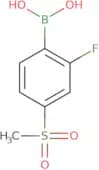
(2-Fluoro-4-methylsulfonylphenyl)boronic acid
CAS:<p>2-Fluoro-4-methylsulfonylphenyl)boronic acid is a fine chemical that is useful as a scaffold for the production of other compounds. It can be used as a versatile building block in organic synthesis, and is often used as an intermediate or research chemical. 2-Fluoro-4-methylsulfonylphenyl)boronic acid has been shown to react with many different types of compounds, making it a valuable reagent. This compound is also known for its high quality, which makes it an excellent choice for use in reactions that require speciality chemicals.</p>Fórmula:C7H8BFO4SPureza:Min. 95%Cor e Forma:White PowderPeso molecular:218.01 g/mol2-Fluoro-4-trifluoromethoxyphenyl boronic acid
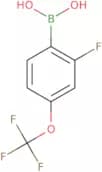
CAS:<p>2-Fluoro-4-trifluoromethoxyphenyl boronic acid is a fine chemical that has been used as a building block in organic synthesis. It is also a versatile intermediate, which can be used for the preparation of complex compounds. The compound is soluble in methanol, ethanol, and THF. It has a CAS number of 503309-10-2 and was first synthesized in 1960.</p>Fórmula:C7H5BF4O3Pureza:Min. 95%Cor e Forma:White PowderPeso molecular:223.92 g/mol2-Aminophenylboronic acid
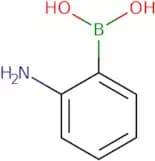
CAS:<p>2-Aminophenylboronic acid is an organic compound that can be used as a cross-coupling agent in the Suzuki coupling reaction. It has been used to synthesize amides and β-unsaturated ketones. It has also been used to prepare fluorescent molecules for use in clinical diagnostics. The phase transition temperature of 2-aminophenylboronic acid is approximately -6°C, which makes it useful for the synthesis of amides and β-unsaturated ketones at low temperatures. This compound is not reactive towards nucleophiles due to its acidic character, but it can undergo a nucleophilic attack when protonated. Its fluorescence assay can be used to detect the presence of low concentrations of hydrogen sulfide gas in natural gas pipelines.</p>Fórmula:C6H8BNO2Pureza:Min. 95%Cor e Forma:PowderPeso molecular:136.94 g/molDimethylethylsilylimidazole
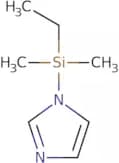
CAS:<p>Dimethylethylsilylimidazole (DMS) is a drug that inhibits the activity of certain enzymes and transporters. It binds to the toll-like receptor and activates downstream signalling pathways, leading to an increased production of reactive oxygen species. DMS also inhibits the activity of DNA polymerase and prevents transcriptional elongation by blocking the dinucleotide phosphate-dependent enzyme. DMS has been shown to be effective in treating chronic cough caused by squamous cell carcinoma. This drug can have adverse effects on other drugs that are metabolized through cytochrome P450 enzymes or are substrates for P-glycoprotein transporters.</p>Fórmula:C7H14N2SiPureza:Min. 95%Peso molecular:154.29 g/molN-α-Fmoc-Nε-7-methoxycoumarin-4-acetyl-L-lysine
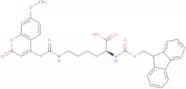
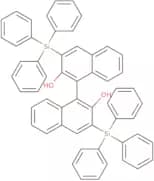
CAS:N-alpha-Fmoc-Nepsilon-7-methoxycoumarin-4-acetyl-L-lysine is a fluorogenic molecule that is synthesized by the solid phase method. It is an analog of lysine, which is a bioactive amino acid. This compound binds to copper and exhibits fluorescence emission at 585 nm when excited at 488 nm. N-alpha-Fmoc-Nepsilon-7-methoxycoumarin-4-acetyl-L-lysine can be used as a substrate for bone growth in vitro and in vivo. It can also be used as a labeling reagent for bone tissue, such as bone sections or cells. It has been shown to produce osteogenic activity in vitro and in vivo.Fórmula:C33H32N2O8Pureza:Min. 97 Area-%Cor e Forma:PowderPeso molecular:584.62 g/mol(R)-3,3'-Bis(triphenylsilyl)-1,1'-binaphthalene-2,2'-diol
CAS:<p>(R)-3,3'-Bis(triphenylsilyl)-1,1'-binaphthalene-2,2'-diol is a high quality chemical and useful scaffold that can be used as a reagent for the synthesis of complex compounds. This compound has CAS No. 111822-69-6 and is an intermediate for the preparation of fine chemicals and speciality chemicals. It is also a versatile building block that can be used in research or as a reaction component to produce useful scaffolds.</p>Fórmula:C56H42O2Si2Pureza:Min. 95%Cor e Forma:White PowderPeso molecular:803.1 g/mol1,2-Bis(chlorodimethylsilyl)ethane [Protecting Reagent for Primary Amines]
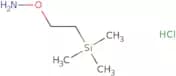
CAS:Fórmula:C6H16Cl2Si2Pureza:>95.0%(GC)Cor e Forma:White or Colorless to Almost white or Almost colorless powder to lump to clear liquidPeso molecular:215.26O-(2-Trimethylsilylethyl)hydroxylamine HCl
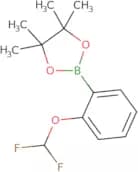
CAS:<p>O-(2-Trimethylsilylethyl)hydroxylamine HCl is a fine chemical that can be used as a versatile building block in the synthesis of complex compounds. It is also an intermediate for research chemicals, reagents, and speciality chemicals. O-(2-Trimethylsilylethyl)hydroxylamine HCl can be used as a reaction component in organic synthesis and has been shown to be useful in the synthesis of new scaffolds.</p>Fórmula:C5H15NOSi·HClPureza:Min. 95%Cor e Forma:White PowderPeso molecular:169.72 g/mol2-Difluoromethoxyphenylboronic acid pinacol ester
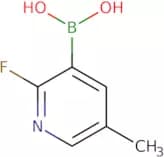
CAS:<p>2-Difluoromethoxyphenylboronic acid pinacol ester is a high quality reagent that can be used as a useful intermediate, fine chemical, or speciality chemical in reactions. This compound is an important building block for synthesizing other chemicals and can also be used to make novel compounds with pharmaceutical properties. 2-Difluoromethoxyphenylboronic acid pinacol ester is versatile and can be used in many different reactions. It has been reported to react with various other molecules to form new scaffolds and building blocks for use in organic synthesis.</p>Fórmula:C13H17BF2O3Pureza:Min. 95%Cor e Forma:PowderPeso molecular:270.08 g/mol2-Fluoro-5-methylpyridine-3-boronic acid
CAS:<p>2-Fluoro-5-methylpyridine-3-boronic acid is a high quality chemical with CAS No. 1072952-45-4 that is a useful building block for the synthesis of complex compounds and speciality chemicals. 2-Fluoro-5-methylpyridine-3-boronic acid is also a versatile building block that can be used in organic reactions as a reaction component for the synthesis of speciality chemicals and other reagents. It can also be used to make fluoroquinolones and related pharmaceuticals, which are used to treat bacterial infections. This compound has many uses in research, including being a valuable scaffold for the synthesis of new drugs.</p>Fórmula:C6H7BFNO2Pureza:Min. 95%Cor e Forma:White PowderPeso molecular:154.93 g/mol1,3-Dimethyl-1,1,3,3-tetraphenyldisilazane
CAS:Fórmula:C26H27NSi2Pureza:>95.0%(GC)Cor e Forma:White to Light yellow powder to crystalPeso molecular:409.68[4-(Allyloxy)phenyl]boronic acid
CAS:<p>4-(Allyloxy)phenylboronic acid is an intermediate in the manufacture of pharmaceuticals and other organic compounds. It can be used as a building block for more complex compounds and as a reagent in organic synthesis. 4-(Allyloxy)phenylboronic acid is soluble in water and has a melting point of >200°C. This compound is a fine chemical with CAS No. 1117776-68-7 and is useful for research purposes.</p>Fórmula:C9H11BO3Pureza:Min. 95%Cor e Forma:White PowderPeso molecular:177.99 g/molDecamethylcyclopentasiloxane
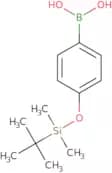
CAS:<p>Decamethylcyclopentasiloxane is a compound that is used in wastewater treatment. It is used as a co-solvent in the removal of fatty acids from wastewater by adsorption on activated carbon. Decamethylcyclopentasiloxane has been shown to be less toxic than other solvents, such as pergolide mesylate, and can be used for the removal of fatty acids from wastewater by adsorption on activated carbon. The process involves the formation of decamethylcyclopentasiloxane-fatty acid complexes at the surface of activated carbon particles. Decamethylcyclopentasiloxane does not cause chronic exposure or emit particles when subjected to high temperatures.</p>Fórmula:C10H30O5Si5Pureza:Min. 95%Cor e Forma:Colorless Clear LiquidPeso molecular:370.77 g/mol4-(tert-Butyldimethylsilyloxy)phenylboronic acid
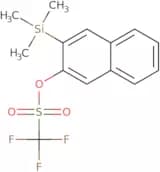
CAS:<p>4-(tert-Butyldimethylsilyloxy)phenylboronic acid (BSPOH) is a molecule that has been shown to have growth factor activity. Studies have shown that BSPOH can stimulate the uptake of iron in cells, which may be due to its ability to increase hepcidin production. This compound also has anti-cancer properties and can induce apoptosis in cancer cell lines.</p>Fórmula:C12H21BO3SiPureza:Min. 95%Cor e Forma:White PowderPeso molecular:252.19 g/mol3-(Trimethylsilyl)-2-naphthyl trifluoromethanesulfonate
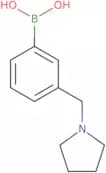
CAS:<p>3-(Trimethylsilyl)-2-naphthyl trifluoromethanesulfonate is a synthetic molecule that is used to synthesize benzofurans. 3-(Trimethylsilyl)-2-naphthyl trifluoromethanesulfonate is activated by reaction with N-bromosuccinimide, which creates an electrophilic carbon center. This electrophilic center reacts with nucleophiles such as alcohols, amines, and thiols to form a new bond. The product of this reaction is benzoylated, which can then undergo further reactions to form other compounds. X-ray crystallography has been used to characterize the structure of 3-(trimethylsilyl)-2-naphthyl trifluoromethanesulfonate.</p>Fórmula:C14H15F3O3SSiPureza:Min. 95%Cor e Forma:Colorless Clear LiquidPeso molecular:348.41 g/mol(3-(Pyrrolidin-1-ylmethyl)phenyl)boronic acid
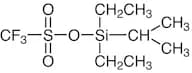
CAS:<p>(3-(Pyrrolidin-1-ylmethyl)phenyl)boronic acid (BPABA) is a fine chemical that is a useful building block in the synthesis of organic compounds. It is also a reagent in organic chemistry and research, as well as a speciality chemical and high quality compound. BPABA is versatile as a building block for the synthesis of complex compounds. It has been used in reactions with many different types of substrates, including nucleophilic addition to unsaturated carbon-carbon bonds, alkylation, vinylation, and Michael reaction. BPABA has been shown to be an effective intermediate for the synthesis of biologically active compounds such as antibiotics and antifungals. BPABA is also used for the synthesis of scaffolds in organic chemistry, such as polymers and nanomaterials.</p>Fórmula:C11H16BNO2Pureza:Min. 95%Cor e Forma:PowderPeso molecular:205.06 g/molDiethylisopropylsilyl Trifluoromethanesulfonate
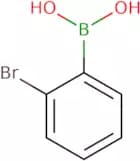
CAS:Fórmula:C8H17F3O3SSiPureza:>98.0%(T)Cor e Forma:Colorless to Light yellow to Light orange clear liquidPeso molecular:278.362-Bromophenylboronic acid
CAS:<p>2-Bromophenylboronic acid is a glucose monitoring agent that has a ruthenium complex with an acidic environment. The nitro group and the amines are in close proximity to the boron center, and this proximity leads to a high nucleophilic character of the molecule. This reactivity allows 2-bromophenylboronic acid to be used as a fluorescence probe for acidic environments. 2-Bromophenylboronic acid also inhibits secretase enzymes, which are involved in Alzheimer’s disease and other neurodegenerative disorders. It is an inhibitor of γ-secretase, which is responsible for cleaving the amyloid precursor protein (APP), and it has shown efficacy against biphenyl, an anticancer drug that binds to benzodiazepine receptors.<br>2-Bromophenylboronic acid is also an enantiopure compound because all four substituents are different from each other.</p>Fórmula:C6H6BBrO2Pureza:Min. 95%Cor e Forma:White PowderPeso molecular:200.83 g/mol[[(3,5-Dimethyl-1H-pyrrol-2-yl)(3,5-dimethyl-2H-pyrrol-2-ylidene)methyl]methane](difluoroborane)
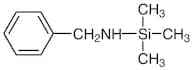
CAS:<p>[[(3,5-Dimethyl-1H-pyrrol-2-yl)(3,5-dimethyl-2H-pyrrol-2-ylidene)methyl]methane](difluoroborane) is a compound that is used in photophysical studies. It has been shown to exhibit low energy levels and fluorescence properties. The chloro atom in this molecule has been shown to have a photostability of approximately 10 μs, which may be due to the lack of electron delocalization that would lead to a significant amount of excited state decay. This compound also exhibits fatty acid microcapsule formation and particle formation, which may be useful for confocal microscopy. [[(3,5-Dimethyl-1H-pyrrol-2-yl)(3,5-dimethyl-2H-pyrrol-2-ylidene)methyl]methane](difluorob</p>Fórmula:C14H17BF2N2Pureza:Min. 95%Cor e Forma:Red PowderPeso molecular:262.11 g/molN-Benzyltrimethylsilylamine
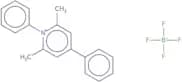
CAS:Fórmula:C10H17NSiPureza:>98.0%(T)Cor e Forma:Colorless to Almost colorless clear liquidPeso molecular:179.342,6-Dimethyl-1,4-diphenylpyridinium tetrafluoroborate
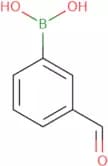
CAS:<p>2,6-Dimethyl-1,4-diphenylpyridinium tetrafluoroborate is a high quality reagent that can be used as a useful intermediate in the synthesis of fine chemicals. It is used as an important building block in the synthesis of many organic compounds and is also an important reaction component. This compound has a wide range of uses and can be used as a versatile building block in organic synthesis or as a speciality chemical for research purposes.</p>Fórmula:C19H18N·BF4Pureza:Min. 95%Peso molecular:347.16 g/mol3-Formylphenylboronic acid - 80%
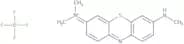
CAS:<p>3-Formylphenylboronic acid is an apical ligand with a phenylpropionic acid substituent. It has been shown to have hypoglycemic effects in rats, and binding constants for proteins ranging from 10 μM to 1 mM. 3-Formylphenylboronic acid binds to the chelate ligand of a macrocyclic structure, which is a molecule consisting of two or more rings that are linked together. This compound has been shown to have inhibitory effects on both the enzyme (vibrational) and fluorescence resonance energy transfer (FRET).</p>Fórmula:C7H7BO3Pureza:Min. 95%Cor e Forma:PowderPeso molecular:149.94 g/molAzure B Tetrafluoroborate
CAS:<p>Azure B Tetrafluoroborate is a potentiator for antibiotics. It is used to enhance the antibacterial efficacy of antibiotics by increasing their ability to penetrate tissues and bacterial biofilms. Azure B Tetrafluoroborate is an organic solvent that can be applied with a handpiece or cavity instrument. It has been shown to increase the in vitro activity of various antibiotics against gram-negative organisms and can be used as a polymeric matrix for coating medical devices such as catheters, endoscopes, and implants. The mechanism of action involves activation of the chemical species within the antibiotic molecule, which then reacts with diode-pumped solid state laser radiation to produce luminescence reactions.</p>Fórmula:C15H16N3S·BF4Pureza:Min. 95%Peso molecular:357.18 g/molEthylenedithiobis(trimethylsilane) [Protecting Reagent for Aldehydes and Ketones]
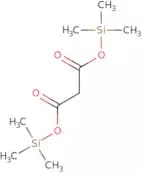
CAS:Fórmula:C8H22S2Si2Pureza:>97.0%(GC)Cor e Forma:Colorless to Almost colorless clear liquidPeso molecular:238.55Bis(trimethylsilyl)malonate
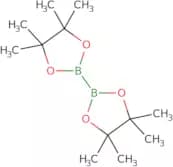
CAS:<p>Bis(trimethylsilyl)malonate is a molecule that is used as a reagent in organic chemistry. It is an ethyl ester of malonic acid and can be synthesized using phosphorus pentoxide and the methyl ketones. The synthesis of covid-19, a pandemic antiviral drug, requires this chemical. Covid-19 has been shown to have anticancer activity in animal studies, as well as clinical chemistry applications for colorectal carcinoma.</p>Fórmula:C9H20O4Si2Pureza:Min. 95%Cor e Forma:Colourless To Yellow LiquidPeso molecular:248.42 g/molBis(pinacolato)diboron
CAS:<p>Bis(pinacolato)diboron is a versatile reagent that is used in organic synthesis. It is a boron-containing compound that inhibits the reaction between amines and hydroxide solutions, forming an intermediate copper complex with a carbonyl group. The mechanism of this inhibition has been explored and found to be due to the presence of a hydroxyl group on the bis(pinacolato)diboron molecule. Bis(pinacolato)diboron reacts with an amine to form an adduct containing a boron-nitrogen double bond. This intermediate then reacts with hydroxide ions from the solution to form the final product, which contains both an amine and hydroxyl groups. The isolated yield of this reaction is typically low, but can be increased by using palladium as a catalyst.</p>Fórmula:C12H24B2O4Pureza:Min. 98 Area-%Cor e Forma:PowderPeso molecular:253.94 g/molAcetyltrimethylsilane
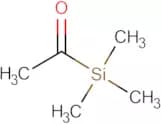
CAS:<p>S25017 - Acetyltrimethylsilane</p>Fórmula:C5H12OSiPureza:95%;RGCor e Forma:LiquidPeso molecular:116.235Isobutylmethyldimethoxysilane
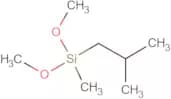
CAS:<p>S25196 - Isobutylmethyldimethoxysilane</p>Fórmula:C7H18O2SiCor e Forma:ClearPeso molecular:162.304N,N’-Bis(trimethylsilyl)urea
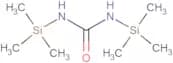
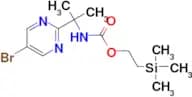
CAS:<p>S02850 - N,N'-Bis(trimethylsilyl)urea</p>Fórmula:C7H20N2OSi2Pureza:95%Cor e Forma:SolidPeso molecular:204.422-(TRIMETHYLSILYL)ETHYL (2-(5-BROMOPYRIMIDIN-2-YL)PROPAN-2-YL)CARBAMATE
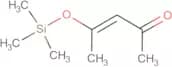
CAS:Fórmula:C13H22BrN3O2SiPureza:95.0%Peso molecular:360.3272-(tert-Butyldimethylsiloxy)pent-2-en-4-one
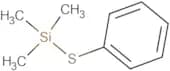
CAS:<p>S03325 - 2-(tert-Butyldimethylsiloxy)pent-2-en-4-one</p>Fórmula:C11H22O2SiPureza:95%Cor e Forma:ClearPeso molecular:214.38Phenylthiotrimethylsilane
CAS:<p>S13625 - Phenylthiotrimethylsilane(S-Trimethylsilylthiophenol)</p>Fórmula:C9H14SSiPureza:≥95%(GC)Cor e Forma:Liquid, ClearPeso molecular:182.364-Methoxy-1-((2-(trimethylsilyl)ethoxy)methyl)-5-vinyl-1H-pyrrolo[2,3-b]pyridine
CAS:Pureza:95%Peso molecular:304.4649963Methacryloxypropylheptaisobutyl-T8-silsesquioxane
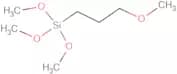
CAS:<p>S25227 - Methacryloxypropylheptaisobutyl-T8-silsesquioxane</p>Fórmula:C35H74O14Si8Cor e Forma:Solid, White solidPeso molecular:943.6433-(Methoxy)propyltrimethoxysilane
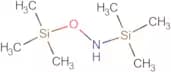
CAS:<p>S10950 - 3-(Methoxy)propyltrimethoxysilane</p>Fórmula:C7H18O4SiPureza:95+%Cor e Forma:Liquid, ClearPeso molecular:194.302N,0-Bis(trimethylsilyl)hydroxylamine
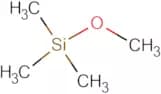
CAS:<p>S02650 - N,0-Bis(trimethylsilyl)hydroxylamine</p>Fórmula:C6H19NOSi2Pureza:>95.0%(GC)Cor e Forma:LiquidPeso molecular:177.394Trimethylmethoxysilane
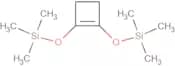
CAS:<p>S18650 - Trimethylmethoxysilane</p>Fórmula:C4H12OSiPureza:>98.0%(GC)Cor e Forma:Clear to straw liquidPeso molecular:104.224Bis(trimethylsiloxy)cyclobutene
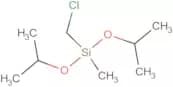
CAS:<p>S02290 - Bis(trimethylsiloxy)cyclobutene</p>Fórmula:C10H22O2Si2Pureza:95%Cor e Forma:Liquid, ClearPeso molecular:230.454(Chloromethyl)methyldiisopropoxysilane
CAS:<p>S04225 - (Chloromethyl)methyldiisopropoxysilane</p>Fórmula:C8H19ClO2SiPureza:95%Cor e Forma:ClearPeso molecular:210.77Vinylmethyldiethoxysilane
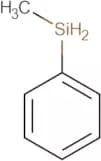
CAS:<p>S21825 - Vinylmethyldiethoxysilane</p>Fórmula:C7H16O2SiPureza:95%Cor e Forma:Liquid, ClearPeso molecular:160.288Methylphenylsilane
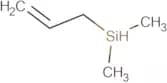
CAS:<p>S11625 - Methylphenylsilane</p>Fórmula:C7H10SiCor e Forma:LiquidPeso molecular:122.242Allyldimethylsilane
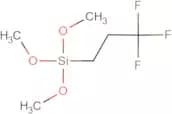
CAS:<p>S00275 - Allyldimethylsilane</p>Fórmula:C5H12SiPureza:90%Cor e Forma:Liquid, Clear LiquidPeso molecular:100.236(3,3,3-Trifluoropropyl)trimethoxysilane
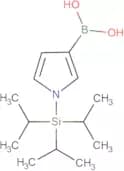
CAS:<p>S17850 - (3,3,3-Trifluoropropyl)trimethoxysilane</p>Fórmula:C6H13F3O3SiPureza:95%Cor e Forma:ClearPeso molecular:218.2471-(Triisopropylsilyl)pyrrole-3-boronic acid
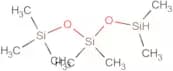
CAS:<p>S18028 - 1-(Triisopropylsilyl)pyrrole-3-boronic acid</p>Fórmula:C13H26BNO2SiPureza:95+%Cor e Forma:White to off-white solidPeso molecular:267.251,1,1,3,3,5,5-Heptamethyltrisiloxane
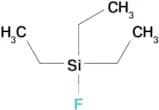
CAS:<p>S09275 - 1,1,1,3,3,5,5-Heptamethyltrisiloxane</p>Fórmula:C7H22O2Si3Pureza:≥90%Cor e Forma:Liquid, ClearPeso molecular:222.506TRIETHYLFLUOROSILANE
CAS:Fórmula:C6H15FSiPureza:98%(GC-MS);RGCor e Forma:LiquidPeso molecular:134.269Trimethoxysilyl propyl urea
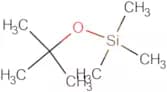
CAS:<p>S18475 - Trimethoxysilyl propyl urea</p>Fórmula:C7H18N2O4SiPureza:95%Cor e Forma:Viscous LiquidPeso molecular:222.316tert-Butoxytrimethylsilane
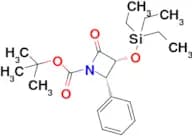
CAS:<p>S03200 - tert-Butoxytrimethylsilane</p>Fórmula:C7H18OSiPureza:98%Cor e Forma:Liquid, ClearPeso molecular:146.305(3R,4S)-tert-Butyl 2-oxo-4-phenyl-3-((triethylsilyl)oxy)azetidine-1-carboxylate
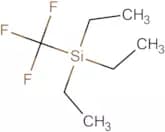
CAS:Fórmula:C20H31NO4SiPureza:95%Peso molecular:377.556Trifluoromethyl triethyl silane
CAS:<p>S17673 - Trifluoromethyl triethyl silane</p>Fórmula:C7H15F3SiPureza:97%Cor e Forma:LiquidPeso molecular:184.2772-Amino-3-((tert-butyldiphenylsilyl)oxy)-2-methylpropan-1-ol
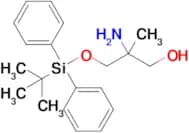
CAS:Pureza:95%Peso molecular:343.54199222-(((tert-Butyldimethylsilyl)oxy)methyl)-5-(4,4,5,5-tetramethyl-1,3,2-dioxaborolan-2-yl)thiazole
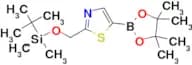
Fórmula:C16H30BNO3SSiPureza:95%Peso molecular:355.38Styrylethyltrimethoxysilane 90%
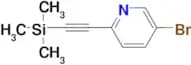
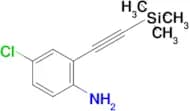
CAS:<p>S15140 - Styrylethyltrimethoxysilane 90%</p>Fórmula:C13H20O3SiPureza:90%Cor e Forma:ClearPeso molecular:252.3855-BROMO-2-(2-(TRIMETHYLSILYL)ETHYNYL)PYRIDINE
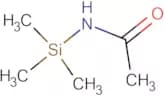
CAS:Fórmula:C10H12BrNSiPureza:95.0%Peso molecular:254.202N-Trimethylsilylacetamide
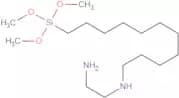
CAS:<p>S18875 - N-Trimethylsilylacetamide</p>Fórmula:C5H13NOSiPureza:95%Cor e Forma:SolidPeso molecular:131.25N-(2-Aminoethyl)-11-aminoundecyltrimethoxysilane
CAS:<p>S25036 - N-(2-Aminoethyl)-11-aminoundecyltrimethoxysilane</p>Fórmula:C16H38N2O3SiPureza:90%Cor e Forma:LiquidPeso molecular:334.576(S)-3-Bromo-6-((tert-butyldimethylsilyl)oxy)-6,7-dihydro-5H-pyrazolo[5,1-b][1,3]oxazine
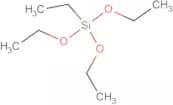
CAS:Pureza:98%Peso molecular:333.3009949Ethyltriethoxysilane
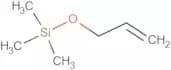
CAS:<p>S08850 - Ethyltriethoxysilane</p>Fórmula:C8H20O3SiPureza:97%Cor e Forma:Liquid, ClearPeso molecular:192.33Allyloxytrimethylsilane
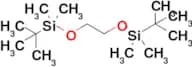
CAS:<p>S00325 - Allyloxytrimethylsilane</p>Fórmula:C6H14OSiPureza:98%Cor e Forma:Liquid, ClearPeso molecular:130.2622-(t-Butyldimethylsiloxy)ethanol
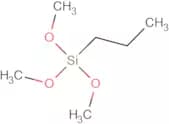
CAS:<p>S25088 - 2-(t-Butyldimethylsiloxy)ethanol</p>Fórmula:C8H20O2SiPureza:95%Cor e Forma:Liquid, ClearPeso molecular:176.331n-Propyltrimethoxysilane
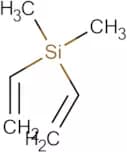
CAS:<p>S14125 - n-Propyltrimethoxysilane</p>Fórmula:C6H16O3SiPureza:98%Cor e Forma:Liquid, ClearPeso molecular:164.276Dimethyldivinylsilane
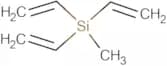
CAS:<p>S07232 - Dimethyldivinylsilane</p>Fórmula:C6H12SiPureza:95%Cor e Forma:Liquid, ClearPeso molecular:112.247Trivinylmethylsilane
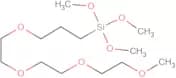
CAS:<p>S21575 - Trivinylmethylsilane</p>Fórmula:C7H12SiPureza:95%Cor e Forma:ClearPeso molecular:124.258Methoxytriethyleneoxypropyltrimethoxysilane
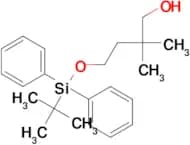
CAS:<p>S25239 - Methoxytriethyleneoxypropyltrimethoxysilane</p>Fórmula:C13H30O7SiPureza:97%Cor e Forma:Liquid, ClearPeso molecular:326.4614-((TERT-BUTYLDIPHENYLSILYL)OXY)-2,2-DIMETHYLBUTAN-1-OL
CAS:Fórmula:C22H32O2SiPureza:95%Peso molecular:356.5812,2,3,3,8,8,9,9-Octamethyl-4,7-dioxa-3,8-disiladecane
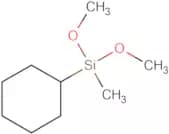
CAS:Pureza:95%Cor e Forma:LiquidPeso molecular:290.5939941Cyclohexylmethyldimethoxysilane
CAS:<p>S05200 - Cyclohexylmethyldimethoxysilane</p>Fórmula:C9H20O2SiPureza:97%Cor e Forma:LiquidPeso molecular:188.342Divinyltetraphenyldisiloxane
CAS:<p>S08430 - Divinyltetraphenyldisiloxane</p>Fórmula:C28H26OSi2Pureza:95% mix TBC as stabilizerCor e Forma:SolidPeso molecular:434.6852-Trimethylsiloxypent-2-en-4-one
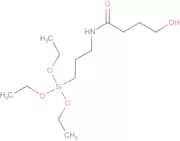
CAS:<p>S18825 - 2-Trimethylsiloxypent-2-en-4-one</p>Fórmula:C8H16O2SiPureza:>96.0%(GC)Cor e Forma:Liquid, ClearPeso molecular:172.299N-(3-Triethoxysilylpropyl)-4-hydroxybutyramide
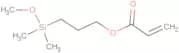
CAS:<p>S17350 - N-(3-Triethoxysilylpropyl)-4-hydroxybutyramide</p>Fórmula:C13H29NO5SiPureza:97%Cor e Forma:ClearPeso molecular:307.462(3-Acryloxypropyl)dimethylmethoxysilane
CAS:<p>S25022 - (3-Acryloxypropyl)dimethylmethoxysilane</p>Fórmula:C9H18O3SiPureza:95%Cor e Forma:Liquid, ClearPeso molecular:202.325Tetrakis(2-hydroxyethoxy)silane
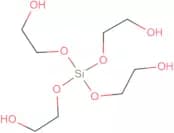
CAS:<p>S25273 - Tetrakis(2-hydroxyethoxy)silane</p>Fórmula:C8H20O8SiPureza:90%Cor e Forma:Liquid, Clear viscous liquidPeso molecular:272.325Isooctyl triethoxysilane
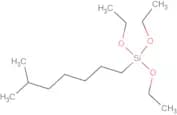
CAS:<p>S10230 - Isooctyl triethoxysilane</p>Fórmula:C14H32O3SiPureza:97%+Cor e Forma:LiquidPeso molecular:276.492{4-fluoro-1-[tris(propan-2-yl)silyl]-1H-pyrrolo[2,3-b]pyridin-5-yl}boronic acid
CAS:Fórmula:C16H26BFN2O2SiPureza:95%Peso molecular:336.29Tri-n-hexylsilane
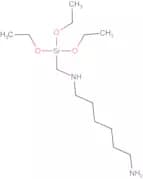
CAS:<p>S17900 - Tri-n-hexylsilane</p>Fórmula:C18H40SiPureza:98%Cor e Forma:Liquid, ClearPeso molecular:284.603N-(6-Aminohexyl)aminomethyltriethoxysilane
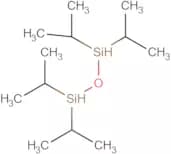
CAS:<p>S25035 - N-(6-Aminohexyl)aminomethyltriethoxysilane</p>Fórmula:C13H32N2O3SiPureza:92%Cor e Forma:LiquidPeso molecular:292.4951,1,3,3-Tetraisopropyldisiloxane
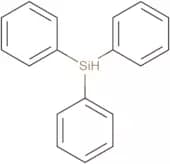
CAS:<p>S15605 - 1,1,3,3-Tetraisopropyldisiloxane</p>Fórmula:C12H30OSi2Pureza:95%Cor e Forma:Liquid, ClearPeso molecular:246.541Triphenylsilane
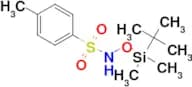
CAS:<p>S20600 - Triphenylsilane</p>Fórmula:C18H16SiPureza:96%Cor e Forma:SolidPeso molecular:260.411N-(TERT-BUTYLDIMETHYLSILYLOXY)-4-METHYLBENZENESULFONAMIDE
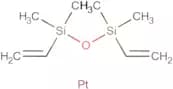
CAS:Fórmula:C13H23NO3SSiPureza:95%Peso molecular:301.48Platinum-divinyltetramethyldisiloxane complex in xylene (2.1 - 2.4% Platinum concentration)
CAS:<p>S25259 - Platinum-divinyltetramethyldisiloxane complex in xylene (2.1 - 2.4% Platinum concentration)</p>Fórmula:C8H18OPtSi2Pureza:95%Cor e Forma:Liquid, HazyPeso molecular:381.4851-Bromo-4-(t-butyldimethylsilyloxy)butane
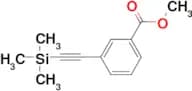
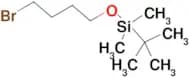
CAS:Fórmula:C10H23BrOSiPureza:95%Cor e Forma:LiquidPeso molecular:267.282DIMETHYL 5-(2-(TRIMETHYLSILYL)ETHYNYL) BENZENE-1,3-DIOATE
CAS:Fórmula:C15H18O4SiPureza:95.0%Peso molecular:290.391,3 Bis[2(3,4 epoxycyclohex-1-yl)ethyl]tetra- methyldisiloxane
CAS:<p>S01810 - 1,3 Bis[2(3,4 epoxycyclohex-1-yl)ethyl]tetra- methyldisiloxane</p>Fórmula:C20H38O3Si2Pureza:95%Cor e Forma:Liquid, ClearPeso molecular:382.691Triphenyltrimethylcyclotrisiloxane,90%
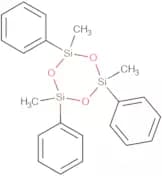
CAS:<p>S25286 - Triphenyltrimethylcyclotrisiloxane,90%</p>Fórmula:C21H24O3Si3Pureza:97%Cor e Forma:Liquid, HazyPeso molecular:408.6753-Aminopropyldimethylfluorosilane
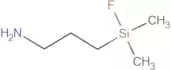
CAS:<p>S25040 - 3-Aminopropyldimethylfluorosilane</p>Fórmula:C5H14FNSiCor e Forma:LiquidPeso molecular:135.2571,5-Divinylhexamethyltrisiloxane
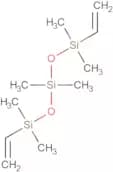
CAS:<p>S08365 - 1,5-Divinylhexamethyltrisiloxane</p>Fórmula:C10H24O2Si3Cor e Forma:LiquidPeso molecular:260.555Tetradecamethylhexasiloxane
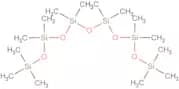
CAS:<p>S25272 - Tetradecamethylhexasiloxane</p>Fórmula:C14H42O5Si6Pureza:97%Cor e Forma:Liquid, ClearPeso molecular:458.9952,2,3,3,9,9,10,10-OCTAMETHYL-4,8-DIOXA-3,9-DISILAUNDECAN-6-OL
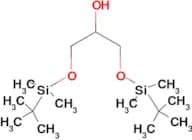
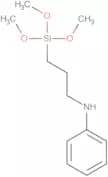
CAS:Fórmula:C15H36O3Si2Pureza:98%Cor e Forma:LiquidPeso molecular:320.62N-Phenyl-3-aminopropyltrimethoxysilane
CAS:<p>S13325 - N-Phenyl-3-aminopropyltrimethoxysilane</p>Fórmula:C12H21NO3SiPureza:96%Cor e Forma:LiquidPeso molecular:255.389Trimethylsilyl methacrylate inhibited MEHQ
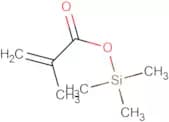
CAS:<p>S19625 - Trimethylsilyl methacrylate inhibited MEHQ</p>Fórmula:C7H14O2SiPureza:98%+(GC-MS);RGCor e Forma:Liquid, ClearPeso molecular:158.272

![1,2-Bis(chlorodimethylsilyl)ethane [Protecting Reagent for Primary Amines]](/_next/image/?url=https%3A%2Fstatic.cymitquimica.com%2Fproducts%2F3B%2Fthumb-webp%2FB1688.webp&w=3840&q=75)


![[4-(Allyloxy)phenyl]boronic acid](/_next/image/?url=https%3A%2Fstatic.cymitquimica.com%2Fproducts%2F3D%2Fthumb-webp%2FFA121987.webp&w=3840&q=75)
![[[(3,5-Dimethyl-1H-pyrrol-2-yl)(3,5-dimethyl-2H-pyrrol-2-ylidene)methyl]methane](difluoroborane)](/_next/image/?url=https%3A%2Fstatic.cymitquimica.com%2Fproducts%2F3D%2Fthumb-webp%2FFD62165.webp&w=3840&q=75)
![Ethylenedithiobis(trimethylsilane) [Protecting Reagent for Aldehydes and Ketones]](/_next/image/?url=https%3A%2Fstatic.cymitquimica.com%2Fproducts%2F3B%2Fthumb-webp%2FE0479.webp&w=3840&q=75)


![4-Methoxy-1-((2-(trimethylsilyl)ethoxy)methyl)-5-vinyl-1H-pyrrolo[2,3-b]pyridine](/_next/image/?url=https%3A%2Fstatic.cymitquimica.com%2Fproducts%2F10%2Fthumb-webp%2FF784408.webp&w=3840&q=75)







![(S)-3-Bromo-6-((tert-butyldimethylsilyl)oxy)-6,7-dihydro-5H-pyrazolo[5,1-b][1,3]oxazine](/_next/image/?url=https%3A%2Fstatic.cymitquimica.com%2Fproducts%2F10%2Fthumb-webp%2FF781577.webp&w=3840&q=75)
![6-Bromo-2-(trimethylsilyl)furo[3,2-b]pyridine](/_next/image/?url=https%3A%2Fstatic.cymitquimica.com%2Fproducts%2F10%2Fthumb-webp%2FF763859.webp&w=3840&q=75)


![{4-fluoro-1-[tris(propan-2-yl)silyl]-1H-pyrrolo[2,3-b]pyridin-5-yl}boronic acid](/_next/image/?url=https%3A%2Fstatic.cymitquimica.com%2Fproducts%2F10%2Fthumb-webp%2FF519140.webp&w=3840&q=75)


![1,3 Bis[2(3,4 epoxycyclohex-1-yl)ethyl]tetra- methyldisiloxane](/_next/image/?url=https%3A%2Fstatic.cymitquimica.com%2Fproducts%2F10%2Fthumb-webp%2FS01810.webp&w=3840&q=75)