


Compostos de organossilícico
Subcategorias de "Compostos de organossilícico"
Foram encontrados 4330 produtos de "Compostos de organossilícico"
Tetraethylammonium tetrafluoroborate
CAS:Tetraethylammonium tetrafluoroborate is a diamagnetic chemical species that reacts with water, forming the hydrated salt tetraethylammonium hydroxide. Tetraethylammonium tetrafluoroborate has a high resistance to oxidation and reduction reactions. It can be used as an electrolyte in electrochemistry and as a thermal expansion agent in plastics. The potentials of this substance are around +1 V, which makes it useful for electrochemical impedance spectroscopy. Tetraethylammonium tetrafluoroborate is activated by organic solvents, but not by water vapor.
Fórmula:C8H20N·BF4Cor e Forma:White Off-White PowderPeso molecular:217.06 g/molFITC-epsilonAhx-Amyloid b-Protein (1-42) trifluoroacetate salt
Please enquire for more information about FITC-epsilonAhx-Amyloid b-Protein (1-42) trifluoroacetate salt including the price, delivery time and more detailed product information at the technical inquiry form on this pageFórmula:C230H333N57O66S2Pureza:Min. 95%Peso molecular:5,016.58 g/mol4-Fluoro-2-(trifluoromethyl)phenylboronic acid
CAS:The process development of 4-fluoro-2-(trifluoromethyl)phenylboronic acid (4FTFPBA) is a simplified procedure that can be scaled up and used for medicinal chemistry. This compound was synthesized by a boronic acid process using the Suzuki-Miyaura cross coupling reaction. The major factor to consider in this synthesis is the placement of the fluorine atom, which determines the relative reactivity and stability of the compound. In order to mimic these factors, an environment with low water content and a sequence that minimizes exposure to air are required.
Fórmula:C7H5BF4O2Pureza:Min. 95%Cor e Forma:PowderPeso molecular:207.92 g/mol3-Pyridineboronic acid
CAS:3-Pyridineboronic acid is an antimicrobial agent that is used to treat bacterial and fungal infections. 3-Pyridineboronic acid is a prodrug that is metabolized to its active form, pyridinium boronate. This drug has been shown to be effective in the treatment of hypoxic tumors in mice, which are resistant to other anticancer drugs. 3-Pyridineboronic acid also has acidic properties and can be used as an antiseptic for the treatment of skin and eye infections. It can also be used as a hydrogen bonding partner when combined with halides, such as chloride or bromide ions. The drug binds to human serum proteins and forms an acidic complex that prevents bacterial growth by inhibiting protein synthesis. 3-Pyridineboronic acid also inhibits prostate cancer cells by competitively inhibiting the enzyme 4-pyridinylboronic acid reductase (4PBAR).Fórmula:C5H6BNO2Pureza:Min. 95%Peso molecular:122.92 g/molProp-1-en-2-ylboronic acid
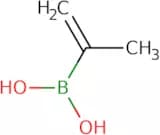
CAS:Prop-1-en-2-ylboronic acid is a chemical compound that belongs to the group of aromatic hydrocarbons. It is used in pharmaceutical preparations as a monomer and as a chiral building block for the synthesis of oxazolidinones, which are used in medicinal chemistry as protein inhibitors against cancers. Prop-1-en-2-ylboronic acid is also used as a reagent in preparative high performance liquid chromatography. This chemical has shown maximal response against colorectal carcinoma cells and has been shown to be an inhibitor of cholesterol ester transfer.Fórmula:C3H7BO2Pureza:90%MinPeso molecular:85.9 g/molBis (neopentylglycolato) diboron
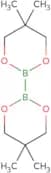
CAS:Bis (neopentylglycolato) diboron is a boronic acid that can be used in catalytic asymmetric synthesis. The compound is prepared by the reaction of neopentyl glycol with boric acid and NaOH, followed by purification by column chromatography. Bis (neopentylglycolato) diboron is soluble in non-polar solvents. It has been shown to have uptake in cells and has been used in the preparation of conjugates for the treatment of cancer.Fórmula:C10H20O4B2Pureza:Min. 95%Cor e Forma:White Off-White PowderPeso molecular:225.89 g/molBiotinyl-ε-aminocaproyl-D-Phe-Pro-Arg-chloromethylketone
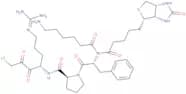
CAS:Please enquire for more information about Biotinyl-epsilon-aminocaproyl-D-Phe-Pro-Arg-chloromethylketone including the price, delivery time and more detailed product information at the technical inquiry form on this page
Fórmula:C37H56ClN9O6SPureza:Min. 95%Peso molecular:790.42 g/mol(3-Bromopropyl)trimethoxysilane
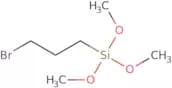
CAS:3-Bromopropyltrimethoxysilane is a divalent hydrocarbon that has been used as a model compound for the study of detection methods. It has been shown to have biocompatible properties and can be used as an immobilization template molecule. 3-Bromopropyltrimethoxysilane also reacts with pyridinium ions to form complexes that are highly stable. The stability of these complexes can be attributed to the functional groups on the pyridine ring, which are more susceptible to hydrolysis than those on the silica surface. 3-Bromopropyltrimethoxysilane is a substrate for nitrate reductase enzymes, resulting in inhibition of growth at concentrations low enough not to cause cytotoxicity.Fórmula:C6H15BrO3SiPureza:Min. 95%Peso molecular:243.17 g/molBiphenyldiMethylsilane
CAS:BiphenyldiMethylsilane is a reactive compound that can be used for the surface modification of metals. It reacts with metal carbonyls, such as ZrO2, to form an oxide layer on the metal surface. This reaction can be monitored by magnetic resonance spectroscopy and chemical structures. The reactive site of this compound is a hydroxyl group, which will react with chloride ions to form a zirconium chloride complex. The chemical ionization technique can be used to determine the surface concentrations of this compound. BiphenyldiMethylsilane is often used in analytical chemistry to detect metal ions on surfaces or in films using infrared spectroscopy or mass spectrometry.
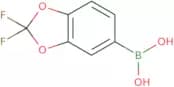
Pureza:Min. 95%2,2-Difluoro-1,3-Benzodioxol-5-Ylboronic Acid
CAS:Please enquire for more information about 2,2-Difluoro-1,3-Benzodioxol-5-Ylboronic Acid including the price, delivery time and more detailed product information at the technical inquiry form on this pageFórmula:C7H5BF2O4Pureza:Min. 95%Peso molecular:201.92 g/molBiotinyl-epsilonAhx-omega-Conotoxin GVIA trifluoroacetate salt
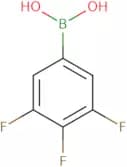
CAS:Produto ControladoPlease enquire for more information about Biotinyl-epsilonAhx-omega-Conotoxin GVIA trifluoroacetate salt including the price, delivery time and more detailed product information at the technical inquiry form on this pageFórmula:C136H207N41O46S7Pureza:Min. 95%Peso molecular:3,376.81 g/mol(3,4,5-Trifluorophenyl)boronic acid
CAS:The trifluorophenylboronic acid is a boronic acid that has been used in the synthesis of vitamin B12. This compound is often used as a catalyst for the Suzuki coupling reaction. It can also be used to synthesize amides and synthons. The trifluorophenylboronic acid is soluble in water, ethanol, and acetone. The pH of the solution depends on the type of base added. For example, when an amine is added to the solution, it increases to approximately 8-9. When a p-hydroxybenzoic acid is added to the solution, it decreases to approximately 2-3.
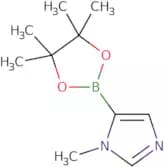
Fórmula:C6H4BF3O2Pureza:Min. 95%Cor e Forma:PowderPeso molecular:175.9 g/mol1-Methyl-1H-imidazole-5-boronic acid pinacol ester
CAS:Please enquire for more information about 1-Methyl-1H-imidazole-5-boronic acid pinacol ester including the price, delivery time and more detailed product information at the technical inquiry form on this page
Fórmula:C10H17BN2O2Pureza:Min. 95%Peso molecular:208.07 g/molN-Methoxymethyl-N-(trimethylsilylmethyl)benzylamine
CAS:N-Methoxymethyl-N-(trimethylsilylmethyl)benzylamine is a chiral, electron deficient reagent that reacts with aldehydes and boronic esters to form products with high chemical yields. This compound can be used as a catalyst for acylation reactions, such as the synthesis of p-nitrophenol. N-Methoxymethyl-N-(trimethylsilylmethyl)benzylamine is synthesized by the reaction of trifluoroacetic acid and an amine, followed by chloroformate displacement. The product is then reacted with acylating agents in the presence of catalysts.Fórmula:C13H23NOSiPureza:Min. 95%Cor e Forma:Clear Colourless To Pale Yellow LiquidPeso molecular:237.41 g/mol4-Methoxybenzylboronic acid pinacolester
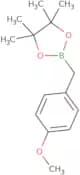
CAS:Please enquire for more information about 4-Methoxybenzylboronic acid pinacolester including the price, delivery time and more detailed product information at the technical inquiry form on this pageFórmula:C14H21BO3Pureza:Min. 95%Peso molecular:248.13 g/mol4-[4-(N-Boc)piperazin-1-yl]phenylboronic acid pinacol ester
CAS:Please enquire for more information about 4-[4-(N-Boc)piperazin-1-yl]phenylboronic acid pinacol ester including the price, delivery time and more detailed product information at the technical inquiry form on this pageFórmula:C21H33BN2O4Pureza:Min. 95%Cor e Forma:PowderPeso molecular:388.31 g/mol3-Bromophenyl boronic acid
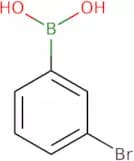
CAS:3-Bromophenyl boronic acid is a group P2 molecule with functional groups of vibrational and cross-coupling. It has been shown to inhibit the activity of aryl boronic acids, which are commonly used in analytical methods. 3-Bromophenyl boronic acid is also capable of inhibiting the production of alizarin, which is a dye that is used for staining biological tissue. The molecular modeling study revealed that this molecule has an atomic orbital with electron density distribution around the central carbon atom. This distribution indicates that it is more stable than other molecules with similar structures.Fórmula:C6H6BBrO2Pureza:Min. 95%Cor e Forma:PowderPeso molecular:200.83 g/molTri-tert-butylphosphine tetrafluoroborate
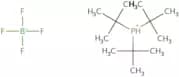
CAS:Tri-tert-butylphosphine tetrafluoroborate (TBPB) is a compound that inhibits tumor growth by inhibiting the activation of allyl carbonates. TBPB has been shown to inhibit tumor growth in vivo and to have an inhibitory effect on the growth of cancer cells in vitro. This drug has been shown to be effective against multiple types of cancer, including breast, prostate, leukemia, and lymphomas. TBPB also inhibits the activity of protein kinase C (PKC), which may play a role in tumorigenesis. It is believed that this drug works by binding to PKC and preventing its activation.Fórmula:C12H28BF4PPureza:Min. 95%Cor e Forma:White PowderPeso molecular:290.13 g/mol2-Methylpyridine-4-boronic acid
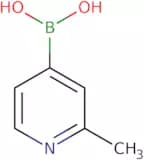
CAS:2-Methylpyridine-4-boronic acid is a reactive molecule that has been used in post-column derivatization and vivo studies. It has been shown to be reactive with mass spectrometric analysis, cancer assays, proteomics, and tumorigenic sample preparation. It also has been shown to have a molecular target of the cytochrome P450 reductase (CPR), which is involved in the metabolism of drugs and other xenobiotics. 2-Methylpyridine-4-boronic acid binds to CPR and inhibits its enzymatic activity, thereby affecting the metabolism of xenobiotics.
Fórmula:C6H8BNO2Pureza:Min. 95%Cor e Forma:White PowderPeso molecular:136.94 g/mol[2-fluoro-4-(trifluoromethyl)phenyl]boronic Acid
CAS:2-Fluoro-4-(trifluoromethyl)phenylboronic acid is a boron compound that can be used to synthesize a variety of target products. 2-Fluoro-4-(trifluoromethyl)phenylboronic acid occurs in the form of an oil and is an impurity in the target product, phenylboronic acid. This impurity can be removed by reacting with lithium benzotrifluoride. Lithiated 2-fluoro-4-(trifluoromethyl)phenylboronic acid is then reacted with phenylboronic acid to give lithiated phenylboronic ester in high yield. The lithiation reaction can be carried out under alkaline conditions or under a condition where the reactants are dissolved in water.Fórmula:C7H5BF4O2Pureza:Min. 95%Peso molecular:207.92 g/mol




![4-[4-(N-Boc)piperazin-1-yl]phenylboronic acid pinacol ester](/_next/image/?url=https%3A%2Fstatic.cymitquimica.com%2Fproducts%2F3D%2Fthumb-webp%2FFN162753.webp&w=3840&q=75)
![[2-fluoro-4-(trifluoromethyl)phenyl]boronic Acid](/_next/image/?url=https%3A%2Fstatic.cymitquimica.com%2Fproducts%2F3D%2Fthumb-webp%2FFF105416.webp&w=3840&q=75)