Grupos de protecção
Os grupos de proteção são usados na síntese orgânica para mascarar temporariamente grupos funcionais reativos, permitindo que reações seletivas ocoam sem interferência. Esses grupos são essenciais para processos de síntese em várias etapas, garantindo que partes específicas da molécula permaneçam não reativas enquanto outras reações são realizadas. Nesta seção, você encontrará uma variedade de grupos de proteção adequados para diferentes grupos funcionais, juntamente com reagentes para sua introdução e remoção. Na CymitQuimica, oferecemos uma gama abrangente de grupos de proteção de alta qualidade para facilitar suas estratégias sintéticas.
Subcategorias de "Grupos de protecção"
- Compostos Boc Protegidos(913 produtos)
- Compostos Desprotectores(24 produtos)
- Compostos Fmoc Protegidos(1.722 produtos)
Foram encontrados 444 produtos de "Grupos de protecção"
Ordenar por
Pureza (%)
0
100
|
0
|
50
|
90
|
95
|
100
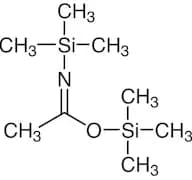
N,O-Bis(trimethylsilyl)acetamide Kit TMS-BA (25% in Acetonitrile) 1 mL × 8 / Reaction vial, capacity 2 mL × 8 [Trimethylsilylating Reagent, for NH2 compounds]
CAS:Cor e Forma:Colorless to Light yellow clear liquidtert-Butyl 4-[4-(1-Hydroxyethyl)-2-methoxy-5-nitrophenoxy]butanoate
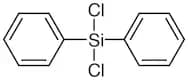
CAS:Fórmula:C17H25NO7Pureza:>98.0%(HPLC)(qNMR)Cor e Forma:White to Light yellow powder to crystalPeso molecular:355.39Dichlorodiphenylsilane
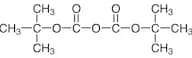
CAS:Fórmula:C12H10Cl2SiPureza:>98.0%(GC)Cor e Forma:Colorless to Almost colorless clear liquidPeso molecular:253.20Di-tert-butyl Dicarbonate (ca. 30% in Tetrahydrofuran)
CAS:Fórmula:C10H18O5Cor e Forma:Colorless to Almost colorless clear liquidPeso molecular:218.25Ethylenedioxybis(trimethylsilane) [Protecting Reagent for Aldehydes and Ketones]
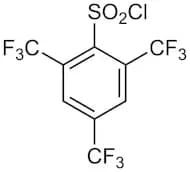
CAS:Fórmula:C8H22O2Si2Pureza:>97.0%(GC)Cor e Forma:Colorless to Light yellow clear liquidPeso molecular:206.432,4,6-Tris(trifluoromethyl)benzenesulfonyl Chloride
CAS:Fórmula:C9H2ClF9O2SPureza:>95.0%(T)(HPLC)Cor e Forma:White to Light yellow to Light orange powder to granulePeso molecular:380.61Bromotriethylsilane
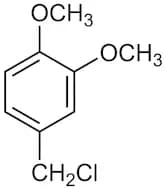
CAS:Fórmula:C6H15BrSiPureza:>96.0%(GC)Cor e Forma:White - Yellow LiquidPeso molecular:195.184-(Chloromethyl)-1,2-dimethoxybenzene
CAS:Fórmula:C9H11ClO2Pureza:>95.0%(GC)(T)Cor e Forma:White to Light yellow powder to crystalPeso molecular:186.64N-(tert-Butoxycarbonyloxy)phthalimide
CAS:Fórmula:C13H13NO5Pureza:>95.0%(HPLC)Cor e Forma:White to Almost white powder to crystalPeso molecular:263.25Benzyl 2,2,2-Trifluoro-N-phenylacetimidate
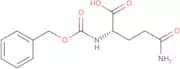
CAS:Fórmula:C15H12F3NOPureza:>98.0%(GC)Cor e Forma:White or Colorless to Yellow to Green powder to lump to clear liquidPeso molecular:279.26Cbz-L-glutamine
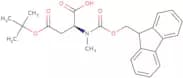
CAS:<p>Cbz-L-glutamine is a water soluble compound that is used in the synthesis of pomalidomide. It is synthesized through a stepwise amide formation from methylamine and ethylene diamine. Cbz-L-glutamine has been shown to have an inhibitory effect on cancer cells, which may be due to its ability to break down hydroxamic acids. This chemical reaction causes the release of hydrogen ions, which leads to the disruption of various cellular processes, such as DNA replication and protein synthesis. The uptake of Cbz-L-glutamine by cancer cells has been shown in tissue culture experiments.</p>Fórmula:C13H16N2O5Pureza:Min. 95%Cor e Forma:PowderPeso molecular:280.28 g/molFmoc-N-Me-Asp(OtBu)-OH
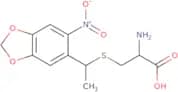
CAS:<p>Fmoc-N-Me-Asp(OtBu)-OH is a synthetic peptide with potential immunosuppressive properties. It has been shown to inhibit the proliferation of human lymphocytes in response to lipopolysaccharides (LPS) and also to suppress the release of cytokines such as IL-1β, IL-6, and TNFα. The effects were dose dependent and could be reversed by the addition of a neutralizing antibody. This peptide can be used as an immunosuppressant in clinical trials that are investigating treatments for myasthenia gravis. Fmoc-N-Me-Asp(OtBu)-OH has been synthesised using chemical synthesis methods from commercially available reagents.</p>Fórmula:C24H27NO6Pureza:Min. 98 Area-%Cor e Forma:PowderPeso molecular:425.47 g/molH-L-Cys(mdnpe)-OH
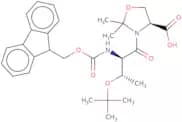
CAS:<p>A novel protected cysteine that can be cleaved by photolysis.</p>Fórmula:C12H14N2O6SPureza:Min. 95%Peso molecular:314.32 g/molFmoc-D-allo-Thr(tBu)-L-Ser(Psi(Me,Me)pro)-OH
<p>Fmoc-D-allo-Thr(tBu)-L-Ser(Psi(Me,Me)pro)-OH is a reagent that is used as an intermediate in the synthesis of complex compounds. It is also a fine chemical that can be used to prepare speciality chemicals. Fmoc-D-allo-Thr(tBu)-L-Ser(Psi(Me,Me)pro)-OH has CAS No. and can be used as a reaction component in various reactions. This compound is versatile and can be used as a building block for other compounds.</p>Fórmula:C29H36N2O7Pureza:Min. 95%Cor e Forma:PowderPeso molecular:524.61 g/molBoc-L-prolinal
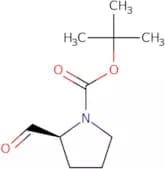
CAS:<p>Boc-L-prolinal is a stereoselective enolate that has been used in the synthesis of organometallic compounds. It is also used in the preparation of monoclonal antibodies, which are proteins that are produced by the immune system to help fight off infections. Boc-L-prolinal has been shown to be an effective agent for treating many cancers, including breast cancer and melanoma. In addition, it has been shown to inhibit epidermal growth factor (EGF) and other growth factors, which may be due to its ability to induce apoptotic signaling. Boc-L-prolinal also contains a carbonyl group, which can undergo acidolysis reactions with nucleophiles such as water or alcohols.</p>Fórmula:C10H17NO3Pureza:Min. 95%Cor e Forma:Colorless Clear LiquidPeso molecular:199.25 g/molFmoc-L-Cys(StBu)-OH
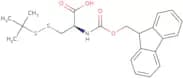
CAS:<p>Fmoc-L-Cys(StBu)-OH is a synthetic molecule that is used in pharmaceutical formulations. It can be synthesized from Fmoc-L-Cys and L-serine methyl ester by the chemical ligation of the two molecules. The chloride group at the end of this molecule provides a functional group for conjugation with other biomolecules, such as fatty acids. This molecule has been shown to have high purity with an isolated yield of about 98%.</p>Fórmula:C22H25NO4S2Pureza:Min. 98 Area-%Cor e Forma:PowderPeso molecular:431.57 g/molFmoc-Cys-(CAMTrt)-OH
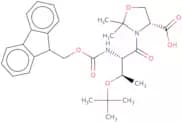
CAS:<p>Fmoc-Cys-(CAMTrt)-OH is an amino acid derivative, which is a synthetic compound essential for peptide synthesis. It is derived from natural cysteine, an amino acid found in proteins, and is modified with an Fmoc (9-fluorenylmethoxycarbonyl) protective group and a CAMTrt (trityl sulfonium ion) moiety. This derivative is used primarily in solid-phase peptide synthesis, where the Fmoc group protects the amine during chain elongation, and the CAMTrt group safeguards the thiol function of cysteine, preventing unwanted side reactions during synthesis.</p>Fórmula:C39H34N2O5SPureza:Min. 98 Area-%Peso molecular:642.76 g/molFmoc-Thr(tBu)-D-Ser(Psi(Me,Me)pro)-OH
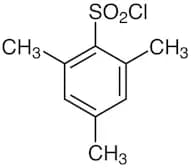
<p>Fmoc-Thr(tBu)-D-Ser(Psi(Me,Me)pro)-OH is a speciality chemical that is used as a reagent for peptide synthesis. It is also useful in the synthesis of complex compounds and scaffolds. This compound has high quality with a CAS number of 56610-81-8. Fmoc-Thr(tBu)-D-Ser(Psi(Me,Me)pro)-OH is a versatile building block that can be used in reactions involving amines and carboxylic acids. Fmoc-Thr(tBu)-D-Ser(Psi(Me,Me)pro)-OH is an intermediate that can be used in the synthesis of many different compounds.</p>Fórmula:C29H36N2O7Pureza:Min. 95%Cor e Forma:PowderPeso molecular:524.61 g/mol2-Mesitylenesulfonyl Chloride
CAS:Fórmula:C9H11ClO2SPureza:>99.0%(T)Cor e Forma:White powder to crystalPeso molecular:218.70Ethylenedithiobis(trimethylsilane) [Protecting Reagent for Aldehydes and Ketones]
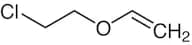
CAS:Fórmula:C8H22S2Si2Pureza:>97.0%(GC)Cor e Forma:Colorless to Almost colorless clear liquidPeso molecular:238.552-Chloroethyl Vinyl Ether (stabilized with MEHQ + Triethanolamine)
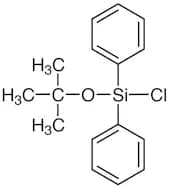
CAS:Fórmula:C4H7ClOPureza:>97.0%(GC)Cor e Forma:Colorless to Almost colorless clear liquidPeso molecular:106.55tert-Butoxydiphenylchlorosilane (stabilized with CaCO3)
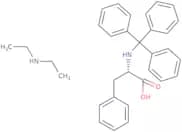
CAS:Fórmula:C16H19ClOSiPureza:>95.0%(GC)Cor e Forma:Colorless to Almost colorless clear liquidPeso molecular:290.86Trityl-L-phenylalanine diethylamine
CAS:<p>Trityl-L-phenylalanine diethylamine is a reagent that is used in the synthesis of peptides, reagents, and other chemicals. Trityl-L-phenylalanine diethylamine reacts with an azide to form a triazole. It can also be used to convert an acid into an amino acid. This chemical has been shown to be sensitive to plasmin, which may lead to degradation during peptide synthesis.</p>Fórmula:C28H25NO2·C4H11NPureza:Min. 95%Cor e Forma:PowderPeso molecular:480.64 g/molN-Methylbis(trifluoroacetamide) [Trifluoroacylating Agent]
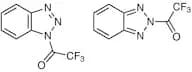
CAS:Fórmula:C5H3F6NO2Pureza:>97.0%(GC)Cor e Forma:Colorless to Light yellow clear liquidPeso molecular:223.07(Trifluoroacetyl)benzotriazole (mixture of 1H- and 2H- isomers)
CAS:Fórmula:C8H4F3N3OPureza:>98.0%(HPLC)Cor e Forma:White to Almost white powder to crystalPeso molecular:215.141,2-Bis(chlorodimethylsilyl)ethane [Protecting Reagent for Primary Amines]
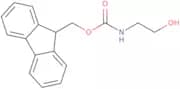
CAS:Fórmula:C6H16Cl2Si2Pureza:>95.0%(GC)Cor e Forma:White or Colorless to Almost white or Almost colorless powder to lump to clear liquidPeso molecular:215.26Fmoc-glycinol
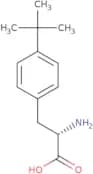
CAS:<p>Fmoc-glycinol is a synthetase that is used to synthesize glycinol conjugates. It binds to the receptor on Gram-positive bacteria and blocks the synthesis of bacterial cell wall, leading to cell death. Fmoc-glycinol has been shown to have high binding constants with amines and an acyl chain, which allows it to bind with antigen. Fmoc-glycinol also has strong nucleophilic properties that allow it to react with chloride ions in water and other polar solvents. This reaction mechanism leads to the formation of a new bond between two molecules, which is called a glycinol linkage.</p>Fórmula:C17H17NO3Pureza:Min. 95%Cor e Forma:White PowderPeso molecular:283.32 g/mol4-tert-Butyl-L-phenylalanine
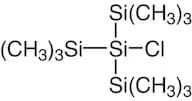
CAS:<p>4-tert-Butyl-L-phenylalanine is a synthetically created antigen with the ability to interact with red blood cells. It has been shown to be a potent probe for the detection of P. falciparum, and can be used as an affinity reagent for the isolation and identification of mutations in the c-terminal region of this protein. 4-tert-Butyl-L-phenylalanine also interacts with P. falciparum apical membrane proteins, which are specific to this type of parasite. This interaction may play a role in its invasion into red blood cells, which is what causes malaria infection.</p>Fórmula:C13H19NO2Pureza:Min. 95%Cor e Forma:White PowderPeso molecular:221.3 g/molChlorotris(trimethylsilyl)silane
CAS:Fórmula:C9H27ClSi4Pureza:>95.0%(GC)(T)Cor e Forma:White to Almost white powder to lumpPeso molecular:283.11N-(2-Pyridyl)bis(trifluoromethanesulfonimide) [Triflating Reagent]
CAS:Fórmula:C7H4F6N2O4S2Pureza:>98.0%(GC)Cor e Forma:White or Colorless to Almost white or Almost colorless powder to lump to clear liquidPeso molecular:358.23Fmoc-Asp(OtBu)-D-Ser(Psi(Me,Me)pro)-OH
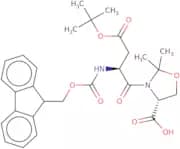
<p>Fmoc-Asp(OtBu)-D-Ser(Psi(Me,,Me)pro)-OH is a high quality, reagent, complex compound, useful intermediate, fine chemical, useful scaffold, and speciality chemical that is used in the synthesis of peptides and other organic compounds. It can be used as a reaction component for the synthesis of peptides and other organic compounds. This building block is versatile with many different functional groups and can be used in a wide variety of reactions. Fmoc-Asp(OtBu)-D-Ser(Psi(Me,,Me)pro)-OH is also a reaction component that can be used to make various drugs or pharmaceuticals.</p>Fórmula:C29H34N2O8Pureza:Min. 95%Cor e Forma:White PowderPeso molecular:538.59 g/molFmoc-D-allo-isoleucine
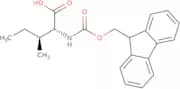
CAS:<p>Fmoc-D-allo-isoleucine is a β-amino acid that is used in the synthesis of calpinactam, a multidrug used to treat tuberculosis. The chemical structure of Fmoc-D-allo-isoleucine has been analyzed by spectroscopic methods and found to be labile. This product is susceptible to hydrolysis and can undergo modifications such as dehydration, oxidation, or racemization. Fmoc-D-allo-isoleucine has shown antimycobacterial activity when tested against M. tuberculosis.</p>Fórmula:C21H23NO4Pureza:Min. 95%Cor e Forma:PowderPeso molecular:353.41 g/molN-Cbz-L-homoserine
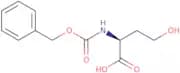
CAS:<p>N-Cbz-L-homoserine is a synthetic amino acid that has been used in positron emission tomography (PET) studies to determine the uptake and utilisation of other amino acids by biological systems. It has also been used in biological studies to investigate the mechanism of nucleophilic attack by serine on Cbz-protected homoserine. N-Cbz-L-homoserine has been shown to have hepatotoxic effects and may be carcinogenic, but no evidence indicates it is mutagenic or teratogenic. It is highly reactive with acrylonitrile, which can cause it to produce hydrogen cyanide as a result of nitrile hydrolysis.</p>Fórmula:C12H15NO5Pureza:Min. 95%Cor e Forma:PowderPeso molecular:253.25 g/molFmoc-N-Me-Asn(Trt)-OH
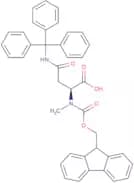
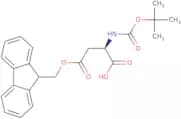
CAS:<p>Fmoc-N-Me-Asn(Trt)-OH is a peptidomimetic that mimics the sequence of the serine protease. The Fmoc group on the N-terminal amino acid is used to protect against proteolytic degradation and its methyl ester group confers stability in biological fluids. The Fmoc-N-Me-Asn(Trt)-OH has been shown to have minimal effects on endogenous protein synthesis, while also being quantified with high sensitivity and specificity. This compound has been shown to inhibit protein-protein interactions by acting as a competitive inhibitor of serine proteases.</p>Fórmula:C39H34N2O5Pureza:Min. 95%Cor e Forma:PowderPeso molecular:610.7 g/molBoc-D-aspartic acid β-9-fluorenylmethyl ester
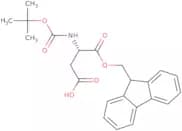
CAS:<p>Please enquire for more information about Boc-D-aspartic acid beta-9-fluorenylmethyl ester including the price, delivery time and more detailed product information at the technical inquiry form on this page</p>Fórmula:C23H25NO6Pureza:Min. 95%Peso molecular:411.45 g/molBoc-L-aspartic acid a-9-fluorenylmethyl ester
CAS:<p>Boc-L-aspartic acid a-9-fluorenylmethyl ester is a synthetic compound that mimics the structure of acetylcholine. It has been shown to be an efficient method for generating pseudopeptides and cyclic peptides. This compound may be used as a surrogate for acetylcholine in virus research, since it can bind to the same receptor. Boc-L-aspartic acid a-9-fluorenylmethyl ester has also been used to generate monoclonal antibodies that are neutralizing against foot-and-mouth disease viruses.</p>Fórmula:C23H25NO6Pureza:Min. 97 Area-%Peso molecular:411.45 g/molBoc-D-Tyr(tBu)-OH
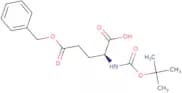
CAS:<p>Boc-D-Tyr(tBu)-OH is a natural product that is an amphipathic molecule with a cyclic structure. It has been shown to be able to inhibit the growth of bacteria, such as Staphylococcus aureus and Escherichia coli, by acting as an antibiotic. Boc-D-Tyr(tBu)-OH inhibits the synthesis of peptides by binding to the ribosome and blocking peptide elongation. This molecule also inhibits peptide synthesis by interacting with the aminoacyl site on the ribosome and preventing it from binding with amino acids. Boc-D-Tyr(tBu)-OH is synthesized in two stages: solid phase peptide synthesis and nucleophilic activation. The decapeptides are then purified and characterized based on their function.</p>Fórmula:C18H27NO5Pureza:Min. 95%Cor e Forma:PowderPeso molecular:337.41 g/molBoc-glu(OBzl)-OH
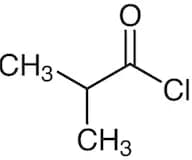
CAS:<p>Boc-glu(OBzl)-OH is a small-molecule drug that binds to the glutamate receptor. It has been shown to have anticancer activity in vitro and in vivo, but does not affect normal cells. Boc-glu(OBzl)-OH has been used as a synthetic substrate for the preparation of conjugates containing an amide group. This chemical can also be used as an anticancer agent by inhibiting protease activity, which inhibits cancer cell growth. The uptake of Boc-glu(OBzl)-OH can be increased by making it more acidic or by using an efficient method such as ultrasound.</p>Fórmula:C17H23NO6Pureza:Min. 98 Area-%Cor e Forma:PowderPeso molecular:337.37 g/molIsobutyryl Chloride
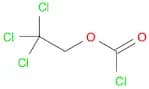
CAS:Fórmula:C4H7ClOPureza:>98.0%(GC)(T)Cor e Forma:Colorless to Light yellow clear liquidPeso molecular:106.55Carbonochloridic acid, 2,2,2-trichloroethyl ester
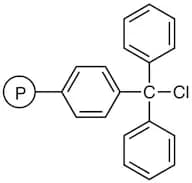
CAS:Fórmula:C3H2Cl4O2Pureza:97%Cor e Forma:LiquidPeso molecular:211.8588Trityl Chloride Resin cross-linked with 1% DVB (200-400mesh) (2.0-2.5mmol/g)
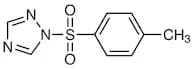
Cor e Forma:White to Amber powder to crystal1-(p-Toluenesulfonyl)-1,2,4-triazole
CAS:Fórmula:C9H9N3O2SPureza:>98.0%(HPLC)Cor e Forma:White to Almost white powder to crystalPeso molecular:223.25

![tert-Butyl 4-[4-(1-Hydroxyethyl)-2-methoxy-5-nitrophenoxy]butanoate](/_next/image/?url=https%3A%2Fstatic.cymitquimica.com%2Fproducts%2F3B%2Fthumb-webp%2FB6668.webp&w=3840&q=75)
![Ethylenedioxybis(trimethylsilane) [Protecting Reagent for Aldehydes and Ketones]](/_next/image/?url=https%3A%2Fstatic.cymitquimica.com%2Fproducts%2F3B%2Fthumb-webp%2FE0478.webp&w=3840&q=75)





![Ethylenedithiobis(trimethylsilane) [Protecting Reagent for Aldehydes and Ketones]](/_next/image/?url=https%3A%2Fstatic.cymitquimica.com%2Fproducts%2F3B%2Fthumb-webp%2FE0479.webp&w=3840&q=75)
![N-Methylbis(trifluoroacetamide) [Trifluoroacylating Agent]](/_next/image/?url=https%3A%2Fstatic.cymitquimica.com%2Fproducts%2F3B%2Fthumb-webp%2FM0671.webp&w=3840&q=75)
![1,2-Bis(chlorodimethylsilyl)ethane [Protecting Reagent for Primary Amines]](/_next/image/?url=https%3A%2Fstatic.cymitquimica.com%2Fproducts%2F3B%2Fthumb-webp%2FB1688.webp&w=3840&q=75)
![N-(2-Pyridyl)bis(trifluoromethanesulfonimide) [Triflating Reagent]](/_next/image/?url=https%3A%2Fstatic.cymitquimica.com%2Fproducts%2F3B%2Fthumb-webp%2FB1871.webp&w=3840&q=75)