Grupos de protecção
Subcategorias de "Grupos de protecção"
- Compostos Boc Protegidos(907 produtos)
- Compostos Desprotectores(23 produtos)
- Compostos Fmoc Protegidos(1.716 produtos)
Foram encontrados 440 produtos para "Grupos de protecção".
- Preços em ordem crescente
- Preços em ordem decrescente
- Menor grau de pureza
- Maior grau de pureza
- Estimativa de entrega mais rápida
Ref: IN-DA002VQL
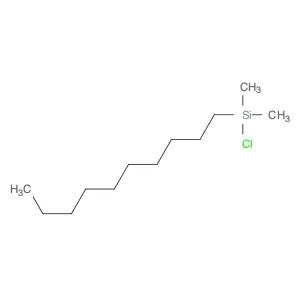
Produto descontinuadon-Decyldimethylchlorosilane
CAS:Fórmula:C12H27ClSiPureza:96%Cor e Forma:LiquidPeso molecular:234.8813Ref: IN-DA003SXX
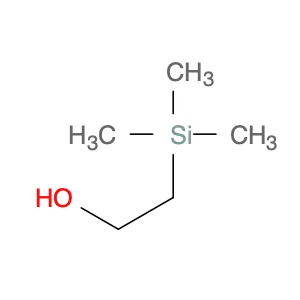
Produto descontinuado(2-Hydroxyethyl)trimethylsilane
CAS:Fórmula:C5H14OSiPureza:98%Cor e Forma:LiquidPeso molecular:118.2496Ref: IN-DA002XIU
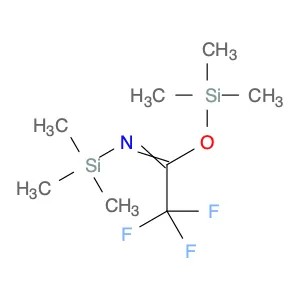
Produto descontinuadoTrifluoro-N,O-bis(trimethylsilyl)acetamide
CAS:Fórmula:C8H18F3NOSi2Pureza:98%Cor e Forma:LiquidPeso molecular:257.4008Ref: IN-DA0035BP
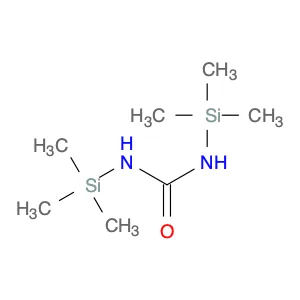
Produto descontinuado1,3-Bis(Trimethylsilyl)Urea
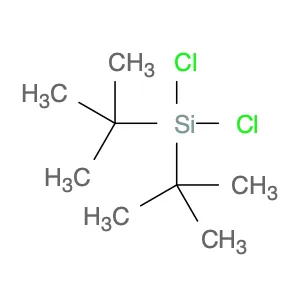
CAS:Fórmula:C7H20N2OSi2Pureza:97%Cor e Forma:SolidPeso molecular:204.4175Di-tert-butyldichlorosilane
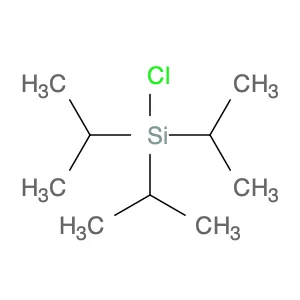
CAS:Fórmula:C8H18Cl2SiPureza:97%Cor e Forma:LiquidPeso molecular:213.2200Silane, chlorotris(1-methylethyl)-
CAS:Fórmula:C9H21ClSiPureza:98%Cor e Forma:LiquidPeso molecular:192.8015Benzene, [(chlorodimethylsilyl)methyl]-
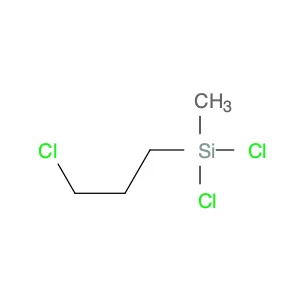
CAS:Fórmula:C9H13ClSiPureza:95%Cor e Forma:LiquidPeso molecular:184.73803-Chloropropyldichloromethylsilane
CAS:Fórmula:C4H9Cl3SiPureza:98%Cor e Forma:LiquidPeso molecular:191.5588Ref: IN-DA003PI8
Produto descontinuadoN-[(1,1-Dimethylethyl)dimethylsilyl]-2,2,2-trifluoro-N-methylacetamide
CAS:Fórmula:C9H18F3NOSiPureza:96%Cor e Forma:LiquidPeso molecular:241.3260Ref: IN-DA0036J3
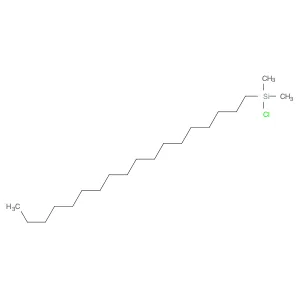
Produto descontinuadoChlorodimethyloctadecylsilane
CAS:Fórmula:C20H43ClSiPureza:95%Cor e Forma:LiquidPeso molecular:347.0939Ref: IN-DA0034LG
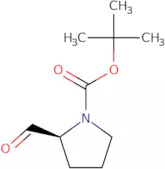
Produto descontinuadoBoc-L-prolinal
CAS:Boc-L-prolinal is a stereoselective enolate that has been used in the synthesis of organometallic compounds. It is also used in the preparation of monoclonal antibodies, which are proteins that are produced by the immune system to help fight off infections. Boc-L-prolinal has been shown to be an effective agent for treating many cancers, including breast cancer and melanoma. In addition, it has been shown to inhibit epidermal growth factor (EGF) and other growth factors, which may be due to its ability to induce apoptotic signaling. Boc-L-prolinal also contains a carbonyl group, which can undergo acidolysis reactions with nucleophiles such as water or alcohols.
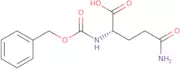
Fórmula:C10H17NO3Pureza:Min. 95%Cor e Forma:Colorless Clear LiquidPeso molecular:199.25 g/molCbz-L-glutamine
CAS:Cbz-L-glutamine is a water soluble compound that is used in the synthesis of pomalidomide. It is synthesized through a stepwise amide formation from methylamine and ethylene diamine. Cbz-L-glutamine has been shown to have an inhibitory effect on cancer cells, which may be due to its ability to break down hydroxamic acids. This chemical reaction causes the release of hydrogen ions, which leads to the disruption of various cellular processes, such as DNA replication and protein synthesis. The uptake of Cbz-L-glutamine by cancer cells has been shown in tissue culture experiments.
Fórmula:C13H16N2O5Pureza:Min. 95%Cor e Forma:PowderPeso molecular:280.28 g/molRef: 3D-FC39401
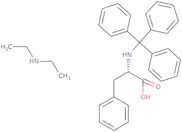
Produto descontinuadoTrityl-L-phenylalanine diethylamine
CAS:Trityl-L-phenylalanine diethylamine is a reagent that is used in the synthesis of peptides, reagents, and other chemicals. Trityl-L-phenylalanine diethylamine reacts with an azide to form a triazole. It can also be used to convert an acid into an amino acid. This chemical has been shown to be sensitive to plasmin, which may lead to degradation during peptide synthesis.Fórmula:C28H25NO2·C4H11NPureza:Min. 95%Cor e Forma:PowderPeso molecular:480.64 g/molRef: 3D-FT48947
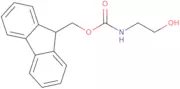
Produto descontinuadoFmoc-glycinol
CAS:Fmoc-glycinol is a synthetase that is used to synthesize glycinol conjugates. It binds to the receptor on Gram-positive bacteria and blocks the synthesis of bacterial cell wall, leading to cell death. Fmoc-glycinol has been shown to have high binding constants with amines and an acyl chain, which allows it to bind with antigen. Fmoc-glycinol also has strong nucleophilic properties that allow it to react with chloride ions in water and other polar solvents. This reaction mechanism leads to the formation of a new bond between two molecules, which is called a glycinol linkage.Fórmula:C17H17NO3Pureza:Min. 95%Cor e Forma:White PowderPeso molecular:283.32 g/molRef: 3D-FF31852
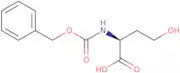
Produto descontinuadoN-Cbz-L-homoserine
CAS:N-Cbz-L-homoserine is a synthetic amino acid that has been used in positron emission tomography (PET) studies to determine the uptake and utilisation of other amino acids by biological systems. It has also been used in biological studies to investigate the mechanism of nucleophilic attack by serine on Cbz-protected homoserine. N-Cbz-L-homoserine has been shown to have hepatotoxic effects and may be carcinogenic, but no evidence indicates it is mutagenic or teratogenic. It is highly reactive with acrylonitrile, which can cause it to produce hydrogen cyanide as a result of nitrile hydrolysis.
Fórmula:C12H15NO5Pureza:Min. 95%Cor e Forma:PowderPeso molecular:253.25 g/molRef: 3D-FC19701
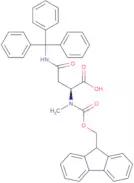
Produto descontinuadoFmoc-N-Me-Asn(Trt)-OH
CAS:Fmoc-N-Me-Asn(Trt)-OH is a peptidomimetic that mimics the sequence of the serine protease. The Fmoc group on the N-terminal amino acid is used to protect against proteolytic degradation and its methyl ester group confers stability in biological fluids. The Fmoc-N-Me-Asn(Trt)-OH has been shown to have minimal effects on endogenous protein synthesis, while also being quantified with high sensitivity and specificity. This compound has been shown to inhibit protein-protein interactions by acting as a competitive inhibitor of serine proteases.Fórmula:C39H34N2O5Pureza:Min. 95%Cor e Forma:PowderPeso molecular:610.7 g/mol

![Benzene, [(chlorodimethylsilyl)methyl]-](https://static.cymitquimica.com/products/IN/thumb-webp/DA0027HN.webp)
![N-[(1,1-Dimethylethyl)dimethylsilyl]-2,2,2-trifluoro-N-methylacetamide](https://static.cymitquimica.com/products/IN/thumb-webp/DA0036J3.webp)