Haletos orgânicos
Nesta categoria, você encontrará moléculas orgânicas contendo um ou mais átomos de halogênio em sua estrutura. Estes haletos orgânicos incluem compostos bromados, iodados, clorados e haletos cíclicos. Os haletos orgânicos são amplamente utilizados em síntese orgânica, farmacêutica, agroquímica e ciência dos materiais devido à sua reatividade e capacidade de sofrer uma variedade de transformações químicas. Na CymitQuimica, oferecemos uma seleção abrangente de haletos orgânicos de alta qualidade para apoiar suas aplicações de pesquisa e industriais, garantindo desempenho confiável e eficaz em seus projetos sintéticos e analíticos.
Subcategorias de "Haletos orgânicos"
Foram encontrados 20437 produtos de "Haletos orgânicos"
Ordenar por
Pureza (%)
0
100
|
0
|
50
|
90
|
95
|
100
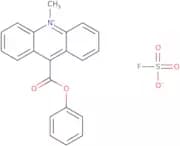
10-Methyl-9-(phenoxycarbonyl)acridinium fluorosulfonate
CAS:<p>Please enquire for more information about 10-Methyl-9-(phenoxycarbonyl)acridinium fluorosulfonate including the price, delivery time and more detailed product information at the technical inquiry form on this page</p>Fórmula:C21H16FNO5SPureza:Min. 95%Peso molecular:413.42 g/molAmmonium Undecafluorohexanoate
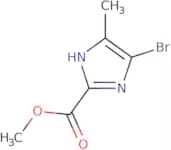
CAS:<p>Undecafluorohexanoic acid is a perfluoroalkyl carboxylic acid that has been shown to disrupt steroidogenesis in vitro. It may be able to inhibit the transport of cholesterol, fats, and other lipids in cells, which causes disruption in steroidogenesis. This compound also has anti-cancer properties due to its ability to induce apoptosis and arrest cancer cell proliferation. Undecafluorohexanoic acid may also have developmental effects on animals because it can bind to estrogen receptors and disrupt the normal process of estrogen-mediated signaling pathways.</p>Fórmula:C6H4F11NO2Pureza:Min. 95%Peso molecular:331.08 g/molMethyl 4- bromo- 5- methyl- 1H- imidazole- 2- carboxylate
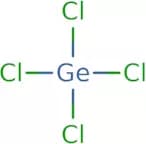
CAS:<p>Please enquire for more information about Methyl 4- bromo- 5- methyl- 1H- imidazole- 2- carboxylate including the price, delivery time and more detailed product information at the technical inquiry form on this page</p>Pureza:Min. 95%Germaniumtetrachloride
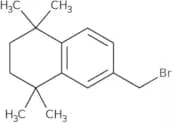
CAS:<p>Germaniumtetrachloride (GeCl4) is a thermal expansion agent that is used in the production of boron nitride and zirconium oxide. It is also used as a catalyst for hydrochloric acid and hydroxyl group reactions. GeCl4 has carcinogenic potential, but this has not been confirmed in animal studies. GeCl4 is an effective solid catalyst for the reaction of hydrogen chloride with ethylene oxide to form polyethylene glycols. The mechanism of this reaction involves a substitution reaction between the chlorine ion and the hydroxyl group on the catalyst surface, forming chlorohydrocarbonate ions, which react with ethylene oxide to form polymer chains. This process can be carried out at room temperature or below, without using any solvents or catalysis promoters such as mercury or sulfur dioxide.</p>Fórmula:Cl4GePureza:Min. 95%Peso molecular:214.44 g/mol6-(Bromomethyl)-1,1,4,4-tetramethyl-1,2,3,4-tetrahydronaphthalene
CAS:<p>Please enquire for more information about 6-(Bromomethyl)-1,1,4,4-tetramethyl-1,2,3,4-tetrahydronaphthalene including the price, delivery time and more detailed product information at the technical inquiry form on this page</p>Fórmula:C15H21BrPureza:Min. 80 Area-%Cor e Forma:Clear LiquidPeso molecular:281.23 g/molAngiotensin A (1-7) trifluoroacetate
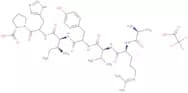
CAS:<p>Endogenous heptapetide which causes vasodilation and has anti-hypertensive properties.</p>Fórmula:C40H62N12O9•(C2HF3O2)xPureza:Min. 95%Cor e Forma:PowderPeso molecular:855 g/molLHRH (1-5) (free acid) trifluoroacetate salt
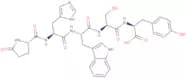
CAS:<p>LHRH (1-5) (free acid) trifluoroacetate salt is a synthetic hormone that is used in the treatment of prostate cancer. It inhibits the release of luteinizing hormone and follicle-stimulating hormone from the anterior pituitary gland, which suppresses testosterone production by the testes. LHRH (1-5) (free acid) trifluoroacetate salt is synthesized industrially using a liquid phase synthesis. The product may be recycled by returning it to the manufacturing process or using it as an additive for plastics or other industrial products. LHRH (1-5) (free acid) trifluoroacetate salt was shown to be active against tumor cells in culture and inhibited cell growth in culture. This drug has been shown to inhibit the production of nitric oxide, which may contribute to its anti-tumor activity. LHRH (1-5) (free acid)</p>Fórmula:C34H38N8O9Pureza:Min. 95%Cor e Forma:PowderPeso molecular:702.71 g/mol12-Fluorododecan-1-ol
CAS:<p>12-Fluorododecan-1-ol is a volatile chemical compound that is found in the exoskeleton of termites. It has been shown to be a major component of the termiticide, FluoroCitrate. 12-fluorododecan-1-ol can be used to control the growth of insect populations by interfering with their ability to synthesize fatty acids and alcohols. It also has an effect on protein synthesis and inhibits the activity of citrate synthase, which is an enzyme involved in glycolate metabolism. This compound is also toxic to some species of insects such as Rhinotermitidae. 12-fluorododecan-1-ol can be used as a marker for Reticulitermes flavipes (a type of wood eating cockroach) and it can be used to distinguish between different species or strains of termites.</p>Fórmula:C12H25FOPureza:Min. 95%Cor e Forma:Clear LiquidPeso molecular:204.32 g/mol2,3,5-Trichlorobenzaldehyde
CAS:<p>2,3,5-Trichlorobenzaldehyde is a chemical compound that has been shown to have anticancer and apoptotic effects. It inhibits the growth of bacteria by chelating iron ions and inhibiting bacterial dna synthesis. 2,3,5-Trichlorobenzaldehyde has also been shown to inhibit the growth of cancer cells in culture in an experimental study. This chemical has been used as a substrate for nmr spectroscopy to study its functional groups and radical scavenging activities. 2,3,5-Trichlorobenzaldehyde can be synthesized from phenacyl chloride and benzaldehyde in the presence of hydrogen chloride gas. The carbonyl group in 2,3,5-trichlorobenzaldehyde may cause metabolic disorders such as diabetes mellitus or hyperglycemia.</p>Fórmula:C7H3Cl3OPureza:Min. 95%Cor e Forma:PowderPeso molecular:209.46 g/mol7-Fluoro-2-methylquinoline
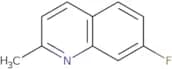
CAS:<p>7-Fluoro-2-methylquinoline is a multistep synthetic compound that belongs to the family of quinoxalines. It has been shown to have potent antibacterial activity against a wide range of bacteria, including methicillin-resistant Staphylococcus aureus (MRSA) and Mycobacterium tuberculosis. 7-Fluoro-2-methylquinoline was developed as an analog of the natural product quinoxaline. The key step in its synthesis is the reaction between an aldehyde and hydroxyalkylating reagent in the presence of iron catalyst. This process results in the formation of functional groups such as hydroxyls, alkoxy, or halogens.</p>Fórmula:C10H8FNPureza:Min. 95%Cor e Forma:White PowderPeso molecular:161.18 g/molIndium (III) chloride
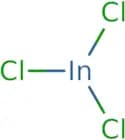
CAS:<p>Indium (III) chloride is a reactive metal with a high oxidation state that has been shown to have significant cytotoxic effects in vitro. It is also genotoxic, which may be due to the generation of hydroxyl radicals and other reactive oxygen species. Indium (III) chloride has been used for the treatment of various infectious diseases, including HIV, Epstein-Barr virus, herpes simplex virus type 1, and influenza A virus. The toxicity of this metal is dependent on the concentration and duration of exposure. Indium (III) chloride is metabolized by plasma mass spectrometry as a substrate molecule for cytochrome P450 enzymes. This reaction results in the formation of an active metabolite that can bind to DNA and affect mitochondrial membrane potential. Indium (III) chloride has also been used as a contrast agent in fluorescein angiography or particle imaging techniques to visualize the presence of biological materials such as tissue necrosis or inflammation.</p>Fórmula:Cl3InPureza:Min. 95%Cor e Forma:Clear LiquidPeso molecular:221.18 g/molα-Chloro-2-nitrobenzaldoxime
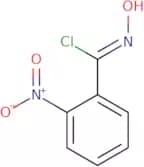
CAS:<p>The heterocycle alpha-chloro-2-nitrobenzaldoxime is a functional group that can be oriented in two different ways. The diversity of the product arises from the fact that it is possible to create new functional groups by substitution on the benzene ring and on the nitrogen. Heterocyclization of alpha-chloro-2-nitrobenzaldoxime can be achieved by using other heterocycles such as isoxazoles, which are readily available in large quantities, as building blocks. This reaction can be catalyzed by reductive means with sodium borohydride and methanol.</p>Fórmula:C7H5ClN2O3Pureza:Min. 95%Peso molecular:200.58 g/mol(S)-(-)-6,7-Dimethoxy-1,2,3,4-tetrahydroisoquinoline-3-carboxylic acid hydrochloride
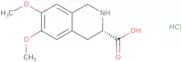
CAS:<p>(S)-(-)-6,7-Dimethoxy-1,2,3,4-tetrahydroisoquinoline-3-carboxylic acid hydrochloride is a synthetic chiral compound that is used to study the role of glyoxylate in biochemical reactions. This drug is an enolate and alkylating agent that can react with nucleophiles such as amines and thiols. It has been shown to be effective against perchlorates by hydrolyzing them into chlorine and oxygen gas. This drug has also been shown to inhibit the growth of Rhodobacter sphaeroides by inhibiting glyoxylate metabolism.</p>Fórmula:C12H15NO4·HClPureza:Min. 95%Cor e Forma:White PowderPeso molecular:273.71 g/molPhenyl-magnesium bromide solution - 1.0 M in THF
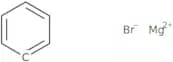
CAS:<p>Phenyl-magnesium bromide solution is a chemical compound that can be used as a pesticide. It has been shown to have carcinoid syndrome-inducing properties in animal studies. Phenyl-magnesium bromide solution has also been found to have biological properties that are beneficial for bowel disease, organometallic reactivity, and congestive heart failure. This chemical compound reacts with ester hydrochloride in the presence of an organic base to form a reactive intermediate that undergoes transfer reactions with other organic compounds. Phenyl-magnesium bromide solution is reactive and can cause metabolic disorders such as palladium-catalyzed coupling.</p>Fórmula:C6H5BrMgPureza:Min. 95%Peso molecular:181.31 g/molDi-tert-butyldichlorosilane
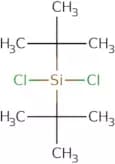
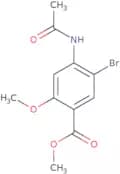
CAS:<p>Di-tert-butyldichlorosilane is a silicon compound that has been used to silylate amines and primary alcohols. It is a sterically hindered molecule with two chloro groups at the same position on one of the silicon atoms, which prevents or limits steric interactions with other molecules. Covid-19 Pandemic is the name given to a new strain of influenza virus that was discovered in 2009. The new strain contains some genetic material from bird flu, which makes it resistant to oseltamivir and zanamivir, drugs commonly used to fight against influenza infection.</p>Fórmula:C8H18Cl2SiPureza:Min. 95%Cor e Forma:Clear LiquidPeso molecular:213.22 g/mol4-Acetylamino-5-bromo-2-methoxy-benzoic acid methylester
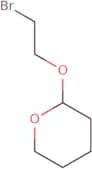
CAS:<p>Please enquire for more information about 4-Acetylamino-5-bromo-2-methoxy-benzoic acid methylester including the price, delivery time and more detailed product information at the technical inquiry form on this page</p>Fórmula:C11H12BrNO4Pureza:Min. 95%Cor e Forma:PowderPeso molecular:302.12 g/mol2-(2-Bromoethoxy)tetrahydro-2H-pyran
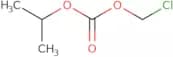
CAS:<p>2-(2-Bromoethoxy)tetrahydro-2H-pyran is a synthetic molecule that has been shown to act as an estrogen receptor modulator, which has the potential to be used for the treatment of hormone-sensitive diseases such as breast cancer. This compound is chemically very similar to other compounds that have been shown to be effective in treating breast cancer. 2-(2-Bromoethoxy)tetrahydro-2H-pyran has a cavity and 6 hydroxyl groups that can form hydrogen bonds with water molecules, leading to its gelling properties. In addition, this compound is thermoreversible and can reversibly gel when heated or cooled. The gelation property of 2-(2-Bromoethoxy)tetrahydro-2H-pyran makes it a promising candidate for use in vaginal tablets, which could potentially lead to treatments for vaginal dryness and atrophy.</p>Fórmula:C7H13BrO2Pureza:Min. 95%Cor e Forma:Clear LiquidPeso molecular:209.08 g/molChloromethyl isopropyl carbonate
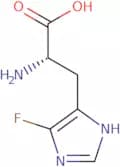
CAS:<p>Chloromethyl isopropyl carbonate (CIC) is a prodrug that is converted to disoproxil in the body. It has significant cytotoxicity and antiviral activity against HIV and other viruses, but has not been used clinically due to its chemical instability. CIC can be administered orally as a prodrug, with the active form of CIC being tenofovir disoproxil. Tenofovir disoproxil is metabolized by proximal tubules and has shown efficacy for treating hepatitis B and C. Tenofovir has also been shown to decrease the incidence of renal disease in HIV patients.</p>Fórmula:C5H9ClO3Pureza:Min. 95%Cor e Forma:Colorless PowderPeso molecular:152.58 g/mol5-Fluorohistidine
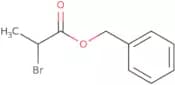
CAS:<p>5-Fluorohistidine is an organic compound with the formula CHFNO. It is a fluorinated derivative of histidine, and a precursor to histamine. 5-Fluorohistidine has been shown to be a potent thyrotropin-releasing hormone (TRH) analog, and is used in the synthesis of histamine. This compound has also been used as a tool for investigating the mechanism of TRH action by studying its stereoselective binding to protrusions from rat brain capillary endothelial cells. 5-Fluorohistidine has also been used as a microbial probe for detecting microbial protrusions from bacterial cells.</p>Fórmula:C6H8FN3O2Pureza:Min. 95%Peso molecular:173.15 g/mol2-Bromopropionic acid benzyl ester
CAS:<p>2-Bromopropionic acid benzyl ester is a synthetic compound with a molecular weight of 220.24 g/mol. It is soluble in organic solvents and has a hydroxyl group at its alpha position. 2-Bromopropionic acid benzyl ester is used in the synthesis of beta-cyclodextrin, which is an important biomaterial for drug delivery as well as other applications. 2-Bromopropionic acid benzyl ester also has antioxidant properties and can be used to treat leukemia cells by inhibiting the production of reactive oxygen species (ROS).</p>Fórmula:C10H11BrO2Pureza:Min. 95%Peso molecular:243.1 g/mol