Haletos orgânicos
Nesta categoria, você encontrará moléculas orgânicas contendo um ou mais átomos de halogênio em sua estrutura. Estes haletos orgânicos incluem compostos bromados, iodados, clorados e haletos cíclicos. Os haletos orgânicos são amplamente utilizados em síntese orgânica, farmacêutica, agroquímica e ciência dos materiais devido à sua reatividade e capacidade de sofrer uma variedade de transformações químicas. Na CymitQuimica, oferecemos uma seleção abrangente de haletos orgânicos de alta qualidade para apoiar suas aplicações de pesquisa e industriais, garantindo desempenho confiável e eficaz em seus projetos sintéticos e analíticos.
Subcategorias de "Haletos orgânicos"
Foram encontrados 20437 produtos de "Haletos orgânicos"
Ordenar por
Pureza (%)
0
100
|
0
|
50
|
90
|
95
|
100
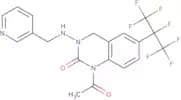
1-Acetyl-6-(perfluoropropan-2-yl)-3-((pyridin-3-ylmethyl)amino)-3,4-dihydroquinazolin-2(1H)-one
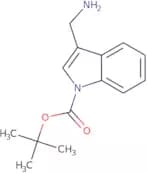
CAS:<p>1-Acetyl-6-(perfluoropropan-2-yl)-3-((pyridin-3-ylmethyl)amino)-3,4-dihydroquinazolin-2(1H)-one (PAFQ) is a mitochondrial cytochrome P450 inhibitor that inhibits the function of the ryanodine receptor and interacts with the piperonyl butoxide synergistically. PAFQ has been shown to be effective against animal pests such as termites, ants, and cockroaches. It also inhibits population growth in these populations by interfering with their ability to synthesize proteins. The effective dose for PAFQ varies depending on whether it is applied topically or orally.</p>Fórmula:C19H15F7N4O2Pureza:Min. 95%Peso molecular:464.34 g/moltert-Butyl 3-(aminomethyl)-1H-indole-1-carboxylate hydrochloride
CAS:<p>Please enquire for more information about tert-Butyl 3-(aminomethyl)-1H-indole-1-carboxylate hydrochloride including the price, delivery time and more detailed product information at the technical inquiry form on this page</p>Fórmula:C14H18N2O2Pureza:Min. 95%Peso molecular:246.31 g/molEthyl2-(acetylamino)-3-[3,5-diiodo-4-(4-methoxyphenoxy)phenyl]propanoate
CAS:<p>Please enquire for more information about Ethyl2-(acetylamino)-3-[3,5-diiodo-4-(4-methoxyphenoxy)phenyl]propanoate including the price, delivery time and more detailed product information at the technical inquiry form on this page</p>Fórmula:C20H21I2NO5Pureza:Min. 95%Peso molecular:609.19 g/molTriethyloxonium tetrafluoroborate
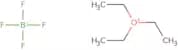
CAS:<p>Triethyloxonium tetrafluoroborate is an antimicrobial agent that inhibits the transfer of electrons from one molecule to another. It has been shown to be effective against methicillin-resistant Staphylococcus aureus and Mycobacterium tuberculosis. Triethyloxonium tetrafluoroborate binds to the bacterial enzyme, Jak1, which is involved in the formation of cytokines and interleukins. This binding inhibits the production of these molecules, leading to cell death by apoptosis. The use of triethyloxonium tetrafluoroborate as a research tool has facilitated its discovery as a potential anti-inflammatory drug for autoimmune diseases such as type 1 diabetes mellitus and rheumatoid arthritis. Triethyloxonium tetrafluoroborate can be used to inhibit amide synthesis, which may have applications in the study of carbohydrate chemistry and nitrogen atoms in biological systems. This compound has also been used</p>Fórmula:C6H15BF4OPureza:Min. 95%Cor e Forma:PowderPeso molecular:189.99 g/mol2,3-Bis(bromomethyl)quinoxaline
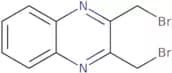
CAS:<p>2,3-Bis(bromomethyl)quinoxaline is a nitrogenous heterocyclic compound that has a coordination geometry of square planar. It has been used as an inhibitor for the protein p21 and the nucleophile in palladium complexes. 2,3-Bis(bromomethyl)quinoxaline is also a model system for studying reaction mechanisms and chemical structures. The electron density map of the compound was obtained by X-ray crystal structure analysis. The reaction mechanism of this molecule is proposed to be through a chelate ring cross-coupling process.</p>Fórmula:C10H8Br2N2Pureza:Min. 95%Cor e Forma:Brown PowderPeso molecular:315.99 g/molBenzal Chloride
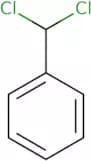
CAS:Produto Controlado<p>Benzal Chloride is a chlorinating agent that exhibits reactive properties. It is used in wastewater treatment to disinfect and oxidize organic matter, as well as to remove hydrogen sulfide and other volatile organics. Benzal Chloride is also used for the preparation of benzalkonium chloride, which has been shown to have antimicrobial properties. The pharmacokinetic properties of benzal chloride are similar to those of chloride, but it has not been studied extensively in humans.</p>Fórmula:C7H6Cl2Pureza:Min. 95%Cor e Forma:Clear LiquidPeso molecular:161.03 g/molUroporphyrin I dihydrochloride
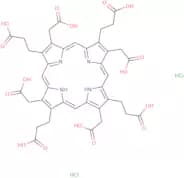
CAS:<p>Uroporphyrin I dihydrochloride is a facilitator of carbohydrate metabolism. It is a cofactor for the enzyme dehydrogenase and changes the optical properties of certain compounds. Uroporphyrin I dihydrochloride has been shown to modulate the redox potential in lung cells and inhibit human immunodeficiency virus (HIV) replication by inhibiting coproporphyrin production. This drug has also been shown to have an anticancer effect against both leukemia and colon cancer cell lines. Uroporphyrin I dihydrochloride reacts with oxygen, giving it a luminescent property that can be used to assay for its presence in biological systems.</p>Fórmula:C40H38N4O16•(HCl)2Pureza:Min. 95%Peso molecular:903.67 g/mol1-Bromopyrene
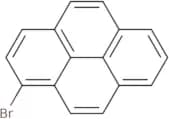
CAS:<p>1-Bromopyrene is a chemical that has been shown to be mutagenic and a carcinogen. It has been used extensively in research as a fluorescence probe for DNA, due to its ability to bind to dioxygen and other oxygen nucleophiles. 1-Bromopyrene reacts with the molecule pyrene, which emits light of different wavelengths depending on the type of reaction. The diazonium salt formed from this reaction is an effective electron donor in organic reactions and can be used as a chemical oxidant. 1-Bromopyrene also has significant photochemical properties.<br>1-Bromopyrene binds to DNA via hydrogen bonding between the bromine atom and the phosphate group of deoxyribose sugar in DNA, forming a covalent bond that alters the conformation of DNA by opening up the double helix structure. This causes oxidative damage to DNA by increasing reactive oxygen species (ROS) production and decreasing cellular antioxidant capacity.</p>Fórmula:C16H9BrPureza:Min. 95%Cor e Forma:White PowderPeso molecular:281.15 g/molPiminodine dihydrochloride
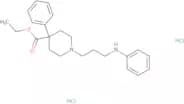
CAS:Produto Controlado<p>Please enquire for more information about Piminodine dihydrochloride including the price, delivery time and more detailed product information at the technical inquiry form on this page</p>Fórmula:C23H32Cl2N2O2Pureza:Min. 95%Peso molecular:439.42 g/molNIR-664-iodoacetamide
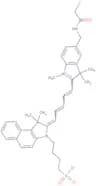
CAS:<p>NIR-664 is a potential use for the treatment of cancer. It is an iodinated acetamide with a ruthenium complex that has been shown to have magnetic and fluorescent properties. The diameter of NIR-664 is approximately 2 nm, and it has a hydrophobic character. This compound can be used in nanocrystals or as a mesoporous material. The fluorescence of NIR-664 can be observed in the near infrared region at 664 nm, which gives this compound its name. NIR-664 has also been shown to react with ruthenium, which makes it suitable for use in particle form.</p>Fórmula:C37H42IN3O4SPureza:Min. 95%Peso molecular:751.72 g/mol3-Chlorobenzoyl Chloride
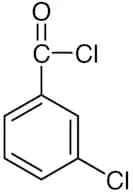
CAS:Fórmula:C7H4Cl2OPureza:>98.0%(GC)(T)Cor e Forma:Colorless to Light yellow clear liquidPeso molecular:175.01Isobutyryl Chloride
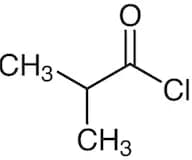
CAS:Fórmula:C4H7ClOPureza:>98.0%(GC)(T)Cor e Forma:Colorless to Light yellow clear liquidPeso molecular:106.552-Bromobutyryl Bromide
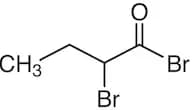
CAS:Fórmula:C4H6Br2OPureza:>97.0%(GC)Cor e Forma:Colorless to Light orange to Yellow clear liquidPeso molecular:229.90Ref: IN-DA0038T2
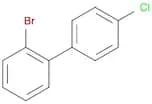
Produto descontinuado1,1'-Biphenyl, 2-bromo-4'-chloro-
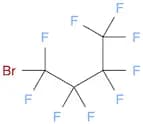
CAS:Fórmula:C12H8BrClPureza:97%Cor e Forma:SolidPeso molecular:267.5489Butane,1-bromo-1,1,2,2,3,3,4,4,4-nonafluoro-
CAS:Fórmula:C4BrF9Pureza:98%Cor e Forma:LiquidPeso molecular:298.9324Ref: IN-DA003O5P
Produto descontinuado

![Ethyl2-(acetylamino)-3-[3,5-diiodo-4-(4-methoxyphenoxy)phenyl]propanoate](/_next/image/?url=https%3A%2Fstatic.cymitquimica.com%2Fproducts%2F3D%2Fthumb-webp%2FFE149894.webp&w=3840&q=75)