Haletos orgânicos
Nesta categoria, você encontrará moléculas orgânicas contendo um ou mais átomos de halogênio em sua estrutura. Estes haletos orgânicos incluem compostos bromados, iodados, clorados e haletos cíclicos. Os haletos orgânicos são amplamente utilizados em síntese orgânica, farmacêutica, agroquímica e ciência dos materiais devido à sua reatividade e capacidade de sofrer uma variedade de transformações químicas. Na CymitQuimica, oferecemos uma seleção abrangente de haletos orgânicos de alta qualidade para apoiar suas aplicações de pesquisa e industriais, garantindo desempenho confiável e eficaz em seus projetos sintéticos e analíticos.
Subcategorias de "Haletos orgânicos"
Foram encontrados 20437 produtos de "Haletos orgânicos"
Ordenar por
Pureza (%)
0
100
|
0
|
50
|
90
|
95
|
100
Ref: IN-DA001YD6
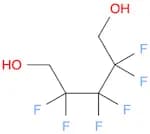
Produto descontinuado2,2,3,3,4,4-HEXAFLUORO-1,5-PENTANEDIOL
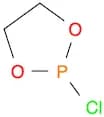
CAS:Fórmula:C5H6F6O2Pureza:98%Cor e Forma:SolidPeso molecular:212.09042-Chloro-1,3,2-dioxaphospholane
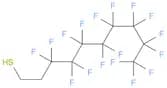
CAS:Fórmula:C2H4ClO2PPureza:97%Cor e Forma:LiquidPeso molecular:126.47873,3,4,4,5,5,6,6,7,7,8,8,9,9,10,10,10-Heptadecafluoro-1-decanethiol
CAS:Fórmula:C10H5F17SPureza:97%Cor e Forma:LiquidPeso molecular:480.1845543999997Ref: IN-DA0038T2
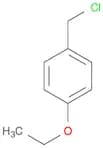
Produto descontinuado1-(CHLOROMETHYL)-4-ETHOXYBENZENE
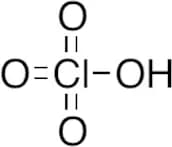
CAS:Fórmula:C9H11ClOPureza:95%Cor e Forma:SolidPeso molecular:170.6360Perchloric Acid (60%)
CAS:<p>Applications Perchloric Acid is a useful chemical reagent in the preparation of perchlorate salts. It is also known to be a strong oxidizer.<br> E0<br></p>Fórmula:ClHO4Pureza:60%Cor e Forma:NeatPeso molecular:100.4585Bis(2,2,2-trichloroethyl)azodicarboxylate
CAS:<p>Bis(2,2,2-trichloroethyl)azodicarboxylate is a nucleophile that can be used as an alkylating agent in the industrial process. It is also used to prepare chiral amines by adding an amine to the enantiomerically pure bis(2,2,2-trichloroethyl)azodicarboxylate. The anticancer activity of Bis(2,2,2-trichloroethyl)azodicarboxylate is due to its ability to inhibit tumor cell proliferation. Bis(2,2,2-trichloroethyl)azodicarboxylate is not effective against cancerous cells that do not have functional groups such as amino acids.</p>Fórmula:C6H4Cl6N2O4Pureza:Min. 95%Cor e Forma:Yellow SolidPeso molecular:380.82 g/molRef: 3D-FB01254
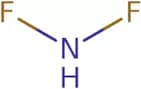
Produto descontinuadoDifluoroamine
CAS:Produto Controlado<p>Difluoroamine is a chemical compound that is used in the production of organic compounds. It has been shown to have high stability and detection sensitivity, which is attributed to its hydrogen bond forming ability. Difluoroamine also reacts with trifluoroacetic acid and hydrogen fluoride, both of which are strong acids. The reaction mechanism of difluoroamine involves the protonation of nitrogen atoms on the molecule followed by a nucleophilic attack on the electrophilic carbon atom that results in the formation of an amine group. This reaction can be carried out in a flow system as well as in a batch process. Difluoramine is an intermediate product during this process and can be converted into glycol ethers or nitrobenzene.</p>Fórmula:F2HNPureza:Min. 95%Peso molecular:53.01 g/molIsopropyl ethylphosphonochloridate
CAS:Produto Controlado<p>Please enquire for more information about Isopropyl ethylphosphonochloridate including the price, delivery time and more detailed product information at the technical inquiry form on this page</p>Fórmula:C5H12FO2PPureza:Min. 95%Methyltriphenoxyphosphonium Trifluoromethanesulfonate
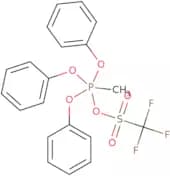
CAS:Produto Controlado<p>Methyltriphenoxyphosphonium Trifluoromethanesulfonate is a reagent for the synthesis of alkenes, ethers, nitriles, esters and alkanes. It is also used to synthesize heterocycles. Methyltriphenoxyphosphonium Trifluoromethanesulfonate can be used to synthesise a wide variety of organic compounds. It reacts with electrophiles such as alcohols, amines and carboxylic acids to produce the corresponding ethers, nitriles, esters or alkanes. This reagent can also be used in many different cross-coupling reactions such as Suzuki-Miyaura reaction or Sonogashira reaction.</p>Fórmula:C20H18F3O6PSPureza:Min. 95%Peso molecular:474.39 g/mol3-Bromo-5-isopropyl-1,2,4-oxadiazole
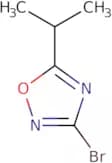
CAS:<p>3-Bromo-5-isopropyl-1,2,4-oxadiazole is a radiocarbon that was first detected in the atmosphere of Earth in the 1960s. It is produced by natural processes and is emitted into the atmosphere by human activities. 3-Bromo-5-isopropyl-1,2,4-oxadiazole has been found to be present in humans and other animals, as well as plants and soil. This compound has been detected in different parts of China and has been shown to be related to human activities. The evolution of 3-bromo-5-isopropyl-1,2,4 oxadiazole can be analysed using semantic approaches such as ideology sampling or repairing. Factors that may affect the production of 3-bromo 5 isopropyl 1 2 4 oxadiazole include climate change and technological development.</p>Fórmula:C5H7BrN2OPureza:Min. 95%Cor e Forma:Colorless PowderPeso molecular:191.03 g/molRef: 3D-FB123862
Produto descontinuadoTetrafluorohydrazine
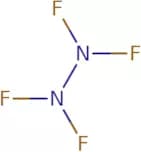
CAS:Produto Controlado<p>Tetrafluorohydrazine is a reactive chemical compound that is used as a precursor to other nitrogen-containing compounds. It can be made by reacting hydrochloric acid with hydrogen fluoride and ammonia at high temperatures. The tetrafluorohydrazine molecule is thermodynamically unstable, so it decomposes into the trifluoride anion, dinitrogen gas, and hydrogen fluoride gas. Tetrafluorohydrazine reacts with the difluoride ion to form the difluoramine molecule. This reaction requires a catalyst, such as zinc. Tetrafluorohydrazine has been shown to react with alkenes in the presence of catalysts to produce alcohols or ketones.</p>Fórmula:F4N2Pureza:Min. 95%Peso molecular:104.01 g/molFluorescein
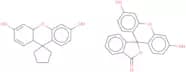
CAS:<p>Fluorescein is a fluorescent molecule often used in in vitro assays, immunohistochemistry, microscopy, and clinical analytics. Fluorescein is not a natural product and was first synthesized in 1871 by Adolf von Baeyer, a later Nobel-prize winner for his work on organic dyes. Fluorescein has an absorption maximum of 494 nm and an emission maximum of 512 nm; these values can however slightly change depending on the solution medium.<br>Fluorescein is used clinically in ophthalmology to assess the blood flow in the eye blood vessels and to detect eye injuries such as foreign bodies and possible abrasions. Interestingly, fluorescein has been found to possess peroxidase activity under certain conditions.</p>Fórmula:C20H12O5Cor e Forma:PowderPeso molecular:332.31 g/molRef: 3D-FF23342
Produto descontinuado