Bioquímicos e reagentes
Os bioquímicos e reagentes são substâncias fundamentais para a pesquisa e desenvolvimento em campos como biotecnologia, biologia molecular, farmacologia e medicina. Esses produtos são essenciais para uma variedade de aplicações, incluindo a síntese de compostos, a análise de amostras biológicas, a pesquisa de processos metabólicos e a produção de medicamentos. Na CymitQuimica, oferecemos uma ampla seleção de bioquímicos e reagentes de alta qualidade e pureza, adequados para diversas necessidades científicas e industriais. Nosso catálogo inclui enzimas, anticorpos, ácidos nucleicos, aminoácidos e muitos outros produtos, todos projetados para apoiar pesquisadores e profissionais em seus projetos de pesquisa e desenvolvimento, garantindo resultados confiáveis e reproduzíveis.
Subcategorias de "Bioquímicos e reagentes"
- Biomoléculas(99.130 produtos)
- Por Alvo Biológico(99.159 produtos)
- Por uso/Efeitos Farmacológicos(6.787 produtos)
- Compostos relacionados à criopreservação e aos crioconservantes(21 produtos)
- Desinfetantes, aditivos para aquecimento de líquidos de banho e compostos relacionados(28 produtos)
- Hormónios(346 produtos)
- Biologia Vegetal(6.747 produtos)
- Metabólitos secundários(14.222 produtos)
Foram encontrados 130579 produtos de "Bioquímicos e reagentes"
Ordenar por
Pureza (%)
0
100
|
0
|
50
|
90
|
95
|
100
FLJ30934 antibody
<p>FLJ30934 antibody was raised in rabbit using the middle region of FLJ30934 as the immunogen</p>Pureza:Min. 95%CRTC1 antibody
<p>CRTC1 antibody was raised in Mouse using a purified recombinant fragment of human CRTC1 expressed in E. coli as the immunogen.</p>TWEAK Receptor protein
<p>Region of TWEAK protein corresponding to amino acids EQAPGTAPCS RGSSWSADLD KCMDCASCRA RPHSDFCLGC AAAPPAPFRL LWP.</p>Pureza:Min. 95%MTHFSD Blocking Peptide
<p>A synthetic peptide for use as a blocking control in assays to test for specificity of MTHFSD antibody, catalog no. 70R-4964</p>Pureza:Min. 95%Neuroserpin antibody
<p>Neuroserpin antibody was raised in rabbit using highly pure recombinant human neuroserpin as the immunogen.</p>Pureza:Min. 95%LEC antibody
<p>LEC antibody was raised in mouse using highly pure recombinant human LEC as the immunogen.</p>GOT2 antibody
<p>GOT2 antibody was raised using a synthetic peptide corresponding to a region with amino acids VEMGPPDPILGVTEAFKRDTNSKKMNLGVGAYRDDNGKPYVLPSVRKAEA</p>Pureza:Min. 95%EIF4E3 Blocking Peptide
<p>A synthetic peptide for use as a blocking control in assays to test for specificity of EIF4E3 antibody, catalog no. 70R-5011</p>Pureza:Min. 95%ApoER2 antibody
<p>The ApoER2 antibody is a highly specific reagent used in Life Sciences research. It is produced by a hybridoma cell line and targets the ApoER2 molecule. This monoclonal antibody has been extensively tested and validated for its reactivity against dopamine, endogenous protein kinase, inhibitor p21, IL-2 receptor, and other relevant targets.</p>PFKP antibody
<p>The PFKP antibody is a specific antibody used in Life Sciences research. It is designed to target and detect the presence of the PFKP protein, a polymorphic glycoprotein involved in syncytia formation. This antibody can be used in various applications such as immunoblotting, immunohistochemistry, and flow cytometry. The PFKP antibody has been validated for use with human serum samples and has shown high specificity and sensitivity. It can be used in conjunction with lectins or other glycan-binding proteins for further analysis. This monoclonal antibody is available as magnetic particles conjugated with the PFKP-specific antibody, allowing for easy separation and purification of target molecules. With its high affinity and specificity, this PFKP antibody is an essential tool for researchers studying the function and regulation of this important protein in various biological systems.</p>PBK antibody
<p>PBK antibody was raised using the N terminal of PBK corresponding to a region with amino acids SLCLAMEYGGEKSLNDLIEERYKASQDPFPAAIILKVALNMARGLKYLHQ</p>Pureza:Min. 95%TLE2 Blocking Peptide
<p>A synthetic peptide for use as a blocking control in assays to test for specificity of TLE2 antibody, catalog no. 70R-7914</p>Pureza:Min. 95%Influenza A antibody (FITC)
<p>Influenza A antibody (FITC) was raised in mouse using Influenza A-from A/Texas strain as the immunogen.</p>IFN γ antibody
<p>IFN gamma antibody is a highly specific antibody that targets interferon gamma, a key cytokine involved in immune response regulation. This antibody can be used in various research applications, including immunohistochemistry, Western blotting, and ELISA. It specifically recognizes the carbonyl group of IFN gamma and has been extensively validated for its high affinity and specificity. It can effectively neutralize the activity of IFN gamma in vitro and in vivo, making it a valuable tool for studying the role of this cytokine in various biological processes. Whether you are investigating immune responses, studying growth factors, or exploring the effects of IFN gamma on different cell types, this antibody is an excellent choice for your research needs. Trust its reliable performance to provide accurate and reproducible results every time.</p>Goat anti Mouse IgG + IgM (H + L)
<p>Goat anti-mouse IgG/IgM (H+L) was raised in goat using murine IgG and IgM whole molecules as the immunogen.</p>Pureza:Min. 95%Junctophilin 1 antibody
<p>Junctophilin 1 antibody was raised using the C terminal of JPH1 corresponding to a region with amino acids SNGELHSQYHGYYVKLNAPQHPPVDVEDGDGSSQSSSALVHKPSANKWSP</p>Pureza:Min. 95%UBE2L3 antibody
<p>The UBE2L3 antibody is a powerful tool in the field of Life Sciences. It has been extensively studied for its antifibrotic properties and its role in acid-induced autophagy. This specific antibody targets UBE2L3, a protein involved in various cellular processes. By binding to UBE2L3, the antibody can disrupt protein complex formation and inhibit serine protease activity.</p>LRRC42 antibody
<p>LRRC42 antibody was raised using the N terminal of LRRC42 corresponding to a region with amino acids LIGFPEQIAEKLFSAAEARQKFTEPGAGLRALQKFTEAYGSLVLCSLCLR</p>CDK9 antibody
<p>The CDK9 antibody is a crucial tool in the field of Life Sciences. It plays a significant role in cell cytotoxicity studies, as it targets and neutralizes the activity of cyclin-dependent kinase 9 (CDK9). This antibody has been proven to be highly effective in inhibiting the phosphorylation of RNA polymerase II, thereby preventing transcriptional elongation and ultimately leading to cell death.</p>RAB18 antibody
<p>RAB18 antibody was raised using the C terminal of RAB18 corresponding to a region with amino acids LFIEASAKTCDGVQCAFEELVEKIIQTPGLWESENQNKGVKLSHREEGQG</p>Pureza:Min. 95%SLC12A5 Blocking Peptide
<p>A synthetic peptide for use as a blocking control in assays to test for specificity of SLC12A5 antibody, catalog no. 70R-6293</p>Pureza:Min. 95%dsDNA
<p>dsDNA is a recombinant protein and antigen that plays a crucial role in various biological processes. It acts as a template for DNA replication and is involved in the synthesis of proteins. dsDNA is essential for the growth and development of cells, as it provides the necessary instructions for the production of vital molecules such as enzymes, hormones, and antibodies. One of the key characteristics of dsDNA is its ability to bind to specific molecules, including tyrosine, growth factors, dopamine, antibodies, and binding proteins. This binding interaction facilitates various cellular activities such as signal transduction, gene expression regulation, and immune response modulation. In addition to its role in normal physiological functions, dsDNA has been widely used in life sciences research. It serves as a valuable tool for studying nuclear processes, protein-protein interactions, and disease-related mechanisms. For example, researchers have utilized dsDNA to investigate the effects of trastuzumab on breast cancer cells or study the cytotoxic properties of alpha-synucle</p>Pureza:1.85 Determined By Uv Spectrophotometer.Rat Thymocyte antibody (FITC)
<p>Rat thymocyte antibody (FITC) was raised in rabbit using RBC-free rat thymocytes as the immunogen.</p>LY 517717
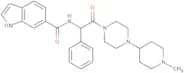
CAS:<p>LY 517717 is an oral, investigational anticoagulant that is being studied as a potential treatment for acute coronary syndrome (ACS). It acts by inhibiting the prothrombinase complex and the activated partial thromboplastin time (APTT). LY 517717 has been shown to be safe and well tolerated in clinical trials. It has also been shown to have a favorable safety profile with no major adverse events or bleeding complications. LY 517717 is currently in clinical development as a potential anticoagulant therapy for ACS.</p>Fórmula:C27H33N5O2Pureza:Min. 95%Peso molecular:459.6 g/molGRIA1 Blocking Peptide
<p>A synthetic peptide for use as a blocking control in assays to test for specificity of GRIA1 antibody, catalog no. 70R-8215</p>PAFAH1B1 antibody
<p>PAFAH1B1 antibody was raised using the N terminal of PAFAH1B1 corresponding to a region with amino acids KLNEAKEEFTSGGPLGQKRDPKEWIPRPPEKYALSGHRSPVTRVIFHPVF</p>Pureza:Min. 95%Goat anti Rabbit IgG (Fab'2) (HRP)
<p>Goat anti-rabbit IgG (Fab'2) (HRP) was raised in goat using rabbit IgG F(ab')2 fragment as the immunogen.</p>Pureza:Min. 95%RP11-217H1.1 antibody
<p>RP11-217H1.1 antibody was raised using the N terminal Of Rp11-217H1.1 corresponding to a region with amino acids ARWRFWCVSVTMVVALLIVCDVPSASAQRKKEMVLSEKVSQLMEWTNKRP</p>Pureza:Min. 95%HNRPLL Blocking Peptide
<p>A synthetic peptide for use as a blocking control in assays to test for specificity of HNRPLL antibody, catalog no. 70R-4841</p>Pureza:Min. 95%PANK4 Blocking Peptide
<p>A synthetic peptide for use as a blocking control in assays to test for specificity of PANK4 antibody, catalog no. 70R-2710</p>Pureza:Min. 95%CHIC2 antibody
<p>CHIC2 antibody was raised using the N terminal of CHIC2 corresponding to a region with amino acids MADFDEIYEEEEDEERALEEQLLKYSPDPVVVRGSGHVTVFGLSNKFESE</p>Pureza:Min. 95%MC4R antibody
<p>MC4R antibody was raised in rabbit using a 14 amino acid peptide of human MC4-R as the immunogen.</p>Pureza:Min. 95%NOVA2 antibody
<p>The 6-Fluoro-3-indoxyl-beta-D-galactopyranoside is a powerful antituberculosis drug from the class of rifamycins. It is specifically designed to target tuberculosis infections and contains active compounds that exhibit bactericidal activity. This drug works by binding to DNA-dependent RNA polymerase, inhibiting transcription and replication, ultimately preventing the growth of bacteria. Its effectiveness has been proven through extensive testing using the patch-clamp technique on human erythrocytes. Additionally, this drug undergoes various metabolic transformations such as hydrolysis, oxidation, reduction, and conjugation with glucuronic acid. It also exhibits high affinity for markers expressed in Mycobacterium tuberculosis strains, inhibiting their growth in culture.</p>APC antibody
<p>The 6-Fluoro-3-indoxyl-beta-D-galactopyranoside is a powerful antituberculosis drug from the rifamycin class. It is specifically designed to target tuberculosis infections and contains active compounds that exhibit strong bactericidal activity. Through its unique mechanism of action, this drug binds to DNA-dependent RNA polymerase, effectively preventing transcription and replication in bacteria. Its efficacy has been extensively demonstrated through various scientific techniques such as the patch-clamp technique on human erythrocytes. Additionally, it undergoes several metabolic transformations including hydrolysis by esterases or glucuronidases, oxidation by cytochrome P450 enzymes, reduction by glutathione reductase, or conjugation with glucuronic acid. This drug also exhibits high affinity for markers expressed in Mycobacterium tuberculosis strains, inhibiting their growth in culture.</p>Estrogen Receptor α antibody
<p>The Estrogen Receptor alpha antibody is a highly specialized monoclonal antibody that targets the estrogen receptor alpha (ERα) protein. This protein plays a crucial role in regulating various biological processes, including cell growth and differentiation. The antibody has been extensively tested and proven to be highly effective in neutralizing the activity of ERα.</p>SOD1 protein
<p>1-154 amino acids: MATKAVCVLK GDGPVQGIIN FEQKESNGPV KVWGSIKGLT EGLHGFHVHE FGDNTAGCTS AGPHFNPLSR KHGGPKDEER HVGDLGNVTA DKDGVADVSI EDSVISLSGD HCIIGRTLVV HEKADDLGKG GNEESTKTGN AGSRLACGVI GIAQ</p>Pureza:Min. 95%SLC25A32 Blocking Peptide
<p>A synthetic peptide for use as a blocking control in assays to test for specificity of SLC25A32 antibody, catalog no. 70R-6474</p>Pureza:Min. 95%COX3 antibody
<p>COX3 antibody was raised using the C terminal of COX3 corresponding to a region with amino acids FESPFTISDGIYGSTFFVATGFHGLHVIIGSTFLTICFIRQLMFHFTSKH</p>Pureza:Min. 95%ADAR1 antibody
<p>The ADAR1 antibody is a polyclonal antibody that is used in life sciences research. It specifically targets the ADAR1 protein, which plays a role in RNA editing and regulation. This antibody has been shown to be effective in various applications, including immunohistochemistry, western blotting, and flow cytometry.</p>FOXO1 antibody
<p>The FOXO1 antibody is a highly specific monoclonal antibody that targets the FOXO1 protein. It is designed to bind to specific amino acid residues on the protein, allowing for accurate detection and analysis. This antibody is commonly used in research and diagnostic applications, as it can be used to study various biological processes and pathways.</p>UBL4A antibody
<p>UBL4A antibody was raised in rabbit using the middle region of UBL4A as the immunogen</p>Pureza:Min. 95%5-Endo-BCN-pentanoic acid
CAS:<p>5-Endo-BCN-pentanoic acid is a small molecule that has been shown to have pharmacological activity. It has been reported to act as an activator of the G protein coupled receptors (GPCRs) and ion channels, as well as inhibit the activity of peptide hormones. 5-Endo-BCN-pentanoic acid has also been used in research studies for its ability to bind antibodies and various cell surface receptors. The compound is also used in laboratory settings for its high purity and low cost, making it an attractive research tool for basic science, cell biology, and biochemistry research.</p>Fórmula:C16H23NO4Pureza:Min. 95%Peso molecular:293.36 g/molPHLDB1 antibody
<p>PHLDB1 antibody was raised in rabbit using the middle region of PHLDB1 as the immunogen</p>Pureza:Min. 95%MBD2 antibody
<p>MBD2 antibody was raised using the middle region of MBD2 corresponding to a region with amino acids DCPALPPGWKKEEVIRKSGLSAGKSDVYYFSPSGKKFRSKPQLARYLGNT</p>TRIM2 antibody
<p>The TRIM2 antibody is a monoclonal antibody that specifically targets insulin, glucagon, and alpha-fetoprotein. It is widely used in Life Sciences research to study the role of these hormones in various physiological processes. The TRIM2 antibody has been shown to have cytotoxic effects on cells expressing high levels of insulin, making it a valuable tool for studying insulin-related disorders such as diabetes. Additionally, this antibody can be used in combination with other antibodies, such as anti-ICOS antibodies or annexin A2 antibodies, to investigate complex signaling pathways and protein interactions. The TRIM2 antibody is highly specific and exhibits strong binding affinity to its target proteins in human serum samples. Its versatility and reliability make it an indispensable tool for scientists working in the field of molecular biology and biomedical research.</p>SLC27A4 antibody
<p>SLC27A4 antibody was raised using a synthetic peptide corresponding to a region with amino acids YKFQKTELRKEGFDPAIVKDPLFYLDAQKGRYVPLDQEAYSRIQAGEEKL</p>Pureza:Min. 95%FABP4 antibody
<p>The 6-Fluoro-3-indoxyl-beta-D-galactopyranoside is a powerful antituberculosis drug that falls under the class of rifamycins. It is specifically designed to combat tuberculosis infections by targeting the active compounds responsible for bactericidal activity. This drug works by binding to DNA-dependent RNA polymerase, preventing transcription and replication, ultimately inhibiting bacterial growth. The effectiveness of this drug has been proven through extensive research using advanced techniques such as the patch-clamp technique on human erythrocytes. Additionally, it undergoes various metabolic transformations, including hydrolysis by esterases or glucuronidases, oxidation by cytochrome P450 enzymes, reduction by glutathione reductase, or conjugation with glucuronic acid. With its ability to bind to markers expressed in Mycobacterium tuberculosis strains and inhibit cell growth in culture, this drug stands out as an exceptional choice for treating tuberculosis infections.</p>Pureza:Min. 95%Cystatin 8 antibody
<p>Cystatin 8 antibody was raised using a synthetic peptide corresponding to a region with amino acids LKPVNASNANVKQCLWFAMQEYNKESEDKYVFLVVKTLQAQLQVTNLLEY</p>SLC9A1 antibody
<p>SLC9A1 antibody was raised using a synthetic peptide corresponding to a region with amino acids RSKETSSPGTDDVFTPAPSDSPSSQRIQRCLSDPGPHPEPGEGEPFFPKG</p>Pureza:Min. 95%MPI antibody
<p>The MPI antibody is a monoclonal antibody that specifically targets and inhibits the activity of thymidylate synthase. Thymidylate synthase is an enzyme involved in DNA synthesis and repair, making it a crucial target for cancer treatment. The MPI antibody has been extensively studied in the field of Life Sciences and has shown promising results as an anti-cancer therapy.</p>CD154 antibody (Azide Free)
<p>CD154 antibody was raised in hamster using activated murine Th1 clone D1.6 as the immunogen.</p>DNase I antibody
<p>The DNase I antibody is a powerful medicament used in immunohistochemistry. It belongs to the class of Polyclonal Antibodies, which are known for their high specificity and affinity. This antibody specifically targets tyrosine residues on collagen, growth factors, and membrane-spanning polypeptides. It can be used in various Life Sciences applications, including research and diagnostic purposes.</p>TAF9 antibody
<p>TAF9 antibody was raised in rabbit using the N terminal of TAF9 as the immunogen</p>Pureza:Min. 95%MYB antibody
<p>The MYB antibody is a monoclonal antibody that specifically targets the MYB protein. It has been extensively studied and proven to be highly effective in various applications. This antibody has been used in research settings to detect MYB expression levels in different cell types, including human hepatocytes. It has also been used to study the role of MYB in cancer development and progression.</p>LRRC52 antibody
<p>LRRC52 antibody was raised using the N terminal of LRRC52 corresponding to a region with amino acids QEVICTGKQLTEYPLDIPLNTRRLFLNENRITSLPAMHLGLLSDLVYLDC</p>Pureza:Min. 95%GATA1 antibody
<p>The GATA1 antibody is a powerful tool in the field of life sciences. It is a polyclonal antibody that specifically targets GATA1, a transcription factor involved in the regulation of gene expression. This antibody can be used to study various cellular processes, including cell differentiation, proliferation, and apoptosis. The GATA1 antibody has been shown to have cytotoxic effects on certain cancer cells and can also modulate the production of interferon-gamma (IFN-gamma), an important cytokine involved in immune responses. Additionally, this antibody has been used in research related to β-catenin signaling pathway and growth factors. Whether you are studying antiviral mechanisms or nuclear signaling events, the GATA1 antibody is an essential tool for your research needs.</p>Pureza:Min. 95%FAIM antibody
<p>FAIM antibody was raised using the middle region of FAIM corresponding to a region with amino acids FRIVLEKDAMDVWCNGKKLETAGEFVDDGTETHFSIGNHDCYIKAVSSGK</p>Cytokeratin 5 antibody
<p>Cytokeratin 5 antibody was raised in guinea pig using recombinant human keratin K5 as the immunogen.</p>Pureza:Min. 95%FZD6 antibody
<p>The FZD6 antibody is a highly specialized monoclonal antibody that targets the insulin-like growth factor receptor (IGF-1R). It is designed to specifically bind to the IGF-1R and inhibit its activity. This antibody has shown promising results in preclinical studies, demonstrating its potential as a therapeutic agent for various diseases, including cancer.</p>CD82 antibody
<p>The CD82 antibody is a powerful tool in the field of Life Sciences. It acts as a phosphatase that regulates various cellular processes by binding to specific proteins. This antibody has been shown to inhibit the production of interleukin-6, a pro-inflammatory cytokine involved in immune responses. Additionally, it can be used in antigen-antibody reactions to detect the presence of autoantibodies in patient samples.</p>