Bioquímicos e reagentes
Os bioquímicos e reagentes são substâncias fundamentais para a pesquisa e desenvolvimento em campos como biotecnologia, biologia molecular, farmacologia e medicina. Esses produtos são essenciais para uma variedade de aplicações, incluindo a síntese de compostos, a análise de amostras biológicas, a pesquisa de processos metabólicos e a produção de medicamentos. Na CymitQuimica, oferecemos uma ampla seleção de bioquímicos e reagentes de alta qualidade e pureza, adequados para diversas necessidades científicas e industriais. Nosso catálogo inclui enzimas, anticorpos, ácidos nucleicos, aminoácidos e muitos outros produtos, todos projetados para apoiar pesquisadores e profissionais em seus projetos de pesquisa e desenvolvimento, garantindo resultados confiáveis e reproduzíveis.
Subcategorias de "Bioquímicos e reagentes"
- Biomoléculas(99.130 produtos)
- Por Alvo Biológico(99.159 produtos)
- Por uso/Efeitos Farmacológicos(6.787 produtos)
- Compostos relacionados à criopreservação e aos crioconservantes(21 produtos)
- Desinfetantes, aditivos para aquecimento de líquidos de banho e compostos relacionados(28 produtos)
- Hormónios(346 produtos)
- Biologia Vegetal(6.747 produtos)
- Metabólitos secundários(14.222 produtos)
Foram encontrados 130579 produtos de "Bioquímicos e reagentes"
Ordenar por
Pureza (%)
0
100
|
0
|
50
|
90
|
95
|
100
Collagen Type XI α 2 antibody
<p>Collagen Type XI Alpha 2 antibody was raised using the N terminal of COL11A2 corresponding to a region with amino acids TADRFQAEEYGEGGTDPPEGPYDYTYGYGDDYREETELGPALSAETAHSG</p>Pureza:Min. 95%ADCY2 antibody
<p>ADCY2 antibody was raised in rabbit using the middle region of ADCY2 as the immunogen</p>Pureza:Min. 95%Alkaline Phosphatase antibody
<p>Alkaline phosphatase antibody was raised in mouse using human placental alkaline phosphatase as the immunogen.</p>AQP1 antibody
<p>The AQP1 antibody is a growth factor that belongs to the class of monoclonal antibodies. It has been shown to inhibit the multidrug resistance protein and enhance the expression of E-cadherin, a cell adhesion molecule. This antibody specifically targets AQP1, which is a water channel protein involved in various physiological processes. The AQP1 antibody has been extensively used in life sciences research to study its role in different cellular pathways. Additionally, it has been found to have cytotoxic effects on cancer cells and can interfere with nuclear signaling pathways. Its potential as a therapeutic agent is being explored in various fields, including oncology and immunology.</p>LIX protein (Mouse)
<p>Region of LIX protein corresponding to amino acids TELRCVCLTV TPKINPKLIA NLEVIPAGPQ CPTVEVIAKL KNQKEVCLDP EAPVIKKIIQ KILGSDKKKA.</p>Pureza:Min. 95%C-myc antibody (HRP)
<p>C-myc antibody (HRP) was raised in goat using a synthetic peptide representing amino acid residues 410-419 (EQKLISEEDL) of human myc conjugated to KLH as the immunogen.</p>FGFR3 antibody
<p>The FGFR3 antibody is a histidine-rich interferon family kinase inhibitor that is widely used in the Life Sciences field. It possesses strong inhibitory properties, particularly against diacylglycerol, making it an effective tool for studying various cellular processes. This monoclonal antibody specifically targets and binds to the glycoprotein FGFR3, blocking its activity and preventing the activation of downstream signaling pathways. By inhibiting FGFR3, this antibody can interfere with epidermal growth factor-mediated cell proliferation and survival. Additionally, it has cytotoxic effects on cancer cells that overexpress FGFR3, making it a potential therapeutic option for certain types of cancers. The FGFR3 antibody is available as both monoclonal and polyclonal antibodies, providing researchers with versatile tools for their experiments.</p>PF 3274167
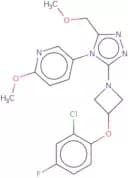
CAS:<p>Antagonist of oxytocin receptor</p>Fórmula:C19H19ClFN5O3Pureza:Min. 95%Peso molecular:419.84 g/molGranulysin antibody
<p>Granulysin antibody was raised using the N terminal of GNLY corresponding to a region with amino acids MASGPLGPGARPTRLHPPFPPPAHIKPGAPPGENPELSGLERILARHQLP</p>CMV antibody
<p>CMV antibody was raised in mouse using a 66 kDa antigen appearing in the cytoplasm and nucleus. as the immunogen.</p>BEND7 antibody
<p>BEND7 antibody was raised using the middle region of BEND7 corresponding to a region with amino acids LGFGIVLESPSSDPEVQLAEGFDVFMPKSQLDSILSNYTRSGSLLFRKLV</p>ATF2 antibody
<p>The ATF2 antibody is a highly specialized product in the field of Life Sciences. It is an antibody that specifically binds to ATF2, a transcription factor that plays a crucial role in various cellular processes. This monoclonal antibody is widely used in research and diagnostic applications to study the function and regulation of ATF2.</p>Pureza:Min. 95%Goat anti Rabbit IgG (H + L) (Alk Phos)
<p>This antibody reacts with heavy (gamma) chains on rabbit IgG and light chains on all rabbit immunoglobulins.</p>Pureza:Min. 95%SRPK1 Blocking Peptide
<p>A synthetic peptide for use as a blocking control in assays to test for specificity of SRPK1 antibody, catalog no. 70R-10336</p>Pureza:Min. 95%Tmem147 Blocking Peptide
<p>A synthetic peptide for use as a blocking control in assays to test for specificity of Tmem147 antibody, catalog no. 70R-8854</p>Pureza:Min. 95%USP37 antibody
<p>The USP37 antibody is a highly specialized monoclonal antibody that has neutralizing properties. It specifically targets E-cadherin, a protein involved in cell adhesion and signaling. This antibody has been extensively studied in the field of life sciences, particularly in the context of chemokine and interleukin-6 signaling pathways. It has also been used in various research techniques, such as immunofluorescence staining with phalloidin to visualize actin cytoskeleton, dopamine release assays, and electrophoresis studies involving fibrinogen. The USP37 antibody has shown promising results in granulosa cell research and has been utilized in agglutination assays for detecting erythropoietin levels. Its specificity and reliability make it a valuable tool for researchers working with antibodies.</p>TRPM5 antibody
<p>TRPM5 antibody was raised using the N terminal of TRPM5 corresponding to a region with amino acids EKHISEQRAGYGGTGSIEIPVLCLLVNGDPNTLERISRAVEQAAPWLILV</p>Pureza:Min. 95%Abcb10 antibody
<p>Abcb10 antibody was raised in rabbit using the N terminal of Abcb10 as the immunogen</p>Pureza:Min. 95%DHRS2 antibody
<p>DHRS2 antibody was raised in rabbit using the N terminal of DHRS2 as the immunogen</p>Pureza:Min. 95%Desmoglein 2 Blocking Peptide
<p>A synthetic peptide for use as a blocking control in assays to test for specificity of DSG2 antibody, catalog no. 70R-6105</p>Pureza:Min. 95%ACADL antibody
<p>The ACADL antibody is a neurotrophic factor monoclonal antibody that has shown promising results in various studies. This antibody acts as a growth factor and has the ability to promote cell survival and differentiation. It can be used in research settings to study the effects of neurotrophic factors on neuronal development and function.</p>SLC6A1 antibody
<p>SLC6A1 antibody was raised using a synthetic peptide corresponding to a region with amino acids CCINSCTSMFAGFVIFSIVGFMAHVTKRSIADVAASGPGLAFLAYPEAVT</p>Pureza:Min. 95%ARPC3 Blocking Peptide
<p>A synthetic peptide for use as a blocking control in assays to test for specificity of ARPC3 antibody, catalog no. 70R-3074</p>Pureza:Min. 95%Pin1 antibody
<p>Pin1 antibody was raised in mouse using recombinant human Pin1 (1-163aa) purified from E. coli as the immunogen.</p>SNAI1 antibody
<p>The SNAI1 antibody is a monoclonal antibody that specifically targets the SNAI1 protein. This protein plays a crucial role in various cellular processes, including cell growth and differentiation. The SNAI1 antibody has been extensively tested and validated for its specificity and sensitivity in detecting the presence of SNAI1 in different samples.</p>AKR1B1 Blocking Peptide
<p>A synthetic peptide for use as a blocking control in assays to test for specificity of AKR1B1 antibody, catalog no. 70R-1071</p>Pureza:Min. 95%Rabbit anti Rat IgG (H + L) (rhodamine)
<p>Rabbit anti-rat IgG (H+L) (Rhodamine) was raised in rabbit using rat IgG whole molecule as the immunogen.</p>Pureza:Min. 95%BSG antibody
<p>The BSG antibody is a monoclonal antibody that is used in the field of Life Sciences. It specifically targets and binds to BSG (basigin) protein, which is expressed on the surface of cardiomyocytes. This antibody has been shown to be effective in inhibiting the activation of BSG, making it a valuable tool for studying the role of BSG in various cellular processes. Additionally, the BSG antibody can be used as a diagnostic tool in human serum samples to detect the presence of activated BSG. With its cytotoxic properties, this monoclonal antibody has also shown promise as a potential treatment for certain types of cancer. Its ability to target nuclear proteins and inhibit protein kinases, such as mitogen-activated protein kinase and tyrosine kinases, makes it an important tool in both research and therapeutic applications.</p>KLC3 antibody
<p>KLC3 antibody was raised using the middle region of KLC3 corresponding to a region with amino acids MLNILALVYRDQNKYKEATDLLHDALQIREQTLGPEHPAVAATLNNLAVL</p>PLEKHA9 antibody
<p>PLEKHA9 antibody was raised using a synthetic peptide corresponding to a region with amino acids EALLWLKRGLKFLKGFLTEVKNGEKDIQTALNNAYGKTLRQHHGWVVRGV</p>MAGEB4 Blocking Peptide
<p>A synthetic peptide for use as a blocking control in assays to test for specificity of MAGEB4 antibody, catalog no. 70R-4031</p>Pureza:Min. 95%CYP4X1 Blocking Peptide
<p>A synthetic peptide for use as a blocking control in assays to test for specificity of CYP4X1 antibody, catalog no. 70R-7249</p>Pureza:Min. 95%TMPRSS3 antibody
<p>TMPRSS3 antibody was raised using the N terminal of TMPRSS3 corresponding to a region with amino acids MGENDPPAVEAPFSFRSLFGLDDLKISPVAPDADAVAAQILSLLPLKFFP</p>Corticosteroid Binding Globulin protein
<p>Corticosteroid Binding Globulin (CBG) protein is a growth factor that plays a crucial role in regulating the body's response to stress and inflammation. It binds to corticosteroids, such as cortisol, in the blood, controlling their availability and activity. CBG also interacts with reactive oxygen species and antibodies, contributing to immune system function.</p>Pureza:Min. 95%CD40 ligand protein
<p>CD40 ligand protein is an activated protein that plays a crucial role in immune response and cell signaling. It is commonly used in research and diagnostic applications. The CD40 ligand protein has an antigen binding domain that interacts with the CD40 receptor on B cells, leading to their activation and differentiation. This protein can be used as a tool in various assays, such as chemiluminescent immunoassays or DNA vaccines. It can also be conjugated to other molecules, such as monoclonal antibodies or chemokines, for specific applications. The CD40 ligand protein is stable and can be easily immobilized on surfaces like carbon electrodes for electrode-based assays. Its structure consists of amino acid residues that are methylated, providing stability and enhancing its functionality. Researchers in the life sciences field often rely on this protein to investigate immune responses and develop new therapeutic strategies.</p>Pureza:Min. 95%DGAT2L7 antibody
<p>DGAT2L7 antibody was raised in rabbit using the C terminal of DGAT2L7 as the immunogen</p>Pureza:Min. 95%Myc antibody
<p>The Myc antibody is a highly specialized antibody used in Life Sciences research. It is designed to specifically target and bind to the c-myc protein, which plays a crucial role in cell growth and proliferation. This antibody is available in both polyclonal and monoclonal forms, providing researchers with options for their specific needs.</p>Pureza:Min. 95%NR5A2 antibody
<p>NR5A2 antibody was raised in rabbit using a synthetic peptide conjugated to KLH as the immunogen.</p>Pureza:Min. 95%Fibrinogen antibody
<p>Fibrinogen antibody was raised in Rat using Fibrinogen purified from human blood containing alpha, beta and gamma chains as the immunogen.</p>ABCE1 Blocking Peptide
<p>A synthetic peptide for use as a blocking control in assays to test for specificity of ABCE1 antibody, catalog no. 70R-6268</p>Pureza:Min. 95%Rabbit anti Mouse IgG3 (Alk Phos)
<p>Rabbit anti-mouse IgG3 (Alk Phos) was raised in rabbit using murine IgG3 heavy chain as the immunogen.</p>Pureza:Min. 95%MARVELD2 antibody
<p>MARVELD2 antibody was raised using the middle region of MARVELD2 corresponding to a region with amino acids PKTPFVLVVAGLAWITTIIILVLGMSMYYRTILLDSNWWPLTEFGINVAL</p>Pureza:Min. 95%Candida Albicans Monoclonal Antibody
<p>The Candida Albicans Monoclonal Antibody is a highly specific immunohistochemistry reagent that is used for the detection of Candida albicans in various biological samples. This monoclonal antibody is produced using hybridoma technology and recognizes a glycoprotein antigen present on the surface of Candida albicans cells. The Candida Albicans Monoclonal Antibody has been extensively validated for its specificity and sensitivity in detecting Candida albicans in clinical specimens, such as blood, urine, and tissue samples. It offers high affinity and binding specificity, allowing for accurate and reliable results. This antibody can be used in various applications, including immunohistochemistry staining of tissue sections, flow cytometry analysis of cell suspensions, and Western blotting. It provides clear and distinct staining patterns, allowing for easy identification of Candida albicans cells. In addition to its diagnostic applications, the Candida Albicans Monoclonal Antibody has also been used in research studies to investigate</p>Pureza:>90%PINK1 antibody
<p>PINK1 antibody was raised in rabbit using residues 258-274 (YRKSKRGPKQLAPHPNI) of human PINK1 as the immunogen.</p>Pureza:Min. 95%HSPA4L antibody
<p>HSPA4L antibody was raised using the middle region of HSPA4L corresponding to a region with amino acids KCHAEHTPEEEIDHTGAKTKSAVSDKQDRLNQTLKKGKVKSIDLPIQSSL</p>Ccdc90b antibody
<p>Ccdc90b antibody was raised in rabbit using the N terminal of Ccdc90b as the immunogen</p>Pureza:Min. 95%Flag Tag
<p>The Flag tag is a versatile tool used in the field of Life Sciences. It consists of a short peptide sequence that can be fused to a protein of interest, allowing for easy detection and purification. The Flag tag has been widely used in various applications such as immunoblotting, immunoprecipitation, and flow cytometry. One of the key advantages of the Flag tag is its high specificity and sensitivity. It can be easily recognized by commercially available monoclonal antibodies, making it ideal for protein detection and quantification. Additionally, the Flag tag does not interfere with the structure or function of the tagged protein, ensuring accurate results. The Flag tag is commonly used in research related to cytokines such as IFN-gamma and TNF-alpha. It has also been utilized in studies involving viscosity measurements, anti-MERTK antibody development, and activation assays. Whether you are working with monoclonal or polyclonal antibodies, the Flag tag provides a reliable target molecule for your experiments. In</p>VGF antibody
<p>VGF antibody was raised using the middle region of VGF corresponding to a region with amino acids ARQNALLFAEEEDGEAGAEDKRSQEETPGHRRKEAEGTEEGGEEEDDEEM</p>Pureza:Min. 95%PITX1 antibody
<p>The PITX1 antibody is a highly specific monoclonal antibody that targets the PITX1 protein. This antibody has been extensively studied and proven to have a high affinity for its target molecule. It can be used in various research applications, including immunohistochemistry, Western blotting, and flow cytometry.</p>G3BP1 antibody
<p>The G3BP1 antibody is a monoclonal antibody that specifically targets and binds to the granulosa cell protein G3BP1. This antibody is widely used in the field of Life Sciences for various applications. It has been shown to neutralize the activity of G3BP1, which plays a crucial role in cellular processes such as antigen-antibody reactions, growth factor signaling, and regulation of gene expression. The G3BP1 antibody can be used in experiments to study the function of G3BP1 and its interactions with other proteins, such as β-catenin and glutamate receptors. Additionally, both monoclonal and polyclonal antibodies against G3BP1 are available, providing researchers with options to suit their specific needs.</p>Goat anti Mouse IgM (mu chain)
<p>This antibody reacts with heavy (mu) chains on mouse IgM.</p>Pureza:Min. 95%BEGIN antibody
<p>The BEGIN antibody is a highly effective neutralizing monoclonal antibody that targets endothelial growth factor CXCR4. It is widely used in Life Sciences research to study the activation of hepatocyte growth factor and other chemokine binding proteins. The BEGIN antibody has shown exceptional results in inhibiting the growth and proliferation of cells expressing high levels of CXCR4. In addition, it has been proven to effectively bind to other important molecules such as adalimumab, electrode, epidermal growth factor, annexin, and TNF-α. Researchers rely on the BEGIN antibody for its superior specificity and reliability in various experimental settings.</p>Estrogen antibody
<p>Estrogen antibody was raised in rabbit using estriol - BSA as the immunogen.</p>Pureza:Min. 95%TRIM21 antibody
<p>The TRIM21 antibody is a versatile and essential tool in the field of Life Sciences. This polyclonal antibody specifically targets CD20, a protein that is expressed on the surface of B cells. By binding to CD20, the TRIM21 antibody can effectively neutralize its function and inhibit B cell activity.</p>G6PD Blocking Peptide
<p>A synthetic peptide for use as a blocking control in assays to test for specificity of G6PD antibody, catalog no. 70R-3240</p>Pureza:Min. 95%EDG4 antibody
<p>The EDG4 antibody is a highly specialized monoclonal antibody used in the field of Life Sciences. It specifically targets and binds to the EDG4 receptor, which is involved in various cellular processes such as fatty acid metabolism, caffeine response, and low-density lipoprotein (LDL) cholesterol uptake. This antibody has been extensively studied for its potential therapeutic applications, particularly in the fields of cancer research and immunology.</p>SLC18A1 antibody
<p>SLC18A1 antibody was raised in rabbit using the N terminal of SLC18A1 as the immunogen</p>Pureza:Min. 95%HSPA9 protein (His tag)
<p>47-679 amino acids: MGSSHHHHHH SSGLVPRGSH MASEAIKGAV VGIDLGTTNS CVAVMEGKQA KVLENAEGAR TTPSVVAFTA DGERLVGMPA KRQAVTNPNN TFYATKRLIG RRYDDPEVQK DIKNVPFKIV RASNGDAWVE AHGKLYSPSQ IGAFVLMKMK ETAENYLGHT AKNAVITVPA YFNDSQRQAT KDAGQISGLN VLRVINEPTA AALAYGLDKS EDKVIAVYDL GGGTFDISIL EIQKGVFEVK STNGDTFLGG EDFDQALLRH IVKEFKRETG VDLTKDNMAL QRVREAAEKA KCELSSSVQT DINLPYLTMD SSGPKHLNMK LTRAQFEGIV TDLIRRTIAP CQKAMQDAEV SKSDIGEVIL VGGMTRMPKV QQTVQDLFGR APSKAVNPDE AVAIGAAIQG GVLAGDVTDV LLLDVTPLSL GIETLGGVFT KLINRNTTIP TKKSQVFSTA ADGQTQVEIK VCQGEREMAG DNKLLGQFTL IGIPPAPRGV PQIEVTFDID ANGIVHVSAK DKGTGREQQI VIQSSGGLSK DDIENMVKNA EKYAEEDRRK KERVEAVNMA EGIIHDTETK MEEFKDQLPA DECNKLKEEI SKMRELLARK DSETGENIRQ AASSLQQASL KLFEMAYKKM ASEREGSGSS GTGEQKEDQK EEKQ</p>Pureza:Min. 95%PHP 501 trifluoroacetate
CAS:<p>PHP 501 trifluoroacetate is a research tool that can be used to activate or inhibit ion channels and other proteins. It can also be used to study the interactions between proteins and peptides. This product has high purity, is stable at room temperature, and is soluble in water. PHP 501 trifluoroacetate has been used as a ligand for receptor binding studies and as an inhibitor of protein-protein interactions.</p>Fórmula:C22H22F3N3O3Pureza:Min. 95%Peso molecular:433.4 g/mol