Bioquímicos e reagentes
Os bioquímicos e reagentes são substâncias fundamentais para a pesquisa e desenvolvimento em campos como biotecnologia, biologia molecular, farmacologia e medicina. Esses produtos são essenciais para uma variedade de aplicações, incluindo a síntese de compostos, a análise de amostras biológicas, a pesquisa de processos metabólicos e a produção de medicamentos. Na CymitQuimica, oferecemos uma ampla seleção de bioquímicos e reagentes de alta qualidade e pureza, adequados para diversas necessidades científicas e industriais. Nosso catálogo inclui enzimas, anticorpos, ácidos nucleicos, aminoácidos e muitos outros produtos, todos projetados para apoiar pesquisadores e profissionais em seus projetos de pesquisa e desenvolvimento, garantindo resultados confiáveis e reproduzíveis.
Subcategorias de "Bioquímicos e reagentes"
- Biomoléculas(99.115 produtos)
- Por Alvo Biológico(99.160 produtos)
- Por uso/Efeitos Farmacológicos(6.787 produtos)
- Compostos relacionados à criopreservação e aos crioconservantes(21 produtos)
- Desinfetantes, aditivos para aquecimento de líquidos de banho e compostos relacionados(28 produtos)
- Hormónios(346 produtos)
- Biologia Vegetal(6.722 produtos)
- Metabólitos secundários(14.222 produtos)
Foram encontrados 130582 produtos de "Bioquímicos e reagentes"
Ordenar por
Pureza (%)
0
100
|
0
|
50
|
90
|
95
|
100
CDK5 antibody
<p>The CDK5 antibody is a highly effective monoclonal antibody that targets specific glycan structures on chemokines. It is widely used in the field of Life Sciences for various applications, including the study of biomolecules and their interactions. This antibody has been proven to have neutralizing properties against TNF-α, a pro-inflammatory cytokine involved in various diseases. Additionally, it has been shown to enhance the activity of erythropoietin, a hormone responsible for red blood cell production. The CDK5 antibody also plays a crucial role in regulating lipoprotein lipase activity, which is essential for lipid metabolism. Its use in ophthalmic formulations has demonstrated its ability to promote microvessel density and stimulate epidermal growth factor signaling. With its versatility and efficacy, the CDK5 antibody is a valuable tool for researchers and scientists in the field of Life Sciences.</p>2-Acetyl-N-(5-chloro-4-(trifluoromethyl)pyridin-2-yl)thiazole-5-carboxamide
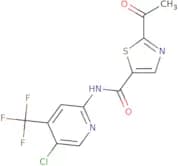
CAS:<p>2-Acetyl-N-(5-chloro-4-(trifluoromethyl)pyridin-2-yl)thiazole-5-carboxamide is a synthetic heterocyclic compound, which is primarily utilized in the realm of agrochemical research. This compound is derived from a complex synthesis involving heteroatoms and halogenated aromatic systems. Its molecular architecture features a pyridine ring substituted with chlorine and trifluoromethyl groups, enhancing its stability and bioactivity.<br><br>The mode of action of this compound involves the inhibition of key enzymatic pathways in target organisms, offering potential as a lead compound in the development of novel pesticides. Its structure allows for strong target binding, increasing its effectiveness in disrupting biological processes critical to pest survival.<br><br>In terms of applications, this compound is predominantly used in experimental settings aimed at discovering new strategies for pest control. It serves as a candidate for testing in bioassays to evaluate its efficacy and safety in diverse agricultural environments. Such studies can help in developing advanced agrochemicals, contributing to sustainable agriculture by providing more efficient and environmentally safer solutions compared to conventional pesticides.</p>Fórmula:C12H7ClF3N3O2SPureza:Min. 95%Peso molecular:349.72 g/molHexokinase 3 antibody
<p>Hexokinase 3 antibody is a cytotoxic protein that plays a crucial role in the regulation of glucose metabolism. It is involved in the phosphorylation of glucose to produce glucose-6-phosphate, which is an essential step in glycolysis. This antibody specifically targets hexokinase 3, a key isoform of hexokinase found in various tissues, including erythropoietin-producing cells.</p>Pureza:Min. 95%LMF2 antibody
<p>LMF2 antibody was raised using the middle region of LMF2 corresponding to a region with amino acids YVEPGTHGRLWTGAHRLFGAVEHLQLANSYGLFRRMTGLGGRPEVVLEGS</p>Pureza:Min. 95%Catalase protein
<p>Catalase protein is a highly versatile enzyme that plays a crucial role in protecting cells from oxidative damage. It is widely used in various applications, including research and diagnostics. Catalase protein exhibits strong catalytic activity, breaking down hydrogen peroxide into water and oxygen. This enzyme is commonly used in studies involving oxidative stress, as it neutralizes reactive oxygen species and prevents cellular damage. Additionally, catalase protein can be used in the production of monoclonal antibodies for various purposes, such as influenza hemagglutinin detection or the development of neutralizing antibodies. It can be easily activated and conjugated with streptavidin or other molecules for specific applications. Whether you are working in the field of life sciences or require catalase protein for diagnostic purposes, this high-quality product will meet your needs effectively. Trust in its reliable performance and exceptional catalase activity to enhance your research or diagnostic capabilities.</p>Pureza:Min. 95%SET7/9 antibody
<p>SET 7/9 antibody was raised in mouse using recombinant human SET7/9 (1-366aa) purified from E. coli as the immunogen.</p>C12ORF49 antibody
<p>C12ORF49 antibody was raised using the C terminal Of C12Orf49 corresponding to a region with amino acids LERFLNRAAVAFQNLFMAVEDHFELCLAKCRTSSQSVQHENTYRDPIAKY</p>Pureza:Min. 95%CYP2A6 antibody
<p>The CYP2A6 antibody is a monoclonal antibody that specifically targets the CYP2A6 enzyme. This enzyme plays a crucial role in the metabolism of various substances, including drugs, toxins, and carcinogens. The CYP2A6 antibody can be used in research and diagnostic applications to study the expression and activity of this enzyme.</p>SH2B3 antibody
<p>The SH2B3 antibody is a valuable tool in the field of Life Sciences. It is an immobilized monoclonal antibody that specifically targets SH2B3, a protein involved in various cellular processes. This antibody can be used for research purposes, such as studying the role of SH2B3 in signal transduction pathways or investigating its interactions with other proteins.</p>Amphetamine antibody
<p>Mouse monoclonal antibody against amphetmine. Amphetamine antibody was raised in Mouse using Amphetamine conjugated to BSA as the immunogen</p>IFN β antibody
<p>IFN beta antibody was raised in mouse using human interferon beta as the immunogen.</p>TSPYL6 antibody
<p>TSPYL6 antibody was raised using the N terminal of TSPYL6 corresponding to a region with amino acids MSLPESPHSPATLDYALEDPHQGQRSREKSKATEVMADMFDGRLEPIVFP</p>ZFP106 antibody
<p>ZFP106 antibody was raised in rabbit using the N terminal of ZFP106 as the immunogen</p>Pureza:Min. 95%HTR5A antibody
<p>HTR5A antibody was raised in rabbit using a synthetic peptide conjugated to KLH as the immunogen.</p>Pureza:Min. 95%PNPO antibody
<p>PNPO antibody was raised using the N terminal of PNPO corresponding to a region with amino acids PMRKSYRGDREAFEETHLTSLDPVKQFAAWFEEAVQCPDIGEANAMCLAT</p>PKC δ antibody
<p>The PKC delta antibody is a highly specific and potent tool used in life sciences research. It targets the protein kinase C delta, an enzyme involved in various cellular processes such as glucose transporter activation and growth factor signaling. This antibody is available in both monoclonal and polyclonal forms, providing researchers with options to suit their specific experimental needs.</p>Pureza:Min. 95%LRRC14 antibody
<p>LRRC14 antibody was raised in rabbit using the C terminal of LRRC14 as the immunogen</p>Pureza:Min. 95%PCSK1 antibody
<p>PCSK1 antibody was raised using the middle region of PCSK1 corresponding to a region with amino acids QSPKKSPSAKLNIPYENFYEALEKLNKPSQLKDSEDSLYNDYVDVFYNTK</p>Pureza:Min. 95%Mouse anti Human IgE
<p>Human IgE antibody was raised in mouse using human myeloma IgE as the immunogen.</p>MMP10 antibody
<p>The MMP10 antibody is a highly effective and versatile monoclonal antibody that has a wide range of applications in the field of life sciences. This high-flux cation antibody specifically targets matrix metalloproteinase 10 (MMP10), an enzyme involved in tissue remodeling and inflammation processes.</p>Pureza:Min. 95%EXT2 antibody
<p>EXT2 antibody was raised using a synthetic peptide corresponding to a region with amino acids NELLMAISDSDYYTDDINRACLFVPSIDVLNQNTLRIKETAQAMAQLSRW</p>Pureza:Min. 95%Mycoplasma pulmonis protein (Mouse)
<p>Purified native Mycoplasma pulmonis protein (Mouse)</p>Pureza:Min. 95%Troponin I antibody (Cardiac)
<p>Troponin I antibody (cardiac) was raised in mouse using amino acid residues 186-192 of cTnI as the immunogen.</p>SLC22A18 antibody
<p>SLC22A18 antibody was raised using the N terminal of SLC22A18 corresponding to a region with amino acids AASSPALPGVYLLFASRLPGALMHTLPAAQMVITDLSAPEERPAALGRLG</p>Pureza:Min. 95%TRIM2 antibody
<p>The TRIM2 antibody is a monoclonal antibody that specifically targets collagen. It is widely used in the field of Life Sciences for its neutralizing properties. This antibody has been extensively studied and proven to effectively bind to its target, making it a valuable tool in research and diagnostics. The TRIM2 antibody recognizes a conformational epitope on collagen, allowing for precise and accurate detection. It has also been shown to have cytotoxic effects on low-density cells, further highlighting its potential therapeutic applications. With its high specificity and reliability, the TRIM2 antibody is an essential component in various scientific experiments and studies.</p>SLC5A10 antibody
<p>SLC5A10 antibody was raised in rabbit using a synthetic peptide conjugated to KLH as the immunogen.</p>Pureza:Min. 95%PPIL2 antibody
<p>PPIL2 antibody was raised using a synthetic peptide corresponding to a region with amino acids GRVVGGFDVLTAMENVESDPKTDRPKEEIRIDATTVFVDPYEEADAQIAQ</p>SP1 antibody
<p>The SP1 antibody is a monoclonal antibody that is commonly used in Life Sciences research. It specifically targets and binds to the SP1 protein, which is a transcription factor involved in regulating gene expression. This antibody has been extensively studied and validated for its specificity and sensitivity in detecting SP1 protein in various experimental settings.</p>Pureza:Min. 95%MHC Class I antibody (allophycocyanin)
<p>Mouse monoclonal MHC Class I antibody (allophycocyanin)</p>CENPQ antibody
<p>CENPQ antibody was raised using the N terminal of CENPQ corresponding to a region with amino acids VRNTVKKNKNHLKDLSSEGQTKHTNLKHGKTAASKRKTWQPLSKSTRDHL</p>STAT5B antibody
<p>STAT5B antibody was raised in rabbit using the N terminal of STAT5B as the immunogen</p>Pureza:Min. 95%XIAP antibody
<p>The XIAP antibody is a monoclonal antibody that specifically targets the X-linked inhibitor of apoptosis protein (XIAP). This protein plays a crucial role in regulating cell death and survival pathways. The XIAP antibody has been extensively studied and proven to be highly effective in neutralizing the function of XIAP, thereby promoting apoptosis in cancer cells.</p>HSD3B1 Blocking Peptide
<p>A synthetic peptide for use as a blocking control in assays to test for specificity of HSD3B1 antibody, catalog no. 70R-7092</p>Pureza:Min. 95%Lidocaine antibody
<p>The Lidocaine antibody is a powerful tool in the field of Life Sciences. It is a polyclonal antibody that specifically targets lidocaine, a commonly used local anesthetic and antiarrhythmic drug. This antibody has been extensively tested and validated for its specificity and sensitivity in various applications.</p>Pureza:Min. 95%Pax5 antibody
<p>Pax5 antibody is a monoclonal antibody that is widely used in the field of life sciences. It specifically targets Pax5, a protein involved in B-cell development and differentiation. This antibody has been shown to have cytotoxic effects on B-cells, leading to their destruction. In addition, Pax5 antibody has antiviral properties and can inhibit the growth of viruses such as mycoplasma genitalium. Furthermore, this antibody can block the activity of certain growth factors, including epidermal growth factor, which are involved in cell proliferation and differentiation. Overall, Pax5 antibody is a valuable tool for researchers studying B-cell biology and its role in various diseases.</p>FH antibody
<p>FH antibody is a monoclonal antibody that targets the protein complex involved in the cytotoxic effects of oral haloperidol. It specifically binds to ornithine, reducing its viscosity and preventing the formation of toxic metabolites. FH antibody also interacts with the nuclear receptor, inhibiting its glycosylation and subsequent activation of interleukin-6 and interferon pathways. This monoclonal antibody has shown promising results in preclinical studies, demonstrating its potential as a therapeutic option for patients experiencing adverse effects from haloperidol treatment. Additionally, FH antibody does not interact with dopamine or mineralocorticoid receptors, minimizing the risk of unwanted side effects.</p>TRHR antibody
<p>TRHR antibody was raised in rabbit using a synthetic peptide conjugated to KLH as the immunogen.</p>Pureza:Min. 95%NUSAP1 antibody
<p>NUSAP1 antibody was raised using the C terminal of NUSAP1 corresponding to a region with amino acids LKASLSRPLNYEPHKGKLKPWGQSKENNYLNQHVNRINFYKKTYKQPHLQ</p>SLC5A9 antibody
<p>SLC5A9 antibody was raised in rabbit using a synthetic peptide conjugated to KLH as the immunogen.</p>Pureza:Min. 95%Rotavirus antibody
<p>Rotavirus antibody was raised in mouse using p41 capsid protein of monkey, porcine and human isolates as the immunogen.</p>Clostridium difficile Toxoid A protein
<p>Purified Native Clostridium difficile Toxoid A protein</p>Pureza:Min. 95%MTHFR antibody
<p>The MTHFR antibody is a monoclonal antibody used in the field of life sciences. It is designed to target and bind to the enzyme methylenetetrahydrofolate reductase (MTHFR). This antibody is commonly used in various research applications, including hybridization studies, where it can be used to detect and visualize the presence of MTHFR in biological samples.</p>Leptin protein
<p>Region of Leptin protein corresponding to amino acids MVPIQKVQDD TKTLIKTIVT RINDISHTQS VSSKQKVTGL DFIPGLHPIL TLSKMDQTLA VYQQILTSMP SRNVIQISND LENLRDLLHV LAFSKSCHLP WASGLETLDS LGGVLEASGY STEVVALSRL QGSLQDMLWQ LDLSPGC.</p>Pureza:Min. 95%SIN3A antibody
<p>SIN3A antibody was raised in rabbit using the N terminal of SIN3A as the immunogen</p>Pureza:Min. 95%SIL1 antibody
<p>SIL1 antibody was raised using a synthetic peptide corresponding to a region with amino acids KETKAEEELDAEVLEVFHPTHEWQALQPGQAVPAGSHVRLNLQTGEREAK</p>Pureza:Min. 95%Twist 1 antibody
<p>The Twist 1 antibody is a polyclonal antibody that has neutralizing properties against the growth factor Twist 1. This antibody specifically targets and inhibits the activity of Twist 1, a transcription factor involved in cell differentiation and embryonic development. By blocking the function of Twist 1, this antibody can prevent abnormal cell growth and promote normal cellular processes.</p>Pureza:Min. 95%4,4'-Methylenebis(5-methyl-1H-pyrrole-2-carbaldehyde)
CAS:<p>4,4'-Methylenebis(5-methyl-1H-pyrrole-2-carbaldehyde) is a ligand that binds to the GABAA receptor. It has been shown to activate this receptor by binding to the alpha subunit of the GABAAR. This receptor is responsible for mediating inhibitory signals in the brain. Activation of this receptor leads to an increase in chloride ion influx, which causes hyperpolarization of neurons and thus reduces neuronal activity. 4,4'-Methylenebis(5-methyl-1H-pyrrole-2-carbaldehyde) has also been shown to be a competitive inhibitor of peptides that bind to the GABAA receptor, such as baclofen and muscimol.<br>!--END--></p>Fórmula:C13H14N2O2Pureza:Min. 95%Peso molecular:230.26 g/molSIAH1 antibody
<p>The SIAH1 antibody is a highly specialized antibody that targets the phosphatase histidine. It exhibits cytotoxic properties and is commonly used in multidrug treatments. This antibody is available in both polyclonal and monoclonal forms, providing researchers with options for their specific needs. It has been extensively used in various life sciences applications, including ophthalmic formulations, chemokine studies, hybridization assays, growth factor research, and immunoassays. The SIAH1 antibody is known for its high specificity and sensitivity, making it a valuable tool for scientists studying cellular signaling pathways and protein regulation. Whether you're conducting basic research or developing new therapeutic approaches, this antibody is an essential component of your toolkit.</p>p53 antibody
<p>p53 antibody was raised in mouse using recombinant human p53 (transcription domain within the NH2 terminus) as the immunogen.</p>ITGB3 antibody
<p>ITGB3 antibody was raised in rabbit using a synthetic peptide conjugated to KLH as the immunogen.</p>Pureza:Min. 95%MST1R antibody
<p>MST1R antibody was raised in rabbit using a synthetic peptide conjugated to KLH as the immunogen.</p>Pureza:Min. 95%SNX27 antibody
<p>The SNX27 antibody is a highly effective monoclonal antibody used in Life Sciences. It is specifically designed to target thrombocytopenia, a condition characterized by low platelet count. This powerful antibody works by binding to specific receptors on the surface of platelets, promoting their activation and preventing their destruction. In addition to its role in treating thrombocytopenia, the SNX27 antibody has also shown promise in other areas of research. It can be used in assays to detect and quantify various proteins, such as collagen and anti-mesothelin antibodies. Furthermore, this antibody has been found to inhibit the activity of urokinase plasminogen activator, an enzyme involved in blood clot dissolution. With its cytotoxic properties and ability to neutralize inhibitors present in human serum, the SNX27 antibody is a valuable tool for both laboratory research and therapeutic applications.</p>EWSR1 antibody
<p>EWSR1 antibody was raised in rabbit using the middle region of EWSR1 as the immunogen</p>Pureza:Min. 95%NUMB antibody
<p>The NUMB antibody is a monoclonal antibody that specifically targets adiponectin, a growth factor found in adipose tissue. This antibody is widely used in Life Sciences research to study the role of adiponectin in various physiological processes. It has been shown to be effective in detecting and quantifying adiponectin levels in samples such as serum, plasma, and cell lysates. The NUMB antibody can also be used for immunohistochemistry and Western blot analysis to visualize the expression of adiponectin in different tissues. Additionally, this antibody has been used to investigate the presence of autoantibodies against adiponectin in certain diseases, including insulin resistance and diabetes. Its high specificity and sensitivity make it a valuable tool for researchers studying adipocyte biology and related disorders.</p>RABEP1 antibody
<p>The RABEP1 antibody is a polyclonal antibody that has high specificity for interferon and alpha-fetoprotein. It recognizes specific glycan and fatty acid molecules and can be used in various applications in the field of Life Sciences. This monoclonal antibody exhibits high specific activity, making it a valuable tool for research purposes. It can be used to detect the presence of RABEP1 protein in samples such as human serum or cell lysates. Additionally, this antibody has been shown to have superoxide activity and may play a role in regulating lipoprotein lipase activity. With its versatility and reliability, the RABEP1 antibody is an essential component for any laboratory conducting research in these areas.</p>PGM2L1 antibody
<p>PGM2L1 antibody was raised using the N terminal of PGM2L1 corresponding to a region with amino acids KEDNGYKVYWETGAQITSPHDKEILKCIEECVEPWNGSWNDNLVDTSPLK</p>LPCAT1 antibody
<p>LPCAT1 antibody was raised using the middle region of LPCAT1 corresponding to a region with amino acids LRLPADTCLLEFARLVRGLGLKPEKLEKDLDRYSERARMKGGEKIGIAEF</p>Pureza:Min. 95%PIK3R4 antibody
<p>PIK3R4 antibody was raised using the N terminal of PIK3R4 corresponding to a region with amino acids HDLPEKAEGEPKENGLVILVSVITSCLQTLKYCDSKLAALELILHLAPRL</p>Pureza:Min. 95%SLITRK6 antibody
<p>SLITRK6 antibody was raised using the N terminal of SLITRK6 corresponding to a region with amino acids NFITVIEPSAFSKLNRLKVLILNDNAIESLPPNIFRFVPLTHLDLRGNQL</p>Pureza:Min. 95%BCL2 antibody
<p>The BCL2 antibody is a highly specialized monoclonal antibody that targets the B-cell lymphoma 2 (BCL2) protein, which plays a crucial role in regulating cell survival. This antibody specifically binds to the BCL2 protein, inhibiting its function and promoting apoptosis (cell death) in cancer cells.</p>DPH2 Blocking Peptide
<p>A synthetic peptide for use as a blocking control in assays to test for specificity of DPH2 antibody, catalog no. 70R-3317</p>Pureza:Min. 95%PYGB antibody
<p>PYGB antibody was raised using the N terminal of PYGB corresponding to a region with amino acids ADDWLRYGNPWEKARPEYMLPVHFYGRVEHTPDGVKWLDTQVVLAMPYDT</p>Rex1 antibody
<p>The Rex1 antibody is a polyclonal antibody that is widely used in life sciences research. It is commonly used in assays and immunohistochemical studies to detect the presence of Rex1, a protein expressed in pluripotent stem cells. This antibody has been shown to be highly specific and sensitive, making it an ideal tool for studying the properties and behavior of stem cells. Additionally, the Rex1 antibody can be used as an inhibitor to block the activity of Rex1, allowing researchers to investigate its function and role in cellular processes. Its application extends beyond basic research, as it has potential uses in the development of new medicines and therapies targeting pluripotent stem cells. With its unique ability to recognize and bind to Rex1, this antibody offers valuable insights into the complex mechanisms underlying cell differentiation and development.</p>Pureza:Min. 95%XPA antibody
<p>The XPA antibody is a polyclonal antibody used in Life Sciences research. It is specifically designed to target and bind to the XPA protein, which plays a crucial role in DNA repair. This antibody is commonly used in studies involving mesenchymal stem cells, as well as in investigations related to thrombocytopenia and growth factors. The XPA antibody can also be utilized for the detection and quantification of various chemokines, antibodies, inhibitors, collagens, and other proteins of interest. Its high specificity and affinity make it an invaluable tool for researchers looking to understand the molecular mechanisms underlying different biological processes. With its colloidal properties and ability to bind to specific epitopes, this monoclonal antibody offers accurate and reliable results. Additionally, its low viscosity allows for easy handling and efficient use in various experimental protocols.</p>