Bioquímicos e reagentes
Os bioquímicos e reagentes são substâncias fundamentais para a pesquisa e desenvolvimento em campos como biotecnologia, biologia molecular, farmacologia e medicina. Esses produtos são essenciais para uma variedade de aplicações, incluindo a síntese de compostos, a análise de amostras biológicas, a pesquisa de processos metabólicos e a produção de medicamentos. Na CymitQuimica, oferecemos uma ampla seleção de bioquímicos e reagentes de alta qualidade e pureza, adequados para diversas necessidades científicas e industriais. Nosso catálogo inclui enzimas, anticorpos, ácidos nucleicos, aminoácidos e muitos outros produtos, todos projetados para apoiar pesquisadores e profissionais em seus projetos de pesquisa e desenvolvimento, garantindo resultados confiáveis e reproduzíveis.
Subcategorias de "Bioquímicos e reagentes"
- Biomoléculas(99.115 produtos)
- Por Alvo Biológico(99.074 produtos)
- Por uso/Efeitos Farmacológicos(6.785 produtos)
- Compostos relacionados à criopreservação e aos crioconservantes(21 produtos)
- Desinfetantes, aditivos para aquecimento de líquidos de banho e compostos relacionados(28 produtos)
- Hormónios(346 produtos)
- Biologia Vegetal(6.693 produtos)
- Metabólitos secundários(14.219 produtos)
Foram encontrados 130577 produtos de "Bioquímicos e reagentes"
Ordenar por
Pureza (%)
0
100
|
0
|
50
|
90
|
95
|
100
NPFF2 antibody
<p>NPFF2 antibody was raised in rabbit using N terminal sequence MNEKWDTNSSENWHPI and C terminal sequence ELVMEELKETTNSSEI of the human NPFF2 protein as the immunogen.</p>Pureza:Min. 95%KLK11 antibody
<p>KLK11 antibody was raised in rabbit using residues 68-82 [YIVHLGQHNLQKEEG] of the 35 kDa human hippostasin/KLK11protein as the immunogen.</p>Pureza:Min. 95%ZMYND11 antibody
<p>ZMYND11 antibody was raised in rabbit using the N terminal of ZMYND11 as the immunogen</p>Pureza:Min. 95%MGMT protein (His tag)
<p>1-207 amino acids: MGSSHHHHHH SSGLVPRGSH MDKDCEMKRT TLDSPLGKLE LSGCEQGLHE IKLLGKGTSA ADAVEVPAPA AVLGGPEPLM QCTAWLNAYF HQPEAIEEFP VPAFHHPVFQ QESFTRQVLW KLLKVVKFGE VISYQQLAAL AGNPKAARAV GGAMRGNPVP ILIPCHRVVC SSGAVGNYSG GLAVKEWLLA HEGHRLGKPG LGGSSGLAGA WLKGAGATSG SPPAGRN</p>Pureza:Min. 95%Hexokinase antibody
<p>Hexokinase antibody was raised in mouse using recombinant human Hexokinase1 (1-917aa) purified from E. coli as the immunogen.</p>Digitoxin antibody
<p>Digitoxin antibody was raised in rabbit using digitoxin-BSA as the immunogen.</p>Pureza:Min. 95%ERK1 antibody
<p>ERK1 antibody was raised in mouse using recombinant full length ERK1 protein as the immunogen.</p>Matrilin 3 antibody
<p>Matrilin 3 antibody was raised using the middle region of MATN3 corresponding to a region with amino acids IELYAVGVDRADMASLKMMASEPLEEHVFYVETYGVIEKLSSRFQETFCA</p>Pureza:Min. 95%SIGLEC9 antibody
<p>The SIGLEC9 antibody is a monoclonal antibody that is used in immunoassays to detect autoantibodies in human serum. It can be immobilized on an electrode and used for the quantitation of specific markers or proteins. This antibody has anti-angiogenesis properties, making it valuable in research and potential treatment and/or prophylaxis of angiogenesis-related conditions. The SIGLEC9 antibody can be used in combination with streptavidin or other detection methods to enhance sensitivity and specificity in various life science applications. Its high affinity for histidine makes it an excellent tool for protein purification and analysis.</p>Riboflavin kinase protein (His tag)
<p>1-162 amino acids: MGSSHHHHHH SSGLVPRGSH MPRADCIMRH LPYFCRGQVV RGFGRGSKQL GIPTANFPEQ VVDNLPADIS TGIYYGWASV GSGDVHKMVV SIGWNPYYKN TKKSMETHIM HTFKEDFYGE ILNVAIVGYL RPEKNFDSLE SLISAIQGDI EEAKKRLELP EHLKIKEDNF FQVSKSKIMN GH</p>Pureza:Min. 95%RBM22 antibody
<p>RBM22 antibody was raised using the C terminal of RBM22 corresponding to a region with amino acids KWGRSQAARGKEKEKDGTTDSGIKLEPVPGLPGALPPPPAAEEEASANYF</p>CDH22 antibody
<p>CDH22 antibody was raised using the N terminal of CDH22 corresponding to a region with amino acids LIDELTGDIHAMERLDREQKTFYTLRAQARDRATNRLLEPESEFIIKVQD</p>CD4 antibody (allophycocyanin)
<p>Rat monoclonal CD4 antibody (allophycocyanin); IgG2b kappa; clone GK1.5</p>TrkA antibody
<p>The TrkA antibody is a highly specialized protein complex that plays a crucial role in various Life Sciences research applications. It is commonly used as a tool for studying the functions and interactions of specific proteins, such as c-myc and alpha-fetoprotein. This antibody is widely recognized for its exceptional specificity and sensitivity, making it an ideal choice for researchers in the field.</p>STEAP4 antibody
<p>STEAP4 antibody was raised using the C terminal of STEAP4 corresponding to a region with amino acids AFLHVLYTLVIPIRYYVRWRLGNLTVTQAILKKENPFSTSSAWLSDSYVA</p>Pureza:Min. 95%TUFM antibody
<p>TUFM antibody was raised using the middle region of TUFM corresponding to a region with amino acids PEKELAMPGEDLKFNLILRQPMILEKGQRFTLRDGNRTIGTGLVTNTLAM</p>Eotaxin 2 antibody
<p>Eotaxin 2 antibody was raised in goat using highly pure recombinant murine eotaxin-2 as the immunogen.</p>Pureza:Min. 95%JARID2 antibody
<p>JARID2 antibody was raised using the N terminal of JARID2 corresponding to a region with amino acids THKHVHNGHVFNGSSRSTREKEPVQKHKSKEATPAKEKHSDHRADSRREQ</p>Pureza:Min. 95%NMT1 antibody
<p>NMT1 antibody was raised using the N terminal of NMT1 corresponding to a region with amino acids TMEEASKRSYQFWDTQPVPKLGEVVNTHGPVEPDKDNIRQEPYTLPQGFT</p>Adenylate kinase 3(C22S) protein (His tag)
<p>1-223 amino acids: MRGSHHHHHH GMASMTGGQQ MGRDLYDDDD KDRWGSMASK LLRAVILGPP GSGKGTVSQR IAQNFGLQHL SSGHFLRENI KASTEVGEMA KQYIEKSLLV PDHVITRLMM SELENRRGQH WLLDGFPRTL GQAEALDKIC EVDLVISLNI PFETLKDRLS RRWIHPPSGR VYNLDFNPPH VHGIDDVTGE PLVQQEDDKP EAVAARLRQY KDVAKPVIEL YKSRGVLHQF SGTETNKIWP YVYTLFSNKI TPIQSKEAY</p>Pureza:Min. 95%AML1 antibody
<p>The AML1 antibody is a growth factor monoclonal antibody that is used in Life Sciences research. It specifically targets AML1, a transcription factor involved in hematopoiesis and leukemogenesis. This antibody can be used to study the role of AML1 in various cellular processes, such as cell proliferation, differentiation, and apoptosis. The AML1 antibody is produced using advanced techniques that ensure high specificity and affinity for its target. It can be used in a variety of applications, including Western blotting, immunofluorescence, and immunohistochemistry. With its ability to bind to AML1 and inhibit its function, this antibody provides valuable insights into the mechanisms underlying leukemia development and progression. Researchers and scientists rely on the AML1 antibody to advance their understanding of hematopoiesis and develop potential therapeutic strategies for leukemia treatment.</p>Sideroflexin 3 antibody
<p>Sideroflexin 3 antibody was raised using the middle region of SFXN3 corresponding to a region with amino acids TPITVRQLGTAYVSATTGAVATALGLKSLTKHLPPLVGRFVPFAAVAAAN</p>Pureza:Min. 95%CDC27 antibody
<p>CDC27 antibody is a high-quality polyclonal antibody that specifically targets CDC27 protein. This antibody can be used in various research applications, including immunohistochemistry, western blotting, and ELISA. CDC27 is an essential component of the anaphase-promoting complex/cyclosome (APC/C), which plays a crucial role in cell cycle regulation. It is involved in the degradation of cell cycle regulators and ensures the proper progression through mitosis. The CDC27 antibody has been validated for its specificity and sensitivity, making it a reliable tool for studying cell cycle dynamics and understanding the mechanisms underlying cell division. With its outstanding performance and versatility, this antibody is a valuable asset for researchers in the field of life sciences.</p>C1S antibody
<p>The C1S antibody is a monoclonal antibody that targets the cholinergic growth factor. It is designed to specifically bind to and neutralize the activity of C1S, a protease involved in various biological processes. This antibody has been shown to induce cell lysis and inhibit the activity of C1S in human serum. Additionally, it has anti-idiotypic properties, meaning it can bind to and block the binding of other antibodies to their target molecules. The C1S antibody is widely used in life sciences research for its ability to study protease activity and glycopeptide metabolism. Its low pH stability makes it suitable for various applications requiring acidic conditions. With its high specificity and neutralizing capabilities, this monoclonal antibody is an invaluable tool for studying C1S-related processes in both basic research and therapeutic development.</p>ZNF499 antibody
<p>ZNF499 antibody was raised in rabbit using the middle region of ZNF499 as the immunogen</p>Pureza:Min. 95%SDF1 α antibody
<p>SDF1 alpha antibody was raised in rabbit using highly pure recombinant human SDF-1-alpha as the immunogen.</p>Pureza:Min. 95%STS antibody
<p>The STS antibody is a highly specialized antibody used in the field of Life Sciences. It is commonly used in research and diagnostic applications. This antibody is designed to specifically target and bind to STS (steroid sulfatase), an enzyme involved in the metabolism of steroid hormones. The STS antibody can be used for various techniques, including polymerase chain reaction (PCR), lectin binding assays, carbonic anhydrase activity assays, and hybridization studies.</p>FBXO31 Blocking Peptide
<p>A synthetic peptide for use as a blocking control in assays to test for specificity of FBXO31 antibody, catalog no. 70R-2500</p>Pureza:Min. 95%FAM14A antibody
<p>FAM14A antibody was raised using the middle region of FAM14A corresponding to a region with amino acids LSTSSNILLASVGSVLGACLGNSPSSSLPAEPEAKEDEARENVPQGEPPK</p>Pureza:Min. 95%PF9601N
CAS:<p>PF9601N is a selective inhibitor of the enzyme dopamine-beta-hydroxylase (DBH). DBH is a rate-limiting enzyme in the synthesis of dopamine, and PF9601N has been shown to provide neuroprotection against neuronal death. PF9601N binds reversibly to the active site of DBH and inhibits amine oxidation, thereby inhibiting the production of norepinephrine and epinephrine. The basic structure of PF9601N is similar to that of reserpine, which was used for decades as an antihypertensive drug. The in vivo model for PF9601N is rat striatal cells treated with 6-hydroxydopamine, which induces cell death by apoptosis. In response to this treatment, cells treated with PF9601N showed significantly less neuronal death than those not treated with the compound.</p>Fórmula:C19H18N2OPureza:Min. 95%Peso molecular:290.36 g/molTUBB3 antibody
<p>The TUBB3 antibody is a monoclonal antibody used in the field of Life Sciences. It specifically targets the tubulin beta-3 chain, which is involved in cell division and growth. This antibody has been extensively studied for its role in various cellular processes, including the regulation of alpha-fetoprotein and dopamine levels, as well as the modulation of growth factors.</p>SHMT2 antibody
<p>The SHMT2 antibody is a highly specialized monoclonal antibody that targets the serine hydroxymethyltransferase 2 (SHMT2) protein. This protein plays a crucial role in the metabolism of fatty acids and acts as a growth factor in various cellular processes. The SHMT2 antibody specifically binds to the SHMT2 protein, allowing for its detection and analysis in research and diagnostic applications.</p>LRRTM1 antibody
<p>LRRTM1 antibody was raised using the middle region of LRRTM1 corresponding to a region with amino acids RIFQDCRSLKFLDIGYNQLKSLARNSFAGLFKLTELHLEHNDLVKVNFAH</p>Pureza:Min. 95%TYMS antibody
<p>TYMS antibody was raised in mouse using recombinant TYMS (1-313aa) purified from E. coli as the immunogen.</p>ACVR1C antibody
<p>ACVR1C antibody was raised using the N terminal of ACVR1C corresponding to a region with amino acids QVFCHSSNNVTKTECCFTDFCNNITLHLPTASPNAPKLGPMELAIIITVP</p>Pureza:Min. 95%Rabbit anti Dog IgG (H + L) (HRP)
<p>Rabbit anti-canine IgG (H + L) (HRP) was raised in rabbit using canine IgG (H & L) as the immunogen.</p>UBA5 antibody
<p>UBA5 antibody was raised using the middle region of UBA5 corresponding to a region with amino acids VLSCVDNFEARMTINTACNELGQTWMESGVSENAVSGHIQLIIPGESACF</p>Pureza:Min. 95%Fosgemcitabine palabenamide
CAS:<p>Fosgemcitabine is a peptide analog that binds to the active site of the DNA ligase, an enzyme involved in DNA repair. Fosgemcitabine has been shown to inhibit the enzymatic activity of DNA ligase and lead to cell death by inhibiting protein synthesis and cell division. Fosgemcitabine is also known as palabenamide, which is a synthetic compound that acts as a selective inhibitor of the ion channel TRPM2. The binding of palabenamide to TRPM2 leads to inhibition of calcium influx into cells and subsequent cell death. Palabenamide has been shown to inhibit the proliferation of human T-cells and suppress antigen-specific immune responses in mice models.</p>Fórmula:C25H27F2N4O8PPureza:Min. 95%Peso molecular:580.5 g/molAc710 mesylate
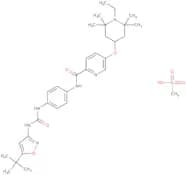
CAS:<p>Ac710 mesylate is a small molecule that is being developed for the treatment of fibrosis. It blocks the activity of collagen-specific TGF-β1 and TGF-β3, which are cytokines that function as signaling molecules in fibrosis. Ac710 mesylate has been shown to inhibit alveolar type II cell proliferation and induce lung fibrosis in mice. The drug was also shown to prevent emphysema development in rats with chronic bronchitis, by reducing protein expression and neutrophil infiltration.</p>Fórmula:C32H46N6O7SPureza:Min. 95%Peso molecular:658.8 g/molMyc antibody
<p>The Myc antibody is a monoclonal antibody that specifically targets the c-Myc protein. It has a high affinity for c-Myc, which is a nuclear biomolecule involved in the regulation of cell growth and proliferation. The Myc antibody can be used in various life sciences research applications to study the role of c-Myc in different cellular processes.</p>LRRC26 antibody
<p>LRRC26 antibody was raised using the middle region of Lrrc26 corresponding to a region with amino acids LRPLCAWLRRHPLPASEAETVLCVWPGRLTLSPLTAFSDAAFSHCAQPLA</p>Pureza:Min. 95%CD42d antibody
<p>The CD42d antibody is a highly specialized monoclonal antibody that has been developed for use in the field of Life Sciences. This antibody is specifically designed to target and neutralize syncytia formation, which is a process involved in the development of certain diseases. By inhibiting this process, the CD42d antibody can effectively prevent the formation of syncytia and reduce the severity of disease symptoms.</p>DMTF1 antibody
<p>DMTF1 antibody was raised in mouse using recombinant Cyclin D Binding Myb-Like Transcription Factor 1</p>ZW10 antibody
<p>ZW10 antibody was raised in mouse using recombinant Human Zw10, Kinetochore Associated, Homolog (Drosophila) (Zw10)</p>USP1 antibody
<p>The USP1 antibody is a high-quality monoclonal antibody that is widely used in Life Sciences research. It specifically binds to glycans and has been proven to be a potent inhibitor of gapdh, an enzyme involved in glycolysis. This antibody is an essential tool for studying the function and regulation of gapdh in various cellular processes. Additionally, the USP1 antibody has shown great potential as an antiviral agent due to its ability to target specific viral antigens. Its high affinity binding properties make it an ideal choice for researchers working with interleukins and other extracellular proteins. Furthermore, this antibody has also been found to play a crucial role in tumor-related macrophages, making it a valuable tool for cancer research. Whether you are conducting basic research or developing therapeutic strategies, the USP1 antibody is an indispensable resource for your scientific endeavors.</p>MTMR12 antibody
<p>MTMR12 antibody was raised using the middle region of MTMR12 corresponding to a region with amino acids RNSARLSSLFPFALLQRHSSKPVLPTSGWKALGDEDDLAKREDEFVDLGD</p>PDZK1 antibody
<p>PDZK1 antibody was raised using the N terminal of PDZK1 corresponding to a region with amino acids MTSTFNPRECKLSKQEGQNYGFFLRIEKDTEGHLVRVVEKCSPAEKAGLQ</p>PPP2R1A protein
<p>The 6-Fluoro-3-indoxyl-beta-D-galactopyranoside is an effective antituberculosis drug that falls under the class of rifamycins. It is specifically designed to combat tuberculosis infection by targeting active compounds and exhibiting bactericidal activity. This drug works by binding to DNA-dependent RNA polymerase, preventing transcription and replication, thus inhibiting bacterial growth. It has been extensively studied using advanced techniques like transcription-quantitative polymerase chain and patch-clamp technique. Moreover, it undergoes various metabolic transformations such as hydrolysis by esterases or glucuronidases, oxidation by cytochrome P450 enzymes, reduction by glutathione reductase, or conjugation with glucuronic acid. Additionally, it selectively binds to markers expressed in Mycobacterium tuberculosis strains and effectively inhibits cell growth in culture.</p>Pureza:Min. 95%TP53 antibody
<p>The TP53 antibody is a highly effective monoclonal antibody that targets the TP53 protein, also known as tumor protein 53. This protein plays a crucial role in regulating cell division and preventing the formation of tumors. The TP53 antibody specifically binds to TP53 and activates its cytotoxic properties, leading to the destruction of cancer cells.</p>Ret antibody
<p>The Ret antibody is a highly specialized globulin that is used in the field of Life Sciences. It is an autoantibody that specifically targets the Ret protein complex, which plays a crucial role in various cellular processes. This antibody has been extensively studied and proven to have neutralizing effects on the Ret protein, making it an important tool for research and development.</p>CYP2J2 antibody
<p>The CYP2J2 antibody is a highly specific monoclonal antibody that targets the glycoprotein CYP2J2. It is widely used in life sciences research and various immunoassays. This antibody has been shown to have cytotoxic effects, making it a valuable tool for studying the function of CYP2J2 in cellular processes. Additionally, it has neutralizing properties and can be used to inhibit the activity of CYP2J2 in experiments. The CYP2J2 antibody is also commonly used in studies involving irinotecan, fibrinogen, and actin, as it can facilitate the detection and quantification of these molecules. With its high specificity and versatility, this monoclonal antibody is an essential component for researchers in the field of molecular biology.</p>ZGPAT antibody
<p>ZGPAT antibody was raised using the N terminal of ZGPAT corresponding to a region with amino acids DEESLESALQTYRAQLQQVELALGAGLDSSEQADLRQLQGDLKELIELTE</p>Cyclin H protein (His tag)
<p>1-323 amino acids: MGSSHHHHHH SSGLVPRGSH MYHNSSQKRH WTFSSEEQLA RLRADANRKF RCKAVANGKV LPNDPVFLEP HEEMTLCKYY EKRLLEFCSV FKPAMPRSVV GTACMYFKRF YLNNSVMEYH PRIIMLTCAF LACKVDEFNV SSPQFVGNLR ESPLGQEKAL EQILEYELLL IQQLNFHLIV HNPYRPFEGF LIDLKTRYPI LENPEILRKT ADDFLNRIAL TDAYLLYTPS QIALTAILSS ASRAGITMES YLSESLMLKE NRTCLSQLLD IMKSMRNLVK KYEPPRSEEV AVLKQKLERC HSAELALNVI TKKRKGYEDD DYVSKKSKHE EEEWTDDDLV ESL</p>Pureza:Min. 95%HSV1 protein
<p>The HSV1 protein is a native protein that plays a crucial role in various biological processes. It acts as an epidermal growth factor, promoting cell growth and differentiation. This protein exhibits excellent photostability, making it ideal for use in life sciences research. It can be used as a monoclonal antibody or in combination with other native proteins and antigens.</p>Pureza:Min. 95%BAX antibody
<p>The BAX antibody is a highly specialized monoclonal antibody that targets the BAX protein, which plays a crucial role in programmed cell death (apoptosis). This steroid and multidrug-resistant protein is involved in regulating the release of cytochrome c from mitochondria, ultimately leading to apoptosis. The BAX antibody specifically binds to the BAX protein, preventing its function and promoting cell survival.</p>NR2C2 antibody
<p>NR2C2 antibody was raised using the N terminal of NR2C2 corresponding to a region with amino acids INKHHRNRCQFCRLKKCLEMGMKMESVQSERKPFDVQREKPSNCAASTEK</p>Pureza:Min. 95%Mioflazine
CAS:<p>Mioflazine is a ligand that binds to the ion channels and induces a conformational change in the protein. It has been used as a pharmacological tool in the study of ion channels, a research tool in cell biology, and as an inhibitor of peptide-mediated reactions. Mioflazine is a high-purity product that is supplied at > 99% purity.</p>Fórmula:C29H30Cl2F2N4O2Pureza:Min. 95%Peso molecular:575.5 g/mol4-(2-(1H-Imidazol-1-yl)ethoxy)benzoic acid hydrochloride
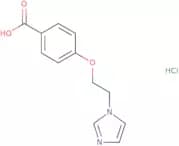
CAS:<p>4-(2-(1H-Imidazol-1-yl)ethoxy)benzoic acid hydrochloride is a synthetic chemical compound, which is typically sourced through organic synthesis methods. This compound is characterized by its unique structure featuring an imidazole group linked to a benzoic acid moiety via an ethoxy bridge. The mode of action of this compound predominantly involves interactions at a molecular level with various biological targets, potentially influencing biochemical pathways by mimicking or inhibiting natural biological molecules.</p>Fórmula:C12H13ClN2O3Pureza:Min. 95%Peso molecular:268.69 g/molAZD 5597
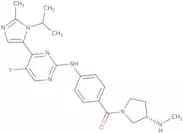
CAS:<p>Inhibitor of cyclin-dependent kinases CDK1 and CDK2</p>Fórmula:C23H28FN7OPureza:Min. 95%Peso molecular:437.51 g/molPyrimidyn-7
CAS:<p>Pyrimidyn-7 is a pharmacologically active ligand that binds to the receptor and activates ion channels. It is an inhibitor of potassium channels, which regulate the flow of potassium ions across the neuronal membrane. A high purity pyrimidyn-7 was obtained by recrystallization from methanol. The purity was determined to be >99% by HPLC analysis and confirmed by IR spectroscopy and elemental analysis.</p>Fórmula:C8H8N2SPureza:Min. 95%Peso molecular:164.23 g/molBAY 2416964
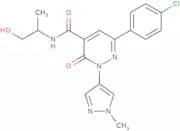
CAS:<p>BAY 2416964 is a chemical compound that is used as an antioxidant in skin care products. It has been shown to have synergistic effects when applied with other antioxidants, such as vitamin E or green tea extract. This compound is used to prevent dehydration and improve the appearance of dry skin. BAY 2416964 also has antioxidant effects, which may help protect against oxidative damage caused by free radicals and reactive oxygen species in the environment. The use of this drug has been reported to help with symptoms of skin conditions such as dermatitis, psoriasis, and eczema. BAY 2416964 has been shown to inhibit the growth of prostate cancer cells "in vitro" by disrupting the cell cycle.</p>Fórmula:C18H18ClN5O3Pureza:Min. 95%Peso molecular:387.8 g/molMethyltetrazine Agarose
<p>Methyltetrazine agarose is a 6% crosslinked agarose resin that is activated with methyltetrazine functional groups for covalent immobilization of TCO-modified biomolecules via a Diels–Alder reaction. Applications are preparation of protein agarose media with almost quantitative capture of proteins.<br>Activation level: 10-20 µmol methyltetrazine groups per mL resin<br>Bead size: 50-150 µm</p>Pureza:Min. 95%MHY 553
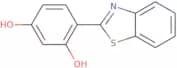
CAS:<p>MHY 553 is a pharmaceutical preparation that contains propranolol hydrochloride. It has been shown to inhibit the growth of human breast cancer cells in culture by lowering camp levels and reducing the number of fatty acids. MHY 553 also inhibits tumor growth in mice with MDA-MB-231 breast cancer and decreases diastolic blood pressure in rats. MHY 553 has been shown to have a protective effect on experimental models of light-induced skin cancer and to bind DNA, inhibiting transcription and replication.</p>Fórmula:C13H9NO2SPureza:Min. 95%Peso molecular:243.28 g/molMurraxocin
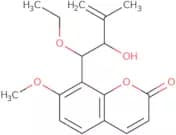
CAS:<p>Murraxocin is an anxiolytic drug that belongs to the class of enantiomer. It has been shown to have a strong effect on the central nervous system, and is used in the treatment of anxiety disorders. Murraxocin has been shown to be effective against viruses such as albiflora and murralongin, which cause symptoms such as skin care, s. aureus, and cell culture. Murraxocin also inhibits the production of prostaglandins and other inflammatory mediators in cells. This inhibition can lead to cell apoptosis by preventing cellular proliferation. Murraxocin is not active against bacteria or fungi.</p>Fórmula:C17H20O5Pureza:Min. 95%Peso molecular:304.34 g/mol(R)-Telaprevir
CAS:<p>Telaprevir is a small molecule that binds to the cytoplasmic domain of the human immunodeficiency virus type 1 (HIV-1) envelope protein, blocking its fusion with host cells. Telaprevir is also an inhibitor of hepatitis C virus (HCV) NS3 protease. The binding of telaprevir to HIV-1 and HCV is selective and reversible. This drug has been shown to be effective in inhibiting the replication of HIV-1 and HCV in vitro, as well as in clinical trials. Telaprevir binds to the active site of the protease, preventing cleavage of a polyprotein into three parts: p7, p2, and p6.<br>Telaprevir is an ion channel blocker that inhibits potassium channels. It can be used as a research tool for studying ligand-receptor interactions or protein interactions with peptides. Telaprevir is a high purity product with CAS No.</p>Fórmula:C36H53N7O6Pureza:Min. 95%Peso molecular:679.8 g/mol(S)-Hydroxychloroquine sulfate
CAS:<p>(S)-Hydroxychloroquine sulfate is a research tool that is used as an activator for the production of antibodies and to study the interactions between peptides and proteins. (S)-Hydroxychloroquine sulfate has been shown to inhibit ion channels, such as voltage-gated sodium channels. It also inhibits protein interactions, such as receptor-ligand interactions.</p>Fórmula:C18H28ClN3O5SPureza:Min. 95%Peso molecular:434.00 g/mol