Bioquímicos e reagentes
Os bioquímicos e reagentes são substâncias fundamentais para a pesquisa e desenvolvimento em campos como biotecnologia, biologia molecular, farmacologia e medicina. Esses produtos são essenciais para uma variedade de aplicações, incluindo a síntese de compostos, a análise de amostras biológicas, a pesquisa de processos metabólicos e a produção de medicamentos. Na CymitQuimica, oferecemos uma ampla seleção de bioquímicos e reagentes de alta qualidade e pureza, adequados para diversas necessidades científicas e industriais. Nosso catálogo inclui enzimas, anticorpos, ácidos nucleicos, aminoácidos e muitos outros produtos, todos projetados para apoiar pesquisadores e profissionais em seus projetos de pesquisa e desenvolvimento, garantindo resultados confiáveis e reproduzíveis.
Subcategorias de "Bioquímicos e reagentes"
- Biomoléculas(99.116 produtos)
- Por Alvo Biológico(99.076 produtos)
- Por uso/Efeitos Farmacológicos(6.785 produtos)
- Compostos relacionados à criopreservação e aos crioconservantes(21 produtos)
- Desinfetantes, aditivos para aquecimento de líquidos de banho e compostos relacionados(28 produtos)
- Hormónios(346 produtos)
- Biologia Vegetal(6.698 produtos)
- Metabólitos secundários(14.220 produtos)
Foram encontrados 130579 produtos de "Bioquímicos e reagentes"
Ordenar por
Pureza (%)
0
100
|
0
|
50
|
90
|
95
|
100
Goat anti Rabbit IgG (20 nm Gold Colloid)
<p>Goat anti-rabbit IgG antibody was raised in goat using rabbit IgG as the immunogen.</p>Pureza:Min. 95%Giardia lamblia antibody
<p>Giardia lamblia antibody is a monoclonal antibody that specifically targets and binds to Giardia lamblia, a microscopic parasite that causes gastrointestinal infections in humans. This antibody has been extensively studied in the field of Life Sciences and has shown promising results in diagnostic applications. It can be used in various immunoassays to detect the presence of Giardia lamblia antigens in human serum or other biological samples. The highly specific binding of this antibody to Giardia lamblia antigens allows for accurate and reliable detection, making it an invaluable tool for researchers and healthcare professionals. Additionally, molecular docking studies have revealed insights into the mechanism of action of this antibody, highlighting its ability to interact with specific tyrosine residues on the target antigen. With its activated colloidal properties and high affinity for Giardia lamblia antigens, this monoclonal antibody offers great potential for advancing our understanding and management of Giardiasis infections.</p>Wnt10a antibody
<p>Wnt10a antibody was raised in rabbit using the middle region of Wnt10a as the immunogen</p>Pureza:Min. 95%CD62E antibody
<p>The CD62E antibody is a monoclonal antibody that has antiviral properties and is commonly used in research and medical applications. It specifically targets the CD62E protein, also known as E-selectin, which plays a crucial role in immune response and inflammation. This antibody works by binding to the CD62E protein, preventing its interaction with other molecules involved in immune cell adhesion and migration.</p>SLC10A1 antibody
<p>SLC10A1 antibody was raised using a synthetic peptide corresponding to a region with amino acids VFSLAMKGDMNLSIVMTTCSTFCALGMMPLLLYIYSRGIYDGDLKDKVPY</p>Pureza:Min. 95%AT 13148
CAS:<p>Inhibitor of ROCK I and ROCK II kinases; multi-AGC kinase inhibitor</p>Pureza:Min. 95%Alkaline Phosphatase antibody
<p>Alkaline phosphatase antibody was raised in mouse using human placental alkaline phosphatase as the immunogen.</p>BRAF antibody
<p>The BRAF antibody is a monoclonal antibody that specifically targets the BRAF protein, which plays a crucial role in cell growth and division. This antibody has been extensively studied in the field of life sciences and has shown promising results in various applications. It has been found to inhibit the activity of BRAF, leading to reduced cell proliferation and increased cell cytotoxicity.</p>HER2 antibody
<p>The 6-Fluoro-3-indoxyl-beta-D-galactopyranoside is a powerful antituberculosis drug from the rifamycin class. It is specifically designed to combat tuberculosis infections by targeting active compounds and exhibiting bactericidal activity. This drug works by binding to DNA-dependent RNA polymerase, preventing transcription and replication, thus inhibiting bacterial growth. Extensive research has been conducted on this compound using advanced techniques such as transcription-quantitative polymerase chain and patch-clamp technique. It undergoes various metabolic transformations, including hydrolysis by esterases, oxidation by cytochrome p450 enzymes, reduction by glutathione reductase, or conjugation with glucuronic acid. Additionally, it specifically binds to markers expressed in Mycobacterium tuberculosis strains, inhibiting cell growth in culture.</p>Pureza:Min. 95%USP10 antibody
<p>USP10 antibody was raised in rabbit using the middle region of USP10 as the immunogen</p>Pureza:Min. 95%RAD54B antibody
<p>RAD54B antibody was raised using a synthetic peptide corresponding to a region with amino acids RRSAAPSQLQGNSFKKPKFIPPGRSNPGLNEEITKLNPDIKLFEGVAINN</p>Pureza:Min. 95%LAMP3 protein
<p>The LAMP3 protein is a conjugated protein that acts as a chemokine in the body. It plays a crucial role in the immobilization of proteins and antigens, making it an essential component in various biological processes. LAMP3 contains specific amino acid residues that allow it to bind to antibodies and serve as a target for protein kinase activity. Additionally, this protein has neutralizing properties and can inhibit the function of IL-6, an important cytokine involved in inflammation.</p>Pureza:Min. 95%NAP2 antibody
<p>NAP2 antibody was raised in goat using highly pure recombinant hNAP-2 as the immunogen.</p>Pureza:Min. 95%ZFP36 antibody
<p>The ZFP36 antibody is a polypeptide that belongs to the family of Polyclonal Antibodies. It is also available as a monoclonal antibody. This antibody is widely used in the field of Life Sciences for various research applications. The polyclonal antibodies are produced by immunizing animals with specific antigens, resulting in the production of antibodies that recognize multiple epitopes on the target protein. On the other hand, monoclonal antibodies are produced from a single clone of cells and recognize a specific epitope on the target protein. Both types of antibodies are valuable tools in scientific research for studying protein expression, localization, and function.</p>ADH5 antibody
<p>ADH5 antibody was raised using a synthetic peptide corresponding to a region with amino acids KSVESVPKLVSEYMSKKIKVDEFVTHNLSFDEINKAFELMHSGKSIRTVV</p>SETD7 antibody
<p>The SETD7 antibody is a highly targeted molecule that is widely used in Life Sciences research. It is an essential tool for various applications, including hybridization studies, antibiotic research, and the development of Monoclonal Antibodies.</p>STAT1 antibody
<p>The STAT1 antibody is a monoclonal antibody used in Life Sciences research. It specifically targets the STAT1 protein, which plays a crucial role in cellular responses to interferon-gamma (IFN-γ) and other cytokines. This antibody is lysine-specific, meaning it recognizes and binds to specific lysine residues on the STAT1 protein.</p>ACOT11 antibody
<p>ACOT11 antibody was raised using the middle region of ACOT11 corresponding to a region with amino acids YVIALRSVTLPTHRETPEYRRGETLCSGFCLWREGDQLTKCCWVRVSLTE</p>Pureza:Min. 95%MUC12 antibody
<p>MUC12 antibody was raised in rabbit using residues 541-555 [WEDQNLRESRFGLEN] of the human MUC12 protein as the immunogen.</p>Pureza:Min. 95%SDC4 antibody
<p>The SDC4 antibody is a highly effective immunoassay tool that allows for the accurate quantitation of various target molecules. This monoclonal antibody specifically binds to SDC4, a cell surface receptor protein involved in various cellular processes. The SDC4 antibody can be used in conjunction with streptavidin to create an electrode-based detection system, enabling the precise measurement of target molecules in samples.</p>Podoplanin antibody
<p>Podoplanin antibody was raised using the middle region of PDPN corresponding to a region with amino acids VATSHSTEKVDGDTQTTVEKDGLSTVTLVGIIVGVLLAIGFIGAIIVVVM</p>Pureza:Min. 95%B3GALNT2 antibody
<p>B3GALNT2 antibody was raised in Rabbit using Human B3GALNT2 as the immunogen</p>Vaccinia virus antibody
<p>Vaccinia virus antibody was raised in rabbit using new york city board of health (NYCBOH) strain, Vaccinia (whole virus) as the immunogen.</p>Pureza:Min. 95%ALOX12 antibody
<p>ALOX12 antibody was raised using the C terminal of ALOX12 corresponding to a region with amino acids MGSLPDVRQACLQMAISWHLSRRQPDMVPLGHHKEKYFSGPKPKAVLNQF</p>SB 216763
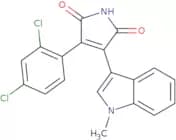
CAS:<p>GSK3 serine/threonine protein kinase inhibitor; neuroprotective;cardioprotective</p>Fórmula:C19H12Cl2N2O2Pureza:Min. 95%Peso molecular:371.22 g/molHuntingtin antibody
<p>The Huntingtin antibody is a specific antibody that targets the huntingtin protein, which is associated with Huntington's disease. This monoclonal antibody is produced by a hybridoma cell line and has been extensively studied in various research fields, including Life Sciences. It has been shown to bind to the huntingtin protein and inhibit its function, making it a promising tool for studying the role of this protein in disease progression.</p>EPHA2 antibody
<p>The EPHA2 antibody is a highly specialized monoclonal antibody that targets the elastase protein, an enzyme involved in various physiological processes. This antibody has been extensively studied and proven to be effective in inhibiting the activity of elastase. It is widely used in Life Sciences research for its ability to specifically bind to elastase and neutralize its function.</p>LGALS3BP antibody
<p>The LGALS3BP antibody is a monoclonal antibody that targets LGALS3BP, a phosphatase involved in various biological processes. This antibody can be used for research purposes in the field of life sciences. LGALS3BP is known to interact with several molecules, including interferon and interleukin-6, and it plays a role in glycation, neutralizing fatty acids, collagen synthesis, and growth factor signaling. The LGALS3BP antibody can be used to study the endocytic uptake of LGALS3BP and its interaction with galectin-3-binding proteins. With its high specificity and affinity, this antibody is a valuable tool for researchers studying the functions of LGALS3BP in different cellular processes.</p>PNMT antibody
<p>The PNMT antibody is a monoclonal antibody that specifically targets and binds to the enzyme phenylethanolamine N-methyltransferase (PNMT). This enzyme plays a crucial role in the synthesis of epinephrine (adrenaline) from norepinephrine. By binding to PNMT, this antibody inhibits its catalytic activity, thereby reducing the conversion of norepinephrine to epinephrine.</p>MRPL17 antibody
<p>MRPL17 antibody is a highly specialized monoclonal antibody used in Life Sciences research. It is commonly used for the detection and analysis of MRPL17 protein expression in various biological samples, including pleural fluid, human serum, and tissue sections. This antibody specifically binds to MRPL17, a key component of the mitochondrial ribosome that plays a crucial role in protein synthesis within the mitochondria.</p>Pureza:Min. 95%PNPLA1 antibody
<p>PNPLA1 antibody was raised using the middle region of PNPLA1 corresponding to a region with amino acids QAPTSHRPSLGPSTVGAPQTLPRSSLSAFPAQPPVEELGQEQPQAVALLV</p>Guinea Pig Red Blood Cells
<p>Guinea Pig Red Blood Cells (GPRBCs) are widely used in the field of Life Sciences for various applications. These cells have binding proteins that play a crucial role in chemokine signaling pathways. GPRBCs are commonly used in research laboratories and veterinary applications for studying cellular interactions, immune responses, and the effects of different compounds on these cells.</p>NFS1 Blocking Peptide
<p>A synthetic peptide for use as a blocking control in assays to test for specificity of NFS1 antibody, catalog no. 70R-1097</p>Pureza:Min. 95%IL4 antibody
<p>IL4 antibody was raised in rabbit using highly pure recombinant rat IL-4 as the immunogen.</p>Pureza:Min. 95%PA28 α 11SREG antibody
<p>PA28 alpha 11SREG antibody was raised in rabbit using a synthetic Peptide, R(5) V Q P E A Q A K V D V F R E D L C(22), as the immunogen.</p>Pureza:Min. 95%Somatostatin antibody
<p>Somatostatin antibody was raised in rat using somatostatin conjugated to thyroglobulin as the immunogen.</p>BIN3 antibody
<p>The BIN3 antibody is a monoclonal antibody that is widely used in the field of Life Sciences. It specifically targets and binds to a growth factor, which plays a crucial role in various biological processes. The binding of the BIN3 antibody to the growth factor disrupts its function and prevents it from interacting with its receptors.</p>AMT antibody
<p>AMT antibody was raised using the N terminal of AMT corresponding to a region with amino acids QRAVSVVARLGFRLQAFPPALCRPLSCAQEVLRRTPLYDFHLAHGGKMVA</p>SERINC2 antibody
<p>SERINC2 antibody was raised using the N terminal of SERINC2 corresponding to a region with amino acids VCEEGAGIPTVLQGHIDCGSLLGYRAVYRMCFATAAFFFFFTLLMLCVSS</p>Pureza:Min. 95%Cytokeratin 18 antibody
<p>The Cytokeratin 18 antibody is a powerful tool in the field of Life Sciences. This monoclonal antibody exhibits cytotoxic effects and is widely used for research purposes. It has the ability to neutralize specific antigens, making it an essential component in various studies involving growth factors, polymerase chain reactions, and blood plasma analysis.</p>GLDA protein
<p>GLDA protein is a medicament that promotes hepatocyte growth and is commonly used in Life Sciences research. It has been shown to activate phospholipase C-gamma and protein kinase, both of which play important roles in cellular signaling pathways. GLDA protein can be used in vitro assays to study the effects of growth factors on cell proliferation and differentiation. Additionally, it has been found to interact with CYP2A6, an enzyme involved in drug metabolism, suggesting potential applications in pharmacology research. GLDA protein is often used as a selectable marker in genetic engineering experiments due to its ability to confer resistance to certain antibiotics or toxins. It can also be conjugated with other proteins or antigens for immunoassays or immobilization purposes. Overall, GLDA protein offers a versatile tool for studying cellular processes and developing new therapeutic strategies.</p>Pureza:Min. 95%HIV1 antibody (HTLV3)
<p>HIV1 antibody (HTLV3) was raised in goat using human isolate, highly pure HIV1 as the immunogen.</p>Aste1 antibody
<p>Aste1 antibody was raised in rabbit using the middle region of Aste1 as the immunogen</p>Pureza:Min. 95%SEMA3C antibody
<p>The SEMA3C antibody is a highly specialized monoclonal antibody used in the field of Life Sciences. It has been extensively studied for its ability to inhibit the activity of interleukin-6 (IL-6), a multifunctional cytokine involved in various biological processes. This antibody has also shown promising results in inhibiting multidrug resistance and TGF-beta signaling.</p>EpCAM antibody
<p>The EpCAM antibody is a monoclonal antibody that specifically targets the Epithelial Cell Adhesion Molecule (EpCAM). It has been widely used in various applications within the field of Life Sciences. The EpCAM antibody has proven to be highly effective in detecting and quantifying alpha-fetoprotein (AFP), a protein commonly associated with liver cancer, as well as in studying breast cancer cells such as MCF-7.</p>RNF20 antibody
<p>RNF20 antibody was raised using the N terminal of RNF20 corresponding to a region with amino acids LKRYDLEQGLGDLLTERKALVVPEPEPDSDSNQERKDDRERGEGQEPAFS</p>HAT1 protein (His tag)
<p>20-341 amino acids: MGSSHHHHHH SSGLVPRGSH MKKLAEYKCN TNTAIELKLV RFPEDLENDI RTFFPEYTHQ LFGDDETAFG YKGLKILLYY IAGSLSTMFR VEYASKVDEN FDCVEADDVE GKIRQIIPPG FCTNTNDFLS LLEKEVDFKP FGTLLHTYSV LSPTGGENFT FQIYKADMTC RGFREYHERL QTFLMWFIET ASFIDVDDER WHYFLVFEKY NKDGATLFAT VGYMTVYNYY VYPDKTRPRV SQMLILTPFQ GQGHGAQLLE TVHRYYTEFP TVLDITAEDP SKSYVKLRDF VLVKLCQDLP CFSREKLMQG FNEDMAIEAQ QKFKINKQHA RRVYEILRLL VTD</p>Pureza:Min. 95%STC1 antibody
<p>STC1 antibody is a polyclonal antibody that specifically targets the epidermal growth factor STC1. It is widely used in life sciences research and has been shown to have neutralizing effects on STC1 activity. This antibody can be used in various applications, such as Western blotting, immunohistochemistry, and enzyme-linked immunosorbent assay (ELISA). The STC1 antibody binds to the target protein and blocks its interaction with receptors, inhibiting downstream signaling pathways involved in cell growth and differentiation. It is an essential tool for studying the role of STC1 in various biological processes and for developing potential therapeutic inhibitors or modulators of this important growth factor.</p>PTP1B antibody
<p>The PTP1B antibody is a powerful tool in the field of Life Sciences. It is a polyclonal antibody that targets and inhibits the activity of protein tyrosine phosphatase 1B (PTP1B). This enzyme plays a crucial role in various cellular processes, including fas-mediated apoptosis, epidermal growth factor signaling, and regulation of insulin and leptin receptors.</p>ZAP70 antibody
<p>ZAP70 antibody is a highly specialized product used in immunoassays and research within the field of Life Sciences. It is a polyclonal antibody that specifically targets ZAP70, a protein involved in T-cell signaling pathways. This antibody can be used to detect and measure the levels of ZAP70 in various biological samples, such as human serum or tissue lysates. It can also be used as a neutralizing agent to inhibit the activity of ZAP70 in experimental settings. The ZAP70 antibody is produced using advanced techniques, including monoclonal antibody production and purification processes. It has been extensively tested for specificity and sensitivity, ensuring accurate and reliable results. Researchers rely on this high-quality antibody to study the role of ZAP70 in immune responses, steroid signaling, fatty acid metabolism, interferon activation, and other important cellular processes. With its wide range of applications and exceptional performance, the ZAP70 antibody is an indispensable tool for scientists working in immunology and related fields.</p>PDK3 antibody
<p>PDK3 antibody was raised using the N terminal of PDK3 corresponding to a region with amino acids RPSVGLVQSWYMQSFLELLEYENKSPEDPQVLDNFLQVLIKVRNRHNDVV</p>Salmonella antibody
<p>Salmonella antibody was raised in mouse using LPS of Salmonella typhimurium as the immunogen.</p>ABCC3 antibody
<p>The ABCC3 antibody is a highly effective anti-VEGF (vascular endothelial growth factor) agent. It belongs to the class of agonist proteins and is specifically designed for use in Life Sciences research. This polyclonal antibody has been engineered to bind to VEGF, a key growth factor involved in angiogenesis, and inhibit its activity. The ABCC3 antibody has also shown binding affinity towards other growth factors such as erythropoietin, making it a versatile tool for studying various cellular processes. In addition to its antiangiogenic properties, this antibody has demonstrated cytotoxic effects on target cells, making it a valuable tool for cancer research. Its unique beta-hairpin structure ensures optimal binding efficiency and specificity. Researchers can use the ABCC3 antibody in various applications including immunohistochemistry, Western blotting, and flow cytometry experiments. With its high-quality formulation and reliable results, this antibody is an essential component of any research project focused on understanding vascular development and angi</p>NR3C1 antibody
<p>NR3C1 antibody was raised using the N terminal of NR3C1 corresponding to a region with amino acids NVKLYTTDQSTFDILQDLEFSSGSPGKETNESPWRSDLLIDENCLLSPLA</p>Pureza:Min. 95%DHX37 antibody
<p>DHX37 antibody was raised using a synthetic peptide corresponding to a region with amino acids PLTKKEKKVLQKILEQKEKKSQRAEMLQKLSEVQASEAEMRLFYTTSKLG</p>INSIG1 antibody
<p>INSIG1 antibody was raised using the middle region of INSIG1 corresponding to a region with amino acids TTWLFHKTRSNYRVFLKSPIVIESSKPPILRARKILEENLTVDYDKDYLF</p>Pureza:Min. 95%RDH10 antibody
<p>RDH10 antibody was raised using a synthetic peptide corresponding to a region with amino acids QSNEETAGMVRHIYRDLEAADAAALQAGNGEEEILPHCNLQVFTYTCDVG</p>Pureza:Min. 95%HSV2 antibody (nuclear regulatory protein)
<p>HSV2 antibody was raised in mouse using HSV 2, a nuclear regulatory) protein, as the immunogen.</p>FIV Protein
<p>FIV protein is a glycoprotein that plays a crucial role in the field of Life Sciences. It is an activated growth factor that has been extensively studied for its potential therapeutic applications. FIV protein can stimulate the production of anti-idiotypic antibodies, which are antibodies that bind to and neutralize other antibodies. This makes it a valuable tool in research and diagnostic applications. The antigenic properties of FIV protein have made it an important component in the development of monoclonal antibodies. These antibodies specifically target and bind to FIV protein, allowing for precise detection and analysis. Additionally, FIV protein has been shown to interact with fibrinogen, a key component in blood clotting processes. Recombinant Proteins & Antigens containing FIV protein are widely used in various experiments and assays. The high purity and quality of these proteins ensure accurate results and reliable data. FIV protein can also be utilized in studies involving nuclear proteins and protein kinases. For researchers and scientists</p>Pureza:≥80% By Sds-Page And Gel-Dot Analysis.LRRTM1 antibody
<p>LRRTM1 antibody was raised using the middle region of LRRTM1 corresponding to a region with amino acids CALASWLNNFQGRYDGNLQCASPEYAQGEDVLDAVYAFHLCEDGAEPTSG</p>Pureza:Min. 95%IL1b antibody
<p>IL1b antibody was raised in rabbit using recombinant human IL-1b as the immunogen.</p>Pureza:Min. 95%