Bioquímicos e reagentes
Os bioquímicos e reagentes são substâncias fundamentais para a pesquisa e desenvolvimento em campos como biotecnologia, biologia molecular, farmacologia e medicina. Esses produtos são essenciais para uma variedade de aplicações, incluindo a síntese de compostos, a análise de amostras biológicas, a pesquisa de processos metabólicos e a produção de medicamentos. Na CymitQuimica, oferecemos uma ampla seleção de bioquímicos e reagentes de alta qualidade e pureza, adequados para diversas necessidades científicas e industriais. Nosso catálogo inclui enzimas, anticorpos, ácidos nucleicos, aminoácidos e muitos outros produtos, todos projetados para apoiar pesquisadores e profissionais em seus projetos de pesquisa e desenvolvimento, garantindo resultados confiáveis e reproduzíveis.
Subcategorias de "Bioquímicos e reagentes"
- Biomoléculas(99.185 produtos)
- Por Alvo Biológico(99.150 produtos)
- Por uso/Efeitos Farmacológicos(6.789 produtos)
- Compostos relacionados à criopreservação e aos crioconservantes(21 produtos)
- Desinfetantes, aditivos para aquecimento de líquidos de banho e compostos relacionados(28 produtos)
- Hormónios(346 produtos)
- Biologia Vegetal(6.764 produtos)
- Metabólitos secundários(14.307 produtos)
Foram encontrados 130581 produtos de "Bioquímicos e reagentes"
Ordenar por
Pureza (%)
0
100
|
0
|
50
|
90
|
95
|
100
USP7 antibody
<p>The USP7 antibody is a monoclonal antibody that targets the USP7 protein. It has been shown to have a wide range of applications in the field of Life Sciences. This antibody specifically binds to USP7 and inhibits its activity, which plays a crucial role in various cellular processes including IFN-gamma signaling, fatty acid metabolism, siderophore production, and superoxide regulation.</p>ABCB9 antibody
<p>ABCB9 antibody was raised using a synthetic peptide corresponding to a region with amino acids RLWKAVVVTLAFMSVDICVTTAIYVFSHLDRSLLEDIRHFNIFDSVLDLW</p>Pureza:Min. 95%PRPS1 protein (His tag)
<p>1-318 amino acids: MGSSHHHHHH SSGLVPRGSH MPNIKIFSGS SHQDLSQKIA DRLGLELGKV VTKKFSNQET CVEIGESVRG EDVYIVQSGC GEINDNLMEL LIMINACKIA SASRVTAVIP CFPYARQDKK DKSRAPISAK LVANMLSVAG ADHIITMDLH ASQIQGFFDI PVDNLYAEPA VLKWIRENIS EWRNCTIVSP DAGGAKRVTS IADRLNVDFA LIHKERKKAN EVDRMVLVGD VKDRVAILVD DMADTCGTIC HAADKLLSAG ATRVYAILTH GIFSGPAISR INNACFEAVV VTNTIPQEDK MKHCSKIQVI DISMILAEAI RRTHNGESVS YLFSHVPL</p>Pureza:Min. 95%Plasmin protein
<p>Plasmin protein is a pegylated, neutralizing growth factor that plays a crucial role in various Life Sciences applications. It is commonly used in the field of Proteins and Antigens for its ability to promote the growth and differentiation of mesenchymal stem cells. Additionally, plasmin protein has been found to have intraocular effects and can be used in the development of antibodies, including monoclonal antibodies.</p>Pureza:Min. 95%ZNF660 antibody
<p>ZNF660 antibody was raised in rabbit using the C terminal of ZNF660 as the immunogen</p>Pureza:Min. 95%SFTPB Antibody
<p>The SFTPB Antibody is an activated antibody that serves as a serum marker for various medical conditions. It specifically targets cardiomyocytes and can be used to detect the presence of autoantibodies in the blood. This antibody has also been utilized in the field of regenerative medicine, particularly in studies involving pluripotent stem cells. The SFTPB Antibody is a glycoprotein that interacts with specific receptors on cell membranes, resulting in the activation of transmembrane conductance and facilitating the transmission of signals such as acetylcholine or other active agents. This versatile antibody is widely used in Life Sciences research and has proven to be an invaluable tool in understanding various physiological processes. The SFTPB Antibody is available as Polyclonal Antibodies, ensuring high specificity and sensitivity for accurate detection and analysis.</p>Pureza:Min. 95%TRIM2 antibody
<p>The TRIM2 antibody is a highly specialized monoclonal antibody that targets insulin and has neutralizing properties. It specifically binds to cholinergic receptors, inhibiting their activity and preventing the release of insulin. This antibody has been extensively studied in the field of Life Sciences and has shown promising results in various research applications.</p>HS3ST1 Blocking Peptide
<p>A synthetic peptide for use as a blocking control in assays to test for specificity of HS3ST1 antibody, catalog no. 70R-5492</p>Pureza:Min. 95%ZBTB3 antibody
<p>ZBTB3 antibody was raised in rabbit using the middle region of ZBTB3 as the immunogen</p>Pureza:Min. 95%Chloroquine N-oxide
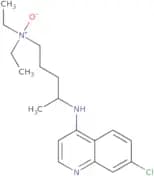
CAS:<p>Chloroquine N-oxide is an analog of Chloroquine that acts as a potent kinase inhibitor. It has been shown to have anticancer properties and can induce apoptosis in cancer cells. Chloroquine N-oxide has been found to be effective against a variety of human tumors, including lung, breast, and colon cancers. This drug inhibits the activity of hepcidin, a protein involved in iron metabolism, which may contribute to its anticancer effects. Additionally, Chloroquine N-oxide has been detected in the urine of Chinese patients with cancer who were treated with this drug. This suggests that it may have potential as an anticancer agent for humans.</p>Fórmula:C18H26ClN3OPureza:Min. 95%Peso molecular:335.9 g/molBRS3 antibody
<p>The BRS3 antibody is a polyclonal antibody that serves as an affinity ligand for extracellular substances. It is commonly used in the field of medicine to isolate retinal autoantibodies. The BRS3 antibody has been found to be effective in inhibiting DNA double-strand break repair and can be used as a tool for studying the mechanisms involved in this process. In addition, it has been shown to inhibit the growth of pluripotent stem cells and can be used in research related to their differentiation. The BRS3 antibody is often employed in immunohistochemical studies to detect the presence of certain markers or proteins in tissue samples. Its use in life sciences research has provided valuable insights into various biological processes and pathways.</p>UBE2L6 antibody
<p>UBE2L6 antibody was raised in mouse using recombinant human UBE2L6 (1-152aa) purified from E. coli as the immunogen.</p>IMPG2 antibody
<p>IMPG2 antibody was raised using the C terminal of IMPG2 corresponding to a region with amino acids VVFFSLRVTNMMFSEDLFNKNSLEYKALEQRFLELLVPYLQSNLTGFQNL</p>Pureza:Min. 95%Prealbumin protein
<p>Prealbumin protein is a biochemical substance that is used for the treatment and/or prophylaxis of certain conditions. It can be quantitated using monoclonal antibodies specific to prealbumin protein. This protein contains histidine residues, which can serve as inhibitors of certain enzymes. Monoclonal antibody-based assays are commonly used in Life Sciences research to study the expression and function of prealbumin protein. Prealbumin protein is also known as transthyretin, a carrier protein for thyroid hormones and retinol-binding proteins. Native Proteins & Antigens, including prealbumin protein, are widely used in various research applications such as Western blotting, ELISA, and immunohistochemistry. Additionally, prealbumin protein has been implicated in anti-angiogenesis processes and may be targeted by autoantibodies in certain autoimmune diseases.</p>Pureza:Min. 95%STAT5 antibody
<p>The STAT5 antibody is a powerful tool in the field of Life Sciences. It is a polyclonal antibody that specifically targets and neutralizes tyrosinase, an enzyme involved in melanin production. This antibody can be used in various applications, such as immunohistochemistry, Western blotting, and ELISA assays. The STAT5 antibody has been extensively validated and has shown excellent specificity and sensitivity in detecting tyrosinase expression. It can be used to study melanoma progression, evaluate the efficacy of anti-tyrosinase therapies, and explore the role of tyrosinase in other biological processes. Whether you are a researcher or a pharmaceutical company working on developing new treatments for skin disorders, the STAT5 antibody is an essential tool for your studies.</p>Pureza:Min. 95%Cytokeratin 19 antibody (Prediluted for IHC)
<p>Mouse monoclonal Cytokeratin 19 antibody (Prediluted for IHC)</p>Pureza:Min. 95%PCDH15 antibody
<p>PCDH15 antibody was raised using the N terminal of PCDH15 corresponding to a region with amino acids HSIVVQVQCINKKVGTIIYHEVRIVVRDRNDNSPTFKHESYYATVNELTP</p>Pureza:Min. 95%BTAF1 antibody
<p>BTAF1 antibody was raised in mouse using recombinant Btaf1 Rna Polymerase Ii, B-Tfiid Transcription Factor-Associated, 170Kda (Mot1 Homolog, S. Cerevisiae) (Btaf1)</p>CD74 protein
<p>The CD74 protein is a collagen-based peptide agent that has been pegylated for enhanced stability and efficacy. It acts as an inhibitor of various biological processes and has shown promising results in the field of Life Sciences. The CD74 protein has been found to neutralize influenza hemagglutinin, inhibit the activity of angiotensin-converting enzyme, and modulate the levels of growth factors and chemokines in human serum. Additionally, it has demonstrated the ability to bind to alpha-fetoprotein and erythropoietin receptors, suggesting potential applications in cancer treatment and blood disorders. With its unique properties and monoclonal antibody structure, the CD74 protein holds great promise for further research and therapeutic development.</p>Pureza:Min. 95%Caveolin 1 antibody
<p>The Caveolin 1 antibody is a highly effective and versatile tool used in various fields of life sciences. It is available as both polyclonal and monoclonal antibodies, allowing researchers to choose the most suitable option for their specific needs.</p>Cdc2 antibody
<p>Cdc2 antibody was raised in Mouse using a purified recombinant fragment of Cdc2 expressed in E. coli as the immunogen.</p>PIP4K2A antibody
<p>PIP4K2A antibody was raised using the middle region of PIP4K2A corresponding to a region with amino acids EQEEVECEENDGEEEGESDGTHPVGTPPDSPGNTLNSSPPLAPGEFDPNI</p>ENPEP antibody
<p>ENPEP antibody is a monoclonal antibody that specifically targets ENPEP, an enzyme involved in the metabolism of progesterone and interferon. This antibody can be used for various applications in life sciences, including research on growth hormone receptor signaling, chemokine regulation, and steroid metabolism. It has also shown antiviral activity by inhibiting the replication of certain viruses in human serum. Additionally, this antibody has been used to detect ENPEP expression in tissues and cells using techniques such as immunohistochemistry and flow cytometry. Its high specificity and affinity make it a valuable tool for studying ENPEP-related processes and developing potential therapeutic strategies.</p>BAT5 antibody
<p>BAT5 antibody was raised using the middle region of BAT5 corresponding to a region with amino acids RAKLLACDGNEIDTMFVDRRGTAEPQGQKLVICCEGNAGFYEVGCVSTPL</p>Pureza:Min. 95%GPT2 antibody
<p>GPT2 antibody was raised using a synthetic peptide corresponding to a region with amino acids EIKGQLVKLLSVRLCPPVSGQAAMDIVVNPPVAGEESFEQFSREKESVLG</p>β-2-microglobulin monoclonal antibody
<p>The Beta-2-microglobulin monoclonal antibody is a highly specialized antibody that targets and interacts with beta-2-microglobulin, a protein found on the surface of various cells. This antibody has been extensively studied in the field of Life Sciences and has shown promising results in different applications.</p>IMPAD1 antibody
<p>IMPAD1 antibody was raised using the N terminal of IMPAD1 corresponding to a region with amino acids VLAAVRGGDEVRRVRESNVLHEKSKGKTREGAEDKMTSGDVLSNRKMFYL</p>Pureza:Min. 95%MDM2 antibody
<p>The MDM2 antibody is a neutralizing monoclonal antibody that targets the MDM2 protein. It has been shown to inhibit the activity of interleukin-6 (IL-6) and tumor necrosis factor-alpha (TNF-α), two pro-inflammatory cytokines involved in immune responses. This antibody is reactive against adipose tissue and has been used in studies involving conditions such as obesity and metabolic disorders. Additionally, the MDM2 antibody has shown potential therapeutic effects against Brucella abortus, a bacterial pathogen that causes brucellosis. The colloidal gold-labeled MDM2 antibody can be used for immunohistochemistry or immunocytochemistry applications. This antibody also demonstrates inhibitory activity against certain family kinases and amyloid proteins. Overall, the MDM2 antibody offers a versatile tool for researchers studying various biological processes and diseases related to MDM2 and its associated pathways.</p>δ Catenin antibody
<p>delta Catenin antibody was raised in mouse using synthetic peptide J6 (corresponding to aa 292-309) coupled to KLH as the immunogen.</p>Mouse anti Human IgG1
<p>Human IgG1 antibody was raised in mouse using IgG1 Fc region as the immunogen.</p>GPR61 antibody
<p>GPR61 antibody was raised in rabbit using a synthetic peptide conjugated to KLH as the immunogen.</p>Pureza:Min. 95%TNF α antibody
<p>TNF alpha antibody was raised in goat using highly pure recombinant murine TNF-alpha as the immunogen.</p>Pureza:Min. 95%MAFK antibody
<p>The MAFK antibody is a highly effective substance used in Life Sciences research. It is a recombinant antigen that specifically targets the polypeptide expression of MAFK, which plays a crucial role in various cellular processes. This antibody has been extensively studied and found to inhibit the activity of arginase, an enzyme involved in the metabolism of arginine. Additionally, it has shown potential as a therapeutic agent for non-alcoholic steatohepatitis (NASH) due to its ability to modulate the function of microvessel endothelial cells.</p>