Bioquímicos e reagentes
Os bioquímicos e reagentes são substâncias fundamentais para a pesquisa e desenvolvimento em campos como biotecnologia, biologia molecular, farmacologia e medicina. Esses produtos são essenciais para uma variedade de aplicações, incluindo a síntese de compostos, a análise de amostras biológicas, a pesquisa de processos metabólicos e a produção de medicamentos. Na CymitQuimica, oferecemos uma ampla seleção de bioquímicos e reagentes de alta qualidade e pureza, adequados para diversas necessidades científicas e industriais. Nosso catálogo inclui enzimas, anticorpos, ácidos nucleicos, aminoácidos e muitos outros produtos, todos projetados para apoiar pesquisadores e profissionais em seus projetos de pesquisa e desenvolvimento, garantindo resultados confiáveis e reproduzíveis.
Subcategorias de "Bioquímicos e reagentes"
- Biomoléculas(99.115 produtos)
- Por Alvo Biológico(99.074 produtos)
- Por uso/Efeitos Farmacológicos(6.785 produtos)
- Compostos relacionados à criopreservação e aos crioconservantes(21 produtos)
- Desinfetantes, aditivos para aquecimento de líquidos de banho e compostos relacionados(28 produtos)
- Hormónios(346 produtos)
- Biologia Vegetal(6.693 produtos)
- Metabólitos secundários(14.219 produtos)
Foram encontrados 130577 produtos de "Bioquímicos e reagentes"
Ordenar por
Pureza (%)
0
100
|
0
|
50
|
90
|
95
|
100
H-GAGSSQHQER^-OH
<p>Peptide H-GAGSSQHQER^-OH is a Research Peptide with significant interest within the field academic and medical research. This peptide is available for purchase at Cymit Quimica in multiple sizes and with a specification of your choice.</p>DAPKtide Substrate Peptide
<p>DARKtide is a substrate peptide for death-associated protein kinase (DAPK) for use in kinases assays. DAPK is involved in several cellular pathways including: apoptosis, tumour suppression, stress response, anti-viral immunity and IL-1-associated inflammatory diseases. In C. elegans DAPK-1 regulates epidermal morphogenesis, innate immunity and wound repair.</p>Pureza:Min. 95%Cor e Forma:PowderPeso molecular:1,577.9 g/molSARS-CoV-2 NSP13 (551-565)
<p>The SARS-CoV-2 non-structural protein 13 (NSP13) has been identified as a target for anti-viral therapeutics due to its highly conserved sequence and is essential for viral replication. NSP13 is part of the helicase superfamily 1B. As an NTPase and RNA helicase, NSP13 binds to RNA-dependent RNA polymerase and acts in concert with the replication-transcription complex to stimulate backtracking and further activate NSP13 helicase activity. These factors make NSP13 a good target for developing new antiviral drugs. In addition, the identification of epitopes within the NSP13 sequence can help design more effective SARS-CoV-2 vaccines.Models have predicted epitopes exhibiting antigenicity, stability and interactions with MHC class-I and class-II molecules. NSP13 (551-565) is an epitope candidate with various HLA restrictions. This epitope can be used to better vaccine design for more durable CD4+ and CD8+ T cell responses for long-lasting immunity.</p>Peso molecular:1,673.8 g/molH-VSAADICGL-OH
<p>H-VSAADICGL-OH is a custom peptide that can be synthesized rapidly by our peptide experts in under 2 weeks. H-VSAADICGL-OH is provided at greater that >95% purity (HPLC) from Cymit Quimica for a variety of research applications. We also offer H-VSAADICGL-OH in bulk quantities in addition to our standard pack sizes.Please enquire for more information about H-VSAADICGL-OH at the technical inquiry form on this page</p>Pureza:Min. 95%Bevacizumab heavy chain Light
<p>Bevacizumab, sold under the trade name Avastin, is a medication used to treat a number of types of cancers. Bevacizumab contains human framework regions and the complementarity-determining regions of a murine antibody that binds to VEGF.</p>Pureza:Min. 95%Peso molecular:1,044.5 g/molH-VNTLTER^-OH
<p>Peptide H-VNTLTER^-OH is a Research Peptide with significant interest within the field academic and medical research. This peptide is available for purchase at Cymit Quimica in multiple sizes and with a specification of your choice.</p>Cellulose synthase Light
<p>Cellulose synthase is a crucial enzyme involved in the synthesis of cellulose. Cellulose is an aggregation of unbranched polymer chains made of β-(1-4)-linked glucose residues, and is a component of primary and secondary cell walls - functioning to primarily maintain strength and shape in cells. Cellulose is synthesised by large cellulose synthase complexes (CSCs), which consist of synthase protein isoforms (CesA) that are arranged into a unique hexagonal structure.</p>Pureza:Min. 95%Cor e Forma:PowderPeso molecular:1,394.7 g/molHepcidin-25 (human) trifluoroacetate salt
CAS:<p>Please enquire for more information about Hepcidin-25 (human) trifluoroacetate salt including the price, delivery time and more detailed product information at the technical inquiry form on this page</p>Fórmula:C113H170N34O31S9·C2HF3O2Pureza:Min. 95 Area-%Cor e Forma:PowderPeso molecular:2,903.38 g/molSARS-CoV-2 NSP13 (321-335)
<p>The SARS-CoV-2 non-structural protein 13 (NSP13) has been identified as a target for anti-viral therapeutics due to its highly conserved sequence and is essential for viral replication. NSP13 is part of the helicase superfamily 1B. As an NTPase and RNA helicase, NSP13 binds to RNA-dependent RNA polymerase and acts in concert with the replication-transcription complex to stimulate backtracking and further activate NSP13 helicase activity. These factors make NSP13 a good target for developing new antiviral drugs. In addition, the identification of epitopes within the NSP13 sequence can help design more effective SARS-CoV-2 vaccines.Models have predicted epitopes exhibiting antigenicity, stability and interactions with MHC class-I and class-II molecules. NSP13 (321-335) is an epitope candidate with various HLA restrictions. This epitope can be used to better vaccine design for more durable CD4+ and CD8+ T cell responses for long-lasting immunity.</p>Peso molecular:1,729 g/molSARS-CoV-2 Spike (1192-1200)
<p>The SARS-CoV-2 spike protein is present on the outside of the virus particles and can bind to angiotensin-converting enzyme II (ACE2) present on the host cells. The C-terminal receptor binding domain (RBD) of the spike protein binds to the N-terminal peptidase M2 domain of ACE2. This receptor binding results in the internalisation of the virus-receptor complex and is, therefore the mechanism of entry of SARS-CoV-2 into host cells.The spike protein residues NLNESLIDL (1192-1200) from SARS-CoV-2 have been identified as a T-cell epitope with a predicted HLA restriction. Immune targeting of confirmed epitopes may potentially offer protection against SARS-CoV-2 and help the development of vaccines for long-lasting immunity.</p>Peso molecular:1,029.5 g/molGanglioside GM1-binding peptides p3
<p>Ganglioside GM1-binding peptides p3.</p>Cor e Forma:PowderPeso molecular:1,777.1 g/molOVA (323-339)
CAS:<p>Ovalbumin (OVA) is the primary protein in egg-white, and is involved in initiating food allergies and asthma. It is a highly immunogenic protein and can be used for peptide conjugation in the development of antibodies.OVA (323-339) is a class I (Kb)-restricted peptide epitope of OVA. The ovalbumin fragment is presented by the class I MHC molecule, H-2Kb.</p>Fórmula:C74H120N26O25Pureza:Min. 95%Cor e Forma:PowderPeso molecular:1,773.93 g/mol4,6-Dibromo olivetol
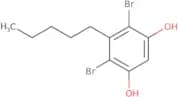
CAS:<p>Please enquire for more information about 4,6-Dibromo olivetol including the price, delivery time and more detailed product information at the technical inquiry form on this page</p>Fórmula:C11H14Br2O2Pureza:Min. 95%Cor e Forma:PowderPeso molecular:338.04 g/molMBP Ac1-9 (4Y)
<p>This peptide constitutes the acetylated N-terminal region of murine myelin basic protein (MBP) and displays high affinity for major histocompatibility complexes (MHC). This high MHC affinity is due to substitution of the native lysine at position 4 for a tyrosine. Substitution increases the MHC binding affinity of the peptide by around 1 million fold, therefore creating a superagonist ligand. MBP is an integral component of myelin found in the central nervous system (CNS) vital for the development and stability of the myelin sheath where it plays a role in membrane adhesion. MBP may be targeted by auto-antibodies in diseases such as multiple sclerosis. The low affinity of the native lysine containing MBP 1-9 peptide for MCH class II may result in MBP auto-reactive T cells escaping central-tolerance where self reactive T cells are usually eliminated. MBPs constitute an extraordinarily varied collection of splice isoforms which show a myriad of post-translational modifications.</p>Cor e Forma:PowderPeso molecular:1,133.22 g/molYSA acid
<p>YSA binds to the extracellular domain of ephrin type-A receptor 2 (EphA2) with high affinity and selectivity. YSA binding activates EphA2 and its tumour suppressing downstream signalling pathways (including inhibition of the PI3K/Akt and ERK pathways), and promotes receptor internalisation.EphA2 is highly expressed in many types of solid tumour, and the level of EphA2 expression is positively correlated with malignancy and poor prognosis in some cancer types.YSA has been shown to be an effective targeting peptide of chemotherapeutic drugs to EphA2 expressing tumours. YSA-drug conjugates are able to selectively target EphA2 expressing tumours, both activating tumour supressing downstream signalling pathways, and becoming effectively internalised by cancer cells to further increase the potency of the chemotherapeutic drug. YSA-drug conjugates have been shown to be dramatically more effective at inhibiting tumour growth than chemotherapy alone. Selective tumour targeting with YSA could also reduce the systemic toxicity caused by nonselective and highly toxic chemotherapy agents, and thus reduce adverse side effects of chemotherapy.</p>Peso molecular:1,346.6 g/molUBA3 (59-72) peptide
<p>Peptide derived from the ubiquitin-activating enzyme 3 (UBA3), the catalytic subunit of the NEDD8-activating enzyme (NAE).</p>Cor e Forma:PowderPeso molecular:1,495.8 g/molFSH protein (intact) (> 60% pure)
<p>Purified native Human FSH protein (intact) (> 60% pure)</p>Pureza:Min. 95%Angiotensin II (1-8)
<p>Angiotensin II (Ang-II) is a key signalling peptide of the renin angiotensin system (RAS) which is involved in regulating blood pressure, cardiovascular function and energy balance. RAS activity is elevated in obesity and is widely studied in relation to lifestyle-related diseases.Ang-II is produced from angiotensinogen (AGT) via the intermediate angiotensin I (Ang-I). AGT is cleaved by the aspartyl-protease, renin, to produce Ang-I, which is then cleaved by the dicarboxyl-peptidase angiotensin converting enzyme (ACE). ACE removes a histidine and a leucine from the C-terminus of Ang-I to form Ang-II.Ang-II exerts its affect by binding to the G-protein-coupled receptors- Ang II type 1 (AT1) and Ang II type 2 (AT2) receptors. Ang-II plays central roles in glucose metabolism and blood pressure. Increased levels of Ang-II have also been associated with Alzheimer's disease, and certain cancers including oesophageal squamous cell carcinoma (ESCC), brain cancers and breast cancers. The effects of Ang-II appear to be supressed by another branch of the RAS- the ACE2/Ang-(1-7)/Mas pathway.</p>Peso molecular:1,045.5 g/molH-DGQLTIK^-OH
<p>Peptide H-DGQLTIK^-OH is a Research Peptide with significant interest within the field academic and medical research. This peptide is available for purchase at Cymit Quimica in multiple sizes and with a specification of your choice.</p>Isotocin
<p>Isotocin is a nonapeptide of the arginine vasopressin-oxytocin family produced exclusively in the preoptic area (POA) of teleosts. As a homologue of mammalian oxytocin, studying fish nonapeptides has shown that Isotocin mediates social and reproductive behaviour in fishes. Functional isotocin is stored in granules at the axon terminal with a carrier peptide, neurophysin. Stimuli leads to isotocin dissociation, to be released into the bloodstream or to cross over into the brain. It binds to G-protein coupled receptors (GPCRs), which subtype isotocin binds to defines the following physiological action. It, like other nonapeptides, is a neuromodulator in the CNS, but when distributed by the bloodstream, it acts as a peripheral hormone, such as regulating osmoregulation. Isotocin levels are sex-dependent and linked to the reproductive cycle.HPLC is a sensitive method to detect bioavailable isotocin and other nonapeptides. Measurement of mRNA levels of isotocin has been important to demonstrate the cyclical changes to regulate the endocrine calendar and diurnal rhythm. The level of isotocin is also considered a biomarker for aggression in behavioural indicators of fish welfare studies.</p>Cor e Forma:PowderPeso molecular:966.14 g/molIRF3 antibody
<p>IRF3 antibody was raised in mouse using recombinant Interferon Regulatory Factor 3</p>Pleiotrophin protein
<p>Region of Pleiotrophin protein corresponding to amino acids GKKEKPEKKV KKSDCGEWQW SVCVPTSGDC GLGTREGTRT GAECKQTMKT QRCKIPCNWK KQFGAECKYQ FQAWGECDLN TALKTRTGSL KRALHNAECQ KTVTISKPCG KLTKPKPQAE SKKKKKEGKK QEKMLD.</p>Galanin (3-13)
<p>Galanin is a neuropeptide synthesised and released by the brainstem locus coeruleus (LC). Galanin is expressed in most LC neurons in rodents and humans. Galanin has been shown to inhibit LC activity by hyperpolarising LC neurons, suppressing their spontaneous firing rate, and enhancing alpha2-adrenergic receptor-mediated negative feedback. Galanin is also a potent trophic and neuroprotective factor throughout the nervous system.Galanin is widely distributed in the central nervous, peripheral, and endocrine systems. Galanin's overarching function is as an inhibitory, hyper-polarizing neuromodulator for classical neurotransmitters like acetylcholine and serotonin. Galanin interacts with 3 receptor subtypes, GalR1-3, these G protein-coupled receptors are inserted into the plasma membrane. GalR1 is believed to activate a Gβγ pathway to regulate MAPK activation. GalR2 can also activate the MAPK pathway, but unlike GalR1, there is detectable inositol phosphate production. GalR3 is associated with the Galphai/o pathway. Activation of the receptor leads to a cellular influx of K+. Each receptor has been associated with neurological diseases such as GalR3 with epilepsy.N-terminal fragments naturally occur in vivo, but their relevance is unclear. Some N-terminal fragments reduce metabolic and functional disorders in experimental heart damage. Using N-terminal fragments such as galanin (3-13) can clarify the function of full-length galanin during myocardial ischemia and reperfusion injury. This may highlight new agonists/antagonists for the galanin GalR receptors that can be putative therapeutic targets.</p>Cor e Forma:PowderPeso molecular:1,103.6 g/molSRC-1 (676-700)
<p>Steroid Receptor Coactivator - 1 (676-700).</p>Cor e Forma:PowderPeso molecular:2,797.4 g/molVisperas1pY
<p>An immuno-receptor tyrosine-based activation motif (ITAM) is a phosphorylation site consisting of a conserved sequence of four amino acids that is repeated twice in the cytoplasmic tails of cell-surface non-catalytic tyrosine-phosphorylated receptors. ITAMs are involved activation of immune cells. The motif has the following structure: YxxL/I. where xx are any two amino acids. Two of these motifs are typically separated by between 6 and 8 amino acids in the cytoplasmic tail of the molecule (YxxL/Ix(6-8)YxxL/I). ITAMs are found in the CD3 and θ¶-chains of the T cell receptor (TCR) complex. TCR is a multi-subunit receptor on the surface of T cells which contains two ligand binding chains containing 20 phosphorylation sites, distributed on 10 ITAMs. The TCR θ¶-chain is a homodimer subunit that contains six ITAMs (12 sites). These sites are phosphorylated by the membrane-anchored Src family tyrosine kinase Lck and Fyn and are dephosphorylated by the transmembrane phosphatases CD148 and CD45. When both tyrosines in an ITAM are phosphorylated they generate docking sites for the tandem SH2 domains of the cytosolic tyrosine kinase ZAP-70. Bound ZAP-70 can phosphorylate tyrosines on other substrates that initiate the signal transduction that leads to T cell activation. The multiple ITAMs on the TCR function mainly to amplify subsequent signalling.T cells rely on the TCR to recognize antigens, in the form of peptides bound to major histocompatibility complexes (MHC), on the surfaces of antigen-presenting cells. Binding of TCR to antigen-MCH complexes leads to proliferation, differentiation, and the secretion of effector cytokines, contributing to the elimination of infections.</p>Peso molecular:1,986.9 g/molTestosterone antibody
<p>The Testosterone antibody is a powerful tool for researchers and scientists working in the field of endocrinology. This monoclonal antibody specifically targets testosterone, a hormone that plays a crucial role in various physiological processes. The Testosterone antibody has been extensively tested and validated for its specificity and sensitivity. It binds to testosterone with high affinity, allowing for accurate detection and quantification of this hormone in biological samples. One of the key applications of the Testosterone antibody is its use in immunoassays, such as ELISA or Western blotting. By utilizing this antibody, researchers can measure testosterone levels in serum, plasma, or tissue extracts with great precision. Additionally, the Testosterone antibody can be used for immunohistochemistry (IHC) to visualize the localization of testosterone within tissues. This technique provides valuable insights into the distribution and expression patterns of testosterone in various organs and cell types. Moreover, this antibody has been shown to have minimal cross-reactivity with other related hormones or compounds, ensuring accurate</p>N-formylated PSMalpha3
<p>Pathogenic Staphylococcus aureus strains produce N-formylmethionyl containing peptides. Peptides starting with an N-formylated methionyl group constitute a unique hallmark of bacterial as well as mitochondrial metabolism, and professional phagocytes of our innate immune system recognise this microbial/mitochondrial pattern as a danger signal that guides innate immune cells.All PSMα peptides have the same basic functions and promote virulence through effects on discrete neutrophil functions (i.e. chemotaxis) and by being cytotoxic at higher concentrations. PSMα2 and PSMα3 can both bind to FPR2 and trigger superoxide release in neutrophils at low nanomolar concentrations. In addition, at high nanomolar concentrations they display cytotoxicity selectively on apoptotic neutrophil membranes and this occurs in an FPR2 independent manner.</p>Cor e Forma:PowderPeso molecular:2,633.4 g/molTAT 2-4
<p>TAT 2-4 is derived from human immunodeficiency virus (HIV) transactivator of transcription (TAT) residues 47-58. TAT (47-58) is a cell penetrating cationic peptide derived from the N-terminus of the Tat protein, which is a trans-activator of the transcription protein present in the human immunodeficiency virus (HIV). As a cell penetrating peptide (CPP) TAT aids in the cellular uptake of molecules and hence serves a valuable purpose in transduction methods. TAT 2-4 are residues (47-58) of HIV TAT protein repeated back to back, this dimer of TAT sequences has been shown to be the most efficient oligomer for cell penetration. This TAT dimer has been used in previous studies to deliver a wide variety of cargoes including fluorophores, chelators and DNA to target cells.</p>Cor e Forma:PowderPeso molecular:3,213.9 g/molClick Maier8
<p>Maier8 is a short basic amphipathic peptide that functions as a cell-penetrating peptide (CPP). Maier8 has been studied in comparison to other CPPs and found to be highly efficient at crossing into the cell without causing cytotoxicity. Furthermore, Maier8 has a long half-life which is vital for effective delivery of the conjugate.Maier8 is labelled at the N-terminus with an alkyne attachment for ease of reaction with an opposite Click reactive partner (azide). Azide-alkyne cycloaddition has become the most popular Click reaction. Alkyne-Maier8 allows a wide variety of applications, particularly for conjugation, modification, and drug delivery.</p>Cor e Forma:PowderPeso molecular:1,588.1 g/mol(D-Pro7)-Angiotensin I/II (1-7)
<p>The renin angiotensin system (RAS) consists of many angiotensin peptides involved in regulating functions such as blood pressure, cardiovascular function and energy balance. RAS activity is elevated in obesity and RAS is widely studied in relation to lifestyle-related diseases.Angiotensin 1-7 (Ang-(1-7)) is a component of the RAS. Ang-(1-7) is produced by angiotensin-converting enzyme 2 (ACE2), from the angiotensin II (Ang-II) peptide, as well as by prolylendopeptidase (PEP) and neutral endopeptidase (NEP) which produce Ang1 7 directly from angiotensin I (Ang-I).Ang-(1-7) broadly opposes Ang-II actions. Ang-(1-7) has vasodilatory and anti-oxidative effects, and exerts protective actions in hypertension, diabetes, and other cardiovascular disorders, Ang-(1-7) therefore represents a promising therapeutic target for cardiovascular and metabolic diseases. Ang (1-7) exerts its actions via its G-protein-coupled receptor, Mas. This novel arm of the RAS has effects that counterbalance those mediated by the classical ACE/Ang-II pathway.The C-terminal proline fro this peptide is in the D enantiomer.</p>Cor e Forma:PowderPeso molecular:898.5 g/molPhosphorylated CHKtide Heavy
<p>CHKtide is a synthetic peptide substrate for checkpoint kinase 1 and 2 (CHK1/CHK2) as well as salt-inducible kinase (SIKs) for use in kinase assays. CHKtide has been derived from CDC25C which is phosphorylated by CHK1/CHK2 in one of the DNA repair pathways. SIKs are serine/threonine kinases that are part of a complex network that regulate sodium homeostasis and blood pressure.The serine residue at position 5 has been phosphorylated and the valine residue at positon 4 has been isotopically labelled with carbon-13(5) and nitrogen-15(1).</p>Pureza:Min. 95%Cor e Forma:PowderPeso molecular:2,785.5 g/molAlyteserin-2Mb
<p>Synthetic anti-microbial peptide originally identified and isolated form the skin secretions of the midwife toad,-Alytes maurus. Alyteserin-2Mb has 82% homology to alyteserin-2, from the closely related midwife toad-Alytes obstetricans.Alyteserin-2Mb has strong activity against Gram-positive-bacteria such as Staphylococcus aureus and weak activity against gram negative bacteria such as Escherichia coli and fungi such as Candida albicans.</p>Peso molecular:1,615.04 g/mol[5-TAMRA]-ATIA agonist [sar1, Ile4, Ile8]
<p>An agonist of anti-TNFalpha-induced apoptosis (ATIA) whose function is to provide cells with protection from TNFalpha and hypoxia-induced apoptosis. It has been labelled with tetramethylrhodamine (5-TAMRA).</p>Cor e Forma:PowderPeso molecular:1,379.7 g/molInfluenza B antibody
<p>The Influenza B antibody is a neutralizing antibody that is activated upon binding to the influenza virus. It specifically targets the glutamate region on the virus surface, preventing its attachment to host cells and subsequent infection. The antibody is immobilized on a cellulose matrix, which allows for easy purification and handling. Additionally, it has been conjugated with phalloidin, a cytotoxic compound that enhances its efficacy against the virus. This antibody has been extensively tested in human serum and has shown high specificity and affinity for the influenza B virus. It is widely used in Life Sciences research for studying viral replication, as well as in diagnostic assays for detecting influenza infections. The monoclonal antibodies are produced using advanced techniques and are of high purity and quality. Each batch undergoes rigorous quality control tests to ensure consistent performance. The electrode used for immobilization is made of high-quality materials to ensure stability and reliability. Furthermore, the antibody has low affinity for serum albumin, minimizing non-specific binding and</p>Pureza:≥95% By Sds-Page Or UplcH-PLLALLALWGPDPAAAF-OH
<p>H-PLLALLALWGPDPAAAF-OH is a custom peptide that can be synthesized rapidly by our peptide experts in under 2 weeks. H-PLLALLALWGPDPAAAF-OH is provided at greater that >90% purity (HPLC) from Cymit Quimica for a variety of research applications. We also offer H-PLLALLALWGPDPAAAF-OH in bulk quantities in addition to our standard pack sizes.Please enquire for more information about H-PLLALLALWGPDPAAAF-OH at the technical inquiry form on this page</p>Pureza:Min. 95%SARS-CoV-2 Nucleocapsid (128-143)
<p>SARS-CoV-2 is an enveloped single-stranded, positive-sense RNA virus. The SARS-CoV-2 nucleocapsid (N) protein is essential for viral RNA replication and new virion assembly. The N protein assembles the positive strand viral genome RNA forming a helical ribonucleocapsid (RNP) during the packaging of the RNA genome. The N protein is also involved in regulating viral RNA synthesis during replication and RNA transcription and modulating metabolism in infected subjects.</p>Pureza:Min. 95%Peso molecular:1,683.9 g/molAlyteserin-1a
<p>Alyerserin-1a is a C-terminally α-amidated 23 residue cationic antimicrobial peptide (AMP). Antimicrobial peptides (AMPs) are produced by the innate immune system and are expressed when the host is challenged by a pathogen. The Alyerserin family of peptides was first identified in norepinephrine-stimulated skin secretions of the midwife toad-Alytes obstetricans-(Alytidae). Alyteserin-1 peptides have limited structural similarity to the ascaphins from the skins of frogs of the Leiopelmatidae family. Alyteserin-1 peptides are selective at inhibiting growth activity of Gram-negative bacteria-such as Escherichia coli and Salmonella-and show weak haemolytic activity against human erythrocytes.Alyteserin contain at least 50% hydrophobic amino acids. Hydrophobic residues contribute to the insertion of the peptide into the hydrophobic membrane core which results in membrane disruption and death of the pathogen. Due to their mechanism of action it is less likely for resistance to develop towards such peptides compared to conventional antibiotics.</p>Cor e Forma:PowderPeso molecular:2,277.3 g/molDAG peptide
<p>Cyclic DAG peptide targets connective tissue growth factor (CTGF/CCN2), present in the extracellular matrix, endothelial cells and overexpressed in several brain diseases. CTGF is a matricellular protein that acts as a regulator of several cellular functions, including cell adhesion, migration, mitogenesis, differentiation, and survival. CTGF is up regulated in Alzheimer's disease, Parkinson's disease, brain injury, glioblastoma, and cerebral infarction.DAG peptide has been shown to home to the brain in mouse models of glioblastoma, traumatic brain injury, and Parkinson's disease when exogenously delivered, making it an attractive target for the treatment of glioblastoma. DAG may be of use as a tool to enhance delivery of therapeutics and imaging agents to sites of brain diseases.</p>Peso molecular:1,005.4 g/molLL-37 acid
<p>LL-37, also known as CAP-18 for Cathelicidin antimicrobial peptide 18, is a 37 amino acid cationic peptide. LL-37 is also a typical linear antimicrobial peptide which can eliminate a wide range of pathogenes, including bacteria, viruses, fungi, and parasites. LL-37 is the only human cathelicidin peptide reported yet, found in lysosomes of macrophages and leukocytes.<br>LL-37 plays an important role in the first act of defense against local infection and systemic invasion of pathogens at sites of inflammation.<br>LL-37 shows cytotoxicity against bacterial and normal eukaryotic cells and is significantly resistant to proteolytic degradation. Besides its antimicrobial functions, LL-37 also has immunomodulatory roles. LL-37 suppresses the production of pro-inflammatory cytokines, TNF-α and IL-6 in infected monocytes. LL-37 increases cytokine and chemokine liberation from local cells and leucocytes and has chemotactic effects on a large number of immune cells.</p>Peso molecular:4,490.6 g/molTurkey Red Blood Cells
<p>Turkey Red Blood Cells are biospecimens that can be used for various research purposes. They are commonly used in neutralizing assays, interferon assays, and monoclonal antibody binding studies. These blood cells contain globulin and other binding proteins, making them useful for studying the interaction between antibodies and antigens. Turkey Red Blood Cells have also been used in veterinary applications, such as testing the efficacy of anti-CD20 antibodies in animals. Additionally, they can be employed in liver microsome studies to assess drug metabolism and evaluate the effects of growth factors or excipients. Overall, Turkey Red Blood Cells are valuable tools for researchers investigating immune responses, antibody-drug interactions, and various other areas of study.</p>PAR-1 Antagonist
<p>YFLLRNP works as a partial PAR-1 agonist that induces platelet shape change without calcium mobilization via the galpha12/13 signalling cascade. Full activation of platelets is only achieved at higher concentrations. YFLLRNP may therefore be useful for differentiating between several possible activation states of the platelet thrombin receptor. YFLLRNP is an antagonist to thrombin.Protease activated receptors (PARs) are a distinctive four-member family of seven transmembrane G protein-coupled receptors (GPCRs) widely expressed in inflammatory cells. PARs are cleaved by certain serine proteases to expose a tethered ligand domain, this ligand domain then binds to and activates the receptors to initiate multiple signalling cascades.</p>Cor e Forma:PowderPeso molecular:921.5 g/molAngiotensin 1-5 heavy
<p>Angiotensin 1-5 (Ang- (1-5)) is a biologically active metabolite of Ang-(1-7). Its production is catalysed by angiotensin-converting enzyme (ACE). Like Ang-(1-7), Ang-(1-5) stimulates atrial natriuretic peptide (ANP) secretion via the G-protein-coupled receptor, Mas.The valine residue at position 3 and the isoleucine residue at position 5 of this peptide are isotopically labelled with carbon-13 (11) and nitrogen-15 (2), giving this peptide a mass increase of 13 compared to the unlabelled peptide.</p>Pureza:Min. 95%Cor e Forma:PowderPeso molecular:671.4 g/molβ-Amyloid (1-13) Biotin
<p>β-Amyloid 1-13 (Aβ1-13) is one of many short Aβ species found in vivo and is formed by the cleavage of amyloid β precursor protein by β- and α-secretase. Amyloid β-protein (Aβ) has been identified as the key subunit of the extracellular plaques found in the brains of patients with Alzheimer disease (AD) and Down syndrome (DS). Aβ has therefore been extensively studied as a potential target for treatment of AD.Aβ is formed from the cleavage of the large, transmembrane protein- APP (amyloid precursor protein). Cleavage of APP by β- and then α-secretases results in the formation of Aβ. Aβ can aggregate to produce amyloid-β oligomers, which are thought to be highly neurotoxic. Over time Aβ can further aggregate to produce the characteristic senile plaques present in AD and DS. Aβ can be degraded by enzymes such as neprilysin, insulin degrading enzyme or endothelin converting enzyme. At physiological levels Aβ may be involved in controlling synaptic activity and neuronal survival. Biotin is C-terminally linked to the peptide via ethylenediamine for convenient detection and purification. Alternative β-Amyloid fragments and labels are also available, please refer to our peptide catalogue for availability.</p>Peso molecular:1,828.8 g/molACTH (7-38) Human
<p>Segment 7-38 of adrenocorticotropic hormone (ACTH). ACTH, also known as corticotropin, is a cleavage product from a larger precursor proopiomelanocortin (POMC). This 39 amino acid-peptide hormone is produced in the anterior pituitary gland upon stimulation by the corticotropin releasing hormone from the hypothalamus in response to stress. It stimulates the secretion of steroid hormone, specifically glucocorticoids in the adrenal cortex by acting through a cell membrane receptor (ACTH-R). In mammals, the action of ACTH is limited to those areas of the adrenal cortex in which the glucocorticoid hormones cortisol (hydrocortisone) and corticosterone are formed. ACTH has little control over the secretion of aldosterone, the other major steroid hormone from the adrenal cortex.</p>Peso molecular:3,659.11 g/molBiotin-PEG2-Claudin-9
<p>Biotin-PEG2-Claudin-9 is derived from the tight junction protein Claudin-9 which is encoded by the CLDN6 gene and can be found within epithelial cell to cell contacts. Structurally, the Claudin family, of which Claudin-9 is a member, are transmembrane proteins containing two extracellular loops and are involved in maintaining cell polarity and controlling paracellular ion flux.Reduction in the number of Claudins has been associated with tumour formation. This may be due to Claudin role in maintaining cell detachment and migration.Claudin-9 has been shown to be overexpressed in hepatocellular carcinoma (HCC) and has the ability to increase the metastasis of hepatocytes. It further influences the activation of the Stat3 signalling pathway through tyrosine kinase 2. Overall CLDN9 demonstrates itself to be a HCC proto-oncogene.This peptide has a covalently bonded N-terminal Biotin tag that can be used for detection and purification and contains a polyethylene glycol spacer (PEG2).</p>Cor e Forma:PowderPeso molecular:2,881.5 g/mol





![PFR-[AMC]](/_next/image/?url=https%3A%2Fstatic.cymitquimica.com%2Fproducts%2F3D%2Fthumb-webp%2FCRB1101042.webp&w=3840&q=75)

![[5-TAMRA]-ATIA agonist [sar1, Ile4, Ile8]](/_next/image/?url=https%3A%2Fstatic.cymitquimica.com%2Fproducts%2F3D%2Fthumb-webp%2FCRB1100566.webp&w=3840&q=75)