Bioquímicos e reagentes
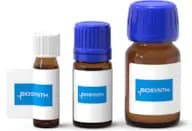
Os bioquímicos e reagentes são substâncias fundamentais para a pesquisa e desenvolvimento em campos como biotecnologia, biologia molecular, farmacologia e medicina. Esses produtos são essenciais para uma variedade de aplicações, incluindo a síntese de compostos, a análise de amostras biológicas, a pesquisa de processos metabólicos e a produção de medicamentos. Na CymitQuimica, oferecemos uma ampla seleção de bioquímicos e reagentes de alta qualidade e pureza, adequados para diversas necessidades científicas e industriais. Nosso catálogo inclui enzimas, anticorpos, ácidos nucleicos, aminoácidos e muitos outros produtos, todos projetados para apoiar pesquisadores e profissionais em seus projetos de pesquisa e desenvolvimento, garantindo resultados confiáveis e reproduzíveis.
Subcategorias de "Bioquímicos e reagentes"
- Biomoléculas(99.130 produtos)
- Por Alvo Biológico(99.159 produtos)
- Por uso/Efeitos Farmacológicos(6.787 produtos)
- Compostos relacionados à criopreservação e aos crioconservantes(21 produtos)
- Desinfetantes, aditivos para aquecimento de líquidos de banho e compostos relacionados(28 produtos)
- Hormónios(346 produtos)
- Biologia Vegetal(6.747 produtos)
- Metabólitos secundários(14.222 produtos)
Foram encontrados 130579 produtos de "Bioquímicos e reagentes"
Ordenar por
Pureza (%)
0
100
|
0
|
50
|
90
|
95
|
100
GUF1 antibody
<p>The GUF1 antibody is a highly specialized monoclonal antibody used in the field of Life Sciences. It specifically targets and binds to the apical membrane of cells, allowing for precise detection and analysis. This antibody recognizes and interacts with specific tyrosine residues on growth factor receptors, providing valuable insights into signaling pathways and cellular responses.</p>AXUD1 antibody
<p>AXUD1 antibody was raised in rabbit using human AXUD1 protein as the immunogen.</p>Pureza:Min. 95%Caspase 9 antibody
<p>The Caspase 9 antibody is a highly specialized polyclonal antibody that targets the caspase 9 enzyme involved in apoptosis. It plays a crucial role in regulating cell death and is essential for maintaining tissue homeostasis. This antibody has been extensively studied in the field of life sciences and has shown promising results in various research areas.</p>REN antibody
<p>The REN antibody is a highly specialized monoclonal antibody that targets the hepatocyte growth factor and chemokine receptor CXCR4. It acts as a potent family kinase inhibitor, blocking the signaling pathways involved in cell growth and migration. This colloidal antibody has been extensively studied in the field of life sciences and has shown promising results in inhibiting tumor growth and metastasis. Additionally, it has been found to have nephrotoxic effects, making it a potential therapeutic option for kidney-related disorders. The REN antibody is also used in research settings to detect autoantibodies and cytotoxic antibodies, as well as for studying thrombocytopenia. With its diverse applications and high efficacy, this antibody is an invaluable tool for scientists and researchers in various fields of study.</p>PDLIM2 antibody
<p>The PDLIM2 antibody is a highly specific monoclonal antibody that is used in various life science assays. It is designed to detect and bind to the PDLIM2 protein, which plays a crucial role in regulating cell proliferation, differentiation, and apoptosis. This antibody has been extensively validated for its high affinity and specificity, making it an ideal tool for researchers studying the function of PDLIM2 in different biological systems.</p>NPFF2 antibody
<p>NPFF2 antibody was raised in rabbit using N terminal sequence MNEKWDTNSSENWHPI and C terminal sequence ELVMEELKETTNSSEI of the human NPFF2 protein as the immunogen.</p>Pureza:Min. 95%KLK11 antibody
<p>KLK11 antibody was raised in rabbit using residues 68-82 [YIVHLGQHNLQKEEG] of the 35 kDa human hippostasin/KLK11protein as the immunogen.</p>Pureza:Min. 95%ZMYND11 antibody
<p>ZMYND11 antibody was raised in rabbit using the N terminal of ZMYND11 as the immunogen</p>Pureza:Min. 95%MGMT protein (His tag)
<p>1-207 amino acids: MGSSHHHHHH SSGLVPRGSH MDKDCEMKRT TLDSPLGKLE LSGCEQGLHE IKLLGKGTSA ADAVEVPAPA AVLGGPEPLM QCTAWLNAYF HQPEAIEEFP VPAFHHPVFQ QESFTRQVLW KLLKVVKFGE VISYQQLAAL AGNPKAARAV GGAMRGNPVP ILIPCHRVVC SSGAVGNYSG GLAVKEWLLA HEGHRLGKPG LGGSSGLAGA WLKGAGATSG SPPAGRN</p>Pureza:Min. 95%Hexokinase antibody
<p>Hexokinase antibody was raised in mouse using recombinant human Hexokinase1 (1-917aa) purified from E. coli as the immunogen.</p>Digitoxin antibody
<p>Digitoxin antibody was raised in rabbit using digitoxin-BSA as the immunogen.</p>Pureza:Min. 95%ERK1 antibody
<p>ERK1 antibody was raised in mouse using recombinant full length ERK1 protein as the immunogen.</p>Matrilin 3 antibody
<p>Matrilin 3 antibody was raised using the middle region of MATN3 corresponding to a region with amino acids IELYAVGVDRADMASLKMMASEPLEEHVFYVETYGVIEKLSSRFQETFCA</p>Pureza:Min. 95%SIGLEC9 antibody
<p>The SIGLEC9 antibody is a monoclonal antibody that is used in immunoassays to detect autoantibodies in human serum. It can be immobilized on an electrode and used for the quantitation of specific markers or proteins. This antibody has anti-angiogenesis properties, making it valuable in research and potential treatment and/or prophylaxis of angiogenesis-related conditions. The SIGLEC9 antibody can be used in combination with streptavidin or other detection methods to enhance sensitivity and specificity in various life science applications. Its high affinity for histidine makes it an excellent tool for protein purification and analysis.</p>Riboflavin kinase protein (His tag)
<p>1-162 amino acids: MGSSHHHHHH SSGLVPRGSH MPRADCIMRH LPYFCRGQVV RGFGRGSKQL GIPTANFPEQ VVDNLPADIS TGIYYGWASV GSGDVHKMVV SIGWNPYYKN TKKSMETHIM HTFKEDFYGE ILNVAIVGYL RPEKNFDSLE SLISAIQGDI EEAKKRLELP EHLKIKEDNF FQVSKSKIMN GH</p>Pureza:Min. 95%RBM22 antibody
<p>RBM22 antibody was raised using the C terminal of RBM22 corresponding to a region with amino acids KWGRSQAARGKEKEKDGTTDSGIKLEPVPGLPGALPPPPAAEEEASANYF</p>CDH22 antibody
<p>CDH22 antibody was raised using the N terminal of CDH22 corresponding to a region with amino acids LIDELTGDIHAMERLDREQKTFYTLRAQARDRATNRLLEPESEFIIKVQD</p>CD4 antibody (allophycocyanin)
<p>Rat monoclonal CD4 antibody (allophycocyanin); IgG2b kappa; clone GK1.5</p>TrkA antibody
<p>The TrkA antibody is a highly specialized protein complex that plays a crucial role in various Life Sciences research applications. It is commonly used as a tool for studying the functions and interactions of specific proteins, such as c-myc and alpha-fetoprotein. This antibody is widely recognized for its exceptional specificity and sensitivity, making it an ideal choice for researchers in the field.</p>STEAP4 antibody
<p>STEAP4 antibody was raised using the C terminal of STEAP4 corresponding to a region with amino acids AFLHVLYTLVIPIRYYVRWRLGNLTVTQAILKKENPFSTSSAWLSDSYVA</p>Pureza:Min. 95%TUFM antibody
<p>TUFM antibody was raised using the middle region of TUFM corresponding to a region with amino acids PEKELAMPGEDLKFNLILRQPMILEKGQRFTLRDGNRTIGTGLVTNTLAM</p>Eotaxin 2 antibody
<p>Eotaxin 2 antibody was raised in goat using highly pure recombinant murine eotaxin-2 as the immunogen.</p>Pureza:Min. 95%JARID2 antibody
<p>JARID2 antibody was raised using the N terminal of JARID2 corresponding to a region with amino acids THKHVHNGHVFNGSSRSTREKEPVQKHKSKEATPAKEKHSDHRADSRREQ</p>Pureza:Min. 95%NMT1 antibody
<p>NMT1 antibody was raised using the N terminal of NMT1 corresponding to a region with amino acids TMEEASKRSYQFWDTQPVPKLGEVVNTHGPVEPDKDNIRQEPYTLPQGFT</p>Adenylate kinase 3(C22S) protein (His tag)
<p>1-223 amino acids: MRGSHHHHHH GMASMTGGQQ MGRDLYDDDD KDRWGSMASK LLRAVILGPP GSGKGTVSQR IAQNFGLQHL SSGHFLRENI KASTEVGEMA KQYIEKSLLV PDHVITRLMM SELENRRGQH WLLDGFPRTL GQAEALDKIC EVDLVISLNI PFETLKDRLS RRWIHPPSGR VYNLDFNPPH VHGIDDVTGE PLVQQEDDKP EAVAARLRQY KDVAKPVIEL YKSRGVLHQF SGTETNKIWP YVYTLFSNKI TPIQSKEAY</p>Pureza:Min. 95%AML1 antibody
<p>The AML1 antibody is a growth factor monoclonal antibody that is used in Life Sciences research. It specifically targets AML1, a transcription factor involved in hematopoiesis and leukemogenesis. This antibody can be used to study the role of AML1 in various cellular processes, such as cell proliferation, differentiation, and apoptosis. The AML1 antibody is produced using advanced techniques that ensure high specificity and affinity for its target. It can be used in a variety of applications, including Western blotting, immunofluorescence, and immunohistochemistry. With its ability to bind to AML1 and inhibit its function, this antibody provides valuable insights into the mechanisms underlying leukemia development and progression. Researchers and scientists rely on the AML1 antibody to advance their understanding of hematopoiesis and develop potential therapeutic strategies for leukemia treatment.</p>Sideroflexin 3 antibody
<p>Sideroflexin 3 antibody was raised using the middle region of SFXN3 corresponding to a region with amino acids TPITVRQLGTAYVSATTGAVATALGLKSLTKHLPPLVGRFVPFAAVAAAN</p>Pureza:Min. 95%CDC27 antibody
<p>CDC27 antibody is a high-quality polyclonal antibody that specifically targets CDC27 protein. This antibody can be used in various research applications, including immunohistochemistry, western blotting, and ELISA. CDC27 is an essential component of the anaphase-promoting complex/cyclosome (APC/C), which plays a crucial role in cell cycle regulation. It is involved in the degradation of cell cycle regulators and ensures the proper progression through mitosis. The CDC27 antibody has been validated for its specificity and sensitivity, making it a reliable tool for studying cell cycle dynamics and understanding the mechanisms underlying cell division. With its outstanding performance and versatility, this antibody is a valuable asset for researchers in the field of life sciences.</p>C1S antibody
<p>The C1S antibody is a monoclonal antibody that targets the cholinergic growth factor. It is designed to specifically bind to and neutralize the activity of C1S, a protease involved in various biological processes. This antibody has been shown to induce cell lysis and inhibit the activity of C1S in human serum. Additionally, it has anti-idiotypic properties, meaning it can bind to and block the binding of other antibodies to their target molecules. The C1S antibody is widely used in life sciences research for its ability to study protease activity and glycopeptide metabolism. Its low pH stability makes it suitable for various applications requiring acidic conditions. With its high specificity and neutralizing capabilities, this monoclonal antibody is an invaluable tool for studying C1S-related processes in both basic research and therapeutic development.</p>ZNF499 antibody
<p>ZNF499 antibody was raised in rabbit using the middle region of ZNF499 as the immunogen</p>Pureza:Min. 95%SDF1 α antibody
<p>SDF1 alpha antibody was raised in rabbit using highly pure recombinant human SDF-1-alpha as the immunogen.</p>Pureza:Min. 95%STS antibody
<p>The STS antibody is a highly specialized antibody used in the field of Life Sciences. It is commonly used in research and diagnostic applications. This antibody is designed to specifically target and bind to STS (steroid sulfatase), an enzyme involved in the metabolism of steroid hormones. The STS antibody can be used for various techniques, including polymerase chain reaction (PCR), lectin binding assays, carbonic anhydrase activity assays, and hybridization studies.</p>FBXO31 Blocking Peptide
<p>A synthetic peptide for use as a blocking control in assays to test for specificity of FBXO31 antibody, catalog no. 70R-2500</p>Pureza:Min. 95%FAM14A antibody
<p>FAM14A antibody was raised using the middle region of FAM14A corresponding to a region with amino acids LSTSSNILLASVGSVLGACLGNSPSSSLPAEPEAKEDEARENVPQGEPPK</p>Pureza:Min. 95%PF9601N
CAS:<p>PF9601N is a selective inhibitor of the enzyme dopamine-beta-hydroxylase (DBH). DBH is a rate-limiting enzyme in the synthesis of dopamine, and PF9601N has been shown to provide neuroprotection against neuronal death. PF9601N binds reversibly to the active site of DBH and inhibits amine oxidation, thereby inhibiting the production of norepinephrine and epinephrine. The basic structure of PF9601N is similar to that of reserpine, which was used for decades as an antihypertensive drug. The in vivo model for PF9601N is rat striatal cells treated with 6-hydroxydopamine, which induces cell death by apoptosis. In response to this treatment, cells treated with PF9601N showed significantly less neuronal death than those not treated with the compound.</p>Fórmula:C19H18N2OPureza:Min. 95%Peso molecular:290.36 g/molTUBB3 antibody
<p>The TUBB3 antibody is a monoclonal antibody used in the field of Life Sciences. It specifically targets the tubulin beta-3 chain, which is involved in cell division and growth. This antibody has been extensively studied for its role in various cellular processes, including the regulation of alpha-fetoprotein and dopamine levels, as well as the modulation of growth factors.</p>SHMT2 antibody
<p>The SHMT2 antibody is a highly specialized monoclonal antibody that targets the serine hydroxymethyltransferase 2 (SHMT2) protein. This protein plays a crucial role in the metabolism of fatty acids and acts as a growth factor in various cellular processes. The SHMT2 antibody specifically binds to the SHMT2 protein, allowing for its detection and analysis in research and diagnostic applications.</p>LRRTM1 antibody
<p>LRRTM1 antibody was raised using the middle region of LRRTM1 corresponding to a region with amino acids RIFQDCRSLKFLDIGYNQLKSLARNSFAGLFKLTELHLEHNDLVKVNFAH</p>Pureza:Min. 95%TYMS antibody
<p>TYMS antibody was raised in mouse using recombinant TYMS (1-313aa) purified from E. coli as the immunogen.</p>ACVR1C antibody
<p>ACVR1C antibody was raised using the N terminal of ACVR1C corresponding to a region with amino acids QVFCHSSNNVTKTECCFTDFCNNITLHLPTASPNAPKLGPMELAIIITVP</p>Pureza:Min. 95%Rabbit anti Dog IgG (H + L) (HRP)
<p>Rabbit anti-canine IgG (H + L) (HRP) was raised in rabbit using canine IgG (H & L) as the immunogen.</p>UBA5 antibody
<p>UBA5 antibody was raised using the middle region of UBA5 corresponding to a region with amino acids VLSCVDNFEARMTINTACNELGQTWMESGVSENAVSGHIQLIIPGESACF</p>Pureza:Min. 95%Fosgemcitabine palabenamide
CAS:<p>Fosgemcitabine is a peptide analog that binds to the active site of the DNA ligase, an enzyme involved in DNA repair. Fosgemcitabine has been shown to inhibit the enzymatic activity of DNA ligase and lead to cell death by inhibiting protein synthesis and cell division. Fosgemcitabine is also known as palabenamide, which is a synthetic compound that acts as a selective inhibitor of the ion channel TRPM2. The binding of palabenamide to TRPM2 leads to inhibition of calcium influx into cells and subsequent cell death. Palabenamide has been shown to inhibit the proliferation of human T-cells and suppress antigen-specific immune responses in mice models.</p>Fórmula:C25H27F2N4O8PPureza:Min. 95%Peso molecular:580.5 g/molAc710 mesylate
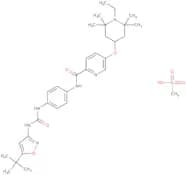
CAS:<p>Ac710 mesylate is a small molecule that is being developed for the treatment of fibrosis. It blocks the activity of collagen-specific TGF-β1 and TGF-β3, which are cytokines that function as signaling molecules in fibrosis. Ac710 mesylate has been shown to inhibit alveolar type II cell proliferation and induce lung fibrosis in mice. The drug was also shown to prevent emphysema development in rats with chronic bronchitis, by reducing protein expression and neutrophil infiltration.</p>Fórmula:C32H46N6O7SPureza:Min. 95%Peso molecular:658.8 g/molMyc antibody
<p>The Myc antibody is a monoclonal antibody that specifically targets the c-Myc protein. It has a high affinity for c-Myc, which is a nuclear biomolecule involved in the regulation of cell growth and proliferation. The Myc antibody can be used in various life sciences research applications to study the role of c-Myc in different cellular processes.</p>LRRC26 antibody
<p>LRRC26 antibody was raised using the middle region of Lrrc26 corresponding to a region with amino acids LRPLCAWLRRHPLPASEAETVLCVWPGRLTLSPLTAFSDAAFSHCAQPLA</p>Pureza:Min. 95%SATB1 antibody
<p>The SATB1 antibody is a highly specialized monoclonal antibody that has been developed for targeted therapy in various medical applications. This antibody specifically targets and binds to SATB1, a protein that plays a crucial role in gene regulation and cellular function. By binding to SATB1, this antibody can modulate its activity and inhibit the growth of certain cells.</p>POSTN antibody
<p>POSTN antibody was raised using the middle region of POSTN corresponding to a region with amino acids VTKFIEGGDGHLFEDEEIKRLLQGDTPVRKLQANKKVQGSRRRLREGRSQ</p>Pureza:Min. 95%TDGF1 antibody
<p>The TDGF1 antibody is a monoclonal antibody that targets E-cadherin, a basic protein involved in cell adhesion. It acts as a neutralizing agent against epidermal growth factor (EGF), a potent growth factor that plays a crucial role in cell proliferation and differentiation. The TDGF1 antibody is widely used in the field of life sciences for various applications, including immunohistochemistry and Western blotting.</p>Goat anti Rat IgG (H + L) (HRP)
<p>This antibody reacts with heavy (gamma) chains on rat IgG and light chains on all rat immunoglobulins.</p>Pureza:Min. 95%BFSP1 antibody
<p>BFSP1 antibody was raised using the N terminal of BFSP1 corresponding to a region with amino acids QVESNRQRVRDLEAERARLERQGTEAQRALDEFRSKYENECECQLLLKEM</p>CNPase antibody
<p>The CNPase antibody is a monoclonal antibody used in Life Sciences research. It is designed to specifically target and bind to CNPase, a protein involved in myelination. This antibody can be used for various applications, such as immunohistochemistry, Western blotting, and ELISA assays. It has been shown to effectively detect CNPase in human serum and tissues, making it a valuable tool for studying the role of this protein in various biological processes. Additionally, the CNPase antibody has been demonstrated to have high specificity and sensitivity, ensuring accurate and reliable results. With its ability to recognize and bind to CNPase with high affinity, this antibody is an essential tool for researchers in the field of neuroscience and neurobiology.</p>Pureza:Min. 95%ALAS2 antibody
<p>ALAS2 antibody was raised using the C terminal of ALAS2 corresponding to a region with amino acids PTVPRGEELLRLAPSPHHSPQMMEDFVEKLLLAWTAVGLPLQDVSVAACN</p>NUP50 antibody
<p>NUP50 antibody was raised using the C terminal of NUP50 corresponding to a region with amino acids TTQSKPVSSPFPTKPLEGQAEGDSGECKGGDEEENDEPPKVVVTEVKEED</p>LONRF2 antibody
<p>LONRF2 antibody was raised using the middle region of LONRF2 corresponding to a region with amino acids IGISRFRVLSHRHRDGYNTADIEYLEDEKVEGPEYEELAALHDSVHQQSV</p>Pureza:Min. 95%SRF antibody
<p>The SRF antibody is a polyclonal antibody that targets the Serum Response Factor (SRF). SRF is a transcription factor that plays a crucial role in regulating gene expression, particularly in response to various stimuli such as interleukin-6, cholinergic signaling, and interferon. This antibody is widely used in life sciences research to study the function and regulation of SRF.</p>Gpt protein
<p>Gpt protein is a versatile binding protein that plays a crucial role in the Life Sciences field. It is widely used in various applications such as biomass analysis, hybridization studies, and protein-protein interactions. Gpt protein has the ability to bind to specific target molecules, including annexin, inhibitors, emission factors, viscosity modifiers, osteopontin, neutralizing antibodies, growth factors, and interferons. Its unique properties make it an essential tool for researchers working on Proteins and Antigens. With its high affinity and specificity, Gpt protein enables accurate detection and quantification of target molecules in biological samples. Whether you are conducting research or developing diagnostic assays, Gpt protein is an indispensable component that ensures reliable results.</p>Pureza:Min. 95%KLRA1 antibody
<p>KLRA1 antibody was raised using the N terminal of KLRA1 corresponding to a region with amino acids NDQGEIYSTLRFLQSPSESQNRLRPDDTQRPGKTDDKEFSVPWHLIAVTL</p>Pureza:Min. 95%MVK antibody
<p>MVK antibody was raised using the N terminal of MVK corresponding to a region with amino acids LAVLAFLYLYLSICRKQRALPSLDIVVWSELPPGAGLGSSAAYSVCLAAA</p>