Bioquímicos e reagentes
Os bioquímicos e reagentes são substâncias fundamentais para a pesquisa e desenvolvimento em campos como biotecnologia, biologia molecular, farmacologia e medicina. Esses produtos são essenciais para uma variedade de aplicações, incluindo a síntese de compostos, a análise de amostras biológicas, a pesquisa de processos metabólicos e a produção de medicamentos. Na CymitQuimica, oferecemos uma ampla seleção de bioquímicos e reagentes de alta qualidade e pureza, adequados para diversas necessidades científicas e industriais. Nosso catálogo inclui enzimas, anticorpos, ácidos nucleicos, aminoácidos e muitos outros produtos, todos projetados para apoiar pesquisadores e profissionais em seus projetos de pesquisa e desenvolvimento, garantindo resultados confiáveis e reproduzíveis.
Subcategorias de "Bioquímicos e reagentes"
- Biomoléculas(99.185 produtos)
- Por Alvo Biológico(99.150 produtos)
- Por uso/Efeitos Farmacológicos(6.789 produtos)
- Compostos relacionados à criopreservação e aos crioconservantes(21 produtos)
- Desinfetantes, aditivos para aquecimento de líquidos de banho e compostos relacionados(28 produtos)
- Hormónios(346 produtos)
- Biologia Vegetal(6.764 produtos)
- Metabólitos secundários(14.307 produtos)
Foram encontrados 130581 produtos de "Bioquímicos e reagentes"
Ordenar por
Pureza (%)
0
100
|
0
|
50
|
90
|
95
|
100
Nε-(1-Carboxymethyl)-L-lysine-d4
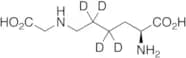
CAS:Produto Controlado<p>Stability Hygroscopic<br>Applications CEL and CML are two stable, nonenzymatic chemical modifications of protein lysine residues resulting from glycation and oxidation reactions.<br>References Fu, M.X., et al.: J. Biol. Chem., 271, 9982 (1996), Ahmed M.U., et al.: Biochem.J., 324, 565 (1997), Schleicher, E.D., et al.: J. Clin. Invest., 99, 457 (1997), Shibayama, R., et al.: Diabetes, 48, 1842 (1999),<br></p>Fórmula:C8H12D4N2O4Cor e Forma:NeatPeso molecular:208.25N-(9-((2R,3R,4R,5R)-5-((Bis(4-methoxyphenyl)(phenyl)methoxy)methyl)-4-hydroxy-3-methoxytetrahydrofuran-2-yl)-9H-purin-6-yl)benzamide
CAS:Produto ControladoFórmula:C39H37N5O7Cor e Forma:NeatPeso molecular:687.74D,L-Mevalonic Acid Lactone
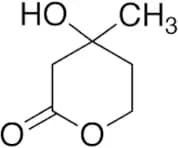
CAS:<p>Stability Hygroscopic<br>Applications A metabolite from endophytes of the medicinal plant Erythrina crista-galli.<br>References Stadler, M., et al.: Planta Med., 60, 128 (1994), Kopcke, B., et al.: Phytochemistry, 60, 709 (2002), Chu, M., et al.: J. Nat. Prod., 66, 1527 (2003), Weber, D., et al.: J. Antibiot., 57, 559 (2004),<br></p>Fórmula:C6H10O3Cor e Forma:NeatPeso molecular:130.14Disperse Orange 3 (Technical Grade)
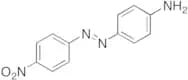
CAS:Produto Controlado<p>Applications Disperse Orange 3 is an azo disperse dye which is water insoluble. Disperse Orange 3 can be used to dye polyester and acetate fibers. Dyes and metabolites, Environmental Testing.<br>References Nishida, K., et al.: J. Soc. Dyers Colour., 105, 112 (1989); De Wael, K.: Sci. Justice, 52, 81 (2012)<br></p>Fórmula:C12H10N4O2Cor e Forma:OrangePeso molecular:242.23L-Aspartic Acid
CAS:<p>Applications L-Aspartic Acid is a non-essential amino acid found in food sources. L-Aspartic Acid is one of the 20 proteinogenic amino acids; the building blocks of proteins. Its conjugate base L-aspartate is an excitatory neurotransmitter in the central nervous system.<br>References Ager, D.J. et al.: J. Mol. Catal. Enzym., 11, 199 (2001); Velisek, J. et al.: Cze. J. Food. Sci., 24, 1 (2006); Nagahama, M. et al.: Cell Tiss. Res., 318, 483 (2004);<br></p>Fórmula:C4H7NO4Cor e Forma:WhitePeso molecular:133.10Acid Orange 3, Technical Grade
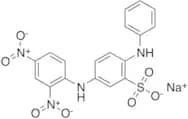
CAS:Produto Controlado<p>Applications Acid Orange 3 (cas# 6373-74-6) is a useful research chemical.<br></p>Fórmula:C18H13N4O7S·NaCor e Forma:NeatPeso molecular:452.37322-Palmitoyl-rac-glycerol
CAS:<p>Applications A biomarker of metabolic responses to hepatotoxicants and carcinogens.<br>References Broadhurst, D., et al.: Metabolomics, 2, 171 (2006), Shi, J., et al.: Nat. Biotechnol., 25, 930 (2007),<br></p>Fórmula:C19H38O4Cor e Forma:NeatPeso molecular:330.50Coumarin 1
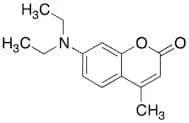
CAS:Produto Controlado<p>Applications Coumarin 1, also 7-(Diethylamino)-4-methylcoumarin, is potentially useful as a laser dye.<br>References F.P. Schafer, Ed., Dye Lasers , Springer, Berlin, (1973)<br></p>Fórmula:C14H17NO2Cor e Forma:NeatPeso molecular:231.29Lumogallion
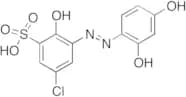
CAS:Produto Controlado<p>Applications Lumogallion is a fluorimetric reagent for the detection of Aluminum, Gallium and other metals.<br>References A.M., Lukin, E.A., Bozshevolnov, Zh, Anal. Khim. 15, 43 (1960); R.A., Zweidinger, L. Barnett, C.G., Ditt, Anal. Chem. 45, 1563 (1973); T., Imasaka, K., Kina, Y., Goto, Anal. Chim. Acta. 129, 195 (1981); N., Ishibashi, K., Kina,, Anal. Lett., 5, 637 (1972); A.G., Howard, A.J., Coxhead, I.A., Potter, A.P., Watt, Analyst(London), 111, 1379 (1986); D.J., Hydes, P.S., Liss, ibid., 101, 922 (1976); G.R., Haugen, I.L., Steinmetz, T.B., Herschfeld, S.M., Klainer, Appl. Spectrose., 35, 568 (1981); I.P., Alimarin, S.B., Savvin, Talanta 13, 689 (1966); A., Sanz-Medel, M.M.F., Perez, M. de la Guardia, J.L., Carrion, Anal.Chem., 58, 2161 (1986)<br></p>Fórmula:C12H9ClN2O6SCor e Forma:NeatPeso molecular:344.73Cholesterol 3-Sulfate Sodium Salt
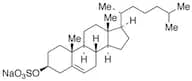
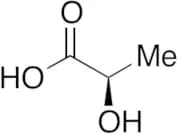
CAS:Produto ControladoFórmula:C27H45O4S·NaCor e Forma:White PowderPeso molecular:488.70D-Lactic Acid
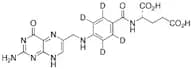
CAS:<p>Applications D-Lactic Acid occurs in small quantities in the blood and muscle fluid of man and animals. The lactic acid concentration increases in muscle and blood after vigorous activity.<br>References He, W. et al.: Comp. Biochem. Phys. Part A: Mol. Int. Phys., 166, 308 (2013)<br></p>Fórmula:C3H6O3Pureza:90%Cor e Forma:Colourless To Light YellowPeso molecular:90.08Folic Acid-d4
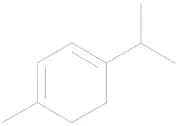
CAS:Produto Controlado<p>Applications A vitamin needed to synthesize DNA, conduct DNA repair and methylate DNA, it also acts as a cofactor in biological reactions involving folate.<br>References Xu, L., et al.: Mol. Pharm., 7, 1311 (2010), Everette, J., et al.: J. Agric. Food Chem., 58, 8139 (2010), Alshatwi, A., et al.: Food, Chem., Toxicol., 48, 1881 (2010), McKay, D., et al.: Nut. J., 9 (2010),<br></p>Fórmula:C192H4H15N7O6Cor e Forma:NeatPeso molecular:445.42a-Terpinene (~90%)
CAS:Produto ControladoFórmula:C10H16Pureza:~90%Cor e Forma:ColourlessPeso molecular:136.23Thyroxine-13C6
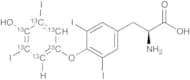
CAS:<p>Applications One of the thyroid hormones involved in the maintenance of metabolic homeostasis. Synthesized and stored as amino acid residues of thyroglobulin, the major protein component of the thyroid follicular colloid. Synthesis and secretion are regulated by the pituitary hormone (TSH). Deiodinated in peripheral tissues to the active metabolite, liothyronine. The D-form has very little activity as a thyroid hormone, but has been used to treat hyperlipidemia.<br>References Post, A., et al.: Anal. Profiles Drug Subs., 5, 225 (1976), Nelson, J.C., et al.: Clin. Chem., 34, 1737 (1988), Fischer, D.A., et al.: Clin. Chem., 42, 135 (1996), Cavalieri, R.R., et al.: Thyroid, 7, 177 (1997),<br></p>Fórmula:C913C6H11I4NO4Cor e Forma:White To Light BrownPeso molecular:782.83Fructose Valine (mixture of diastereomers)
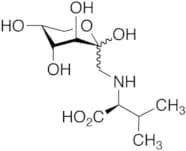
CAS:Produto Controlado<p>Applications An Amadori compound having the potential to alter cellular adhesion, inhibit cancer metastasis and induce apoptosis.<br>References Horiuchi, T., et al.: Agric. Biol. Chem., 55, 333 (1991), Sosnovsky, G., et al.: J. Pharm. Sci., 82, 649 (1993), Glinsky, G., et al.: Cancer Res., 56, 5319 (1996),<br></p>Fórmula:C11H21NO7Cor e Forma:Off-White To Dark BrownPeso molecular:279.29Leuco Malachite Green-d5
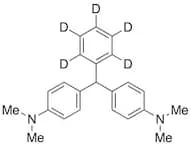
CAS:Produto Controlado<p>Applications A labelled metabolite of Malachite Green in seafood products. A labelled triphenylmethane dye with fungicidal and limited antiseptic activity. The term Malachine green applies to the oxalate as well as the chloride. Harmful if swallowed. Avoid release to the environment.<br>References Carter, S.G., et al.: J. Biochem. Biophys. Methods, 7, 7 (1982), Saikan, S., et al.: J. Chem. Phys., 79, 4154 (1983), Clemmensen, S., et al.: Arch. Toxicol., 56, 43 (1984),<br></p>Fórmula:C232H5H21N2Cor e Forma:White To Off-WhitePeso molecular:335.50(R)-3-Carboxy-2-hydroxy-N,N,N-trimethylpropan-1-aminium Chloride
CAS:Produto Controlado<p>Stability Hygroscopic<br>Applications (R)-3-Carboxy-2-hydroxy-N,N,N-trimethylpropan-1-aminium chloride is an important co-factor of mammalian mitochondrial energy metabolism. It is also a good active ingredient for dry-skin.<br>References Geier, David A., et al.: Neurochem. Res., 38(11), 2336-2341 (2013);Tanno, Osamu, et al.: Fragrance J., 33(8), 82-85 (2005);<br></p>Fórmula:C7H16NO3·ClCor e Forma:White To Off-WhitePeso molecular:197.660