Bioquímicos e reagentes
Os bioquímicos e reagentes são substâncias fundamentais para a pesquisa e desenvolvimento em campos como biotecnologia, biologia molecular, farmacologia e medicina. Esses produtos são essenciais para uma variedade de aplicações, incluindo a síntese de compostos, a análise de amostras biológicas, a pesquisa de processos metabólicos e a produção de medicamentos. Na CymitQuimica, oferecemos uma ampla seleção de bioquímicos e reagentes de alta qualidade e pureza, adequados para diversas necessidades científicas e industriais. Nosso catálogo inclui enzimas, anticorpos, ácidos nucleicos, aminoácidos e muitos outros produtos, todos projetados para apoiar pesquisadores e profissionais em seus projetos de pesquisa e desenvolvimento, garantindo resultados confiáveis e reproduzíveis.
Subcategorias de "Bioquímicos e reagentes"
- Biomoléculas(99.118 produtos)
- Por Alvo Biológico(99.156 produtos)
- Por uso/Efeitos Farmacológicos(6.788 produtos)
- Compostos relacionados à criopreservação e aos crioconservantes(21 produtos)
- Desinfetantes, aditivos para aquecimento de líquidos de banho e compostos relacionados(28 produtos)
- Hormónios(346 produtos)
- Biologia Vegetal(6.748 produtos)
- Metabólitos secundários(14.233 produtos)
Foram encontrados 130579 produtos de "Bioquímicos e reagentes"
Ordenar por
Pureza (%)
0
100
|
0
|
50
|
90
|
95
|
100
(R,S)-Equol 4’-Sulfate Sodium Salt (90%)
CAS:Produto Controlado<p>Stability Moisture and Temperature Sensitive<br>Applications (R,S)-Equol 4’-Sulfate is a sulfated metabolite of isoflavone Daidzein (D103500).<br>References Heinonen, S., et al.: Anal. Biochem., 274, 211 (1999), Setchell, K., et al.: J. Nutr., 132, 3577 (2002), Thigpen, J., et al.: Comp. Med., 53, 607 (2003), Yee, S., et al.: Food Chem. Toxicol., 46, 2713 (2008),<br></p>Fórmula:C15H13O6S·NaPureza:90%Cor e Forma:NeatPeso molecular:344.31L-Serine-2-13C
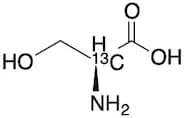
CAS:Produto Controlado<p>Applications Isotope labelled L-Serine is used in the synthesis of purines and pyrimidines as antibacterial/antifungal agents, as well as acting as a proteinogenic compound.<br>References Olivella, M. et al.: Bioorg. Med. Chem., 20, 6109 (2012);<br></p>Fórmula:C213CH7NO3Cor e Forma:NeatPeso molecular:106.09MCC-DM1
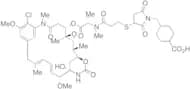
CAS:Produto Controlado<p>Stability Hygroscopic<br>Applications MCC-DM1 is designed for efficient detoxification via liver metabolism.<br>References Sun, X., et al.: Bioconjugate Chem., 22, 728 (2011)<br></p>Fórmula:C47H63ClN4O14SCor e Forma:NeatPeso molecular:975.54Ancitabine Hydrochloride
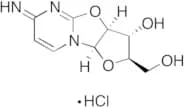
CAS:Produto Controlado<p>Applications Ancitabine Hydrochloride is an antineoplastic agent.<br>References Ototani, N., Whistler, R.: J. Med. Chem., 17, 535 (1974); Smith, K., et al.: EMBO Mol. Med., 2, 371 (2010);<br></p>Fórmula:C9H11N3O4·HClCor e Forma:NeatPeso molecular:261.66β-Sitosterol β-D-Glucoside
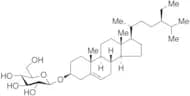
CAS:<p>Applications β-Sitosterol and β-sitosteryl-β-D-glucoside were isolated as analgesic constituents from the leaves of Mentha cordifolia Opiz.<br>References Tanaka, et al.: J. Biochem., 17, 483 (1933), Nigro, N.D., et al.: J. Natl. Cancer Inst., 69, 103 (1982),<br></p>Fórmula:C35H60O6Cor e Forma:Off-White To Light BrownPeso molecular:576.85(All-Z)-8,11,14,17-Eicosatetraenoic Acid Ethyl Ester
CAS:Produto ControladoFórmula:C22H36O2Cor e Forma:Colourless To Light YellowPeso molecular:332.523-Methylglutaconic Acid
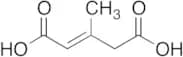
CAS:Produto Controlado<p>Stability Hygroscopic<br>Applications 3-Methylglutaconic acid is a glutarate which builds up in the urine in 3-methylglutaconic aciduria. 3-methylglutaconic aciduria is a term used to describe five different disorders that impair the functioning of energy-producing centers within cells (mitochondria)<br>References Walsh, R., et al.: J. Inherit. Metab. Dis., 22, 251 (1999); Gonzalez, I., et al.: Am J Med Genet A., 134, 409 (2005); MacKenzie, J., et al.: Biochim Biophys Acta., 1772, 509 (2007)<br></p>Fórmula:C6H8O4Cor e Forma:NeatPeso molecular:144.1322α-Hydroxy Cholesterol
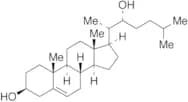
CAS:Produto Controlado<p>Applications The 22R-metabolite of Cholesterol (C432501). 22-Hydroxycholesterol inhibits chemokine receptor activity.<br>References Samson, M., et al.: J. Biol. Chem., 272, 24934 (1997), Mackay, C., et al.: Nature Immunol., 2, 95 (2001), Navenot, J., et al.: J. Mol. Biol., 313, 1181 (2001),<br></p>Fórmula:C27H46O2Cor e Forma:NeatPeso molecular:402.65N-Heptanoylglycine
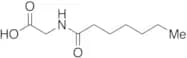
CAS:<p>Applications An acylglycine present in urniary excretion that can be analyzed and be used as diagnostic tool for metabolic disorders, complementary to organic acids and acylcarnitine profiles.<br>References Bonafe, L. et al.: Mol. Genetics Metab., 69, 302 (2000);<br></p>Fórmula:C9H17NO3Cor e Forma:WhitePeso molecular:187.24(4-Methoxybenzyl)hydrazine Hydrochloride
CAS:Produto Controlado<p>Stability Hygroscopic<br>Applications (4-Methoxybenzyl)hydrazine Hydrochloride is used in preparation of Heterocyclic derivatives useful as SHP2 inhibitors.<br>References Kang, D., et al.: PCT Int. Appl., (2020);<br></p>Fórmula:C8H12N2O·HClCor e Forma:NeatPeso molecular:152.09 + 36.463-Hydroxytetradecanoic Acid
CAS:Produto Controlado<p>Applications 3-Hydroxytetradecanoic Acid is used in the preparation of liposomes coated with N-acylated molecular-weight. Also used in the synthesis of pseudomycin side-chain analogs. Also used in the study of Lipid A, a major constituent of the lipopolysaccharides, which are responsible for the toxicity of gram negative bacteria.<br>References Naberezhnykh, G. et al.: Chem. Nat. Comp., 46, 852 (2011); Chen, S. et al.: Bioorg. Med. Chem. Lett., 10, 2107 (2000); Carillo, S. et al.: Marine Drugs., 11, 184 (2013);<br></p>Fórmula:C14H28O3Cor e Forma:NeatPeso molecular:244.372-O-a-D-Glucopyranosyl-L-ascorbic Acid
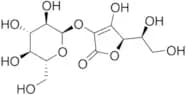
CAS:Produto Controlado<p>Applications 2-O-a-D-Glucopyranosyl-L-ascorbic Acid is a useful cosmetic gel and skin cleanser.<br>References Aizawa, K., et al.: PCT Int. Appl. (2020), WO 2020226147 A1<br></p>Fórmula:C12H18O11Cor e Forma:White To Off-WhitePeso molecular:338.26(R)-Butyryl Carnitine Chloride
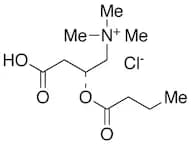
CAS:Produto Controlado<p>Stability Hygroscopic<br>Applications (R)-Butyryl Carnitine is a potential prodrug of Carnitine, used for treating seizure disorders.<br>References Fei, Y., et al.: J. Biol. Chem., 275, 23707 (2000), Duran, J., et al.: J. Membr. Biol., 185, 65 (2002), Brown, A., et al.: J. Biol. Chem., 278, 11312 (2003), Gupta, N., et al.: Life Sci., 78, 2419 (2006),<br></p>Fórmula:C11H22NO4·ClCor e Forma:NeatPeso molecular:267.7520(S)-Ginsenoside Rg2
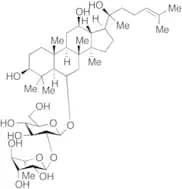
CAS:Produto Controlado<p>Stability Hygroscopic<br>Applications 20(S)-Ginsenoside Rg2 is used as an aldose reductase inhibitor and my exert anti-inflammatory and immunomodulatory activity. It exists as a bioactive metabolite of the ginsenoside component of Panax ginseng.<br>References Cho, K. et al.: Biomol. Ther., 22, 55 (2014); Fatmawati, S. et al.: Bioorg. Med. Chem. Lett., 24, 4407 (2014);<br></p>Fórmula:C42H72O13Cor e Forma:NeatPeso molecular:785.01Pterine-6-carboxylic Acid
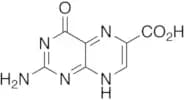
CAS:Produto Controlado<p>Applications Pterine-6-carboxylic Acid is a degradation product of Folic acid (F680300).<br>References Akhtar, M., et al.: J. Pharm. Biomed. Anal., 19, 269 (1999), Andrisano, V., et al.: J. Pharm. Biomed. Anal., 32, 983 (2003), Patro, B., et al.: Bioorg. Med. Chem. Lett., 15, 67 (2005),<br></p>Fórmula:C7H5N5O3Cor e Forma:NeatPeso molecular:207.15p-Cresidine
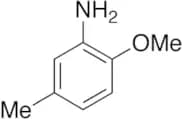
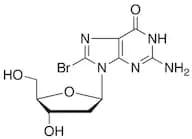
CAS:<p>Stability Air Sensitive<br>Applications p-Cresidine is a reagent used in the preparation of enaminones acting as anticonvulsants. Also used in the preparation of crescent oligoamides. Dyes and metabolites, Environmental Testing.<br>References Zhu, J. et al.: J. Am. Chem. Soc., 122, 4219 (2000); Scott, K. et al.: J. Med. Chem., 36, 1947 (1993);<br></p>Fórmula:C8H11NOCor e Forma:NeatPeso molecular:137.188-Bromo-2’-deoxyguanosine
CAS:Produto Controlado<p>Applications 8-Bromo-2’-deoxyguanosine (cas# 13389-03-2) is a compound useful in organic synthesis.<br>References Chatgilialoglu, C., et al.: Chem. Res. Toxicol., 20, 1820 (2007),<br></p>Fórmula:C10H12BrN5O4Cor e Forma:NeatPeso molecular:346.144-Acetamido-4'-isothiocyanatostilbene-2,2'-disulfonic Acid, Sodium Salt
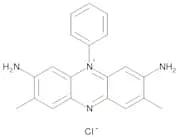
CAS:Produto Controlado<p>Stability Hygroscopic, Temperature Sensitive<br>Applications A fluorescent label for the specific and reversible labelling of the outer components of the plasma membrane. The reagent reacts with a fixed number of sites on the surface of cells concerned with anion permeation; does not pass through the osmotic barrier of the membrane; reacts under physiological conditions of temperature, pH and tonicity; and is detectable in small amounts. SEE ALSO NOTES FOR DIDS (CAT#D460600).Fluorescence: max. Abs. l = 336nm, max. Em. l = 436 nm.<br>References Maddy., A.H.: Biochim. Biophys. Acta., 88, 390 (1964), Cabantchik, Z.I., et al.: J. Membrane Biol., 10, 311 (1972); Am. J. Physiol. 262, C803 (1992); J. Biol. Chem. 266, 13355 (1991), Ma, W., et al.: J. Pharmacol. Exp. Ther., 328, 409 (2009),<br></p>Fórmula:C17H12N2O7S3·2NaCor e Forma:NeatPeso molecular:498.46Safranin T (>75% Purity)
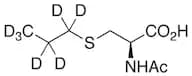
CAS:Produto ControladoFórmula:C20H19N4·ClPureza:>75%Cor e Forma:Dark RedPeso molecular:350.84N-Acetyl-S-(propyl-d7)-L-cysteine
CAS:Produto ControladoFórmula:C8D7H8NO3SCor e Forma:Off-WhitePeso molecular:212.32