Bioquímicos e reagentes
Os bioquímicos e reagentes são substâncias fundamentais para a pesquisa e desenvolvimento em campos como biotecnologia, biologia molecular, farmacologia e medicina. Esses produtos são essenciais para uma variedade de aplicações, incluindo a síntese de compostos, a análise de amostras biológicas, a pesquisa de processos metabólicos e a produção de medicamentos. Na CymitQuimica, oferecemos uma ampla seleção de bioquímicos e reagentes de alta qualidade e pureza, adequados para diversas necessidades científicas e industriais. Nosso catálogo inclui enzimas, anticorpos, ácidos nucleicos, aminoácidos e muitos outros produtos, todos projetados para apoiar pesquisadores e profissionais em seus projetos de pesquisa e desenvolvimento, garantindo resultados confiáveis e reproduzíveis.
Subcategorias de "Bioquímicos e reagentes"
- Biomoléculas(99.115 produtos)
- Por Alvo Biológico(99.160 produtos)
- Por uso/Efeitos Farmacológicos(6.787 produtos)
- Compostos relacionados à criopreservação e aos crioconservantes(21 produtos)
- Desinfetantes, aditivos para aquecimento de líquidos de banho e compostos relacionados(28 produtos)
- Hormónios(346 produtos)
- Biologia Vegetal(6.722 produtos)
- Metabólitos secundários(14.222 produtos)
Foram encontrados 130582 produtos de "Bioquímicos e reagentes"
Ordenar por
Pureza (%)
0
100
|
0
|
50
|
90
|
95
|
100
Butyrylglycine
CAS:<p>Applications Butyrylglycine is one of the acylglycines, an important class of metabolites that have been used in the diagnosis of several inborn errors of metabolism (IEM).<br>References Costa, C., et al.: J. Pharmaceut. Biomed. Anal., 21, 1215 (2000), Garcia-Villoria, J., et al.: Clin. Biochem., 42, 2 (2009), Scalbert, A., et al.: Metabolomics, 5, 435 (2009),<br></p>Fórmula:C6H11NO3Cor e Forma:NeatPeso molecular:145.161-(β-Glucosyl)glycerol(Mixture of Diastereomers)
Produto ControladoFórmula:C9H18O8Cor e Forma:NeatPeso molecular:254.2345'-O-[Bis(4-methoxyphenyl)phenylmethyl]-N-(2-methyl-1-oxopropyl)-guanosine
CAS:Produto Controlado<p>Applications 5'-O-[Bis(4-methoxyphenyl)phenylmethyl]-N-(2-methyl-1-oxopropyl)-guanosine is used to prepare ppGpp analogs as inhibitors of RelA from Gram-negative/-positive bacteria. It is also used to synthesize guanosine 5'-conjugates as initiator molecules for transcription priming.<br>References Wexselblatt, E., et al.: Bioorg. Med. Chem., 18, 4485 (2010); Wolf, J., et al.:Org. Biomol. Chem., 6, 899 (2008)<br></p>Fórmula:C35H37N5O8Cor e Forma:NeatPeso molecular:655.697Chenodeoxycholic Acid-d4
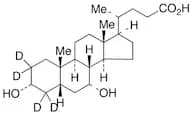
CAS:Produto Controlado<p>Applications Labelled Chenodiol (Chenodeoxycholic acid). A major bile acid in many vertebrates, occurring as the N-glycine and/or N-taurine conjugate. With other bile acids, forms mixed micelles with lecithin in bile which solubilize cholesterol and thus facilitates its excretion. Fcilitates fat absorption in the small intestine by micellar solubilization of fatty acids and monoglycerides. Anticholelithogenic. Epimeric with Ursodiol.<br>References Danzinger, et al.: N. Engl. J. Med., 286, 1 (1972), Iser, J.H., et al.: Drugs, 21, 90 (1981), Tint, G.S., et al.: Gastroenterology, 91, 1007 (1986),<br></p>Fórmula:C24D4H36O4Cor e Forma:White To Off-WhitePeso molecular:396.608-Aminopyrene-1,3,6-trisulfonic Acid Trisodium Salt
CAS:Produto Controlado<p>Stability Very Hygroscopic<br>Applications Fluorescent label for glycoproteins and saccharides.Dyes and metabolites.<br>References Wang, D., et al.: Langmuir, 17, 1262 (2001), Cappuccio, F., et al.: J. Fluoresc., 14, 521 (2004), Cordes, D., et al.: Org. Biomol. Chem., 3, 1708 (2005),<br></p>Fórmula:C16H8NO9S3·3NaCor e Forma:NeatPeso molecular:523.40γ-Polyglutamic Acid Sodium Salt (Technical Grade)
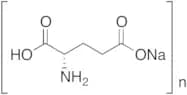
CAS:Produto Controlado<p>Stability Hygroscopic<br>Applications gamma-Polyglutamic acid - sodium salt (cas# 25513-46-6) is a useful research chemical.<br></p>Fórmula:(C5H8NNaO4)nCor e Forma:NeatPeso molecular:NAAnthrose
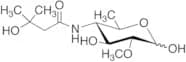
CAS:Produto Controlado<p>Applications Anthrose (cas# 769959-88-8) is a compound useful in organic synthesis.<br>References Saksena, R., et al.: Carbohydrate Research, 340, 1591 (2005)<br></p>Fórmula:C12H23NO6Cor e Forma:NeatPeso molecular:277.31H-L-MeThr-OH
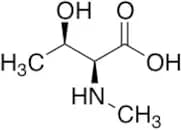
CAS:Produto Controlado<p>Applications H-L-METHR-OH (cas# 2812-28-4) is a useful research chemical.<br></p>Fórmula:C5H11NO3Cor e Forma:NeatPeso molecular:133.15Nisin Z (~80%) Hydrochloride
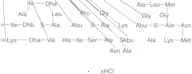
CAS:<p>Applications Nisin Z Hydrochloride is a peptide antibiotic synthesized by Lactococcus lactis. Nisin Z interacts with lipid II, a lipid component of cell wall, to form pores in the plasma membrane.<br>References Kuipers, O. P., et al.: J. Biol. Chem. 270, 27299 (1995); Breukink, E., et al.: Science 286, 2361 (1999); Breukink, E., et al.: Biochemistry 36, 6968 (1997)<br></p>Fórmula:C141H229N41O38S7·x(HCl)Cor e Forma:NeatPeso molecular:3331.033646D-Idose (0.141M Solution)
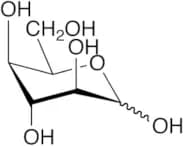
CAS:<p>Applications D-Idose is a monosaccharide that is an important component of dermatan sulfate and heparan sulfate.<br>References Olsen, S.G., et al.: J. Biol. Chem., 264, 15982 (1989);<br></p>Fórmula:C6H12O6Cor e Forma:Single SolutionPeso molecular:180.1559C12 Ceramide
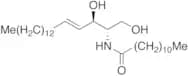
CAS:Produto Controlado<p>Applications Ceramide is one of the simplest sphingolipids, consisting of a sphingosine base N-linked to a fatty acid, and is a membrane mediator for cell-signaling events. N-Acyl chain length of membrane ceramides can influence bidimensional transitions, condensed domain morphology, and interfacial thickness.<br>References Shimshick, E., et al.: Biochemistry, 1973, 12, 2351 (1973), Kolesnick, R., et al.: J. Cell Physiol., 184, 285 (2000), Goni, F., et al.: Biochim. Biophys. Acta., 1758, 1902 (2006),<br></p>Fórmula:C30H59NO3Cor e Forma:NeatPeso molecular:481.792,4-Dimethylaniline-d9
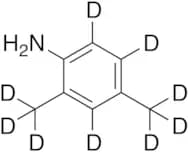
CAS:Produto Controlado<p>Applications 4,6-Di(methyl-d3)benzen-2,3,5-d3-amine is a useful isotopically labeled research compound.<br></p>Fórmula:C8H2D9NCor e Forma:NeatPeso molecular:130.24N-Acetyl-S-(carbamoylethyl)-L-cysteine-d3
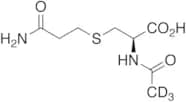
CAS:Produto Controlado<p>Stability Hygroscopic<br>Applications Labelled N-Acetyl-S-(carbamoylethyl)-L-cysteine (A171870). N-Acetyl-S-(carbamoylethyl)-L-cysteine is the urinary metabolite of Acrylamide (AA). Acrylamide is formed during the heating of food and is classified as a genotoxic carcinogen.<br>References Besaratinia, A., et al.: Mutat. Res., 80, 31 (2005), Bjellaas, T., et al.: Xenobiotica, 35, 1003 (2005), Bjellaas, T., et al.: Food Chem. Toxicol., 45, 1020 (2007), Bjellaas, T., et al.: Toxicol. Sci., 98, 110 (2007),<br></p>Fórmula:C8H11D3N2O4SCor e Forma:Off-WhitePeso molecular:237.292-Pentylidenecyclohexanone
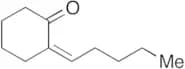
CAS:<p>Stability Light Sensitive<br>Applications 2-Pentylidenecyclohexanone, is the fragrance chemical. It can also be used in the synthesis of dialkylphenols in the presence of zirconium catalyst.<br>References Tetsuo, B. et al.: Kenkyu Hokoku - Asahi Garasu Zaidan, 58, 201 (1991); Hostynek, J. J., et al.: Toxicology in Vitro, 11, 377 (1997);<br></p>Fórmula:C11H18OCor e Forma:NeatPeso molecular:166.261,2-Dipalmitoyl-rac-glycero-3-phosphoethanolamine
CAS:Produto Controlado<p>Applications 1,2-Dipalmitoyl-rac-glycero-3-phosphoethanolamine is a long chain fatty acid, acting as a luminescence marker. Is used in enhancing radiotherapy for cancer treatment<br>References Dotsikas, Y. et al.: Anal. Sci., 28, 753 (2012); Choi, J. et al.: J. Nanomet., 8, 863704, (2012);<br></p>Fórmula:C37H74NO8PCor e Forma:NeatPeso molecular:691.96Poly(ethylene Glycol) ~2000
CAS:<p>Applications Poly(ethylene Glycol) molecules of an average molecular mass of 2000. Poly(ethylene Glycol) is used in various applications from industrial chemistry to biological chemistry. Recent research has shown PEG maintains the ability to aid the spinal cord injury recovery process, helping the nerve impulse conduction process in animals. In rats, it has been shown to aid in the repair of severed sciatic axons, helping with nerve damage recovery. It is industrially produced as a lubricating substance for various surfaces to reduce friction. PEG is also used in the preparation of vesicle transport systems in with application towards diagnostic procedures or drug delivery methods.<br>References Borgens, R. et al.: J. Neurosci. Res., 66, 1179 (2001); Stavisky, R. et al.: Neurosci. Lett., 376, 98 (2005); Nalam, P. et al.: Tribiol. Lett., 37, 541 (2010); Steinmetz, N. et al.: J. Am. Chem. Soc., 131, 17093 (2009); Li, X. et al.: J. Am. Chem. Soc., 133, 11147 (2011); Li, L. et al.: Int. J. Pharm., 447, 192 (2013);<br></p>Fórmula:H2O(C2H4O)nCor e Forma:White To Off-WhitePeso molecular:62.07Eosine-5-isothiocyanate
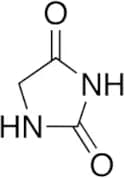
CAS:Produto Controlado<p>Applications Eosine-5-isothiocyanate is a fluorescence probe.<br></p>Fórmula:C21H7Br4NO5SCor e Forma:NeatPeso molecular:704.96Hydantoin
CAS:Produto Controlado<p>Applications Hydantoin (cas# 461-72-3) is a compound useful in organic synthesis.<br></p>Fórmula:C3H4N2O2Cor e Forma:NeatPeso molecular:100.08


![5'-O-[Bis(4-methoxyphenyl)phenylmethyl]-N-(2-methyl-1-oxopropyl)-guanosine](/_next/image/?url=https%3A%2Fstatic.cymitquimica.com%2Fproducts%2FTR%2Fthumb-webp%2FB415160.webp&w=3840&q=75)