Bioquímicos e reagentes
Os bioquímicos e reagentes são substâncias fundamentais para a pesquisa e desenvolvimento em campos como biotecnologia, biologia molecular, farmacologia e medicina. Esses produtos são essenciais para uma variedade de aplicações, incluindo a síntese de compostos, a análise de amostras biológicas, a pesquisa de processos metabólicos e a produção de medicamentos. Na CymitQuimica, oferecemos uma ampla seleção de bioquímicos e reagentes de alta qualidade e pureza, adequados para diversas necessidades científicas e industriais. Nosso catálogo inclui enzimas, anticorpos, ácidos nucleicos, aminoácidos e muitos outros produtos, todos projetados para apoiar pesquisadores e profissionais em seus projetos de pesquisa e desenvolvimento, garantindo resultados confiáveis e reproduzíveis.
Subcategorias de "Bioquímicos e reagentes"
- Biomoléculas(99.117 produtos)
- Por Alvo Biológico(99.161 produtos)
- Por uso/Efeitos Farmacológicos(6.787 produtos)
- Compostos relacionados à criopreservação e aos crioconservantes(21 produtos)
- Desinfetantes, aditivos para aquecimento de líquidos de banho e compostos relacionados(28 produtos)
- Hormónios(346 produtos)
- Biologia Vegetal(6.705 produtos)
- Metabólitos secundários(14.220 produtos)
Foram encontrados 130581 produtos de "Bioquímicos e reagentes"
Ordenar por
Pureza (%)
0
100
|
0
|
50
|
90
|
95
|
100
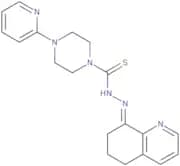
COTI-2
CAS:<p>COTI-2 is a copper complex that has been shown to selectively bind to the tumor suppressor protein, annexin A2. It inhibits tumor growth and induces apoptosis in cancer cells in vitro and in vivo. The mechanism of action of COTI-2 is not known but it may inhibit the activity of efflux pumps, leading to increased accumulation of anticancer drugs in tumor cells. In addition, COTI-2 may be a predictive biomarker for radiation exposure and an indicator for the development of cancer. Clinical studies have shown that COTI-2 is a potential biomarker for identifying patients who are at risk for developing lung cancer.</p>Fórmula:C19H22N6SPureza:Min. 95%Peso molecular:366.48 g/molADK antibody
<p>The ADK antibody is a monoclonal antibody that is widely used in Life Sciences research. It plays a crucial role as a growth factor and has been extensively studied for its impact on microvessel density. The ADK antibody has shown to have anticoagulant properties, and it interacts with various factors such as TNF-α, androgens, adrenomedullin, and fibrinogen. This versatile antibody can be activated under specific conditions, making it a valuable tool in numerous experimental settings. Its high affinity and specificity make it an excellent choice for researchers looking to study the nuclear localization of specific proteins or investigate the role of fatty acids in cellular processes. For those seeking reliable and accurate results, the ADK antibody is an indispensable asset.</p>16:0-d31-16:0 Pc
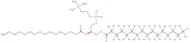
CAS:Produto Controlado<p>16:0-d31-16:0 Pc is a research tool for studying protein interactions. It has been shown to be an activator of the ion channel TRPV1, which is involved in pain and inflammatory responses. 16:0-d31-16:0 Pc also binds to the receptor CXCR2, which is involved in inflammatory responses. 16:0-d31-16:0 Pc has been used as a ligand for studying protein interactions with antibodies and receptors.</p>Fórmula:C40H49NO8PD31Pureza:Min. 95%Peso molecular:765.23 g/molGRIK2 Blocking Peptide
<p>A synthetic peptide for use as a blocking control in assays to test for specificity of GRIK2 antibody, catalog no. 70R-1530</p>Pureza:Min. 95%SYT16 antibody
<p>SYT16 antibody was raised in rabbit using the N terminal of SYT16 as the immunogen</p>Pureza:Min. 95%Vimentin Blocking Peptide
<p>A synthetic peptide for use as a blocking control in assays to test for specificity of VIM antibody, catalog no. 70R-3030</p>Pureza:Min. 95%C14orf166 antibody
<p>C14orf166 antibody was raised in Rabbit using Human C14orf166 as the immunogen</p>TBCCD1 antibody
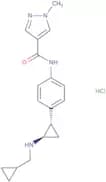
<p>TBCCD1 antibody was raised using the N terminal of TBCCD1 corresponding to a region with amino acids WPSPRNKSQSPDLTEKSNCHNKNWNDYSHQAFVYDHLSDLLELLLDPKQL</p>T 3775440 hydrochloride
CAS:<p>Lysine-specific inhibitor of histone demethylase (LSD1)</p>Fórmula:C18H23ClN4OPureza:Min. 95%Peso molecular:346.85 g/molSAT1 protein
<p>The SAT1 protein is a recombinant protein that is used in the field of Life Sciences. It plays a crucial role in various biological processes, including amyloid formation and chemokine regulation. This protein can be used for research purposes, as well as for the development of monoclonal antibodies and other therapeutic agents.</p>Pureza:Min. 95%FBXO42 Blocking Peptide
<p>A synthetic peptide for use as a blocking control in assays to test for specificity of FBXO42 antibody, catalog no. 70R-3602</p>Pureza:Min. 95%Rabbit anti Cat IgG (Alk Phos)
<p>Rabbit anti-cat IgG (Alk Phos) was raised in rabbit using feline IgG F(ab')2 fragment as the immunogen.</p>Pureza:Min. 95%GPR27 Blocking Peptide
<p>A synthetic peptide for use as a blocking control in assays to test for specificity of GPR27 antibody, catalog no. 70R-7334</p>Pureza:Min. 95%Bnc2 antibody
<p>Bnc2 antibody was raised in rabbit using the C terminal of Bnc2 as the immunogen</p>Pureza:Min. 95%LMF1 Blocking Peptide
<p>A synthetic peptide for use as a blocking control in assays to test for specificity of LMF1 antibody, catalog no. 70R-7300</p>Pureza:Min. 95%Tubacin
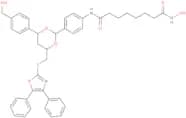
CAS:<p>Tubacin is a natural compound that has been found to inhibit the histone deacetylase (HDAC) enzyme. Tubacin has shown significant cytotoxicity against cancer cells and other cells in vitro. It inhibits HDAC and prevents the acetylation of histones, which are proteins that package DNA strands into chromosomes. This inhibition leads to increased gene expression and cell death. Tubacin is not toxic to normal cells, but it does cause oxidative injury to neurons.</p>Fórmula:C41H43N3O7SPureza:Min. 95%Peso molecular:721.9 g/molDNAL1 Blocking Peptide
<p>A synthetic peptide for use as a blocking control in assays to test for specificity of DNAL1 antibody, catalog no. 70R-10420</p>Pureza:Min. 95%PLMN antibody
<p>PLMN antibody is an essential tool used in life sciences research for the detection and analysis of various proteins and peptides. This polyclonal antibody specifically targets c-myc, a hormone peptide that plays a crucial role in cell growth and proliferation. The PLMN antibody is highly sensitive and can detect even low levels of c-myc in samples.</p>C17ORF78 Blocking Peptide
<p>A synthetic peptide for use as a blocking control in assays to test for specificity of C17orf78 antibody, catalog no. 70R-7006</p>Pureza:Min. 95%Influenza Virus Ns1A Binding Protein Blocking Peptide
<p>A synthetic peptide for use as a blocking control in assays to test for specificity of IVNS1ABP antibody, catalog no. 70R-2152</p>Pureza:Min. 95%GPR174 antibody
<p>GPR174 antibody was raised in rabbit using the C terminal of GPR174 as the immunogen</p>Complement C2 antibody
<p>Complement C2 antibody was raised using the N terminal of C2 corresponding to a region with amino acids EPICRQPYSYDFPEDVAPALGTSFSHMLGATNPTQKTKESLGRKIQIQRS</p>Pureza:Min. 95%Nvp-aew541 hydrochloride
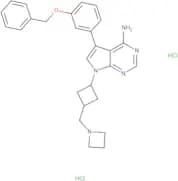
CAS:<p>Please enquire for more information about Nvp-aew541 hydrochloride including the price, delivery time and more detailed product information at the technical inquiry form on this page</p>Fórmula:C27H31Cl2N5OPureza:Min. 95%Peso molecular:512.5 g/molAquaporin 4 antibody
<p>Aquaporin 4 antibody is a biomolecule that plays a crucial role in various physiological processes. It is a polyclonal antibody that specifically targets the aquaporin 4 protein, which is found in the central nervous system and plays a key role in water transport across cell membranes. This antibody is widely used in life sciences research to study the function and regulation of aquaporin 4.</p>IGFBP1 Protein
<p>IGFBP1 protein is a thrombocytopenia-inducing protein that plays a crucial role in regulating the activity of insulin-like growth factors (IGFs). It is a recombinant protein used as a medicament and growth factor in various applications. IGFBP1 protein is known to bind to IGFs, thereby modulating their biological activities. This protein has been extensively studied and characterized, and its functions have been well-documented in the field of Life Sciences. It can be used in research studies, diagnostic assays, and therapeutic applications. Monoclonal antibodies specific to IGFBP1 protein have been developed, including neutralizing antibodies that can inhibit its activity. These antibodies have shown cytotoxic effects on cells expressing IGFBP1 and can be valuable tools for studying its role in various physiological processes.</p>Pureza:Min. 95%ST6GALNAC1 antibody
<p>The ST6GALNAC1 antibody is a powerful tool for researchers in the field of life sciences. It is an antibody that specifically targets and binds to ST6GALNAC1, an enzyme involved in the synthesis of sialyl-Tn antigen. This antigen has been implicated as a diagnostic biomarker for various cancers, making the ST6GALNAC1 antibody a valuable theranostic tool.</p>Tip60 antibody
<p>The Tip60 antibody is a monoclonal antibody that is widely used in Life Sciences research. It acts as a growth factor by neutralizing the effects of certain proteins, such as collagen and androgen. This antibody can be used in various applications, including Western blotting, immunohistochemistry, and flow cytometry. It is available as both monoclonal and polyclonal antibodies to suit different experimental needs. The Tip60 antibody has been shown to have multidrug resistance-associated protein (MRP) inhibitory activity, making it useful for studying drug resistance mechanisms. Additionally, it interacts with cytochrome proteins involved in cellular metabolism. The Tip60 antibody is formulated with low-density excipients to ensure stability and optimal performance.</p>CD86 antibody
<p>CD86 antibody was raised in rat using LPS-activated murine B cells as the immunogen.</p>LASS1 antibody
<p>LASS1 antibody was raised using the middle region of LASS1 corresponding to a region with amino acids LYIVAFAAKVLTGQVHELKDLREYDTAEAQSLKPSKAEKPLRNGLVKDKR</p>Pureza:Min. 95%WNT9B Blocking Peptide
<p>A synthetic peptide for use as a blocking control in assays to test for specificity of WNT9B antibody, catalog no. 70R-7246</p>Pureza:Min. 95%ZNF17 antibody
<p>ZNF17 antibody was raised in rabbit using the N terminal of ZNF17 as the immunogen</p>Pureza:Min. 95%TRIM63 Blocking Peptide
<p>A synthetic peptide for use as a blocking control in assays to test for specificity of TRIM63 antibody, catalog no. 70R-2552</p>Pureza:Min. 95%CKAP4 Blocking Peptide
<p>A synthetic peptide for use as a blocking control in assays to test for specificity of CKAP4 antibody, catalog no. 70R-6704</p>Pureza:Min. 95%FHL1 antibody
<p>The FHL1 antibody is a cytotoxic monoclonal antibody that acts as a family kinase inhibitor. It targets tyrosine residues and neutralizes chemokines, including TNF-α. This antibody has been shown to have high affinity for collagen and can effectively block the activity of antibodies that are involved in superoxide production. Additionally, the FHL1 antibody has been found to be highly reactive with liver microsomes, making it a valuable tool for studying liver function. With its potent inhibitory properties and specificity, the FHL1 antibody is an essential tool for researchers in the field of immunology.</p>SYT11 protein
<p>The SYT11 protein is a monoclonal antibody that belongs to the group of Proteins and Antigens. It has neutralizing properties and can be used in combination with adalimumab to treat various conditions. The SYT11 protein specifically targets carbonic antibodies and anti-VEGF inhibitory factors, which are known to play a role in the development and progression of certain diseases. This protein is formulated with excipients to ensure stability and efficacy. It does not interact with TNF-α or other Conjugated Proteins. Additionally, the SYT11 protein does not affect endothelial growth or epidermal growth factor inhibitors. It is a highly specialized therapeutic agent designed for specific applications in the field of Life Sciences.</p>Pureza:Min. 95%