Bioquímicos e reagentes
Os bioquímicos e reagentes são substâncias fundamentais para a pesquisa e desenvolvimento em campos como biotecnologia, biologia molecular, farmacologia e medicina. Esses produtos são essenciais para uma variedade de aplicações, incluindo a síntese de compostos, a análise de amostras biológicas, a pesquisa de processos metabólicos e a produção de medicamentos. Na CymitQuimica, oferecemos uma ampla seleção de bioquímicos e reagentes de alta qualidade e pureza, adequados para diversas necessidades científicas e industriais. Nosso catálogo inclui enzimas, anticorpos, ácidos nucleicos, aminoácidos e muitos outros produtos, todos projetados para apoiar pesquisadores e profissionais em seus projetos de pesquisa e desenvolvimento, garantindo resultados confiáveis e reproduzíveis.
Subcategorias de "Bioquímicos e reagentes"
- Biomoléculas(99.104 produtos)
- Por Alvo Biológico(99.074 produtos)
- Por uso/Efeitos Farmacológicos(6.784 produtos)
- Compostos relacionados à criopreservação e aos crioconservantes(21 produtos)
- Desinfetantes, aditivos para aquecimento de líquidos de banho e compostos relacionados(28 produtos)
- Hormónios(346 produtos)
- Biologia Vegetal(6.693 produtos)
- Metabólitos secundários(14.218 produtos)
Foram encontrados 130576 produtos de "Bioquímicos e reagentes"
Ordenar por
Pureza (%)
0
100
|
0
|
50
|
90
|
95
|
100
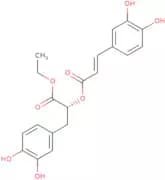
Ethyl rosmarinate
CAS:<p>Ethyl rosmarinate is an esterified derivative of rosmarinic acid, which is naturally sourced from the rosemary plant (Rosmarinus officinalis). This compound exhibits potent antioxidant properties, acting primarily by scavenging free radicals and inhibiting lipid peroxidation. These mechanisms allow it to mitigate oxidative stress within biological systems.</p>Fórmula:C20H20O8Pureza:Min. 95%Peso molecular:388.37 g/molCD131 antibody
<p>The 6-Fluoro-3-indoxyl-beta-D-galactopyranoside is a powerful antituberculosis drug that falls under the class of rifamycins. It is known for its bactericidal activity against tuberculosis infection and active compounds. By binding to DNA-dependent RNA polymerase, it inhibits bacterial growth by preventing transcription and replication. The effectiveness of this drug has been demonstrated through various techniques such as the patch-clamp technique on human erythrocytes. It undergoes several metabolic transformations, including hydrolysis, oxidation, reduction, or conjugation with glucuronic acid. Additionally, it specifically targets Mycobacterium tuberculosis strains and inhibits cell growth in culture.</p>D-Dimer protein
<p>D-Dimer protein is a glycoprotein that is found in human serum and plays a crucial role in the coagulation process. It is commonly used in Life Sciences research and diagnostics. The D-Dimer protein is produced using an expression plasmid and can be detected using specific antibodies or monoclonal antibodies. This protein can be used for various applications, including the development of diagnostic assays, studying chemokine interactions, and as a control in protein-protein interaction studies. The D-Dimer protein can be immobilized on a carbon electrode to create biosensors for rapid and sensitive detection. It can also be used as a reference standard for the quantification of alpha-fetoprotein or fibrinogen levels in biological samples. With its versatility and importance in coagulation studies, the D-Dimer protein is an essential tool for researchers and scientists in the field of Life Sciences.</p>Pureza:Min. 95%SERP1 antibody
<p>The SERP1 antibody is a powerful tool in the field of life sciences. It is an antibody that specifically targets and binds to the SERP1 protein, which plays a crucial role in proteolysis and phosphatase activity. This antibody can be used for various applications, including research on adeno-associated virus (AAV) biology and gene therapy.</p>HRB antibody
<p>HRB antibody was raised using the middle region of HRB corresponding to a region with amino acids SQSPVVGRSQGQQQEKKQFDLLSDLGSDIFAAPAPQSTATANFANFAHFN</p>AADACL4 antibody
<p>AADACL4 antibody was raised using the N terminal of AADACL4 corresponding to a region with amino acids FIRFLHDSVRIKKDPELVVTDLRFGTIPVRLFQPKAASSRPRRGIIFYHG</p>Pureza:Min. 95%IFN γ antibody
<p>The 6-Fluoro-3-indoxyl-beta-D-galactopyranoside is a powerful antituberculosis drug that falls under the class of rifamycins. It is specifically designed to combat tuberculosis infections by targeting active compounds and exhibiting bactericidal activity. This drug works by binding to DNA-dependent RNA polymerase, effectively inhibiting bacterial growth and preventing transcription and replication. Its efficacy has been demonstrated through extensive research using the patch-clamp technique on human erythrocytes.</p>IP10 antibody
<p>IP10 antibody was raised in rabbit using highly pure recombinant murine IP-10 as the immunogen.</p>Pureza:Min. 95%Ferritin antibody (Prediluted for IHC)
<p>Rabbit polyclonal Ferritin antibody (Prediluted for IHC)</p>Pureza:Min. 95%SIX1 antibody
<p>SIX1 antibody was raised in rabbit using the N terminal of Six1 as the immunogen</p>Pureza:Min. 95%PAIP2 protein (His tag)
<p>1-127 amino acids: MGSSHHHHHH SSGLVPRGSH MKDPSRSSTS PSIINEDVII NGHSHEDDNP FAEYMWMENE EEFNRQIEEE LWEEEFIERC FQEMLEEEEE HEWFIPARDL PQTMDQIQDQ FNDLVISDGS SLEDLVVKSN LNPNAKEFVP GVKYGNI</p>Pureza:Min. 95%Lipocalin 12 antibody
<p>Lipocalin 12 antibody was raised using the N terminal of LCN12 corresponding to a region with amino acids GNQFQGEWFVLGLAGNSFRPEHRALLNAFTATFELSDDGRFEVWNAMTRG</p>Pureza:Min. 95%GKN1 antibody
<p>The GKN1 antibody is a monoclonal antibody that plays a crucial role in Life Sciences. It functions as a growth factor and has been found to interact with collagen, olaparib, ferritin, and various proteins. Through molecular docking studies, it has been determined that the GKN1 antibody binds to specific targets such as TGF-beta, interleukin-6, ADP-ribose, chemokine, and glycopeptide. This antibody is highly effective in targeting these molecules and can be used for research purposes in the field of Life Sciences. With its specificity and potency, the GKN1 antibody is an essential tool for scientists working in this area of study.</p>GRIN2C antibody
<p>GRIN2C antibody was raised using the N terminal of GRIN2C corresponding to a region with amino acids VNTTNPSSLLTQICGLLGAAHVHGIVFEDNVDTEAVAQILDFISSQTHVP</p>Pureza:Min. 95%HSF1 antibody
<p>HSF1 antibody was raised in rabbit using the C terminal of HSF1 as the immunogen</p>Pureza:Min. 95%Dystrophin antibody
<p>The Dystrophin antibody is a powerful tool in Life Sciences research. It is a monoclonal antibody that specifically targets and neutralizes dystrophin, a key protein involved in muscle function. This antibody can be used in various applications, such as immunohistochemistry, western blotting, and flow cytometry.</p>Troponin T Type 1 antibody
<p>Troponin T Type 1 antibody was raised using a synthetic peptide corresponding to a region with amino acids WIHQLESEKFDLMAKLKQQKYEINVLYNRISHAQKFRKGAGKGRVGGRWK</p>ZNF651 antibody
<p>ZNF651 antibody was raised in rabbit using the N terminal of ZNF651 as the immunogen</p>Pureza:Min. 95%PAICS antibody
<p>PAICS antibody was raised using the N terminal of PAICS corresponding to a region with amino acids ATAEVLNIGKKLYEGKTKEVYELLDSPGKVLLQSKDQITAGNAARKNHLE</p>GPR182 antibody
<p>GPR182 antibody was raised in rabbit using a synthetic peptide conjugated to KLH as the immunogen.</p>Pureza:Min. 95%ILF2 antibody
<p>The ILF2 antibody is a monoclonal antibody that targets ILF2, also known as interferon regulatory factor 4-binding protein (IRF4BP). ILF2 is involved in various cellular processes, including gene transcription, RNA processing, and protein translation. This antibody specifically recognizes ILF2 and can be used for research purposes in the field of Life Sciences.</p>RAE1 antibody
<p>RAE1 antibody was raised using a synthetic peptide corresponding to a region with amino acids SACCFNHNGNIFAYASSYDWSKGHEFYNPQKKNYIFLRNAAEELKPRNKK</p>RPH3A antibody
<p>RPH3A antibody was raised in rabbit using the N terminal of RPH3A as the immunogen</p>Pureza:Min. 95%SP1 antibody
<p>The SP1 antibody is a powerful tool in the field of Life Sciences. It is a cytotoxic antibody that targets pluripotent cells and inhibits their growth. This antibody acts as a growth factor, promoting the proliferation and differentiation of various cell types. It has been extensively studied for its role in regulating gene expression and cellular processes.</p>SLC39A12 antibody
<p>SLC39A12 antibody was raised using a synthetic peptide corresponding to a region with amino acids MCFRTKLSVSWVPLFLLLSRVFSTETDKPSAQDSRSRGSSGQPADLLQVL</p>Pureza:Min. 95%CA2 antibody
<p>CA2 antibody was raised in rabbit using the N terminal of CA2 as the immunogen</p>Pureza:Min. 95%CD25 antibody
<p>CD25 antibody is a drug that targets the IL-2 receptor, which is involved in immune system activation. It is an anti-CD25 antibody that has been developed as a potential treatment for various diseases, including cancer. CD25 antibody works by blocking the IL-2 receptor and preventing the binding of IL-2, a growth factor that stimulates the proliferation and activation of immune cells. This inhibition of IL-2 signaling can help regulate immune responses and potentially suppress autoimmune reactions. CD25 antibody is a monoclonal antibody, meaning it is produced from a single clone of cells and specifically targets the CD25 antigen on immune cells. It has shown promising results in preclinical studies and is being investigated as a potential therapeutic option in Life Sciences research. The use of CD25 antibody in combination with other drugs, such as histone deacetylase inhibitors or C-C chemokine receptor antagonists, may enhance its efficacy and provide additional benefits.</p>Caspase 7 antibody
<p>The Caspase 7 antibody is a highly specialized diagnostic reagent used in the field of Life Sciences. This monoclonal antibody is specifically designed to target and detect caspase 7, an important enzyme involved in programmed cell death (apoptosis). It is widely used in research laboratories and medical facilities for various applications, including studying apoptosis pathways, investigating neuroprotective mechanisms, and developing therapeutic strategies.</p>