Antibióticos
Subcategorias de "Antibióticos"
- Antibióticos macrolídeos(26 produtos)
- Antibióticos Esteróides(31 produtos)
- Antibióticos de tetraciclina(20 produtos)
- Antibióticos β-Lactâmicos(11 produtos)
Foram encontrados 4103 produtos de "Antibióticos"
Norvancomycin trifluoroacetate
CAS:Norvancomycin trifluoroacetate is an antibiotic compound, which is a glycopeptide derived from the bacterium Amycolatopsis orientalis. Its mode of action involves inhibiting bacterial cell wall synthesis. Specifically, Norvancomycin disrupts the cross-linking of peptidoglycan layers in the bacterial cell wall by binding to the D-alanyl-D-alanine terminus of cell wall precursors. This disruption weakens the bacterial cell wall, ultimately leading to cell lysis and death, thereby exerting a bactericidal effect.Fórmula:C65H73Cl2N9O24•(C2HF3O2)xPureza:Min. 95%Clindamycin-2,4-diphosphate
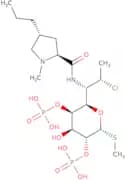
CAS:Clindamycin-2,4-diphosphate is a phosphorylated derivative of the antibiotic clindamycin, which is a semi-synthetic lincosamide antibiotic originally derived from Streptomyces lincolnensis. Its mode of action involves the inhibition of bacterial protein synthesis by binding to the 50S ribosomal subunit, thereby preventing peptide chain elongation during translation. This mechanism effectively disrupts protein production in susceptible bacteria, leading to their growth inhibition or death.Fórmula:C18H35ClN2O11P2SPureza:Min. 95%Peso molecular:584.94 g/molPiericidin A
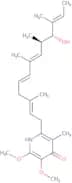
CAS:Piericidin A is a microbial metabolite, specifically a type of polyketide, which is derived from the bacterium of the genus Streptomyces. This compound acts as an electron transport chain inhibitor by specifically binding to the ubiquinone binding site of complex I (NADH:ubiquinone oxidoreductase) in mitochondria. This mode of action results in the disruption of ATP production through oxidative phosphorylation.
Fórmula:C25H37NO4Pureza:Min. 95%Peso molecular:415.57 g/molCefotiam
CAS:Cefotiam is a broad-spectrum cephalosporin antibiotic, which is a beta-lactam compound derived from the mold Acremonium. It functions by inhibiting bacterial cell wall synthesis, particularly by targeting penicillin-binding proteins, which leads to cell lysis and death in susceptible bacteria. This mechanism of action makes it effective against various Gram-positive and Gram-negative bacteria.
Fórmula:C18H23N9O4S3Pureza:Min. 95%Cor e Forma:PowderPeso molecular:525.62 g/molMitomycin D
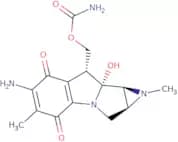
CAS:Mitomycin D is an antibiotic and chemotherapeutic agent known for its ability to inhibit DNA synthesis, making it a potent antitumor agent. It is derived from the bacterium *Streptomyces caespitosus*. Mitomycin D functions as a DNA crosslinking agent by alkylating the DNA strands, which interferes with DNA replication and transcription. This mechanism leads to the cessation of cellular division and ultimately induces apoptosis in rapidly dividing cells.
Fórmula:C15H18N4O5Pureza:Min. 95%Peso molecular:334.33 g/molImipenem Monohydrate, Antibiotic for Culture Media Use Only
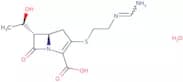
CAS:Imipenem acts as an antimicrobial through inhibiting cell wall synthesis of various gram-positive and gram-negative bacteria. It remains very stable in the presence of beta-lactamase (both penicillinase andcephalosporinase) produced by some bacteria, and is a strong inhibitor of beta-lactamases from some gram-negative bacteria that are resistant to most beta-lactam antibiotics.Fórmula:C12H19N3O5SPureza:Min. 98.0 Area-%Peso molecular:317.36 g/molClarithromycin - EP
CAS:A macrolide, broad-spectrum antibiotic that targets cytochrome P4503A4 (CYP3A4). Clarithromycin has been used to potentiate the pharmacological effects of some drugs that are metabolised by the cytochrome P450.
Fórmula:C38H69NO13Pureza:Min. 95%Peso molecular:747.95 g/molErythromycin, Antibiotic for Culture Media Use Only
CAS:Erythromycin, Antibiotic for Culture Media Use Only, is a macrolide antibiotic derived from the bacterium *Saccharopolyspora erythraea*. It functions by inhibiting protein synthesis, specifically targeting the 50S ribosomal subunit in susceptible bacteria. This action results in the prevention of peptide chain elongation, effectively halting bacterial growth and proliferation.Fórmula:C37H67NO13Pureza:Min. 93.0 Area-%Peso molecular:733.93 g/molRef: 3D-E-3250
1kgA consultar100gA consultar250gA consultar500gA consultar2500gA consultar-Unit-ggA consultarAclacinomycin HCl
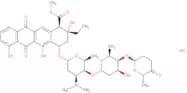
CAS:Aclacinomycin HCl is a cytotoxic antibiotic that inhibits the growth of tumor cells. It has been shown to induce apoptosis in human leukemia cells by altering the transmembrane potential and inhibiting cell proliferation. Aclacinomycin HCl also induces DNA damage response, which leads to caspase activities and cell death. This drug is highly selective for tumor cells, with no effect on normal cells. It has been shown to be effective against primary liver cancer in animal models, as well as developmental disorders such as autism spectrum disorder (ASD).
Fórmula:C42H53NO15·HClPureza:Min. 95%Cor e Forma:Orange PowderPeso molecular:848.33 g/mol4'-Epidaunorubicin hydrochloride
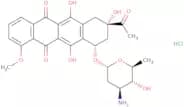
CAS:4'-Epidaunorubicin hydrochloride is an anthracycline antibiotic derivative, which is synthesized from modifications of natural products. It functions as a topoisomerase II inhibitor, which intercalates into DNA strands and disrupts replication and transcription, thereby inhibiting cancer cell proliferation. This compound is primarily utilized in the field of oncology for its potent anti-tumor activities. By forming stable complexes with DNA and topoisomerase II, 4'-Epidaunorubicin hydrochloride induces breaks in the DNA strands, leading to apoptosis of cancer cells. It is often used in treatment protocols for various malignancies, including leukemia and solid tumors. While highly effective, its administration is carefully managed to mitigate potential cardiotoxicity, a common attribute of anthracycline drugs. Research continues to explore its full potential and optimize delivery methods to enhance its therapeutic index.Fórmula:C27H30ClNO10Pureza:Min. 95%Peso molecular:563.98 g/molKanamycin A Related Compound 1
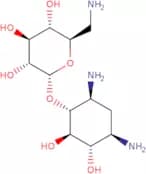
CAS:Kanamycin A Related Compound 1 is an analytical reference standard, which is derived from aminoglycoside antibiotics. Its source stems from the chemical structures related to the aminoglycoside class, primarily used to ensure precise identification and quantification of kanamycin residues or impurities in pharmaceutical formulations. The mode of action of Kanamycin A Related Compound 1 involves serving as a comparator or reference point in chromatographic and spectroscopic methods, facilitating accurate analysis by providing a consistent baseline for research laboratories.Fórmula:C12H25N3O7Pureza:Min. 95%Peso molecular:323.34 g/mol6,11-Di-O-methyl erythromycin
CAS:6,11-Di-O-methyl erythromycin is a semi-synthetic derivative of erythromycin, which is a macrolide antibiotic originally sourced from the bacterium *Saccharopolyspora erythraea*. This compound is produced through chemical modification of the natural antibiotic to improve its pharmacokinetic properties, such as stability and absorption.Fórmula:C39H71NO13Pureza:Min. 95%Peso molecular:761.98 g/molEnrofloxacin HCl
CAS:Enrofloxacin HCl is a fluoroquinolone antibiotic, which is a synthetic compound derived from chemical synthesis. Its mode of action involves the inhibition of bacterial DNA gyrase and topoisomerase IV, critical enzymes in bacterial DNA replication and transcription processes. This action disrupts bacterial cellular division and transcription, leading to cell death.Fórmula:C19H22FN3O3•HClPureza:Min. 95%Peso molecular:395.86 g/molErythromycylamine
CAS:Erythromycylamine is a semisynthetic antibiotic, which is derived from the parent compound erythromycin. This compound is sourced from the fermentation product of the bacterium *Saccharopolyspora erythraea*. Erythromycylamine acts by inhibiting bacterial protein synthesis, specifically targeting the 50S ribosomal subunit, which ultimately leads to the disruption of bacterial cell growth and replication.
Fórmula:C37H70N2O12Pureza:Min. 95%Peso molecular:734.96 g/molAphidicolin
CAS:Aphidicolin is a tetracyclic diterpenoid that acts as a potent inhibitor of DNA polymerase. Derived from the fungus *Cephalosporium aphidicola*, it is primarily identified for its ability to impede DNA synthesis by targeting eukaryotic DNA polymerase α. This selective inhibition disrupts replication processes, making it a crucial tool for studying cell cycle dynamics.Fórmula:C20H34O4Pureza:Min. 95%Peso molecular:338.48 g/molPuromycin aminonucleoside
CAS:Inducer of apoptosis; translational inhibitor; aminonucleoside antibiotic
Fórmula:C12H18N6O3Pureza:Min. 95%Peso molecular:294.31 g/molNafcillin sodium
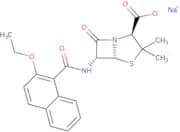
CAS:Nafcillin sodium is a beta-lactam antibiotic, which is a semisynthetic derivative of the organic compound penicillin. It is specifically engineered to be resistant to the inactivation by penicillinase enzymes produced by certain bacteria. This feature allows it to remain effective against a range of penicillinase-producing staphylococcal infections.Fórmula:C21H21N2NaO5SPureza:Min. 95%Cor e Forma:PowderPeso molecular:436.46 g/molDesmethyl doxorubicin oxalate
CAS:Desmethyl doxorubicin oxalate is an anthracycline-type chemotherapeutic agent, which is derived from the naturally occurring antibiotic doxorubicin. This compound comprises a desmethylated form of doxorubicin combined with oxalate. Its mode of action involves intercalating DNA strands and inhibiting topoisomerase II, thereby disrupting DNA replication and transcription. This interference leads to the inhibition of cancer cell proliferation and induces apoptosis.
Fórmula:C26H27NO11Pureza:Min. 95%Peso molecular:529.49 g/molThienamycin
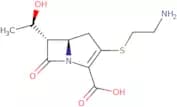
CAS:Thienamycin is a β-lactam antibiotic, which originates from the fermentation of the bacterium *Streptomyces cattleya*. Its mode of action involves inhibiting the synthesis of bacterial cell walls. Thienamycin accomplishes this by binding to penicillin-binding proteins (PBPs) critical for peptidoglycan construction, thereby disrupting cell wall integrity and leading to bacterial lysis.
Fórmula:C11H16N2O4SPureza:80%MinCor e Forma:PowderPeso molecular:272.32 g/molCloxacillin benzathine
CAS:Cloxacillin benzathine is a beta-lactam antibiotic, which is synthesized from Penicillium fungi-derived penicillins. It acts by inhibiting bacterial cell wall synthesis. The mechanism involves the irreversible inhibition of penicillin-binding proteins (PBPs). This disruption in the bacterial cell wall structure ultimately leads to cell lysis and death.Fórmula:C54H56Cl2N8O10S2Pureza:Min. 95 Area-%Cor e Forma:White PowderPeso molecular:1,112.11 g/mol