Antibióticos
Os antibióticos são compostos projetados para destruir ou inibir o crescimento de vários microrganismos, desempenhando um papel crucial no tratamento de infecções e na prevenção da disseminação de doenças. Esta categoria oferece uma ampla variedade de ingredientes ativos especificamente para pesquisa no campo bioquímico. Esses compostos são ferramentas essenciais no estudo dos mecanismos bacterianos, padrões de resistência e no desenvolvimento de novos agentes terapêuticos. Os pesquisadores podem explorar uma grande variedade de antibióticos para entender seus efeitos, otimizar seu uso e desenvolver novos tratamentos para combater ameaças microbianas emergentes. A disponibilidade de um espectro tão amplo de antibióticos apoia a pesquisa avançada e a inovação em microbiologia e ciências farmacêuticas.
Subcategorias de "Antibióticos"
- Antibióticos macrolídeos(26 produtos)
- Antibióticos Esteróides(31 produtos)
- Antibióticos de tetraciclina(20 produtos)
- Antibióticos β-Lactâmicos(11 produtos)
Foram encontrados 4102 produtos de "Antibióticos"
Ordenar por
Pureza (%)
0
100
|
0
|
50
|
90
|
95
|
100
2,3-Bis[(acetyloxy)methyl]-1-oxoquinoxalin-1-ium-4(1H)-olate
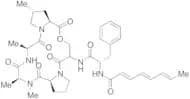
CAS:Produto Controlado<p>Applications 2,3-Bis[(acetyloxy)methyl]-1-oxoquinoxalin-1-ium-4(1H)-olate is an antibiotic.<br>References Marrero-Ponce, Yovani, et al.: Bioorg. & Med. Chem., 13(8), 2881-2899 (2005)<br></p>Fórmula:C14H14N2O6Cor e Forma:NeatPeso molecular:306.27A 54556A (~90%)
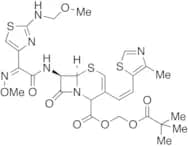
CAS:Produto ControladoFórmula:C38H50N6O8Pureza:~90%Cor e Forma:NeatPeso molecular:718.84N-MOM-Cefditoren Pivoxil
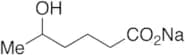
Produto Controlado<p>Applications N-MOM-Cefditoren Pivoxil is a derivative of Cefditoren Pivoxil (C242700), an antibacterial, third generation cephalosporin.<br>References Sakagami, K., et al.: J. Antibiot., 43, 1047 (1990), Felmingham, D., Drugs Exp. Clin. Res., 20, 127 (1994), Iwai, N., et al.: Jpn. J. Antibiot., 47, 181 (1994)<br></p>Fórmula:C27H32N6O8S3Cor e Forma:NeatPeso molecular:664.775-Hydroxyhexanoic Acid Sodium Salt
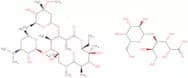
CAS:Produto Controlado<p>Stability Hygroscopic<br>Applications A new constituent of bacterial polyhydroxyalkanoic acids.<br>References Bollard, M., et al.: Toxicol. Appl. Pharmacol., 204, 135 (2005), Slupsky, C., et al.: Anal. Chem., 79, 6995 (2007),<br></p>Fórmula:C6H11NaO3Cor e Forma:NeatPeso molecular:154.14Erythromycin iactobionate
CAS:<p>Erythromycin lactobionate is a macrolide antibiotic, which is derived from the bacterium *Saccharopolyspora erythraea*. Its mode of action involves binding to the 50S subunit of the bacterial ribosome, thereby inhibiting protein synthesis and leading to the suppression of bacterial growth. This mechanism effectively targets gram-positive bacteria and some gram-negative bacteria, making it a crucial agent in the fight against various bacterial infections.</p>Fórmula:C49H87NO24Pureza:Min. 95%Cor e Forma:White To Off-White SolidPeso molecular:1,074.21 g/molKanamycin A
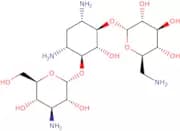
CAS:<p>Inhibitor of protein synthesis; aminoglycoside</p>Fórmula:C18H36N4O11Pureza:Min. 95%Cor e Forma:White Clear LiquidPeso molecular:484.5 g/molLincomycin B hydrochloride
CAS:<p>Inhibitor of protein synthesis; lincosamide</p>Fórmula:C17H33ClN2O6SPureza:Min. 95%Peso molecular:428.97 g/molBoromycin
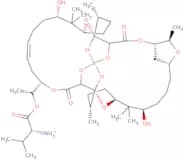
CAS:Boromycin is a macrolide antibiotic, which is derived from the fermentation of certain strains of Streptomyces bacteria. It operates as an ionophore with the ability to transport ions across lipid membranes, effectively disrupting ionic gradients. This mechanism of action compromises essential cellular processes in target organisms, thereby exerting its antimicrobial effects.Fórmula:C45H74BNO15Pureza:Min. 95%Peso molecular:879.88 g/mol(+)-Madindoline A
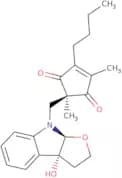
CAS:<p>(+)-Madindoline A is a chemical substance that inhibits the growth of cancer cells. It has been shown to inhibit colon cancer cell proliferation and induce apoptosis by inhibiting signal pathways and suppressing inflammatory responses. (+)-Madindoline A is an experimental model for the study of bowel disease and inflammatory diseases, as it can be used to treat both bowel disease and inflammatory diseases. It also has inhibitory effects on the production of proinflammatory cytokines in human protein cells and natural compounds in experimental models. (+)-Madindoline A is found in small amounts in food compositions such as apples, carrots, cauliflower, celery, cucumbers, garlic, leeks, lettuce, onions, peas, peppers, potatoes and tomatoes.</p>Fórmula:C22H27NO4Pureza:Min. 95%Peso molecular:369.45 g/molCefotiam
CAS:<p>Cefotiam is a broad-spectrum cephalosporin antibiotic, which is a beta-lactam compound derived from the mold Acremonium. It functions by inhibiting bacterial cell wall synthesis, particularly by targeting penicillin-binding proteins, which leads to cell lysis and death in susceptible bacteria. This mechanism of action makes it effective against various Gram-positive and Gram-negative bacteria.</p>Fórmula:C18H23N9O4S3Pureza:Min. 95%Cor e Forma:PowderPeso molecular:525.62 g/molPanipenem
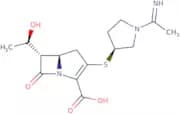
CAS:Panipenem is a carbapenem antibiotic, which is a type of beta-lactam antibiotic derived from thienamycin. It functions by inhibiting penicillin-binding proteins (PBPs), which are essential for bacterial cell wall synthesis. This inhibition disrupts the cell wall construction, leading to cell lysis and death, thereby demonstrating strong bactericidal activity.Fórmula:C15H21N3O4SPureza:Min. 95%Peso molecular:339.41 g/molGentamicin C2 pentaacetate (2 : 1 Mixture of C2 and C2a)
CAS:Produto Controlado<p>Gentamicin C2 pentaacetate (2 : 1 Mixture of C2 and C2a) is an aminoglycoside class antibiotic derivative, primarily derived from the fermentation of Micromonospora species. This product is a semi-synthetic compound, combining two closely related gentamicin components, C2 and C2a, in a specified ratio. Its mode of action involves binding to the 30S subunit of the bacterial ribosome, which disrupts protein synthesis resulting in bactericidal activity against a wide spectrum of Gram-negative and some Gram-positive bacteria.</p>Fórmula:C30H61N5O17Pureza:Min. 95%Peso molecular:763.83 g/molL-Carnitine fumarate
CAS:<p>L-Carnitine fumarate is a compound that functions as a dietary supplement, which is synthesized by combining L-carnitine, an amino acid derivative naturally found in the body, with fumaric acid. This product is primarily sourced from fermentation or chemical synthesis processes to produce L-carnitine, which is then reacted with fumaric acid to form the fumarate salt. This combination enhances the stability and bioavailability of L-carnitine.</p>Fórmula:C7H15NO3·C4H4O4Pureza:Min. 95%Peso molecular:277.27 g/mol6,11-Di-O-methyl erythromycin
CAS:<p>6,11-Di-O-methyl erythromycin is a semi-synthetic derivative of erythromycin, which is a macrolide antibiotic originally sourced from the bacterium *Saccharopolyspora erythraea*. This compound is produced through chemical modification of the natural antibiotic to improve its pharmacokinetic properties, such as stability and absorption.</p>Fórmula:C39H71NO13Pureza:Min. 95%Peso molecular:761.98 g/molChaetoglobosin A - From chaetomium globosum
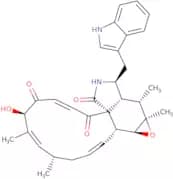
CAS:<p>Chaetoglobosin A is a mycotoxin, which is a secondary metabolite produced by the fungus Chaetomium globosum. This compound exhibits its mode of action by disrupting the cytoskeletal elements within cells, primarily affecting actin polymerization. This interference leads to alterations in cell morphology and can induce apoptosis in certain cell lines.</p>Fórmula:C32H36N2O5Pureza:Min. 95%Peso molecular:528.64 g/molCefotaxime sodium - Sterile grade
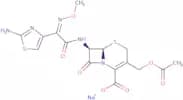
CAS:<p>Cefotaxime sodium - Sterile grade is a cephalosporin antibiotic, which is derived from the beta-lactam class of antibacterial agents. It effectively disrupts bacterial cell wall synthesis by binding to and inhibiting penicillin-binding proteins, leading to cell lysis and death. This mechanism of action is potent against a variety of Gram-positive and Gram-negative bacteria, making it a valuable tool in clinical settings.</p>Fórmula:C16H17N5O7S2·NaPureza:Min. 95%Peso molecular:478.46 g/molAphidicolin
CAS:<p>Aphidicolin is a tetracyclic diterpenoid that acts as a potent inhibitor of DNA polymerase. Derived from the fungus *Cephalosporium aphidicola*, it is primarily identified for its ability to impede DNA synthesis by targeting eukaryotic DNA polymerase α. This selective inhibition disrupts replication processes, making it a crucial tool for studying cell cycle dynamics.</p>Fórmula:C20H34O4Pureza:Min. 95%Peso molecular:338.48 g/molHerbimycin
CAS:<p>Herbimycin is an antibiotic, which is a natural product derived from Streptomyces bacteria. It functions primarily as a tyrosine kinase inhibitor, disrupting cellular signaling pathways by binding to the ATP-binding site of kinases and inhibiting phosphorylation events. This mode of action makes it an effective tool for scientists studying signal transduction processes and oncogenic transformation.</p>Fórmula:C30H42N2O9Pureza:Min. 95%Peso molecular:574.66 g/mol3'-N-Desmethyl-3'-N-tosyl azithromycin
CAS:3'-N-Desmethyl-3'-N-tosyl azithromycin is a semi-synthetic macrolide antibiotic analog, which is a derivative of azithromycin, a well-known member of the macrolide class of antibiotics. This compound is synthesized through chemical modifications of the parent molecule, azithromycin, to potentially enhance its pharmacokinetic and pharmacodynamic properties.Fórmula:C44H76N2O14SPureza:Min. 95%Peso molecular:889.15 g/molChlortetracycline
CAS:<p>Chlortetracycline is a tetracycline antibiotic, which is derived from the bacterium *Streptomyces aureofaciens*. It functions by inhibiting protein synthesis through binding to the 30S ribosomal subunit, thereby preventing the attachment of aminoacyl-tRNA to the mRNA-ribosome complex. This mechanism effectively impedes the growth and replication of both gram-positive and gram-negative bacteria.</p>Fórmula:C22H23ClN2O8Pureza:Min. 95%Peso molecular:478.88 g/mol
![2,3-Bis[(acetyloxy)methyl]-1-oxoquinoxalin-1-ium-4(1H)-olate](/_next/image/?url=https%3A%2Fstatic.cymitquimica.com%2Fproducts%2FTR%2Fthumb-webp%2FB325620.webp&w=3840&q=75)