Heterociclos de enxofre (S)
Aqui você encontrará uma classe de compostos orgânicos que contêm um átomo de enxofre no anel heterocíclico. Heterociclos contendo enxofre são cruciais no desenvolvimento de produtos farmacêuticos, agroquímicos e materiais devido às suas propriedades químicas únicas e atividades biológicas. Esses compostos são amplamente utilizados na química medicinal e na ciência dos materiais. Na CymitQuimica, oferecemos uma seleção diversificada de heterociclos contendo enxofre de alta qualidade para apoiar suas pesquisas e aplicações industriais.
Subcategorias de "Heterociclos de enxofre (S)"
Foram encontrados 1000 produtos de "Heterociclos de enxofre (S)"
Ordenar por
Pureza (%)
0
100
|
0
|
50
|
90
|
95
|
100
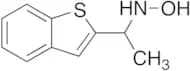
N-des(aminocarbonyl) Zileuton
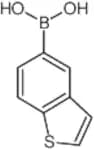
CAS:Produto ControladoFórmula:C10H11NOSCor e Forma:NeatPeso molecular:193.265Benzothiophene-5-boronic acid
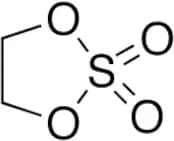
CAS:Produto Controlado<p>Applications Benzothiophene-5-boronic acid<br></p>Fórmula:C8H7BO2SCor e Forma:NeatPeso molecular:178.021,3,2-Dioxathiolane 2,2-Dioxide
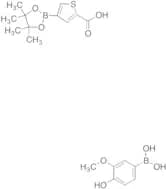
CAS:Produto Controlado<p>Applications 1,3,2-Dioxathiolane 2,2-Dioxide is an alkylating agent with carcinogenic activty.<br>References Van Duuren, B.L. et al.: J. Nat. Cancer Inst., 53, 695 (1974);<br></p>Fórmula:C2H4O4SCor e Forma:NeatPeso molecular:124.122-Carboxythiophene-4-boronic Acid Pinacol Ester
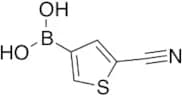
CAS:Produto ControladoFórmula:C11H15BO4SCor e Forma:NeatPeso molecular:254.11(5-Cyanothiophen-3-yl)boronic Acid
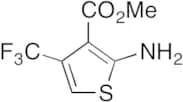
CAS:Produto ControladoFórmula:C5H4BNO2SCor e Forma:NeatPeso molecular:152.967Methyl 2-Amino-4-trifluoromethylthiophene-3-carboxylate
CAS:Produto ControladoFórmula:C7H6F3NO2SCor e Forma:NeatPeso molecular:225.19Methyl 5-Chloro-3-(chlorosulfonyl)thiophene-2-carboxylate
CAS:Produto Controlado<p>Applications Methyl 5-Chloro-3-(Chlorosulfonyl)Thiophene-2-Carboxylate (cas# 126910-68-7) is a useful research chemical.<br></p>Fórmula:C6H4Cl2O4S2Cor e Forma:NeatPeso molecular:275.112-Hydroxy-6-thiophen-2-yl-isonicotinic Acid
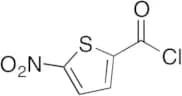
CAS:Produto ControladoFórmula:C10H7NO3SCor e Forma:NeatPeso molecular:221.2325-Nitrothiophene-2-carbonyl Chloride
CAS:Produto ControladoFórmula:C5H2ClNO3SCor e Forma:NeatPeso molecular:191.592,5-Dimethoxythiophenol
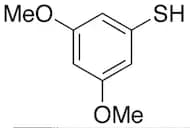
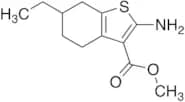
CAS:Produto Controlado<p>Applications 2,5-Dimethoxythiophenol is a thiophenol derivative used in the preparation of dihydrofolate reductase inhibitors and potential antitumor agents.<br>References Gangjee, A. et al.: J. Med. Chem., 52, 4892 (2009); Gangjee, A. et al.: Biiorg. Med. Chem., 18, 953 (2010);<br></p>Fórmula:C8H10O2SCor e Forma:NeatPeso molecular:170.23Methyl 2-Amino-6-ethyl-4,5,6,7-tetrahydro-1-benzothiophene-3-carboxylate
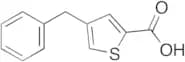
CAS:Produto ControladoFórmula:C21H30O4Cor e Forma:NeatPeso molecular:346.464-Benzyl- 2-thiophenecarboxylic Acid
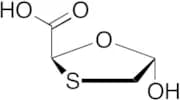
CAS:Produto ControladoFórmula:C12H10O2SCor e Forma:NeatPeso molecular:218.272rac-trans-5-Hydroxy-1,3-oxathiolane-2-carboxylic Acid
CAS:Produto Controlado<p>Stability Epimerize in solution<br>Applications 5-Hydroxy-1,3-oxathiolane-2-carboxylic Acid is used in the synthesis of potent antiviral agent (-)-2’-Deoxy-3’-thiacytidine and its enantiomer.<br>References Jin, H.L., et al.: J. Org. Chem., 60, 2621 (1995);<br></p>Fórmula:C4H6O4SCor e Forma:NeatPeso molecular:150.15Tert-butyl N-[(5-Cyanothiophen-2-yl)methyl]carbamate
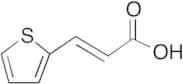
CAS:Produto ControladoFórmula:C11H14N2O2SCor e Forma:NeatPeso molecular:238.306(E)-2-Thiopheneacrylic Acid
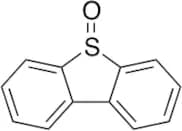
CAS:Produto Controlado<p>Applications (E)-2-Thiopheneacrylic Acid is used in the synthesis of anti-HIV HEPT analogs. Also used in the synthesis of benzimidazole and caffeine (C080100) analogs as inhibitors of monoamine oxidase B.<br>References Pontikis, R. et al.: J. Med. Chem., 40, 1845 (1997); van den Berg, D. et al.: Bioorg. Med. Chem., 15, 1692 (2007);<br></p>Fórmula:C7H6O2SCor e Forma:NeatPeso molecular:154.19Dibenzothiophene 5-Oxide
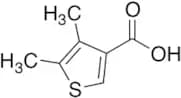
CAS:Produto Controlado<p>Applications DIBENZOTHIOPHENE 5-OXIDE (cas# 1013-23-6) is a useful research chemical.<br></p>Fórmula:C12H8OSCor e Forma:NeatPeso molecular:200.254,5-dimethylthiophene-3-carboxylic acid
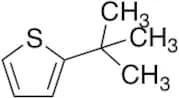
CAS:Produto Controlado<p>Applications 4,5-dimethylthiophene-3-carboxylic acid (cas# 19156-52-6) is a useful research chemical.<br></p>Fórmula:C7H8O2SCor e Forma:NeatPeso molecular:156.22-(tert-Butyl)thiophene
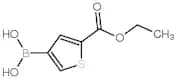
CAS:Produto Controlado<p>Applications 2-(tert-Butyl)thiophene (cas# 1689-78-7) is a useful research chemical.<br></p>Fórmula:C8H12SCor e Forma:NeatPeso molecular:140.255-(Ethoxycarbonyl)thiophene-3-boronic Acid
CAS:Produto Controlado<p>Applications 5-(Ethoxycarbonyl)thiophene-3-boronic Acid is a useful reagent for preparing hydroxyimino(phenyl)propanones as GPBAR1 agonists.<br>References Bissantz, C., et al.: U.S. Pat. Appl. Publ. (2012), US 20120010190 A1<br></p>Fórmula:C7H9BO4SCor e Forma:NeatPeso molecular:200.026,6-Dimethyl-3-(Methylthio)-4-Oxo-4,5,6,7-Tetrahydrobenzo[C]Thiophene-1-Carbonitrile
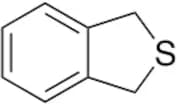
CAS:Produto Controlado<p>Applications 6,6-Dimethyl-3-(Methylthio)-4-Oxo-4,5,6,7-Tetrahydrobenzo[C]Thiophene-1-Carbonitrile (cas# 175202-50-3) is a useful research chemical.<br></p>Fórmula:C12H13NOS2Cor e Forma:NeatPeso molecular:251.3681,3-Dihydro-2-benzothiophene
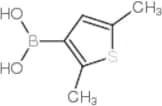
CAS:Produto ControladoFórmula:C8H8SCor e Forma:NeatPeso molecular:136.2142,5-Dimethylthiophene-3-boronic Acid
CAS:Produto Controlado<p>Applications 2,5-Dimethylthiophene-3-boronic acid<br></p>Fórmula:C6H9BO2SCor e Forma:NeatPeso molecular:156.012-(Benzo[b]thiophen-5-yl)ethanol
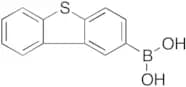
CAS:Produto ControladoFórmula:C10H10OSCor e Forma:NeatPeso molecular:178.251Dibenzothiophene-2-boronic acid
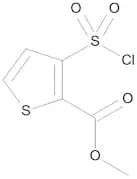
CAS:Produto Controlado<p>Applications Dibenzothiophene-2-boronic acid is a useful reagent for organic synthesis and other chemical processes.<br>References Duncton, M. A. J., et al.: Org. Lett., 10, 3259 (2008)<br></p>Fórmula:C7H3ClF2OCor e Forma:NeatPeso molecular:176.548Methyl 3-chlorosulfonylthiophene-2-carboxylate
CAS:Produto Controlado<p>Applications Methyl 3-chlorosulfonylthiophene-2-carboxylate<br></p>Fórmula:C6H5ClO4S2Cor e Forma:NeatPeso molecular:240.68(E)-1-(Benzo[b]thiophen-2-yl)ethanone Oxime
CAS:Produto Controlado<p>Applications (E)-1-(Benzo[b]thiophen-2-yl)ethanone Oxime is an isomer of N-(1-Benzo[b]thiophen-2-yl-ethyl)-hydroxylamine a reagent used in the preparation of Zileuton, an anti-asthmatic drug.<br>References Guinchard, X. et al.: J. Org. Chem., 73, 2028 (2008)<br></p>Fórmula:C10H9NOSCor e Forma:NeatPeso molecular:191.252-Aminothiophenol 90%
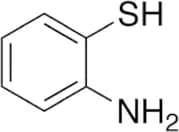
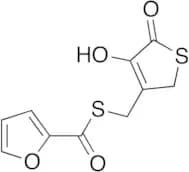
CAS:Produto Controlado<p>Stability Air Sensitive<br>Applications A multifunctional compound which shows antioxidant activity in a skin cell model of UVA-induced stress.<br> Not a dangerous good if item is equal to or less than 1g/ml and there is less than 100g/ml in the package<br>References Sies, H., et al.: Eur. J. Biochem., 215, 213 (1993), Meotti, F., et al.: Environ. Res., 94, 276 (2004),<br></p>Fórmula:C6H7NSPureza:90%Cor e Forma:NeatPeso molecular:125.19S-((4-Hydroxy-5-oxo-2,5-dihydrothiophen-3-yl)methyl) Furan-2-carbothioate
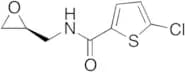
Produto ControladoFórmula:C10H8O4S2Cor e Forma:NeatPeso molecular:256.2985-Chloro-thiophene-2-carboxylic Acid
CAS:Produto ControladoFórmula:C8H8ClNO2SCor e Forma:NeatPeso molecular:217.673Benzo[b]thiophene-5-acetic Acid
CAS:Produto ControladoFórmula:C10H8O2SCor e Forma:NeatPeso molecular:192.2345-Bromo-2,3-dihydrobenzo[b]thiophene 1,1-dioxide
CAS:Produto ControladoFórmula:C8H7BrO2SCor e Forma:NeatPeso molecular:247.1093-Hydroxythiophene-2-carboxylic Acid
CAS:Produto ControladoFórmula:C5H4O3SCor e Forma:NeatPeso molecular:144.149Thieno[3,2-b]thiophene-2-carboxylic Acid
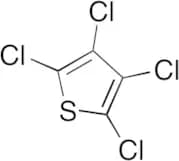
CAS:Produto ControladoFórmula:C7H4O2S2Cor e Forma:NeatPeso molecular:184.236Tetrachlorothiophene
CAS:Produto Controlado<p>Applications Tetrachlorothiophene is chlorinated derivative of Thiophene (T368080), which is used as a building block of various organic molecules and pharmaceuticals providing functional properties.<br> Not a dangerous good if item is equal to or less than 1g/ml and there is less than 100g/ml in the package<br>References Prasad, B. et al.: Chem. Comm., 48, 10434 (2012); Freitas, V. et al.: Struct. Chem., 24, 661 (2013);<br></p>Fórmula:C4Cl4SCor e Forma:NeatPeso molecular:221.921,1'-[1]Benzothieno[3,2-b][1]benzothiophene-2,7-diylbis[1-octanone]
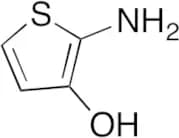
CAS:Produto Controlado<p>Applications 1,1'-[1]Benzothieno[3,2-b][1]benzothiophene-2,7-diylbis[1-octanone] is the intermediate in the synthesis of C8-BTBT (C015010), which is a soluble organic semicoductor used in solution-processed organic field-effect transistors.<br>References Ebata, H., et al.: J. Am. Chem. Soc., 129, 15732 (2007); Izawa, T., et al.: Adv. Mat., 20, 3388 (2008)<br></p>Fórmula:C30H36O2S2Cor e Forma:NeatPeso molecular:492.7362-Aminothiophen-3-ol
CAS:Produto Controlado<p>Applications 2-Aminothiophen-3-ol, is a heterocyclic building block used for the synthesis of various pharmaceutical compounds.<br></p>Fórmula:C4H5NOSCor e Forma:NeatPeso molecular:115.1542-Thiopheneethanol
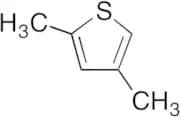
CAS:Produto Controlado<p>Applications 2-Thiopheneethanol is a thiophene derivative used in the preparation of oligothiophene isothiocyanates as fluorescent markers for biopolymers. 2-Thiopheneethanol is also used in the preparation of other biologically active compounds such as the analgesic Sulfentanyl and the antithrombotic Clopidogrel Hydrogen Sulfate (C587250).<br> Not a dangerous good if item is equal to or less than 1g/ml and there is less than 100g/ml in the package<br>References Barbarella, G. et al.: J. Am. Chem. Soc., 123, 11600 (2001); Yang, Z.: Yiy. Gong., 16, 241 (1985); Lin, Z. et al.: Ship. Yu Yao., 12, 235 (2010):<br></p>Fórmula:C6H8OSCor e Forma:NeatPeso molecular:128.192,4-Dimethylthiophene
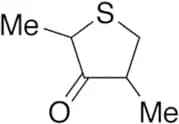
CAS:Produto Controlado<p>Applications 2,4-Dimethylthiophene is a biochemical used for proteomics and food research.<br>References Xu, Q. et al.: Food Res. Int., 54, 683 (2013);<br></p>Fórmula:C6H8SCor e Forma:NeatPeso molecular:112.193Dihydro-2,4-dimethyl-3(2H)-thiophenone
CAS:Produto Controlado<p>Applications Used in the preparation of sulfur aroma compounds.<br></p>Fórmula:C6H10OSCor e Forma:NeatPeso molecular:130.212-Vinylthiophene (Stabilized with BHT)
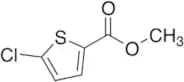
CAS:Produto Controlado<p>Stability Light Sensitive<br>Applications 2-VINYLTHIOPHENE (cas# 1918-82-7) is a useful research chemical.<br></p>Fórmula:C6H6SCor e Forma:NeatPeso molecular:110.17Methyl 5-chlorothiophene-2-carboxylate
CAS:Produto Controlado<p>Applications Methyl 5-chlorothiophene-2-carboxylate (cas# 35475-03-7) is a useful research chemical.<br></p>Fórmula:C6H5ClO2SCor e Forma:NeatPeso molecular:176.6212-Amino-4,5-dimethylthiophene-3-carbonitrile
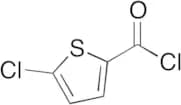
CAS:Produto Controlado<p>Applications 2-Amino-4,5-dimethylthiophene-3-carbonitrile is a useful research chemical for organic synthesis and other chemical processes.<br>References Rahman, K. M. M., et al.: Pakistan J. Sci. Ind. Res., 46, 95 (2003); Madhavi, K., et al.: Res. J. Pharm. Biol. Chem. Sci., 8, 387 (2017)<br></p>Fórmula:C7H8N2SCor e Forma:NeatPeso molecular:152.215-Chloro-2-Thiophenecarbonyl Chloride (>90%)
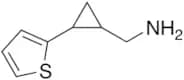
CAS:Produto Controlado<p>Stability Hygroscopic<br>Applications 5-Chloro-2-Thiophenecarbonyl Chloride is a reagent in the synthesis of indolinyl-thiazole based inhibitors of cellular lipid uptake. Also used in the preparation of anticoagulants and such related promising drug candidates.<br>References Dockendorff, C. et al.: ACS Med. Chem. Lett.., 6, 375 (2015);<br></p>Fórmula:C5H2Cl2OSPureza:>90%Cor e Forma:NeatPeso molecular:181.04(2-(Thiophen-2-yl)cyclopropyl)methanamine Hydrochloride
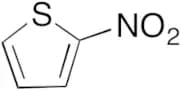
CAS:Produto ControladoFórmula:C8H11NS·HClCor e Forma:NeatPeso molecular:189.7062-Nitrothiophene (Technical Grade)
CAS:Produto Controlado<p>Applications 2-Nitrothiophene is a useful compound in the synthesis of thiophene containing compounds.<br>References Sun, Xin, et al.: J. of Polymer Sci., Part A:, 56(7), 776-782 (2018)<br></p>Fórmula:C4H3NO2SCor e Forma:NeatPeso molecular:129.149,10-Dihydro-4H-benzo[4,5]cyclohepta[1,2-b]thiophen-4-one
CAS:<p>Please enquire for more information about 9,10-Dihydro-4H-benzo[4,5]cyclohepta[1,2-b]thiophen-4-one including the price, delivery time and more detailed product information at the technical inquiry form on this page</p>Fórmula:C13H10OSPureza:Min. 95%Peso molecular:214.28 g/molMethyl3-iodothiophene-2-carboxylate
CAS:<p>Methyl3-iodothiophene-2-carboxylate is a chemical compound that is involved in the biosynthesis of eicosanoids. It can be synthesized by the cyclization of the corresponding lactam to produce an intermediate, which is then converted to methyl3-iodothiophene-2-carboxylate by hydrolysis or reduction. This compound has been shown to inhibit malaria parasites such as Plasmodium falciparum and Plasmodium vivax. Methyl3-iodothiophene-2-carboxylate also inhibits the growth of bacteria such as Staphylococcus aureus and Bacillus subtilis. The mechanism of action is believed to be due to its ability to inhibit protein synthesis by binding with ribosomes in prokaryotic cells.END></p>Fórmula:C6H5IO2SPureza:Min. 95%Peso molecular:268.07 g/mol6-Methoxy-2-(4-methoxyphenyl)benzo[b]thiophene
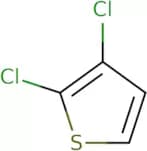
CAS:<p>6-Methoxy-2-(4-methoxyphenyl)benzo[b]thiophene (6MBT) is a mesomorphic, acid catalyst that has been used to synthesize polyphosphoric acid. It reacts with chloride to form 6-chloro-2-(4-methoxyphenyl)benzo[b]thiophene, which can be converted to the desired product by sulfoxide. The reaction time for this process is relatively short and the yield is high. 6MBT can also be used as a semiconductor in devices such as solar cells and electronic displays. The photoelectric effect of 6MBT was demonstrated in 1972, when it was found that electron emission from a photocurrent could be obtained at room temperature. This property has been shown to be due to the molecule's absorption of light energy and subsequent conversion into electrical energy.</p>Fórmula:C16H14O2SPureza:Min. 95%Cor e Forma:PowderPeso molecular:270.35 g/mol2,3-Dichlorothiophene
CAS:<p>2,3-Dichlorothiophene is a heterocyclic compound that can be used as an intermediate in organic synthesis. The compound has two isomers, 2,2-dichlorothiophene and 2,3-dichlorothiophene. The first isomer reacts with water to form a protonated species and the second isomer reacts with chlorine to form a protonated species. The thermodynamic parameters for the reaction of 2,3-dichlorothiophene with chlorine are more favorable than those for the reaction of 2,2-dichlorothiophene with chlorine. This means that the equilibrium lies to the right when 2,3-chlorothiophene is reacted with chlorine (to form 2,3-dichloroethane), but not when 2,2-chlorothiophene is reacted with chlorine (to form chloroform).</p>Fórmula:C4H2Cl2SPureza:Min. 95%Cor e Forma:Clear LiquidPeso molecular:153.03 g/mol3,6-Dichlorobenzo[b]thiophene-2-carboxylic acid
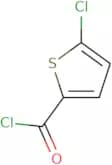
CAS:<p>3,6-Dichlorobenzo[b]thiophene-2-carboxylic acid is an extracellular metabolite that is involved in the metabolism of muscle. It is produced as a byproduct of the reaction catalyzed by dehydrogenase, which converts 3,6-dichlorobenzo[b]thiophene to 2-carboxybenzothiophene. This compound has been shown to inhibit the enzyme histidine carboxylate synthetase, which is involved in branched-chain amino acid synthesis. The enzyme can be inhibited by either a wild type or an analog of 3,6-dichlorobenzo[b]thiophene-2-carboxylic acid.</p>Fórmula:C9H4Cl2O2SPureza:Min. 95%Peso molecular:247.1 g/mol5-Chlorothiophene-2-carbonyl chloride
CAS:<p>Intermediate in the synthesis of rivaroxaban</p>Fórmula:C5H2Cl2OSPureza:Min. 95%Cor e Forma:Clear LiquidPeso molecular:181.04 g/mol2,2-(Bromoethyl)thiophene
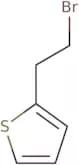
CAS:<p>Oripavine is a naturally occurring alkaloid that can be synthesized from 2,2-bromoethane and potassium carbonate. It has been used for the treatment of Parkinson's disease. Oripavine is an intermediate in the synthesis of rotigotine, a dopamine agonist used to treat Parkinson's disease. The reaction mechanism involves the addition of bromine to 2,2-bromoethane followed by hydrochloric acid treatment to form oripavine. The reaction proceeds with the formation of hydrogen chloride and potassium bromide. The product can then be reacted with a Grignard reagent or allyl group to produce rotigotine.</p>Fórmula:C6H7BrSPureza:Min. 95%Peso molecular:191.09 g/mol4-Fluorothiophenol
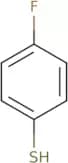
CAS:<p>4-Fluorothiophenol is a reactive chemical that can be used as a monomer for the synthesis of polymers. It has been shown to polymerize with acrylonitrile and methacrylate in the presence of an initiator to form polyacrylonitrile and polymethacrylate, respectively. 4-Fluorothiophenol reacts with unsaturated fatty acids to form thiolates, which are useful intermediates in organic synthesis. 4-Fluorothiophenol also reacts with sulfur transfer agents such as thiourea or mercaptoethanol, leading to S-sulfides that are useful intermediates in organic synthesis. These reactions can be followed by kinetic energy spectroscopy (photoelectron) and nuclear magnetic resonance spectroscopy (NMR). 4-Fluorothiophenol has been shown to undergo intramolecular hydrogen transfer reactions with second order rate constants ranging from</p>Fórmula:C6H5FSPureza:Min. 95%Peso molecular:128.17 g/mol2-(2-Nitroanilino)-5-methylthiophene-3-carbonitrile
CAS:<p>2-(2-Nitroanilino)-5-methylthiophene-3-carbonitrile is a crystalline compound that belongs to the group of small molecules. It has a molecular weight of 153.2 g/mol and a melting point of 281 °C. The compound has three different crystalline forms, including a monoclinic form, which is thermodynamically stable at room temperature. 2-(2-Nitroanilino)-5-methylthiophene-3-carbonitrile can be used as a model system for studying influenza virus and as an inhibitor of influenza virus replication. 2-(2-Nitroanilino)-5-methylthiophene-3-carbonitrile also inhibits the activity of carbamazepine, which is an anti epileptic drug, by binding to its active site on the molecule.</p>Fórmula:C12H9N3O2SPureza:Min. 95%Cor e Forma:PowderPeso molecular:259.29 g/mol3-Chlorothiophene-2-carbonylchloride
CAS:<p>3-Chlorothiophene-2-carbonylchloride (3C2CC) is a heterobicyclic compound that is a ligand for the amine receptor. It is also used as an intermediate in the synthesis of other heterocycles. 3C2CC has been shown to interact with amines to form a nitrene, which can be detected by luminescence or x-ray diffraction techniques. 3C2CC interacts with chloride ions to form a crystal that has a different x-ray diffraction pattern from the one obtained from chloride alone. The crystal structure of this complex was determined using x-ray crystallography.</p>Fórmula:C5H2Cl2OSPureza:Min. 95%Cor e Forma:PowderPeso molecular:181.04 g/mol4-Bromo-2-nitrothiophene
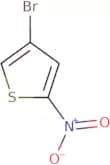
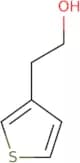
CAS:<p>Please enquire for more information about 4-Bromo-2-nitrothiophene including the price, delivery time and more detailed product information at the technical inquiry form on this page</p>Fórmula:C4H2BrNO2SPureza:Min. 95%Peso molecular:208.03 g/mol3-Thiopheneethanol
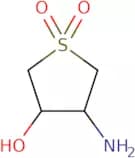
CAS:<p>3-Thiopheneethanol is a synthetic polymer that can be used as an insoluble polymer. It has been shown to undergo chemical reactions with hydroxy groups, which form a polymer film. The untreated control group did not show any change in the film thickness, but the electrochemical methods group showed a significant increase in the film thickness. 3-Thiopheneethanol may have potential applications in medical devices and sensors. The detection time of 3-thiopheneethanol was found to be longer than that of other polymers, such as polystyrene sulfonic acid (PSSA).</p>Fórmula:C6H8OSPureza:Min. 95%Peso molecular:128.19 g/mol4-Aminotetrahydrothiophene-3-ol 1,1-dioxide
CAS:<p>Please enquire for more information about 4-Aminotetrahydrothiophene-3-ol 1,1-dioxide including the price, delivery time and more detailed product information at the technical inquiry form on this page</p>Fórmula:C4H9NO3SPureza:Min. 95%Peso molecular:151.19 g/mol3-Bromo-2,4-dimethylthiophene
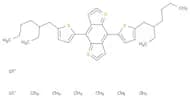
CAS:<p>3-Bromo-2,4-dimethylthiophene is a reactive chemical that can reversibly change its color in the presence of uv light. The isomers of 3-bromo-2,4-dimethylthiophene are easily separated by uv irradiation and are characterized by their different spectral properties. This compound fluoresces with a maximum at 370 nm under a uv light source and has an absorption maximum at 360 nm. The photochromic properties of 3-bromo-2,4-dimethylthiophene are related to changes in the crystalline phase and light source. 3-Bromo-2,4-dimethylthiophene is used as a photochromic agent for uv radiation protection in glasses and contact lenses.</p>Fórmula:C6H7BrSPureza:Min. 95%Peso molecular:191.09 g/mol4,8-Bis[5-(2-ethylhexyl)thiophen-2-yl]-2,6-bis(trimethylstannyl)benzo[1,2-b:4,5-b']dithiophene
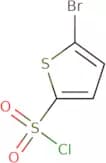
CAS:<p>Please enquire for more information about 4,8-Bis[5-(2-ethylhexyl)thiophen-2-yl]-2,6-bis(trimethylstannyl)benzo[1,2-b:4,5-b']dithiophene including the price, delivery time and more detailed product information at the technical inquiry form on this page</p>Fórmula:C40H58S4Sn2Pureza:Min. 95%Peso molecular:904.57 g/mol5-Bromo-2-thiophenesulfonyl chloride
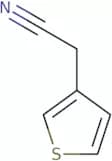
CAS:<p>5-Bromo-2-thiophenesulfonyl chloride (5BrTSCl) is a chemical compound that belongs to the class of matrix metalloproteinase inhibitors. This drug inhibits the activity of MMPs and has anticancer activity. 5BrTSCl blocks the activation of MMPs by binding to their active site, which prevents the cleavage of collagen and other proteins. It also inhibits cell proliferation in a number of cancer cell lines, including human breast cancer cells. 5BrTSCl has been shown to be effective in inhibiting angiogenesis and tumor growth in animal models.</p>Fórmula:C4H2BrClO2S2Pureza:Min. 95%Cor e Forma:PowderPeso molecular:261.55 g/molThiophene-3-acetonitrile
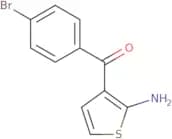
CAS:<p>Thiophene-3-acetonitrile is a reactive intermediate that is used in the synthesis of active enzymes. It has been shown to be an efficient method for the synthesis of antitubercular agents, such as rifamycins and other drugs. Thiophene-3-acetonitrile is an electron acceptor and can be used to generate active enzymes, such as those involved in DNA replication and transcription. This compound also has a variety of functional groups, which can be used for a number of techniques, including coordination geometry studies.</p>Fórmula:C6H5NSPureza:Min. 95%Cor e Forma:Clear LiquidPeso molecular:123.18 g/mol(2-Aminothiophen-3-yl)(4-bromophenyl)methanone
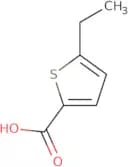
CAS:<p>2-Aminothiophen-3-yl)(4-bromophenyl)methanone is a new compound that is being developed as a potential antiviral agent. Covid-19, the trade name for 2-aminothiophen-3-yl)(4-bromophenyl)methanone, prevents the replication of viruses by binding to their nucleic acids and blocking their ability to produce proteins. Covid-19 has been shown to be effective against both influenza A and B viruses in cellular and animal models. The antiviral activity of Covid-19 is due to its ability to bind to viral nucleic acid, preventing the production of proteins vital for viral replication. This compound has also been shown to have anti-inflammatory properties, which may be due to its ability to inhibit the production of amyloid plaques in mice with Alzheimer's disease.</p>Fórmula:C11H8BrNOSPureza:Min. 95%Peso molecular:282.16 g/mol5-Ethylthiophene-2-carboxylic acid
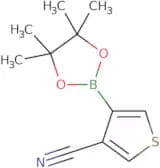
CAS:<p>5-Ethylthiophene-2-carboxylic acid is a chemical compound that has been acetylated. It is often used as an intermediate in organic synthesis, especially as a building block for the production of pharmaceuticals and agrochemicals. 5-Ethylthiophene-2-carboxylic acid can be chromatographically separated by using strategies such as validation, algorithm, and regression. The chemical structure of this compound may be determined by using methods such as fingerprinting and gas chromatography. The structural isomers of this compound are naphthenic (5E) and butyllithium (5B). Chemists use 5E and 5B to profile the properties of this substance.</p>Fórmula:C7H8O2SPureza:Min. 95%Peso molecular:156.2 g/mol3-Cyanothiophene-4-boronic acid pinacol ester
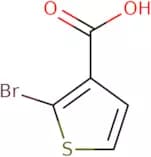
CAS:<p>Please enquire for more information about 3-Cyanothiophene-4-boronic acid pinacol ester including the price, delivery time and more detailed product information at the technical inquiry form on this page</p>Fórmula:C11H14BNO2SPureza:Min. 95%Peso molecular:235.11 g/mol2-Bromo-3-thiophenecarboxylic acid
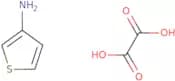
CAS:<p>2-Bromo-3-thiophenecarboxylic acid (BTPC) is a synthetic drug that is used as an analog of sildenafil, which is a PDE5 inhibitor. BTPC has been shown to be a more potent and selective inhibitor of cGMP hydrolysis than sildenafil. It has also been shown to be capable of inhibiting the growth of human lung cancer cells in vitro. BTPC has not yet been tested in vivo, but may offer advantages over other PDE5 inhibitors due to its increased potency and selectivity.</p>Fórmula:C5H3BrO2SPureza:Min. 97 Area-%Cor e Forma:PowderPeso molecular:207.05 g/molThiophen-3-amine oxalate
CAS:<p>Thiophen-3-amine oxalate is an organic compound that is used as a pharmaceutical intermediate. It is a white solid that has a melting point of 121°C, and can be obtained by reacting 3-aminophenol with formaldehyde in the presence of sodium bicarbonate. It has two functional groups, one chloride and one cromakalim. The skeleton consists of a phenyl ring and an activated nucleus. The phenyl ring is substituted by two n-substituted groups, which are represented by the diazoxide group and the formaldehyde group. The chemical formula for thiophen-3-amine oxalate is C8H5N3O4Cl2.</p>Fórmula:C6H7NO4SPureza:Min. 95%Peso molecular:189.19 g/mol3,4'-Dihexyl-2,2'-bithiophene
CAS:<p>Please enquire for more information about 3,4'-Dihexyl-2,2'-bithiophene including the price, delivery time and more detailed product information at the technical inquiry form on this page</p>Pureza:Min. 95%2-Acetyl-5-methylthiophene
CAS:<p>2-Acetyl-5-methylthiophene is a heteroatomic compound that can be used in cancer therapy. It has been shown to inhibit the growth of human cell lines and to have anticancer activity. This compound is also known for its potential interaction with fatty acids, which may be due to the molecular electrostatic potential. The molecule's structure contains a β-unsaturated ketone, which is an active site for many reactions and may interact with other compounds such as thiosemicarbazide. 2-Acetyl-5-methylthiophene has two isomers, namely 5-methylthiophen-2-yl acetate and 5-(acetyloxy)methylthiophen-2-yl acetate. These two molecules differ in the arrangement of their carbons and hydrogens on the central carbon atom and are not considered to be identical substances.</p>Fórmula:C7H8OSPureza:Min. 95%Cor e Forma:PowderPeso molecular:140.2 g/mol1-(4-Benzo[b]thien-2-ylphenyl)ethanone
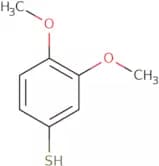
CAS:<p>Please enquire for more information about 1-(4-Benzo[b]thien-2-ylphenyl)ethanone including the price, delivery time and more detailed product information at the technical inquiry form on this page</p>Fórmula:C16H12OSPureza:Min. 95%Peso molecular:252.33 g/mol3,4-Dimethoxythiophenol
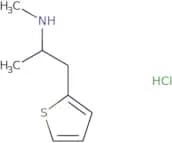
CAS:<p>3,4-Dimethoxythiophenol is a chemical compound that is used as a fluorescence probe to study biological functions in cells. It reacts with hydroxyl groups and other reactive sites on proteins, including sulfhydryl groups, thiols, and amines. 3,4-Dimethoxythiophenol has been shown to inhibit the viability of cancer cells (e.g., prostate cancer cells) by interfering with the function of dehydrogenase enzymes. 3,4-Dimethoxythiophenol also inhibits growth of microglia (cells that protect neurons) in vitro. This inhibition is due to the production of reactive oxygen species by the microglial cells. The chemical structure of this compound includes a hydroxyl group and two methoxy groups.</p>Fórmula:C8H10O2SPureza:Min. 95%Cor e Forma:Clear LiquidPeso molecular:170.23 g/molN,α-Dimethyl-2-thiopheneethanamine hydrochloride
CAS:Produto Controlado<p>Methiopropamine is a synthetic psychoactive substance that has been associated with long-term health effects. It is used recreationally for its stimulant properties, such as increased alertness and wakefulness. Methiopropamine may cause paranoia and delusions, as well as other long-term effects. The drug can be detected in the urine for up to five days after ingestion. Methiopropamine is an amphetamine analogue of cathinone, which is a naturally occurring substance found in the khat plant. It is classified by the DEA as a Schedule I controlled substance in the United States.</p>Fórmula:C8H14ClNSPureza:Min. 95%Peso molecular:191.72 g/mol2-Chlorothiophenol
CAS:<p>2-Chlorothiophenol is a chemical compound that belongs to the group of fatty acids. It is synthesized by reacting phosphorus pentachloride with 2-chloroethanol in the presence of magnesium salt. The corresponding molecule has a diameter of 4.8 Å and a thermal expansion coefficient of 1.5×10 K−1, which is similar to the thermal expansion coefficients of fatty acids. 2-Chlorothiophenol reacts with carbonyl groups in the presence of oxygen to form 2-chlorophenol and hydrogen chloride gas, which are products that can be detected using spectroscopic techniques such as infrared or nuclear magnetic resonance spectroscopy. The reaction mechanism for this reaction is not well understood, but it is thought that the intramolecular hydrogen acts as an electron donor to form a pi bond between carbon atoms on adjacent molecules, leading to formation of an oxygenated molecule. 2-Chlorothiophenol also has protein</p>Fórmula:C6H5ClSPureza:Min. 95%Cor e Forma:Clear Colourless LiquidPeso molecular:144.62 g/mol5-Aminothiophene-2-carbonitrile
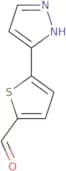
CAS:<p>Please enquire for more information about 5-Aminothiophene-2-carbonitrile including the price, delivery time and more detailed product information at the technical inquiry form on this page</p>Fórmula:C5H4N2SPureza:Min. 95%Peso molecular:124.16 g/mol5-(1H-Pyrazol-5-yl)thiophene-2-carbaldehyde
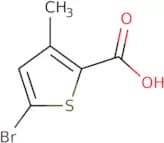
CAS:<p>Please enquire for more information about 5-(1H-Pyrazol-5-yl)thiophene-2-carbaldehyde including the price, delivery time and more detailed product information at the technical inquiry form on this page</p>Fórmula:C8H6N2OSPureza:Min. 95%Peso molecular:178.21 g/mol5-Bromo-3-methylthiophene-2-carboxylic acid
CAS:<p>5-bromo-3-methylthiophene-2-carboxylic acid (5BmtCA) is a potential therapeutic that has been shown to have the same estrogenic activity as estradiol. It may be used for the treatment of osteoporosis and other conditions associated with estrogen deficiency, including resorption and bone loss. 5BmtCA is an amide with two phenyl groups at the C3 position, which are bioisosteres of the sulfur in estradiol. The substitutions on these phenyl groups can be changed to produce analogs with different properties. For example, 5BmtCA may be substituted with a ketone group at position C3 to produce the corresponding ketone analog 5BmtCK. This compound would be expected to have reduced bone resorption activity relative to 5BmtCA.</p>Fórmula:C6H5BrO2SPureza:Min. 95%Cor e Forma:PowderPeso molecular:221.07 g/mol2-methyl-3-(tributylstannyl) benzothiophene
CAS:Produto Controlado<p>Please enquire for more information about 2-methyl-3-(tributylstannyl) benzothiophene including the price, delivery time and more detailed product information at the technical inquiry form on this page</p>Pureza:Min. 95%(6R,7R)-3-(Acetoxymethyl)-8-oxo-7-(2-(thiophen-2-yl)acetamido)-5-thia-1-azabicyclo[4.2.0]oct-2-ene-2-carboxylic acid
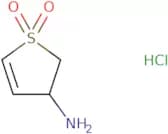
CAS:<p>(6R,7R)-3-(Acetoxymethyl)-8-oxo-7-(2-(thiophen-2-yl)acetamido)-5-thia-1-azabicyclo[4.2.0]oct-2-ene-2-carboxylic acid is an antimicrobial agent that inhibits bacterial growth by binding to the penicillin binding protein (PBP), which prevents the synthesis of peptidoglycan. This drug has shown effectiveness against gram positive bacteria, including aerobacter aerogenes, as well as infectious diseases in wastewater treatment plants. It has also been demonstrated to be effective in experimental models of infection due to high resistance and cell signaling pathways. The reaction solution was analyzed by plasma mass spectrometry.</p>Fórmula:C16H16N2O6S2Pureza:Min. 98%Cor e Forma:White PowderPeso molecular:396.44 g/mol3-Amino-2,3-dihydro-1λ6-thiophene-1,1-dione hydrochloride
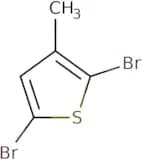
CAS:<p>Please enquire for more information about 3-Amino-2,3-dihydro-1λ6-thiophene-1,1-dione hydrochloride including the price, delivery time and more detailed product information at the technical inquiry form on this page</p>Fórmula:C4H7NO2S•HClPureza:Min. 95%Peso molecular:169.63 g/mol2,5-Dibromo-3-methylthiophene
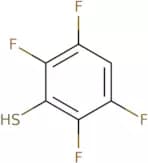
CAS:<p>2,5-Dibromo-3-methylthiophene is a small molecule that has been shown to have anti-bacterial properties. It reacts with the bacterial cell membrane, disrupting the bacteria's ability to function and causing it to die. 2,5-Dibromo-3-methylthiophene can be used as an antibacterial agent in medicine or cosmetics. The chemical structure of 2,5-dibromo-3-methylthiophene is similar to that of oxadiazole and 5H-[1]benzothiazol[5,4,-d][1,2]oxazole and it has been shown that these compounds can also be used for antibacterial purposes. The anti-bacterial activity of 2,5-dibromo-3-methylthiophene is due to its functional groups which are reactive with metal ions such as Cu(II) and Fe(III).</p>Fórmula:C5H4Br2SPureza:Min. 95%Peso molecular:255.96 g/mol2,3,5,6-Tetrafluorothiophenol
CAS:<p>2,3,5,6-Tetrafluorothiophenol is a backup chemical that can be used in place of the more expensive 2,4,5-trichlorophenol. It is a chemical intermediate that has been shown to react with fatty acids to form chromatographic products. FTIR spectroscopy and sample preparation techniques have been developed for this application. The light emission from FTIR spectroscopy can also be used as a means of controlling a microcontroller in telecommunications devices. A telecommunication company has successfully downloaded this information on their website. 2,3,5,6-Tetrafluorothiophenol has also been shown to inhibit the growth of Pseudomonas aeruginosa and Staphylococcus epidermidis bacteria by interfering with the synthesis of fatty acids and increasing the production of hydroxyl groups.END> Rifapentine is an anti-tuberculosis drug that</p>Fórmula:C6H2F4SPureza:Min. 95%Cor e Forma:Clear LiquidPeso molecular:182.14 g/molDibenzothiophene
CAS:<p>Dibenzothiophene is a chemical compound that has been used as a reagent for flow system and is characterized by its high chemical stability. Dibenzothiophene has been shown to be an effective inhibitor of bacterial growth in the presence of hydroxyl groups, such as in test samples. The reaction mechanism of dibenzothiophene with acetate extract is based on the enhancement of the activated surface methodology and light emission.</p>Fórmula:C12H8SPureza:Min. 95%Cor e Forma:PowderPeso molecular:184.26 g/mol2-(4-Fluorophenyl)-5-[(5-iodo-2-methylphenyl)methyl]thiophene
CAS:<p>Intermediate in the synthesis of canagliflozin</p>Fórmula:C18H14FISPureza:Min. 95%Peso molecular:408.27 g/molRITA
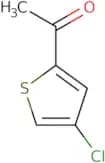
CAS:<p>RITA is a novel compound that has been shown to have anticancer activity in vivo in a rat model. RITA is a small molecule with high potency and low toxicity. It binds selectively to the α subunit of the enzyme topoisomerase II, which is involved in DNA replication and repair. RITA has been shown to induce apoptosis in cancer cells by pro-apoptotic proteins such as Bax and Bak. These proteins are known for their ability to induce apoptosis by increasing mitochondrial membrane permeability, inhibiting mitochondrial functions, or destabilizing the mitochondrial membrane potential. The compound class of RITA is not yet known, but it has been shown to be chemically stable at physiological pH levels and does not require metabolic activation for its cytotoxicity. The pharmacokinetics of this drug have also been studied in human liver cells and humans, indicating that this drug may be able to cross the blood-brain barrier.</p>Fórmula:C14H12O3S2Pureza:Min. 95%Peso molecular:292.38 g/mol1-(4-Chlorothiophen-2-yl)ethanone
CAS:<p>1-(4-Chlorothiophen-2-yl)ethanone is an oxychloride that belongs to the family of thiourea derivatives. It is synthesized by reacting phosphorus oxychloride with 2,3-dichloroacetophenone in a solvent such as dioxane or acetonitrile. The final product is purified by means of vacuum distillation and recrystallization from diethyl ether, hexane, and chlorinated hydrocarbons.</p>Fórmula:C6H5ClOSPureza:Min. 95%Peso molecular:160.62 g/molBenzo[b]thiophene-2-carbonitrile
CAS:<p>Benzo[b]thiophene-2-carbonitrile is a naphthalene derivative with a catalytic backbones. It is a new synthetic method that provides the opportunity to access benzo[b]thiophene-2-carboxylic acid and 2,6-dibromo-benzo[b]thiophene in one step. This reaction has been found to be effective for the synthesis of various heterocycles, such as 3,4-dihydroquinoxaline, 2,6-dibromo-pyridine, and 6-(3'-chlorophenyl)-1H-[1']benzopyran. The optical properties of this compound have been investigated by UV/visible spectroscopy and shown to exhibit an intense blue color. Benzo[b]thiophene-2-carbonitrile can also act as an electron acceptor or donor in organic reactions with halogen substituents</p>Fórmula:C9H5NSPureza:Min. 95%Peso molecular:159.21 g/mol2-Thiophenecarboxaldehyde
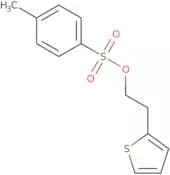
CAS:<p>2-Thiophenecarboxaldehyde is a synthetic compound that has been shown to have in vitro antifungal activity. It has also been shown to inhibit the growth of bacteria and fungi, such as Candida albicans. The antimicrobial activity of 2-thiophenecarboxaldehyde has been demonstrated by in vitro studies using human serum, metal carbonyl complexes, and sodium salts. In addition, this compound inhibits the synthesis of proteins in animal cells infected with viruses or bacteria. It also has amoebicidal activity against Entamoeba histolytica and Leishmania donovani. This compound is used for the treatment of autoimmune diseases such as rheumatoid arthritis and multiple sclerosis.</p>Fórmula:C5H4OSPureza:Min. 95%Cor e Forma:Clear LiquidPeso molecular:112.15 g/mol2-Thiopheneethanol tosylate
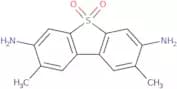
CAS:<p>2-Thiopheneethanol tosylate (2TEtOS) is an antitubercular agent that belongs to the class of thiopheneethanol esters. It is a potent inhibitor of Mycobacterium tuberculosis and other bacteria by blocking the transfer reactions that are required for bacterial growth. The molecular structure of 2TEtOS consists of a thiophene ring with an allyl group attached to it and a chiral sulfur atom in the center. This molecule can be derivatized with various ligands, which enables the control experiments to be performed. 2TEtOS has been shown to have redox potentials and diffraction properties that are similar to those of borohydride reduction agents, suggesting that 2TEtOS may also act as a reducing agent.</p>Fórmula:C13H14O3S2Pureza:Min. 95%Peso molecular:282.38 g/mol3,7-Diamino-2,8-dimethyldibenzothiophene sulfone, contains 2,6-Dimethyl isomer
CAS:<p>3,7-Diamino-2,8-dimethyldibenzothiophene sulfone (contains 2,6-Dimethyl isomer) is a hydrophilic aromatic hydrocarbon that is used in the production of polymers. It is a copolymerization agent and monomer for epoxy resins and vulcanizates. The product contains impurities such as benzene and sulfur.</p>Fórmula:C14H14N2O2SPureza:Min. 95%Cor e Forma:Slightly Yellow PowderPeso molecular:274.34 g/mol4-Bromobenzo[b]thiophene
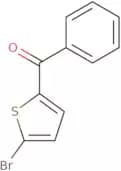
CAS:<p>Intermediate in the synthesis of brexpiprazole</p>Fórmula:C8H5BrSPureza:Min. 95%Peso molecular:213.1 g/mol2-Bromo-5-benzoylthiophene
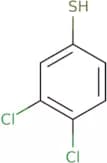
CAS:<p>2-Bromo-5-benzoylthiophene is a brominated hydrophobic compound. It has a catalytic activity and can be used as an antibacterial agent. The 9-oxime of 2-bromo-5-benzoylthiophene is more active than the free drug and is capable of inhibiting the growth of bacteria in vitro. This oxime also has a higher affinity for DNA gyrase and topoisomerase IV than other drugs in this class, which may be due to its hydrophobic nature or bromine substitution. Molecular modeling studies have shown that the chlorine atom in the 9-oxime plays an important role in stabilizing the complex formed with DNA gyrase or topoisomerase IV, which could explain its high activity against these enzymes.</p>Fórmula:C11H7BrOSPureza:Min. 95%Peso molecular:267.14 g/mol3,4-Dichlorothiophenol
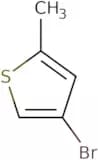
CAS:<p>3,4-Dichlorothiophenol is a chemical compound that belongs to the group of reactive compounds. It can be used as a chemical intermediate for the synthesis of other organic compounds. 3,4-Dichlorothiophenol is an inhibitor of methylating enzymes such as glyoxalase I and II and glyceraldehyde-3-phosphate dehydrogenase. This inhibition leads to the accumulation of methylglyoxal and 3-deoxyglucosone in cells, which are potent inhibitors of protein glycosylation. 3,4-Dichlorothiophenol also inhibits nucleophilic attack on DNA by epoxide hydrolases such as epoxide hydrolase 1 and 2. This inhibition results in the accumulation of reactive metabolites that are covalently adducted with DNA bases.</p>Fórmula:C6H4Cl2SPureza:Min. 95%Peso molecular:179.07 g/mol4-Bromo-2-methylthiophene
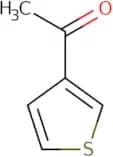
CAS:<p>4-Bromo-2-methylthiophene is a linker that is used in the synthesis of metal carbonyls. It has been shown to be an efficient cross-linking agent for the preparation of polymers. 4-Bromo-2-methylthiophene can be isomerized to 2,5-dimethylthiophene by heating it with hydroxylamine. 4-Bromo-2-methylthiophene can also catalyze the alkylation of nucleophiles such as ammonia and dimethyl sulfate, as well as nucleophilic attack on carboxylic acid derivatives. This compound is acidic, due to its chloride substituent, which can react with basic groups such as hydroxyl groups or amines.</p>Fórmula:C5H5BrSPureza:Min. 95%Cor e Forma:Clear LiquidPeso molecular:177.06 g/mol3-Acetylthiophene
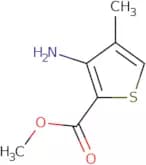
CAS:<p>3-Acetylthiophene is an organic compound with the chemical formula CH3C6H2S. It is a white solid that is soluble in water and alcohols, but not in ethers or chloroform. 3-Acetylthiophene has been shown to inhibit cell growth through competitive inhibition of the cationic surfactant cetrimide, which blocks the formation of micelles and destabilizes the cell membrane. This process causes DNA oxidation and leads to the production of reactive oxygen species such as hydrogen peroxide. 3-Acetylthiophene also inhibits metal ion-catalyzed reactions by competing with them for binding sites on functional groups.</p>Pureza:Min. 95%Peso molecular:126.18 g/mol3-Amino-4-methyl-thiophen-2-carboxylic acid methyl ester
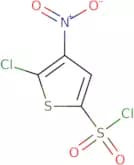
CAS:<p>3-Amino-4-methylthiophen-2-carboxylic acid methyl ester (3AMTC) is a novel compound that has been shown to have antihypertensive activity, as well as other pharmacological actions. 3AMTC is an allosteric modulator of α7 nicotinic acetylcholine receptors, which are found in the central and peripheral nervous system. The efficacy of 3AMTC was evaluated using magnetic resonance spectroscopy to measure the effects on mouse tumor cells. This compound showed no carcinogenic potential, which may be due to its inability to cross the blood brain barrier.</p>Pureza:Min. 95%Peso molecular:171.22 g/mol5-Chloro-4-nitrothiophene-2-sulfonylchloride
CAS:<p>Please enquire for more information about 5-Chloro-4-nitrothiophene-2-sulfonylchloride including the price, delivery time and more detailed product information at the technical inquiry form on this page</p>Fórmula:C4HCl2NO4S2Pureza:Min. 95%Peso molecular:262.09 g/mol2,6-Bis(triMethyltin)-4,8-bis(5-(2-ethylhexyl)thiophen-2-yl)benzo [1,2-b
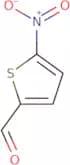
CAS:Fórmula:C40H58S4Sn2Pureza:96%Cor e Forma:SolidPeso molecular:904.55055-Nitrothiophene-2-carboxaldehyde
CAS:<p>5-Nitrothiophene-2-carboxaldehyde (5NT) is a chemical compound that belongs to the class of dihedral molecules. It is commonly used as an antimicrobial agent and has been shown to have amoebicidal activity in tissue culture. 5NT also inhibits cell growth and proliferation in certain bacteria, such as Staphylococcus aureus strains, by interfering with DNA replication and protein synthesis. Although 5NT is not active against other types of bacteria, it has been shown to be effective against MRSA in laboratory studies. The biological properties of 5NT are still being studied.</p>Fórmula:C5H3NO3SPureza:Min. 95%Peso molecular:157.15 g/molRef: 3D-FN33032
Produto descontinuado




![Tert-butyl N-[(5-Cyanothiophen-2-yl)methyl]carbamate](/_next/image/?url=https%3A%2Fstatic.cymitquimica.com%2Fproducts%2FTR%2Fthumb-webp%2FB815518.webp&w=3840&q=75)
![6,6-Dimethyl-3-(Methylthio)-4-Oxo-4,5,6,7-Tetrahydrobenzo[C]Thiophene-1-Carbonitrile](/_next/image/?url=https%3A%2Fstatic.cymitquimica.com%2Fproducts%2FTR%2Fthumb-webp%2FD496438.webp&w=3840&q=75)
![2-(Benzo[b]thiophen-5-yl)ethanol](/_next/image/?url=https%3A%2Fstatic.cymitquimica.com%2Fproducts%2FTR%2Fthumb-webp%2FB276735.webp&w=3840&q=75)
![(E)-1-(Benzo[b]thiophen-2-yl)ethanone Oxime](/_next/image/?url=https%3A%2Fstatic.cymitquimica.com%2Fproducts%2FTR%2Fthumb-webp%2FB276763.webp&w=3840&q=75)
![Benzo[b]thiophene-5-acetic Acid](/_next/image/?url=https%3A%2Fstatic.cymitquimica.com%2Fproducts%2FTR%2Fthumb-webp%2FB276740.webp&w=3840&q=75)
![5-Bromo-2,3-dihydrobenzo[b]thiophene 1,1-dioxide](/_next/image/?url=https%3A%2Fstatic.cymitquimica.com%2Fproducts%2FTR%2Fthumb-webp%2FB801163.webp&w=3840&q=75)

![Thieno[3,2-b]thiophene-2-carboxylic Acid](/_next/image/?url=https%3A%2Fstatic.cymitquimica.com%2Fproducts%2FTR%2Fthumb-webp%2FT345200.webp&w=3840&q=75)
![1,1'-[1]Benzothieno[3,2-b][1]benzothiophene-2,7-diylbis[1-octanone]](/_next/image/?url=https%3A%2Fstatic.cymitquimica.com%2Fproducts%2FTR%2Fthumb-webp%2FB583050.webp&w=3840&q=75)



![9,10-Dihydro-4H-benzo[4,5]cyclohepta[1,2-b]thiophen-4-one](/_next/image/?url=https%3A%2Fstatic.cymitquimica.com%2Fproducts%2F3D%2Fthumb-webp%2FFD21990.webp&w=3840&q=75)


![6-Methoxy-2-(4-methoxyphenyl)benzo[b]thiophene](/_next/image/?url=https%3A%2Fstatic.cymitquimica.com%2Fproducts%2F3D%2Fthumb-webp%2FFM25206.webp&w=3840&q=75)
![3,6-Dichlorobenzo[b]thiophene-2-carboxylic acid](/_next/image/?url=https%3A%2Fstatic.cymitquimica.com%2Fproducts%2F3D%2Fthumb-webp%2FFD57151.webp&w=3840&q=75)



![4,8-Bis[5-(2-ethylhexyl)thiophen-2-yl]-2,6-bis(trimethylstannyl)benzo[1,2-b:4,5-b']dithiophene](/_next/image/?url=https%3A%2Fstatic.cymitquimica.com%2Fproducts%2F3D%2Fthumb-webp%2FFB76071.webp&w=3840&q=75)


![1-(4-Benzo[b]thien-2-ylphenyl)ethanone](/_next/image/?url=https%3A%2Fstatic.cymitquimica.com%2Fproducts%2F3D%2Fthumb-webp%2FFA149381.webp&w=3840&q=75)



![(6R,7R)-3-(Acetoxymethyl)-8-oxo-7-(2-(thiophen-2-yl)acetamido)-5-thia-1-azabicyclo[4.2.0]oct-2-ene…](/_next/image/?url=https%3A%2Fstatic.cymitquimica.com%2Fproducts%2F3D%2Fthumb-webp%2FFA32097.webp&w=3840&q=75)

![2-(4-Fluorophenyl)-5-[(5-iodo-2-methylphenyl)methyl]thiophene](/_next/image/?url=https%3A%2Fstatic.cymitquimica.com%2Fproducts%2F3D%2Fthumb-webp%2FFF34928.webp&w=3840&q=75)

![Benzo[b]thiophene-2-carbonitrile](/_next/image/?url=https%3A%2Fstatic.cymitquimica.com%2Fproducts%2F3D%2Fthumb-webp%2FFB143739.webp&w=3840&q=75)

![4-Bromobenzo[b]thiophene](/_next/image/?url=https%3A%2Fstatic.cymitquimica.com%2Fproducts%2F3D%2Fthumb-webp%2FFB57657.webp&w=3840&q=75)