


Heterociclos de enxofre (S)
Aqui você encontrará uma classe de compostos orgânicos que contêm um átomo de enxofre no anel heterocíclico. Heterociclos contendo enxofre são cruciais no desenvolvimento de produtos farmacêuticos, agroquímicos e materiais devido às suas propriedades químicas únicas e atividades biológicas. Esses compostos são amplamente utilizados na química medicinal e na ciência dos materiais. Na CymitQuimica, oferecemos uma seleção diversificada de heterociclos contendo enxofre de alta qualidade para apoiar suas pesquisas e aplicações industriais.
Subcategorias de "Heterociclos de enxofre (S)"
Foram encontrados 1000 produtos de "Heterociclos de enxofre (S)"
Ordenar por
Pureza (%)
0
100
|
0
|
50
|
90
|
95
|
100
5-Methylthiophene-3-carbohydrazide
CAS:<p>5-Methylthiophene-3-carbohydrazide is a white powder that is soluble in water and ethanol. It is used as a reagent for organic synthesis, especially for the production of heterocycles. The chemical name for 5-methylthiophene-3-carbohydrazide is methyl 3-(aminocarbonyl)-5-methylthiophenecarboxylate. It has a molecular weight of 160.06 grams per mole and a melting point of 35°C. It reacts with acid to form an N-methylthiophthalimide, which can then be reacted with various amines to produce diverse products. This compound is also used as a building block in the synthesis of complex molecules such as pharmaceuticals, agrochemicals, or fragrances.</p>Fórmula:C6H8N2OSPureza:Min. 95 Area-%Cor e Forma:PowderPeso molecular:156.21 g/mol(S)-3-(Allyl(methyl)amino)-1-(thiophen-2-yl)propan-1-ol
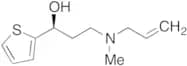
Produto Controlado<p>Applications (S)-3-(Allyl(methyl)amino)-1-(thiophen-2-yl)propan-1-ol is an intermediate in the syntehsis of 4-Hydroxy Duloxetine β-D-Glucuronide Sodium Salt (H941805), which is a metabolite of Duloxetine.<br>References Lantz, R.J., et al.: Drug Dispos. Metab., 31, 1142 (2003); Detke, M., et al.: J. Clin Psy., 63, 308 (2002); Bymaster, F.P., et al.: Bioorg. Med., Chem. Lett., 13, 4477 (2003);<br></p>Fórmula:C11H17NOSCor e Forma:NeatPeso molecular:211.3243-Thiophenecarboxylic Acid
CAS:Produto Controlado<p>Applications 3-Thiophenecarboxylic Acid was used as a lading compound for the development of a clinic useful D-amino acid inhibitor and have the potential to sever as active site proves to elucidate the structure-function relationships of D-amino acids.<br>References Katane, M., et al.: J. Med. Chem., 56, 1894 (2013)<br></p>Fórmula:C5H4O2SCor e Forma:NeatPeso molecular:128.15Ethyl 2-Aminothiophene-3-carboxylate
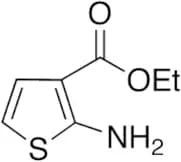
CAS:Produto Controlado<p>Applications Ethyl 2-Aminothiophene-3-carboxylate (cas# 31891-06-2) is a compound useful in organic synthesis.<br></p>Fórmula:C7H9NO2SCor e Forma:NeatPeso molecular:171.224-Benzyloxy-2-(2’-carbomethoxy)thiophenylaniline
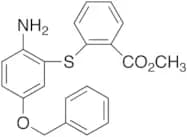
CAS:Produto Controlado<p>Applications 4-Benzyloxy-2-(2’-carbomethoxy)thiophenylaniline (cas# 329217-05-2) is a compound useful in organic synthesis.<br></p>Fórmula:C21H19NO3SCor e Forma:NeatPeso molecular:365.454-Benzyloxy-2-(2’-carbomethoxy)thiophenylnitrobenzene
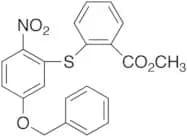
CAS:Produto Controlado<p>Applications 4-Benzyloxy-2-(2’-carbomethoxy)thiophenylnitrobenzene (cas# 329217-03-0) is a compound useful in organic synthesis.<br></p>Fórmula:C21H17NO5SCor e Forma:YellowPeso molecular:395.432-Bromothiophene
CAS:<p>2-Bromothiophene is a brominated organic compound with six carbon atoms in a ring. It is synthesized by the Suzuki coupling reaction of 2-bromobenzene and aniline, which forms the pyrazole ring. The molecule can be used as a monomer for cationic polymerization to form polymers with high thermal stability. 2-Bromothiophene has been shown to be effective in treating chronic bronchitis, and can also be used as a photoelectron source.</p>Fórmula:C4H3BrSPureza:Min. 95%Cor e Forma:Clear LiquidPeso molecular:163.04 g/mol2,5-Dibromothiophene
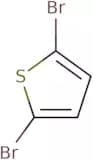
CAS:<p>2,5-Dibromothiophene is a reactive intermediate that has been used in the synthesis of ondansetron hydrochloride. 2,5-Dibromothiophene can be prepared by the reaction of triethyl orthoformate and thiophene. The compound spontaneously undergoes bond cleavage to give the dibromo derivative followed by oxidation with aqueous hydrogen peroxide. 2,5-Dibromothiophene has been shown to have photocatalytic activity under visible light irradiation. This compound functions as a monomer in the polymerization of polythiophenes. 2,5-Dibromothiophene can also be used in palladium-catalyzed cross-coupling reactions with azasetron hydrochloride to form x-ray crystal structures and nmr spectra.</p>Fórmula:C4H2Br2SPureza:Min. 95%Cor e Forma:Colourless To Yellow LiquidPeso molecular:241.93 g/mol2-Bromo-3-methylthiophene
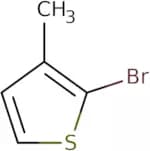
CAS:<p>2-Bromo-3-methylthiophene (2BMT) is an organic chemical compound that has been used for the Suzuki coupling reaction. It can be prepared by reacting 2-bromo-3-methylthiophene with potassium hydroxide in a hydroxide solution. 2BMT has shown to inhibit the activity of tiagabine hydrochloride, which is a drug that regulates GABA neurotransmission. 2BMT is also used as an intermediate in the synthesis of carbonyl group compounds and halides. The structure and physical properties of 2BMT have been studied in detail by x-ray crystallography and nmr spectroscopy.</p>Fórmula:C5H5BrSPureza:Min. 95%Cor e Forma:Clear LiquidPeso molecular:177.06 g/molBenzo[1,2-b:4,5-b']dithiophene-4,8-dione
CAS:<p>Benzo[1,2-b:4,5-b']dithiophene-4,8-dione is a heterocyclic compound that has been studied for its potential use in electronic devices. The molecule is composed of two aromatic rings and one heterocyclic ring. It is an important building block in the synthesis of many five-membered heterocycles such as benzothiophene and benzofuran. Benzo[1,2-b:4,5-b']dithiophene-4,8-dione can be used as a photoactive material for solar cells due to its ability to absorb light from the visible spectrum and emit it in the near infrared region.</p>Fórmula:C10H4O2S2Pureza:Min. 95%Cor e Forma:White PowderPeso molecular:220.27 g/molMethyl 3-amino-5-methyl thiophene-2-carboxylate
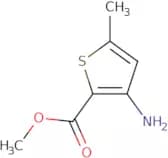
CAS:<p>Methyl 3-amino-5-methyl thiophene-2-carboxylate is a fine chemical that belongs to the group of useful scaffolds, versatile building blocks, useful intermediates for research chemicals and speciality chemicals. It can be used as reaction components in the synthesis of complex compounds. Methyl 3-amino-5-methyl thiophene-2-carboxylate is a high quality reagent with a wide range of applications in organic chemistry.</p>Fórmula:C7H9NO2SPureza:Min. 95%Cor e Forma:PowderPeso molecular:171.22 g/molThiophene-2-carboxamide
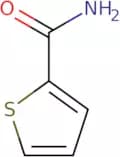
CAS:<p>Thiophene-2-carboxamide is a synthetic chemical that is an inhibitor of the efflux pump, receptor activity, and recombinant cytochrome p450. It has been shown to be effective against colorectal carcinoma cells in vitro and in vivo. Thiophene-2-carboxamide also inhibits the mitochondrial membrane potential and hydrogen bond formation. This compound has potent inhibitory activity for the enzyme synthetase, which may be a potential drug target for cancer treatment. Nitrogen atoms are present in this molecule.</p>Fórmula:C5H5NOSPureza:Min. 95%Cor e Forma:White PowderPeso molecular:127.17 g/mol2-Aminothiophene-3-methyl carboxylate
CAS:<p>2-Aminothiophene-3-methyl carboxylate is a hydrogen bond that is derived from the amino acid methionine. It has been shown to have potent antitumor activity and can be used for the treatment of cancer. 2-Aminothiophene-3-methyl carboxylate has a molecular weight of 244.6 g/mol, an isolated yield of 0.68%, and a melting point of 245 °C.</p>Fórmula:C4H2SCOOCH3NH2Pureza:Min. 95%Cor e Forma:Yellow PowderPeso molecular:157.19 g/mol4,5-Dihydro-3(2H)-thiophenone-1,1-dioxide
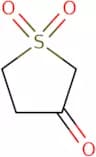
CAS:<p>4,5-Dihydro-3(2H)-thiophenone-1,1-dioxide is a pyridine derivative with a functional group that is used as an antiviral agent. It blocks the serine protease by binding to the active site of the enzyme and preventing it from functioning. 4,5-Dihydro-3(2H)-thiophenone-1,1-dioxide has a carbonyl group that can be used for catalysis and hydroxy groups that are important for hydrogen bonding. This compound also has quinoline derivatives that act as cyclic structures.</p>Fórmula:C4H6O3SPureza:Min. 95%Cor e Forma:Light (Or Pale) Yellow SolidPeso molecular:134.15 g/molThiophene-2-sulfonamide
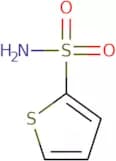
CAS:<p>Thiophene-2-sulfonamide is a fungal biomass inhibitor that binds to specific receptors in the human liver, which decreases the production of hemolytic substances. Thiophene-2-sulfonamide has been shown to have a reversible effect on the metabolism of peptide hormones and metabolic disorders in vivo. The drug also has diagnostic properties and can be used to measure receptor binding activity. Thiophene-2-sulfonamide is an intermediate in the synthesis of diagnostic agents such as 3-(4'-aminophenyl)thiophene-2,5-diol (APTD).</p>Fórmula:C4H5NO2S2Pureza:Min. 95%Cor e Forma:PowderPeso molecular:163.22 g/mol3-Bromothiophene-2-carbaldehyde
CAS:<p>3-Bromothiophene-2-carbaldehyde is an organic compound that has been shown to have antibacterial activity. It can be synthesized by reacting triethyl orthoformate with methyl ketones in the presence of a photocatalyst such as titanium dioxide or zinc oxide. This reaction produces 3-bromothiophene-2-carboxylic acid which reacts with ammonia and hydrogen bromide to form 3-bromothiophene-2-carbaldehyde. 3-Bromothiophene-2-carbaldehyde has been shown to inhibit the growth of cancer cells and induce apoptosis, which may be due to its ability to inhibit angiogenesis. The anticancer properties are most likely due to its ability to bind DNA and inhibit protein synthesis, leading to cell death.</p>Fórmula:C5H3BrOSPureza:Min. 95%Cor e Forma:White To Yellow To Light Brown SolidPeso molecular:191.05 g/molMethyl 3-chlorosulfonylthiophene-2-carboxylate
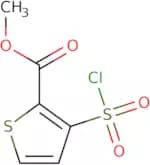
CAS:<p>Methyl 3-chlorosulfonylthiophene-2-carboxylate is a chemical compound that belongs to the family of thiophene carboxylic acid esters. It has been used for the synthesis of bioactive molecules, such as tenoxicam, and heteroarylations. Methyl 3-chlorosulfonylthiophene-2-carboxylate can be used in cross-coupling reactions with chloride as a reagent and is regiospecific. This chemical has also been shown to be reactive towards proteins, nucleic acids, and other biomolecules.</p>Fórmula:C6H5ClO4S2Pureza:Min. 95%Cor e Forma:PowderPeso molecular:240.69 g/mol2-Acetylthiophene
CAS:<p>2-Acetylthiophene is a chemical compound that contains thiophene and acetyl groups. It is a tetrazolium dye which can be used to study the Langmuir adsorption isotherm. 2-Acetylthiophene has been shown to have biological properties in vitro, including apoptotic effects in mammalian cells. 2-Acetylthiophene is an aryl halide with methyl ketones as its conjugate base. It can be synthesized by reacting 2-chlorothiophene with acetyl chloride in the presence of hydrochloric acid. The reaction can also be performed using phosphotungstic acid or hydrochloric acid as catalysts. 2-Acetylthiophene has been shown to have antifungal activity against Candida albicans and Saccharomyces cerevisiae, although it has no effect on Aspergillus niger.</p>Fórmula:C6H6OSPureza:90%Cor e Forma:Colorless Clear LiquidPeso molecular:126.18 g/mol3,3'-Dimethyl-2,2'-bithiophenyl
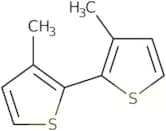
CAS:<p>3,3'-Dimethyl-2,2'-bithiophenyl is a thermochromic polymeric compound that has been used as a colorant in polymers. The compound has a linear structure consisting of two thiophene rings with methyl groups at the 3 and 2 positions. The 3,3'-dimethyl group is attached to the second carbon atom of the thiophene ring and the 2,2'-bithiophenyl group is attached to the first carbon atom of the thiophene ring. The color changes from yellow to orange when heated to above 200 °C. This color change is due to conformational changes in the molecule that occur with thermal energy input.</p>Fórmula:C10H10S2Pureza:Min. 95%Cor e Forma:Yellow PowderPeso molecular:194.32 g/molMethyl 4-methyl-3-[(N-propylalanyl)amino]thiophene-2-carboxylate HCl
CAS:<p>Methyl 4-methyl-3-[(N-propylalanyl)amino]thiophene-2-carboxylate HCl is a local anesthetic. It has been shown to be effective in the treatment of dental pain. Methyl 4-methyl-3-[(N-propylalanyl)amino]thiophene-2-carboxylate HCl acts by inhibiting the sodium channels in nerve cells, thereby blocking the transmission of pain signals and causing muscle relaxation. This drug also provides relief from anxiety, tension, and fear. Methyl 4-methyl-3-[(N-propylalanyl)amino]thiophene-2-carboxylate HCl has a rapid onset of action, with effects lasting up to 45 minutes. The drug is metabolized by hydrolysis to methyl 3-(aminocarbonyl)thiophene carboxylate and excreted in urine as metabolites.</p>Fórmula:C13H20N2O3S·HClPureza:Min. 95%Cor e Forma:PowderPeso molecular:320.84 g/mol





![Benzo[1,2-b:4,5-b']dithiophene-4,8-dione](/_next/image/?url=https%3A%2Fstatic.cymitquimica.com%2Fproducts%2F3D%2Fthumb-webp%2FFB42139.webp&w=3840&q=75)



![Methyl 4-methyl-3-[(N-propylalanyl)amino]thiophene-2-carboxylate HCl](/_next/image/?url=https%3A%2Fstatic.cymitquimica.com%2Fproducts%2F3D%2Fthumb-webp%2FFM130460.webp&w=3840&q=75)