Heterociclos com Nitrogénio (N)
Nesta categoria, você encontrará uma grande variedade de heterociclos contendo nitrogênio. Heterociclos são cadeias de carbono que formam um ciclo em que pelo menos uma posição é ocupada por um heteroátomo, neste caso, o nitrogênio. Esses compostos são essenciais na síntese de produtos farmacêuticos, agroquímicos e corantes, oferecendo reatividade e estabilidade únicas. Na CymitQuimica, oferecemos uma seleção abrangente de heterociclos contendo nitrogênio de alta qualidade para apoiar suas pesquisas e aplicações industriais.
Subcategorias de "Heterociclos com Nitrogénio (N)"
- Azepano(434 produtos)
- Benzotriazóis(436 produtos)
- Diazepinas(331 produtos)
- Imidazóis(4.011 produtos)
- Imidazolinas(385 produtos)
- Isoxazol(1.077 produtos)
- Piperazinas(3.736 produtos)
- Piperidinas(8.406 produtos)
- Pirazinas(1.299 produtos)
- Pirazol(5.921 produtos)
- Pirazolidina(21 produtos)
- Pirazolina(142 produtos)
- Piridazina(856 produtos)
- Piridinas(21.917 produtos)
- Pirimidina(6.041 produtos)
- Pirróis(2.443 produtos)
- Pirrolidinas(5.816 produtos)
- Pirrolina(48 produtos)
- Pirrolo[1,2-b]piridazina(10 produtos)
- Tetrazola(510 produtos)
- Triazinas(462 produtos)
- Triazolas(1.680 produtos)
Exibir 14 mais subcategorias
Foram encontrados 17855 produtos de "Heterociclos com Nitrogénio (N)"
Ordenar por
Pureza (%)
0
100
|
0
|
50
|
90
|
95
|
100
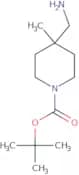
tert-Butyl 4-(aminomethyl)-4-methylpiperidine-1-carboxylate
CAS:<p>Please enquire for more information about tert-Butyl 4-(aminomethyl)-4-methylpiperidine-1-carboxylate including the price, delivery time and more detailed product information at the technical inquiry form on this page</p>Fórmula:C12H24N2O2Pureza:Min. 95%Peso molecular:228.33 g/mol1-(3-Isobutoxybenzyl)piperazine
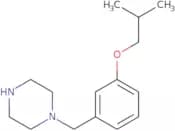
CAS:Produto Controlado<p>Please enquire for more information about 1-(3-Isobutoxybenzyl)piperazine including the price, delivery time and more detailed product information at the technical inquiry form on this page</p>Fórmula:C15H24N2OPureza:Min. 95%Peso molecular:248.36 g/mol1,1'-Dimethyl-4,4'-bipyridinium dichloride hydrate
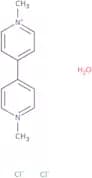
CAS:<p>1,1'-Dimethyl-4,4'-bipyridinium dichloride hydrate is a bipyridine with a divalent chloride. It has been shown to have synergic effects in the presence of dextran sulfate and paraquat. This compound has good photochemical properties, which are used for wastewater treatment and surface methodology. 1,1'-Dimethyl-4,4'-bipyridinium dichloride hydrate also has toxicological studies that show it does not cause any cellular toxicity or mitochondrial membrane potential changes. It also reduces potassium dichromate toxicity in glomerular filtration rate studies. This compound can be used as an analytical method for other bipyridines.</p>Fórmula:C12H14Cl2N2•(H2O)xPureza:Min. 95%Cor e Forma:PowderPeso molecular:257.16 g/mol1-Benzyl-4-methylpiperidin-3-one
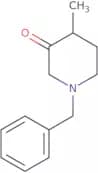
CAS:<p>Please enquire for more information about 1-Benzyl-4-methylpiperidin-3-one including the price, delivery time and more detailed product information at the technical inquiry form on this page</p>Fórmula:C13H17NOPureza:Min. 95%Peso molecular:203.28 g/mol1-(2-Bromophenyl)piperazine
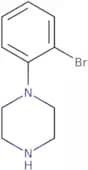
CAS:Produto Controlado<p>1-(2-Bromophenyl)piperazine is a drug that inhibits the activity of dehydrogenase, an enzyme that catalyzes the oxidation of NADH to NAD. It has been shown to inhibit other enzymes as well, such as those involved in the synthesis of amino acids and nucleic acids. 1-(2-Bromophenyl)piperazine has shown potential as a therapeutic agent for Parkinson's disease. This drug is being tested in clinical trials for its efficacy in treating a variety of diseases, including metabolic and cardiovascular disorders, hepatobiliary diseases, and neurodegenerative diseases.</p>Fórmula:C10H13BrN2Pureza:Min. 95%Peso molecular:241.13 g/mol2,5-Pyridinedicarboxylic acid diethyl ester
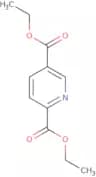
CAS:<p>2,5-Pyridinedicarboxylic acid diethyl ester is a porphyrin derivative that has been used in the synthesis of phthalocyanines and porphyrins. It is reactive and can be made to react with other compounds by cross-coupling reactions. This compound can also be synthesized through the reaction of picolyl chloride with 2,5-diketopiperazine. The yield of this product is low, but it can be improved through cross-coupling reactions. The functionality of this molecule is determined by the pyridyl group at one end and the diethyl ester at the other.</p>Fórmula:C11H13NO4Pureza:Min. 95%Cor e Forma:White PowderPeso molecular:223.23 g/mol5-Cyclopropyl-2-thioxo-2,3-dihydro-1H-pyrimidin-4-one
CAS:<p>Please enquire for more information about 5-Cyclopropyl-2-thioxo-2,3-dihydro-1H-pyrimidin-4-one including the price, delivery time and more detailed product information at the technical inquiry form on this page</p>Fórmula:C7H8N2OSPureza:Min. 95%Peso molecular:168.22 g/mol2-Amino-4-(cyclopropyl)pyrimidine
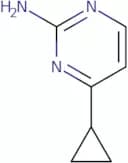
CAS:<p>Please enquire for more information about 2-Amino-4-(cyclopropyl)pyrimidine including the price, delivery time and more detailed product information at the technical inquiry form on this page</p>Fórmula:C7H9N3Pureza:Min. 95%Peso molecular:135.17 g/mol3-Hydroxy-1-methylpyridinium iodide
CAS:<p>3-Hydroxy-1-methylpyridinium iodide is a solute that has a molecular weight of 183.12 and the chemical formula CHNO. It is synthesized by the reaction of hydrogen peroxide with pyridinium dichromate in the presence of vitamin B6. 3-Hydroxy-1-methylpyridinium iodide has been shown to be an effective probe for 13C NMR spectroscopy and can be used as a boronic ester with an electron withdrawing group. The synthesis of 3-hydroxy-1-methylpyridinium iodide may also include halides such as bromo or chloro compounds, which are added to increase the solubility of the product.</p>Fórmula:C6H8NOPureza:Min. 95%Peso molecular:110.13 g/molCinnoline
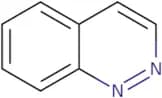
CAS:<p>Cinnoline is a chemical compound that is structurally similar to phenol, containing a hydroxyl group, two nitrogen atoms and a cyclic structure. Cinnoline has been shown to have anti-inflammatory activity in rats with adjuvant-induced arthritis. The mechanism of the anti-inflammatory effect of cinnoline is not fully understood, but it may be due to its stability and ability to bind to biological molecules or its conformational properties. Cinnoline does not react with nitric acid, making it a good candidate for use in infectious diseases such as tuberculosis. It has also been shown to be stable in human serum and has low pharmacokinetic properties. The fluorescence intensity of cinnoline was found to increase when exposed to an electrochemical potential and can be used as a probe molecule for pharmacokinetics studies.</p>Fórmula:C8H6N2Pureza:Min. 95%Cor e Forma:PowderPeso molecular:130.15 g/mol3-[(2S)-1,2,3,6-Tetrahydropyridin-2-Yl]Pyridine
CAS:<p>3-[(2S)-1,2,3,6-Tetrahydropyridin-2-Yl]Pyridine is a compound that is derived from the plant metabolism. It has been shown to have a nicotine-like effect on locomotor activity in rats. 3-[(2S)-1,2,3,6-Tetrahydropyridin-2-Yl]Pyridine has also been shown to inhibit antibody production in mice and to be effective against bowel disease. The compound has also been studied for its ability to treat metabolic disorders such as diabetes. 3-[(2S)-1,2,3,6-Tetrahydropyridin-2-Yl]Pyridine is not toxic when administered orally over a long period of time.</p>Fórmula:C10H12N2Pureza:Min. 95%Peso molecular:160.22 g/mol(6R)-6-Cyclopentyl-6-[2-(2,6-diethyl-4-pyridinyl)ethyl]-3-[(5,7-dimethyl[1,2,4]triazolo[1,5-a]pyrimidin-2-yl)methyl]-5,6-dihydro-4-h ydroxy-2H-pyran-2-one
CAS:<p>Fidovirsen is a nucleoside analogue that is an inhibitor of the NS3 protease of hepatitis C virus (HCV). Fidovirsen binds to the active site of the NS3 protease and prevents cleavage at the NS3/4A interface, thus inhibiting viral replication. It has been shown to be effective in clinical studies involving human liver samples. Fidovirsen has also been shown to have antiviral activity against other RNA viruses, including HIV-1 and influenza A virus. Fidovirsen has a low toxicity profile and does not exhibit cross-resistance with other antiviral drugs. The drug is being developed as a potential therapy for chronic HCV infection.</p>Fórmula:C29H37N5O3Pureza:Min. 95%Peso molecular:503.64 g/mol3,3-Dimethylpiperidine
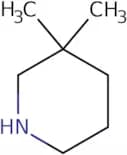
CAS:<p>3,3-dimethylpiperidine is a chemical compound that is used in wastewater treatment. It has been shown to inhibit the production of serotonin and other substances by binding to serotonin receptors. 3,3-dimethylpiperidine has been shown to be selective for the l-type of calcium channels, which are involved in blood vessel contraction and relaxation. This chemical has also been shown to increase the permeability of cell membranes, which may be due to its ability to bind with receptor sites on cell membranes. The binding of 3,3-dimethylpiperidine with these sites leads to an increase in the hydrophilicity of the membrane surface and an increase in receptor binding.</p>Fórmula:C7H15NPureza:Min. 95%Cor e Forma:Clear LiquidPeso molecular:113.2 g/mol3,5-Dibromo-6-methylpyrazin-2-amine
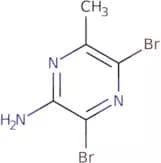
CAS:<p>Please enquire for more information about 3,5-Dibromo-6-methylpyrazin-2-amine including the price, delivery time and more detailed product information at the technical inquiry form on this page</p>Fórmula:C5H5Br2N3Pureza:Min. 95%Peso molecular:266.92 g/moltert-Butyl 6-(aminomethyl)-1,4-oxazepane-4-carboxylate
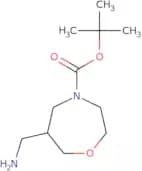
CAS:<p>Please enquire for more information about tert-Butyl 6-(aminomethyl)-1,4-oxazepane-4-carboxylate including the price, delivery time and more detailed product information at the technical inquiry form on this page</p>Fórmula:C11H22N2O3Pureza:Min. 95%Peso molecular:230.3 g/mol1-Benzyl-4-piperidine-carboxaldehyde
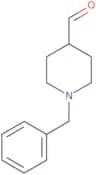
CAS:<p>1-Benzyl-4-piperidine-carboxaldehyde is a polymorphic compound with two crystalline forms: the α form and β form. The α form has a molecular weight of 174.2 g/mol and the β form has a molecular weight of 178.3 g/mol. Both forms are soluble in organic solvents but not in water. It is insoluble in hydrochloric acid, n-hexane, and acetonitrile. It is stable at room temperature but unstable at temperatures above 60°C. 1-Benzyl-4-piperidinecarboxaldehyde is an inhibitor of liver function, which may be due to its inhibition of CYP450 enzymes or other unknown mechanisms that lead to haemodynamic effects such as hypotension and tachycardia.</p>Fórmula:C13H17NOPureza:Min. 95%Cor e Forma:Yellow PowderPeso molecular:203.28 g/mol1-(2-Methylbenzyl)piperazine
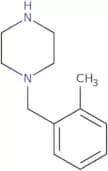
CAS:Produto Controlado<p>1-(2-Methylbenzyl)piperazine is a piperazine derivative that is used as a medicine. It has been shown to have an inhibitory effect on the reuptake of dopamine and noradrenaline, which are neurotransmitters that play an important role in the regulation of mood and behaviour. 1-(2-Methylbenzyl)piperazine has been shown to be effective in animal experiments. It was found to be toxic at high doses, but had low toxicity at low doses. It also showed no adverse effects on mating behaviour or fertility.</p>Fórmula:C12H18N2Pureza:Min. 95%Peso molecular:190.28 g/mol1-(3-Chlorobenzyl)piperazine
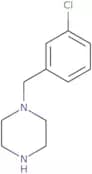
CAS:Produto Controlado<p>1-(3-Chlorobenzyl)piperazine (1CBPZ) is a selective and reversible inhibitor of ns3 protease, which plays an important role in plant resistance. 1CBPZ was found to be effective in controlling the growth of certain bacteria. It also has been shown to be useful for the prevention of liver lesions caused by casein in rats. 1CBPZ has optical properties that are sensitive to boron nitride and can be used as a control analysis for experiments involving this material. This chemical has been shown to inhibit the reaction mechanism of ns3 protease and is being used as an experimental model for studying this enzyme. The detection time for 1CBPZ is 3 hours, which makes it more energy efficient than other compounds.</p>Fórmula:C11H15ClN2Pureza:Min. 95%Peso molecular:210.7 g/mol2-Amino-6-chloropyrazine
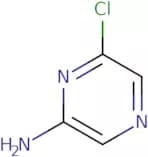
CAS:<p>2-Amino-6-chloropyrazine (2ACP) is an inhibitor that binds to the active site on human protein kinase C (PKC). It has been shown to inhibit PKC by hydrogen bonding with the hydroxide ion, which blocks its catalytic activity. 2ACP has been studied for its potential use in treating cancer and for inhibiting amine oxidases, which are enzymes associated with inflammation and chronic obstructive pulmonary disease. The inhibition of these enzymes may help to reduce stenosis in the lungs or other organs. 2ACP also has been shown to have antimycobacterial activity against Mycobacterium tuberculosis, M. avium complex, and M. leprae by inhibiting DNA synthesis and RNA synthesis. 2ACP inhibits the kinase receptor on the cell membrane that phosphorylates a water molecule into a chlorine atom, which then reacts with hydrogen peroxide to form free radicals that can kill bacteria</p>Fórmula:C4H4ClN3Pureza:Min. 95%Peso molecular:129.55 g/mol3-Bromo-5-fluoropyridine
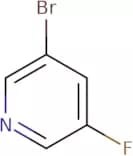
CAS:<p>3-Bromo-5-fluoropyridine is a synthetic dyestuff that is used in the production of dyes and pigments. It has an analogous structure to 3-amino-5-bromopyridine, which is used as a medicine for treating epilepsy. 3-Bromo-5-fluoropyridine reacts with acetoacetate or ethyl acetoacetate to form methylated products, such as 3-(4'-hydroxyphenyl)propionate. This compound can be synthesized by halogenation with bromine or chlorination followed by hydrolysis. The synthesis of 3-bromo-5-fluoropyridine from 3-amino-5-bromopyridine involves a series of reactions, including diazonium salt formation, followed by bromination and reduction to produce the desired product.</p>Fórmula:C5H3BrFNPureza:Min. 95%Cor e Forma:PowderPeso molecular:175.9 g/mol


![3-[(2S)-1,2,3,6-Tetrahydropyridin-2-Yl]Pyridine](/_next/image/?url=https%3A%2Fstatic.cymitquimica.com%2Fproducts%2F3D%2Fthumb-webp%2FFT31535.webp&w=3840&q=75)
![(6R)-6-Cyclopentyl-6-[2-(2,6-diethyl-4-pyridinyl)ethyl]-3-[(5,7-dimethyl[1,2,4]triazolo[1,5-a]pyri…](/_next/image/?url=https%3A%2Fstatic.cymitquimica.com%2Fproducts%2F3D%2Fthumb-webp%2FFC152905.webp&w=3840&q=75)