


Heterociclos com Nitrogénio (N)
Nesta categoria, você encontrará uma grande variedade de heterociclos contendo nitrogênio. Heterociclos são cadeias de carbono que formam um ciclo em que pelo menos uma posição é ocupada por um heteroátomo, neste caso, o nitrogênio. Esses compostos são essenciais na síntese de produtos farmacêuticos, agroquímicos e corantes, oferecendo reatividade e estabilidade únicas. Na CymitQuimica, oferecemos uma seleção abrangente de heterociclos contendo nitrogênio de alta qualidade para apoiar suas pesquisas e aplicações industriais.
Subcategorias de "Heterociclos com Nitrogénio (N)"
- Azepano(434 produtos)
- Benzotriazóis(436 produtos)
- Diazepinas(331 produtos)
- Imidazóis(4.011 produtos)
- Imidazolinas(385 produtos)
- Isoxazol(1.077 produtos)
- Piperazinas(3.736 produtos)
- Piperidinas(8.406 produtos)
- Pirazinas(1.299 produtos)
- Pirazol(5.921 produtos)
- Pirazolidina(21 produtos)
- Pirazolina(142 produtos)
- Piridazina(856 produtos)
- Piridinas(21.917 produtos)
- Pirimidina(6.041 produtos)
- Pirróis(2.443 produtos)
- Pirrolidinas(5.816 produtos)
- Pirrolina(48 produtos)
- Pirrolo[1,2-b]piridazina(10 produtos)
- Tetrazola(510 produtos)
- Triazinas(462 produtos)
- Triazolas(1.680 produtos)
Exibir 14 mais subcategorias
Foram encontrados 17855 produtos de "Heterociclos com Nitrogénio (N)"
Ordenar por
Pureza (%)
0
100
|
0
|
50
|
90
|
95
|
100
2,5-Diaminopyridine dihydrochloride
CAS:<p>2,5-Diaminopyridine dihydrochloride is a compound that belongs to the class of hydroxamic acids. It is an intermediate in the synthesis of the anti-cancer drug, hydroxyurea (hydroxylamine). 2,5-Diaminopyridine dihydrochloride can be used as a cross-coupling reagent for coupling reactions with chlorinated and tritiated organic compounds. The efficiency of this reaction is dependent on the coulombic and mutagenic properties of 2,5-diaminopyridine dihydrochloride. 2,5-Diaminopyridine dihydrochloride has been shown to cause cancer in animal studies.</p>Fórmula:C5H7N3•(HCl)2Pureza:Min. 95%Peso molecular:182.05 g/mol1-(N-Butyl)piperazine
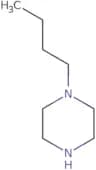
CAS:<p>1-(N-Butyl)piperazine is the simplest member of a class of drugs called aliphatic amines. This drug has been found to be active against a broad spectrum of bacteria, yeast, and fungi, including many antibiotic-resistant strains. 1-(N-Butyl)piperazine also has pharmacokinetic properties that make it suitable for administration by injection or intravenously.</p>Fórmula:C8H18N2Pureza:Min. 95%Peso molecular:142.24 g/mol4,4'-Dinitro-2,2'-bipyridine-N,N'-dioxide
CAS:<p>4,4'-Dinitro-2,2'-bipyridine-N,N'-dioxide is a high quality reagent that can be used for a variety of purposes including as a building block for the synthesis of complex compounds or as an intermediate in fine chemicals. The CAS number is 51595-55-2 and it has a molecular weight of 138.10 g/mol. This reagent can be used to synthesize useful scaffolds, useful building blocks, speciality chemicals and research chemicals. It also has versatile applications that allow it to react with other compounds to form different products.</p>Fórmula:C10H6N4O6Pureza:Min. 94.0 Area-%Peso molecular:278.18 g/molRef: 3D-W-202946
5gA consultar10gA consultar25gA consultar50gA consultar100gA consultar-Unit-ggA consultarCiprofloxacin piperazinyl-N4-sulfate
CAS:<p>Ciprofloxacin is a fluoroquinolone antibiotic with potent activity against many Gram-negative and Gram-positive bacteria. It is used in the treatment of urinary tract infections, respiratory tract infections, skin and soft tissue infections, bone and joint infections, and intra-abdominal infections. Ciprofloxacin piperazinyl-N4-sulfate has the potential to interact with other drugs. It binds to human serum albumin (HSA) and may be excreted into breast milk. The drug is well absorbed orally but has poor bioavailability due to rapid metabolism by the liver. Ciprofloxacin piperazinyl-N4-sulfate has been shown to have pharmacokinetic properties that are independent of dose or duration of administration.</p>Fórmula:C17H18FN3O6SPureza:Min. 95%Peso molecular:411.41 g/mol(4-Phenylpiperazin-1-yl)piperidin-4-yl-methanone dihydrochloride
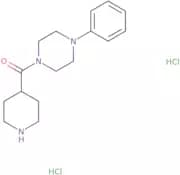
CAS:Produto Controlado<p>Please enquire for more information about (4-Phenylpiperazin-1-yl)piperidin-4-yl-methanone dihydrochloride including the price, delivery time and more detailed product information at the technical inquiry form on this page</p>Fórmula:C16H25Cl2N3OPureza:Min. 95%Peso molecular:346.29 g/mol1-(2-Pyrimidyl)piperazine
CAS:<p>1-(2-Pyrimidyl)piperazine is a compound that has been found to be present in human serum and urine. It is thought that 1-(2-Pyrimidyl)piperazine is involved in locomotor activity and the regulation of dopamine levels. It also has a structural similarity to 5-hydroxytryptamine (5-HT), which is known as a neurotransmitter that regulates mood, appetite, sleep, memory, and learning. This drug may have anti-inflammatory properties due to its ability to inhibit the release of growth factors.</p>Fórmula:C8H12N4Pureza:Min. 95%Peso molecular:164.21 g/mol2-Cyanopyridine-4-carboxaldehyde
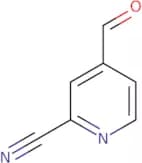
CAS:<p>Please enquire for more information about 2-Cyanopyridine-4-carboxaldehyde including the price, delivery time and more detailed product information at the technical inquiry form on this page</p>Fórmula:C7H4N2OPureza:Min. 95%Peso molecular:132.12 g/mol3-Amino-4-methoxypyridine
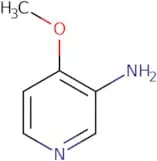
CAS:<p>3-Amino-4-methoxypyridine is a molecule that has been shown to have anesthetic activity. It has been shown to inhibit the uptake of glycogen by glioblastoma cells and decrease the rate of glycogen synthesis in these cells. 3-Amino-4-methoxypyridine also inhibits the production of ATP in cardiac muscle cells, which may be due to its ability to inhibit glycogen synthase kinase-3 (GSK3) and glycogen synthase. This drug also inhibits cancer cell growth by inhibiting protein synthesis, as well as inflammatory disease progression by inhibiting NFκB activation and cytokine production. 3-Amino-4-methoxypyridine can be synthesized from aminopyridines such as isonicotinic acid or nicotinic acid, which are oxidized with hydrogen peroxide and sodium nitrite in the presence of a base catalyst.</p>Fórmula:C6H8N2OPureza:Min. 95%Peso molecular:124.14 g/mol1-(2-Chloroethyl)piperidine hydrochloride
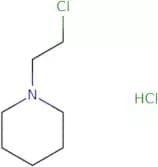
CAS:<p>1-(2-Chloroethyl)piperidine hydrochloride is a chemical compound that has photochemical properties. It is used as an amine and in the synthesis of other chemicals. The crystal structure of 1-(2-Chloroethyl)piperidine hydrochloride has been determined by X-ray crystallography. It also has antibacterial activity and inhibits the growth of bacteria by binding to single-stranded DNA, which prevents DNA replication. 1-(2-Chloroethyl)piperidine hydrochloride binds to DNA with tetradentate coordination, forming a stable complex which does not allow the DNA polymerase to bind to the single strand. 1-(2-Chloroethyl)piperidine hydrochloride can be detected using mass spectrometry and nuclear magnetic resonance spectra.</p>Fórmula:C7H14ClN•HClPureza:Min. 95%Peso molecular:184.11 g/molQueuine
CAS:<p>Please enquire for more information about Queuine including the price, delivery time and more detailed product information at the technical inquiry form on this page</p>Fórmula:C12H15N5O3Pureza:Min. 95%Peso molecular:277.28 g/mol2-Methyl-5-nitropyridin-3-amine
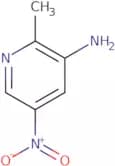
CAS:<p>2-Methyl-5-nitropyridin-3-amine is a heterocyclic compound that is synthesized by the cyclization of 2-methylpyridine with sodium nitrite. The reaction product is hydrolyzed to yield the desired compound, 5-nitropyridine. The synthesis of this compound can be used as a target for organic synthesis.</p>Fórmula:C6H7N3O2Pureza:Min. 95%Peso molecular:153.14 g/molPyrimidine-5-carboxylic acid
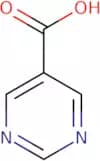
CAS:<p>Pyrimidine-5-carboxylic acid is a synthetic, nucleophilic pyrimidine compound that is used in the laboratory for the synthesis of other compounds. It has been shown to inhibit the growth of Leishmania and Staphylococcus bacteria. Pyrimidine-5-carboxylic acid binds to the malonic acid moiety of phosphoenolpyruvate carboxykinase and inhibits its activity, leading to a reduction in cellular respiration. This drug also has clinical development potential as an analgesic with modulating properties.</p>Fórmula:C5H4N2O2Pureza:Min. 95%Peso molecular:124.1 g/molN-(2-Aminoethyl)piperazine
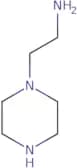
CAS:N-(2-Aminoethyl)piperazine (NAPE) is a chemical compound that can be used as an environmentally friendly catalyst for the degradation of ethylene diamine and other amines. NAPE has been shown to be stable under alkaline conditions, and its fluorescence probe has been used to monitor the progress of the reaction. This compound is a coordination complex with nitrogen atoms at the corners of a square and two amines at opposite corners of the square. The amine groups are coordinated to metal ions in a geometry that is determined by the atomic number of the metal ion. Disulfide bonds form between two cysteine residues on adjacent chains. Glycol ethers can also form disulfide bonds with NAPE, forming glycol ether-NAPE complexes. Antibodies have been shown to bind to glycol ether-NAPE complexes, suggesting that these complexes may play a role in antibody response, although experimental solubility data have not yet confirmed thisFórmula:C6H15N3Pureza:Min. 95%Peso molecular:129.2 g/mol6-Methoxypyridine-2-boronic acid
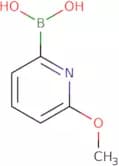
CAS:<p>6-Methoxypyridine-2-boronic acid is a boronate ligand that can be used to form coordination complexes with metals. It has been shown to interact with silver ions, which are the most effective ligands for enhancing the fluorescence of organic dyes. 6-Methoxypyridine-2-boronic acid is able to rigidify organic molecules by binding to their steric and electronic properties, making them more resistant to photodegradation. This property makes it an excellent candidate for the use in the development of fluorescent labels in analytical chemistry.</p>Fórmula:C6H8BNO3Pureza:Min. 95%Peso molecular:152.94 g/mol1-(2-Phenylethyl)piperidin-4-amine dihydrochloride
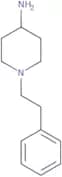
CAS:Produto Controlado<p>Please enquire for more information about 1-(2-Phenylethyl)piperidin-4-amine dihydrochloride including the price, delivery time and more detailed product information at the technical inquiry form on this page</p>Fórmula:C13H20N2Pureza:Min. 95%Peso molecular:204.31 g/mol2-Ethynylpyridine
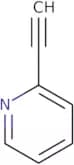
CAS:<p>2-Ethynylpyridine is a structural analog of pyridine and is used in the synthesis of polymers. 2-Ethynylpyridine has been shown to have significant cytotoxicity, which may be due to its ability to bind to receptors. Using X-ray crystallography, it has been determined that 2-ethynylpyridine binds to a receptor by forming hydrogen bonds with the nitrogen atoms on the receptor. 2-Ethynylpyridine can also be activated by hydrochloric acid (HCl) and reacts with sodium hydroxide (NaOH) solution and x-rays to form an x-ray crystal structure. 2-Ethynylpyridine is synthesized by the reaction between ethyne and nitric acid in the presence of aluminum chloride (AlCl3). The product is reacted with hydrochloric acid (HCl) or sodium hydroxide (NaOH) solution, which causes a change in</p>Fórmula:C7H5NPureza:Min. 97 Area-%Cor e Forma:Clear LiquidPeso molecular:103.12 g/mol1,4-Piperidinedicarboxylic acid, 4-aMino-, 1-(1,1-diMethylethyl) 4-ethyl ester
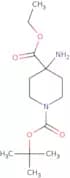
CAS:<p>Please enquire for more information about 1,4-Piperidinedicarboxylic acid, 4-aMino-, 1-(1,1-diMethylethyl) 4-ethyl ester including the price, delivery time and more detailed product information at the technical inquiry form on this page</p>Fórmula:C13H25N2O4Pureza:Min. 95%Peso molecular:273.35 g/mol4-Oxo-3,4-dihydro-2H-pyridine-1-carboxylic acid tert-butyl ester
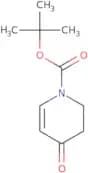
CAS:<p>4-Oxo-3,4-dihydro-2H-pyridine-1-carboxylic acid tert-butyl ester is a white solid that is soluble in organic solvents and oils. It can be used as a source of lithium carbonate in alkaline solutions. 4-Oxo-3,4-dihydro-2H-pyridine-1 -carboxylic acid tert -butyl ester is typically used in the preparation of lithium carbonate from lithium hydroxide.</p>Fórmula:C10H15NO3Pureza:Min. 95%Cor e Forma:PowderPeso molecular:197.23 g/mol4-Hydroxypyridine-3-sulfonicacid
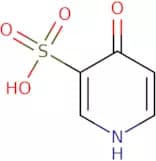
CAS:<p>4-Hydroxypyridine-3-sulfonic acid is the anion of 4-hydroxypyridine with sulfate. It has a pK a of 1.5 and is soluble in water, ethanol, and methanol. 4-Hydroxypyridine-3-sulfonic acid can be used as a crystallographic data collection reagent. The anion can act as an acceptor for radiation and can also be used to generate hydrogen sulfate. Hydrogen sulfate is generated by the reaction of sulfuric acid with potassium hydroxide or sodium hydroxide. Hydrogen sulfate reacts with elemental sulfur to produce hydrogen sulfide. This compound has been shown to have properties that make it useful in analytical chemistry, such as its ability to form hydrogen bonds and act as an anion. The structure of 4-hydroxypyridine-3-sulfonic acid is shown below: 4 H O 2 S</p>Fórmula:C5H5NO4SPureza:Min. 95%Peso molecular:175.16 g/mol7-Fluoro-imidazo[1,2-a]pyridine
CAS:<p>Please enquire for more information about 7-Fluoro-imidazo[1,2-a]pyridine including the price, delivery time and more detailed product information at the technical inquiry form on this page</p>Fórmula:C7H5FN2Pureza:95%NmrCor e Forma:SolidPeso molecular:136.13 g/mol






![7-Fluoro-imidazo[1,2-a]pyridine](/_next/image/?url=https%3A%2Fstatic.cymitquimica.com%2Fproducts%2F3D%2Fthumb-webp%2FFF165964.webp&w=3840&q=75)