Heterociclos com Nitrogénio (N)
Nesta categoria, você encontrará uma grande variedade de heterociclos contendo nitrogênio. Heterociclos são cadeias de carbono que formam um ciclo em que pelo menos uma posição é ocupada por um heteroátomo, neste caso, o nitrogênio. Esses compostos são essenciais na síntese de produtos farmacêuticos, agroquímicos e corantes, oferecendo reatividade e estabilidade únicas. Na CymitQuimica, oferecemos uma seleção abrangente de heterociclos contendo nitrogênio de alta qualidade para apoiar suas pesquisas e aplicações industriais.
Subcategorias de "Heterociclos com Nitrogénio (N)"
- Azepano(434 produtos)
- Benzotriazóis(436 produtos)
- Diazepinas(331 produtos)
- Imidazóis(4.011 produtos)
- Imidazolinas(385 produtos)
- Isoxazol(1.077 produtos)
- Piperazinas(3.736 produtos)
- Piperidinas(8.406 produtos)
- Pirazinas(1.299 produtos)
- Pirazol(5.921 produtos)
- Pirazolidina(21 produtos)
- Pirazolina(142 produtos)
- Piridazina(856 produtos)
- Piridinas(21.917 produtos)
- Pirimidina(6.041 produtos)
- Pirróis(2.443 produtos)
- Pirrolidinas(5.816 produtos)
- Pirrolina(48 produtos)
- Pirrolo[1,2-b]piridazina(10 produtos)
- Tetrazola(510 produtos)
- Triazinas(462 produtos)
- Triazolas(1.680 produtos)
Exibir 14 mais subcategorias
Foram encontrados 17855 produtos de "Heterociclos com Nitrogénio (N)"
Ordenar por
Pureza (%)
0
100
|
0
|
50
|
90
|
95
|
100
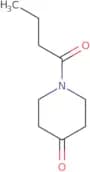
1-Butyrylpiperidin-4-one
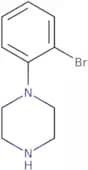
CAS:Produto Controlado<p>Please enquire for more information about 1-Butyrylpiperidin-4-one including the price, delivery time and more detailed product information at the technical inquiry form on this page</p>Fórmula:C9H15NO2Pureza:Min. 95%Peso molecular:169.22 g/mol1-(2-Bromophenyl)piperazine
CAS:Produto Controlado<p>1-(2-Bromophenyl)piperazine is a drug that inhibits the activity of dehydrogenase, an enzyme that catalyzes the oxidation of NADH to NAD. It has been shown to inhibit other enzymes as well, such as those involved in the synthesis of amino acids and nucleic acids. 1-(2-Bromophenyl)piperazine has shown potential as a therapeutic agent for Parkinson's disease. This drug is being tested in clinical trials for its efficacy in treating a variety of diseases, including metabolic and cardiovascular disorders, hepatobiliary diseases, and neurodegenerative diseases.</p>Fórmula:C10H13BrN2Pureza:Min. 95%Peso molecular:241.13 g/molQueuine
CAS:<p>Please enquire for more information about Queuine including the price, delivery time and more detailed product information at the technical inquiry form on this page</p>Fórmula:C12H15N5O3Pureza:Min. 95%Peso molecular:277.28 g/mol8-Bromo-imidazo[1,2-a]pyridine
CAS:<p>8-Bromo-imidazo[1,2-a]pyridine is a neutralizing agent that can be used in the synthesis of succinimide. It reacts with chloroacetaldehyde to yield the imidate ester. This reaction is catalyzed by alkali and requires filtration to remove the bromine and any other impurities. The reaction generates heat, so it must be performed in a well-ventilated area.</p>Fórmula:C7H5BrN2Pureza:Min. 95%Peso molecular:197.03 g/mol4-Ethynylpyridine
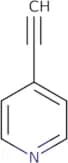
CAS:<p>4-Ethynylpyridine is a yellow solid that is soluble in most organic solvents. It has been shown to be an inhibitor of Cox-2, which is a pro-inflammatory enzyme. 4-Ethynylpyridine also inhibits the production of nitric oxide by inhibiting the enzyme inducible nitric oxide synthase (iNOS). This compound also has high cytotoxicity and can be used for photodynamic therapy. The chemical structure of 4-ethynylpyridine is composed of nitrogen atoms, carbon atoms, and hydrogen atoms. 4-Ethynylpyridine forms a complex with 2-phenylbutyric acid through electrochemical studies, which is important for its pharmacological properties.</p>Fórmula:C7H5NPureza:Min. 95%Cor e Forma:PowderPeso molecular:103.12 g/mol1-Aminopiperidine
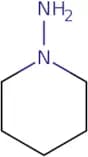
CAS:<p>1-Aminopiperidine is a hydrochloric acid derivative that is used to treat tuberculosis. It inhibits the enzyme catalysis of phospholipase A2 (PLA2) and blocks the release of arachidonic acid from cell membranes. 1-Aminopiperidine has been shown to have tuberculostatic activity in vivo by inhibiting PLA2 and blocking the release of arachidonic acid. This agent also exhibits antitumor properties, which may be due to its ability to inhibit the production of prostaglandin E2 (PGE2), an inflammatory mediator that can stimulate tumor growth. 1-Aminopiperidine binds to cannabinoid receptors, but does not bind to opioid or benzodiazepine receptors. This drug also exhibits antagonist activity against rimonabant, a type of receptor blocker for cannabinoid receptors.</p>Fórmula:C5H12N2Pureza:Min. 95%Cor e Forma:Clear LiquidPeso molecular:100.16 g/mol1-(3-Chlorophenyl)-4-(3-chloropropyl)piperazine Hydrochloride
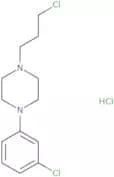
CAS:Produto Controlado<p>1-(3-Chlorophenyl)-4-(3-chloropropyl)piperazine Hydrochloride is an antidepressant that belongs to the class of nefazodone. It is a prodrug, which is hydrolyzed to nefazodone in the liver. It has been shown to have a high affinity for serotonin receptors and as such may be useful for the treatment of depression. 1-(3-Chlorophenyl)-4-(3-chloropropyl)piperazine Hydrochloride also has anticonvulsant properties, which may be due to its inhibition of neuronal excitability by blocking sodium channels in the brain.</p>Fórmula:C13H18Cl2N2·HClPureza:Min. 95%Peso molecular:309.66 g/mol4-(Methylnitrosoamino)-1-(3-pyridinyl)-1-butanone
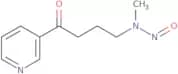
CAS:<p>4-(Methylnitrosoamino)-1-(3-pyridinyl)-1-butanone (NNK) is a carcinogenic chemical that has been identified in tobacco smoke. It induces squamous cell carcinomas in the respiratory tract of rodents and induces lung cancer in the offspring of pregnant rats exposed to NNK. This compound binds to double-stranded DNA, with high affinity for the minor groove, and inhibits DNA synthesis by binding to enzymes such as polymerase chain. In addition, it has been shown to cause transformation of epithelial cells into mesenchymal cells in vitro. 4-(Methylnitrosoamino)-1-(3-pyridinyl)-1-butanone binds to α7 nicotinic acetylcholine receptors and increases the response element activity.</p>Fórmula:C10H13N3O2Pureza:Min. 95%Cor e Forma:PowderPeso molecular:207.23 g/mol2-(2-Dimethylamino)Ethyl) Pyridine
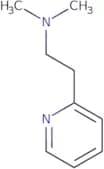
CAS:<p>2-(2-Dimethylamino)Ethyl) Pyridine is a chemical compound that contains oxygen atoms, hydroxo, and nitrogen atoms. It has a tetranuclear hexahydrate form and the molecular formula C5H7N3O2. 2-(2-Dimethylamino)Ethyl) Pyridine has been shown to have desilylation properties. 2-(2-Dimethylamino)Ethyl) Pyridine binds to group P2 of RNA and represses translation by preventing ribosomal binding to the mRNA strand. This drug is also an x-ray data collection agent in which it is used as a ligand in magnetic resonance imaging (MRI).</p>Fórmula:C9H14N2Pureza:Min. 95%Peso molecular:150.22 g/molMethyl 1H-pyrrolo[2,3-b]pyridine-2-carboxylate
CAS:<p>Please enquire for more information about Methyl 1H-pyrrolo[2,3-b]pyridine-2-carboxylate including the price, delivery time and more detailed product information at the technical inquiry form on this page</p>Fórmula:C9H8N2O2Pureza:Min. 95%Peso molecular:176.17 g/molMethyl 2-amino-4,6-dichloropyridine-3-carboxylate
CAS:<p>Please enquire for more information about Methyl 2-amino-4,6-dichloropyridine-3-carboxylate including the price, delivery time and more detailed product information at the technical inquiry form on this page</p>Fórmula:C7H6Cl2N2O2Pureza:Min. 95%Peso molecular:221.04 g/mol3-Fluoro-4-(tributylstannyl)pyridine
CAS:Produto Controlado<p>3-Fluoro-4-(tributylstannyl)pyridine is a high affinity, selective, and membrane permeable ligand of the A2B adenosine receptor. It has been shown to be a potent antagonist of A2B receptors in vitro. This compound has also been shown to have a lower affinity for A1, A3, and A4 receptors. 3-Fluoro-4-(tributylstannyl)pyridine has been shown to have high brain uptake in vivo studies. 3-Fluoro-4-(tributylstannyl)pyridine binds to the x-ray structure of the adenosine receptor with high affinity and penetrability. The binding site is proposed to be located on the extracellular side of the receptor near the interface with the second transmembrane domain. In vivo studies have shown that 3-fluoro-4-(tributylstannyl)p</p>Fórmula:C17H30FNSnPureza:Min. 95%Peso molecular:386.14 g/mol4-Amino-1-Boc-piperidine-4-carboxamide
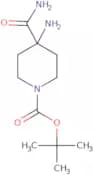
CAS:<p>Please enquire for more information about 4-Amino-1-Boc-piperidine-4-carboxamide including the price, delivery time and more detailed product information at the technical inquiry form on this page</p>Fórmula:C11H21N3O3Pureza:Min. 95%Peso molecular:243.3 g/mol1-(2-Aminopyrimidin-5-yl)ethanone
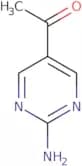
CAS:<p>Please enquire for more information about 1-(2-Aminopyrimidin-5-yl)ethanone including the price, delivery time and more detailed product information at the technical inquiry form on this page</p>Fórmula:C6H7N3OPureza:Min. 95%Peso molecular:137.14 g/mol(3R,4R)-1-((2S)-2-Benzyl-2-carboxyethyl)-4-(3-hydroxyphenyl)-3,4-dimethylpiperidine hydrochloride
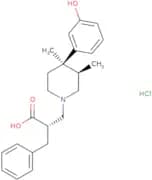
CAS:<p>Please enquire for more information about (3R,4R)-1-((2S)-2-Benzyl-2-carboxyethyl)-4-(3-hydroxyphenyl)-3,4-dimethylpiperidine hydrochloride including the price, delivery time and more detailed product information at the technical inquiry form on this page</p>Fórmula:C23H29NO3•HClPureza:Min. 95%Peso molecular:403.94 g/mol2-Hydroxy-4-methylpyrimidine
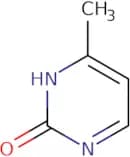
CAS:<p>2-Hydroxy-4-methylpyrimidine is a heterocyclic compound that is used in the synthesis of other heterocycles. It is prepared by the reaction of methylbenzene and nitrous acid, followed by hydrolysis to form an imine. This compound has been synthesized with various substituents at different positions on the ring and also as a series of homologues. The 2-hydroxy-4-methylpyrimidine molecule has four nitroso groups, which are substituted with methyl groups. X-ray crystallography studies have shown that the molecule can exist in two different forms: one with the methyl groups pointing "homotopically" towards each other and the other with them directed "heterotopically."</p>Fórmula:C5H6N2OPureza:Min. 95%Peso molecular:110.11 g/mol3-Bromoacetylpyridine, hydrobromide
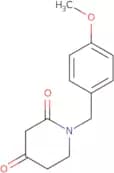
CAS:<p>3-Bromoacetylpyridine, hydrobromide is a derivatizing agent that has been shown to react with nucleophiles. It can be used as an electron donor or electron acceptor in radical scavenging and other reactions. 3-Bromoacetylpyridine, hydrobromide is also a ligand for metal ions, and has been shown to bind to copper(II) ions. This product ionizes easily under electrospray ionization and reacts with thiourea to form 3-acetylpyridine.</p>Fórmula:C7H7Br2NOPureza:Min. 95%Peso molecular:280.94 g/mol1-(4-Methoxybenzyl)piperidine-2,4-dione
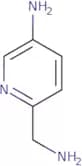
CAS:<p>Please enquire for more information about 1-(4-Methoxybenzyl)piperidine-2,4-dione including the price, delivery time and more detailed product information at the technical inquiry form on this page</p>Fórmula:C13H15NO3Pureza:Min. 95%Peso molecular:233.26 g/mol6-(Aminomethyl)pyridin-3-amine
CAS:<p>Please enquire for more information about 6-(Aminomethyl)pyridin-3-amine including the price, delivery time and more detailed product information at the technical inquiry form on this page</p>Pureza:Min. 95%4-Amino-1,3-dimethyl-2,6-dioxo-5-nitrosopyrimidine
CAS:<p>4-Amino-1,3-dimethyl-2,6-dioxo-5-nitrosopyrimidine is a monoclonal antibody that binds to cancer cells. It has been shown to be effective in the treatment of leukemia, Hodgkin's disease, and non-Hodgkin's lymphoma. The binding of 4-Amino-1,3-dimethyl-2,6-dioxo-5-nitrosopyrimidine to cancer cells is due to the formation of a coordination geometry between the copper complex and the nitrogen atoms on the amino group. This drug has been shown to inhibit tumor growth by blocking the synthesis of DNA and RNA, which are key components in cell division. 4AADNP also inhibits cancer cells' ability to uptake glucose by inhibiting cellular glucose transporters. The binding affinity of 4AADNP for cancer cells is higher than for normal cells because cancer cells have more receptors for this drug</p>Fórmula:C6H8N4O3Pureza:Min. 95%Peso molecular:184.15 g/mol


![8-Bromo-imidazo[1,2-a]pyridine](/_next/image/?url=https%3A%2Fstatic.cymitquimica.com%2Fproducts%2F3D%2Fthumb-webp%2FFB54448.webp&w=3840&q=75)
![Methyl 1H-pyrrolo[2,3-b]pyridine-2-carboxylate](/_next/image/?url=https%3A%2Fstatic.cymitquimica.com%2Fproducts%2F3D%2Fthumb-webp%2FFM142039.webp&w=3840&q=75)