Heterociclos com Nitrogénio (N)
Nesta categoria, você encontrará uma grande variedade de heterociclos contendo nitrogênio. Heterociclos são cadeias de carbono que formam um ciclo em que pelo menos uma posição é ocupada por um heteroátomo, neste caso, o nitrogênio. Esses compostos são essenciais na síntese de produtos farmacêuticos, agroquímicos e corantes, oferecendo reatividade e estabilidade únicas. Na CymitQuimica, oferecemos uma seleção abrangente de heterociclos contendo nitrogênio de alta qualidade para apoiar suas pesquisas e aplicações industriais.
Subcategorias de "Heterociclos com Nitrogénio (N)"
- Azepano(434 produtos)
- Benzotriazóis(436 produtos)
- Diazepinas(331 produtos)
- Imidazóis(4.011 produtos)
- Imidazolinas(385 produtos)
- Isoxazol(1.077 produtos)
- Piperazinas(3.736 produtos)
- Piperidinas(8.405 produtos)
- Pirazinas(1.299 produtos)
- Pirazol(5.921 produtos)
- Pirazolidina(21 produtos)
- Pirazolina(142 produtos)
- Piridazina(856 produtos)
- Piridinas(21.917 produtos)
- Pirimidina(6.041 produtos)
- Pirróis(2.443 produtos)
- Pirrolidinas(5.816 produtos)
- Pirrolina(48 produtos)
- Pirrolo[1,2-b]piridazina(10 produtos)
- Tetrazola(510 produtos)
- Triazinas(462 produtos)
- Triazolas(1.680 produtos)
Exibir 14 mais subcategorias
Foram encontrados 17855 produtos de "Heterociclos com Nitrogénio (N)"
Ordenar por
Pureza (%)
0
100
|
0
|
50
|
90
|
95
|
100
(αR)-α-(2-Chlorophenyl)-2H-tetrazole-2-ethanol
CAS:<p>Please enquire for more information about (αR)-α-(2-Chlorophenyl)-2H-tetrazole-2-ethanol including the price, delivery time and more detailed product information at the technical inquiry form on this page</p>Fórmula:C9H9ClN4OPureza:Min. 95%Peso molecular:224.65 g/mol5-Fluoro-2-hydrazinopyridine
CAS:<p>Please enquire for more information about 5-Fluoro-2-hydrazinopyridine including the price, delivery time and more detailed product information at the technical inquiry form on this page</p>Fórmula:C5H6FN3Pureza:Min. 95%Peso molecular:127.12 g/mol2-chloro-3-nitro-5-(trifluoromethyl)pyridine
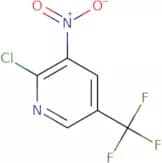
CAS:<p>Please enquire for more information about 2-chloro-3-nitro-5-(trifluoromethyl)pyridine including the price, delivery time and more detailed product information at the technical inquiry form on this page</p>Fórmula:C6H2ClF3N2O2Pureza:Min. 95%Peso molecular:226.54 g/mol4-[(4-chlorophenyl)-2-pyridinylmethoxy]-1-piperidinecarboxylic acid ethylester
CAS:<p>Please enquire for more information about 4-[(4-chlorophenyl)-2-pyridinylmethoxy]-1-piperidinecarboxylic acid ethylester including the price, delivery time and more detailed product information at the technical inquiry form on this page</p>Fórmula:C20H23ClN2O3Pureza:Min. 95%Peso molecular:374.86 g/mol2-[Chloro(4-chlorophenyl)methyl]-pyridine
CAS:<p>Please enquire for more information about 2-[Chloro(4-chlorophenyl)methyl]-pyridine including the price, delivery time and more detailed product information at the technical inquiry form on this page</p>Fórmula:C12H9Cl2NPureza:Min. 95%Peso molecular:238.11 g/molN-Methyl-N-((3R,4R)-4-methylpiperidin-3-yl)-7H-pyrrolo[2,3-d]pyrimidin-4-amine
CAS:<p>Intermediate in the synthesis of tofacitinib</p>Fórmula:C13H19N5Pureza:Min. 95%Peso molecular:245.32 g/mol4,6-Dichloro-pyridin-3-ylamine
CAS:<p>Please enquire for more information about 4,6-Dichloro-pyridin-3-ylamine including the price, delivery time and more detailed product information at the technical inquiry form on this page</p>Fórmula:C5H4Cl2N2Pureza:Min. 95%Cor e Forma:PowderPeso molecular:163 g/mol2,3-Dimethylpyrazine
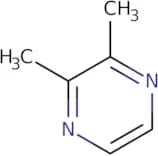
CAS:<p>2,3-Dimethylpyrazine (DMPA) is a compound that belongs to the group of fatty acid derivatives. It has been shown to enhance the transfer of hydrocarbons from water to organic solvents by reducing the surface tension. DMPA also produces hydrogen bonding interactions with ethylene diamine, which leads to increased phase equilibrium and a more efficient transfer mechanism. These interactions may be due to its structural analysis and x-ray crystal structures. The molecule is at a distance of 0.7 Å from the oxygen atoms in ethylene diamine and 2.6 Å from the hydrogen atoms in ethyl decanoate, which are both within hydrogen bond range. This proximity suggests that it will have an increased chance of interacting with these molecules compared to other compounds that do not have this ability.</p>Fórmula:C6H8N2Pureza:Min. 95%Peso molecular:108.14 g/mol4-Bromo-3-(trifluoromethoxy)pyridine hydrobromide
CAS:<p>Please enquire for more information about 4-Bromo-3-(trifluoromethoxy)pyridine hydrobromide including the price, delivery time and more detailed product information at the technical inquiry form on this page</p>Fórmula:C6H3BrF3NO•BrHPureza:Min. 95%Peso molecular:322.91 g/moltert-Butyl2-bromo-6,7-dihydrothiazolo[5,4-c]pyridine-5(4H)-carboxylate
CAS:<p>Please enquire for more information about tert-Butyl2-bromo-6,7-dihydrothiazolo[5,4-c]pyridine-5(4H)-carboxylate including the price, delivery time and more detailed product information at the technical inquiry form on this page</p>Fórmula:C11H15BrN2O2SPureza:Min. 95%Peso molecular:319.22 g/mol3-(Boc-amino)pyridine
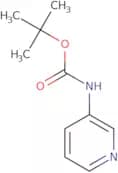
CAS:<p>3-(Boc-amino)pyridine is a glycine derivative with a trigonal, chelate ring. It can be hydrolyzed by acid to form 3-aminopyridine. 3-(Boc-amino)pyridine has been shown to react with trimethyltin chloride to form an intramolecular complex in the presence of alkyllithiums. This reaction proceeds through lithiation and methylation of the carboxyl group of 3-(Boc-amino)pyridine. The interaction between 3-(Boc-amino)pyridine and trimethyltin chloride forms an antiaromatic six membered ring that resembles a benzene molecule.</p>Fórmula:C10H14N2O2Pureza:Min. 95%Peso molecular:194.23 g/molOrotic acid anhydrous
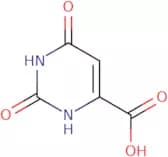
CAS:<p>Orotic acid anhydrous is a hydrogen bonding interaction that can be found in biological systems. It plays a role in the physiological effects of orotic acid, which is a metabolite of uridine and an intermediate in the synthesis of pyrimidine nucleotides. Orotic acid has antimicrobial properties and has been shown to inhibit enzyme activities involved in energy metabolism, such as polymerase chain reaction (PCR) and adenosine triphosphate (ATP) synthase. Orotic acid also inhibits the growth of bacteria, fungi, and parasites. Orotic acid anhydrous is used for treating myocardial infarcts or brain functions. The untreated group was given no treatment at all.</p>Fórmula:C5H4N2O4Pureza:Min. 98 Area-%Cor e Forma:White PowderPeso molecular:156.1 g/molEthyl 3-(pyridin-2-ylamino)propanoate
CAS:<p>Ethyl 3-(pyridin-2-ylamino)propanoate is a thrombin inhibitor that can be used for the treatment of cancer. Ethyl 3-(pyridin-2-ylamino)propanoate is a reactive, profile compound with electrons and hydrogen bonds. It has been shown to have anticancer activity in vitro and in vivo, inhibiting tumor cell growth by inhibiting DNA synthesis. This molecule also has anti-inflammatory properties, which may be due to its ability to inhibit platelet aggregation.</p>Fórmula:C10H14N2O2Pureza:Min. 95 Area-%Cor e Forma:PowderPeso molecular:194.23 g/mol1-Boc-4-Iodomethyl-Piperidine
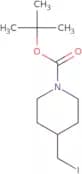
CAS:<p>Please enquire for more information about 1-Boc-4-Iodomethyl-Piperidine including the price, delivery time and more detailed product information at the technical inquiry form on this page</p>Fórmula:C11H20INO2Cor e Forma:PowderPeso molecular:325.19 g/mol5-Chloro-2-formylpyridine
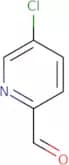
CAS:<p>5-Chloro-2-formylpyridine is a peroxide that reacts with pyridine rings to form epoxides. It has been shown to be a potent oxidant and is used in the synthesis of epoxides. 5-Chloro-2-formylpyridine can also react with imidazoles and form tetradentate ligands, which are compounds that bind to metals. This chemical has selectivity for carboxylic acid groups, hydrogen peroxide, alkene, and piperazine. Irradiation of 5-chloro-2-formylpyridine yields an epoxide group on the pyridine ring.</p>Fórmula:C6H4NOClPureza:Min. 95%Peso molecular:141.55 g/mol2-Amino-5-methylpyridine
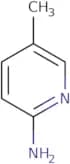
CAS:<p>2-Amino-5-methylpyridine is a chemical compound that belongs to the group of methyl ketones. It has a nitrogen atom and an oxygen atom in its structure, which allows it to form hydrogen bonds with other molecules. 2-Amino-5-methylpyridine can be obtained by reacting hydrochloric acid and xanthone in the presence of a base. The compound is highly reactive and has been shown to have antiinflammatory properties. This can be attributed to its ability to inhibit prostaglandin synthesis. 2-Amino-5-methylpyridine also has fluorescence properties that are sensitive to pH changes and can be used as a probe for metal ions.<br>2-Amino-5-methylpyridine is an organic compound that contains a methyl group, two nitrogen atoms, and one oxygen atom in its chemical structure. This molecule can form hydrogen bonds with other molecules due to its nitrogen atoms and oxygen atom,</p>Fórmula:C6H8N2Pureza:Min. 95%Cor e Forma:PowderPeso molecular:108.14 g/mol2-Chloromethyl-3,5-dimethylpyridin-4-ol
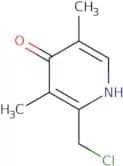
CAS:<p>Please enquire for more information about 2-Chloromethyl-3,5-dimethylpyridin-4-ol including the price, delivery time and more detailed product information at the technical inquiry form on this page</p>Fórmula:C8H10ClNOPureza:Min. 95%Peso molecular:171.62 g/mol2-Amino-6-chloropurine
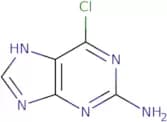
CAS:<p>2-Amino-6-chloropurine is a nucleophilic substituent that is used in the synthesis of 2-amino-6-chloropurine. It reacts with hydroxyl groups to form a palladium-catalyzed coupling reaction solution, which is then treated with hydrochloric acid and trifluoroacetic acid. The product is purified by crystallization and recrystallization. This compound has potent antitumor activity against carcinoma cell lines, but it has not been shown to have any effect against Mycobacterium tuberculosis.</p>Fórmula:C5H4ClN5Pureza:Min. 95%Cor e Forma:Off-White PowderPeso molecular:169.57 g/mol4-[4-(4-Methyloxy-phenyl)-piperazin-1-yl]-phenylamine
CAS:<p>4-Methyloxy-phenyl)-piperazin-1-yl]-phenylamine is an organic compound that has a reactive silicon group. It contains two phenyl groups, one of which is attached to the silicon. This compound exhibits phase equilibrium in water and can be used as a monomer for fabricating inorganic materials with orderly patterns, such as glass and metal oxides. This product also has impurities and can be grown at different rates depending on the conditions, such as temperature. The optical properties of 4-methyloxy-phenyl)-piperazin-1-yl]-phenylamine are dependent on its environment and it has been shown to have exothermic properties when reacting with iron powder.</p>Fórmula:C17H21N3OPureza:Min. 95%Peso molecular:283.37 g/mol1-Methyl-3-phenyl-piperazine
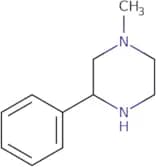
CAS:<p>1-Methyl-3-phenylpiperazine is a molecule with the chemical formula C6H14N2. It is an amide that belongs to the group of hexanes. 1-Methyl-3-phenylpiperazine is a colorless liquid with a strong ammonia odor and an irritating effect on skin. The molecule has been tested in vivo and found to be irritants when applied to the skin of rabbits, and can cause severe irritation when injected into the eyes of rabbits or rats. 1-Methyl-3-phenylpiperazine is not soluble in water but can be dissolved in ethanolamine, dimethyl sulfoxide, acetone, or chloroform.</p>Fórmula:C11H16N2Pureza:Min. 95%Cor e Forma:PowderPeso molecular:176.26 g/mol


![4-[(4-chlorophenyl)-2-pyridinylmethoxy]-1-piperidinecarboxylic acid ethylester](/_next/image/?url=https%3A%2Fstatic.cymitquimica.com%2Fproducts%2F3D%2Fthumb-webp%2FFP152183.webp&w=3840&q=75)
![2-[Chloro(4-chlorophenyl)methyl]-pyridine](/_next/image/?url=https%3A%2Fstatic.cymitquimica.com%2Fproducts%2F3D%2Fthumb-webp%2FFC152996.webp&w=3840&q=75)
![N-Methyl-N-((3R,4R)-4-methylpiperidin-3-yl)-7H-pyrrolo[2,3-d]pyrimidin-4-amine](/_next/image/?url=https%3A%2Fstatic.cymitquimica.com%2Fproducts%2F3D%2Fthumb-webp%2FFM154245.webp&w=3840&q=75)


![tert-Butyl2-bromo-6,7-dihydrothiazolo[5,4-c]pyridine-5(4H)-carboxylate](/_next/image/?url=https%3A%2Fstatic.cymitquimica.com%2Fproducts%2F3D%2Fthumb-webp%2FFB148706.webp&w=3840&q=75)

![4-[4-(4-Methyloxy-phenyl)-piperazin-1-yl]-phenylamine](/_next/image/?url=https%3A%2Fstatic.cymitquimica.com%2Fproducts%2F3D%2Fthumb-webp%2FFM25923.webp&w=3840&q=75)