Building Blocks Hidrocarbonetos
Os building blocks hidrocarbonetos são compostos orgânicos constituídos exclusivamente por átomos de carbono e hidrogénio. Estas estruturas fundamentais servem de base para a síntese de uma grande variedade de moléculas complexas. Os building blocks hidrocarbonetos são utilizados no desenvolvimento de fármacos, polímeros e outros compostos orgânicos. Na CymitQuimica, oferecemos uma vasta gama de building blocks hidrocarbonetos de alta qualidade para facilitar os seus projetos de síntese e investigação.
Subcategorias de "Building Blocks Hidrocarbonetos"
Foram encontrados 5577 produtos de "Building Blocks Hidrocarbonetos"
Ordenar por
Pureza (%)
0
100
|
0
|
50
|
90
|
95
|
100
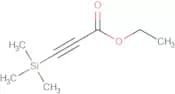
Ethyl 3-(trimethylsilyl) propiolate
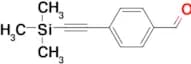
CAS:<p>S08905 - Ethyl 3-(trimethylsilyl) propiolate</p>Fórmula:C8H14O2SiPureza:97%Cor e Forma:Liquid, ClearPeso molecular:170.2834-((Trimethylsilyl)ethynyl)benzaldehyde
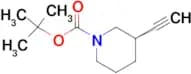
CAS:Fórmula:C12H14OSiPureza:95%Cor e Forma:SolidPeso molecular:202.3281-PIPERIDINECARBOXYLIC ACID, 3-ETHYNYL-, 1,1-DIMETHYLETHYL ESTER, (3R)-
CAS:Fórmula:C12H19NO2Pureza:97%Peso molecular:209.289DL-Propargylglycine hydrochloride
CAS:Fórmula:C5H8ClNO2Pureza:97%Cor e Forma:SolidPeso molecular:149.57[5-bromo-2-(2-propyn-1-yloxy)phenyl]methanol
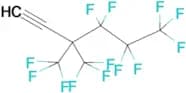
CAS:Fórmula:C10H9BrO2Pureza:95.0%Cor e Forma:Solid, Light yellow powderPeso molecular:241.0843,3, Bis (trifluoromethyl) ,4,5,5,6,6,6,-heptafluorohex-1-yne
CAS:Fórmula:C8HF13Peso molecular:344.0752-(Chloromethyl)-N,N-diethyl-1,4-dihydro-5-methyl-4-oxothieno[2,3-d]pyrimidine-6-carboxamide
CAS:Pureza:97%Peso molecular:313.8Ref: 10-F647914
1g790,00€5g2.209,00€10g4.240,00€2.5g1.473,00€50mg162,00€100mg261,00€250mg413,00€500mg590,00€3-(Trimethylsilyl) propiolic acid
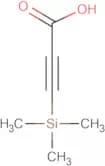
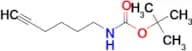
CAS:<p>S20140 - 3-(Trimethylsilyl) propiolic acid</p>Fórmula:C6H10O2SiPureza:95%Cor e Forma:LiquidPeso molecular:142.229TERT-BUTYL HEX-5-YN-1-YLCARBAMATE
CAS:Fórmula:C11H19NO2Pureza:95%Cor e Forma:LiquidPeso molecular:197.2787-Octyn-1-ol
CAS:Produto Controlado<p>Applications 7-Octyn-1-ol is used in the synthesis of the sex pheromone of the citrus leafminer, Phyllocnistis citrella.<br>References Ando, T., et al.: Agric. Biol. Chem., 49, 3633 (1985), Beevor, P., et al.: J. Chem. Ecol., 12, 1 (1986), Kerr, D., et al.: J. Med. Chem., 33, 1958 (1990), McElfresh, J., et al.: Ecology, 82, 3505 (2002),<br></p>Fórmula:C8H14OCor e Forma:NeatPeso molecular:126.20Vinylcyclopropane
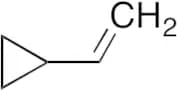
CAS:Produto Controlado<p>Stability Highly Volatile<br>Applications Vinylcyclopropane is a useful synthetic intermediate. Vinylcyclopropane and its derivatives can participate in a variety of transition-metal-catalyzed multicomponent cycloadditions to produce five- to eight-membered carbocycles.<br>References Jiao, L., et al.: J. Org. Chem., 78, 6842 (2013); Pasto, D., et al.: Tetrahedron Lett., 9, 713 (1979); Larock, R., et al.: Tetrahedron, 52, 2743 (1996)<br></p>Fórmula:C5H8Cor e Forma:NeatPeso molecular:68.123,4-Dihydro-2H-pyran-2-methanol
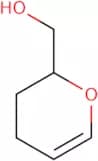
CAS:<p>3,4-Dihydro-2H-pyran-2-methanol is a tetrahydropyran alcohol that has been shown to be able to form cationic polymers in the presence of a ring-opening metathesis polymerization catalyst. The chloride anion is also capable of initiating the polymerization reaction. This compound has potential applications as a drug delivery agent or biomaterials scaffold due to its ability to act as a linker for the synthesis of biocompatible polymers. 3,4-Dihydro-2H-pyran-2-methanol can also be used in molecular modelling studies to explore the reactivity between hydroxy groups and nucleophiles.</p>Fórmula:C6H10O2Pureza:Min. 95%Cor e Forma:Colorless PowderPeso molecular:114.14 g/moltert-Butylisocyanate
CAS:Please enquire for more information about tert-Butylisocyanate including the price, delivery time and more detailed product information at the technical inquiry form on this pageFórmula:C5H9NOPureza:Min. 98.5 Area-%Peso molecular:99.13 g/molParaffin oil
CAS:<p>Paraffin oil is a mixture of hydrocarbons that is liquid at room temperature and pressure. It has been shown to inhibit the growth of human osteosarcoma cells in vitro, with a potency corresponding to that of delphinidin, a natural compound found in plants. Paraffin oil also has an inhibitory effect on the mitochondrial membrane potential and on the release of pro-inflammatory cytokines such as TNF-α and IL-6 by HL-60 cells. This inhibition may be due to the ability of paraffin oil to bind to Toll-like receptors (TLRs). The molecular mechanism underlying this inhibition remains unknown. Paraffin oil can be used as a model system for epigenetic modulators because it induces histone acetylation, which alters gene expression.</p>Pureza:Min. 95%2-Bromo-2-nitro-1,3-propanediol
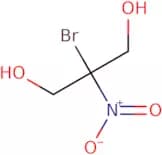
CAS:<p>2-Bromo-2-nitro-1,3-propanediol (BNP) is a preservative that is used in wastewater treatment. It is an antimicrobial agent that has synergistic effects with other antimicrobial agents such as triclosan, benzalkonium chloride and sesquiterpene lactones. 2-Bromo-2-nitro-1,3-propanediol has been shown to have a phase transition temperature of -28°C, which can be used to identify it in the laboratory. This compound also has a pK value of 4.4, which indicates that it is weakly acidic. 2-Bromo-2-nitro-1,3-propanediol can be used as an analytical method for the determination of p - hydroxybenzoic acid in aqueous samples by electrochemical impedance spectroscopy (EIS).</p>Fórmula:C3H6BrNO4Pureza:Min. 95%Cor e Forma:PowderPeso molecular:199.99 g/mol2-Nitropropane
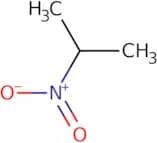
CAS:<p>2-Nitropropane is a pharmacological agent that is used for the treatment of bacterial infections. It is a nitroalkane, which are compounds with nitro groups in their molecular structure. 2-Nitropropane has been shown to inhibit DNA synthesis by binding to nuclear dna and inhibiting enzyme activities in vitro. Toxicological studies on 2-nitropropane have been conducted and show that it does not cause any adverse effects at low doses. The mechanism of action for 2-nitropropane has been investigated and found to inhibit the enzyme activity of nitrate reductase, which leads to an accumulation of the toxic nitrite ion (NO2-) in cells.</p>Fórmula:C3H7NO2Pureza:Min. 95%Cor e Forma:Colorless PowderPeso molecular:89.09 g/molEthanesulfonic acid, 70% aqueous solution
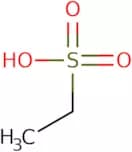
CAS:<p>Ethanesulfonic acid solution - 70 wt. % in H2O is a monosodium salt that is used as an enzymatic reagent for the determination of bacteria and fungi, as well as for the detection of infectious diseases. It has been shown to be effective against microdialysis probes with a high degree of sensitivity and specificity. Ethanesulfonic acid solution - 70 wt. % in H2O has been shown to have significant physiological effects on various regions of the body, including bowel disease, polymerase chain reaction (PCR), glycol ethers, antimicrobial agents, and radiation. Ethanesulfonic acid solution - 70 wt. % in H2O also inhibits the growth of bacteria by acting as a coumarin derivative that reacts with nucleotides to form dinucleotide phosphate, which blocks DNA synthesis and transcription from RNA templates.</p>Fórmula:C2H6O3SPureza:(Titration) 68.0 To 72.0%Cor e Forma:Clear LiquidPeso molecular:110.13 g/molChlorobutanol
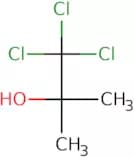
CAS:Chlorobutanol is an antimicrobial agent that is used in the preservation of pharmaceuticals, cosmetics, and other products. It has been shown to be effective against a variety of bacterial and fungal organisms. Chlorobutanol is also used as a preservative in topical ophthalmic preparations. In addition, chlorobutanol has been found to be a potent inhibitor of histone deacetylase (HDAC) activity, which may be due to its ability to bind to the active site of HDACs. This binding prevents acetylation of lysine residues on histones, thereby preventing transcriptional activation.Fórmula:C4H7OCl3Pureza:Min. 95%Cor e Forma:White To Off-White SolidPeso molecular:177.46 g/mol2,2,4,4,6,8,8-Heptamethylnonane
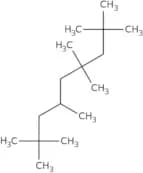
CAS:<p>2,2,4,4,6,8,8-Heptamethylnonane is a hydrogenated form of 2-methylnonane. It is used as a model system for fatty acids in order to study the kinetics of air entrainment and constant pressure distillation. The chemical stability of 2,2,4,4,6,8,8-heptamethylnonane has been shown to be excellent when heated at 200°C under nitrogen. This compound can also be used as an analytical method for ethylene diamine in pharmaceutical preparations of sodium salts and boron nitride. The use of 2-methylnonane as a starting material may lead to the production of chinese herb by reacting with acetic acid or formic acid.</p>Fórmula:C16H34Pureza:Min. 95%Cor e Forma:PowderPeso molecular:226.44 g/mol2-(2-Phenoxyethoxy)ethanol
CAS:<p>2-(2-Phenoxyethoxy)ethanol (BPE) is a polycarboxylic acid that is used as an additive in the production of coatings, adhesives and plastics. It is a colorless liquid with a mild odor. BPE has synergic effect with cationic polymers and surfactants, which results in high resistance to water, oil and gas. This product can be used as an additive for cationic polymerization, which will increase the hydrophobicity of the material. BPE also has a high degree of resistance to biological treatment (e.g., potassium dichromate).</p>Fórmula:C10H14O3Pureza:Min. 95%Cor e Forma:Clear LiquidPeso molecular:182.22 g/mol
![[2-(furan-3-yl)ethynyl]trimethylsilane](/_next/image/?url=https%3A%2Fstatic.cymitquimica.com%2Fproducts%2F10%2Fthumb-webp%2FF639509.webp&w=3840&q=75)







![[5-bromo-2-(2-propyn-1-yloxy)phenyl]methanol](/_next/image/?url=https%3A%2Fstatic.cymitquimica.com%2Fproducts%2F10%2Fthumb-webp%2FF315498.webp&w=3840&q=75)
![2-(Chloromethyl)-N,N-diethyl-1,4-dihydro-5-methyl-4-oxothieno[2,3-d]pyrimidine-6-carboxamide](/_next/image/?url=https%3A%2Fstatic.cymitquimica.com%2Fproducts%2F10%2Fthumb-webp%2FF988262.webp&w=3840&q=75)