Hidrazinas
Foram encontrados 1359 produtos de "Hidrazinas"
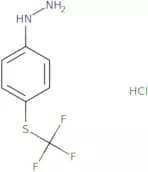
4-(Trifluoromethyl)thiophenylhydrazine hydrochloride
CAS:4-(Trifluoromethyl)thiophenylhydrazine hydrochloride (TFTH) is a chemical compound that belongs to the group of useful scaffolds, versatile building blocks, and reaction components. It has been used as a research chemical in the synthesis of complex compounds with high quality and is an intermediate for speciality chemicals. TFTH can be used as a reagent in organic chemistry for the preparation of amines and amino alcohols. This compound has CAS No. 162258-86-8.br>br> 4-(Trifluoromethyl)thiophenylhydrazine hydrochloride has been shown to be an excellent building block in organic synthesis because it is stable under mild conditions, reacts rapidly with nucleophiles, and is readily available from commercial sources.Fórmula:C7H7F3N2S·ClHPureza:Min. 95%Cor e Forma:Orange PowderPeso molecular:244.67 g/mol3-Hydrazinobenzoic acid
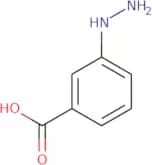
CAS:3-Hydrazinobenzoic acid is a covalent inhibitor that binds to lysine residues of proteins and inhibits their activity. It can be immobilized in different materials such as polymers, hydrogels, and zeolites. 3-Hydrazinobenzoic acid has been used to treat autoimmune diseases and cancer. In wastewater treatment, it has been shown to remove chloride ions, which are toxic to microorganisms. 3-Hydrazinobenzoic acid also reduces the pH of the environment by reacting with hydrochloric acid or other acidic compounds.Fórmula:C7H8N2O2Pureza:Min. 95%Cor e Forma:PowderPeso molecular:152.15 g/molHydrazine hydrochloride
CAS:Produto ControladoHydrazine hydrochloride is an antimicrobial agent that belongs to the group of hydrazines. It is a fatty acid that has been esterified with hydrochloric acid and hydrogen fluoride to form the corresponding ester hydrochloride. Hydrazine hydrochloride has shown to be effective against a variety of microorganisms. The antimicrobial activity of this drug may be due to its ability to inhibit fatty acid synthesis by binding to the active site of the enzyme, acyl-CoA:malonyl-CoA acyltransferase (MCT). Hydrazine hydrochloride also inhibits the production of pyrazoles, which are compounds that are known to induce autoimmune diseases in mice.Fórmula:N2H4·HClPureza:min 98%Cor e Forma:White PowderPeso molecular:68.51 g/mol2,4-Dinitro-5-methylphenylhydrazine
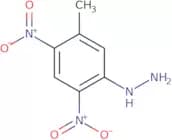
CAS:2,4-Dinitro-5-methylphenylhydrazine (DMN) is a fine chemical that is used as a versatile building block in the synthesis of complex compounds. It can be used to synthesize high quality reagents and reaction components for research purposes. DMN has been shown to have a number of properties that make it useful in industrial processes, including its stability and resistance to heat and light.
Fórmula:C7H8N4O4Pureza:Min. 95%Cor e Forma:PowderPeso molecular:212.16 g/molN-[4-(2-Hydrazino-2-oxoethoxy)phenyl]acetamide
CAS:N-[4-(2-Hydrazino-2-oxoethoxy)phenyl]acetamide is a phenolic compound that has been shown to have an antimicrobial effect. It has been shown to have antitubercular activity against Mycobacterium tuberculosis and the ability to inhibit the growth of cancer cells in vitro. N-[4-(2-Hydrazino-2-oxoethoxy)phenyl]acetamide is also known as monastrol. The pharmacophore of this drug is based on the structure of paracetamol, which is a member of the class of drugs known as analgesics, antipyretics, and antiinflammatory agents. Paracetamol has been used for decades in humans and animals for relief from pain, fever, and inflammation. N-[4-(2-Hydrazino-2-oxoethoxy)phenyl]acetamide may be useful for treating diseases such as cancer or tuberculosis due to its anticFórmula:C10H13N3O3Pureza:Min. 95%Cor e Forma:PowderPeso molecular:223.23 g/mol(4-(tert-Butyl)phenyl)hydrazine hydrochloride
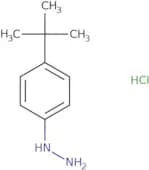
CAS:4-(tert-Butyl)phenylhydrazine hydrochloride (BPHH) is a chemical compound that has been used as a synthetic precursor to indole. It has been shown to be synthesized from cycloheptanone and sulfuric acid, with the addition of hydrazine hydrochloride and sodium acetate. BPHH can also be synthesized from 4-nitrobenzaldehyde and hydrazine sulfate, which is then reacted with ethanolamine.Fórmula:C10H16N2•HClPureza:Min. 95%Cor e Forma:Light brown powder.Peso molecular:200.71 g/mol4-Methyl-1-hydrazino-phthalazine HCl
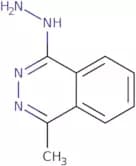
CAS:4-Methyl-1-hydrazino-phthalazine HCl is a fine chemical that is used as a building block for complex compounds. It can be used as a reagent or speciality chemical and also has applications in research. 4-Methyl-1-hydrazino-phthalazine HCl reacts with nitric acid to produce an orange liquid, which can then be reacted with hydrochloric acid to produce the desired product. 4-Methyl-1-hydrazino-phthalazine HCl is also a versatile building block for many reactions and is useful as an intermediate in the synthesis of other chemicals. CAS No. 91520-81-9Fórmula:C9H10N4·xHClPureza:Min. 95%Cor e Forma:SolidPeso molecular:174.2 g/mol5-Bromo-2-hydrazinopyrimidine
CAS:5-Bromo-2-hydrazinopyrimidine is a heterocyclic compound with the chemical formula C5H4N3Br. It is used as reagent, high quality, and complex intermediate in fine chemicals, research chemicals, and speciality chemicals. It is also a versatile building block for many reactions in synthesis of other compounds.Fórmula:C4H5BrN4Pureza:Min. 98 Area-%Peso molecular:189.01 g/mol2-(Trifluoromethyl)phenylhydrazine hydrochloride
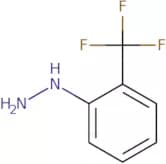
CAS:2-(Trifluoromethyl)phenylhydrazine hydrochloride is a carbamic acid derivative that is used in the synthesis of other compounds. 2-(Trifluoromethyl)phenylhydrazine hydrochloride can be used to make carboxylic acids and their derivatives, such as esters, amides, and anhydrides. It also reacts with hydrogen fluoride to form trifluoroacetic acid and hydrogen gas. This compound is an isomerizing agent that converts alkyl halides into their corresponding carbonyls. Hydrogen fluoride reacts with 2-(trifluoromethyl)phenylhydrazine hydrochloride to form trifluoroacetic acid and hydrogen gas.Fórmula:C7H7F3N2•HClPureza:Min. 95%Cor e Forma:PowderPeso molecular:212.6 g/mol6-Hydrazino-3-pyridinecarboxylic acid
CAS:6-Hydrazino-3-pyridinecarboxylic acid is a potent inhibitor of angiogenesis. It inhibits the activity of vascular endothelial growth factor, which is a potent pro-angiogenic factor. 6HPCA has been shown to inhibit the growth of prostate cancer cells in vitro and tumor growth in vivo. The mechanism for this inhibition may be due to its ability to decrease levels of all-trans retinoic acid (RA), a potent pro-angiogenic molecule. 6HPCA also inhibits the proliferation of human serum, monoclonal antibody, and polymer drug uptake in cell culture systems. In addition, 6HPCA has low toxicity and low pharmacokinetic properties that have been demonstrated by several studies using radiolabeled analogues and autoradiography.Fórmula:C6H7N3O2Pureza:Min. 97 Area-%Cor e Forma:PowderPeso molecular:153.14 g/mol4-Bromo-2-fluorophenylhydrazine hydrochloride
CAS:Please enquire for more information about 4-Bromo-2-fluorophenylhydrazine hydrochloride including the price, delivery time and more detailed product information at the technical inquiry form on this pageFórmula:C6H7BrClFN2Pureza:Min. 95%Cor e Forma:PowderPeso molecular:241.49 g/molβ-Naphthoylhydrazine
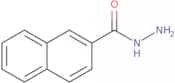
CAS:Beta-Naphthoylhydrazine is a chemical inhibitor that binds to the enzyme diacylglycerol, which is involved in the synthesis of cholesterol. It has been shown to inhibit the uptake of cholesterol by ovary cells and human serum lipase. Beta-Naphthoylhydrazine potently inhibits reactive oxygen species and may be used in the treatment of inflammation and cancer.
Fórmula:C11H10N2OPureza:Min. 95%Cor e Forma:PowderPeso molecular:186.21 g/mol3-Chloro-6-hydrazinopyridazine
CAS:3-Chloro-6-hydrazinopyridazine is a redox potential probe that has high cytotoxicity. It is used in the detection of the redox potential of hydrogen peroxide and nitric oxide by a turbidimetric method. 3-Chloro-6-hydrazinopyridazine can be used as a fluorogenic probe for the detection of chlorine atoms in biological systems. 3-Chloro-6-hydrazinopyridazine has been shown to enhance cancer cell growth and inhibit matrix metalloproteinase (MMP) activity. The biological properties of this compound are due to its ability to form intermolecular hydrogen bonds with nitrogen atoms, which leads to a dihedral angle that favors its binding to proteins.Fórmula:C4H5ClN4Pureza:Min. 95%Cor e Forma:Brown PowderPeso molecular:144.56 g/mol2-Nitrophenylhydrazine
CAS:2-Nitrophenylhydrazine is a drug that is used as an anti-inflammatory agent. It is a nonsteroidal anti-inflammatory drug (NSAID) that acts by blocking the production of prostaglandins in the body, preventing inflammation and pain. 2-Nitrophenylhydrazine can be used to treat conditions such as arthritis, gout, and rheumatoid arthritis. This drug also has the ability to remove organic contaminants from water. 2-Nitrophenylhydrazine binds with fatty acids in wastewater treatment plants, forming an insoluble complex that precipitates out of solution. The compound inhibits the activity of hydrogen bond and methyl ethyl groups, which are needed for the biosynthesis of polyunsaturated fatty acids like phytanic acid and diphenyl ether.
Fórmula:C6H7N3O2Pureza:Min. 95%Cor e Forma:PowderPeso molecular:153.14 g/mol4-n-Butylphenylhydrazine hydrochloride
CAS:4-n-Butylphenylhydrazine hydrochloride is a chromatographic reagent used in the analysis of compounds. It is a colorless crystalline solid that can be dissolved in water, ethanol, acetone, and other organic solvents. The most common use of 4-n-butylphenylhydrazine hydrochloride is for reversed-phase liquid chromatography (LC) analysis. In this application, it is typically used as an internal standard to calibrate the LC system. This compound also has applications in mass spectrometry, where it is used as an ionization reagent for electrospray and electrospray ionization (ESI) mass spectrometry. ESIMS data can be obtained by using this compound to ionize the analyte and then measure the molecular weight of the resulting ions using a mass spectrometer with an orbitrap or quadrupole detector. 4-n-ButylphenylhydFórmula:C10H16N2•HClPureza:Min. 95%Cor e Forma:PowderPeso molecular:200.71 g/mol(3-Benzyloxy-phenyl)hydrazine hydrochloride
CAS:3-Benzyloxy-phenyl)hydrazine hydrochloride is a chemical used in the synthesis of other organic compounds. It is a versatile building block that can be used in the preparation of complex compounds and useful intermediates. 3-Benzyloxy-phenyl)hydrazine hydrochloride is an excellent reagent for reactions involving electron-deficient alkenes, alkynes, and cyclic ethers. This compound also has applications as a pharmaceutical intermediate and as an analytical reference standard for chemical analyses.
Fórmula:C13H14N2O·HClPureza:Min. 95%Cor e Forma:PowderPeso molecular:250.72 g/mol4-Chlorophenylhydrazine hydrochloride
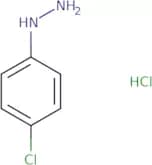
CAS:4-Chlorophenylhydrazine hydrochloride is a chemical compound that contains a pyrazole ring, chlorine and anhydrous sodium. This substance is used as a reactant in the production of diazonium salts. 4-Chlorophenylhydrazine hydrochloride also inhibits the reaction of benzodiazepines with their binding site on the GABA receptor, which prevents the formation of reactive intermediates. It has been shown to have an inhibitory effect on wastewater treatment and can be used for the treatment of acidic water. 4-Chlorophenylhydrazine hydrochloride reacts with fluorescence probes to form intermolecular hydrogen bonds and hydrogen bonds that are used for determining pH values in solution.
Fórmula:C6H8Cl2N2Cor e Forma:Off-White PowderPeso molecular:179.05 g/mol4-Bromophenylhydrazine hydrochloride
CAS:4-Bromophenylhydrazine hydrochloride is a hydroxylated phenylhydrazine derivative that is used as an inhibitor of the enzyme tyrosinase. It has been shown to have significant antiproliferative activity against various cancer cell lines in vitro. 4-Bromophenylhydrazine hydrochloride has undergone extensive chemical study and its molecular structure has been elucidated by means of computational methods. The compound inhibits human tyrosinase by cleaving the C-C bond between the hydroxyl group and the phenyl ring, inhibiting tyrosinase activity and preventing melanin production. This process is reversible, so it can be used to maintain skin pigmentation at a desired level. 4-Bromophenylhydrazine hydrochloride also inhibits other enzymes that are related to pigment production, such as chymotrypsin and trypsin.Fórmula:C6H7BrN2•HClPureza:Min. 95%Peso molecular:223.5 g/mol(S)-4-(4-Hydrazinylbenzyl)-2-oxazolidinone
CAS:4-(4-Hydrazinylbenzyl)-2-oxazolidinone is an ion-pair and a synthetic intermediate for the production of several pharmaceuticals. It is a white solid that can be crystallized from water or alcohol. The major impurities in this compound are diazotization and triphosgene, which are process-related impurities. 4-(4-Hydrazinylbenzyl)-2-oxazolidinone is used to produce butyraldehyde, which is used as a solvent in the production of pharmaceuticals. This compound undergoes hydrogenation reduction to form butyraldehyde after hydrolysis, which produces linearity. Hydrolysis can be carried out with either acidic or basic conditions.Fórmula:C10H13N3O2Pureza:Min. 95%Cor e Forma:PowderPeso molecular:207.23 g/mol2,3-Dimethylphenylhydrazine hydrochloride hydrate
CAS:2,3-Dimethylphenylhydrazine hydrochloride hydrate is a fine chemical that is used as a building block for research chemicals and speciality chemicals. It is also a high quality reagent and useful scaffold for the synthesis of complex compounds. 2,3-Dimethylphenylhydrazine hydrochloride hydrate is versatile, being able to be used in reactions involving nucleophilic substitution or elimination reactions. This product can be used in reactions involving the formation of carbon-carbon bonds.Fórmula:C8H12N2•HCl•(H2O)xPureza:Min. 95%Cor e Forma:PowderPeso molecular:172.66 g/mol


![N-[4-(2-Hydrazino-2-oxoethoxy)phenyl]acetamide](/_next/image/?url=https%3A%2Fstatic.cymitquimica.com%2Fproducts%2F3D%2Fthumb-webp%2FFH131261.webp&w=3840&q=75)