Hidrazinas
As hidrazinas são compostos orgânicos caracterizados pela presença de um grupo hidrazina (N2H4). Estes compostos são usados em várias reações químicas, incluindo como intermediários em produtos farmacêuticos e agroquímicos. Na CymitQuimica, oferecemos uma ampla seleção de hidrazinas de alta qualidade para apoiar suas aplicações de pesquisa e industriais, garantindo resultados confiáveis e eficientes. Nossa seleção inclui hidrazinas adequadas para uma ampla gama de sínteses químicas e requisitos experimentais.
Foram encontrados 1360 produtos de "Hidrazinas"
Ordenar por
Pureza (%)
0
100
|
0
|
50
|
90
|
95
|
100
[2-(Trifluoromethyl)cyclohexyl]hydrazine Hydrochloride
CAS:Produto ControladoFórmula:C7H13F3N2•HClCor e Forma:NeatPeso molecular:182.19+(36.46)[5-Chloro-2-(cyclopentylmethyl)phenyl]-hydrazine
CAS:Produto ControladoFórmula:C12H17ClN2Cor e Forma:NeatPeso molecular:224.73[4-(2,2,2-Trifluoroethoxy)phenyl]hydrazine Hydrochloride
CAS:Produto ControladoFórmula:C8H9F3N2O·HClCor e Forma:NeatPeso molecular:242.626o-Anisylhydrazine
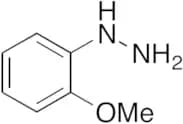
CAS:Produto Controlado<p>Applications o-Anisylhydrazine, can be used as an intermediate in the synthesis of biologically active compounds, such as 1,2,4-trisubstituted imidazoles and 1,3,5-trisubstituted pyrazoles as inhibitors of transforming growth factor β type 1 receptor (ALK5).<br>References Xingzhou,L. et al.: Bio. Med. Chem. Lett., 19, 4868 (2009);<br></p>Fórmula:C7H10N2OCor e Forma:NeatPeso molecular:138.1676-Hydrazinonicotinic acid
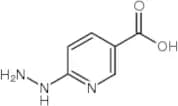
CAS:Produto Controlado<p>Applications 6-Hydrazinonicotinic acid<br></p>Fórmula:C6H7N3O2Cor e Forma:NeatPeso molecular:153.14[5-Chloro-2-(cyclopropylmethyl)phenyl]-hydrazine
CAS:Produto ControladoFórmula:C10H13ClN2Cor e Forma:NeatPeso molecular:196.677Hydrazine Sulfate Salt
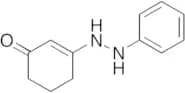
CAS:Produto Controlado<p>Applications Hydrazine Sulfate Salt is a reagent used in the heterocyclization of primary amines and may be cyclized itself. It is also used in the synthesis of novel triazole corrosion inhibitors for mild steel.<br> Not a dangerous good if item is equal to or less than 1g/ml and there is less than 100g/ml in the package<br>References Bentiss, F. et al.: J. App. Electrochem., 29, 1073 (1999); Ju, Y. et al.: J. Org. Chem., 71, 135 (2006);<br></p>Fórmula:H2O4S·H4N2Cor e Forma:Off-WhitePeso molecular:130.123-(2-Phenylhydrazino)-2-cyclohexen-1-one
CAS:Produto ControladoFórmula:C12H14N2OCor e Forma:NeatPeso molecular:202.252[4-(Trifluoromethyl)cyclohexyl]hydrazine Hydrochloride
CAS:Produto ControladoFórmula:C7H13F3N2•HClCor e Forma:NeatPeso molecular:182.19+(36.46)2-Hydroxyethylhydrazine
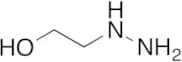
CAS:Produto Controlado<p>Stability Not determined<br>Applications 2-Hydroxyethylhydrazine is a reagent that is used in the preparation of dichlorophenoxymethyl-substituted pyrazolones and analogs as neuroprotectors against cytoxicity from protein aggregation of mutant superoxide dismutase 1.<br> Not a dangerous good if item is equal to or less than 1g/ml and there is less than 100g/ml in the package<br>References Trippier, P. C., et al.: Bioorg. Med. Chem. Lett., 22, 6647 (2012); Rothstein, J., et al.: Anal. Nuerol, 65, S3 (2009)<br></p>Fórmula:C2H8N2OCor e Forma:NeatPeso molecular:76.10[4-(2,2,3,3,3-pentafluoropropoxy)phenyl]hydrazine Hydrochloride
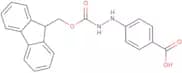
CAS:Produto ControladoFórmula:C10H13N3O3Cor e Forma:NeatPeso molecular:223.228Fmoc-4-hydrazinobenzoic acid
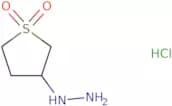
CAS:<p>Please enquire for more information about Fmoc-4-hydrazinobenzoic acid including the price, delivery time and more detailed product information at the technical inquiry form on this page</p>Fórmula:C22H18N2O4Pureza:Min. 95%Peso molecular:374.39 g/mol(1,1-Dioxidotetrahydro-3-thienyl)hydrazine hydrochloride
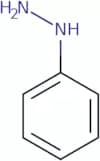
CAS:<p>Please enquire for more information about (1,1-Dioxidotetrahydro-3-thienyl)hydrazine hydrochloride including the price, delivery time and more detailed product information at the technical inquiry form on this page</p>Fórmula:C4H10N2O2SPureza:Min. 95%Peso molecular:150.2 g/molPhenyl Hydrazine
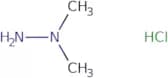
CAS:<p>Phenyl hydrazine is a chemical reagent that is used in biological studies. It is an antimicrobial agent that has been shown to inhibit the growth of Gram-positive and Gram-negative bacteria, including Mycobacterium tuberculosis, Staphylococcus aureus and Klebsiella pneumoniae. Phenylhydrazine can be used as an iron chelator in wastewater treatment, where it removes excess iron from water. The optimum concentration of phenylhydrazine can be determined by using fluorescence probes to measure the cell nuclei of mammalian cells. Phenylhydrazine is also used in electrochemical impedance spectroscopy to measure the oxidative injury of human serum.</p>Fórmula:C6H8N2Pureza:Min. 95%Cor e Forma:Colourless To Yellow To Light Brown LiquidPeso molecular:108.14 g/mol1,1-DimethylhydrazineHCl
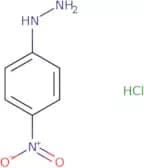
CAS:Produto Controlado<p>1,1-DimethylhydrazineHCl is a drug that inhibits the growth of cancer cells. It is an inhibitor drug for CDK4 and CDK6, which are enzymes essential for DNA replication. 1,1-DimethylhydrazineHCl has been shown to inhibit the growth of cervical cancer cells in mice by inhibiting the epidermal growth factor receptor (EGFR). This inhibition prevents the activation of EGFR and subsequent downstream signaling pathways. 1,1-DimethylhydrazineHCl also inhibits HIV infection by inhibiting viral reverse transcriptase activity. This inhibition prevents the synthesis of viral DNA, which is required for viral replication.</p>Fórmula:C2H9ClN2Pureza:Min. 95%Peso molecular:96.56 g/mol4-Nitrophenylhydrazine hydrochloride
CAS:<p>4-Nitrophenylhydrazine hydrochloride is an organic compound that belongs to the class of hydrazines. It is a colorless solid that has a melting point of 202-204 °C. 4-Nitrophenylhydrazine hydrochloride is used in the synthesis of other compounds, such as trifluoroacetic acid and nucleophilic compounds. The chemical structure can be analyzed using nuclear magnetic resonance (NMR) spectroscopy, which shows that this compound contains amines and nitro groups. 4-Nitrophenylhydrazine hydrochloride is also soluble in water due to its acidic nature. This compound reacts with bases and alcohols to form salts, such as monosodium salt.</p>Fórmula:C6H7N3O2·HClPureza:Min. 95%Cor e Forma:PowderPeso molecular:189.6 g/mol1-Methyl-1-phenylhydrazine
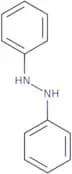
CAS:<p>1-Methyl-1-phenylhydrazine (MPH) is a chemical crosslinking agent that has been shown to be an efficient method for the production of hydrogels. It is a fast and efficient method for the production of hydrogels, which are three dimensional networks of macromolecules that form strong gels. MPH can react with aminosulfonyl groups on proteins to form a covalent bond, which leads to the formation of stable cross-links in hydrogels. It also has been shown to have immunosuppressive effects and may be used as an active substance in autoimmune diseases.</p>Fórmula:C7H10N2Pureza:Min. 95.0%Peso molecular:122.17 g/mol1,2-Diphenylhydrazine
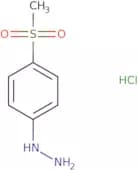
CAS:1,2-Diphenylhydrazine is an organic compound that is used as an antimicrobial agent. It has a typical chemical structure with a phenyl and hydrazine group. The hydrazine group can be substituted with other functional groups to produce different derivatives. 1,2-Diphenylhydrazine is synthesized by the reaction of phenyldiazonium chloride and benzene in the presence of hydrochloric acid. This reaction produces azobenzene as a byproduct, which reacts with hydrazine to form 1,2-diphenylhydrazine. The synthesis of 1,2-diphenylhydrazine occurs through two main mechanisms: 1) A nucleophilic substitution mechanism involving the attack of hydroxide ion on the carbonyl group of azobenzene followed by addition of hydrazine to form intermediate B and subsequent decomposition to form 1,2-diphenylFórmula:C12H12N2Pureza:Min. 95%Peso molecular:184.24 g/mol4-(Methylsulfonyl)phenylhydrazine hydrochloride
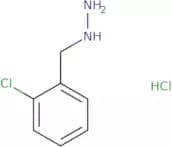
CAS:<p>4-(Methylsulfonyl)phenylhydrazine hydrochloride is a sulfone that is used as a radiopharmaceutical agent. It can be used in the diagnosis of Alzheimer's disease and other neurodegenerative diseases. 4-(Methylsulfonyl)phenylhydrazine hydrochloride binds to carbonic anhydrase I and II, which are membrane-bound enzymes that catalyze the reversible hydration of carbon dioxide. This inhibition leads to increased blood pressure and decreased production of platelets, which can lead to thrombocytopenia. The inhibitory potency of 4-(methylsulfonyl)phenylhydrazine hydrochloride on Cox-1 and Cox-2 has been shown to be similar to that of aspirin, but it is more selective for Cox-2.</p>Fórmula:C7H10N2O2S•HClPureza:Min. 95%Cor e Forma:PowderPeso molecular:222.69 g/mol(2-Chlorobenzyl)hydrazine dihydrochloride
CAS:<p>Please enquire for more information about (2-Chlorobenzyl)hydrazine dihydrochloride including the price, delivery time and more detailed product information at the technical inquiry form on this page</p>Fórmula:C7H9ClN2Pureza:Min. 95%Peso molecular:156.61 g/mol
![[2-(Trifluoromethyl)cyclohexyl]hydrazine Hydrochloride](/_next/image/?url=https%3A%2Fstatic.cymitquimica.com%2Fproducts%2FTR%2Fthumb-webp%2FT791595.webp&w=3840&q=75)

![[5-Chloro-2-(cyclopentylmethyl)phenyl]-hydrazine](/_next/image/?url=https%3A%2Fstatic.cymitquimica.com%2Fproducts%2FTR%2Fthumb-webp%2FC585545.webp&w=3840&q=75)
![[4-(2,2,2-Trifluoroethoxy)phenyl]hydrazine Hydrochloride](/_next/image/?url=https%3A%2Fstatic.cymitquimica.com%2Fproducts%2FTR%2Fthumb-webp%2FT790180.webp&w=3840&q=75)
![[5-Chloro-2-(cyclopropylmethyl)phenyl]-hydrazine](/_next/image/?url=https%3A%2Fstatic.cymitquimica.com%2Fproducts%2FTR%2Fthumb-webp%2FC585535.webp&w=3840&q=75)

![[4-(Trifluoromethyl)cyclohexyl]hydrazine Hydrochloride](/_next/image/?url=https%3A%2Fstatic.cymitquimica.com%2Fproducts%2FTR%2Fthumb-webp%2FT791585.webp&w=3840&q=75)
![[4-(2,2,3,3,3-pentafluoropropoxy)phenyl]hydrazine Hydrochloride](/_next/image/?url=https%3A%2Fstatic.cymitquimica.com%2Fproducts%2FTR%2Fthumb-webp%2FP270420.webp&w=3840&q=75)