Compostos alifáticos e derivados
Os compostos alifáticos e seus derivados são compostos orgânicos caracterizados por estruturas de cadeia reta ou ramificada, ao contrário das estruturas em anel encontradas nos compostos aromáticos. Esses compostos incluem alcanos, alcenos, alcinos e seus derivados funcionalizados, desempenhando um papel vital em vários processos químicos e aplicações industriais. Na CymitQuimica, oferecemos uma seleção diversificada de compostos alifáticos de alta pureza e seus derivados, meticulosamente selecionados e testados para atender aos rigorosos requisitos de pesquisa e necessidades industriais. Nosso catálogo abrange uma ampla gama de compostos, incluindo hidrocarbonetos, álcoois, aldeídos, cetonas e ácidos, cada um conhecido por sua reatividade e versatilidade na síntese orgânica, farmacêutica e ciência dos materiais. Ao fornecer compostos alifáticos e derivados de alta qualidade, apoiamos pesquisadores e profissionais na realização de transformações químicas precisas e eficientes, promovendo a inovação e os avanços em vários campos científicos e tecnológicos.
Foram encontrados 8718 produtos de "Compostos alifáticos e derivados"
Ordenar por
Pureza (%)
0
100
|
0
|
50
|
90
|
95
|
100
tert-Butyl 3-bromopropionate
CAS:<p>Tert-butyl 3-bromopropionate is a linker for the synthesis of pleuromutilin derivatives. It has been used as a model substrate for studying the effects of hypertrophy on cardiac muscle. Tert-butyl 3-bromopropionate has also been shown to inhibit the production of proinflammatory cytokines in response to bacterial infection, and can be used as an antibacterial agent. Tert-butyl 3-bromopropionate binds to RNA and inhibits protein synthesis, which leads to cell death by preventing the production of proteins vital for cell division. Tert-butyl 3-bromopropionate is also a potent inhibitor of chloride channels that are found in nerve cells and prevents the flow of chloride ions through these channels, leading to paralysis. This drug also inhibits hydrogen fluoride excretion in rats, which may be due to its ability to bind with chloride ions in the kidney tubules, preventing their</p>Fórmula:C7H13BrO2Pureza:Min. 95%Cor e Forma:Colorless Clear LiquidPeso molecular:209.08 g/molTrifluoromethanesulfonic acid
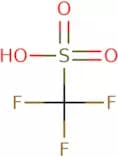
CAS:<p>Trifluoromethanesulfonic acid is a strong oxidizing agent that is used as a catalyst for the synthesis of organic compounds. It is an excellent solvent for many types of reactions and has been shown to be an effective catalyst for the synthesis of triflate, which can be used in cationic polymerization. Trifluoromethanesulfonic acid also has potential applications in carbohydrate chemistry and asymmetric synthesis, due to its ability to reduce carboxylic acids and nitriles. Trifluoromethanesulfonic acid can be synthesized by reacting potassium hexafluorophosphate with amines or nitrogen atoms under activated conditions.</p>Fórmula:CHF3O3SPureza:Min. 95%Cor e Forma:Clear LiquidPeso molecular:150.08 g/molMethanesulfonic anhydride
CAS:<p>Methanesulfonic anhydride is a white crystalline solid that is soluble in water and ethanol. It has been shown to be a potent inhibitor of acetaminophen metabolism and the formation of reactive metabolites. Methanesulfonic anhydride inhibits the metabolic activity of cytochrome P450 enzymes, which are responsible for the oxidation of acetaminophen. This inhibition leads to lower levels of toxic metabolites and less tissue damage. Methanesulfonic anhydride also modulates other assays, such as those for nitric oxide synthase and prostaglandin E2 receptors. Methanesulfonic anhydride is used as a catalyst in chemical reactions, including those that produce hydrogen sulfide gas for use in gold mining. It has also been used to study the localization of various proteins by using probes labeled with methanesulfonic anhydride. Methanesulfonic anhydride may cause hypertension due to its ability to inhibit the degradation of norepinephrine, leading to increased</p>Fórmula:C2H6O5S2Pureza:Min. 95%Cor e Forma:PowderPeso molecular:174.2 g/mol2,2,4,4,6,8,8-Heptamethylnonane
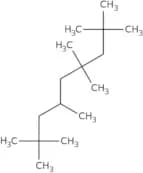
CAS:<p>2,2,4,4,6,8,8-Heptamethylnonane is a hydrogenated form of 2-methylnonane. It is used as a model system for fatty acids in order to study the kinetics of air entrainment and constant pressure distillation. The chemical stability of 2,2,4,4,6,8,8-heptamethylnonane has been shown to be excellent when heated at 200°C under nitrogen. This compound can also be used as an analytical method for ethylene diamine in pharmaceutical preparations of sodium salts and boron nitride. The use of 2-methylnonane as a starting material may lead to the production of chinese herb by reacting with acetic acid or formic acid.</p>Fórmula:C16H34Pureza:Min. 95%Cor e Forma:PowderPeso molecular:226.44 g/molChlorobutanol
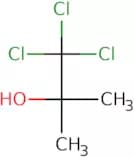
CAS:<p>Chlorobutanol is an antimicrobial agent that is used in the preservation of pharmaceuticals, cosmetics, and other products. It has been shown to be effective against a variety of bacterial and fungal organisms. Chlorobutanol is also used as a preservative in topical ophthalmic preparations. In addition, chlorobutanol has been found to be a potent inhibitor of histone deacetylase (HDAC) activity, which may be due to its ability to bind to the active site of HDACs. This binding prevents acetylation of lysine residues on histones, thereby preventing transcriptional activation.</p>Fórmula:C4H7OCl3Pureza:Min. 95%Cor e Forma:White To Off-White SolidPeso molecular:177.46 g/mol2-(2-Phenoxyethoxy)ethanol
CAS:<p>2-(2-Phenoxyethoxy)ethanol (BPE) is a polycarboxylic acid that is used as an additive in the production of coatings, adhesives and plastics. It is a colorless liquid with a mild odor. BPE has synergic effect with cationic polymers and surfactants, which results in high resistance to water, oil and gas. This product can be used as an additive for cationic polymerization, which will increase the hydrophobicity of the material. BPE also has a high degree of resistance to biological treatment (e.g., potassium dichromate).</p>Fórmula:C10H14O3Pureza:Min. 95%Cor e Forma:Clear LiquidPeso molecular:182.22 g/mol1-Docosanol
CAS:<p>Docosanol is a drug that is used for the treatment of various skin disorders, including psoriasis, eczema, and ichthyosis. It is also used as an adjuvant in the treatment of chronic obstructive pulmonary disease. Docosanol is a lipid molecule that has been shown to have antiviral, antibacterial, antifungal, and antiprotozoal properties. It can be used as a carrier for topical medications and has been shown to have anti-inflammatory effects. The mechanism of action for docosanol is not well understood but may involve its ability to bind to Toll-like receptors on macrophages and neutrophils in the skin. This binding inhibits the synthesis of inflammatory mediators such as prostaglandins and leukotrienes. Docosanol also has physiological effects on water balance by acting as a surfactant in the lungs and preventing water vapor from escaping through respiratory membranes in the nose or mouth. Docosanol</p>Fórmula:C22H46OPureza:Min. 95%Cor e Forma:PowderPeso molecular:326.6 g/mol1,2-Ethanedithiol
CAS:<p>1,2-Ethanedithiol is a molecule that consists of a sulfur atom and two ethyl groups. It can form stable complexes with hydrogen fluoride and trifluoroacetic acid as well as hydrochloric acid. 1,2-Ethanedithiol is reactive with nucleophiles such as amines, thiols, and alcohols. The molecule has an electrochemical impedance spectroscopy (EIS) model system that has shown to react with the electron flow from the electrode to the solution of a compound. The EIS model system also showed that a conformational change in the molecule could result in light emission.</p>Fórmula:C2H6S2Pureza:Min. 95%Cor e Forma:Colorless Clear LiquidPeso molecular:94.2 g/mol2-Nitropropane
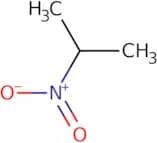
CAS:<p>2-Nitropropane is a pharmacological agent that is used for the treatment of bacterial infections. It is a nitroalkane, which are compounds with nitro groups in their molecular structure. 2-Nitropropane has been shown to inhibit DNA synthesis by binding to nuclear dna and inhibiting enzyme activities in vitro. Toxicological studies on 2-nitropropane have been conducted and show that it does not cause any adverse effects at low doses. The mechanism of action for 2-nitropropane has been investigated and found to inhibit the enzyme activity of nitrate reductase, which leads to an accumulation of the toxic nitrite ion (NO2-) in cells.</p>Fórmula:C3H7NO2Pureza:Min. 95%Cor e Forma:Colorless PowderPeso molecular:89.09 g/molHydroxypropanedial
CAS:<p>Hydroxypropanedial is a hydroxy group-containing compound that is not found in natural sources. It has antioxidative properties, which may be due to its ability to scavenge reactive oxygen species or donate hydrogen atoms to free radicals. The compound also has cyclohexane ring and carbonyl groups, which are responsible for the hydroxyl and carboxylic acid functionalities respectively. This substance is used as a chromatographic reagent to measure second-order rate constants of reactions involving hydroxyl radicals. Hydroxypropanedial absorbs light strongly at wavelengths shorter than 300 nm, which is the most effective wavelength range for uv absorption in biological systems.</p>Fórmula:C3H4O3Pureza:Min. 95%Cor e Forma:Off-White To Light (Or Pale) Brown SolidPeso molecular:88.06 g/molBis[(pinacolato)boryl]methane
CAS:<p>Bis[(pinacolato)boryl]methane is a bifunctional organoboron reagent with an allyl group on one end and a cyclopropane on the other end. It is useful in organic synthesis as a nucleophile for allylation, as well as for the synthesis of unsymmetrical cyclopropanes. This compound can be used to catalyze asymmetric methods, such as the synthesis of alicyclic compounds. Bis[(pinacolato)boryl]methane can also be used to synthesize biomolecules.</p>Fórmula:C13H26B2O4Pureza:Min. 95%Cor e Forma:White To Off-White SolidPeso molecular:267.97 g/mol10-Nitro oleic acid
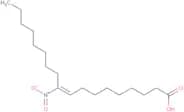
CAS:<p>10-Nitro oleic acid is a nitro compound that has been shown to have a low binding affinity for DNA. It has been shown to induce reactive oxygen species (ROS) in cells, which may be caused by its ability to bind to the response element of the promoter region of an interferon-induced gene. In addition, 10-Nitro oleic acid also binds to single-stranded RNA and induces protein thiols. The polymerase chain reaction (PCR) technique has been used to detect 10-Nitro oleic acid in rat urine and human erythrocytes. 10-Nitro oleic acid is not active against human polymorphonuclear leukocytes or human mdr1 cells; however, it is active against kidney injury cells and chronic liver diseases cells.</p>Fórmula:C18H33NO4Pureza:Min. 95%Cor e Forma:PowderPeso molecular:327.46 g/molN-Methyl-1,1,1-trifluoro-2-propylamine hydrochloride
CAS:<p>Please enquire for more information about N-Methyl-1,1,1-trifluoro-2-propylamine hydrochloride including the price, delivery time and more detailed product information at the technical inquiry form on this page</p>Fórmula:C4H9ClF3NPureza:Min. 95%Peso molecular:163.57 g/molTriisopropylsilyl trifluoromethanesulphonate
CAS:<p>Triisopropylsilyl trifluoromethanesulphonate (TIPS) is a naturally occurring compound that inhibits the enzyme dipeptidyl peptidase IV (DPP-IV). It has been shown to be active against alopecia areata in a mouse model and may have therapeutic potential for other autoimmune diseases. TIPS also has an inhibitory effect on sodium-dependent glucose transport, which may be useful in the treatment of hypertension. The reactive group of TIPS is hydroxyl, which can form a covalent bond with serine proteases and inhibit their activity. This reaction mechanism provides a new way to treat disorders such as metabolic diseases and infectious diseases. TIPS also has an inhibitory effect on ns3 protease, which is involved in the replication of human immunodeficiency virus type 1 (HIV-1) and other retroviruses.</p>Fórmula:C10H21F3O3SSiPureza:Min. 95%Cor e Forma:Colourless Clear LiquidPeso molecular:306.42 g/moltert-Butylisocyanate
CAS:<p>Please enquire for more information about tert-Butylisocyanate including the price, delivery time and more detailed product information at the technical inquiry form on this page</p>Fórmula:C5H9NOPureza:Min. 98.5 Area-%Peso molecular:99.13 g/molMesityl oxide
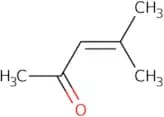
CAS:<p>Mesityl oxide is a nitro compound that is used as an intermediate for the synthesis of other compounds. It is prepared by the reaction of acetone and malonic acid in the presence of phosphorus pentoxide. The optimum concentration for this reaction is 1.5 M in acetone and 0.1 M in malonic acid. The product is purified by solid phase extraction using a microextraction device and then recrystallized from acetone-methanol to obtain pure mesityl oxide. Mesityl oxide has been shown to inhibit prostate cancer cells, which may be due to its ability to react with hydroxyl groups on proteins to form methoxy radicals, which break down DNA molecules.</p>Fórmula:C6H10OPureza:Min. 95%Cor e Forma:Clear LiquidPeso molecular:98.14 g/mol1-Amino-1-cyclopentanecarboxamide
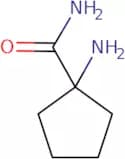
CAS:<p>1-Amino-1-cyclopentanecarboxamide is a bicyclic heterocycle that has been shown to have therapeutic effects in the treatment of autoimmune diseases and cancer. It is structurally related to chemokines, which are cytokines that induce inflammatory responses by activating the immune system. 1-Amino-1-cyclopentanecarboxamide binds to specific receptors on white blood cells, resulting in an increase in the production of chemokines and other proinflammatory molecules. This leads to an increase in inflammation, as well as an increase in blood pressure. The chemical also has anti-inflammatory properties and can be used for the treatment of inflammatory diseases such as arthritis. 1-Amino-1-cyclopentanecarboxamide has been shown to inhibit cancer cell growth by inducing apoptosis (programmed cell death).</p>Fórmula:C6H12N2OPureza:Min. 95%Cor e Forma:PowderPeso molecular:128.17 g/molDocosane
CAS:<p>Please enquire for more information about Docosane including the price, delivery time and more detailed product information at the technical inquiry form on this page</p>Fórmula:C22H46Pureza:Min. 95%Peso molecular:310.6 g/mol1,4,7-Triazacyclononane trihydrochloride
CAS:<p>1,4,7-Triazacyclononane trihydrochloride is a coordination compound that belongs to the class of ligands. It is a chelate ring with six phosphate groups and six nitrogen atoms. It has been shown to behave as an irreversible oxidation catalyst for carboxylate and amine molecules. This molecule also has redox potentials in the range of -0.35 to -0.5 volts and can reversibly oxidize inorganic acids with strong electron-donating properties such as phosphoric acid, nitric acid, and sulfuric acid. 1,4,7-Triazacyclononane trihydrochloride has been shown to be effective as a hydrogen bonding agent in x-ray crystal structures.</p>Fórmula:C6H15N3·3HClPureza:Min. 95%Cor e Forma:Off-White PowderPeso molecular:238.59 g/mol2-(2-Phenoxyethoxy)ethanol
CAS:<p>2-(2-Phenoxyethoxy)ethanol is a fine chemical and a useful building block. It is an important intermediate in the synthesis of other chemicals, such as pharmaceuticals, herbicides, and pesticides. 2-(2-Phenoxyethoxy)ethanol can be used as a research chemical or reagent. It can also be used to prepare complex compounds and versatile scaffolds. CAS No. 104-68-7</p>Fórmula:C10H14O3Pureza:Min. 95.0 Area-%Peso molecular:182.24 g/mol







![Bis[(pinacolato)boryl]methane](/_next/image/?url=https%3A%2Fstatic.cymitquimica.com%2Fproducts%2F3D%2Fthumb-webp%2FFB18774.webp&w=3840&q=75)