Compostos alifáticos e derivados
Os compostos alifáticos e seus derivados são compostos orgânicos caracterizados por estruturas de cadeia reta ou ramificada, ao contrário das estruturas em anel encontradas nos compostos aromáticos. Esses compostos incluem alcanos, alcenos, alcinos e seus derivados funcionalizados, desempenhando um papel vital em vários processos químicos e aplicações industriais. Na CymitQuimica, oferecemos uma seleção diversificada de compostos alifáticos de alta pureza e seus derivados, meticulosamente selecionados e testados para atender aos rigorosos requisitos de pesquisa e necessidades industriais. Nosso catálogo abrange uma ampla gama de compostos, incluindo hidrocarbonetos, álcoois, aldeídos, cetonas e ácidos, cada um conhecido por sua reatividade e versatilidade na síntese orgânica, farmacêutica e ciência dos materiais. Ao fornecer compostos alifáticos e derivados de alta qualidade, apoiamos pesquisadores e profissionais na realização de transformações químicas precisas e eficientes, promovendo a inovação e os avanços em vários campos científicos e tecnológicos.
Foram encontrados 8718 produtos de "Compostos alifáticos e derivados"
Ordenar por
Pureza (%)
0
100
|
0
|
50
|
90
|
95
|
100
{2-[(2-methyl-2-propen-1-yl)oxy]phenyl}methanol
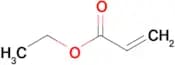
CAS:Fórmula:C11H14O2Pureza:95.0%Peso molecular:178.231Ethyl Acrylate (stabilized with MEHQ)
CAS:Fórmula:C5H8O2Pureza:98.0%Cor e Forma:LiquidPeso molecular:100.117(2E)-1-(3,4-dichlorophenyl)-3-(3-methylphenyl)prop-2-en-1-one
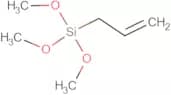
CAS:Fórmula:C16H12Cl2OPureza:95.0%Peso molecular:291.17Allyltrimethoxysilane
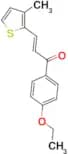
CAS:<p>S00425 - Allyltrimethoxysilane</p>Fórmula:C6H14O3SiPureza:>97.0%(GC)Cor e Forma:Liquid, ClearPeso molecular:162.26(2E)-1-(4-ethoxyphenyl)-3-(3-methylthiophen-2-yl)prop-2-en-1-one
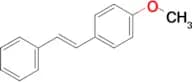
CAS:Fórmula:C16H16O2SPureza:95.0%Peso molecular:272.364-Methoxystilbene
CAS:Fórmula:C15H14OPureza:95%Cor e Forma:Solid, White to very slightly yellowish crystal powderPeso molecular:210.276(2E)-3-(2-chloro-6-fluorophenyl)-1-(2,4-dimethylphenyl)prop-2-en-1-one
CAS:Fórmula:C17H14ClFOPureza:95.0%Peso molecular:288.757-allyl-8-amino-1,3-dimethyl-3,7-dihydro-1H-purine-2,6-dione
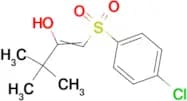
CAS:Fórmula:C10H13N5O2Pureza:95.0%Peso molecular:235.2471-(4′-Chlorobenzenesulfonyl)-3,3-dimethylbutane-2-one
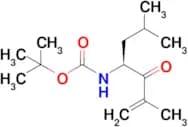
CAS:Fórmula:C12H15ClO3SPureza:98+%Cor e Forma:SolidPeso molecular:274.76(S)-TERT-BUTYL (2,6-DIMETHYL-3-OXOHEPT-1-EN-4-YL)CARBAMATE
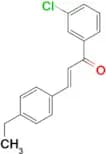
CAS:Fórmula:C14H25NO3Pureza:95%Peso molecular:255.358(2E)-1-(3-chlorophenyl)-3-(4-ethylphenyl)prop-2-en-1-one
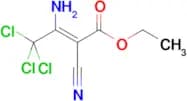
CAS:Fórmula:C17H15ClOPureza:95.0%Peso molecular:270.76(Z)-ETHYL 3-AMINO-4,4,4-TRICHLORO-2-CYANOBUT-2-ENOATE
CAS:Fórmula:C7H7Cl3N2O2Pureza:95.0%Peso molecular:257.53-(4-Methoxyphenyl)-2-methyl-1-propene
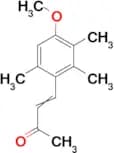
CAS:Fórmula:C11H14OPureza:97.0%Cor e Forma:LiquidPeso molecular:162.2324-(4-Methoxy-2,3,6-trimethylphenyl)but-3-en-2-one
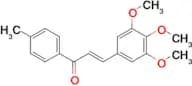
CAS:Fórmula:C14H18O2Pureza:99%+(GC-MS);RGPeso molecular:218.296(2E)-1-(4-methylphenyl)-3-(3,4,5-trimethoxyphenyl)prop-2-en-1-one
CAS:Fórmula:C19H20O4Pureza:95.0%Peso molecular:312.365(2E)-1-(2,4-dimethoxyphenyl)-3-[4-(propan-2-yl)phenyl]prop-2-en-1-one
CAS:Fórmula:C20H22O3Pureza:95.0%Peso molecular:310.393(E)-1-(6-chloro-2-methylimidazo[1,2-a]pyridin-3-yl)-3-(dimethylamino)prop-2-en-1-one
CAS:Pureza:90%Peso molecular:263.730011Platinum-divinyltetramethyldisiloxane complex in xylene (2.1 - 2.4% Platinum concentration)
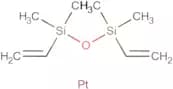
CAS:<p>S25259 - Platinum-divinyltetramethyldisiloxane complex in xylene (2.1 - 2.4% Platinum concentration)</p>Fórmula:C8H18OPtSi2Pureza:95%Cor e Forma:Liquid, HazyPeso molecular:381.485trans-1,4-Dibromo-2-butene
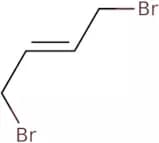
CAS:<p>Trans-1,4-Dibromo-2-butene is a chemical compound with the molecular formula of C4H8Br2. It is an organic halide and a member of the class of compounds known as dibromides. The molecule has two bromine atoms, one on each carbon atom in the chain. Trans-1,4-Dibromo-2-butene is used as a monomer to create polymers such as cationic polymerization or benzalkonium chloride. In addition, trans-1,4-Dibromo-2-butene can be used in the synthesis of amides by reacting with ammonia. This chemical compound also has antimicrobial properties and has been shown to inhibit the activity of bacteria by disrupting protein synthesis and cell division.</p>Fórmula:C4H6Br2Pureza:Min. 95%Cor e Forma:White PowderPeso molecular:213.9 g/mol2-Pentenoic acid
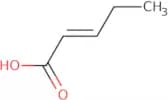
CAS:<p>2-Pentenoic acid is a fatty acid that belongs to the group of sodium salts. It is often used as a catalyst in organic synthesis. 2-Pentenoic acid has been shown to reduce the incidence of bowel disease and improve mitochondrial function. This compound is not toxic at doses up to 1 g/kg in mice, although it may cause acute toxicity at higher doses. 2-Pentenoic acid has also been shown to have anti-inflammatory properties that may be due to its ability to inhibit prostaglandin synthesis.</p>Fórmula:C5H8O2Pureza:Min. 95%Cor e Forma:Colorless Clear LiquidPeso molecular:100.12 g/molα-Bromostyrene (~90%, ~1% Hydroquinone as stabilizer)
CAS:Produto Controlado<p>Applications (1-Bromoethenyl)-benzene is a useful synthetic intermediate. It is a reactant used to synthesize Potassium (1-Phenylcyclopropyl)trifluoroborate (P698400). It can also be used in the synthesis of substituted cyclopentenones.<br>References Zhang, L., et al.: J. Am. Chem. Soc., 128, 1442 (2006)<br></p>Fórmula:C8H7BrCor e Forma:NeatPeso molecular:183.054-Methylindan
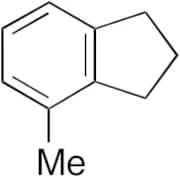
CAS:Produto Controlado<p>Applications 4-Methylindan is a shoyu flavouring that is used in soy sauce.<br>References Nunomura, N., et al.: Agri. Biol. Chem., 48, 1753 (1984);<br></p>Fórmula:C10H12Cor e Forma:NeatPeso molecular:132.21,2-Dimethylcyclohexane
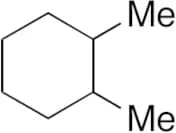
CAS:Produto Controlado<p>Applications 1,2-Dimethylcyclohexane is used in the preparation of rhodium nanoparticles as recyclable catalysts.<br> Not a dangerous good if item is equal to or less than 1g/ml and there is less than 100g/ml in the package<br>References Stratton, S.A., et. al.: Catalysis Today, 183, 96 (2012)<br></p>Fórmula:C8H16Cor e Forma:NeatPeso molecular:112.211-tert-Butyl-3-ethylbenzene
CAS:Produto Controlado<p>Applications 1-TERT-BUTYL-3-ETHYLBENZENE (cas# 14411-56-4) is a useful research chemical.<br> Not a dangerous good if item is equal to or less than 1g/ml and there is less than 100g/ml in the package<br></p>Fórmula:C12H18Cor e Forma:NeatPeso molecular:162.271-Docosanol
CAS:<p>Docosanol is a drug that is used for the treatment of various skin disorders, including psoriasis, eczema, and ichthyosis. It is also used as an adjuvant in the treatment of chronic obstructive pulmonary disease. Docosanol is a lipid molecule that has been shown to have antiviral, antibacterial, antifungal, and antiprotozoal properties. It can be used as a carrier for topical medications and has been shown to have anti-inflammatory effects. The mechanism of action for docosanol is not well understood but may involve its ability to bind to Toll-like receptors on macrophages and neutrophils in the skin. This binding inhibits the synthesis of inflammatory mediators such as prostaglandins and leukotrienes. Docosanol also has physiological effects on water balance by acting as a surfactant in the lungs and preventing water vapor from escaping through respiratory membranes in the nose or mouth. Docosanol</p>Fórmula:C22H46OPureza:Min. 95%Cor e Forma:PowderPeso molecular:326.6 g/molTriisopropylsilyl trifluoromethanesulphonate
CAS:<p>Triisopropylsilyl trifluoromethanesulphonate (TIPS) is a naturally occurring compound that inhibits the enzyme dipeptidyl peptidase IV (DPP-IV). It has been shown to be active against alopecia areata in a mouse model and may have therapeutic potential for other autoimmune diseases. TIPS also has an inhibitory effect on sodium-dependent glucose transport, which may be useful in the treatment of hypertension. The reactive group of TIPS is hydroxyl, which can form a covalent bond with serine proteases and inhibit their activity. This reaction mechanism provides a new way to treat disorders such as metabolic diseases and infectious diseases. TIPS also has an inhibitory effect on ns3 protease, which is involved in the replication of human immunodeficiency virus type 1 (HIV-1) and other retroviruses.</p>Fórmula:C10H21F3O3SSiPureza:Min. 95%Cor e Forma:Colourless Clear LiquidPeso molecular:306.42 g/molN-Methylbutane-1,4-diamine, dihydrochloride
CAS:<p>Putrescine is a metabolite that is produced by the breakdown of amino acids and proteins. It can be synthesized from ornithine, citrulline, and arginine. Putrescine is a precursor to polyamines such as spermidine and spermine, which are important for cell growth. Mouse studies have shown that putrescine is a conjugate base that may act as a neurotransmitter or neuromodulator in the central nervous system.</p>Fórmula:C5H16Cl2N2Pureza:Min. 95%Cor e Forma:PowderPeso molecular:175.1 g/mol

![1-Allyl-[1,4]diazepane](/_next/image/?url=https%3A%2Fstatic.cymitquimica.com%2Fproducts%2F10%2Fthumb-webp%2FF061571.webp&w=3840&q=75)
![{2-[(2-methyl-2-propen-1-yl)oxy]phenyl}methanol](/_next/image/?url=https%3A%2Fstatic.cymitquimica.com%2Fproducts%2F10%2Fthumb-webp%2FF315937.webp&w=3840&q=75)






![(2E)-1-(2,4-dimethoxyphenyl)-3-[4-(propan-2-yl)phenyl]prop-2-en-1-one](/_next/image/?url=https%3A%2Fstatic.cymitquimica.com%2Fproducts%2F10%2Fthumb-webp%2FF523720.webp&w=3840&q=75)

![(E)-1-(6-chloro-2-methylimidazo[1,2-a]pyridin-3-yl)-3-(dimethylamino)prop-2-en-1-one](/_next/image/?url=https%3A%2Fstatic.cymitquimica.com%2Fproducts%2F10%2Fthumb-webp%2FF749860.webp&w=3840&q=75)