Silanos
Os silanos são compostos à base de silício com um ou mais grupos orgânicos ligados a um átomo de silício. Eles servem como building blocks cruciais na síntese orgânica e inorgânica, especialmente na modificação de superfícies, promoção de adesão e produção de revestimentos e selantes. Os silanos são amplamente utilizados na indústria de semicondutores, no tratamento de vidro e como agentes de reticulação na química de polímeros. Na CymitQuimica, oferecemos uma vasta gama de silanos projetados para suas aplicações de pesquisa e industriais.
Subcategorias de "Silanos"
Foram encontrados 1235 produtos de "Silanos"
Ordenar por
Pureza (%)
0
100
|
0
|
50
|
90
|
95
|
100
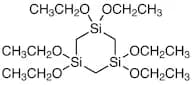
1,1,3,3,5,5-Hexaethoxy-1,3,5-trisilacyclohexane
CAS:Fórmula:C15H36O6Si3Pureza:>90.0%(GC)Cor e Forma:Colorless to Almost colorless clear liquidPeso molecular:396.70Ethylenedithiobis(trimethylsilane) [Protecting Reagent for Aldehydes and Ketones]
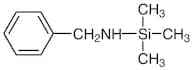
CAS:Fórmula:C8H22S2Si2Pureza:>97.0%(GC)Cor e Forma:Colorless to Almost colorless clear liquidPeso molecular:238.55N-Benzyltrimethylsilylamine
CAS:Fórmula:C10H17NSiPureza:>98.0%(T)Cor e Forma:Colorless to Almost colorless clear liquidPeso molecular:179.342-Propynyl [3-(Triethoxysilyl)propyl]carbamate
CAS:Fórmula:C13H25NO5SiPureza:>90.0%(GC)Cor e Forma:Colorless to Yellow clear liquidPeso molecular:303.43Aminopropyl terminated polydimethylsiloxane cSt 100-120
CAS:<p>DMS-A21 - Aminopropyl terminated polydimethylsiloxane cSt 100-120</p>Cor e Forma:Liquid, ClearPeso molecular:338.187722538Aminoproplyterminated polydimethylsiloxane cSt 20-30
CAS:<p>DMS-A12 - Aminoproplyterminated polydimethylsiloxane cSt 20-30</p>Cor e Forma:Liquid, ClearPeso molecular:338.187722538Silanol terminated polydimethylsiloxanes cSt 50,000
CAS:<p>DMS-S45 - Silanol terminated polydimethylsiloxanes cSt 50,000</p>Cor e Forma:Liquid, ClearPeso molecular:0.0Aminopropyl terminated polydimethylsiloxane cSt 4,000-6,000
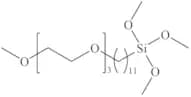
CAS:<p>DMS-A35 - Aminopropyl terminated polydimethylsiloxane cSt 4,000-6,000</p>Cor e Forma:Liquid, ClearPeso molecular:0.02-[Methoxy(polyethyleneoxy)6-9propyl]trimethoxysilane
CAS:<p>S25235 - 2-[Methoxy(polyethyleneoxy)6-9propyl]trimethoxysilane</p>Fórmula:(C2H4O2)nC7H18O3SiPureza:90%Cor e Forma:LiquidPeso molecular:459-591Silanol terminated polydimethylsiloxane cSt 5000
CAS:<p>DMS-S35 - Silanol terminated polydimethylsiloxane cSt 5000</p>Cor e Forma:Liquid, ClearPeso molecular:0.0MonoCarbinol terminated functional Polydimethylsiloxane - symmetric cSt 35-40
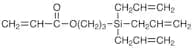
CAS:<p>MCS-C13 - MonoCarbinol terminated functional Polydimethylsiloxane - symmetric cSt 35-40</p>Cor e Forma:Liquid, Clear LiquidPeso molecular:0.03-(Triallylsilyl)propyl Acrylate (stabilized with MEHQ)
CAS:Fórmula:C15H24O2SiPureza:>92.0%(GC)Cor e Forma:Light yellow to Brown clear liquidPeso molecular:264.44(Trifluoromethyl)Trimethylsilane
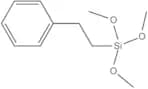
CAS:Fórmula:C4H9F3SiPureza:98%Cor e Forma:LiquidPeso molecular:142.1950PHENETHYLTRIMETHOXYSILANE, tech
CAS:<p>Aromatic Silane - Conventional Surface Bonding<br>Aliphatic, fluorinated aliphatic or substituted aromatic hydrocarbon substituents are the hydrophobic entities which enable silanes to induce surface hydrophobicity. The organic substitution of the silane must be non-polar. The hydrophobic effect of the organic substitution can be related to the free energy of transfer of hydrocarbon molecules from an aqueous phase to a homogeneous hydrocarbon phase. A successful hydrophobic coating must eliminate or mitigate hydrogen bonding and shield polar surfaces from interaction with water by creating a non-polar interphase. Although silane and silicone derived coatings are in general the most hydrophobic, they maintain a high degree of permeability to water vapor. This allows coatings to breathe and reduce deterioration at the coating interface associated with entrapped water. Since ions are not transported through non-polar silane and silicone coatings, they offer protection to composite structures ranging from pigmented coatings to rebar reinforced concrete. A selection guide for hydrophobic silanes can be found on pages 22-31 of the Hydrophobicity, Hydrophilicity and Silane Surface Modification brochure.<br>Phenethyltrimethoxysilane; Phenylethyltrimethoxysilane; Trimethoxy(2-phenylethyl)silane<br>Contains α-, β-isomersComponent in optical coating resinsIn combination with TEOS,SIT7110.0, forms hybrid silicalite-1 molecular sieves<br></p>Fórmula:C11H18O3SiPureza:97%Cor e Forma:Straw To Dark Amber LiquidPeso molecular:226.35Ref: 3H-SIP6722.6
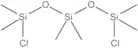
Produto descontinuado1,5-DICHLOROHEXAMETHYLTRISILOXANE, tech
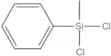
CAS:<p>Alkyl Silane - Conventional Surface Bonding<br>Aliphatic, fluorinated aliphatic or substituted aromatic hydrocarbon substituents are the hydrophobic entities which enable silanes to induce surface hydrophobicity. The organic substitution of the silane must be non-polar. The hydrophobic effect of the organic substitution can be related to the free energy of transfer of hydrocarbon molecules from an aqueous phase to a homogeneous hydrocarbon phase. A successful hydrophobic coating must eliminate or mitigate hydrogen bonding and shield polar surfaces from interaction with water by creating a non-polar interphase. Although silane and silicone derived coatings are in general the most hydrophobic, they maintain a high degree of permeability to water vapor. This allows coatings to breathe and reduce deterioration at the coating interface associated with entrapped water. Since ions are not transported through non-polar silane and silicone coatings, they offer protection to composite structures ranging from pigmented coatings to rebar reinforced concrete. A selection guide for hydrophobic silanes can be found on pages 22-31 of the Hydrophobicity, Hydrophilicity and Silane Surface Modification brochure.<br>1,5-Dichlorohexamethyltrisiloxane; Hexamethyldichlorotrisiloxane; 1,5-Dichloro-1,1,3,3,5,5-hexamethyltrisiloxane<br>ΔHvap: 47.7 kJ/molVapor pressure, 50 °C: 1 mm<br></p>Fórmula:C6H18Cl2O2Si3Pureza:92%Cor e Forma:Straw Amber LiquidPeso molecular:277.37PHENYLMETHYLDICHLOROSILANE
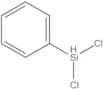
CAS:<p>Aromatic Silane - Conventional Surface Bonding<br>Aliphatic, fluorinated aliphatic or substituted aromatic hydrocarbon substituents are the hydrophobic entities which enable silanes to induce surface hydrophobicity. The organic substitution of the silane must be non-polar. The hydrophobic effect of the organic substitution can be related to the free energy of transfer of hydrocarbon molecules from an aqueous phase to a homogeneous hydrocarbon phase. A successful hydrophobic coating must eliminate or mitigate hydrogen bonding and shield polar surfaces from interaction with water by creating a non-polar interphase. Although silane and silicone derived coatings are in general the most hydrophobic, they maintain a high degree of permeability to water vapor. This allows coatings to breathe and reduce deterioration at the coating interface associated with entrapped water. Since ions are not transported through non-polar silane and silicone coatings, they offer protection to composite structures ranging from pigmented coatings to rebar reinforced concrete. A selection guide for hydrophobic silanes can be found on pages 22-31 of the Hydrophobicity, Hydrophilicity and Silane Surface Modification brochure.<br>Arylsilane Cross-Coupling Agent<br>The cross-coupling reaction is a highly useful methodology for the formation of carbon-carbon bonds. It involves two reagents, with one typically being a suitable organometallic reagent - the nucleophile - and the other a suitable organic substrate, normally an unsaturated halide, tosylate or similar - the electrophile.<br>Phenylmethyldichlorosilane; Methylphenyldichlorosilane; Dichloromethylphenylsilane<br>Viscosity, 20 °C: 1.2 cStΔHvap: 48.1 kJ/molVapor pressure, 82.5 °C: 13 mmMonomer for high temperature siliconesReacts well under the influence of NaOH versus fluoride activation w/ aryl chlorides, bromides, and iodides<br></p>Fórmula:C7H8Cl2SiPureza:97%Cor e Forma:LiquidPeso molecular:191.13Ref: 3H-SIP6738.0
Produto descontinuado(CYCLOHEXYLAMINOMETHYL)TRIETHOXYSILANE
CAS:<p>(N-Cyclohexylaminomethyl)triethoxysilane; [(triethoxysilyl)methyl]aminocyclohexane<br>Secondary amino functional trialkoxy silaneInternal secondary amine coupling agent for UV cure and epoxy systemsUsed in microparticle surface modification<br></p>Fórmula:C13H29NO3SiPureza:95%Cor e Forma:Clear To Straw LiquidPeso molecular:275.46Ref: 3H-SIP6725.0
Produto descontinuadoDODECAFLUORODEC-9-ENE-1-YLTRIMETHOXYSILANE
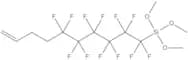
CAS:<p>Olefin Functional Trialkoxy Silane<br>Silane coupling agents have the ability to form a durable bond between organic and inorganic materials to generate desired heterogeneous environments or to incorporate the bulk properties of different phases into a uniform composite structure. The general formula has two classes of functionality. The hydrolyzable group forms stable condensation products with siliceous surfaces and other oxides such as those of aluminum, zirconium, tin, titanium, and nickel. The organofunctional group alters the wetting or adhesion characteristics of the substrate, utilizes the substrate to catalyze chemical transformations at the heterogeneous interface, orders the interfacial region, or modifies its partition characteristics, and significantly effects the covalent bond between organic and inorganic materials.<br>9-Trimethoxysilyl-3,3,4,4,5,5,6,6,7,7,8,8-dodecafluorodecene; Dodecafluorodec-9-ene-1-yltrimethoxysilane<br>Forms self-assembled monolayers; reagent for immobilization of DNAUsed in microparticle surface modificationHalogenated alkyl hydrophobic linkerSimilar to discontinued product, SIH5919.0<br></p>Fórmula:C13H16F12O3SiPureza:97%Cor e Forma:Straw LiquidPeso molecular:476.33PHENYLMETHYLDIMETHOXYSILANE
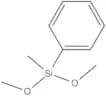
CAS:<p>Aromatic Silane - Conventional Surface Bonding<br>Aliphatic, fluorinated aliphatic or substituted aromatic hydrocarbon substituents are the hydrophobic entities which enable silanes to induce surface hydrophobicity. The organic substitution of the silane must be non-polar. The hydrophobic effect of the organic substitution can be related to the free energy of transfer of hydrocarbon molecules from an aqueous phase to a homogeneous hydrocarbon phase. A successful hydrophobic coating must eliminate or mitigate hydrogen bonding and shield polar surfaces from interaction with water by creating a non-polar interphase. Although silane and silicone derived coatings are in general the most hydrophobic, they maintain a high degree of permeability to water vapor. This allows coatings to breathe and reduce deterioration at the coating interface associated with entrapped water. Since ions are not transported through non-polar silane and silicone coatings, they offer protection to composite structures ranging from pigmented coatings to rebar reinforced concrete. A selection guide for hydrophobic silanes can be found on pages 22-31 of the Hydrophobicity, Hydrophilicity and Silane Surface Modification brochure.<br>Phenylmethyldimethoxysilane; Methylphenyldimethoxysilane; Dimethoxymethylphenylsilane<br>Viscosity, 20 °C: 1.65 cStAdditive to coupling agent systems, increasing interface flexibility, UV stabilityDialkoxy silane<br></p>Fórmula:C9H14O2SiPureza:97%Cor e Forma:Straw LiquidPeso molecular:182.29Ref: 3H-SIP6740.0
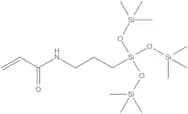
Produto descontinuado3-ACRYLAMIDOPROPYLTRIS(TRIMETHYLSILOXY)SILANE, tech
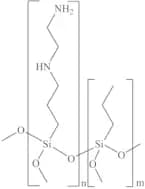
CAS:Fórmula:C15H37NO4Si4Pureza:95%Cor e Forma:SolidPeso molecular:407.8N-(2-AMINOETHYL)-3-AMINOPROPYLTRIMETHOXYSILANE-PROPYLTRIMETHOXYSILANE, oligomeric co-hydrolysate
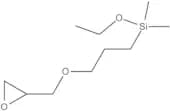
<p>Diamine Functional Polymeric Silane<br>Silane coupling agents have the ability to form a durable bond between organic and inorganic materials to generate desired heterogeneous environments or to incorporate the bulk properties of different phases into a uniform composite structure. The general formula has two classes of functionality. The hydrolyzable group forms stable condensation products with siliceous surfaces and other oxides such as those of aluminum, zirconium, tin, titanium, and nickel. The organofunctional group alters the wetting or adhesion characteristics of the substrate, utilizes the substrate to catalyze chemical transformations at the heterogeneous interface, orders the interfacial region, or modifies its partition characteristics, and significantly effects the covalent bond between organic and inorganic materials.<br>N-(2-Aminoethyl)-3-aminopropyltrimethoxsilane-propyltrimethoxysilane,N-[3-(trimethoxysilyl)propyl]ethylenediamine-(trimethoxysilyl)propane, oligomeric co-hydrolysate<br>Cohydrolysate of SIA0591.1 and SIP6918.0<br></p>Cor e Forma:Straw LiquidPeso molecular:222.36(3-GLYCIDOXYPROPYL)DIMETHYLETHOXYSILANE
CAS:<p>(3-Glycidoxypropyl)dimethylethoxysilane; 3-(2,3-epoxypropoxypropyl)dimethylethoxysilane<br>Epoxy functional monoalkoxy silaneUsed in microparticle surface modificationCoupling agent for UV cure and epoxy systemsEpoxy silane treated surfaces convert to hydrophilic-diols when exposed to moisture<br></p>Fórmula:C10H22O3SiPureza:97%Cor e Forma:Straw LiquidPeso molecular:218.37TRIETHYLSILANE, 98%
CAS:<p>Tri-substituted Silane Reducing Agent<br>Organosilanes are hydrocarbon-like and possess the ability to serve as both ionic and free-radical reducing agents. These reagents and their reaction by-products are safer and more easily handled and disposed than many other reducing agents. The metallic nature of silicon and its low electronegativity relative to hydrogen lead to polarization of the Si-H bond yielding a hydridic hydrogen and a milder reducing agent compared to aluminum-, boron-, and other metal-based hydrides. A summary of some key silane reductions are presented in Table 1 of the Silicon-Based Reducing Agents brochure.<br>Triethylsilane; Triethylsilyl hydride; Triethylsilicon hydride<br>Viscosity: 4.9 cStDipole moment: 0.75 debyeSurface tension: 20.7 mN/mΔHform: -172 kJ/molΔHcomb: -5,324 kJ/molVapor pressure, 20 °: 40 mmSilylates tertiary alcohols in presence of tris(pentafluorophenyl)boraneSilylates arenes in presence of Ru catalyst and t-butylethyleneUsed in reductive cyclization of ynalsReadily converted directly to triethylsilyl carboxylatesUsed to reduce metal saltsEnhances deprotection of t-butoxycarbonyl-protected amines and tert-butyl estersUsed in the reductive amidation of oxazolidinones with amino acids to provide dipeptidesConverts aldehydes to symmetrical and unsymmetrical ethersUsed in the ‘in-situ’ preparation of diborane and haloboranesExtensive review of silicon based reducing agents: Larson, G.; Fry, J. L. "Ionic and Organometallic-Catalyzed Organosilane Reductions", Wipf, P., Ed.; Wiley, 2007<br></p>Fórmula:C6H16SiPureza:98%Cor e Forma:Colourless LiquidPeso molecular:116.28Ref: 3H-SIT8330.0
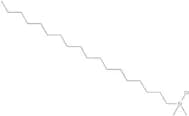
Produto descontinuadon-OCTADECYLDIMETHYLCHLOROSILANE, 70% in toluene
CAS:<p>Alkyl Silane - Conventional Surface Bonding<br>Aliphatic, fluorinated aliphatic or substituted aromatic hydrocarbon substituents are the hydrophobic entities which enable silanes to induce surface hydrophobicity. The organic substitution of the silane must be non-polar. The hydrophobic effect of the organic substitution can be related to the free energy of transfer of hydrocarbon molecules from an aqueous phase to a homogeneous hydrocarbon phase. A successful hydrophobic coating must eliminate or mitigate hydrogen bonding and shield polar surfaces from interaction with water by creating a non-polar interphase. Although silane and silicone derived coatings are in general the most hydrophobic, they maintain a high degree of permeability to water vapor. This allows coatings to breathe and reduce deterioration at the coating interface associated with entrapped water. Since ions are not transported through non-polar silane and silicone coatings, they offer protection to composite structures ranging from pigmented coatings to rebar reinforced concrete. A selection guide for hydrophobic silanes can be found on pages 22-31 of the Hydrophobicity, Hydrophilicity and Silane Surface Modification brochure.<br>n-Octadecyldimethylchlorosilane; Dimethyl-n-octadecylchlorosilane; Chlorodimethyloctadecylsilane; Chlorodimethylsilyl-n-octadecane<br>Contains 5-10% C18 isomers70% in toluene<br></p>Fórmula:C20H43ClSiCor e Forma:Straw Amber LiquidPeso molecular:347.13-ISOCYANOTOPROPYLTRIMETHOXYSILANE, 92%
CAS:<p>3-Isocyanotopropyltrimethoxysilane; trimethoxysilylpropylisocyanate<br>Isocyanate functional trialkoxy silaneViscosity: 1.4 cStCoupling agent for urethanes, polyols, and aminesComponent in hybrid organic/inorganic urethanes<br></p>Fórmula:C7H15NO4SiPureza:92%Cor e Forma:Straw LiquidPeso molecular:205.29Ref: 3H-SII6456.0
Produto descontinuado1,3-DIVINYLTETRAMETHYLDISILOXANE
CAS:<p>Alkenylsilane Cross-Coupling Agent<br>The cross-coupling reaction is a highly useful methodology for the formation of carbon-carbon bonds. It involves two reagents, with one typically being a suitable organometallic reagent - the nucleophile - and the other a suitable organic substrate, normally an unsaturated halide, tosylate or similar - the electrophile.<br>1,3-Divinyltetramethyldisiloxane; Diethenyltetramethyldisiloxane; Tetramethyldivinyldisiloxane; Divinyltetramethyldisiloxane<br>Silicone end-capperPotential vinyl nucleophile in cross-coupling reactionsModifier for vinyl addition silicone formulationsPotential vinyl donor in cross-coupling reactionsExtensive review of silicon based cross-coupling agents: Denmark, S. E. et al. "Organic Reactions, Volume 75" Denmark, S. E. ed., John Wiley and Sons, 233, 2011<br></p>Fórmula:C8H18OSi2Pureza:97%Cor e Forma:LiquidPeso molecular:186.4Ref: 3H-SID4613.0
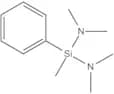
Produto descontinuadoPHENYLMETHYLBIS(DIMETHYLAMINO)SILANE
CAS:<p>Aromatic Silane - Conventional Surface Bonding<br>Aliphatic, fluorinated aliphatic or substituted aromatic hydrocarbon substituents are the hydrophobic entities which enable silanes to induce surface hydrophobicity. The organic substitution of the silane must be non-polar. The hydrophobic effect of the organic substitution can be related to the free energy of transfer of hydrocarbon molecules from an aqueous phase to a homogeneous hydrocarbon phase. A successful hydrophobic coating must eliminate or mitigate hydrogen bonding and shield polar surfaces from interaction with water by creating a non-polar interphase. Although silane and silicone derived coatings are in general the most hydrophobic, they maintain a high degree of permeability to water vapor. This allows coatings to breathe and reduce deterioration at the coating interface associated with entrapped water. Since ions are not transported through non-polar silane and silicone coatings, they offer protection to composite structures ranging from pigmented coatings to rebar reinforced concrete. A selection guide for hydrophobic silanes can be found on pages 22-31 of the Hydrophobicity, Hydrophilicity and Silane Surface Modification brochure.<br>Phenylmethylbis(dimethylamino)silane; Bis(dimethylamino)methylphenylsilane; Bis(dimethylamino)phenylmethylsilane; N,N,N',N',1-Pentamethyl-1-phenylsilanediamine<br></p>Fórmula:C11H20N2SiPureza:97%Cor e Forma:Straw LiquidPeso molecular:208.381,3,5,7,9-PENTAMETHYLCYCLOPENTASILOXANE, 90%
CAS:<p>Siloxane-Based Silane Reducing Agent<br>Organosilanes are hydrocarbon-like and possess the ability to serve as both ionic and free-radical reducing agents. These reagents and their reaction by-products are safer and more easily handled and disposed than many other reducing agents. The metallic nature of silicon and its low electronegativity relative to hydrogen lead to polarization of the Si-H bond yielding a hydridic hydrogen and a milder reducing agent compared to aluminum-, boron-, and other metal-based hydrides. A summary of some key silane reductions are presented in Table 1 of the Silicon-Based Reducing Agents brochure.<br>1,3,5,7,9-Pentamethylcyclopentasiloxane; D'5; Methyl hydrogen cyclic pentamer; 2,4,6,8,10-Pentamethylcyclopentasiloxane<br>ΔHvap: 47.3 kJ/molContains other cyclic homologsExtensive review of silicon based reducing agents: Larson, G.; Fry, J. L. "Ionic and Organometallic-Catalyzed Organosilane Reductions", Wipf, P., Ed.; Wiley, 2007<br></p>Fórmula:C5H20O5Si5Pureza:90%Cor e Forma:LiquidPeso molecular:300.64Ref: 3H-SIP6718.0
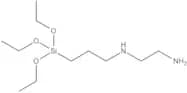
Produto descontinuadoN-(2-AMINOETHYL)-3-AMINOPROPYLTRIETHOXYSILANE, 92%
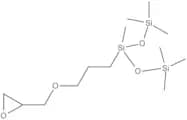
CAS:<p>Diamino Functional Trialkoxy Silane<br>Silane coupling agents have the ability to form a durable bond between organic and inorganic materials to generate desired heterogeneous environments or to incorporate the bulk properties of different phases into a uniform composite structure. The general formula has two classes of functionality. The hydrolyzable group forms stable condensation products with siliceous surfaces and other oxides such as those of aluminum, zirconium, tin, titanium, and nickel. The organofunctional group alters the wetting or adhesion characteristics of the substrate, utilizes the substrate to catalyze chemical transformations at the heterogeneous interface, orders the interfacial region, or modifies its partition characteristics, and significantly effects the covalent bond between organic and inorganic materials.<br>N-(2-Aminoethyl)-3-aminopropyltriethoxysilane; N-[3-(Triethoxysilyl)propyl]-1,2-ethanediamine; N-[3-(Triethoxysilyl)propyl]-ethylenediamine<br>Primary amine with an internal secondary amine coupling agent for UV cure and epoxy systemsUsed in microparticle surface modificationSlower hydrolysis rate than SIA0591.0 and SIA0592.6<br></p>Fórmula:C11H28N2O3SiPureza:92%Cor e Forma:Straw LiquidPeso molecular:264.55(3-GLYCIDOXYPROPYL)BIS(TRIMETHYLSILOXY)METHYLSILANE
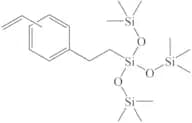
CAS:Fórmula:C13H32O4Si3Pureza:97% including isomersCor e Forma:Straw LiquidPeso molecular:336.65STYRYLETHYLTRIS(TRIMETHYLSILOXY)SILANE, mixed isomers, tech
CAS:Fórmula:C19H38O3Si4Pureza:techCor e Forma:Straw LiquidPeso molecular:426.84TRIS(TRIMETHYLSILOXY)CHLOROSILANE
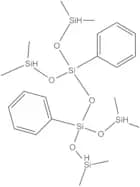
CAS:Fórmula:C9H27ClO3Si4Pureza:97%Cor e Forma:Straw LiquidPeso molecular:331.11,3-DIPHENYLTETRAKIS(DIMETHYLSILOXY)DISILOXANE, 92%
CAS:Fórmula:C20H38O5Si6Pureza:92%Cor e Forma:LiquidPeso molecular:527.031,3-DIPHENYL-1,1,3,3-TETRAMETHYLDISILAZANE
CAS:<p>Phenyl-Containing Blocking Agent<br>Used as a protecting group for reactive hydrogens in alcohols, amines, thiols, and carboxylic acids. Organosilanes are hydrogen-like, can be introduced in high yield, and can be removed under selective conditions. They are stable over a wide range of reaction conditions and can be removed in the presence of other functional groups, including other protecting groups. The tolerance of silylated alcohols to chemical transformations summary is presented in Table 1 of the Silicon-Based Blocking Agents brochure.<br>Aromatic Silane - Conventional Surface Bonding<br>Aliphatic, fluorinated aliphatic or substituted aromatic hydrocarbon substituents are the hydrophobic entities which enable silanes to induce surface hydrophobicity. The organic substitution of the silane must be non-polar. The hydrophobic effect of the organic substitution can be related to the free energy of transfer of hydrocarbon molecules from an aqueous phase to a homogeneous hydrocarbon phase. A successful hydrophobic coating must eliminate or mitigate hydrogen bonding and shield polar surfaces from interaction with water by creating a non-polar interphase. Although silane and silicone derived coatings are in general the most hydrophobic, they maintain a high degree of permeability to water vapor. This allows coatings to breathe and reduce deterioration at the coating interface associated with entrapped water. Since ions are not transported through non-polar silane and silicone coatings, they offer protection to composite structures ranging from pigmented coatings to rebar reinforced concrete. A selection guide for hydrophobic silanes can be found on pages 22-31 of the Hydrophobicity, Hydrophilicity and Silane Surface Modification brochure.<br>Diphenyltetramethyldisilazane; N-(Dimethylphenylsilyl)-1,1-dimethyl-1-phenyl silane amine; N-(Dimethylphenylsilyl)-1,1-dimethyl-1-phenylsilylamine<br>Similar to SIP6728.0Emits ammonia upon reactionUsed for silylation of capillary columnsSummary of selective deprotection conditions is provided in Table 7 through Table 20 of the Silicon-Based Blocking Agents brochure<br></p>Fórmula:C16H23NSi2Pureza:97%Cor e Forma:LiquidPeso molecular:285.54Ref: 3H-SID4586.0
Produto descontinuadoDI-t-BUTOXYDIACETOXYSILANE, 95%
CAS:Fórmula:C12H24O6SiPureza:95%Cor e Forma:LiquidPeso molecular:292.41,3-BIS(3-METHACRYLOXYPROPYL)TETRAMETHYLDISILOXANE
CAS:Fórmula:C18H34O5Si2Pureza:92%Cor e Forma:Straw LiquidPeso molecular:386.64SIVATE A610: ACTIVATED AMINE FUNCTIONAL SILANE
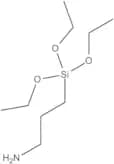
CAS:<p>SIVATE A610 (Activated AMEO)<br>Activated silane blend of aminopropyltriethoxysilane (SIA0610.0) and (1-(3-triethoxysilyl)propyl)-2,2-diethoxy-1-aza-silacyclopentane (SIT8187.2)Reacts at high speed (seconds compared to hours)Does not require moisture or hydrolysis to initiate surface reactivityReacts with a greater variety of substratesPrimer for high speed UV cure systems (e.g. acrylated urethanes)<br>Activated Amine Functional Trialkoxy Silane<br>Silane coupling agents have the ability to form a durable bond between organic and inorganic materials to generate desired heterogeneous environments or to incorporate the bulk properties of different phases into a uniform composite structure. The general formula has two classes of functionality. The hydrolyzable group forms stable condensation products with siliceous surfaces and other oxides such as those of aluminum, zirconium, tin, titanium, and nickel. The organofunctional group alters the wetting or adhesion characteristics of the substrate, utilizes the substrate to catalyze chemical transformations at the heterogeneous interface, orders the interfacial region, or modifies its partition characteristics, and significantly effects the covalent bond between organic and inorganic materials.<br></p>Fórmula:C9H23NO3SiCor e Forma:Colourless To Straw LiquidPeso molecular:221.37Ref: 3H-SIA0610.A1
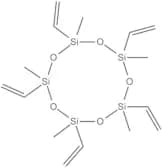
Produto descontinuadoPENTAVINYLPENTAMETHYLCYCLOPENTASILOXANE, 92%
CAS:Fórmula:C15H30O5Si5Pureza:92%Cor e Forma:LiquidPeso molecular:430.82TRIETHOXYSILYL MODIFIED POLY-1,2-BUTADIENE, 50% in volatile silicone
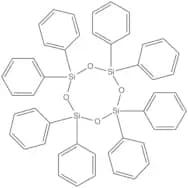
CAS:<p>Triethoxysilyl modified poly-1,2-butadiene; vinyltriethoxysilane-1,2-butadiene copolymer; triethoxysilyl modified poly(1,2-butadiene)<br>Multi-functional polymeric trialkoxy silane50% in volatile silicone (decamethylcyclopentasiloxane)Hydrophobic modified polybutadieneViscosity: 600-1200 cStPrimer coating for silicone rubbers<br></p>Cor e Forma:Pale Yellow Amber LiquidPeso molecular:3500-4500OCTAPHENYLCYCLOTETRASILOXANE, 95%
CAS:Fórmula:C48H40O4Si4Cor e Forma:White SolidPeso molecular:793.18Ref: 3H-SIO6705.0
Produto descontinuado[PERFLUORO(POLYPROPYLENEOXY)]METHOXYPROPYLTRIMETHOXYSILANE, 20% in fluorinated hydrocarbon
CAS:<p>Fluoroalkyl Silane - Conventional Surface Bonding<br>Aliphatic, fluorinated aliphatic or substituted aromatic hydrocarbon substituents are the hydrophobic entities which enable silanes to induce surface hydrophobicity. The organic substitution of the silane must be non-polar. The hydrophobic effect of the organic substitution can be related to the free energy of transfer of hydrocarbon molecules from an aqueous phase to a homogeneous hydrocarbon phase. A successful hydrophobic coating must eliminate or mitigate hydrogen bonding and shield polar surfaces from interaction with water by creating a non-polar interphase. Although silane and silicone derived coatings are in general the most hydrophobic, they maintain a high degree of permeability to water vapor. This allows coatings to breathe and reduce deterioration at the coating interface associated with entrapped water. Since ions are not transported through non-polar silane and silicone coatings, they offer protection to composite structures ranging from pigmented coatings to rebar reinforced concrete. A selection guide for hydrophobic silanes can be found on pages 22-31 of the Hydrophobicity, Hydrophilicity and Silane Surface Modification brochure.<br>[Perfluoro(polypropyleneoxy)]methoxypropyltrimethoxysilane; (1H,1H,2H,2H-Perfluorodecyl)trimethoxysilane; Heptadecafluorodecyltrimethoxysilane<br>Contact angle, water: 112 ° 20% in fluorinated hydrocarbonTrialkoxy silane<br></p>Fórmula:CF3CF2CF2O(CF2CF2CF2O)nCH2OCH2CH2CH2Si(OCH3)3Cor e Forma:Colorless To Light Yellow LiquidPeso molecular:4000-8000n-DECYLTRIETHOXYSILANE
CAS:<p>Alkyl Silane - Conventional Surface Bonding<br>Aliphatic, fluorinated aliphatic or substituted aromatic hydrocarbon substituents are the hydrophobic entities which enable silanes to induce surface hydrophobicity. The organic substitution of the silane must be non-polar. The hydrophobic effect of the organic substitution can be related to the free energy of transfer of hydrocarbon molecules from an aqueous phase to a homogeneous hydrocarbon phase. A successful hydrophobic coating must eliminate or mitigate hydrogen bonding and shield polar surfaces from interaction with water by creating a non-polar interphase. Although silane and silicone derived coatings are in general the most hydrophobic, they maintain a high degree of permeability to water vapor. This allows coatings to breathe and reduce deterioration at the coating interface associated with entrapped water. Since ions are not transported through non-polar silane and silicone coatings, they offer protection to composite structures ranging from pigmented coatings to rebar reinforced concrete. A selection guide for hydrophobic silanes can be found on pages 22-31 of the Hydrophobicity, Hydrophilicity and Silane Surface Modification brochure.<br>n-Decyltriethoxysilane; Triethoxysilyldecane<br>Trialkoxy silane<br></p>Fórmula:C16H36O3SiPureza:97%Cor e Forma:Straw LiquidPeso molecular:304.54Ref: 3H-SID2665.0
Produto descontinuadoMETHOXY(TRIETHYLENEOXY)UNDECYLTRIMETHOXYSILANE
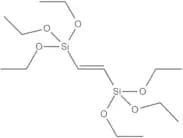
CAS:<p>Tipped PEG Silane (438.68 g/mol)<br>PEG3C11 Silane3,3-Dimethoxy-2,15,18,24-pentaoxa-3-silapentacosanePEO, Trimethoxysilane termination utilized for hydrophilic surface modificationPEGylation reagentHydrogen bonding hydrophilic silane<br></p>Fórmula:C21H46O7SiPureza:97%Cor e Forma:Straw LiquidPeso molecular:438.681,2-BIS(TRIETHOXYSILYL)ETHYLENE, 92%
CAS:<p>Olefin Functional Alkoxy Silane<br>Silane coupling agents have the ability to form a durable bond between organic and inorganic materials to generate desired heterogeneous environments or to incorporate the bulk properties of different phases into a uniform composite structure. The general formula has two classes of functionality. The hydrolyzable group forms stable condensation products with siliceous surfaces and other oxides such as those of aluminum, zirconium, tin, titanium, and nickel. The organofunctional group alters the wetting or adhesion characteristics of the substrate, utilizes the substrate to catalyze chemical transformations at the heterogeneous interface, orders the interfacial region, or modifies its partition characteristics, and significantly effects the covalent bond between organic and inorganic materials.<br>Dipodal Silane<br>Dipodal silanes are a series of adhesion promoters that have intrinsic hydrolytic stabilities up to ~10,000 times greater than conventional silanes and are used in applications such as plastic optics, multilayer printed circuit boards and as adhesive primers for ferrous and nonferrous metals. They have the ability to form up to six bonds to a substrate compared to conventional silanes with the ability to form only three bonds to a substrate. Many conventional coupling agents are frequently used in combination with 10-40% of a non-functional dipodal silane, where the conventional coupling agent provides the appropriate functionality for the application, and the non-functional dipodal silane provides increased durability. Dipodal silanes additives enhance hydrolytic stability, which impacts on increased product shelf life, ensures better substrate bonding and also leads to improved mechanical properties in coatings as well as composite applications.<br>1,2-Bis(triethoxysilyl)ethylene; 4,4,7,7-Tetraethoxy-3,8-dioxa-4,7-disiladec-5-ene<br>~80% trans isomerForms ethylene-bridged mesoporous silicas<br></p>Fórmula:C14H32O6Si2Pureza:92%Cor e Forma:LiquidPeso molecular:352.5710-UNDECENYLTRICHLOROSILANE
CAS:Fórmula:C11H21Cl3SiPureza:97%Cor e Forma:Straw LiquidPeso molecular:287.74

![Ethylenedithiobis(trimethylsilane) [Protecting Reagent for Aldehydes and Ketones]](/_next/image/?url=https%3A%2Fstatic.cymitquimica.com%2Fproducts%2F3B%2Fthumb-webp%2FE0479.webp&w=3840&q=75)
![2-Propynyl [3-(Triethoxysilyl)propyl]carbamate](/_next/image/?url=https%3A%2Fstatic.cymitquimica.com%2Fproducts%2F3B%2Fthumb-webp%2FP2258.webp&w=3840&q=75)


![2-[Methoxy(polyethyleneoxy)6-9propyl]trimethoxysilane](/_next/image/?url=https%3A%2Fstatic.cymitquimica.com%2Fproducts%2F10%2Fthumb-webp%2FS25235.webp&w=3840&q=75)














![[PERFLUORO(POLYPROPYLENEOXY)]METHOXYPROPYLTRIMETHOXYSILANE, 20% in fluorinated hydrocarbon](/_next/image/?url=https%3A%2Fstatic.cymitquimica.com%2Fproducts%2F3H%2Fthumb-webp%2FSIP6720.72.webp&w=3840&q=75)