Silanos
Os silanos são compostos à base de silício com um ou mais grupos orgânicos ligados a um átomo de silício. Eles servem como building blocks cruciais na síntese orgânica e inorgânica, especialmente na modificação de superfícies, promoção de adesão e produção de revestimentos e selantes. Os silanos são amplamente utilizados na indústria de semicondutores, no tratamento de vidro e como agentes de reticulação na química de polímeros. Na CymitQuimica, oferecemos uma vasta gama de silanos projetados para suas aplicações de pesquisa e industriais.
Subcategorias de "Silanos"
Foram encontrados 1235 produtos de "Silanos"
Ordenar por
Pureza (%)
0
100
|
0
|
50
|
90
|
95
|
100
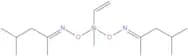
VINYLMETHYLBIS(METHYLISOBUTYLKETOXIMINO)SILANE, tech
CAS:Fórmula:C15H30N2O2SiPureza:90%Cor e Forma:LiquidPeso molecular:298.5THEXYLDIMETHYLCHLOROSILANE
CAS:<p>Alkyl Silane - Conventional Surface Bonding<br>Aliphatic, fluorinated aliphatic or substituted aromatic hydrocarbon substituents are the hydrophobic entities which enable silanes to induce surface hydrophobicity. The organic substitution of the silane must be non-polar. The hydrophobic effect of the organic substitution can be related to the free energy of transfer of hydrocarbon molecules from an aqueous phase to a homogeneous hydrocarbon phase. A successful hydrophobic coating must eliminate or mitigate hydrogen bonding and shield polar surfaces from interaction with water by creating a non-polar interphase. Although silane and silicone derived coatings are in general the most hydrophobic, they maintain a high degree of permeability to water vapor. This allows coatings to breathe and reduce deterioration at the coating interface associated with entrapped water. Since ions are not transported through non-polar silane and silicone coatings, they offer protection to composite structures ranging from pigmented coatings to rebar reinforced concrete. A selection guide for hydrophobic silanes can be found on pages 22-31 of the Hydrophobicity, Hydrophilicity and Silane Surface Modification brochure.<br>Trialkylsilyl Blocking Agent<br>Used as a protecting group for reactive hydrogens in alcohols, amines, thiols, and carboxylic acids. Organosilanes are hydrogen-like, can be introduced in high yield, and can be removed under selective conditions. They are stable over a wide range of reaction conditions and can be removed in the presence of other functional groups, including other protecting groups. The tolerance of silylated alcohols to chemical transformations summary is presented in Table 1 of the Silicon-Based Blocking Agents brochure.<br>Thexyldimethylchlorosilane; t-Hexyldimethylchlorosilane; Dimethylthexylchlorosilane; TDS-Cl<br>Ethers show stability similar to or greater than the TBS ethers.Used for 1° and 2° aminesSelective for 1° alcoholsHighly stable protection of alcohols, amines, amides, mercaptans and acidsThe N-silylated β-lactam shows increased hydrolytic stability over that of the analogous N-TBS derivativeSummary of selective deprotection conditions is provided in Table 7 through Table 20 of the Silicon-Based Blocking Agents brochure<br></p>Fórmula:C8H19ClSiPureza:97%Cor e Forma:LiquidPeso molecular:178.78ALLYLTRIMETHOXYSILANE
CAS:<p>Olefin Functional Trialkoxy Silane<br>Silane coupling agents have the ability to form a durable bond between organic and inorganic materials to generate desired heterogeneous environments or to incorporate the bulk properties of different phases into a uniform composite structure. The general formula has two classes of functionality. The hydrolyzable group forms stable condensation products with siliceous surfaces and other oxides such as those of aluminum, zirconium, tin, titanium, and nickel. The organofunctional group alters the wetting or adhesion characteristics of the substrate, utilizes the substrate to catalyze chemical transformations at the heterogeneous interface, orders the interfacial region, or modifies its partition characteristics, and significantly effects the covalent bond between organic and inorganic materials.<br>Alkenylsilane Cross-Coupling Agent<br>The cross-coupling reaction is a highly useful methodology for the formation of carbon-carbon bonds. It involves two reagents, with one typically being a suitable organometallic reagent - the nucleophile - and the other a suitable organic substrate, normally an unsaturated halide, tosylate or similar - the electrophile.<br>Allyltrimethoxysilane; 1-Trimethoxysilylprop-2-ene<br>Adhesion promoter for vinyl-addition siliconesAllylation of ketones, aldehydes and imines with dual activation of a Lewis Acid and fluoride ionUsed in the regioselective generation of the thermodynamically more stable enol trimethoxysilyl ethers, which in turn are used in the asymmetric generation of quaternary carbon centersConverts arylselenyl bromides to arylallylselenidesAllylates aryl iodidesUsed in microparticle surface modificationComonomer for polyolefin polymerizationExtensive review of silicon based cross-coupling agents: Denmark, S. E. et al. "Organic Reactions, Volume 75" Denmark, S. E. ed., John Wiley and Sons, 233, 2011<br></p>Fórmula:C6H14O3SiPureza:97%Cor e Forma:Straw LiquidPeso molecular:162.261,1,3,3,5,5-HEXAMETHYLTRISILOXANE
CAS:<p>Siloxane-Based Silane Reducing Agent<br>Organosilanes are hydrocarbon-like and possess the ability to serve as both ionic and free-radical reducing agents. These reagents and their reaction by-products are safer and more easily handled and disposed than many other reducing agents. The metallic nature of silicon and its low electronegativity relative to hydrogen lead to polarization of the Si-H bond yielding a hydridic hydrogen and a milder reducing agent compared to aluminum-, boron-, and other metal-based hydrides. A summary of some key silane reductions are presented in Table 1 of the Silicon-Based Reducing Agents brochure.<br>1,1,3,3,5,5-hexamethyltrisiloxane; Methyl 1,5-dihydro-1,1,3,3-hexamethyltrsiloxane; M’DM’<br>High molecular weight silane reducing agentUndergoes hydrosilylation reactionsExtensive review of silicon based reducing agents: Larson, G.; Fry, J. L. "Ionic and Organometallic-Catalyzed Organosilane Reductions", Wipf, P., Ed.; Wiley, 2007<br></p>Fórmula:C6H20O2Si3Pureza:97%Cor e Forma:LiquidPeso molecular:208.48BIS[3-(TRIETHOXYSILYL)PROPYL]DISULFIDE, 90%
CAS:<p>Bis[3-(triethoxysilyl)propyl]disulfide; bis(triethoxysilyl)-4,5-dithiooctane<br>Sulfur functional dipodal silaneContains sulfide and tetrasulfideDipodal coupling agent/vulcanizing agent for rubbersIntermediate for mesoporous silicas with acidic pores<br></p>Fórmula:C18H42O6S2Si2Pureza:90%Cor e Forma:Pale Yellow Amber LiquidPeso molecular:474.821,2-BIS(TRIETHOXYSILYL)ETHANE
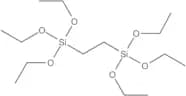
CAS:<p>Alkyl Silane - Dipodal Surface Bonding<br>Aliphatic, fluorinated aliphatic or substituted aromatic hydrocarbon substituents are the hydrophobic entities which enable silanes to induce surface hydrophobicity. The organic substitution of the silane must be non-polar. The hydrophobic effect of the organic substitution can be related to the free energy of transfer of hydrocarbon molecules from an aqueous phase to a homogeneous hydrocarbon phase. A successful hydrophobic coating must eliminate or mitigate hydrogen bonding and shield polar surfaces from interaction with water by creating a non-polar interphase. Although silane and silicone derived coatings are in general the most hydrophobic, they maintain a high degree of permeability to water vapor. This allows coatings to breathe and reduce deterioration at the coating interface associated with entrapped water. Since ions are not transported through non-polar silane and silicone coatings, they offer protection to composite structures ranging from pigmented coatings to rebar reinforced concrete. A selection guide for hydrophobic silanes can be found on pages 22-31 of the Hydrophobicity, Hydrophilicity and Silane Surface Modification brochure.<br>Non Functional Alkoxy Silane<br>Silane coupling agents have the ability to form a durable bond between organic and inorganic materials to generate desired heterogeneous environments or to incorporate the bulk properties of different phases into a uniform composite structure. The general formula has two classes of functionality. The hydrolyzable group forms stable condensation products with siliceous surfaces and other oxides such as those of aluminum, zirconium, tin, titanium, and nickel. The organofunctional group alters the wetting or adhesion characteristics of the substrate, utilizes the substrate to catalyze chemical transformations at the heterogeneous interface, orders the interfacial region, or modifies its partition characteristics, and significantly effects the covalent bond between organic and inorganic materials.<br>Dipodal Silane<br>Dipodal silanes are a series of adhesion promoters that have intrinsic hydrolytic stabilities up to ~10,000 times greater than conventional silanes and are used in applications such as plastic optics, multilayer printed circuit boards and as adhesive primers for ferrous and nonferrous metals. They have the ability to form up to six bonds to a substrate compared to conventional silanes with the ability to form only three bonds to a substrate. Many conventional coupling agents are frequently used in combination with 10-40% of a non-functional dipodal silane, where the conventional coupling agent provides the appropriate functionality for the application, and the non-functional dipodal silane provides increased durability. Also known as bis-silanes additives enhance hydrolytic stability, which impacts on increased product shelf life, ensures better substrate bonding and also leads to improved mechanical properties in coatings as well as composite applications.<br>1,2-Bis(triethoxysilyl)ethane (Hexaethoxydisilethylene, BSE)<br>ΔHvap: 101.5 kJ/molVapor pressure, 150°: 10mmAdditive to silane coupling agent formulations that enhance hydrolytic stabilityEmployed in corrosion resistant coating and primers for steel and aluminumComponent in evaporation-induced self-assembly of mesoporous structuresForms mesoporous molecular sieves that can be further functionalizedSolg-gels of α,ω-bis(trimethoxysilyl)alkanes reportedHydrolysis kinetics studied7Advanced silane in SIVATE™ E610Used as an adhesion promoter in Bird-deterrent Glass Coatings<br></p>Fórmula:C14H34O6Si2Pureza:97%Cor e Forma:LiquidPeso molecular:354.59TRIMETHYLCHLOROSILANE CYLINDER
CAS:<p>Trimethylsilyl Blocking Agent<br>Used as a protecting group for reactive hydrogens in alcohols, amines, thiols, and carboxylic acids. Organosilanes are hydrogen-like, can be introduced in high yield, and can be removed under selective conditions. They are stable over a wide range of reaction conditions and can be removed in the presence of other functional groups, including other protecting groups. The tolerance of silylated alcohols to chemical transformations summary is presented in Table 1 of the Silicon-Based Blocking Agents brochure.<br>Alkyl Silane - Conventional Surface Bonding<br>Aliphatic, fluorinated aliphatic or substituted aromatic hydrocarbon substituents are the hydrophobic entities which enable silanes to induce surface hydrophobicity. The organic substitution of the silane must be non-polar. The hydrophobic effect of the organic substitution can be related to the free energy of transfer of hydrocarbon molecules from an aqueous phase to a homogeneous hydrocarbon phase. A successful hydrophobic coating must eliminate or mitigate hydrogen bonding and shield polar surfaces from interaction with water by creating a non-polar interphase. Although silane and silicone derived coatings are in general the most hydrophobic, they maintain a high degree of permeability to water vapor. This allows coatings to breathe and reduce deterioration at the coating interface associated with entrapped water. Since ions are not transported through non-polar silane and silicone coatings, they offer protection to composite structures ranging from pigmented coatings to rebar reinforced concrete. A selection guide for hydrophobic silanes can be found on pages 22-31 of the Hydrophobicity, Hydrophilicity and Silane Surface Modification brochure.<br>Trimethylchorosilane; Chlorotrimethylsilane; Trimethylsilyl chloride; TMCS<br>Viscosity: 0.47 cStΔHcomb: -2,989 kJ/molΔHform: -354 kJ/molΔHvap: 27.6 kJ/molDipole moment: 2.09 debyeSurface tension: 17.8 mN/mSpecific heat: 1.76 J/g/°CCoefficient of thermal expansion: 1.2 x 10⁻³Vapor pressure, 20 °: 190 mmVapor pressure, 50 °C: 591 mmCritical temperature: 224.6 °CCritical pressure: 31.6 atmMost economical and broadly used silylation reagentEnhances Claisen rearrangementEnhances the deprotection of tBOC-protected amino acidsEnhances ethylene glycol ketalization reactionCatalyzes the formation of chlorohydrin esters from diolsReviewed as water scavenger in reactions of carbonyl compoundsFacilitates Michael additionsReacts in presence of HCl acceptorWill silylate strong acids with expulsion of HClHigh purity grade available, SIT8510.1Protects hindered alcohols with Mg/DMFNafion SAC-13 has been shown to be a recyclable catalyst for the trimethylsilylation of primary, secondary, and tertiary alcohols in excellent yields and short reaction timesSummary of selective deprotection conditions is provided in Table 7 through Table 20 of the Silicon-Based Blocking Agents brochure<br></p>Fórmula:C3H9ClSiPureza:97%Cor e Forma:Straw LiquidPeso molecular:108.64Ref: 3H-SIT8510.0
drA consultar25gA consultar3kgA consultarcylA consultar15kgA consultar750gA consultar170kgA consultarDIMETHYLSILA-14-CROWN-5, 95%
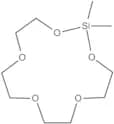
CAS:<p>Silacrown (250.37 g/mol)<br>2,2-Dimethyl-1,3,6,9,12-pentaoxa-2-silacyclotetradecaneCrown ether analogDual end protected PEGPotential Li ion electrolyte<br></p>Fórmula:C10H22O5SiPureza:95%Cor e Forma:LiquidPeso molecular:250.37PENTAFLUOROPHENYLTRIETHOXYSILANE
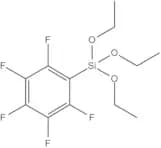
CAS:<p>Arylsilane Cross-Coupling Agent<br>The cross-coupling reaction is a highly useful methodology for the formation of carbon-carbon bonds. It involves two reagents, with one typically being a suitable organometallic reagent - the nucleophile - and the other a suitable organic substrate, normally an unsaturated halide, tosylate or similar - the electrophile.<br>Pentafluorophenyltriethoxysilane; Triethoxysilylperfluorobenzene<br>Forms hydrogen-free silicone resins useful in optical coatingsUseful for the preparation of pentafluorophenyl derivativesExtensive review of silicon based cross-coupling agents: Denmark, S. E. et al. "Organic Reactions, Volume 75" Denmark, S. E. ed., John Wiley and Sons, 233, 2011<br></p>Fórmula:C12H15F5O3SiPureza:97%Cor e Forma:Straw LiquidPeso molecular:330.331,2-BIS(TRIMETHOXYSILYL)DECANE
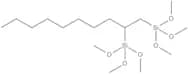
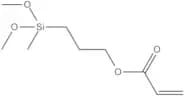
CAS:<p>Alkyl Silane - Dipodal Surface Bonding<br>Aliphatic, fluorinated aliphatic or substituted aromatic hydrocarbon substituents are the hydrophobic entities which enable silanes to induce surface hydrophobicity. The organic substitution of the silane must be non-polar. The hydrophobic effect of the organic substitution can be related to the free energy of transfer of hydrocarbon molecules from an aqueous phase to a homogeneous hydrocarbon phase. A successful hydrophobic coating must eliminate or mitigate hydrogen bonding and shield polar surfaces from interaction with water by creating a non-polar interphase. Although silane and silicone derived coatings are in general the most hydrophobic, they maintain a high degree of permeability to water vapor. This allows coatings to breathe and reduce deterioration at the coating interface associated with entrapped water. Since ions are not transported through non-polar silane and silicone coatings, they offer protection to composite structures ranging from pigmented coatings to rebar reinforced concrete. A selection guide for hydrophobic silanes can be found on pages 22-31 of the Hydrophobicity, Hydrophilicity and Silane Surface Modification brochure.<br>Non Functional Alkoxy Silane<br>Silane coupling agents have the ability to form a durable bond between organic and inorganic materials to generate desired heterogeneous environments or to incorporate the bulk properties of different phases into a uniform composite structure. The general formula has two classes of functionality. The hydrolyzable group forms stable condensation products with siliceous surfaces and other oxides such as those of aluminum, zirconium, tin, titanium, and nickel. The organofunctional group alters the wetting or adhesion characteristics of the substrate, utilizes the substrate to catalyze chemical transformations at the heterogeneous interface, orders the interfacial region, or modifies its partition characteristics, and significantly effects the covalent bond between organic and inorganic materials.<br>Dipodal Silane<br>Dipodal silanes are a series of adhesion promoters that have intrinsic hydrolytic stabilities up to ~10,000 times greater than conventional silanes and are used in applications such as plastic optics, multilayer printed circuit boards and as adhesive primers for ferrous and nonferrous metals. They have the ability to form up to six bonds to a substrate compared to conventional silanes with the ability to form only three bonds to a substrate. Many conventional coupling agents are frequently used in combination with 10-40% of a non-functional dipodal silane, where the conventional coupling agent provides the appropriate functionality for the application, and the non-functional dipodal silane provides increased durability. Also known as bis-silanes additives enhance hydrolytic stability, which impacts on increased product shelf life, ensures better substrate bonding and also leads to improved mechanical properties in coatings as well as composite applications.<br>1,2-Bis(trimethoxysilyl)decane; 3,3,6,6-Tetramethoxy-4-octyl-2,7-dioxa-3,6-disilaoctane<br>Pendant dipodal silaneEmployed in high pH HPLCEmployed in the fabrication of luminescent molecular thermometers<br></p>Fórmula:C16H38O6Si2Pureza:97%Cor e Forma:LiquidPeso molecular:382.65(3-ACRYLOXYPROPYL)METHYLDIMETHOXYSILANE, tech
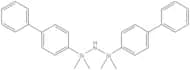
CAS:<p>Acrylate Functional Dialkoxysilane<br>Silane coupling agents have the ability to form a durable bond between organic and inorganic materials to generate desired heterogeneous environments or to incorporate the bulk properties of different phases into a uniform composite structure. The general formula has two classes of functionality. The hydrolyzable group forms stable condensation products with siliceous surfaces and other oxides such as those of aluminum, zirconium, tin, titanium, and nickel. The organofunctional group alters the wetting or adhesion characteristics of the substrate, utilizes the substrate to catalyze chemical transformations at the heterogeneous interface, orders the interfacial region, or modifies its partition characteristics, and significantly effects the covalent bond between organic and inorganic materials.<br>3-(acryloxypropyl)methyldimethoxysilane, dimethoxymethylsilylpropyl acrylate<br>Employed in fabrication of photoimageable, low shrinkage multimode waveguidesCoupling agent for UV cure systemsUsed in microparticle surface modificationComonomer for free-radical polymerizaitonInhibited with MEHQ<br></p>Fórmula:C9H18O4SiPureza:techCor e Forma:Straw LiquidPeso molecular:218.331,3-BIS(4-BIPHENYL)-1,1,3,3-TETRAMETHYLDISILAZANE, 95%
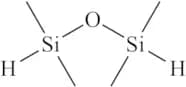
CAS:<p>Phenyl-Containing Blocking Agent<br>Used as a protecting group for reactive hydrogens in alcohols, amines, thiols, and carboxylic acids. Organosilanes are hydrogen-like, can be introduced in high yield, and can be removed under selective conditions. They are stable over a wide range of reaction conditions and can be removed in the presence of other functional groups, including other protecting groups. The tolerance of silylated alcohols to chemical transformations summary is presented in Table 1 of the Silicon-Based Blocking Agents brochure.<br>1,3-Bis(4-biphenyl)-1,1,3,3-tetramethyldisilazane<br>Reactivity and stability similar to that of SID4586.0Summary of selective deprotection conditions is provided in Table 7 through Table 20 of the Silicon-Based Blocking Agents brochure<br></p>Fórmula:C28H31NSi2Pureza:95%Cor e Forma:White SolidPeso molecular:437.731,1,3,3-TETRAMETHYLDISILOXANE, 99%
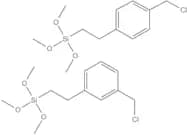
CAS:Fórmula:C4H14OSi2Pureza:99%Cor e Forma:LiquidPeso molecular:134.33((CHLOROMETHYL)PHENYLETHYL)TRIMETHOXYSILANE
CAS:<p>Halogen Functional Trialkoxy Silane<br>Silane coupling agents have the ability to form a durable bond between organic and inorganic materials to generate desired heterogeneous environments or to incorporate the bulk properties of different phases into a uniform composite structure. The general formula has two classes of functionality. The hydrolyzable group forms stable condensation products with siliceous surfaces and other oxides such as those of aluminum, zirconium, tin, titanium, and nickel. The organofunctional group alters the wetting or adhesion characteristics of the substrate, utilizes the substrate to catalyze chemical transformations at the heterogeneous interface, orders the interfacial region, or modifies its partition characteristics, and significantly effects the covalent bond between organic and inorganic materials.<br>((Chloromethyl)phenylethyl)trimethoxysilane; [2-[3(or 4)-(Chloromethyl)phenyl]ethyl]trimethoxysilane; (Trimethoxysilylethyl)benzyl chloride<br>Mixed m-, p- isomersUsed in microparticle surface modificationAdhesion promoter for polyphenylenesulfide and polyimide coatingsEmployed as a high temperature coupling agentDetermined by TGA a 25% weight loss of dried hydrolysates at 495 °CReagent for surface initiated atom-transfer radical-polymerization (ATRP) of N-isopropylacrylamide-butylmethacrylate copolymers<br></p>Fórmula:C12H19ClO3SiPureza:97%Cor e Forma:Straw LiquidPeso molecular:274.82n-BUTYLDIMETHYLCHLOROSILANE
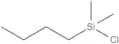
CAS:<p>Alkyl Silane - Conventional Surface Bonding<br>Aliphatic, fluorinated aliphatic or substituted aromatic hydrocarbon substituents are the hydrophobic entities which enable silanes to induce surface hydrophobicity. The organic substitution of the silane must be non-polar. The hydrophobic effect of the organic substitution can be related to the free energy of transfer of hydrocarbon molecules from an aqueous phase to a homogeneous hydrocarbon phase. A successful hydrophobic coating must eliminate or mitigate hydrogen bonding and shield polar surfaces from interaction with water by creating a non-polar interphase. Although silane and silicone derived coatings are in general the most hydrophobic, they maintain a high degree of permeability to water vapor. This allows coatings to breathe and reduce deterioration at the coating interface associated with entrapped water. Since ions are not transported through non-polar silane and silicone coatings, they offer protection to composite structures ranging from pigmented coatings to rebar reinforced concrete. A selection guide for hydrophobic silanes can be found on pages 22-31 of the Hydrophobicity, Hydrophilicity and Silane Surface Modification brochure.<br>n-Butyldimethylchlorosilane; Butylchlorodimethylsilane; Butyldimethylsilyl chloride; Chlorodimethyl-n-butylsilane<br>Forms bonded phases for HPLC<br></p>Fórmula:C6H15ClSiPureza:97%Cor e Forma:LiquidPeso molecular:150.721,1,1,3,3,3-HEXAMETHYLDISILAZANE, 99% 5-GAL DRUM
CAS:<p>Alkyl Silane - Conventional Surface Bonding<br>Aliphatic, fluorinated aliphatic or substituted aromatic hydrocarbon substituents are the hydrophobic entities which enable silanes to induce surface hydrophobicity. The organic substitution of the silane must be non-polar. The hydrophobic effect of the organic substitution can be related to the free energy of transfer of hydrocarbon molecules from an aqueous phase to a homogeneous hydrocarbon phase. A successful hydrophobic coating must eliminate or mitigate hydrogen bonding and shield polar surfaces from interaction with water by creating a non-polar interphase. Although silane and silicone derived coatings are in general the most hydrophobic, they maintain a high degree of permeability to water vapor. This allows coatings to breathe and reduce deterioration at the coating interface associated with entrapped water. Since ions are not transported through non-polar silane and silicone coatings, they offer protection to composite structures ranging from pigmented coatings to rebar reinforced concrete. A selection guide for hydrophobic silanes can be found on pages 22-31 of the Hydrophobicity, Hydrophilicity and Silane Surface Modification brochure.<br>Silane Cross-Coupling Agent<br>The cross-coupling reaction is a highly useful methodology for the formation of carbon-carbon bonds. It involves two reagents, with one typically being a suitable organometallic reagent - the nucleophile - and the other a suitable organic substrate, normally an unsaturated halide, tosylate or similar - the electrophile.<br>Trimethylsilyl Blocking Agent<br>Used as a protecting group for reactive hydrogens in alcohols, amines, thiols, and carboxylic acids. Organosilanes are hydrogen-like, can be introduced in high yield, and can be removed under selective conditions. They are stable over a wide range of reaction conditions and can be removed in the presence of other functional groups, including other protecting groups. The tolerance of silylated alcohols to chemical transformations summary is presented in Table 1 of the Silicon-Based Blocking Agents brochure.<br>ALD Material<br>Atomic layer deposition (ALD) is a chemically self-limiting deposition technique that is based on the sequential use of a gaseous chemical process. A thin film (as fine as -0.1 Å per cycle) results from repeating the deposition sequence as many times as needed to reach a certain thickness. The major characteristic of the films is the resulting conformality and the controlled deposition manner. Precursor selection is key in ALD processes, namely finding molecules which will have enough reactivity to produce the desired films yet are stable enough to be handled and safely delivered to the reaction chamber.<br>1,1,1,3,3,3-Hexamethyldisilazane; HMDS; HMDZ; Bis(trimethylsilyl)amine<br><5 ppm chlorideStandard grade available, SIH6110.0Viscosity: 0.90 cStΔHcomb: 25,332 kJ/molΔHvap: 34.7 kJ/molDipole moment: 0.37 debyeSurface tension: 18.2 mN/mSpecific wetting surface: 485 m2/gVapor pressure, 50 °: 50 mmpKa: 7.55Photoresist adhesion promoterDielectric constant: 1000 Hz: 2.27Ea, reaction w/SiO2 surface: 73.7 kJ/molVersatile silylation reagentCreates hydrophobic surfacesConverts acid chlorides and alcohols to amines in a three-component reactionReacts with formamide and ketones to form pyrimidinesLithium reagent reacts w/ aryl chlorides or bromides to provide primary anilinesUsed to convert ketones to α-aminophosphonates<br></p>Fórmula:C6H19NSi2Pureza:99%Cor e Forma:Colourless LiquidPeso molecular:161.39Ref: 3H-SIH6110.1
drA consultar25gA consultarcylA consultar14kgA consultar1.5kgA consultar150kgA consultarHEXADECYLTRIETHOXYSILANE, 92%
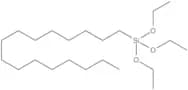
CAS:<p>Alkyl Silane - Conventional Surface Bonding<br>Aliphatic, fluorinated aliphatic or substituted aromatic hydrocarbon substituents are the hydrophobic entities which enable silanes to induce surface hydrophobicity. The organic substitution of the silane must be non-polar. The hydrophobic effect of the organic substitution can be related to the free energy of transfer of hydrocarbon molecules from an aqueous phase to a homogeneous hydrocarbon phase. A successful hydrophobic coating must eliminate or mitigate hydrogen bonding and shield polar surfaces from interaction with water by creating a non-polar interphase. Although silane and silicone derived coatings are in general the most hydrophobic, they maintain a high degree of permeability to water vapor. This allows coatings to breathe and reduce deterioration at the coating interface associated with entrapped water. Since ions are not transported through non-polar silane and silicone coatings, they offer protection to composite structures ranging from pigmented coatings to rebar reinforced concrete. A selection guide for hydrophobic silanes can be found on pages 22-31 of the Hydrophobicity, Hydrophilicity and Silane Surface Modification brochure.<br>Hexadecyltriethoxysilane; Triethoxysilylhexadecane; Cetyltriethoxysilane<br>Trialkoxy silane<br></p>Fórmula:C22H48O3SiPureza:92%Cor e Forma:Straw LiquidPeso molecular:388.71(30-35% TRIETHOXYSILYLETHYL)ETHYLENE-(35-40% 1,4-BUTADIENE)-(25-30% STYRENE) terpolymer, 50% in toluene
<p>(30-35% Triethoxysilylethyl)ethylene-(35-40% 1,4-butadiene)-(25-30% styrene) terpolymer; (vinyltriethoxysilane)-(1,2-butadiene)-(styrene) terpolymer<br>Multi-functional polymeric trialkoxy silaneHydrophobic modified polybutadiene50% in tolueneViscosity: 20-30 cSt<br></p>Cor e Forma:Pale Yellow Amber LiquidPeso molecular:4500-5500


![BIS[3-(TRIETHOXYSILYL)PROPYL]DISULFIDE, 90%](/_next/image/?url=https%3A%2Fstatic.cymitquimica.com%2Fproducts%2F3H%2Fthumb-webp%2FSIB1824.6.webp&w=3840&q=75)