Building Blocks
Subcategorias de "Building Blocks"
- Ácidos Borónicos e Derivados de Ácido Borónico(5.778 produtos)
- Building Blocks Quirais(1.243 produtos)
- Building Blocks Hidrocarbonetos(6.099 produtos)
- Building Blocks orgânicos(61.038 produtos)
Foram encontrados 205376 produtos de "Building Blocks"
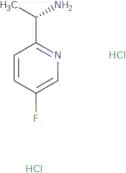
(S)-1-(5-Fluoropyridin-2-yl)ethanamine Dihydrochloride
CAS:Versatile small molecule scaffoldFórmula:C7H9N2F·2HClPureza:Min. 95%Peso molecular:213.08 g/mol4-Methyl-1,1,3-trioxothieno[3,2-d][1,2]thiazole-5-carboxylic acid
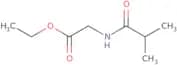
CAS:Versatile small molecule scaffoldFórmula:C7H5NO5S2Pureza:Min. 95%Peso molecular:247.3 g/molEthyl 2-(2-methylpropanamido)acetate
CAS:Versatile small molecule scaffold
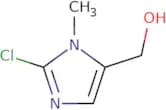
Fórmula:C8H15NO3Pureza:Min. 95%Peso molecular:173.21 g/mol(2-Chloro-1-methyl-1H-imidazol-5-yl)methanol
CAS:Versatile small molecule scaffoldFórmula:C5H7ClN2OPureza:Min. 95%Peso molecular:146.57 g/mol2-(4-Cyanophenyl)-2-hydroxyacetic acid
CAS:Versatile small molecule scaffold
Fórmula:C9H7NO3Pureza:Min. 95%Peso molecular:177.16 g/molRef: 3D-GAB89716
Produto descontinuado[1-(2-Methoxyethyl)-3,5-dimethyl-1H-pyrazol-4-yl]methanamine
CAS:Versatile small molecule scaffold
Fórmula:C9H17N3OPureza:Min. 95%Peso molecular:183.25 g/mol4-(2-Amino-4-methylpentanoyl)piperazin-2-one
CAS:Versatile small molecule scaffold
Fórmula:C10H19N3O2Pureza:Min. 95%Peso molecular:213.28 g/mol1-(Butane-1-sulfonyl)piperidine-2-carboxylic acid
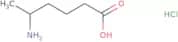
CAS:Versatile small molecule scaffoldFórmula:C10H19NO4SPureza:Min. 95%Peso molecular:249.33 g/mol5-Aminohexanoic acid hydrochloride
CAS:Versatile small molecule scaffold
Fórmula:C6H14ClNO2Pureza:Min. 95%Peso molecular:167.63 g/molRef: 3D-FJB91365
Produto descontinuado2-{Imidazo[1,2-a]pyridin-2-yl}-1H-imidazole
CAS:Versatile small molecule scaffoldFórmula:C10H8N4Pureza:Min. 95%Peso molecular:184.2 g/molRef: 3D-FDD52429
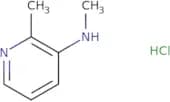
Produto descontinuadoN,2-Dimethylpyridin-3-amine hydrochloride
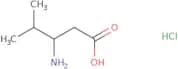
CAS:Versatile small molecule scaffoldFórmula:C7H11ClN2Pureza:Min. 95%Peso molecular:158.63 g/mol3-Amino-4-methylpentanoic acid hydrochloride
CAS:Versatile small molecule scaffold
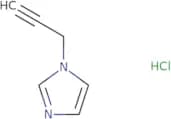
Fórmula:C6H14ClNO2Pureza:Min. 95%Peso molecular:167.63 g/mol1-(Prop-2-yn-1-yl)-1H-imidazole hydrochloride
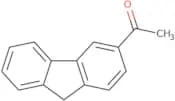
CAS:Versatile small molecule scaffoldFórmula:C6H7ClN2Pureza:Min. 95%Peso molecular:142.58 g/mol1-(9H-Fluoren-3-yl)ethan-1-one
CAS:Versatile small molecule scaffold
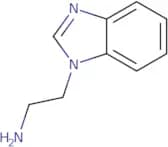
Fórmula:C15H12OPureza:Min. 95%Peso molecular:208.25 g/mol2-(1H-1,3-Benzodiazol-1-yl)ethan-1-amine
CAS:Versatile small molecule scaffold
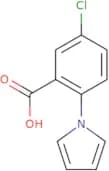
Fórmula:C9H11N3Pureza:Min. 95%Peso molecular:161.2 g/mol5-Chloro-2-(1H-pyrrol-1-yl)benzoic acid
CAS:Versatile small molecule scaffoldFórmula:C11H8ClNO2Pureza:Min. 95%Cor e Forma:PowderPeso molecular:221.64 g/mol2-Methyl-1-phenylbut-3-yn-2-ol
CAS:Versatile small molecule scaffold
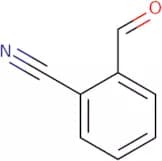
Fórmula:C11H12OPureza:Min. 95%Peso molecular:160.21 g/mol2-Cyanobenzaldehyde
CAS:2-Cyanobenzaldehyde is an aldehyde that reacts with nucleophiles such as trifluoromethanesulfonic acid to form a molecule. 2-Cyanobenzaldehyde has potent inhibitory activity against the kinase glycogen synthase kinase 3 (GSK3) and can be used to treat autoimmune diseases. It also reacts with hydrochloric acid in solution to form an intermediate, which is then reacted with glycine and ATP to produce a chiral compound. The product of this reaction has been shown to be active methylene, which was synthesized by asymmetric synthesis.
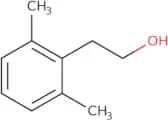
Fórmula:C8H5NOPureza:Min. 95%Cor e Forma:PowderPeso molecular:131.13 g/mol2-(2,6-Dimethylphenyl)ethan-1-ol
CAS:2-(2,6-Dimethylphenyl)ethan-1-ol is a racemic mixture of two compounds with the same molecular formula. The two enantiomers have different chemical properties and can be separated by specific techniques such as chromatography. 2-(2,6-Dimethylphenyl)ethan-1-ol is an ether that is made from methylmalonic acid and ethylene oxide. It is hydrolysed to release methylmalonyl chloride or demethylated to produce methyl ether acetate. This compound has been used in the synthesis of various esters and sesquiterpenoids.
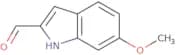
Fórmula:C10H14OPureza:Min. 95%Peso molecular:150.22 g/mol6-Methoxy-1H-indole-2-carbaldehyde
CAS:Versatile small molecule scaffold
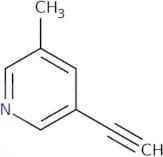
Fórmula:C10H9NO2Pureza:Min. 95%Peso molecular:175.18 g/mol3-Ethynyl-5-methylpyridine
CAS:Versatile small molecule scaffold
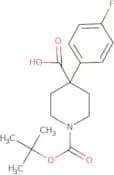
Fórmula:C8H7NPureza:Min. 95%Peso molecular:117.15 g/molBoc-4-(4-fluorophenyl)-piperidine-4-carboxylic acid
CAS:Please enquire for more information about Boc-4-(4-fluorophenyl)-piperidine-4-carboxylic acid including the price, delivery time and more detailed product information at the technical inquiry form on this page
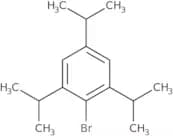
Fórmula:C17H22FNO4Pureza:Min. 95%Peso molecular:323.36 g/mol2-Bromo-1,3,5-triisopropylbenzene
CAS:2-Bromo-1,3,5-triisopropylbenzene is an ethylene acetal that is prepared by the catalyzed reaction of aryl chlorides and anhydrous zinc bromide in the presence of triethylamine. The selectivities of this method are high because it can produce mainly a single isomer. The stereoselectivity is also high because the reaction proceeds with the formation of only one stereoisomer. The mechanism for this reaction involves a nucleophilic substitution of the halogenated aryl chloride with the trialkylborane, which generates two different products. This product has been used in the synthesis of biphenyls and nitro compounds.
Fórmula:C15H23BrPureza:Min. 95%Cor e Forma:Colorless Clear LiquidPeso molecular:283.25 g/molRef: 3D-FB33867
Produto descontinuado1-(2-Methylphenyl)propan-2-amine
CAS:Produto Controlado1-(2-Methylphenyl)propan-2-amine is a fatty acid ester that is used as an excipient in pharmaceutical dosage forms. It is used to increase the viscosity of drug solutions and suspensions, and to provide a protective coating for tablets. 1-(2-Methylphenyl)propan-2-amine is insoluble in water, but soluble in organic solvents such as alcohols and acetone. It can be prepared by reacting a primary amine with a fatty acid chloride or anhydride. The compound has been shown to have high affinity for 5HT2A receptors in vitro, which may account for its psychoactive effects.
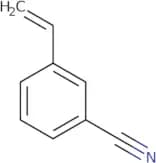
Fórmula:C10H15NPureza:Min. 95%Peso molecular:149.23 g/mol3-Ethenylbenzonitrile
CAS:3-Ethenylbenzonitrile is an organic compound that can be prepared by photolysis of 2-bromobenzonitrile in the presence of a nonpolar solvent. It is also synthesized by laser induced exciplex reaction between benzene and ethylene. 3-Ethenylbenzonitrile has a conformation that is dependent on the polarity of the solvent. In polar solvents, it adopts a bent structure while in nonpolar solvents, it adopts a linear structure. The molecule undergoes cyclobutane formation and then reacts with electron acceptors such as cations to form intermediates. These intermediates react with other molecules to form products.
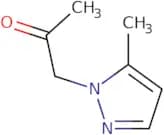
Fórmula:C9H7NPureza:Min. 95%Peso molecular:129.16 g/mol1-(5-Methyl-pyrazol-1-yl)-propan-2-one
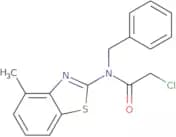
CAS:Versatile small molecule scaffoldFórmula:C7H10N2OPureza:Min. 95%Peso molecular:138.17 g/molN-Benzyl-2-chloro-N-(4-methyl-1,3-benzothiazol-2-yl)acetamide
CAS:Versatile small molecule scaffoldFórmula:C17H15ClN2OSPureza:Min. 95%Peso molecular:330.8 g/mol(4-Ethylcycloheptyl)methanamines
CAS:Versatile small molecule scaffold
Fórmula:C10H21NPureza:Min. 95%Peso molecular:155.3 g/molRef: 3D-EJC74542
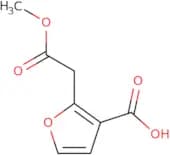
Produto descontinuado2-(2-Methoxy-2-oxoethyl)furan-3-carboxylic acid
CAS:Versatile small molecule scaffoldFórmula:C8H8O5Pureza:Min. 95%Peso molecular:184.15 g/mol2-Carbamoyl-2-methylbutanoic acid
CAS:Versatile small molecule scaffold
Fórmula:C6H11NO3Pureza:Min. 95%Peso molecular:145.2 g/mol4-(4-Aminophenyl)-1-methyl-1H-pyrazolo[3,4-b]pyridine-3-carboxylic acid
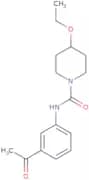
CAS:Versatile small molecule scaffoldFórmula:C14H12N4O2Pureza:Min. 95%Peso molecular:268.27 g/molN-(3-Acetylphenyl)-4-ethoxypiperidine-1-carboxamide
CAS:Versatile small molecule scaffold
Fórmula:C16H22N2O3Pureza:Min. 95%Peso molecular:290.36 g/mol2',3'-Dihydro-1'H-spiro[cyclopropane-1,4'-quinoline]
CAS:Versatile small molecule scaffold
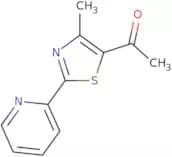
Fórmula:C11H13NPureza:Min. 95%Peso molecular:159.23 g/mol1-(4-Methyl-2-pyridin-2-yl-1,3-thiazol-5-yl)ethanone
CAS:Versatile small molecule scaffold
Fórmula:C11H10N2OSPureza:Min. 95%Peso molecular:218.28 g/mol2,6-Dichloropyridine-3-sulfonamide
CAS:Versatile small molecule scaffold
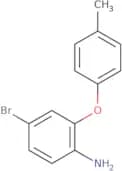
Fórmula:C5H4Cl2N2O2SPureza:Min. 95%Peso molecular:227.07 g/mol4-Bromo-2-(4-methylphenoxy)aniline
CAS:Versatile small molecule scaffold
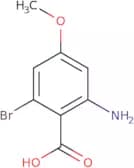
Fórmula:C13H12BrNOPureza:Min. 95%Peso molecular:278.14 g/mol2-Amino-6-bromo-4-methoxybenzoic acid
CAS:Versatile small molecule scaffold
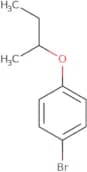
Fórmula:C8H8BrNO3Pureza:Min. 95%Peso molecular:246.06 g/mol1-Bromo-4-(butan-2-yloxy)benzene
CAS:Versatile small molecule scaffold
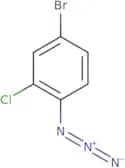
Fórmula:C10H13BrOPureza:Min. 95%Peso molecular:229.11 g/mol1-Azido-4-bromo-2-chlorobenzene
CAS:Versatile small molecule scaffold
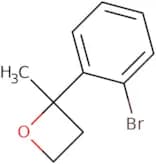
Fórmula:C6H3BrClN3Pureza:Min. 95%Peso molecular:232.46 g/mol2-(2-Bromophenyl)-2-methyloxetane
CAS:Versatile small molecule scaffold
Fórmula:C10H11BrOPureza:Min. 95%Peso molecular:227.1 g/molRef: 3D-CGC24401
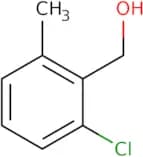
Produto descontinuado(2-Chloro-6-methylphenyl)methanol
CAS:Versatile small molecule scaffold
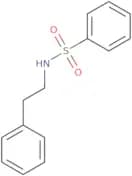
Fórmula:C8H9ClOPureza:Min. 95%Peso molecular:156.61 g/molN-(2-Phenylethyl)benzenesulfonamide
CAS:N-(2-Phenylethyl)benzenesulfonamide is a biodegradable and aerobic catalyst that is used in the production of nitrates. It can be recycled and has a high solubility, which allows for efficient extraction from wastewater effluents. The reactor system can be operated at an aerobic or anaerobic conditions. N-(2-Phenylethyl)benzenesulfonamide is soluble in water and can be hydrolyzed by acids or bases to release ammonia gas. The process can also be sustainable due to the use of renewable energy sources such as solar, wind, tidal, or biomass power.
Fórmula:C14H15NO2SPureza:Min. 95%Peso molecular:261.34 g/mol2-[Ethyl(propan-2-yl)amino]ethan-1-ol
CAS:Produto ControladoVersatile small molecule scaffold
Fórmula:C7H17NOPureza:Min. 95%Peso molecular:131.22 g/mol1-Benzothiophene-5-carbonitrile
CAS:1-Benzothiophene-5-carbonitrile is a heterocyclic compound that is formed by condensation of ethyl azidoacetate with indole under catalysis. It can be used in the synthesis of heterocycles. The yield of 1-benzothiophene-5-carbonitrile is about 56%.
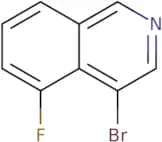
Fórmula:C9H5NSPureza:Min. 95%Peso molecular:159.21 g/mol4-Bromo-5-fluoro-isoquinoline
CAS:Versatile small molecule scaffold
Fórmula:C9H5BrFNPureza:Min. 95%Peso molecular:226.04 g/molRef: 3D-BPA45758
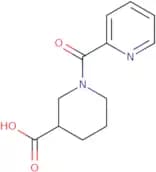
Produto descontinuado1-(Pyridine-2-carbonyl)piperidine-3-carboxylic acid
CAS:Versatile small molecule scaffold
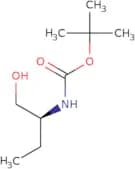
Fórmula:C12H14N2O3Pureza:Min. 95%Peso molecular:234.25 g/molN-Boc-(S)-(ˆ’)-2-amino-1-butanol
CAS:Versatile small molecule scaffold
Fórmula:C9H19NO3Pureza:Min. 95%Peso molecular:189.25 g/mol1-[3-(Hydroxymethyl)phenyl]ethan-1-one
CAS:Versatile small molecule scaffold
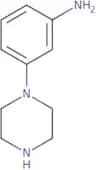
Fórmula:C9H10O2Pureza:Min. 95%Peso molecular:150.17 g/mol3-(Piperazin-1-yl)aniline
CAS:Versatile small molecule scaffold
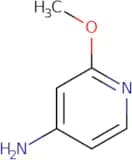
Fórmula:C10H15N3Pureza:Min. 95%Peso molecular:177.25 g/mol(4-Aminopyridin-2-yl)methanol
CAS:Versatile small molecule scaffold
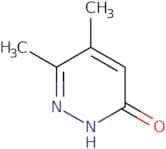
Fórmula:C6H8N2OPureza:Min. 95%Peso molecular:124.14 g/mol5,6-Dimethylpyridazin-3(2H)-one
CAS:Versatile small molecule scaffold
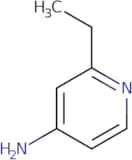
Fórmula:C6H8N2OPureza:Min. 95%Peso molecular:124.14 g/mol2-Ethylpyridin-4-amine
CAS:2-Ethylpyridin-4-amine is a pyridine that can be synthesized from the amination of 4-nitrophenol. It can also be synthesized by acylation of 2-ethylpyridine with ethyl chloroformate followed by cyclization. This compound has shown to have high yields in reactions involving pyridines and it is often used as a precursor for other compounds.
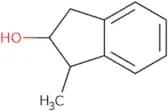
Fórmula:C7H10N2Pureza:Min. 95%Peso molecular:122.17 g/mol1-Methyl-2,3-dihydro-1H-inden-2-ol
CAS:Versatile small molecule scaffold
Fórmula:C10H12OPureza:Min. 95%Peso molecular:148.2 g/molRef: 3D-ACA82313
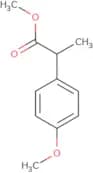
Produto descontinuadoMethyl 2-(4-methoxyphenyl)propanoate
CAS:Versatile small molecule scaffold
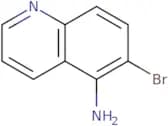
Fórmula:C11H14O3Pureza:Min. 95%Peso molecular:194.23 g/mol5-Amino-6-bromoquinoline
CAS:Versatile small molecule scaffold
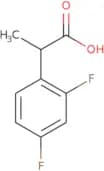
Fórmula:C9H7BrN2Pureza:Min. 95%Peso molecular:223.07 g/mol2-(2,4-Difluorophenyl)propanoic acid
CAS:Versatile small molecule scaffold
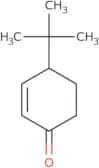
Fórmula:C9H8F2O2Pureza:Min. 95%Peso molecular:186.15 g/mol4-tert-Butylcyclohex-2-en-1-one
CAS:Versatile small molecule scaffold
Fórmula:C10H16OPureza:Min. 95%Peso molecular:152.23 g/molRef: 3D-AAA93707
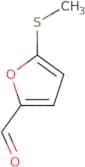
Produto descontinuado5-(Methylsulfanyl)furan-2-carbaldehyde
CAS:Versatile small molecule scaffold
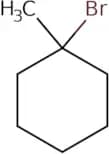
Fórmula:C6H6O2SPureza:Min. 95%Peso molecular:142.18 g/mol1-Bromo-1-methylcyclohexane
CAS:1-Bromo-1-methylcyclohexane is a monomolecular gas that is used as an intermediate in organic synthesis. It reacts with halides to form cyclopentyl derivatives. This reaction has been shown to be faster than the corresponding reaction of 1-bromocyclohexane with chlorides or bromides. The rate of this reaction may be due to the polarizability and conformational changes of the molecule upon substitution by a methyl group. 1-Bromo-1-methylcyclohexane is also an ionizing reagent, which means it can cause electrophilic reactions to occur on other molecules. It has been found that the solvent effect on this product can affect its reactivity, with solvents such as water having more of an effect than solvents such as benzene. 1-Bromo-1-methylcyclohexane has been shown to interact with other compounds in both transfer and complex
Fórmula:C7H13BrPureza:Min. 95%Peso molecular:177.08 g/molN-[Carbamothioyl(phenyl)methyl]benzamide
CAS:Versatile small molecule scaffold
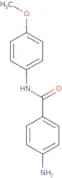
Fórmula:C15H14N2OSPureza:Min. 95%Peso molecular:270.3 g/mol4-Amino-n-(4-methoxyphenyl)benzamide
CAS:4-Amino-N-(4-methoxyphenyl)benzamide is a catalytic sulfamate that has been optimized for use in the synthesis of benzimidazole derivatives. 4-Amino-N-(4-methoxyphenyl)benzamide is used as a reagent for the preparation of aldehydes from sulfamic acid and various types of carboxylic acids. The reaction mechanism involves nucleophilic attack by the hydroxyl group from the sulfamate on the carbonyl carbon atom to form an intermediate, which then reacts with water to release hydrogen sulfate and form a new double bond.
Fórmula:C14H14N2O2Pureza:Min. 95%Peso molecular:242.27 g/mol1,3-Diazaspiro[4.4]nonane-2,4-dione
CAS:1,3-Diazaspiro[4.4]nonane-2,4-dione (1) is a new fungicide that was shown to have fungicidal activity in vitro against the grapevine pathogens Plasmopara viticola and Plasmopara obducens. This compound has been isolated from the plant Express erythroxylum coca (Erythroxylum coca). The compound belongs to the class of diaza spiro compounds and is a member of a family of diaza spiro compounds with antifungal activity. One possible mode of action for 1 is that it inhibits the synthesis of DNA by binding to bacterial DNA gyrase.
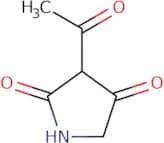
Fórmula:C7H10N2O2Pureza:Min. 95%Peso molecular:154.17 g/mol3-Acetylpyrrolidine-2,4-dione
CAS:3-Acetylpyrrolidine-2,4-dione is an experimental drug that belongs to the class of metal hydroxides. It has been shown to have anti-tumor activity in vitro and in vivo against a variety of malignant tumors. 3-Acetylpyrrolidine-2,4-dione also inhibits the growth of pigweed and other plants by inhibiting the production of tenuazonic acid. This compound is a tautomeric form of tenuazonic acid, which is also known as 2,4-pentanedione. The carboxylate group on this molecule may be responsible for its herbicidal activity.
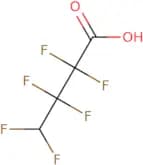
Fórmula:C6H7NO3Pureza:Min. 95%Peso molecular:141.12 g/mol2,2,3,3,4,4-Hexafluorobutyric acid
CAS:2,2,3,3,4,4-Hexafluorobutyric acid is a hydroxylated organic compound. It has been shown to be more chemically stable than other quaternary ammonium compounds. 2,2,3,3,4,4-Hexafluorobutyric acid is used as a polymerization initiator for the preparation of cationic polymers. This chemical can also be used to fragment proteins and nucleic acids in order to prepare samples for analysis by mass spectrometry. 2HFBA is reactive and can cause irritation on contact with the skin or eyes. It has been shown that this chemical may have an effect on body mass index and can bind to calcium ions.
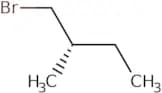
Fórmula:C4H2F6O2Pureza:Min. 95%Peso molecular:196.05 g/mol(S)-(+)-1-Bromo-2-methylbutane
CAS:(S)-(+)-1-Bromo-2-methylbutane is a chiral molecule with two stereoisomers, the cis and trans forms. The cis form has been observed to be the more stable of the two. It is a functional theory that these two forms are not mirror images of each other because they have different conformations. (S)-(+)-1-Bromo-2-methylbutane has been used in the synthesis of a number of important molecules. The stereoisomers can be distinguished by conformational analysis and optical microscopy. (S)-(+)-1-Bromo-2-methylbutane also has an application in biotechnology for use as a precursor for hydrazones, which are important in organic chemistry and molecular biology, such as DNA sequencing.
Fórmula:C5H11BrPureza:Min. 95%Peso molecular:151.04 g/molMethyl 2-Octynoate
CAS:Methyl 2-octynoate is a chemical that has been shown to bind to the nicotinic acetylcholine receptor. Methyl 2-octynoate has been shown to have antitumor activity in various types of cancer cells, including breast, prostate, and lung cancer cells. This chemical is not known to be chemically stable or film-forming. It also disrupts mitochondrial membrane potential and reduces the endpoints of oxidative phosphorylation. Methyl 2-octynoate was found to have low potency against cancer cells in vitro and in vivo.
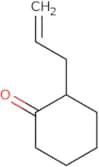
Fórmula:C9H14O2Pureza:Min. 95%Peso molecular:154.21 g/mol2-Allylcyclohexanone
CAS:2-Allylcyclohexanone is an unsaturated ketone that is synthesized by the ring-opening of allyl cyclohexane carboxylate with sodium hydroxide. It can be used as a chemical intermediate for the synthesis of other compounds. 2-Allylcyclohexanone can also be used to react with hydroxide solution to produce a salt and an alcohol. The hydroxide solution can act as a base, reducing the carbonyl group in the presence of an acid to form the corresponding alcohol. This reaction is stereoselective because it only occurs when there are two different groups on adjacent carbons.
2-Allylcyclohexanone has been shown to inhibit non-nucleoside reverse transcriptase inhibitors (NNRTIs) such as nevirapine, efavirenz, and delavirdine. In addition, it has been found to have functional groups that are capable of reactingFórmula:C9H14OPureza:Min. 95%Peso molecular:138.21 g/mol8-Bromo-2-methylimidazo[1,2-a]pyridine
CAS:Versatile small molecule scaffold
Fórmula:C8H7N2BrPureza:Min. 95%Peso molecular:211.05 g/mol3-Hydroxy-5-methylpyridine
CAS:3-Hydroxy-5-methylpyridine (3HMP) is a chemical substance that has been classified as an amine. It is a product of the metabolism of purines, which are nitrogenous bases found in DNA and RNA. 3HMP is produced by aerogenic bacteria (such as Enterobacter), and can be used to estimate the number of these bacteria present in water samples. 3HMP has been shown to have antiviral properties against influenza virus, and can be used as a biomarker for the presence of other viruses in animals. 3HMP also has mineralization properties, which have been studied extensively, particularly with regards to pancreatic disease.
Fórmula:C6H7NOPureza:Min. 95%Cor e Forma:PowderPeso molecular:109.13 g/molRef: 3D-FH16174
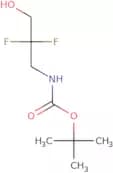
Produto descontinuadotert-Butyl (2,2-difluoro-3-hydroxypropyl)carbamate
CAS:Versatile small molecule scaffoldFórmula:C10H13NO4Pureza:Min. 95%Peso molecular:211.21 g/mol1-Hydroxycyclopentane-1-carbonitrile
CAS:1-Hydroxycyclopentane-1-carbonitrile is a monomer that is hydrolyzed to form benzoin and cyanohydrins. It can be used in the production of scifinder as a monomer or dimerizer.
Fórmula:C6H9NOPureza:Min. 95%Peso molecular:111.14 g/mol4-Chloro-2-hydroxy-6-methylphenylboronic acid
CAS:Versatile small molecule scaffoldFórmula:C7H8BClO3Pureza:Min. 95%Peso molecular:186.4 g/mol2-Bromo-3,3,3-trifluoro-1-propene
CAS:Produto Controlado2-Bromo-3,3,3-trifluoro-1-propene is a chemical compound that has been synthesized in an asymmetric reaction. The reactant is bromopropane and the product is 2,2,2-trifluoropropene. The methylene group on the propene molecule is activated by the nucleophilic attack of a fluoride ion from hydrogen fluoride to form a cavity with a highly strained bond. The kinetic study of this reaction revealed that the activation energy for the reaction is 42 kJ/mol. Palladium-catalyzed coupling reactions are catalyzed by palladium and require nonpolar solvents such as toluene or dichloromethane. This type of reaction has been shown to be exothermic with an isolated yield of 1%.
Fórmula:C3H2BrF3Pureza:Min. 95%Cor e Forma:Colorless PowderPeso molecular:174.95 g/mol4,5-Dihydro-1H-imidazol-2-amine hydrochloride
CAS:Please enquire for more information about 4,5-Dihydro-1H-imidazol-2-amine hydrochloride including the price, delivery time and more detailed product information at the technical inquiry form on this page
Fórmula:C3H7N3•HClPureza:Min. 95%Peso molecular:121.57 g/molRef: 3D-FD183639
Produto descontinuado4,5-Dihydroxy-2,3-Pentanedione
CAS:4,5-Dihydroxy-2,3-pentanedione is a carbonyl compound that is the product of the oxidation of ascorbic acid. It is used in wastewater treatment and has antimicrobial properties against infectious diseases. This compound has been shown to inhibit protein synthesis by binding to the ribosome and preventing the formation of peptide bonds between amino acids. 4,5-Dihydroxy-2,3-pentanedione has also been shown to bind to plasma proteins, which may be due to its acyl chain structure. 4,5-Dihydroxy-2,3-pentanedione can be synthesized in a catalytic mechanism that involves dehydroascorbic acid and molecular oxygen.
Fórmula:C5H8O4Pureza:Min. 95%Cor e Forma:PowderPeso molecular:132.11 g/molRef: 3D-FD180770
Produto descontinuadoPiperyline
CAS:Piperyline is an alkanoic acid that has shown to be effective against skin cancer. It also has antimicrobial properties, which may be due to its ability to bind metal ions and form polymeric compounds. Piperyline inhibits microbial growth by inhibiting the synthesis of proteins and nucleic acids. The antimicrobial activity is related to its cationic polymerization with hydroxyl groups, which forms a structure that can inhibit microbial enzymes and disrupt microbial cell membranes. This compound also interacts with the skin's natural lipids, making it difficult for microorganisms to attach and grow on the skin. Piperyline is synthesized in organic chemistry laboratories as an amide precursor of other pharmaceuticals such as penicillin.
Fórmula:C16H17NO3Pureza:Min. 95%Peso molecular:271.31 g/mol

![4-Methyl-1,1,3-trioxothieno[3,2-d][1,2]thiazole-5-carboxylic acid](/_next/image/?url=https%3A%2Fstatic.cymitquimica.com%2Fproducts%2F3D%2Fthumb-webp%2FGEB80217.webp&w=3840&q=75)

![[1-(2-Methoxyethyl)-3,5-dimethyl-1H-pyrazol-4-yl]methanamine](/_next/image/?url=https%3A%2Fstatic.cymitquimica.com%2Fproducts%2F3D%2Fthumb-webp%2FFWB59580.webp&w=3840&q=75)


![2-{Imidazo[1,2-a]pyridin-2-yl}-1H-imidazole](/_next/image/?url=https%3A%2Fstatic.cymitquimica.com%2Fproducts%2F3D%2Fthumb-webp%2FFDD52429.webp&w=3840&q=75)




![4-(4-Aminophenyl)-1-methyl-1H-pyrazolo[3,4-b]pyridine-3-carboxylic acid](/_next/image/?url=https%3A%2Fstatic.cymitquimica.com%2Fproducts%2F3D%2Fthumb-webp%2FEEC70466.webp&w=3840&q=75)
![2',3'-Dihydro-1'H-spiro[cyclopropane-1,4'-quinoline]](/_next/image/?url=https%3A%2Fstatic.cymitquimica.com%2Fproducts%2F3D%2Fthumb-webp%2FECC59829.webp&w=3840&q=75)

![2-[Ethyl(propan-2-yl)amino]ethan-1-ol](/_next/image/?url=https%3A%2Fstatic.cymitquimica.com%2Fproducts%2F3D%2Fthumb-webp%2FCAA89361.webp&w=3840&q=75)

![1-[3-(Hydroxymethyl)phenyl]ethan-1-one](/_next/image/?url=https%3A%2Fstatic.cymitquimica.com%2Fproducts%2F3D%2Fthumb-webp%2FAFA60406.webp&w=3840&q=75)
![N-[Carbamothioyl(phenyl)methyl]benzamide](/_next/image/?url=https%3A%2Fstatic.cymitquimica.com%2Fproducts%2F3D%2Fthumb-webp%2FAAA89278.webp&w=3840&q=75)
![1,3-Diazaspiro[4.4]nonane-2,4-dione](/_next/image/?url=https%3A%2Fstatic.cymitquimica.com%2Fproducts%2F3D%2Fthumb-webp%2FAAA69951.webp&w=3840&q=75)

![8-Bromo-2-methylimidazo[1,2-a]pyridine](/_next/image/?url=https%3A%2Fstatic.cymitquimica.com%2Fproducts%2F3D%2Fthumb-webp%2FUXB37475.webp&w=3840&q=75)