


Building Blocks
Subcategorias de "Building Blocks"
- Ácidos Borónicos e Derivados de Ácido Borónico(5.778 produtos)
- Building Blocks Quirais(1.243 produtos)
- Building Blocks Hidrocarbonetos(6.099 produtos)
- Building Blocks orgânicos(61.038 produtos)
Foram encontrados 205376 produtos de "Building Blocks"
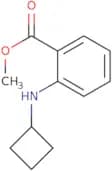
Methyl 2-(cyclobutylamino)benzoate
CAS:Versatile small molecule scaffold
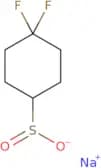
Fórmula:C12H15NO2Pureza:Min. 95%Peso molecular:205.25 g/molSodium 4,4-difluorocyclohexane-1-sulfinate
CAS:Versatile small molecule scaffold
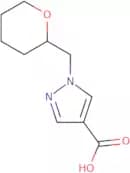
Fórmula:C6H9F2NaO2SPureza:Min. 95%Peso molecular:206.19 g/mol1-((Tetrahydro-2H-pyran-2-yl)methyl)-1H-pyrazole-4-carboxylic acid
CAS:Versatile small molecule scaffold
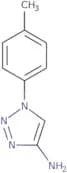
Fórmula:C10H14N2O3Pureza:Min. 95%Peso molecular:210.23 g/mol1-(4-Methylphenyl)-1H-1,2,3-triazol-4-amine
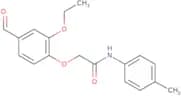
CAS:Versatile small molecule scaffoldFórmula:C9H10N4Pureza:Min. 95%Peso molecular:174.2 g/mol2-(2-Ethoxy-4-formylphenoxy)-N-(p-tolyl)acetamide
CAS:Versatile small molecule scaffold
Fórmula:C18H19NO4Pureza:Min. 95%Peso molecular:313.35 g/mol5,5-Dimethylpyrrolidine-2-carboxylic acid hydrochloride
CAS:Versatile small molecule scaffold
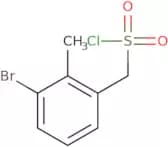
Fórmula:C7H14ClNO2Pureza:Min. 95%Peso molecular:179.64 g/mol(3-Bromo-2-methylphenyl)methanesulfonyl chloride
CAS:Versatile small molecule scaffoldFórmula:C8H8BrClO2SPureza:Min. 95%Peso molecular:283.57 g/mol1-[5-(Trifluoromethyl)-1,3,4-thiadiazol-2-yl]piperazine hydrochloride
CAS:Versatile small molecule scaffold
Fórmula:C7H10ClF3N4SPureza:Min. 95%Peso molecular:274.7 g/mol5-[(2,4-Difluorophenyl)methyl]-4-methyl-1,3-thiazol-2-amine hydrobromide
CAS:Versatile small molecule scaffold
Fórmula:C11H11BrF2N2SPureza:Min. 95%Peso molecular:321.19 g/mol2-(2,2,2-Trifluoroethyl)pyrrolidine hydrochloride
CAS:Versatile small molecule scaffold
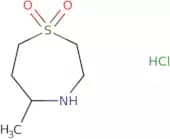
Fórmula:C6H11ClF3NPureza:Min. 95%Peso molecular:189.6 g/mol5-Methyl-1,4-thiazepane-1,1-dione hydrochloride
CAS:Versatile small molecule scaffold
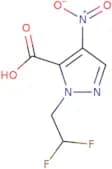
Fórmula:C6H14ClNO2SPureza:Min. 95%Peso molecular:199.7 g/mol1-(2,2-Difluoroethyl)-4-nitro-1H-pyrazole-5-carboxylic acid
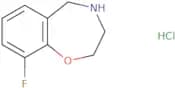
CAS:Versatile small molecule scaffoldFórmula:C6H5F2N3O4Pureza:Min. 95%Peso molecular:221.12 g/mol9-Fluoro-2,3,4,5-tetrahydro-1,4-benzoxazepine hydrochloride
CAS:Versatile small molecule scaffold
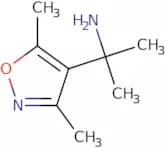
Fórmula:C9H11ClFNOPureza:Min. 95%Peso molecular:203.64 g/mol2-(Dimethyl-1,2-oxazol-4-yl)propan-2-amine
CAS:Versatile small molecule scaffold
Fórmula:C8H14N2OPureza:Min. 95%Peso molecular:154.21 g/molRef: 3D-VKC10832
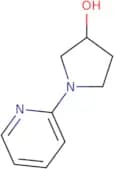
Produto descontinuado(3S)-1-(Pyridin-2-yl)pyrrolidin-3-ol
CAS:Versatile small molecule scaffold
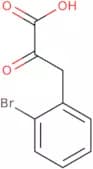
Fórmula:C9H12N2OPureza:Min. 95%Peso molecular:164.2 g/mol3-(2-Bromophenyl)-2-oxopropanoic acid
CAS:Versatile small molecule scaffold
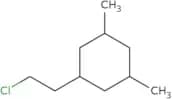
Fórmula:C9H7BrO3Pureza:Min. 95%Peso molecular:243.05 g/mol1-(2-Chloroethyl)-3,5-dimethylcyclohexane
CAS:Versatile small molecule scaffold
Fórmula:C10H19ClPureza:Min. 95%Peso molecular:174.71 g/molRef: 3D-VAA67816
Produto descontinuado2-Phenylbutan-1-amine HCl
CAS:Versatile small molecule scaffold
Fórmula:C10H15N·HClPureza:Min. 95%Peso molecular:185.7 g/mol6-Methyl-3,4-dihydro-2H-pyrido[3,2-b][1,4]oxazine
CAS:Versatile small molecule scaffold
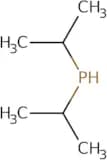
Fórmula:C8H10N2OPureza:Min. 95%Peso molecular:150.18 g/molDiisopropylphosphine, 10wt.% in hexane
CAS:Please enquire for more information about Diisopropylphosphine, 10wt.% in hexane including the price, delivery time and more detailed product information at the technical inquiry form on this page
Fórmula:C6H15PPureza:Min. 95%Peso molecular:118.16 g/molRef: 3D-VAA49153
Produto descontinuado1,1-Bis(bromomethyl)cyclobutane
CAS:Versatile small molecule scaffold
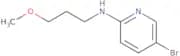
Fórmula:C6H10Br2Pureza:Min. 95%Peso molecular:241.95 g/mol5-Bromo-N-(3-methoxypropyl)pyridin-2-amine
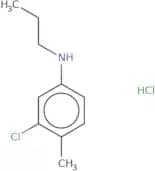
CAS:Versatile small molecule scaffoldFórmula:C9H13BrN2OPureza:Min. 95%Peso molecular:245.12 g/mol3-Chloro-4-methyl-N-propylaniline hydrochloride
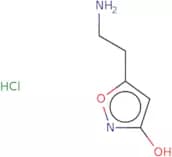
CAS:Versatile small molecule scaffoldFórmula:C10H15Cl2NPureza:Min. 95%Peso molecular:220.1 g/mol5-(2-Aminoethyl)-1,2-oxazol-3-ol hydrochloride
CAS:Versatile small molecule scaffold
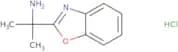
Fórmula:C5H9ClN2O2Pureza:Min. 95%Peso molecular:164.6 g/mol2-(1,3-Benzoxazol-2-yl)propan-2-amine hydrochloride
CAS:Versatile small molecule scaffoldFórmula:C10H13ClN2OPureza:Min. 95%Peso molecular:212.67 g/molRef: 3D-UGD90278
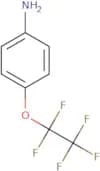
Produto descontinuado4-(Perfluoroethoxy)aniline
CAS:Versatile small molecule scaffold
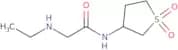
Fórmula:C8H6F5NOPureza:Min. 95%Peso molecular:227.13 g/mol2-(Ethylamino)-N-(tetrahydro-1,1-dioxido-3-thienyl)acetamide
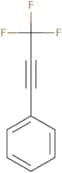
CAS:Versatile small molecule scaffoldFórmula:C8H16N2O3SPureza:Min. 95%Peso molecular:220.29 g/mol(3,3,3-Trifluoroprop-1-yn-1-yl)benzene
CAS:(3,3,3-Trifluoroprop-1-yn-1-yl)benzene is a reaction product that can be used to inhibit the activity of metalloprotease and as an anti-cancer agent. This compound inhibits the enzyme that causes chronic kidney disease and degenerative diseases. It is a potent inhibitor of metalloprotease, which is involved in cancer progression, fatty acid synthesis and bone formation. The effective dose for this drug is between 1 and 10mg/kg body weight. It has been shown to have an asymmetric synthesis with the use of amido groups. (3,3,3-Trifluoroprop-1-yn-1-yl)benzene also has antirheumatic properties due to its ability to inhibit proteases such as matrix metalloproteinases and cathepsins.
Fórmula:C9H5F3Pureza:Min. 95%Peso molecular:170.13 g/molRef: 3D-AAA77262
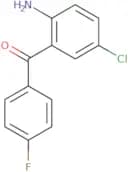
Produto descontinuado4-Chloro-2-(4-fluorobenzoyl)aniline
CAS:Versatile small molecule scaffold
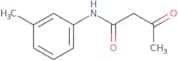
Fórmula:C13H9ClFNOPureza:Min. 95%Peso molecular:249.67 g/molN-(3-Methylphenyl)-3-oxobutanamide
CAS:Versatile small molecule scaffold
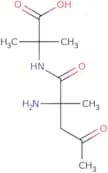
Fórmula:C11H13NO2Pureza:Min. 95%Peso molecular:191.23 g/mol2-(2-acetamido-2-methylpropanamido)-2-methylpropanoic acid
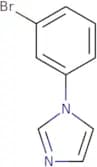
CAS:Versatile small molecule scaffoldFórmula:C10H18N2O4Pureza:Min. 95%Peso molecular:230.26 g/mol1-(3-Bromophenyl)-1H-imidazole
CAS:Versatile small molecule scaffold
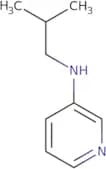
Fórmula:C9H7BrN2Pureza:Min. 95%Peso molecular:223.07 g/molN-(2-Methylpropyl)pyridin-3-amine
CAS:Versatile small molecule scaffold
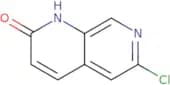
Fórmula:C9H14N2Pureza:Min. 95%Peso molecular:150.22 g/mol6-Chloro-1,2-dihydro-1,7-naphthyridin-2-one
CAS:Versatile small molecule scaffold
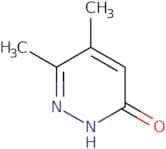
Fórmula:C8H5ClN2OPureza:Min. 95%Peso molecular:180.59 g/mol5,6-Dimethylpyridazin-3(2H)-one
CAS:Versatile small molecule scaffold
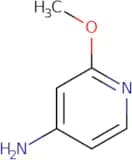
Fórmula:C6H8N2OPureza:Min. 95%Peso molecular:124.14 g/mol(4-Aminopyridin-2-yl)methanol
CAS:Versatile small molecule scaffold
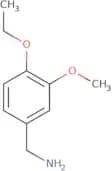
Fórmula:C6H8N2OPureza:Min. 95%Peso molecular:124.14 g/mol(4-Ethoxy-3-methoxybenzyl)amine
CAS:Research has shown that (4-Ethoxy-3-methoxybenzyl)amine (EMBA) is a potent inhibitor of bacterial growth. The alkylation of EMBA with methylamine and benzene leads to the formation of aureus, which is an antibiotic that can be used to treat staphylococcus infections. In addition, EMBA can also be methylated with hydroxylamine to form benzylamine, a compound that inhibits the synthesis of the cell wall in bacteria. These properties make EMBA an effective antimicrobial agent.
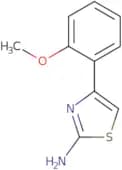
Fórmula:C10H15NO2Pureza:Min. 95%Peso molecular:181.23 g/mol4-(2-Methoxy-phenyl)-thiazol-2-ylamine
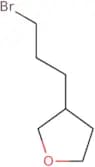
CAS:4-(2-Methoxy-phenyl)-thiazol-2-ylamine is a flavonoid that is synthesized by the condensation of luteolin with salicylaldehyde. It has been shown to have antibacterial activity against strains of P. aeruginosa and S. aureus, with MIC values of 12.5 µg/mL and 25 µg/mL, respectively. The MIC value for 4-(2-Methoxy-phenyl)-thiazol-2-ylamine against E. coli was found to be 100 µg/mL. 4-(2-Methoxy-phenyl)-thiazol-2-ylamine has been shown to inhibit the growth of organisms such as Escherichia coli, Streptococcus pneumoniae and Staphylococcus aureus in vitro. This compound is not active against Gram positive bacteria such as Bacillus subtilis or GramFórmula:C10H10N2OSPureza:Min. 95%Peso molecular:206.27 g/mol3-(3-Bromopropyl)oxolane
CAS:Versatile small molecule scaffold
Fórmula:C7H13BrOPureza:Min. 95%Peso molecular:193.08 g/molRef: 3D-ASB49655
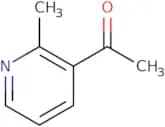
Produto descontinuado1-(2-Methylpyridin-3-yl)ethanone
CAS:1-(2-Methylpyridin-3-yl)ethanone is a ketone that can be synthesized using the reaction of methyl sulfone, benzyl sulfone, and sulphone. It has been shown to have anti-inflammatory properties by inhibiting prostaglandin synthesis and has been used as a nonsteroidal anti-inflammatory drug (NSAID). 1-(2-Methylpyridin-3-yl)ethanone has also been shown to have analgesic effects in mice. This synthetic compound may be useful in treating inflammation, pain, and fever.
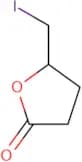
Fórmula:C8H9NOPureza:Min. 95%Peso molecular:135.16 g/mol5-(Iodomethyl)oxolan-2-one
CAS:Versatile small molecule scaffold
Fórmula:C5H7IO2Pureza:Min. 95%Peso molecular:226.01 g/mol(2R,3S)-3-(3-Cyclopropyl-1,2,4-oxadiazol-5-yl)-2-methylmorpholine hydrochloride
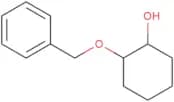
CAS:Versatile small molecule scaffoldFórmula:C10H16ClN3O2Pureza:Min. 95%Peso molecular:245.7 g/molrac-(1R,2R)-2-(Benzyloxy)cyclohexan-1-ol
CAS:Versatile small molecule scaffold
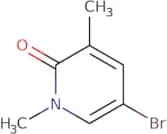
Fórmula:C13H18O2Pureza:Min. 95%Peso molecular:206.28 g/mol5-Bromo-1,3-dimethylpyridin-2(1H)-one
CAS:Benzyne is a reactive intermediate that is formed by the tautomerization of 5-bromo-1,3-dimethylpyridin-2(1H)-one. It is an adduct between a bromine atom and a benzene ring. This compound has been shown to react with electron-rich olefins to form bicyclic compounds called diels-alder adducts. These reactions are often catalyzed by metals, such as palladium or nickel. Benzyne also reacts with triple bonds or other electron rich centers to form benzyne adducts, which are highly reactive and can be used as chemical probes for electron density in molecules.
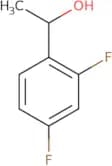
Fórmula:C7H8BrNOPureza:Min. 95%Peso molecular:202.05 g/mol(1R)-1-(2,4-Difluorophenyl)ethan-1-ol
CAS:Versatile small molecule scaffold
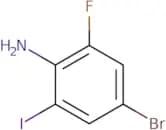
Fórmula:C8H8F2OPureza:Min. 95%Peso molecular:158.14 g/mol4-Bromo-2-fluoro-6-iodoaniline
CAS:Versatile small molecule scaffold
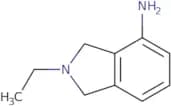
Fórmula:C6H4BrFINPureza:Min. 95%Peso molecular:315.91 g/mol2-Ethyl-2,3-dihydro-1H-isoindol-4-amine
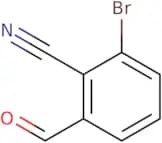
CAS:Versatile small molecule scaffoldFórmula:C10H14N2Pureza:Min. 95%Peso molecular:162.23 g/mol2-Bromo-6-formylbenzonitrile
CAS:Versatile small molecule scaffold
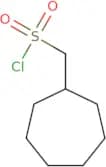
Fórmula:C8H4BrNOPureza:Min. 95%Peso molecular:210.03 g/molCycloheptylmethanesulfonyl chloride
CAS:Cycloheptylmethanesulfonyl chloride is a heterocyclic compound that has been shown to cause neurotoxicity, or nerve damage. It inhibits the activity of two enzymes, acetylcholinesterase and butyrylcholinesterase, which are responsible for regulating the production of the neurotransmitter acetylcholine in the brain. Cycloheptylmethanesulfonyl chloride also inhibits other enzymes involved in the synthesis of proteins in neurons, leading to neuronal damage. Cycloheptylmethanesulfonyl chloride has been shown to be effective against neurological disorders such as neurodegenerative diseases and nerve damage.Fórmula:C8H15ClO2SPureza:Min. 95%Peso molecular:210.72 g/molRef: 3D-SJA45987
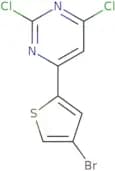
Produto descontinuado4-(4-Bromothiophen-2-yl)-2,6-dichloropyrimidine
CAS:Versatile small molecule scaffold
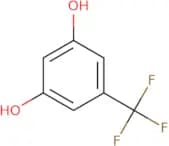
Fórmula:C8H3BrCl2N2SPureza:Min. 95%Peso molecular:310 g/mol5-(Trifluoromethyl)benzene-1,3-diol
CAS:Versatile small molecule scaffold
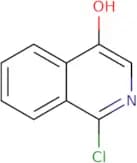
Fórmula:C7H5F3O2Pureza:Min. 95%Peso molecular:178.11 g/mol1-Chloroisoquinolin-4-ol
CAS:1-Chloroisoquinolin-4-ol is a phenylpyrimidine with anti-inflammatory properties. It is used in the treatment of sensitivity and mediated diseases, such as osteoarthritis, rheumatoid arthritis, and ankylosing spondylitis. 1-Chloroisoquinolin-4-ol inhibits the enzymatic activity of matrix metalloproteinases (MMPs), which are enzymes that break down collagen and other proteins in the body. The inhibition of MMPs by 1-chloroisoquinolin-4-ol leads to reduced inflammation and pain. This compound is also an effective inhibitor of the activities of chloride channels involved in acid secretion by cells in the stomach lining, thus inhibiting acid production. 1-Chloroisoquinolin-4-ol has been shown to have anticholesterolemic effects on liver cells due to its ability to inhibit cholesterol synthesis through inhibition of HMG CoA
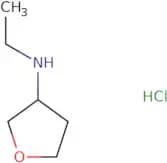
Fórmula:C9H6ClNOPureza:Min. 95%Peso molecular:179.6 g/molN-ethyloxolan-3-amine hydrochloride
CAS:Versatile small molecule scaffold
Fórmula:C6H14ClNOPureza:Min. 95%Peso molecular:151.63 g/mol3-(4-Ethylphenyl)butanoic acid
CAS:Versatile small molecule scaffold
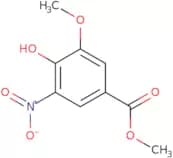
Fórmula:C12H16O2Pureza:Min. 95%Peso molecular:192.25 g/molMethyl 4-hydroxy-3-methoxy-5-nitrobenzenecarboxylate
CAS:Versatile small molecule scaffold
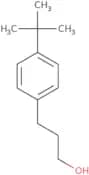
Fórmula:C9H9NO6Pureza:Min. 95%Peso molecular:227.17 g/mol3-(4-tert-Butylphenyl)propan-1-ol
CAS:Versatile small molecule scaffold
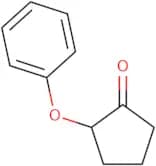
Fórmula:C13H20OPureza:Min. 95%Peso molecular:192.3 g/mol2-Phenoxycyclopentan-1-one
CAS:Versatile small molecule scaffold
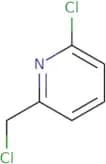
Fórmula:C11H12O2Pureza:Min. 95%Peso molecular:176.21 g/mol2-Chloro-6-(chloromethyl)pyridine
CAS:2-Chloro-6-(chloromethyl)pyridine (2C6CP) is a chloride precursor that can be used for the synthesis of metal chlorides, such as copper chlorides. 2C6CP is synthesized by reacting thionyl chloride with the substituted pyridine under anhydrous conditions at -78°C. The resultant 2C6CP is then hydrolyzed to produce the desired chloride.
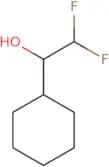
2C6CP has been shown to act as a ligand in coordination chemistry. It was first synthesized by reacting 3-chloropyridine with thionyl chloride and then hydrolyzing it to 2-chloropyridine. This method was later modified to use 4-chlorobenzoyl chloride instead of 3-chloropyridine, producing 2,4-dichloropyridine.Fórmula:C6H5Cl2NPureza:Min. 95%Peso molecular:162.02 g/mol1-Cyclohexyl-2,2-difluoroethan-1-ol
CAS:Versatile small molecule scaffold
Fórmula:C8H14F2OPureza:Min. 95%Peso molecular:164.19 g/molRef: 3D-DGA80110
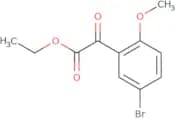
Produto descontinuadoEthyl 2-(5-bromo-2-methoxyphenyl)-2-oxoacetate
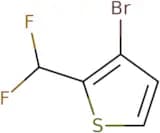
CAS:Versatile small molecule scaffoldFórmula:C11H11BrO4Pureza:Min. 95%Peso molecular:287.11 g/mol3-Bromo-2-(difluoromethyl)thiophene
CAS:Versatile small molecule scaffold
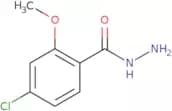
Fórmula:C5H3BrF2SPureza:Min. 95%Peso molecular:213.04 g/mol4-Chloro-2-methoxybenzohydrazide
CAS:Versatile small molecule scaffold
Fórmula:C8H9ClN2O2Pureza:Min. 95%Peso molecular:200.62 g/mol6-bromoimidazo[1,2-a]pyrazin-2-amine
CAS:Versatile small molecule scaffold
Fórmula:C6H5BrN4Pureza:Min. 95%Peso molecular:213 g/mol3-Bromo-5-chloro-1H-pyrrolo[2,3-b]pyridine
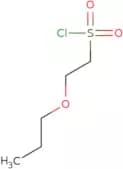
CAS:Versatile small molecule scaffoldFórmula:C7H4BrClN2Pureza:Min. 95%Peso molecular:231.48 g/mol2-Propoxyethane-1-sulfonyl chloride
CAS:Versatile small molecule scaffoldFórmula:C5H11ClO3SPureza:Min. 95%Peso molecular:186.66 g/molRef: 3D-RDC90107
Produto descontinuado5-{[(9H-Fluoren-9-ylmethoxy)carbonyl]amino}-2-fluorobenzoic acid
CAS:Versatile small molecule scaffold
Fórmula:C22H16FNO4Pureza:Min. 95%Peso molecular:377.4 g/mol3-[(Trimethylsilyl)oxy]oxane-3-carbonitrile
CAS:Versatile small molecule scaffold
Fórmula:C9H17NO2SiPureza:Min. 95%Peso molecular:199.32 g/moltert-Butyl (2,2-difluoro-3-hydroxypropyl)carbamate
CAS:Versatile small molecule scaffoldFórmula:C10H13NO4Pureza:Min. 95%Peso molecular:211.21 g/mol3-Hydroxy-5-methylpyridine
CAS:3-Hydroxy-5-methylpyridine (3HMP) is a chemical substance that has been classified as an amine. It is a product of the metabolism of purines, which are nitrogenous bases found in DNA and RNA. 3HMP is produced by aerogenic bacteria (such as Enterobacter), and can be used to estimate the number of these bacteria present in water samples. 3HMP has been shown to have antiviral properties against influenza virus, and can be used as a biomarker for the presence of other viruses in animals. 3HMP also has mineralization properties, which have been studied extensively, particularly with regards to pancreatic disease.
Fórmula:C6H7NOPureza:Min. 95%Cor e Forma:PowderPeso molecular:109.13 g/molRef: 3D-FH16174
Produto descontinuado4-Chloro-2-hydroxy-6-methylphenylboronic acid
CAS:Versatile small molecule scaffoldFórmula:C7H8BClO3Pureza:Min. 95%Peso molecular:186.4 g/mol1-Hydroxycyclopentane-1-carbonitrile
CAS:1-Hydroxycyclopentane-1-carbonitrile is a monomer that is hydrolyzed to form benzoin and cyanohydrins. It can be used in the production of scifinder as a monomer or dimerizer.
Fórmula:C6H9NOPureza:Min. 95%Peso molecular:111.14 g/mol2-Bromo-3,3,3-trifluoro-1-propene
CAS:Produto Controlado2-Bromo-3,3,3-trifluoro-1-propene is a chemical compound that has been synthesized in an asymmetric reaction. The reactant is bromopropane and the product is 2,2,2-trifluoropropene. The methylene group on the propene molecule is activated by the nucleophilic attack of a fluoride ion from hydrogen fluoride to form a cavity with a highly strained bond. The kinetic study of this reaction revealed that the activation energy for the reaction is 42 kJ/mol. Palladium-catalyzed coupling reactions are catalyzed by palladium and require nonpolar solvents such as toluene or dichloromethane. This type of reaction has been shown to be exothermic with an isolated yield of 1%.
Fórmula:C3H2BrF3Pureza:Min. 95%Cor e Forma:Colorless PowderPeso molecular:174.95 g/mol8-Bromo-2-methylimidazo[1,2-a]pyridine
CAS:Versatile small molecule scaffold
Fórmula:C8H7N2BrPureza:Min. 95%Peso molecular:211.05 g/mol4,5-Dihydro-1H-imidazol-2-amine hydrochloride
CAS:Please enquire for more information about 4,5-Dihydro-1H-imidazol-2-amine hydrochloride including the price, delivery time and more detailed product information at the technical inquiry form on this page
Fórmula:C3H7N3•HClPureza:Min. 95%Peso molecular:121.57 g/molRef: 3D-FD183639
Produto descontinuado4,5-Dihydroxy-2,3-Pentanedione
CAS:4,5-Dihydroxy-2,3-pentanedione is a carbonyl compound that is the product of the oxidation of ascorbic acid. It is used in wastewater treatment and has antimicrobial properties against infectious diseases. This compound has been shown to inhibit protein synthesis by binding to the ribosome and preventing the formation of peptide bonds between amino acids. 4,5-Dihydroxy-2,3-pentanedione has also been shown to bind to plasma proteins, which may be due to its acyl chain structure. 4,5-Dihydroxy-2,3-pentanedione can be synthesized in a catalytic mechanism that involves dehydroascorbic acid and molecular oxygen.
Fórmula:C5H8O4Pureza:Min. 95%Cor e Forma:PowderPeso molecular:132.11 g/molRef: 3D-FD180770
Produto descontinuadoPiperyline
CAS:Piperyline is an alkanoic acid that has shown to be effective against skin cancer. It also has antimicrobial properties, which may be due to its ability to bind metal ions and form polymeric compounds. Piperyline inhibits microbial growth by inhibiting the synthesis of proteins and nucleic acids. The antimicrobial activity is related to its cationic polymerization with hydroxyl groups, which forms a structure that can inhibit microbial enzymes and disrupt microbial cell membranes. This compound also interacts with the skin's natural lipids, making it difficult for microorganisms to attach and grow on the skin. Piperyline is synthesized in organic chemistry laboratories as an amide precursor of other pharmaceuticals such as penicillin.
Fórmula:C16H17NO3Pureza:Min. 95%Peso molecular:271.31 g/mol


![1-[5-(Trifluoromethyl)-1,3,4-thiadiazol-2-yl]piperazine hydrochloride](/_next/image/?url=https%3A%2Fstatic.cymitquimica.com%2Fproducts%2F3D%2Fthumb-webp%2FWAC73867.webp&w=3840&q=75)
![5-[(2,4-Difluorophenyl)methyl]-4-methyl-1,3-thiazol-2-amine hydrobromide](/_next/image/?url=https%3A%2Fstatic.cymitquimica.com%2Fproducts%2F3D%2Fthumb-webp%2FVWC49324.webp&w=3840&q=75)

![6-Methyl-3,4-dihydro-2H-pyrido[3,2-b][1,4]oxazine](/_next/image/?url=https%3A%2Fstatic.cymitquimica.com%2Fproducts%2F3D%2Fthumb-webp%2FVAA56767.webp&w=3840&q=75)



![6-bromoimidazo[1,2-a]pyrazin-2-amine](/_next/image/?url=https%3A%2Fstatic.cymitquimica.com%2Fproducts%2F3D%2Fthumb-webp%2FDUB86138.webp&w=3840&q=75)
![3-Bromo-5-chloro-1H-pyrrolo[2,3-b]pyridine](/_next/image/?url=https%3A%2Fstatic.cymitquimica.com%2Fproducts%2F3D%2Fthumb-webp%2FRJB54609.webp&w=3840&q=75)
![5-{[(9H-Fluoren-9-ylmethoxy)carbonyl]amino}-2-fluorobenzoic acid](/_next/image/?url=https%3A%2Fstatic.cymitquimica.com%2Fproducts%2F3D%2Fthumb-webp%2FRDC82236.webp&w=3840&q=75)
![3-[(Trimethylsilyl)oxy]oxane-3-carbonitrile](/_next/image/?url=https%3A%2Fstatic.cymitquimica.com%2Fproducts%2F3D%2Fthumb-webp%2FRDC77065.webp&w=3840&q=75)




![8-Bromo-2-methylimidazo[1,2-a]pyridine](/_next/image/?url=https%3A%2Fstatic.cymitquimica.com%2Fproducts%2F3D%2Fthumb-webp%2FUXB37475.webp&w=3840&q=75)


