


Building Blocks
Subcategorias de "Building Blocks"
- Ácidos Borónicos e Derivados de Ácido Borónico(5.778 produtos)
- Building Blocks Quirais(1.243 produtos)
- Building Blocks Hidrocarbonetos(6.099 produtos)
- Building Blocks orgânicos(61.038 produtos)
Foram encontrados 205376 produtos de "Building Blocks"
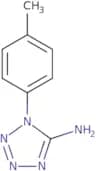
1-(4-Methylphenyl)-1H-1,2,3,4-tetrazol-5-amine
CAS:Versatile small molecule scaffold
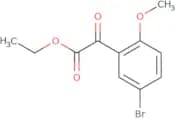
Fórmula:C8H9N5Pureza:Min. 95%Peso molecular:175.19 g/molEthyl 2-(5-bromo-2-methoxyphenyl)-2-oxoacetate
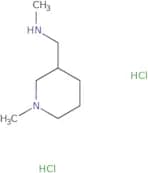
CAS:Versatile small molecule scaffoldFórmula:C11H11BrO4Pureza:Min. 95%Peso molecular:287.11 g/molN-Methyl-1-(1-methylpiperidin-3-yl)methanamine
CAS:Versatile small molecule scaffoldFórmula:C8H18N2Pureza:Min. 95%Peso molecular:142.25 g/molMethyl 2-[2-(hydroxyimino)cyclohexyl]acetate
CAS:Versatile small molecule scaffold
Fórmula:C9H15NO3Pureza:Min. 95%Peso molecular:185.22 g/molEthyl 2-(3-nitrophenyl)acetate
CAS:Ethyl 2-(3-nitrophenyl)acetate is an organic compound. It is a chloride channel blocker that has been shown to inhibit the activity of multidrug-resistant proteins (e.g., p-glycoprotein and multidrug resistance protein). The uptake of this drug in cells is limited by its low oral bioavailability and its interaction with aluminium ions. This drug interacts with multidrug-resistance proteins, which are involved in the transport of drugs or toxins out of the cell, by competing for binding sites. Ethyl 2-(3-nitrophenyl)acetate inhibits the catalytic activity of these proteins, leading to a regression in multidrug resistance. It can also inhibit the activity of isoxazoles and alcohols.br>br>/p>
Fórmula:C10H11NO4Pureza:Min. 95%Peso molecular:209.2 g/mol5-Chloro-3-cyclobutyl-1,2,4-oxadiazole
CAS:Versatile small molecule scaffold
Fórmula:C6H7ClN2OPureza:Min. 95%Peso molecular:158.58 g/mol1-(4-Chlorophenyl)-1H-imidazole-2(3H)-thione
CAS:1-(4-Chlorophenyl)-1H-imidazole-2(3H)-thione is a crystalline solid that belongs to the class of imidazoles. It has been synthesized by reacting 1,2-dibromoethane with sodium methoxide in methanol. The compound was found to have a melting point of about 183°C and a molecular weight of 212.06 g/mol. This compound has been shown to interact with methanol, methoxide, and ethoxy groups. Crystallization occurs when the substance is heated to about 183°C in vacuum and then cooled slowly.
Fórmula:C9H7ClN2SPureza:Min. 95%Peso molecular:210.68 g/mol(5R)-5-(Aminomethyl)-1,3-oxazolidin-2-one HCl ee
CAS:Versatile small molecule scaffold
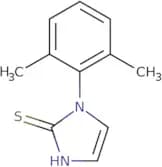
Fórmula:C4H9ClN2O2Pureza:Min. 95%Peso molecular:152.58 g/mol1-(2,6-Dimethylphenyl)-2,3-dihydro-1H-imidazole-2-thione
CAS:Versatile small molecule scaffold
Fórmula:C11H12N2SPureza:Min. 95%Peso molecular:204.29 g/mol3-Methylidene-8-azabicyclo[3.2.1]octane hydrochloride
CAS:Versatile small molecule scaffold
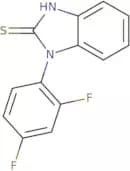
Fórmula:C8H14ClNPureza:Min. 95%Peso molecular:159.65 g/mol1-(2,4-Difluorophenyl)-1H-1,3-benzodiazole-2-thiol
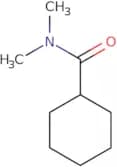
CAS:Versatile small molecule scaffoldFórmula:C13H8F2N2SPureza:Min. 95%Peso molecular:262.28 g/molN,N-Dimethylcyclohexanecarboxamide
CAS:N,N-Dimethylcyclohexanecarboxamide is an acid salt of besylate that is used as a drug for the treatment of hyperglycemia. It has been shown to have a rapid onset and short duration of action. The chemical name for N,N-Dimethylcyclohexanecarboxamide is 1-[2-(2-methoxyethoxy)ethyl]-4-methyl-1,4-dihydropyridine 2,4-dicarboxylic acid methyl ester. This compound inhibits insulin release from the pancreas and stimulates glucagon release from the alpha cells in the pancreas. These effects lead to an increase in blood glucose levels.
Fórmula:C9H17NOPureza:Min. 95%Peso molecular:155.24 g/mol2-({[(9H-Fluoren-9-yl)methoxy]carbonyl}(3-methoxyphenyl)amino)acetic acid
CAS:Versatile small molecule scaffoldFórmula:C24H21NO5Pureza:Min. 95%Peso molecular:403.4 g/moltert-Butyl 3-amino-2-(oxan-4-yl)propanoate
CAS:Versatile small molecule scaffoldFórmula:C12H23NO3Pureza:Min. 95%Peso molecular:229.3 g/molBis(N-[2-(pyridin-3-yl)ethyl]guanidine), sulfuric acid
CAS:Versatile small molecule scaffold
Fórmula:C16H26N8O4SPureza:Min. 95%Peso molecular:426.5 g/mol2-(1-Methylazetidin-3-yl)ethan-1-amine dihydrochloride
CAS:Versatile small molecule scaffold
Fórmula:C6H16Cl2N2Pureza:Min. 95%Peso molecular:187.11 g/mol3-(3-Amino-1H-pyrazol-1-yl)pyrrolidin-2-one
CAS:Versatile small molecule scaffold
Fórmula:C7H10N4OPureza:Min. 95%Peso molecular:166.18 g/molRef: 3D-NKD27328
Produto descontinuado2-[2-({[(9H-Fluoren-9-yl)methoxy]carbonyl}amino)-1,2,3,4-tetrahydronaphthalen-2-yl]acetic acid
CAS:Versatile small molecule scaffold
Fórmula:C27H25NO4Pureza:Min. 95%Peso molecular:427.5 g/molPyrrolo[1,2-b]pyridazin-4(1H)-one
CAS:Versatile small molecule scaffold
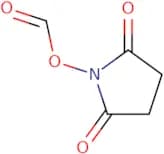
Fórmula:C7H6N2OPureza:Min. 95%Peso molecular:134.14 g/mol2,5-Dioxopyrrolidin-1-yl formate
CAS:2,5-Dioxopyrrolidin-1-yl formate is a solubilized ATP analog that has been clinically developed for the treatment of cancer. This drug binds to cell membranes and causes alkylation of the acidic phospholipids in the membrane, leading to increased permeability of the membrane and release of intracellular components. 2,5-Dioxopyrrolidin-1-yl formate also interacts with lysosomes and increases their acidity, which may lead to an increase in lysosomal enzyme activity. This drug has been shown to inhibit tumor growth in a mouse model by binding to erythrocytes while it was being simultaneously administered intravenously. The chemical structures of this drug are closely related to those of phaseolus, which is known for its anticancer effects.
Fórmula:C5H5NO4Pureza:Min. 95%Peso molecular:143.1 g/mol1-Azabicyclo[3.2.1]octan-4-one
CAS:Versatile small molecule scaffold
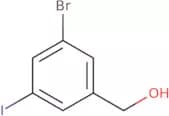
Fórmula:C7H11NOPureza:Min. 95%Peso molecular:125.17 g/mol(3-bromo-5-iodophenyl)methanol
CAS:Versatile small molecule scaffold
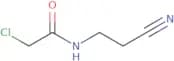
Fórmula:C7H6BrIOPureza:Min. 95%Peso molecular:312.9 g/mol2-Chloro-N-(2-cyanoethyl)acetamide
CAS:2-Chloro-N-(2-cyanoethyl)acetamide is a potent and selective inhibitor of the protein kinase C (PKC). The PKC protein kinases are enzymes that regulate the activity of cells in response to stimuli. 2-Chloro-N-(2-cyanoethyl)acetamide has been shown to be effective against some viruses and tumor cells, but not against bacteria. It inhibits the growth of some cancer cells and has been shown to inhibit the replication of animal viruses such as influenza virus. This drug is also used for treatment of abdominal infections, hepatitis, pancreatitis, mesenteric adenitis, and animals with cancer. 2-Chloro-N-(2-cyanoethyl)acetamide can act as a noncompetitive inhibitor by binding to a site on the enzyme that is different from ATP binding site.
Fórmula:C5H7ClN2OPureza:Min. 95%Peso molecular:146.57 g/mol1-[4-(2,4-Dimethylbenzoyl)piperidin-1-yl]ethan-1-one
CAS:Versatile small molecule scaffold
Fórmula:C16H21NO2Pureza:Min. 95%Peso molecular:259.34 g/mol[2-(Methoxymethyl)-1,3-thiazol-5-yl]methanol
CAS:Versatile small molecule scaffold
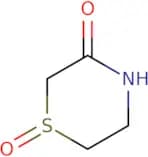
Fórmula:C6H9NO2SPureza:Min. 95%Peso molecular:159.21 g/mol1λ⁴-Thiomorpholine-1,3-dione
CAS:Versatile small molecule scaffold
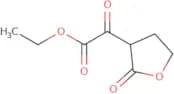
Fórmula:C4H7NO2SPureza:Min. 95%Peso molecular:133.17 g/molEthyl 2-Oxo-2-(2-oxotetrahydrofuran-3-yl)acetate
CAS:Versatile small molecule scaffold
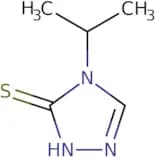
Fórmula:C8H10O5Pureza:Min. 95%Peso molecular:186.16 g/mol4-(Propan-2-yl)-4H-1,2,4-triazole-3-thiol
CAS:Versatile small molecule scaffoldFórmula:C5H9N3SPureza:Min. 95%Peso molecular:143.21 g/mol2-Methylsulfonylthiophene
CAS:2-Methylsulfonylthiophene is a modulating agent that can inhibit the activity of carbonic anhydrase, adenosine receptors and 5-membered heteroaryl. It has been shown to have affinity for CB1 receptor antagonists and is used to treat cardiovascular diseases. 2-Methylsulfonylthiophene also inhibits the enzymatic activity of anhydrase in the eye, which leads to suppression of intraocular pressure (IOP). The drug also has anti-glaucoma effects by reducing the production of aqueous humour. 2-Methylsulfonylthiophene is used as a dyestuff intermediate and as an organic solvent.
Fórmula:C5H6O2S2Pureza:Min. 95%Peso molecular:162.23 g/molCyclopropyl(3,4-dimethylphenyl)methanone
CAS:Cyclopropyl(3,4-dimethylphenyl)methanone (CPM) is a synthetic cannabinoid that has been shown to have similar effects to the natural cannabinoids found in cannabis. CPM binds to and activates the CB2 receptor, which is found on cells of the immune system, brain, and other organs. It has been studied for its ability to reduce glioma tumor growth in mice by inhibiting glutamate release. The molecular modeling study showed that CPM binds to the receptor with a geometry similar to other CB2 agonists like JWH-133. In addition, CPM inhibits locomotor activity in rats and has been shown to produce some symptoms of anxiety in mice. A receptor knockout study with mice showed that CPM can bind to CB2 receptors without activating them. X-ray diffraction data indicated that CPM is an achiral molecule with an idealized molecular geometry of "s".
Fórmula:C12H14OPureza:Min. 95%Peso molecular:174.24 g/mol1,9,10,11,12,12-Hexachloro-5-oxatetracyclo[7.2.1.0²,⁸.0⁴,⁶]dodec-10-ene-3,7-dione
CAS:Versatile small molecule scaffoldFórmula:C11H4Cl6O3Pureza:Min. 95%Peso molecular:396.9 g/molN-[3-(Dimethylamino)propyl]-2-hydroxybenzamide
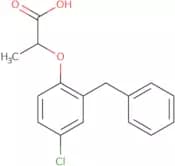
CAS:Versatile small molecule scaffoldFórmula:C12H18N2O2Pureza:Min. 95%Peso molecular:222.28 g/mol2-(2-Benzyl-4-chlorophenoxy)propanoic acid
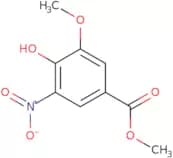
CAS:Versatile small molecule scaffoldFórmula:C16H15ClO3Pureza:Min. 95%Peso molecular:290.74 g/molMethyl 4-hydroxy-3-methoxy-5-nitrobenzenecarboxylate
CAS:Versatile small molecule scaffold
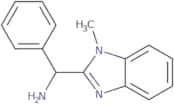
Fórmula:C9H9NO6Pureza:Min. 95%Peso molecular:227.17 g/mol(1-Methyl-1H-1,3-benzodiazol-2-yl)(phenyl)methanamine
CAS:Versatile small molecule scaffold
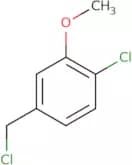
Fórmula:C15H15N3Pureza:Min. 95%Peso molecular:237.31 g/mol1-Chloro-4-(chloromethyl)-2-methoxybenzene
CAS:Versatile small molecule scaffold
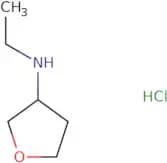
Fórmula:C8H8Cl2OPureza:Min. 95%Peso molecular:191.05 g/molN-ethyloxolan-3-amine hydrochloride
CAS:Versatile small molecule scaffold
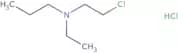
Fórmula:C6H14ClNOPureza:Min. 95%Peso molecular:151.63 g/molN-(2-Chloroethyl)-N-ethylpropan-1-amine hydrochloride
CAS:Produto ControladoVersatile small molecule scaffold
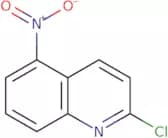
Fórmula:C7H17Cl2NPureza:Min. 95%Peso molecular:186.12 g/mol2-Chloro-5-nitroquinoline
CAS:2-Chloro-5-nitroquinoline is an oxidized aminoquinoline that is synthesized from nitric acid and benzene. It contains a nitro group, which makes it susceptible to oxidation. 2-Chloro-5-nitroquinoline is used as a solvent for rubber, plastics, and waxes. It can also be used as a solvent in the production of quinolines and other nitrogen compounds. Nitration of this compound produces 2-chloroquinoline, which can be transformed into 2-chloroquinolinium hydroxide by reaction with sodium hydroxide. The substituent on the ortho position can be determined by oleum or bromine water.
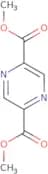
Fórmula:C9H5ClN2O2Pureza:Min. 95%Peso molecular:208.6 g/molDimethyl Pyrazine-2,5-dicarboxylate
CAS:Versatile small molecule scaffold
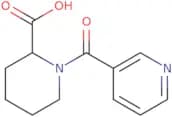
Fórmula:C8H8N2O4Pureza:Min. 95%Peso molecular:196.16 g/mol1-(Pyridine-3-carbonyl)piperidine-2-carboxylic acid
CAS:Versatile small molecule scaffold
Fórmula:C12H14N2O3Pureza:Min. 95%Peso molecular:234.25 g/mol4-[(Chlorosulfonyl)methyl]benzoic acid
CAS:Versatile small molecule scaffold
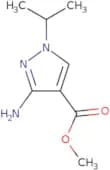
Fórmula:C8H7ClO4SPureza:Min. 95%Peso molecular:234.66 g/molMethyl 3-amino-1-(propan-2-yl)-1H-pyrazole-4-carboxylate
CAS:Versatile small molecule scaffold
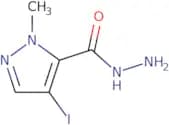
Fórmula:C8H13N3O2Pureza:Min. 95%Peso molecular:183.21 g/mol4-Iodo-1-methyl-1H-pyrazole-5-carbohydrazide
CAS:Versatile small molecule scaffold
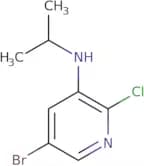
Fórmula:C5H7IN4OPureza:Min. 95%Peso molecular:266.04 g/mol5-Bromo-2-chloro-N-(propan-2-yl)pyridin-3-amine
CAS:Versatile small molecule scaffoldFórmula:C8H10BrClN2Pureza:Min. 95%Peso molecular:249.53 g/mol4-[(tert-Butoxy)methyl]piperidine hydrochloride
CAS:Versatile small molecule scaffold
Fórmula:C10H22ClNOPureza:Min. 95%Peso molecular:207.74 g/mol6-(1-Pyrrolidinyl)-3-pyridinamine
CAS:Versatile small molecule scaffold
Fórmula:C9H13N3Pureza:(%) Min. 95%Cor e Forma:PowderPeso molecular:163.22 g/mol6-Ethyl-3-methyl-1-phenyl-1H-pyrazolo[3,4-b]pyridine-4-carboxylic acid
CAS:Versatile small molecule scaffold
Fórmula:C16H15N3O2Pureza:Min. 95%Peso molecular:281.31 g/mol4-[(2-Amino-1,3-thiazol-5-yl)methyl]-3-(trifluoromethyl)benzonitrile
CAS:Versatile small molecule scaffold
Fórmula:C12H8F3N3SPureza:Min. 95%Peso molecular:283.27 g/mol2-[6-(Furan-2-yl)-3-methyl-4-(trifluoromethyl)-1H-pyrazolo[3,4-b]pyridin-1-yl]acetic acid
CAS:Versatile small molecule scaffoldFórmula:C14H10F3N3O3Pureza:Min. 95%Peso molecular:325.24 g/mol2-{3-Cyclopropyl-5-methyl-1H-pyrazolo[3,4-b]pyridin-1-yl}acetic acid
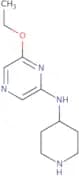
CAS:Versatile small molecule scaffoldFórmula:C12H13N3O2Pureza:Min. 95%Peso molecular:231.25 g/mol6-Ethoxy-N-(piperidin-4-yl)pyrazin-2-amine
CAS:Versatile small molecule scaffold
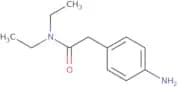
Fórmula:C11H18N4OPureza:Min. 95%Peso molecular:222.29 g/mol2-(4-Aminophenyl)-N,N-diethylacetamide
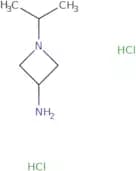
CAS:Versatile small molecule scaffoldFórmula:C12H18N2OPureza:Min. 95%Peso molecular:206.28 g/mol1-(1-Methylethyl)-3-azetidinamine, hydrochloride (1:2)
CAS:1-(1-Methylethyl)-3-azetidinamine, hydrochloride (1:2) is a synthetic compound that has been shown to be a potent and selective γ-secretase modulator. It is a triol with an alcohol group at C-3 and two hydroxyl groups at C-4 and C-5. This compound has been shown to inhibit the production of cycloartenol from soybean oil in vitro, which may be due to its inhibition of γ-secretase activity. 1-(1-Methylethyl)-3-azetidinamine, hydrochloride (1:2) also has the potential for use as a target compound for research purposes.Fórmula:C6H16Cl2N2Pureza:Min. 95%Peso molecular:187.11 g/mol6-(Bromomethyl)-3-phenyl-5H,6H-[1,2,4]triazolo[3,4-b][1,3]thiazole
CAS:Versatile small molecule scaffold
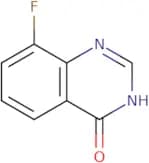
Fórmula:C11H10BrN3SPureza:Min. 95%Peso molecular:296.19 g/mol8-Fluoroquinazolin-4(1H)-one
CAS:Versatile small molecule scaffold
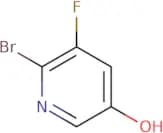
Fórmula:C8H5FN2OPureza:Min. 95%Peso molecular:164.14 g/mol6-Bromo-5-fluoropyridin-3-ol
CAS:Versatile small molecule scaffold
Fórmula:C5H3BrFNOPureza:Min. 95%Peso molecular:191.99 g/mol2-[(2-Aminoethyl)sulfanyl]-1-methyl-1H-imidazole
CAS:Versatile small molecule scaffold
Fórmula:C6H11N3SPureza:Min. 95%Peso molecular:157.24 g/mol[(2-Bromo-5-methoxyphenyl)methyl](methyl)amine
CAS:Versatile small molecule scaffold
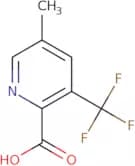
Fórmula:C9H12BrNOPureza:Min. 95%Peso molecular:230.1 g/mol5-Methyl-3-(trifluoromethyl)picolinic acid
CAS:Versatile small molecule scaffold
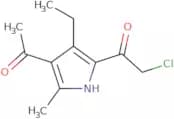
Fórmula:C8H6F3NO2Pureza:Min. 95%Peso molecular:205.13 g/mol1-(4-Acetyl-3-ethyl-5-methyl-1H-pyrrol-2-yl)-2-chloroethan-1-one
CAS:Versatile small molecule scaffold
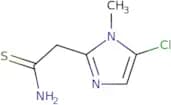
Fórmula:C11H14ClNO2Pureza:Min. 95%Peso molecular:227.69 g/mol2-(5-Chloro-1-methyl-1H-imidazol-2-yl)ethanethioamide
CAS:Versatile small molecule scaffoldFórmula:C6H8ClN3SPureza:Min. 95%Peso molecular:189.67 g/mol[1-(4-Aminophenyl)cyclopropyl]methanol hydrochloride
CAS:Versatile small molecule scaffoldFórmula:C10H14ClNOPureza:Min. 95%Peso molecular:199.7 g/molRef: 3D-LUD67881
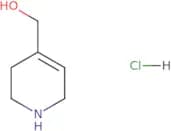
Produto descontinuado(1,2,3,6-Tetrahydropyridin-4-yl)methanol hydrochloride
CAS:Versatile small molecule scaffold
Fórmula:C6H12ClNOPureza:Min. 95%Peso molecular:149.6 g/mol3-(Aminomethyl)-2,2-difluoropentane hydrochloride
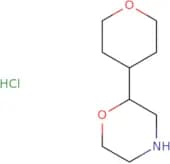
CAS:Versatile small molecule scaffoldFórmula:C6H14ClF2NPureza:Min. 95%Peso molecular:173.6 g/mol2-(Oxan-4-yl)morpholine hydrochloride
CAS:Versatile small molecule scaffold
Fórmula:C9H18ClNO2Pureza:Min. 95%Peso molecular:207.7 g/molRef: 3D-LUD64089
Produto descontinuadoMethyl 2-(hydroxymethyl)-4-methylpyrimidine-5-carboxylate
CAS:Versatile small molecule scaffold
Fórmula:C8H10N2O3Pureza:Min. 95%Peso molecular:182.2 g/mol1-Hydroxycyclopentane-1-carbonitrile
CAS:1-Hydroxycyclopentane-1-carbonitrile is a monomer that is hydrolyzed to form benzoin and cyanohydrins. It can be used in the production of scifinder as a monomer or dimerizer.
Fórmula:C6H9NOPureza:Min. 95%Peso molecular:111.14 g/mol4,5-Dihydro-1H-imidazol-2-amine hydrochloride
CAS:Please enquire for more information about 4,5-Dihydro-1H-imidazol-2-amine hydrochloride including the price, delivery time and more detailed product information at the technical inquiry form on this page
Fórmula:C3H7N3•HClPureza:Min. 95%Peso molecular:121.57 g/molRef: 3D-FD183639
Produto descontinuado8-Bromo-2-methylimidazo[1,2-a]pyridine
CAS:Versatile small molecule scaffold
Fórmula:C8H7N2BrPureza:Min. 95%Peso molecular:211.05 g/moltert-Butyl (2,2-difluoro-3-hydroxypropyl)carbamate
CAS:Versatile small molecule scaffoldFórmula:C10H13NO4Pureza:Min. 95%Peso molecular:211.21 g/mol4-Chloro-2-hydroxy-6-methylphenylboronic acid
CAS:Versatile small molecule scaffoldFórmula:C7H8BClO3Pureza:Min. 95%Peso molecular:186.4 g/mol2-Bromo-3,3,3-trifluoro-1-propene
CAS:Produto Controlado2-Bromo-3,3,3-trifluoro-1-propene is a chemical compound that has been synthesized in an asymmetric reaction. The reactant is bromopropane and the product is 2,2,2-trifluoropropene. The methylene group on the propene molecule is activated by the nucleophilic attack of a fluoride ion from hydrogen fluoride to form a cavity with a highly strained bond. The kinetic study of this reaction revealed that the activation energy for the reaction is 42 kJ/mol. Palladium-catalyzed coupling reactions are catalyzed by palladium and require nonpolar solvents such as toluene or dichloromethane. This type of reaction has been shown to be exothermic with an isolated yield of 1%.
Fórmula:C3H2BrF3Pureza:Min. 95%Cor e Forma:Colorless PowderPeso molecular:174.95 g/mol3-Hydroxy-5-methylpyridine
CAS:3-Hydroxy-5-methylpyridine (3HMP) is a chemical substance that has been classified as an amine. It is a product of the metabolism of purines, which are nitrogenous bases found in DNA and RNA. 3HMP is produced by aerogenic bacteria (such as Enterobacter), and can be used to estimate the number of these bacteria present in water samples. 3HMP has been shown to have antiviral properties against influenza virus, and can be used as a biomarker for the presence of other viruses in animals. 3HMP also has mineralization properties, which have been studied extensively, particularly with regards to pancreatic disease.
Fórmula:C6H7NOPureza:Min. 95%Cor e Forma:PowderPeso molecular:109.13 g/molRef: 3D-FH16174
Produto descontinuado4,5-Dihydroxy-2,3-Pentanedione
CAS:4,5-Dihydroxy-2,3-pentanedione is a carbonyl compound that is the product of the oxidation of ascorbic acid. It is used in wastewater treatment and has antimicrobial properties against infectious diseases. This compound has been shown to inhibit protein synthesis by binding to the ribosome and preventing the formation of peptide bonds between amino acids. 4,5-Dihydroxy-2,3-pentanedione has also been shown to bind to plasma proteins, which may be due to its acyl chain structure. 4,5-Dihydroxy-2,3-pentanedione can be synthesized in a catalytic mechanism that involves dehydroascorbic acid and molecular oxygen.
Fórmula:C5H8O4Pureza:Min. 95%Cor e Forma:PowderPeso molecular:132.11 g/molRef: 3D-FD180770
Produto descontinuadoPiperyline
CAS:Piperyline is an alkanoic acid that has shown to be effective against skin cancer. It also has antimicrobial properties, which may be due to its ability to bind metal ions and form polymeric compounds. Piperyline inhibits microbial growth by inhibiting the synthesis of proteins and nucleic acids. The antimicrobial activity is related to its cationic polymerization with hydroxyl groups, which forms a structure that can inhibit microbial enzymes and disrupt microbial cell membranes. This compound also interacts with the skin's natural lipids, making it difficult for microorganisms to attach and grow on the skin. Piperyline is synthesized in organic chemistry laboratories as an amide precursor of other pharmaceuticals such as penicillin.
Fórmula:C16H17NO3Pureza:Min. 95%Peso molecular:271.31 g/mol

![Methyl 2-[2-(hydroxyimino)cyclohexyl]acetate](/_next/image/?url=https%3A%2Fstatic.cymitquimica.com%2Fproducts%2F3D%2Fthumb-webp%2FSAA44849.webp&w=3840&q=75)


![3-Methylidene-8-azabicyclo[3.2.1]octane hydrochloride](/_next/image/?url=https%3A%2Fstatic.cymitquimica.com%2Fproducts%2F3D%2Fthumb-webp%2FNSC65245.webp&w=3840&q=75)
![2-({[(9H-Fluoren-9-yl)methoxy]carbonyl}(3-methoxyphenyl)amino)acetic acid](/_next/image/?url=https%3A%2Fstatic.cymitquimica.com%2Fproducts%2F3D%2Fthumb-webp%2FNKD54880.webp&w=3840&q=75)

![Bis(N-[2-(pyridin-3-yl)ethyl]guanidine), sulfuric acid](/_next/image/?url=https%3A%2Fstatic.cymitquimica.com%2Fproducts%2F3D%2Fthumb-webp%2FNKD38418.webp&w=3840&q=75)


![2-[2-({[(9H-Fluoren-9-yl)methoxy]carbonyl}amino)-1,2,3,4-tetrahydronaphthalen-2-yl]acetic acid](/_next/image/?url=https%3A%2Fstatic.cymitquimica.com%2Fproducts%2F3D%2Fthumb-webp%2FNKD27275.webp&w=3840&q=75)
![Pyrrolo[1,2-b]pyridazin-4(1H)-one](/_next/image/?url=https%3A%2Fstatic.cymitquimica.com%2Fproducts%2F3D%2Fthumb-webp%2FNKB72026.webp&w=3840&q=75)
![1-Azabicyclo[3.2.1]octan-4-one](/_next/image/?url=https%3A%2Fstatic.cymitquimica.com%2Fproducts%2F3D%2Fthumb-webp%2FSAA60477.webp&w=3840&q=75)
![1-[4-(2,4-Dimethylbenzoyl)piperidin-1-yl]ethan-1-one](/_next/image/?url=https%3A%2Fstatic.cymitquimica.com%2Fproducts%2F3D%2Fthumb-webp%2FSAC64246.webp&w=3840&q=75)
![[2-(Methoxymethyl)-1,3-thiazol-5-yl]methanol](/_next/image/?url=https%3A%2Fstatic.cymitquimica.com%2Fproducts%2F3D%2Fthumb-webp%2FSAC79344.webp&w=3840&q=75)


![1,9,10,11,12,12-Hexachloro-5-oxatetracyclo[7.2.1.0²,⁸.0⁴,⁶]dodec-10-ene-3,7-dione](/_next/image/?url=https%3A%2Fstatic.cymitquimica.com%2Fproducts%2F3D%2Fthumb-webp%2FNBA66780.webp&w=3840&q=75)
![N-[3-(Dimethylamino)propyl]-2-hydroxybenzamide](/_next/image/?url=https%3A%2Fstatic.cymitquimica.com%2Fproducts%2F3D%2Fthumb-webp%2FNBA39443.webp&w=3840&q=75)
![4-[(Chlorosulfonyl)methyl]benzoic acid](/_next/image/?url=https%3A%2Fstatic.cymitquimica.com%2Fproducts%2F3D%2Fthumb-webp%2FSDA61457.webp&w=3840&q=75)
![4-[(tert-Butoxy)methyl]piperidine hydrochloride](/_next/image/?url=https%3A%2Fstatic.cymitquimica.com%2Fproducts%2F3D%2Fthumb-webp%2FMRD31454.webp&w=3840&q=75)

![6-Ethyl-3-methyl-1-phenyl-1H-pyrazolo[3,4-b]pyridine-4-carboxylic acid](/_next/image/?url=https%3A%2Fstatic.cymitquimica.com%2Fproducts%2F3D%2Fthumb-webp%2FMMB69138.webp&w=3840&q=75)
![4-[(2-Amino-1,3-thiazol-5-yl)methyl]-3-(trifluoromethyl)benzonitrile](/_next/image/?url=https%3A%2Fstatic.cymitquimica.com%2Fproducts%2F3D%2Fthumb-webp%2FMMB62900.webp&w=3840&q=75)
![2-[6-(Furan-2-yl)-3-methyl-4-(trifluoromethyl)-1H-pyrazolo[3,4-b]pyridin-1-yl]acetic acid](/_next/image/?url=https%3A%2Fstatic.cymitquimica.com%2Fproducts%2F3D%2Fthumb-webp%2FMMB60578.webp&w=3840&q=75)
![2-{3-Cyclopropyl-5-methyl-1H-pyrazolo[3,4-b]pyridin-1-yl}acetic acid](/_next/image/?url=https%3A%2Fstatic.cymitquimica.com%2Fproducts%2F3D%2Fthumb-webp%2FMMB60570.webp&w=3840&q=75)
![6-(Bromomethyl)-3-phenyl-5H,6H-[1,2,4]triazolo[3,4-b][1,3]thiazole](/_next/image/?url=https%3A%2Fstatic.cymitquimica.com%2Fproducts%2F3D%2Fthumb-webp%2FSEB00446.webp&w=3840&q=75)
![2-[(2-Aminoethyl)sulfanyl]-1-methyl-1H-imidazole](/_next/image/?url=https%3A%2Fstatic.cymitquimica.com%2Fproducts%2F3D%2Fthumb-webp%2FSFA31355.webp&w=3840&q=75)
amine](/_next/image/?url=https%3A%2Fstatic.cymitquimica.com%2Fproducts%2F3D%2Fthumb-webp%2FSFB28908.webp&w=3840&q=75)
![[1-(4-Aminophenyl)cyclopropyl]methanol hydrochloride](/_next/image/?url=https%3A%2Fstatic.cymitquimica.com%2Fproducts%2F3D%2Fthumb-webp%2FLUD67881.webp&w=3840&q=75)



![8-Bromo-2-methylimidazo[1,2-a]pyridine](/_next/image/?url=https%3A%2Fstatic.cymitquimica.com%2Fproducts%2F3D%2Fthumb-webp%2FUXB37475.webp&w=3840&q=75)





