


Building Blocks
Subcategorias de "Building Blocks"
- Ácidos Borónicos e Derivados de Ácido Borónico(5.778 produtos)
- Building Blocks Quirais(1.243 produtos)
- Building Blocks Hidrocarbonetos(6.099 produtos)
- Building Blocks orgânicos(61.038 produtos)
Foram encontrados 205376 produtos de "Building Blocks"
2-(Methylsulfonyl)-1H-benzo[d]imidazole
CAS:2-(Methylsulfonyl)-1H-benzo[d]imidazole (MSBI) is a relatively new class of catalysts that can be used to promote the oxidation of alcohols. The catalytic system consists of copper, iodides, and MSBI. The first step in the catalytic cycle is the formation of a complex between MSBI and copper. This complex reacts with an alcohol to give a more reactive species, which then oxidizes iodide to iodine. The iodide is reduced back to iodide by hydrogen peroxide generated from the reaction with water. The spectrum of MSBI shows peaks at 1706 cm-1 and 1684 cm-1 due to its methyl groups, while the peak at 1202 cm-1 corresponds to the stretching vibration in the imidazole ring. Experimental results show that MSBI has a low density and high theoretical activity.
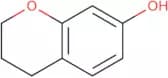
Fórmula:C8H8N2O2SPureza:Min. 95%Peso molecular:196.22 g/mol3,4-dihydro-2H-1-benzopyran-7-ol
CAS:3,4-Dihydro-2H-1-benzopyran-7-ol is a monomer that is used to synthesize medicines. It has the formula CH3COCH=CH(OH)CH3 and belongs to the group of flavonoids. 3,4-Dihydro-2H-1-benzopyran-7-ol has acidic properties, which are due to its isoflavones. It can be used as an acid catalyst in organic synthesis reactions and is a reaction product of chloropropane. 3,4-Dihydro-2H-1-benzopyran-7-ol also has high yield and can act as a bioisostere for other compounds such as chromene.
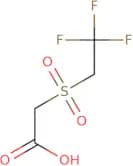
Fórmula:C9H10O2Pureza:Min. 95%Peso molecular:150.18 g/mol2-(2,2,2-Trifluoroethanesulfonyl)acetic acid
CAS:Trifloxacin is a broad-spectrum antibacterial drug that belongs to the class of formyloxy compounds and the cephalosporin family. It has been shown to be active against both Gram-positive and Gram-negative bacteria, with activity against strains resistant to penicillin, ampicillin, erythromycin, and chloramphenicol. Trifloxacin binds to the bacterial ribosome by displacement of a pyridyl group in the ribosomal RNA, inhibiting protein synthesis. This binding inhibits cell growth by preventing the production of proteins that are vital for cell division.
br>
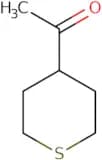
Trifloxacin has also been found to inhibit DNA gyrase and topoisomerase IV in vitro. Trifloxacin's mechanism of action is similar to that of other quinolones such as norfloxacin and ciprofloxacin.Fórmula:C4H5F3O4SPureza:Min. 95%Peso molecular:206.14 g/mol1-(Thian-4-yl)ethan-1-one
CAS:Versatile small molecule scaffold
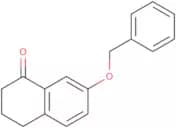
Fórmula:C7H12OSPureza:Min. 95%Peso molecular:144.24 g/mol7-(Benzyloxy)-3,4-dihydronaphthalen-1(2H)-one
CAS:7-(Benzyloxy)-3,4-dihydronaphthalen-1(2H)-one is a tricyclic carboxamide that belongs to the carboxylic acid group. It has a constant boiling point and an acidic pH. 7-(Benzyloxy)-3,4-dihydronaphthalen-1(2H)-one is soluble in water and dilute acids. It has been shown that the melting point of 7-(Benzyloxy)-3,4-dihydronaphthalen-1(2H)-one is not affected by dilution or experiments. The chemical compounds are made up of benzoic acid and carboxylic acid groups that form a six-membered ring with two heterocycles on either side of the molecule.Fórmula:C17H16O2Pureza:Min. 95%Peso molecular:252.31 g/mol6-Chloro-2,3,4,9-tetrahydro-1H-carbazol-3-ol
CAS:Versatile small molecule scaffold
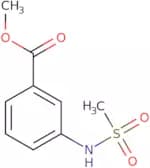
Fórmula:C12H12ClNOPureza:Min. 95%Peso molecular:221.68 g/molMethyl 3-methanesulfonamidobenzoate
CAS:Methyl 3-methanesulfonamidobenzoate is an organic compound that is used as a reagent in organic synthesis. It has the chemical formula CH3O2C(CH2)2SO2CH=NOH. Methyl 3-methanesulfonamidobenzoate is a methyl ester of benzoic acid, which is also known as methyl benzoate. This compound has been shown to react with DNA, forming adducts with guanine and cytosine bases.
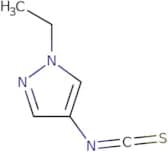
Fórmula:C9H11NO4SPureza:Min. 95%Peso molecular:229.26 g/mol1-Ethyl-4-isothiocyanato-1H-pyrazole
CAS:Versatile small molecule scaffold
Fórmula:C6H7N3SPureza:Min. 95%Peso molecular:153.21 g/mol3-Fluoro-4-[3-(trifluoromethyl)-1H-pyrazol-1-yl]aniline
CAS:Versatile small molecule scaffold
Fórmula:C10H7F4N3Pureza:Min. 95%Peso molecular:245.18 g/mol3-Chloro-4-[3-(trifluoromethyl)-1H-pyrazol-1-yl]aniline
CAS:Versatile small molecule scaffoldFórmula:C10H7ClF3N3Pureza:Min. 95%Peso molecular:261.63 g/mol2-(4-Cyanophenyl)-2-hydroxyacetic acid
CAS:Versatile small molecule scaffold
Fórmula:C9H7NO3Pureza:Min. 95%Peso molecular:177.16 g/molRef: 3D-GAB89716
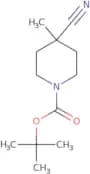
Produto descontinuadotert-Butyl 4-cyano-4-methylpiperidine-1-carboxylate
CAS:Versatile small molecule scaffold
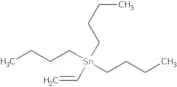
Fórmula:C12H20N2O2Pureza:Min. 95%Peso molecular:224.3 g/molVinyltributyltin
CAS:Produto ControladoVinyltributyltin is a dibutyltin oxide (DBTO) enantiomer that has been shown to inhibit the HIV-1 protease. Vinyltributyltin has also been shown to reduce inflammation in bowel disease, as well as to have synergistic effects with other drugs in the treatment of cancer and inflammatory bowel disease. The mechanism of action of vinyltributyltin is not yet known, but it may be related to its ability to inhibit the quinazolone-dependent formation of reactive oxygen species. Vinyltributyltin also inhibits the NS3 protease, which is an enzyme involved in hepatitis C virus replication.
Fórmula:C14H30SnPureza:Min. 95%Cor e Forma:Colorless Clear LiquidPeso molecular:317.1 g/mol3-Azabicyclo[3.2.1]octan-6-ol hydrochlorides
CAS:Versatile small molecule scaffoldFórmula:C7H14ClNOPureza:Min. 95%Peso molecular:163.6 g/mol1,5,5-Trimethylpyrrolidin-3-amine dihydrochloride
CAS:Versatile small molecule scaffoldFórmula:C7H18Cl2N2Pureza:Min. 95%Peso molecular:201.1 g/mol5-Methoxybicyclo[2.2.1]heptan-2-amine hydrochloride
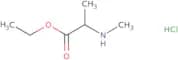
CAS:Versatile small molecule scaffoldFórmula:C8H16ClNOPureza:Min. 95%Peso molecular:177.7 g/molEthyl (2R)-2-(methylamino)propanoate hydrochloride
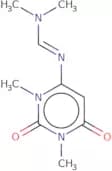
CAS:Versatile small molecule scaffoldFórmula:C6H14ClNO2Pureza:Min. 95%Peso molecular:167.6 g/mol(E)-N'-(1,3-Dimethyl-2,6-dioxo-1,2,3,6-tetrahydropyrimidin-4-yl)-N,N-dimethylmethanimidamide
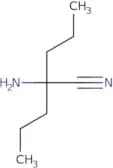
CAS:Versatile small molecule scaffoldFórmula:C9H14N4O2Pureza:Min. 95%Peso molecular:210.2 g/mol2-Amino-2-propylpentanenitrile
CAS:Versatile small molecule scaffold
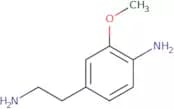
Fórmula:C8H16N2Pureza:Min. 95%Peso molecular:140.23 g/mol4-(2-Aminoethyl)-2-methoxyaniline
CAS:Produto ControladoVersatile small molecule scaffold
Fórmula:C9H14N2OPureza:Min. 95%Peso molecular:166.22 g/mol5-(3H-Pyrazol-3-ylidene)-1,2,4-triazolidine-3-thione
CAS:Versatile small molecule scaffold
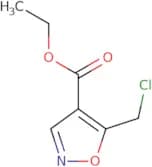
Fórmula:C5H5N5SPureza:Min. 95%Peso molecular:167.19 g/molEthyl 5-(chloromethyl)-1,2-oxazole-4-carboxylate
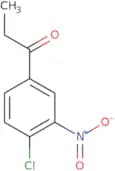
CAS:Versatile small molecule scaffoldFórmula:C7H8ClNO3Pureza:Min. 95%Peso molecular:189.59 g/mol1-(4-Chloro-3-nitrophenyl)propan-1-one
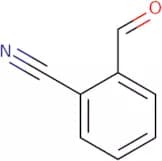
CAS:Versatile small molecule scaffoldFórmula:C9H8ClNO3Pureza:Min. 95%Peso molecular:213.62 g/mol2-Cyanobenzaldehyde
CAS:2-Cyanobenzaldehyde is an aldehyde that reacts with nucleophiles such as trifluoromethanesulfonic acid to form a molecule. 2-Cyanobenzaldehyde has potent inhibitory activity against the kinase glycogen synthase kinase 3 (GSK3) and can be used to treat autoimmune diseases. It also reacts with hydrochloric acid in solution to form an intermediate, which is then reacted with glycine and ATP to produce a chiral compound. The product of this reaction has been shown to be active methylene, which was synthesized by asymmetric synthesis.
Fórmula:C8H5NOPureza:Min. 95%Cor e Forma:PowderPeso molecular:131.13 g/mol(3,4-Dihydro-2H-chromen-6-ylmethyl)ae hydrochloride
CAS:Versatile small molecule scaffold
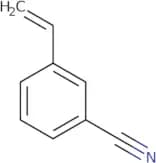
Fórmula:C10H14ClNOPureza:Min. 95%Peso molecular:199.68 g/mol3-Ethenylbenzonitrile
CAS:3-Ethenylbenzonitrile is an organic compound that can be prepared by photolysis of 2-bromobenzonitrile in the presence of a nonpolar solvent. It is also synthesized by laser induced exciplex reaction between benzene and ethylene. 3-Ethenylbenzonitrile has a conformation that is dependent on the polarity of the solvent. In polar solvents, it adopts a bent structure while in nonpolar solvents, it adopts a linear structure. The molecule undergoes cyclobutane formation and then reacts with electron acceptors such as cations to form intermediates. These intermediates react with other molecules to form products.
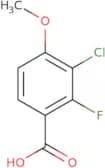
Fórmula:C9H7NPureza:Min. 95%Peso molecular:129.16 g/mol3-Chloro-2-fluoro-4-methoxybenzoic acid
CAS:Versatile small molecule scaffold
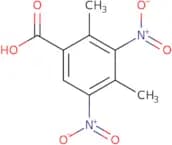
Fórmula:C8H6ClFO3Pureza:Min. 95%Peso molecular:204.58 g/mol2,4-Dimethyl-3,5-dinitrobenzoic acid
CAS:Versatile small molecule scaffold
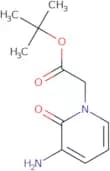
Fórmula:C9H8N2O6Pureza:Min. 95%Peso molecular:240.17 g/moltert-Butyl 2-(3-amino-2-oxo-1,2-dihydropyridin-1-yl)acetate
CAS:Versatile small molecule scaffold
Fórmula:C11H16N2O3Pureza:Min. 95%Peso molecular:224.26 g/mol2-Chloro-4-methoxy-6-methyl-3-nitropyridine
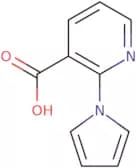
CAS:Versatile small molecule scaffoldFórmula:C7H7ClN2O3Pureza:Min. 95%Peso molecular:202.59 g/mol2-(1H-Pyrrol-1-yl)pyridine-3-carboxylic acid
CAS:Versatile small molecule scaffold
Fórmula:C10H8N2O2Pureza:Min. 95%Peso molecular:188.18 g/mol4-[(4-Methoxyphenyl)methyl]azetidin-2-one
CAS:Versatile small molecule scaffoldFórmula:C11H13NO2Pureza:Min. 95%Peso molecular:191.23 g/mol1-(tert-Butyldimethylsilyl)-1H,2H,3H-pyrrolo[2,3-b]pyridine
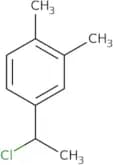
CAS:Versatile small molecule scaffoldFórmula:C13H22N2SiPureza:Min. 95%Peso molecular:234.41 g/mol3,4-Dimethyl-1-(1-chloroethyl)benzene
CAS:Versatile small molecule scaffold
Fórmula:C10H13ClPureza:Min. 95%Peso molecular:168.66 g/mol5-[(Phenylthio)methyl]-2-furoic acid
CAS:Versatile small molecule scaffold
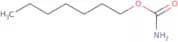
Fórmula:C12H10O3SPureza:Min. 95%Peso molecular:234.27 g/molHeptyl carbamate
CAS:Heptyl carbamate is a cholinergic antagonist of the blood disorders. It has been shown to inhibit hydroxy and hiv infection. In vitro assays have shown that heptyl carbamate inhibits the synthesis of fatty acid, thereby reducing cholesterol levels and inhibiting the production of insulin resistance in cells. Heptyl carbamate also binds to the same site on acetylcholinesterase as donepezil, which blocks the breakdown of acetylcholine and leads to an accumulation of this neurotransmitter in nerve cells. This increased concentration of acetylcholine in nerve cells can lead to a reduced incidence of Alzheimer's disease-related symptoms.
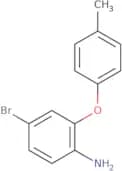
Fórmula:C8H17NO2Pureza:Min. 95%Peso molecular:159.23 g/mol4-Bromo-2-(4-methylphenoxy)aniline
CAS:Versatile small molecule scaffold
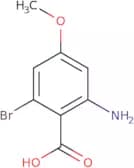
Fórmula:C13H12BrNOPureza:Min. 95%Peso molecular:278.14 g/mol2-Amino-6-bromo-4-methoxybenzoic acid
CAS:Versatile small molecule scaffold
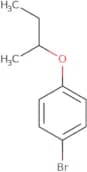
Fórmula:C8H8BrNO3Pureza:Min. 95%Peso molecular:246.06 g/mol1-Bromo-4-(butan-2-yloxy)benzene
CAS:Versatile small molecule scaffold
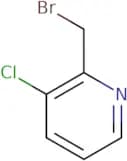
Fórmula:C10H13BrOPureza:Min. 95%Peso molecular:229.11 g/mol2-(bromomethyl)-3-chloropyridine
CAS:Versatile small molecule scaffold
Fórmula:C6H5BrClNPureza:Min. 95%Peso molecular:206.47 g/mol2-(5-Methyl-1H-pyrazol-1-yl)aniline
CAS:Versatile small molecule scaffold
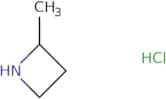
Fórmula:C10H11N3Pureza:Min. 95%Peso molecular:173.21 g/mol2-Methylazetidine hydrochloride
CAS:Versatile small molecule scaffold
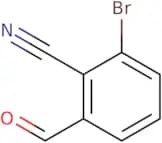
Fórmula:C4H10ClNPureza:Min. 95%Peso molecular:107.58 g/mol2-Bromo-6-formylbenzonitrile
CAS:Versatile small molecule scaffold
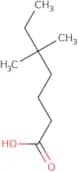
Fórmula:C8H4BrNOPureza:Min. 95%Peso molecular:210.03 g/mol5,5-Dimethylheptanoic acid
CAS:Versatile small molecule scaffold
Fórmula:C9H18O2Pureza:Min. 95%Peso molecular:158.24 g/mol2-[Ethyl(propan-2-yl)amino]ethan-1-ol
CAS:Produto ControladoVersatile small molecule scaffold
Fórmula:C7H17NOPureza:Min. 95%Peso molecular:131.22 g/mol1-Oxaspiro[4.5]dec-2-en-4-one
CAS:Versatile small molecule scaffold
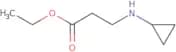
Fórmula:C9H12O2Pureza:Min. 95%Peso molecular:152.19 g/molEthyl 3-(cyclopropylamino)propanoate
CAS:Versatile small molecule scaffold
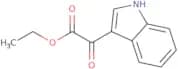
Fórmula:C8H15NO2Pureza:Min. 95%Peso molecular:157.21 g/molEthyl 2-(indol-3-yl)-2-oxoacetate
CAS:Ethyl 2-(indol-3-yl)-2-oxoacetate is a hydroxy derivative of the amino acid tyrosine. It inhibits the enzyme tyrosine hydroxylase, which catalyzes the conversion of tyrosine to L-DOPA. This in turn affects dopamine synthesis and has an inhibitory effect on rat brain. Ethyl 2-(indol-3-yl)-2-oxoacetate also inhibits methylmagnesium borohydride in vitro, which is a reagent that breaks down esters, amides, and nitriles. Tyrosine hydroxylase is inhibited by the presence of two hydroxy groups on the ethyl side chain and one hydroxy group on the indole ring. It can be used as a structural analogue for other drugs that are used to treat Parkinson's disease or depression.
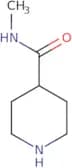
Fórmula:C12H11NO3Pureza:Min. 95%Peso molecular:217.22 g/molN-Methylpiperidine-4-carboxamide
CAS:Versatile small molecule scaffold
Fórmula:C7H14N2OPureza:Min. 95%Peso molecular:142.2 g/mol1-Chloro-4-isocyanobenzene
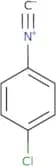
CAS:1-Chloro-4-isocyanobenzene (1CI) is an organic compound that has been used as a chemical probe for the detection of amines and other molecules on metal surfaces. The frequency shift in Raman spectra, which is observed after the addition of 1CI to the metal surface, is used to detect amines. 1CI has also been shown to be a potent inhibitor of mitochondrial function. This molecule binds to nucleophilic sites on metal surfaces and forms covalent bonds with them, leading to a high degree of inhibition.
1CI can be synthesized in three steps from commercially available starting materials and is relatively easy to purify.Fórmula:C7H4ClNPureza:Min. 95%Peso molecular:137.56 g/mol2-[3-(Propan-2-yl)phenoxy]acetic acid
CAS:2-[3-(Propan-2-yl)phenoxy]acetic acid is a chemical compound that is used as an additive in benzene, and is a phytotoxic chemical. It prevents the formation of chlorophyll by blocking electron transport and inhibiting photosynthesis. 2-[3-(Propan-2-yl)phenoxy]acetic acid is used to induce callus tissue from lettuce, radish, and other plants. This compound also inhibits the growth of various bacteria including Escherichia coli and Pseudomonas aeruginosa.
Fórmula:C11H14O3Pureza:Min. 95%Peso molecular:194.23 g/molDi-n-octylamine
CAS:Di-n-octylamine is a reactive chemical that is chemically stable in the presence of nitrogen. It is used in chemical biology as a transport agent for amines and other organic compounds. Di-n-octylamine has been shown to have optimum solubility in glycol ethers, magnesium salts, and trifluoroacetic acid. This compound reacts with fatty acids to form hydroxyl groups and can be used as an extractant for glycol ethers. The mechanism of this reaction involves intramolecular hydrogen transfer from the hydroxyl group on the fatty acid to the n-octyl amine molecule.
Fórmula:C16H35NPureza:Min. 95%Peso molecular:241.46 g/mol3-Azaspiro[5.6]dodecane-2,4-dione
CAS:Versatile small molecule scaffold
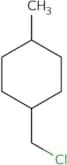
Fórmula:C11H17NO2Pureza:Min. 95%Peso molecular:195.26 g/mol1-(Chloromethyl)-4-methylcyclohexane
CAS:Versatile small molecule scaffold
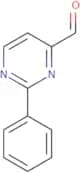
Fórmula:C8H15ClPureza:Min. 95%Peso molecular:146.66 g/mol2-Phenylpyrimidine-4-carbaldehyde
CAS:Versatile small molecule scaffold
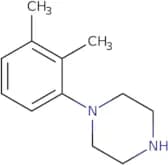
Fórmula:C11H8N2OPureza:Min. 95%Peso molecular:184.19 g/mol1-(2,3-Dimethylphenyl)piperazine
CAS:Produto Controlado1-(2,3-Dimethylphenyl)piperazine is a piperidine derivative that has been shown to have antidepressant activity in both in vitro and in vivo studies. It acts as an antagonist at the 5-HT1A receptor and as an agonist at the 5-HT2A receptor. 1-(2,3-Dimethylphenyl)piperazine has been shown to inhibit the production of dopamine, serotonin, and citric acid by inhibiting the enzyme citrate synthase. This drug also increases the concentration of chloride ions in cells. 1-(2,3-Dimethylphenyl)piperazine is used to treat depression, anxiety disorders, and other conditions that may be related to chemical imbalances of serotonin.
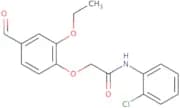
Fórmula:C12H18N2Pureza:Min. 95%Peso molecular:190.29 g/molN-(2-Chlorophenyl)-2-(2-ethoxy-4-formylphenoxy)acetamide
CAS:Versatile small molecule scaffold
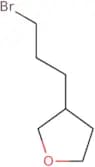
Fórmula:C17H16ClNO4Pureza:Min. 95%Peso molecular:333.8 g/mol3-(3-Bromopropyl)oxolane
CAS:Versatile small molecule scaffold
Fórmula:C7H13BrOPureza:Min. 95%Peso molecular:193.08 g/molRef: 3D-ASB49655
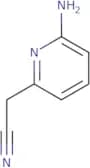
Produto descontinuado2-(6-Aminopyridin-2-yl)acetonitrile
CAS:Versatile small molecule scaffold
Fórmula:C7H7N3Pureza:Min. 95%Peso molecular:133.15 g/molRef: 3D-ARA77668
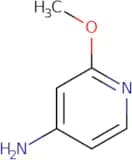
Produto descontinuado(4-Aminopyridin-2-yl)methanol
CAS:Versatile small molecule scaffold
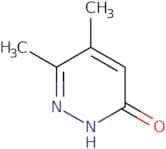
Fórmula:C6H8N2OPureza:Min. 95%Peso molecular:124.14 g/mol5,6-Dimethylpyridazin-3(2H)-one
CAS:Versatile small molecule scaffold
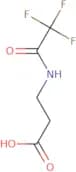
Fórmula:C6H8N2OPureza:Min. 95%Peso molecular:124.14 g/mol3-(Trifluoroacetamido)propanoic acid
CAS:Versatile small molecule scaffold
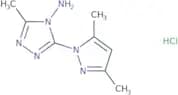
Fórmula:C5H6F3NO3Pureza:Min. 95%Peso molecular:185.1 g/mol3-(3,5-Dimethyl-1H-pyrazol-1-yl)-5-methyl-4H-1,2,4-triazol-4-amine hydrochloride
CAS:Versatile small molecule scaffold
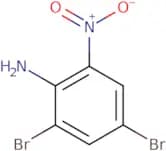
Fórmula:C8H13ClN6Pureza:Min. 95%Peso molecular:228.68 g/mol2,4-Dibromo-6-nitroaniline
CAS:2,4-Dibromo-6-nitroaniline is a nitro compound that has been used in the production of dyes. It is also used as a component in the synthesis of other organic compounds. 2,4-Dibromo-6-nitroaniline can be produced by electrolysis of an acid solution containing radical cations and benzene. The radical cations are formed by proton transfer from the acid to the benzene, followed by electron transfer from benzene to the electrode. This process results in the formation of nitro groups on the benzene ring, which undergoes oxidation to form 2,4-dibromo-6-nitroaniline. The cyclic voltammetry shows that this process occurs via two pathways: one with a fast rate and one with a slow rate. The mechanism for this reaction is not yet known.
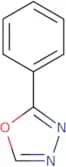
Fórmula:C6H4Br2N2O2Pureza:Min. 95%Peso molecular:295.92 g/mol2-Phenyl-1,3,4-oxadiazole
CAS:2-Phenyl-1,3,4-oxadiazole is a 2-phenyloxazole with an oxygen atom at the 1 position. It is a white crystalline solid that is soluble in water and has antibacterial properties. This chemical can be used as a catalyst for the synthesis of organic compounds. 2-Phenyl-1,3,4-oxadiazole reacts with nitro groups to form oxime derivatives and has been shown to inhibit the growth of fungi such as Candida albicans and Aspergillus niger. 2-Phenyl-1,3,4-oxadiazole can also be used as an antifungal agent against Trichophyton rubrum.
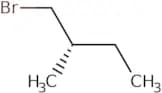
2-Phenyl-1,3,4-oxadiazole may be synthesized by reacting phenol with acetone in the presence of nitric acid or sulfuric acid. The structural formula for this compound isFórmula:C8H6N2OPureza:Min. 95%Peso molecular:146.15 g/mol(S)-(+)-1-Bromo-2-methylbutane
CAS:(S)-(+)-1-Bromo-2-methylbutane is a chiral molecule with two stereoisomers, the cis and trans forms. The cis form has been observed to be the more stable of the two. It is a functional theory that these two forms are not mirror images of each other because they have different conformations. (S)-(+)-1-Bromo-2-methylbutane has been used in the synthesis of a number of important molecules. The stereoisomers can be distinguished by conformational analysis and optical microscopy. (S)-(+)-1-Bromo-2-methylbutane also has an application in biotechnology for use as a precursor for hydrazones, which are important in organic chemistry and molecular biology, such as DNA sequencing.
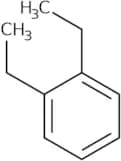
Fórmula:C5H11BrPureza:Min. 95%Peso molecular:151.04 g/mol1,2-Diethylbenzene
CAS:1,2-Diethylbenzene is a trifluoroacetic acid derivative that is used as an acylation agent and a solid catalyst. 1,2-Diethylbenzene has been shown to increase the energy metabolism in cultured human cells. It also influences fatty acid synthesis and nmr spectra of plant families. 1,2-Diethylbenzene was found to be safe for use in sciatic nerve regeneration in Sprague-Dawley rats with axonopathy. This chemical can also be used as an analytical reagent for the separation of urine samples by liquid chromatography methods.
Fórmula:C10H14Pureza:Min. 95%Peso molecular:134.22 g/mol2-Bromo-3,3,3-trifluoro-1-propene
CAS:Produto Controlado2-Bromo-3,3,3-trifluoro-1-propene is a chemical compound that has been synthesized in an asymmetric reaction. The reactant is bromopropane and the product is 2,2,2-trifluoropropene. The methylene group on the propene molecule is activated by the nucleophilic attack of a fluoride ion from hydrogen fluoride to form a cavity with a highly strained bond. The kinetic study of this reaction revealed that the activation energy for the reaction is 42 kJ/mol. Palladium-catalyzed coupling reactions are catalyzed by palladium and require nonpolar solvents such as toluene or dichloromethane. This type of reaction has been shown to be exothermic with an isolated yield of 1%.
Fórmula:C3H2BrF3Pureza:Min. 95%Cor e Forma:Colorless PowderPeso molecular:174.95 g/mol8-Bromo-2-methylimidazo[1,2-a]pyridine
CAS:Versatile small molecule scaffold
Fórmula:C8H7N2BrPureza:Min. 95%Peso molecular:211.05 g/mol3-Hydroxy-5-methylpyridine
CAS:3-Hydroxy-5-methylpyridine (3HMP) is a chemical substance that has been classified as an amine. It is a product of the metabolism of purines, which are nitrogenous bases found in DNA and RNA. 3HMP is produced by aerogenic bacteria (such as Enterobacter), and can be used to estimate the number of these bacteria present in water samples. 3HMP has been shown to have antiviral properties against influenza virus, and can be used as a biomarker for the presence of other viruses in animals. 3HMP also has mineralization properties, which have been studied extensively, particularly with regards to pancreatic disease.
Fórmula:C6H7NOPureza:Min. 95%Cor e Forma:PowderPeso molecular:109.13 g/molRef: 3D-FH16174
Produto descontinuado4,5-Dihydro-1H-imidazol-2-amine hydrochloride
CAS:Please enquire for more information about 4,5-Dihydro-1H-imidazol-2-amine hydrochloride including the price, delivery time and more detailed product information at the technical inquiry form on this page
Fórmula:C3H7N3•HClPureza:Min. 95%Peso molecular:121.57 g/molRef: 3D-FD183639
Produto descontinuado1-Hydroxycyclopentane-1-carbonitrile
CAS:1-Hydroxycyclopentane-1-carbonitrile is a monomer that is hydrolyzed to form benzoin and cyanohydrins. It can be used in the production of scifinder as a monomer or dimerizer.
Fórmula:C6H9NOPureza:Min. 95%Peso molecular:111.14 g/moltert-Butyl (2,2-difluoro-3-hydroxypropyl)carbamate
CAS:Versatile small molecule scaffoldFórmula:C10H13NO4Pureza:Min. 95%Peso molecular:211.21 g/mol4-Chloro-2-hydroxy-6-methylphenylboronic acid
CAS:Versatile small molecule scaffoldFórmula:C7H8BClO3Pureza:Min. 95%Peso molecular:186.4 g/mol4,5-Dihydroxy-2,3-Pentanedione
CAS:4,5-Dihydroxy-2,3-pentanedione is a carbonyl compound that is the product of the oxidation of ascorbic acid. It is used in wastewater treatment and has antimicrobial properties against infectious diseases. This compound has been shown to inhibit protein synthesis by binding to the ribosome and preventing the formation of peptide bonds between amino acids. 4,5-Dihydroxy-2,3-pentanedione has also been shown to bind to plasma proteins, which may be due to its acyl chain structure. 4,5-Dihydroxy-2,3-pentanedione can be synthesized in a catalytic mechanism that involves dehydroascorbic acid and molecular oxygen.
Fórmula:C5H8O4Pureza:Min. 95%Cor e Forma:PowderPeso molecular:132.11 g/molRef: 3D-FD180770
Produto descontinuadoPiperyline
CAS:Piperyline is an alkanoic acid that has shown to be effective against skin cancer. It also has antimicrobial properties, which may be due to its ability to bind metal ions and form polymeric compounds. Piperyline inhibits microbial growth by inhibiting the synthesis of proteins and nucleic acids. The antimicrobial activity is related to its cationic polymerization with hydroxyl groups, which forms a structure that can inhibit microbial enzymes and disrupt microbial cell membranes. This compound also interacts with the skin's natural lipids, making it difficult for microorganisms to attach and grow on the skin. Piperyline is synthesized in organic chemistry laboratories as an amide precursor of other pharmaceuticals such as penicillin.
Fórmula:C16H17NO3Pureza:Min. 95%Peso molecular:271.31 g/mol
![2-(Methylsulfonyl)-1H-benzo[d]imidazole](/_next/image/?url=https%3A%2Fstatic.cymitquimica.com%2Fproducts%2F3D%2Fthumb-webp%2FHCA15981.webp&w=3840&q=75)


![3-Fluoro-4-[3-(trifluoromethyl)-1H-pyrazol-1-yl]aniline](/_next/image/?url=https%3A%2Fstatic.cymitquimica.com%2Fproducts%2F3D%2Fthumb-webp%2FGQB46865.webp&w=3840&q=75)
![3-Chloro-4-[3-(trifluoromethyl)-1H-pyrazol-1-yl]aniline](/_next/image/?url=https%3A%2Fstatic.cymitquimica.com%2Fproducts%2F3D%2Fthumb-webp%2FGQB46761.webp&w=3840&q=75)

![3-Azabicyclo[3.2.1]octan-6-ol hydrochlorides](/_next/image/?url=https%3A%2Fstatic.cymitquimica.com%2Fproducts%2F3D%2Fthumb-webp%2FFSD25297.webp&w=3840&q=75)
![5-Methoxybicyclo[2.2.1]heptan-2-amine hydrochloride](/_next/image/?url=https%3A%2Fstatic.cymitquimica.com%2Fproducts%2F3D%2Fthumb-webp%2FFSD25240.webp&w=3840&q=75)



![4-[(4-Methoxyphenyl)methyl]azetidin-2-one](/_next/image/?url=https%3A%2Fstatic.cymitquimica.com%2Fproducts%2F3D%2Fthumb-webp%2FEFC81230.webp&w=3840&q=75)
![1-(tert-Butyldimethylsilyl)-1H,2H,3H-pyrrolo[2,3-b]pyridine](/_next/image/?url=https%3A%2Fstatic.cymitquimica.com%2Fproducts%2F3D%2Fthumb-webp%2FEFB21438.webp&w=3840&q=75)
![5-[(Phenylthio)methyl]-2-furoic acid](/_next/image/?url=https%3A%2Fstatic.cymitquimica.com%2Fproducts%2F3D%2Fthumb-webp%2FEDA50496.webp&w=3840&q=75)

![2-[Ethyl(propan-2-yl)amino]ethan-1-ol](/_next/image/?url=https%3A%2Fstatic.cymitquimica.com%2Fproducts%2F3D%2Fthumb-webp%2FCAA89361.webp&w=3840&q=75)
![1-Oxaspiro[4.5]dec-2-en-4-one](/_next/image/?url=https%3A%2Fstatic.cymitquimica.com%2Fproducts%2F3D%2Fthumb-webp%2FBDA95195.webp&w=3840&q=75)
![2-[3-(Propan-2-yl)phenoxy]acetic acid](/_next/image/?url=https%3A%2Fstatic.cymitquimica.com%2Fproducts%2F3D%2Fthumb-webp%2FBAA87852.webp&w=3840&q=75)

![3-Azaspiro[5.6]dodecane-2,4-dione](/_next/image/?url=https%3A%2Fstatic.cymitquimica.com%2Fproducts%2F3D%2Fthumb-webp%2FBAA07889.webp&w=3840&q=75)

![8-Bromo-2-methylimidazo[1,2-a]pyridine](/_next/image/?url=https%3A%2Fstatic.cymitquimica.com%2Fproducts%2F3D%2Fthumb-webp%2FUXB37475.webp&w=3840&q=75)






