Building Blocks
Subcategorias de "Building Blocks"
- Ácidos Borónicos e Derivados de Ácido Borónico(5.780 produtos)
- Building Blocks Quirais(1.241 produtos)
- Building Blocks Hidrocarbonetos(6.100 produtos)
- Building Blocks orgânicos(61.023 produtos)
Foram encontrados 205289 produtos de "Building Blocks"
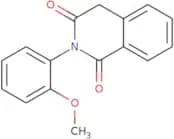
2-(2-Methoxyphenyl)-1,2,3,4-tetrahydroisoquinoline-1,3-dione
CAS:Versatile small molecule scaffoldFórmula:C16H13NO3Pureza:Min. 95%Peso molecular:267.28 g/molMethyl 2-oxopiperidine-3-carboxylate
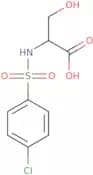
CAS:Versatile small molecule scaffoldFórmula:C10H7NOPureza:Min. 95%Peso molecular:157.17 g/mol2-(4-Chlorobenzenesulfonamido)-3-hydroxypropanoic acid
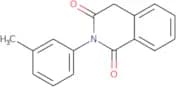
CAS:Versatile small molecule scaffoldFórmula:C9H10ClNO5SPureza:Min. 95%Peso molecular:279.7 g/mol2-(3-Methylphenyl)-1,2,3,4-tetrahydroisoquinoline-1,3-dione
CAS:Versatile small molecule scaffoldFórmula:C16H13NO2Pureza:Min. 95%Peso molecular:251.28 g/mol1-[2-(Diethylamino)ethyl]-2,3-dihydro-1H-indole-2,3-dione
CAS:Versatile small molecule scaffoldFórmula:C14H18N2O2Pureza:Min. 95%Peso molecular:246.3 g/mol1-[2-(Dimethylamino)ethyl]-2,3-dihydro-1H-indole-2,3-dione
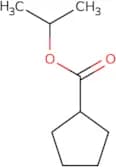
CAS:Versatile small molecule scaffoldFórmula:C12H14N2O2Pureza:Min. 95%Peso molecular:218.25 g/molPropan-2-yl cyclopentanecarboxylate
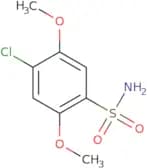
CAS:Propan-2-yl cyclopentanecarboxylate is an inorganic compound that inhibits the pericyclic reaction of dienolate and cyclopentadiene. It has been shown to bind to tyrosine kinase, which is a protein involved in many cellular processes such as cell growth, proliferation, differentiation, and survival. The inhibitory activity of this compound was found to be mediated by its benzamide function. Propan-2-yl cyclopentanecarboxylate has been used as a pesticide for controlling weeds and pests on agricultural crops. It can also be used as an intermediate for the synthesis of other compounds such as imidazopyrazine or carbocycles.Fórmula:C9H16O2Pureza:Min. 95%Peso molecular:156.22 g/mol4-Chloro-2,5-dimethoxybenzene-1-sulfonamide
CAS:Versatile small molecule scaffoldFórmula:C8H10ClNO4SPureza:Min. 95%Peso molecular:251.69 g/mol[2-(4-Chlorophenoxy)ethyl]amine hydrochloride
CAS:Versatile small molecule scaffoldFórmula:C8H11Cl2NOPureza:Min. 95%Peso molecular:208.08 g/mol(2-Methoxyethyl)[(5-methylfuran-2-yl)methyl]amine
CAS:Versatile small molecule scaffold
Fórmula:C9H15NO2Pureza:Min. 95%Peso molecular:169.22 g/molN-[2-(Diethylamino)ethyl]-4-hydroxybenzamide
CAS:Versatile small molecule scaffoldFórmula:C13H20N2O2Pureza:Min. 95%Peso molecular:236.31 g/molImidazo[1,2-a]pyrimidine-3-carbaldehyde
CAS:Imidazo[1,2-a]pyrimidine-3-carbaldehyde is a pyridine that has been shown to have antibacterial activity. The imidazopyridines are a class of compounds with a 1,2-imidazole ring fused to a pyridine ring. Imidazo[1,2-a]pyrimidine-3-carbaldehyde is an example of such a compound. Imidazopyridines may be used as scaffolds for the development of new antibiotics. The chemical structure and activity of this compound may be related to its ability to bind to the 50S ribosomal subunit in bacteria and inhibit protein synthesis. This inhibition leads to cell death by inhibiting the production of proteins vital for cell division.
Fórmula:C7H5N3OPureza:Min. 95%Peso molecular:147.13 g/mol2-[2-(Ethylamino)ethoxy]ethan-1-ol
CAS:Versatile small molecule scaffoldFórmula:C6H15NO2Pureza:Min. 95%Peso molecular:133.19 g/molDimethyl bicyclo[3.2.1]octane-1,5-dicarboxylate
CAS:Versatile small molecule scaffoldFórmula:C12H18O4Pureza:Min. 95%Peso molecular:226.27 g/mol2-[(2-Cyanoethyl)sulfanyl]acetic acid
CAS:Versatile small molecule scaffold
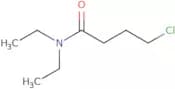
Fórmula:C5H7NO2SPureza:Min. 95%Peso molecular:145.2 g/mol4-Chloro-N,N-diethyl-butyramide
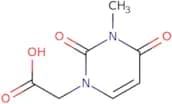
CAS:Versatile small molecule scaffoldFórmula:C8H16ClNOPureza:Min. 95%Peso molecular:177.67 g/mol2-(3-Methyl-2,4-dioxo-1,2,3,4-tetrahydropyrimidin-1-yl)acetic acid
CAS:Versatile small molecule scaffoldFórmula:C7H8N2O4Pureza:Min. 95%Peso molecular:184.15 g/mol(S)-1-(4-Chlorophenyl)ethanamine hydrochloride
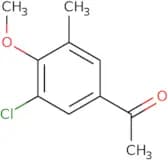
CAS:Versatile small molecule scaffoldFórmula:C8H11Cl2NPureza:Min. 95%Peso molecular:192.09 g/mol1-(3-Chloro-4-methoxy-5-methylphenyl)ethan-1-one
CAS:Versatile small molecule scaffoldFórmula:C10H11ClO2Pureza:Min. 95%Peso molecular:198.64 g/mol4-Cyano-1H-imidazole-5-carboxylic acid
CAS:Versatile small molecule scaffoldFórmula:C5H3N3O2Pureza:Min. 95%Peso molecular:137.1 g/molEthyl 3-(2-methylcyclopropyl)-3-oxopropanoates
CAS:Versatile small molecule scaffold
Fórmula:C9H14O3Pureza:Min. 95%Peso molecular:170.2 g/mol1-[1-(Pyridin-3-yl)ethyl]piperazine
CAS:Versatile small molecule scaffold
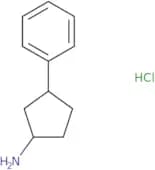
Fórmula:C11H17N3Pureza:Min. 95%Peso molecular:191.27 g/mol3-Phenylcyclopentan-1-amine hydrochloride
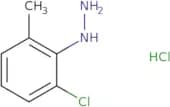
CAS:Versatile small molecule scaffoldFórmula:C11H16ClNPureza:Min. 95%Peso molecular:197.7 g/mol(2-Chloro-6-methylphenyl)hydrazine hydrochloride
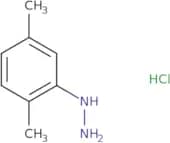
CAS:Versatile small molecule scaffoldFórmula:C7H10Cl2N2Pureza:Min. 95%Peso molecular:193.07 g/mol2,5-Dimethylphenylhydrazine hydrochloride
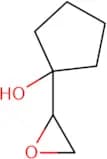
CAS:Versatile small molecule scaffoldFórmula:C8H12N2·HClPureza:Min. 95%Peso molecular:172.66 g/mol1-(Oxiran-2-yl)cyclopentan-1-ol
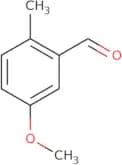
CAS:Versatile small molecule scaffoldFórmula:C7H12O2Pureza:Min. 95%Peso molecular:128.17 g/mol5-Methoxy-2-methylbenzaldehyde
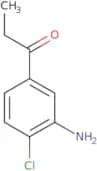
CAS:5-Methoxy-2-methylbenzaldehyde is a piperazine derivative that is used in the synthesis of other organic compounds. It is an intermediate for the production of fluoroquinolones, which are broad spectrum antibiotics. 5-Methoxy-2-methylbenzaldehyde can be synthesized using the liquid phase technique, which involves the use of solvents such as chloroform and ethanol. It has two isomers, methoxy methyl and methoxymethyl, which can be separated by chromatography or mass spectrometry. The synthesis of 5-methoxy-2-methylbenzaldehyde starts with a reaction between trimethylamine and formaldehyde in concentrated sulfuric acid. This reaction produces diethyl fumarate, which reacts with hydrochloric acid to produce diethyl malonate. The next step in this process involves heating the malonate mixture to produce 5-methoxy-2-methylbenzFórmula:C9H10O2Pureza:Min. 95%Peso molecular:150.18 g/mol1-(3-Amino-4-chlorophenyl)propan-1-one
CAS:Versatile small molecule scaffoldFórmula:C9H10ClNOPureza:Min. 95%Peso molecular:183.63 g/mol2-[(1-Phenylethyl)amino]acetohydrazide
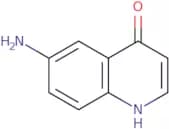
CAS:Versatile small molecule scaffoldFórmula:C10H15N3OPureza:Min. 95%Peso molecular:193.25 g/mol6-Aminoquinolin-4-ol
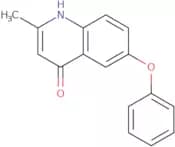
CAS:Versatile small molecule scaffoldFórmula:C9H8N2OPureza:Min. 95%Peso molecular:160.17 g/mol2-Methyl-6-phenoxyquinolin-4-ol
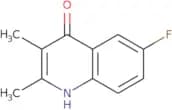
CAS:Versatile small molecule scaffoldFórmula:C16H13NO2Pureza:Min. 95%Peso molecular:251.28 g/mol6-Fluoro-2,3-dimethylquinolin-4-ol
CAS:Versatile small molecule scaffold
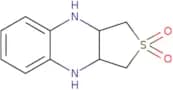
Fórmula:C11H10FNOPureza:Min. 95%Peso molecular:191.2 g/mol1,3,3a,4,9,9a-Hexahydrothieno(3,4-b)quinoxaline 2,2-dioxide
CAS:Versatile small molecule scaffoldFórmula:C10H12N2O2SPureza:Min. 95%Peso molecular:224.28 g/mol1,2-Diazaspiro[4.5]decan-3-one
CAS:Versatile small molecule scaffoldFórmula:C8H14N2OPureza:Min. 95%Peso molecular:154.21 g/mol1,5-Dimethyl-7-methylidenebicyclo[3.3.1]nonan-3-one
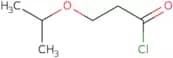
CAS:Versatile small molecule scaffoldFórmula:C12H18OPureza:Min. 95%Peso molecular:178.27 g/mol3-(Propan-2-yloxy)propanoyl chloride
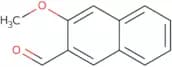
CAS:Versatile small molecule scaffoldFórmula:C6H11ClO2Pureza:Min. 95%Peso molecular:150.6 g/mol3-Methoxy-2-naphthaldehyde
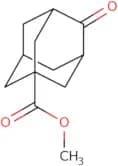
CAS:3-Methoxy-2-naphthaldehyde is a molecule that belongs to the group of organic compounds called aldehydes. It is an oxidizing agent with molecular weight of 92.13 g/mol and chemical formula CH 3 COCH 2 OH. The oxidation of 3-methoxy-2-naphthaldehyde is catalyzed by the enzyme aldehyde oxidase, which converts it into 3-hydroxy-2-naphthaldehyde. This reaction requires NAD+ as cofactor and produces NADH, which can be used in other reactions such as glycolysis or the citric acid cycle. The intramolecular hydrogen bond between the carbon atom in carbonyl group and the oxygen atom in hydroxyl group stabilizes this molecule. 3-Methoxy-2-naphthaldehyde has low energy photophysical properties and can be used as a signal transducer for functional groups, such as phenols and amFórmula:C12H10O2Pureza:Min. 95%Peso molecular:186.21 g/mol4-Oxo-adamantane-1-carboxylic acid methyl ester
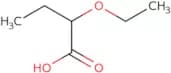
CAS:4-Oxo-adamantane-1-carboxylic acid methyl ester is a carboxylic acid derivative with an inhibitory effect on the enzyme diacylglycerol acyltransferase (DGAT). This inhibition leads to reduced levels of triglycerides in the blood. The compound has been shown to be safe for use in humans, and does not affect bodyweight or plasma triglyceride levels. 4-Oxo-adamantane-1-carboxylic acid methyl ester has been shown to be effective at lowering plasma triglyceride levels in patients with diabetes. This compound is also druggable and can be used as a lead structure for drug development.br>br>Fórmula:C12H16O3Pureza:Min. 95%Peso molecular:208.25 g/mol2-Ethoxybutanoic acid
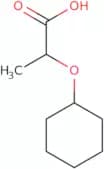
CAS:Versatile small molecule scaffoldFórmula:C6H12O3Pureza:Min. 95%Peso molecular:132.16 g/mol2-(Cyclohexyloxy)propanoic acid
CAS:Versatile small molecule scaffoldFórmula:C9H16O3Pureza:Min. 95%Peso molecular:172.22 g/mol2-[(5-Methyl-1,2-oxazol-3-yl)oxy]acetic acid
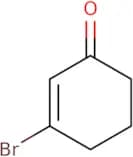
CAS:Versatile small molecule scaffoldFórmula:C6H7NO4Pureza:Min. 95%Peso molecular:157.12 g/mol3-Bromocyclohex-2-en-1-one
CAS:3-Bromocyclohex-2-en-1-one is an organic compound that belongs to the group of halogenated cyclic ketones. It has industrial applications as a solvent and synthetic intermediate, and can be synthesized by the reaction of carbon tetrabromide with triphenylphosphine in ether. The filtration process is used to isolate 3-bromocyclohex-2-en-1-one from other products.Fórmula:C6H7BrOPureza:Min. 95%Peso molecular:175.02 g/molImidazo[1,5-a]pyridine-3-carboxaldehyde
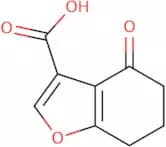
CAS:Imidazo[1,5-a]pyridine-3-carboxaldehyde is a multicomponent molecule that has the potential to be used in biomolecular chemistry. It is a fluorescent compound that can be used to produce sustainable and environmentally friendly photophysical properties. Imidazo[1,5-a]pyridine-3-carboxaldehyde has been shown to have photophysical properties such as fluorescence, phosphorescence, and chemiluminescence. This molecule can also be used in the study of biomolecular chemistry and biomedical research.Fórmula:C8H6N2OPureza:Min. 95%Peso molecular:146.15 g/mol4-Oxo-4,5,6,7-tetrahydrobenzofuran-3-carboxylic acid
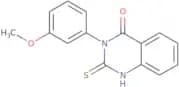
CAS:Versatile small molecule scaffoldFórmula:C9H8O4Pureza:Min. 95%Peso molecular:180.16 g/mol3-(3-Methoxyphenyl)-2-thioxo-2,3-dihydro-4(1H)-quinazolinone
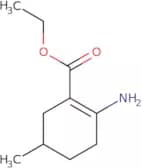
CAS:Versatile small molecule scaffoldFórmula:C15H12N2O2SPureza:Min. 95%Peso molecular:284.33 g/molEthyl 2-amino-5-methylcyclohex-1-ene-1-carboxylate
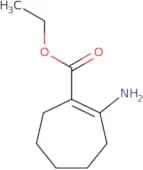
CAS:Versatile small molecule scaffoldFórmula:C10H17NO2Pureza:Min. 95%Peso molecular:183.25 g/molEthyl 2-aminocyclohept-1-ene-1-carboxylate
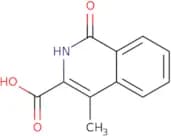
CAS:Versatile small molecule scaffoldFórmula:C10H17NO2Pureza:Min. 95%Peso molecular:183.25 g/mol4-Methyl-1-oxo-1,2-dihydroisoquinoline-3-carboxylic acid
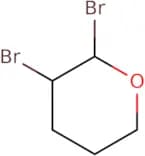
CAS:Versatile small molecule scaffoldFórmula:C11H9NO3Pureza:Min. 95%Peso molecular:203.19 g/mol2,3-Dibromooxane
CAS:Versatile small molecule scaffoldFórmula:C5H8Br2OPureza:Min. 95%Peso molecular:243.92 g/mol4-(Propan-2-yl)-1H-imidazole-2-thiol
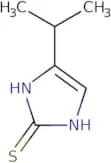
CAS:Versatile small molecule scaffold
Fórmula:C6H10N2SPureza:Min. 95%Peso molecular:142.22 g/mol(2-Aminoethyl)(diphenylmethyl)amine
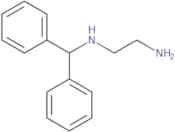
CAS:Versatile small molecule scaffold
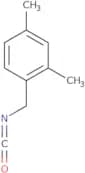
Fórmula:C15H18N2Pureza:Min. 95%Peso molecular:226.32 g/mol1-(Isocyanatomethyl)-2,4-dimethylbenzene
CAS:Versatile small molecule scaffoldFórmula:C10H11NOPureza:Min. 95%Peso molecular:161.2 g/mol1-(3-Chlorobenzyl)imidazole
CAS:Versatile small molecule scaffold
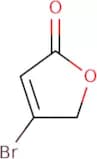
Fórmula:C10H9ClN2Pureza:Min. 95%Peso molecular:192.64 g/mol4-Bromofuran-2-one
CAS:Bromofuran-2-one is an organotin compound that is used in the synthesis of pharmaceuticals, agrochemicals, and other organic compounds. The compound has a sequence of reactions that can be controlled by the substitution of the chloride group with a variety of functional groups. Bromofuran-2-one has been shown to undergo a Suzuki coupling reaction with an olefin, which produces a substituted furanone product.Fórmula:C4H3BrO2Pureza:Min. 95%Peso molecular:162.97 g/mol2,3-Dihydro-1H-indole-1-carboxamide
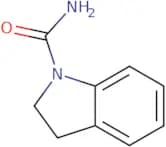
CAS:2,3-Dihydro-1H-indole-1-carboxamide is a factor receptor inhibitor that prevents the binding of growth factors to their receptors. It has been shown to have endothelial dysfunction activity and to inhibit cell growth in cardiac, atherosclerotic lesions, and pulmonary endothelial cells. 2,3-Dihydro-1H-indole-1-carboxamide has also been shown to prevent vascular endothelial cell growth and to reduce the size of atherosclerotic lesions in mice. This drug is a pharmaceutical product that can be used as an antiangiogenic agent or as a medicament for the treatment of pulmonary diseases.Fórmula:C9H10N2OPureza:Min. 95%Peso molecular:162.19 g/mol(6-Methylpyridin-3-yl)methanamine
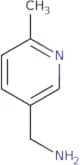
CAS:Versatile small molecule scaffold
Fórmula:C7H10N2Pureza:Min. 95%Peso molecular:122.17 g/molN2,N2-Dimethylpyrimidine-2,5-diamine
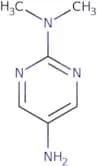
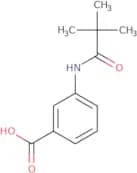
CAS:Versatile small molecule scaffoldFórmula:C6H10N4Pureza:Min. 95%Peso molecular:138.17 g/mol3-(2,2-Dimethylpropionylamino)benzoic acid
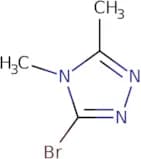
CAS:Versatile small molecule scaffoldFórmula:C12H15NO3Pureza:Min. 95%Peso molecular:221.26 g/mol3-Bromo-4,5-dimethyl-4H-1,2,4-triazole
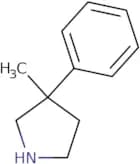
CAS:Versatile small molecule scaffoldFórmula:C4H6BrN3Pureza:Min. 95%Peso molecular:176.01 g/mol3-methyl-3-phenylpyrrolidine
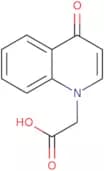
CAS:3-Methyl-3-phenylpyrrolidine is a pharmacological lactam with nicotinic acetylcholine activity. It has been shown to be active in the treatment of epilepsy in rats, which may be due to its ability to bind to and activate neuronal nicotinic acetylcholine receptors. The crystal structure of 3-methyl-3-phenylpyrrolidine has been determined and shows that this molecule can connect with two receptor sites on the acetylcholine receptor. This suggests that 3-methyl-3-phenylpyrrolidine is able to act as an agonist at both sites on the receptor and may have a greater inhibitory effect on neuronal nicotinic acetylcholine receptors than other drugs currently available for the treatment of epilepsy.Fórmula:C11H15NPureza:Min. 95%Peso molecular:161.24 g/mol2-(4-Oxo-1,4-dihydroquinolin-1-yl)acetic acid
CAS:Versatile small molecule scaffold
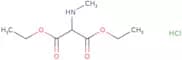
Fórmula:C11H9NO3Pureza:Min. 95%Peso molecular:203.19 g/molDiethyl 2-(methylamino)malonate hydrochloride
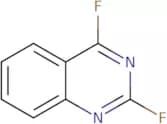
CAS:Versatile small molecule scaffoldFórmula:C8H16ClNO4Pureza:Min. 95%Peso molecular:225.67 g/mol2,4-Difluoroquinazoline
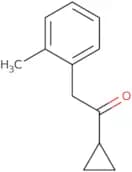
CAS:Versatile small molecule scaffoldFórmula:C8H4F2N2Pureza:Min. 95%Peso molecular:166.13 g/mol1-Cyclopropyl-2-(2-methylphenyl)ethan-1-one
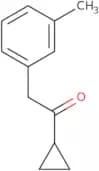
CAS:Versatile small molecule scaffoldFórmula:C12H14OPureza:Min. 95%Peso molecular:174.24 g/mol1-Cyclopropyl-2-(3-methylphenyl)ethan-1-one
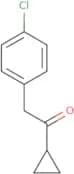
CAS:Versatile small molecule scaffoldFórmula:C12H14OPureza:Min. 95%Peso molecular:174.24 g/mol2-(4-Chlorophenyl)-1-cyclopropylethan-1-one
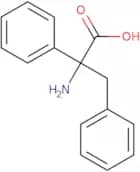
CAS:Versatile small molecule scaffoldFórmula:C11H11ClOPureza:Min. 95%Peso molecular:194.66 g/mol2-Amino-2,3-diphenylpropanoic acid
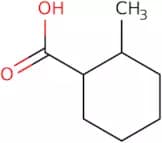
CAS:Versatile small molecule scaffoldFórmula:C15H15NO2Pureza:Min. 95%Peso molecular:241.28 g/mol2-Methyl-1-cyclohexanecarboxylic Acid
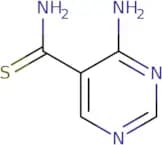
CAS:2-Methyl-1-cyclohexanecarboxylic acid is a monounsaturated fatty acid. It is soluble in water, but not in organic solvents. 2-Methyl-1-cyclohexanecarboxylic acid has been shown to be an attractant for pyrylium ion and a substrate for the enzyme cyclohexane carboxylase. The compound is also found in plants, including leaves of the Acacia tree and bark of the Eucalyptus tree. This monounsaturated fatty acid has been shown to have high chiral purity and low levels of formic acid impurities, making it suitable as an additive in products such as pharmaceuticals, cosmetics, and foodstuffs.Fórmula:C8H14O2Pureza:Min. 95%Peso molecular:142.2 g/mol4-Aminopyrimidine-5-carbothioamide
CAS:Versatile small molecule scaffold
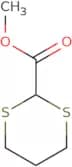
Fórmula:C5H6N4SPureza:Min. 95%Peso molecular:154.2 g/molMethyl 1,3-dithiane-2-carboxylate
CAS:Versatile small molecule scaffoldFórmula:C6H10O2S2Pureza:Min. 95%Peso molecular:178.3 g/mol(5S)-5-Phenylpyrrolidin-2-one
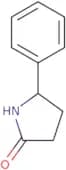
CAS:Versatile small molecule scaffold
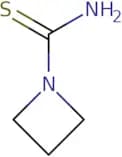
Fórmula:C10H11NOPureza:Min. 95%Peso molecular:161.2 g/molAzetidine-1-carbothioamide
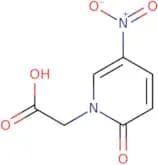
CAS:Versatile small molecule scaffoldFórmula:C4H8N2SPureza:Min. 95%Peso molecular:116.19 g/mol2-(5-Nitro-2-oxo-1,2-dihydropyridin-1-yl)acetic acid
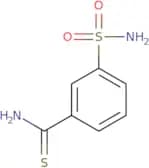
CAS:Versatile small molecule scaffoldFórmula:C7H6N2O5Pureza:Min. 95%Peso molecular:198.13 g/mol3-Sulfamoylbenzene-1-carbothioamide
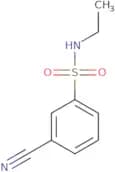
CAS:Versatile small molecule scaffoldFórmula:C7H8N2O2S2Pureza:Min. 95%Peso molecular:216.3 g/mol3-Cyano-N-ethylbenzene-1-sulfonamide
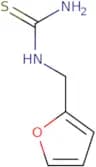
CAS:3-Cyano-N-ethylbenzene-1-sulfonamide is a drug that has been used for the treatment of tuberculosis and as an antidote for poisoning. It is a derivative of aniline that has been treated with ethyl sulfate to make it more soluble in water. 3-Cyano-N-ethylbenzene-1-sulfonamide is used to detect small amounts of drugs, such as methamphetamine, cocaine, and heroin. The detection method involves mixing the compound with a reagent called benzidine and then measuring the color change produced by the reaction. This drug can also be used to detect impurities in other medicines, such as aspirin or amphetamine.Fórmula:C9H10N2O2SPureza:Min. 95%Peso molecular:210.26 g/mol1-(2-Furfuryl)-2-thiourea
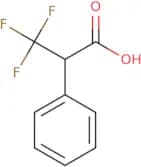
CAS:1-(2-Furfuryl)-2-thiourea is a herbicidal compound that inhibits the growth of plants by interrupting the synthesis of chlorophyll. This reaction occurs through the formation of an intermediate called betacyanin, which absorbs light at 670 nm and prevents it from being used in photosynthesis. 1-(2-Furfuryl)-2-thiourea is synthesized through a two step process, starting with the condensation of phenylurea and thiourea. The second step involves the deuteriumation of 1-(2-furfuryl)thiourea to produce 1-(2-furfuryl)-2-thiourea. The deuteriumation process is achieved by reacting 1-(2-furfuryl)thiourea with sodium borohydride in methanol solution. The yield for this reaction is about 80%.Fórmula:C6H8N2OSPureza:Min. 95%Peso molecular:156.2 g/mol3,3,3-Trifluoro-2-phenylpropionic acid
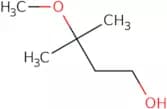
CAS:3,3,3-Trifluoro-2-phenylpropionic acid (TFPA) is a chiral molecule that can be used as a derivatizing agent to identify compounds. It has antibacterial properties and may be used in the manufacture of thin films or coatings. TFPA is insoluble in water and exhibits antibacterial activity when applied to surfaces. This compound can also be used in the synthesis of perovskite solar cells, as well as for particle size measurements. TFPA reacts with alcohols and amides to form esters and amides respectively. TFPA is also reactive with phosphines such as triphenylphosphine to form phosphonium salts. TFPA has been shown to have anti-inflammatory effects in mice by inhibiting prostaglandin synthesis.Fórmula:C9H7F3O2Pureza:Min. 95%Peso molecular:204.15 g/mol3-Methoxy-3-methyl-1-butanol
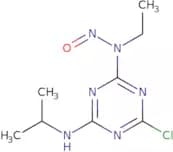
CAS:3-Methoxy-3-methyl-1-butanol is a chemical with a phase equilibrium in water. It has been shown to be effective in the treatment of lung damage caused by radiation, and is also used as an antimicrobial agent in industrial processes. This chemical is used to remove particles from air streams that are contaminated with bacteria. 3-Methoxy-3-methyl-1-butanol binds to fatty acids on the surface of bacteria, which disrupts their cell membranes and inhibits their growth. The molecular weight of this chemical is 138 g/mol.Fórmula:C6H14O2Pureza:Min. 95%Peso molecular:118.17 g/molN-Nitrosoatrazine
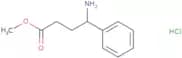
CAS:N-Nitrosoatrazine is a genotoxic compound that is used as an analytical reagent in the field of toxicology. It has been shown to be clastogenic and to cause micronucleus formation in mammalian cells. The toxicity of this compound is related to its ability to induce DNA damage, which may be due to its ability to generate reactive oxygen species by nitrating tyrosine residues on proteins in the cell. N-Nitrosoatrazine also inhibits growth rate and reduces the number of ovary cells in female rats. This effect may be due to its ability to inhibit the synthesis of amines, which are required for follicle development.Fórmula:C8H13ClN6OPureza:Min. 95%Peso molecular:244.68 g/molMethyl 4-amino-4-phenylbutanoate hydrochloride
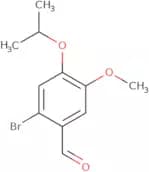
CAS:Versatile small molecule scaffoldFórmula:C11H16ClNO2Pureza:Min. 95%Peso molecular:229.7 g/mol2-Bromo-4-isopropoxy-5-methoxybenzaldehyde
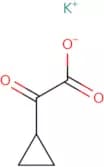
CAS:Versatile small molecule scaffoldFórmula:C11H13BrO3Pureza:Min. 95%Peso molecular:273.12 g/molPotassium 2-cyclopropyl-2-oxoacetate
CAS:Versatile small molecule scaffoldFórmula:C5H5KO3Pureza:Min. 95%Peso molecular:152.19 g/molMethyl 2-oxobicyclo[2.2.1]heptane-1-carboxylate
CAS:Versatile small molecule scaffold
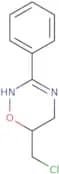
Fórmula:C9H12O3Pureza:Min. 95%Peso molecular:168.2 g/mol6-(Chloromethyl)-3-phenyl-5,6-dihydro-4H-1,2,4-oxadiazine
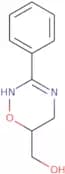
CAS:Versatile small molecule scaffoldFórmula:C10H11ClN2OPureza:Min. 95%Peso molecular:210.66 g/mol(3-Phenyl-5,6-dihydro-4H-1,2,4-oxadiazin-6-yl)methanol
CAS:Versatile small molecule scaffoldFórmula:C10H12N2O2Pureza:Min. 95%Peso molecular:192.21 g/mol4-[(Oxiran-2-yl)methyl]-3-phenyl-4,5-dihydro-1,2,4-oxadiazol-5-one
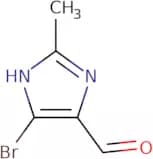
CAS:Versatile small molecule scaffoldFórmula:C11H10N2O3Pureza:Min. 95%Peso molecular:218.21 g/mol4-Bromo-2-methyl-1H-imidazole-5-carbaldehyde
CAS:Versatile small molecule scaffoldFórmula:C5H5BrN2OPureza:Min. 95%Peso molecular:189.01 g/mol2-(5-Chlorothiophen-2-yl)-2-oxoacetic acid
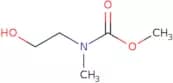
CAS:Versatile small molecule scaffoldFórmula:C6H3ClO3SPureza:Min. 95%Peso molecular:190.6 g/molMethyl N-(2-hydroxyethyl)-N-methylcarbamate
CAS:Methyl N-(2-hydroxyethyl)-N-methylcarbamate (HEMC) is a diazonium salt that is synthesized by the reaction of an amide and methyl ethyl carbamate. HEMC is a potent inhibitor of phosphodiesterase type 5 (PDE5), a type of enzyme found in cells that breaks down the important signaling molecule, cyclic guanosine monophosphate (cGMP). HEMC also has an effect on fatty acid metabolism, leading to changes in the levels of polyunsaturated fatty acids. These effects are thought to be responsible for its anti-inflammatory and emphysema properties. The use of HEMC is restricted to medical purposes. Methyl N-(2-hydroxyethyl)-N-methylcarbamate has been shown to inhibit PDE5 at nanomolar concentrations, with an IC50 value of 0.3 μM. This inhibition leads to increased cGMP levelsFórmula:C5H11NO3Pureza:Min. 95%Peso molecular:133.15 g/mol4-Ethynylpyridine-2-carboxylic acid
CAS:Versatile small molecule scaffold
Fórmula:C8H5NO2Pureza:Min. 95%Peso molecular:147.13 g/molEthyl 1H-pyrazolo[3,4-b]pyridine-5-carboxylate
CAS:Versatile small molecule scaffoldFórmula:C9H9N3O2Pureza:Min. 95%Peso molecular:191.19 g/mol3-[2-(Piperidin-4-yl)ethyl]pyridine
CAS:Versatile small molecule scaffoldFórmula:C12H18N2Pureza:Min. 95%Peso molecular:190.28 g/mol1-(5-Bromo-2-methylpyridin-3-yl)ethanone
CAS:Versatile small molecule scaffoldFórmula:C8H8BrNOPureza:Min. 95%Peso molecular:214.06 g/mol2-Bromo-5-chloropyridine-3-carbonitrile
CAS:Versatile small molecule scaffoldFórmula:C6H2BrClN2Pureza:Min. 95%Peso molecular:217.45 g/mol2-Bromo-5,6-dihydro-7H-cyclopenta[b]pyridin-7-one
CAS:Versatile small molecule scaffoldFórmula:C8H6BrNOPureza:Min. 95%Peso molecular:212.04 g/mol5-Bromo-6-chloropicolinonitrile
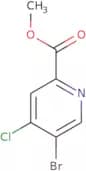
CAS:Versatile small molecule scaffoldFórmula:C6H2BrClN2Pureza:Min. 95%Peso molecular:217.45 g/molMethyl 5-bromo-4-chloropyridine-2-carboxylate
CAS:Versatile small molecule scaffoldFórmula:C7H5BrClNO2Pureza:Min. 95%Peso molecular:250.48 g/mol3-Bromo-5-methoxy-2-methylpyridine
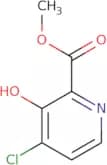
CAS:Versatile small molecule scaffoldFórmula:C7H8BrNOPureza:Min. 95%Peso molecular:202.05 g/molMethyl 4-chloro-3-hydroxypyridine-2-carboxylate
CAS:Versatile small molecule scaffoldFórmula:C7H6ClNO3Pureza:Min. 95%Peso molecular:187.58 g/mol5-Fluoropyridine-2-carbothioamide
CAS:Versatile small molecule scaffoldFórmula:C6H5FN2SPureza:Min. 95%Peso molecular:156.18 g/mol


![1-[2-(Diethylamino)ethyl]-2,3-dihydro-1H-indole-2,3-dione](/_next/image/?url=https%3A%2Fstatic.cymitquimica.com%2Fproducts%2F3D%2Fthumb-webp%2FGEA11061.webp&w=3840&q=75)
![1-[2-(Dimethylamino)ethyl]-2,3-dihydro-1H-indole-2,3-dione](/_next/image/?url=https%3A%2Fstatic.cymitquimica.com%2Fproducts%2F3D%2Fthumb-webp%2FGEA11060.webp&w=3840&q=75)
![[2-(4-Chlorophenoxy)ethyl]amine hydrochloride](/_next/image/?url=https%3A%2Fstatic.cymitquimica.com%2Fproducts%2F3D%2Fthumb-webp%2FGEA03800.webp&w=3840&q=75)
![(2-Methoxyethyl)[(5-methylfuran-2-yl)methyl]amine](/_next/image/?url=https%3A%2Fstatic.cymitquimica.com%2Fproducts%2F3D%2Fthumb-webp%2FGEA02747.webp&w=3840&q=75)
![N-[2-(Diethylamino)ethyl]-4-hydroxybenzamide](/_next/image/?url=https%3A%2Fstatic.cymitquimica.com%2Fproducts%2F3D%2Fthumb-webp%2FGEA01837.webp&w=3840&q=75)
![Imidazo[1,2-a]pyrimidine-3-carbaldehyde](/_next/image/?url=https%3A%2Fstatic.cymitquimica.com%2Fproducts%2F3D%2Fthumb-webp%2FGEA01256.webp&w=3840&q=75)
![2-[2-(Ethylamino)ethoxy]ethan-1-ol](/_next/image/?url=https%3A%2Fstatic.cymitquimica.com%2Fproducts%2F3D%2Fthumb-webp%2FGEA00799.webp&w=3840&q=75)
![Dimethyl bicyclo[3.2.1]octane-1,5-dicarboxylate](/_next/image/?url=https%3A%2Fstatic.cymitquimica.com%2Fproducts%2F3D%2Fthumb-webp%2FGEA00411.webp&w=3840&q=75)
![2-[(2-Cyanoethyl)sulfanyl]acetic acid](/_next/image/?url=https%3A%2Fstatic.cymitquimica.com%2Fproducts%2F3D%2Fthumb-webp%2FGCA79610.webp&w=3840&q=75)


![1-[1-(Pyridin-3-yl)ethyl]piperazine](/_next/image/?url=https%3A%2Fstatic.cymitquimica.com%2Fproducts%2F3D%2Fthumb-webp%2FGCA74361.webp&w=3840&q=75)
![2-[(1-Phenylethyl)amino]acetohydrazide](/_next/image/?url=https%3A%2Fstatic.cymitquimica.com%2Fproducts%2F3D%2Fthumb-webp%2FGCA72093.webp&w=3840&q=75)
![1,2-Diazaspiro[4.5]decan-3-one](/_next/image/?url=https%3A%2Fstatic.cymitquimica.com%2Fproducts%2F3D%2Fthumb-webp%2FGCA70030.webp&w=3840&q=75)
![1,5-Dimethyl-7-methylidenebicyclo[3.3.1]nonan-3-one](/_next/image/?url=https%3A%2Fstatic.cymitquimica.com%2Fproducts%2F3D%2Fthumb-webp%2FGCA69600.webp&w=3840&q=75)
![2-[(5-Methyl-1,2-oxazol-3-yl)oxy]acetic acid](/_next/image/?url=https%3A%2Fstatic.cymitquimica.com%2Fproducts%2F3D%2Fthumb-webp%2FGCA67448.webp&w=3840&q=75)
![Imidazo[1,5-a]pyridine-3-carboxaldehyde](/_next/image/?url=https%3A%2Fstatic.cymitquimica.com%2Fproducts%2F3D%2Fthumb-webp%2FGCA67166.webp&w=3840&q=75)

![Methyl 2-oxobicyclo[2.2.1]heptane-1-carboxylate](/_next/image/?url=https%3A%2Fstatic.cymitquimica.com%2Fproducts%2F3D%2Fthumb-webp%2FGCA50563.webp&w=3840&q=75)
![4-[(Oxiran-2-yl)methyl]-3-phenyl-4,5-dihydro-1,2,4-oxadiazol-5-one](/_next/image/?url=https%3A%2Fstatic.cymitquimica.com%2Fproducts%2F3D%2Fthumb-webp%2FGCA49376.webp&w=3840&q=75)


![Ethyl 1H-pyrazolo[3,4-b]pyridine-5-carboxylate](/_next/image/?url=https%3A%2Fstatic.cymitquimica.com%2Fproducts%2F3D%2Fthumb-webp%2FGAC82448.webp&w=3840&q=75)
![3-[2-(Piperidin-4-yl)ethyl]pyridine](/_next/image/?url=https%3A%2Fstatic.cymitquimica.com%2Fproducts%2F3D%2Fthumb-webp%2FGAC82421.webp&w=3840&q=75)


![2-Bromo-5,6-dihydro-7H-cyclopenta[b]pyridin-7-one](/_next/image/?url=https%3A%2Fstatic.cymitquimica.com%2Fproducts%2F3D%2Fthumb-webp%2FGAC82372.webp&w=3840&q=75)