Building Blocks
Esta seção contém produtos fundamentais para a síntese de compostos orgânicos e biológicos. Building blocks são os materiais de partida essenciais usados para construir moléculas complexas através de várias reações químicas. Eles desempenham um papel crítico na descoberta de medicamentos, ciência dos materiais e pesquisa química. Na CymitQuimica, oferecemos uma ampla gama de building blocks de alta qualidade para apoiar suas pesquisas inovadoras e projetos industriais, garantindo que você tenha os componentes essenciais para uma síntese bem-sucedida.
Subcategorias de "Building Blocks"
- Ácidos Borónicos e Derivados de Ácido Borónico(5.778 produtos)
- Building Blocks Quirais(1.243 produtos)
- Building Blocks Hidrocarbonetos(6.097 produtos)
- Building Blocks orgânicos(61.052 produtos)
Foram encontrados 201390 produtos de "Building Blocks"
Ordenar por
Pureza (%)
0
100
|
0
|
50
|
90
|
95
|
100
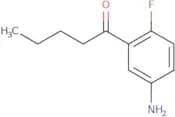
1-(5-Amino-2-fluorophenyl)pentan-1-one
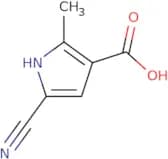
CAS:<p>Versatile small molecule scaffold</p>Fórmula:C11H14FNOPureza:Min. 95%Peso molecular:195.23 g/mol5-Cyano-2-methyl-1H-pyrrole-3-carboxylic acid
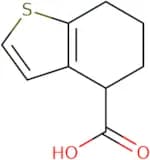
CAS:<p>Versatile small molecule scaffold</p>Fórmula:C7H6N2O2Pureza:Min. 95%Peso molecular:150.13 g/mol4,5,6,7-Tetrahydro-1-benzothiophene-4-carboxylic acid
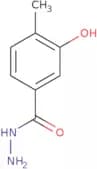
CAS:<p>Versatile small molecule scaffold</p>Fórmula:C9H10O2SPureza:Min. 95%Peso molecular:182.24 g/mol3-Hydroxy-4-methylbenzohydrazide
CAS:<p>Versatile small molecule scaffold</p>Fórmula:C8H10N2O2Pureza:Min. 95%Peso molecular:166.18 g/molN-(4-Methylbenzyl)propan-1-amine
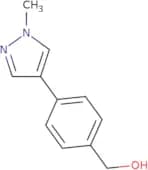
CAS:<p>Versatile small molecule scaffold</p>Fórmula:C11H17NPureza:Min. 95%Peso molecular:163.26 g/mol(4-(1-Methyl-1H-pyrazol-4-yl)phenyl)methanol
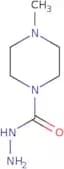
CAS:<p>Versatile small molecule scaffold</p>Fórmula:C11H12N2OPureza:Min. 95%Peso molecular:188.23 g/mol4-Methylpiperazine-1-carbohydrazide
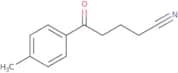
CAS:<p>Versatile small molecule scaffold</p>Fórmula:C6H14N4OPureza:Min. 95%Peso molecular:158.2 g/mol5-(4-Methylphenyl)-5-oxopentanenitrile
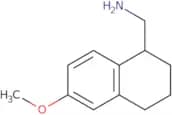
CAS:<p>Versatile small molecule scaffold</p>Fórmula:C12H13NOPureza:Min. 95%Peso molecular:187.24 g/mol(6-Methoxy-1,2,3,4-tetrahydronaphthalen-1-yl)methanamine
CAS:<p>Versatile small molecule scaffold</p>Fórmula:C12H17NOPureza:Min. 95%Peso molecular:191.27 g/mol6-Chloro-1-methyl-1H-pyrazolo[3,4-d]pyrimidine
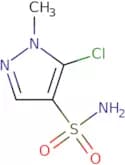
CAS:<p>Versatile small molecule scaffold</p>Fórmula:C6H5ClN4Pureza:Min. 95%Peso molecular:168.58 g/mol5-Chloro-1-methyl-1H-pyrazole-4-sulfonamide
CAS:<p>Versatile small molecule scaffold</p>Fórmula:C4H6ClN3O2SPureza:Min. 95%Peso molecular:195.63 g/mol(1S)-2-Chloro-1-[4-(trifluoromethyl)phenyl]ethan-1-ol
CAS:<p>Versatile small molecule scaffold</p>Fórmula:C9H8ClF3OPureza:Min. 95%Peso molecular:224.61 g/mol(1S)-7-(Propan-2-yloxy)-1,2,3,4-tetrahydronaphthalen-1-ol
CAS:<p>Versatile small molecule scaffold</p>Fórmula:C13H18O2Pureza:Min. 95%Peso molecular:206.3 g/molRef: 3D-TMC23740
Produto descontinuadoOctahydropyrrolo[1,2-a]piperazin-6-one HCl
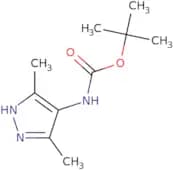
CAS:<p>Versatile small molecule scaffold</p>Fórmula:C7H13ClN2OPureza:Min. 95%Peso molecular:176.64 g/moltert-Butyl N-(3,5-dimethyl-1H-pyrazol-4-yl)carbamate
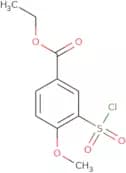
CAS:<p>Versatile small molecule scaffold</p>Fórmula:C10H17N3O2Pureza:Min. 95%Peso molecular:211.26 g/molEthyl 3-(chlorosulfonyl)-4-methoxybenzoate
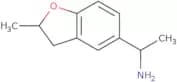
CAS:<p>Versatile small molecule scaffold</p>Fórmula:C10H11ClO5SPureza:Min. 95%Peso molecular:278.71 g/mol(1R)-1-(2-Methyl-2,3-dihydro-1-benzofuran-5-yl)ethan-1-amine
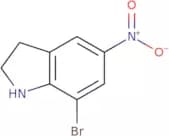
CAS:<p>Versatile small molecule scaffold</p>Fórmula:C11H15NOPureza:Min. 95%Peso molecular:177.24 g/mol7-Bromo-5-nitroindoline
CAS:<p>7-Bromo-5-nitroindoline is a synthetic compound that has been shown to bind to auxin, which is a plant hormone. It has been used in photoaffinity labeling and can be used in the synthesis of other compounds. 7-Bromo-5-nitroindoline binds reversibly and covalently to auxin in the presence of light. The regiospecificity of this binding allows for the determination of specific properties of auxin binding. 7-Bromo-5-nitroindoline is also used as a tritiated label in syntheses and as a deuterated label for photoaffinity labeling.</p>Fórmula:C8H7BrN2O2Pureza:Min. 95%Peso molecular:243.06 g/mol5-Amino-6,7,8,9-tetrahydro-5H-benzo[7]annulene-5-carboxylic acid hydrochloride
CAS:<p>Versatile small molecule scaffold</p>Fórmula:C12H16ClNO2Pureza:Min. 95%Peso molecular:241.71 g/mol7-(Trifluoromethyl)-2-azabicyclo[4.1.0]heptane hydrochloride
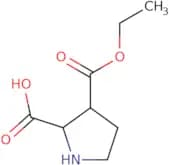
CAS:<p>Versatile small molecule scaffold</p>Fórmula:C7H11ClF3NPureza:Min. 95%Peso molecular:201.62 g/molrac-(2R,3S)-3-(Ethoxycarbonyl)pyrrolidine-2-carboxylic acid
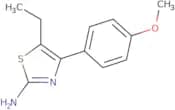
CAS:<p>Versatile small molecule scaffold</p>Fórmula:C8H13NO4Pureza:Min. 95%Peso molecular:187.2 g/mol5-Ethyl-4-(4-methoxy-phenyl)-thiazol-2-ylamine
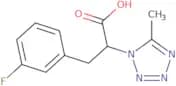
CAS:<p>Versatile small molecule scaffold</p>Fórmula:C12H14N2OSPureza:Min. 95%Peso molecular:234.32 g/mol3-(3-Fluorophenyl)-2-(5-methyl-1H-1,2,3,4-tetrazol-1-yl)propanoic acid
CAS:Produto Controlado<p>3-(3-Fluorophenyl)-2-(5-methyl-1H-1,2,3,4-tetrazol-1-yl)propanoic acid is a potent activator of GABAA receptors. It has been shown to have high affinity for GABA binding sites and is able to activate the receptor with an EC50 of around 100 nM. It also has no effect on other receptors that are structurally related to GABA, such as glycine and 5HT3 receptors. 3-(3-Fluorophenyl)-2-(5-methyl-1H-1,2,3,4-tetrazol-1-yl)propanoic acid is soluble in DMSO and ethanol.</p>Fórmula:C11H11FN4O2Pureza:Min. 95%Peso molecular:250.23 g/mol2-[2-(3,3,3-Trifluoropropyl)-1,3-thiazol-4-yl]acetic acid hydrochloride
CAS:<p>Versatile small molecule scaffold</p>Fórmula:C8H9ClF3NO2SPureza:Min. 95%Peso molecular:275.68 g/molRef: 3D-KHD06040
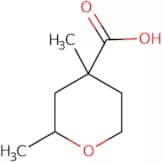
Produto descontinuado2,4-Dimethyloxane-4-carboxylic acid
CAS:<p>Versatile small molecule scaffold</p>Fórmula:C8H14O3Pureza:Min. 95%Peso molecular:158.19 g/molRef: 3D-KHD04477
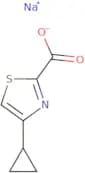
Produto descontinuadoSodium 4-cyclopropyl-1,3-thiazole-2-carboxylate
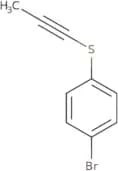
CAS:<p>Versatile small molecule scaffold</p>Fórmula:C7H6NNaO2SPureza:Min. 95%Peso molecular:191.18 g/mol1-Bromo-4-(prop-1-yn-1-ylsulfanyl)benzene
CAS:<p>Versatile small molecule scaffold</p>Fórmula:C9H7BrSPureza:Min. 95%Peso molecular:227.12 g/mol[4-(2,2-Difluoroethoxy)phenyl]methanol
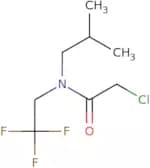
CAS:<p>Versatile small molecule scaffold</p>Fórmula:C9H10F2O2Pureza:Min. 95%Peso molecular:188.17 g/mol2-Chloro-N-(2-methylpropyl)-N-(2,2,2-trifluoroethyl)acetamide
CAS:<p>Versatile small molecule scaffold</p>Fórmula:C8H13ClF3NOPureza:Min. 95%Peso molecular:231.64 g/mol2-[(2-Cyclohexylethyl)amino]acetamide
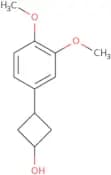
CAS:<p>Versatile small molecule scaffold</p>Fórmula:C10H20N2OPureza:Min. 95%Peso molecular:184.28 g/mol3-(3,4-Dimethoxyphenyl)cyclobutan-1-ols
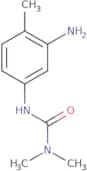
CAS:<p>Versatile small molecule scaffold</p>Fórmula:C12H16O3Pureza:Min. 95%Peso molecular:208.3 g/mol1-(3-Amino-4-methylphenyl)-3,3-dimethylurea
CAS:<p>Versatile small molecule scaffold</p>Fórmula:C10H15N3OPureza:Min. 95%Peso molecular:193.25 g/mol2-[(1S,2R)-2-Hydroxycyclohexyl]acetic acid
CAS:<p>Versatile small molecule scaffold</p>Fórmula:C8H14O3Pureza:Min. 95%Peso molecular:158.19 g/molRef: 3D-JKB04854
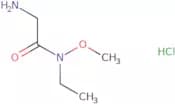
Produto descontinuado2-Amino-N-ethyl-N-methoxyacetamide hydrochloride
CAS:<p>Versatile small molecule scaffold</p>Fórmula:C5H13ClN2O2Pureza:Min. 95%Peso molecular:168.62 g/mol4-[4-(Propan-2-yl)piperazin-1-yl]butanoic acid dihydrochloride
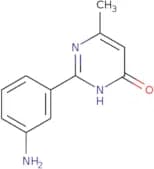
CAS:<p>Versatile small molecule scaffold</p>Fórmula:C11H24Cl2N2O2Pureza:Min. 95%Peso molecular:287.22 g/mol2-(3-Aminophenyl)-6-methyl-3,4-dihydropyrimidin-4-one
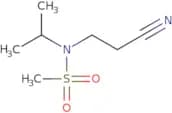
CAS:<p>Versatile small molecule scaffold</p>Fórmula:C11H11N3OPureza:Min. 95%Peso molecular:201.22 g/molN-(2-Cyanoethyl)-N-(propan-2-yl)methanesulfonamide
CAS:<p>Versatile small molecule scaffold</p>Fórmula:C7H14N2O2SPureza:Min. 95%Peso molecular:190.27 g/mol2-Chloro-N-[2-(3-chlorophenyl)ethyl]acetamide
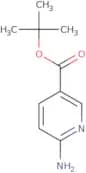
CAS:<p>Versatile small molecule scaffold</p>Fórmula:C10H11Cl2NOPureza:Min. 95%Peso molecular:232.1 g/moltert-Butyl 6-aminopyridine-3-carboxylate
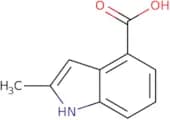
CAS:<p>Versatile small molecule scaffold</p>Fórmula:C10H14N2O2Pureza:Min. 95%Peso molecular:194.23 g/mol2-Methyl-1H-indole-4-carboxylic acid
CAS:<p>2-Methyl-1H-indole-4-carboxylic acid (2MICA) is a cyclic compound that is used in the synthesis of other compounds. It is obtained by reacting 2,3-dibromo-nitrobenzoic acid with sodium ethoxide in an alkaline solution. The yield of 2MICA can be increased by using catalytic acid anhydrides such as dimethyl sulphoxide or lactam. In the presence of reductive agents, 2MICA can be synthesized from the corresponding lactam or cyclised carboxylic acid.<br>2MICA reacts with sodium ethoxide to form a lactam and reduces 2-bromo-3-nitrobenzoic acid to yield 2MICA.</p>Fórmula:C10H9NO2Pureza:Min. 95%Peso molecular:175 g/mol5,7-Dimethyl-[1,2,4]triazolo[1,5-a]pyrimidine-6-carboxylic acid
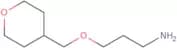
CAS:<p>Versatile small molecule scaffold</p>Fórmula:C8H8N4O2Pureza:Min. 95%Peso molecular:192.17 g/mol3-(Oxan-4-ylmethoxy)propan-1-amine
CAS:<p>Versatile small molecule scaffold</p>Fórmula:C9H19NO2Pureza:Min. 95%Peso molecular:173.25 g/mol1-[2-(Dimethylamino)ethyl]piperazin-2-one
CAS:<p>Versatile small molecule scaffold</p>Fórmula:C8H17N3OPureza:Min. 95%Peso molecular:171.24 g/molRef: 3D-IMB69420
Produto descontinuado(2S)-Chroman-2-carboxylic acid
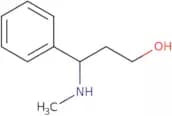
CAS:<p>Versatile small molecule scaffold</p>Fórmula:C10H10O3Pureza:Min. 95%Peso molecular:178.18 g/mol3-(Methylamino)-3-phenylpropan-1-ol
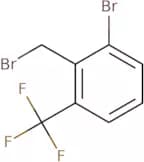
CAS:<p>Versatile small molecule scaffold</p>Fórmula:C10H15NOPureza:Min. 95%Peso molecular:165.23 g/mol2-Bromo-6-(trifluoromethyl)benzyl bromide
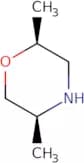
CAS:<p>Versatile small molecule scaffold</p>Pureza:Min. 95%(2S,5S)-2,5-Dimethyl-morpholine HCl
CAS:<p>Versatile small molecule scaffold</p>Fórmula:C6H14ClNOPureza:Min. 95%Peso molecular:151.63 g/mol2-Azatricyclo[7.3.1.0,5,13]trideca-5,7,9(13)-triene
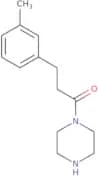
CAS:<p>Versatile small molecule scaffold</p>Fórmula:C12H15NPureza:Min. 95%Peso molecular:173.3 g/mol3-(3-Methylphenyl)-1-(piperazin-1-yl)propan-1-one
CAS:<p>Versatile small molecule scaffold</p>Fórmula:C14H20N2OPureza:Min. 95%Peso molecular:232.32 g/mol2-Cyano-N-[3-methyl-1-(4-methylphenyl)-1H-pyrazol-5-yl]acetamide
CAS:<p>Versatile small molecule scaffold</p>Fórmula:C14H14N4OPureza:Min. 95%Peso molecular:254.29 g/mol1-(Chloromethoxy)-2-fluorobenzene
CAS:<p>Versatile small molecule scaffold</p>Fórmula:C7H6ClFOPureza:Min. 95%Peso molecular:160.57 g/mol2-[2-Methyl-4-(trifluoromethyl)furan-3-yl]acetonitrile
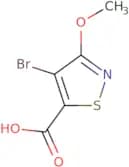
CAS:<p>Versatile small molecule scaffold</p>Fórmula:C8H6F3NOPureza:Min. 95%Peso molecular:189.13 g/mol4-Bromo-3-methoxy-1,2-thiazole-5-carboxylic acid
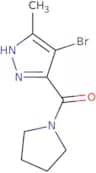
CAS:<p>Versatile small molecule scaffold</p>Fórmula:C5H4BrNO3SPureza:Min. 95%Peso molecular:238.06 g/mol(4-Bromo-5-methyl-1H-pyrazol-3-yl)(pyrrolidin-1-yl)methanone
CAS:Produto Controlado<p>Versatile small molecule scaffold</p>Fórmula:C9H12BrN3OPureza:Min. 95%Peso molecular:258.12 g/mol3-Butanoyl-1,3-thiazolidine-4-carboxylic acid
CAS:<p>Versatile small molecule scaffold</p>Fórmula:C8H13NO3SPureza:Min. 95%Peso molecular:203.26 g/moltert-Butyl N-{[1-(bromomethyl)cyclopropyl]methyl}carbamate
CAS:<p>Versatile small molecule scaffold</p>Fórmula:C10H18BrNO2Pureza:Min. 95%Peso molecular:264.16 g/mol2-Chloro-1-[3-(trifluoromethyl)cyclohexyl]ethan-1-one
CAS:<p>Versatile small molecule scaffold</p>Fórmula:C9H12ClF3OPureza:Min. 95%Peso molecular:228.64 g/molRef: 3D-VLC72752
Produto descontinuado3-[(3-Fluorophenyl)sulfanyl]-2-hydroxy-2-methylpropanoic acid
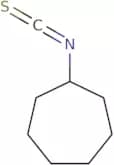
CAS:<p>Versatile small molecule scaffold</p>Fórmula:C10H11FO3SPureza:Min. 95%Peso molecular:230.26 g/molCycloheptyl isothiocyanate
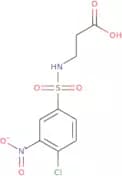
CAS:<p>Cycloheptyl isothiocyanate is a 1-4c alkyl, azaheterocycle, isothiocyanate that has been shown to be stereoselective. It binds to the sulfur atom of thiols and sulfonylureas, preventing the formation of the reactive intermediate that leads to their hydrolysis. This property can be used for the synthesis of ensembles and aralkyls. Cycloheptyl isothiocyanate also binds to alkenyl groups, which may be useful in synthesizing cycloalkyls or haloalkyls.</p>Fórmula:C8H13NSPureza:Min. 95%Peso molecular:155.26 g/mol3-(4-Chloro-3-nitrobenzenesulfonamido)propanoic acid
CAS:<p>Versatile small molecule scaffold</p>Fórmula:C9H9ClN2O6SPureza:Min. 95%Peso molecular:308.7 g/mol6-Methylpyrazolo[1,5-a]pyrimidin-3-amine
CAS:<p>Versatile small molecule scaffold</p>Fórmula:C7H8N4Pureza:Min. 95%Peso molecular:148.17 g/mol2-{Hydroxy[(1,3-thiazol-2-yl)amino]methylidene}-2,3-dihydropyridin-3-one
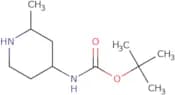
CAS:<p>Versatile small molecule scaffold</p>Fórmula:C9H7N3O2SPureza:Min. 95%Peso molecular:221.24 g/moltert-butyl N-(2-methylpiperidin-4-yl)carbamate, Mixture of diastereomers
CAS:<p>Versatile small molecule scaffold</p>Fórmula:C11H22N2O2Pureza:Min. 95%Peso molecular:214.3 g/molN-(Oxan-4-ylmethyl)-4-(1H-1,2,4-triazol-1-yl)aniline
CAS:<p>Versatile small molecule scaffold</p>Fórmula:C14H18N4OPureza:Min. 95%Peso molecular:258.32 g/mol1-Bromospiro[2.3]hexane
CAS:<p>Versatile small molecule scaffold</p>Fórmula:C6H9BrPureza:Min. 95%Peso molecular:161.04 g/molRef: 3D-WCA15328
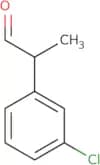
Produto descontinuado2-(3-Chlorophenyl)propanal
CAS:<p>Versatile small molecule scaffold</p>Fórmula:C9H9ClOPureza:Min. 95%Peso molecular:168.62 g/mol5-Hydrazinyl-2-methyl-1H-1,3-benzodiazole dihydrochloride
CAS:<p>Versatile small molecule scaffold</p>Fórmula:C8H12Cl2N4Pureza:Min. 95%Peso molecular:235.11 g/mol3-(1,2,3,6-Tetrahydropyridin-4-yl)quinoline dihydrochloride
CAS:<p>Versatile small molecule scaffold</p>Fórmula:C14H16Cl2N2Pureza:Min. 95%Peso molecular:283.2 g/molRef: 3D-YGC53031
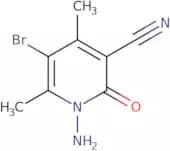
Produto descontinuado1-Amino-5-bromo-4,6-dimethyl-2-oxo-1,2-dihydropyridine-3-carbonitrile
CAS:<p>Versatile small molecule scaffold</p>Fórmula:C8H8BrN3OPureza:Min. 95%Peso molecular:242.07 g/mol2,5-Dimethoxypyridine-4-boronic acid
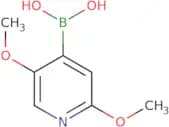
CAS:<p>Versatile small molecule scaffold</p>Fórmula:C7H10BNO4Pureza:Min. 95%Peso molecular:182.97 g/mol3-(Pyridin-4-yl)butanoic acid
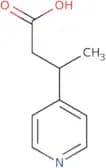
CAS:<p>Versatile small molecule scaffold</p>Fórmula:C9H11NO2Pureza:Min. 95%Peso molecular:165.19 g/molrac-(4aR,7aS)-1H,2H,4aH,5H,7H,7aH-Furo[3,4-b]pyridine hydrochloride
CAS:<p>Versatile small molecule scaffold</p>Fórmula:C7H12ClNOPureza:Min. 95%Peso molecular:161.6 g/mol7-Oxaspiro[3.5]nonan-1-amine hydrochloride
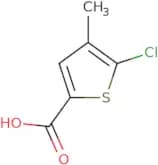
CAS:<p>Versatile small molecule scaffold</p>Fórmula:C8H16ClNOPureza:Min. 95%Peso molecular:177.67 g/mol5-Chloro-4-methylthiophene-2-carboxylic acid
CAS:<p>Versatile small molecule scaffold</p>Fórmula:C6H5ClO2SPureza:Min. 95%Peso molecular:176.62 g/mol1-[5-(Trifluoromethyl)pyridin-2-yl]azetidin-3-ol
CAS:<p>Versatile small molecule scaffold</p>Fórmula:C9H9F3N2OPureza:Min. 95%Peso molecular:218.18 g/molN-[4-(1-Aminoethyl)-1,3-thiazol-2-yl]-2,2-dimethylpropanamide
CAS:<p>Versatile small molecule scaffold</p>Fórmula:C10H17N3OSPureza:Min. 95%Peso molecular:227.33 g/mol7-Bromo-3,4-dihydro-2H-1-benzothiopyran 1,1-dioxide
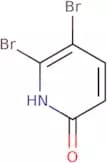
CAS:<p>Versatile small molecule scaffold</p>Fórmula:C9H9BrO2SPureza:Min. 95%Peso molecular:261.14 g/mol5,6-Dibromopyridin-2-ol
CAS:<p>Versatile small molecule scaffold</p>Fórmula:C5H3Br2NOPureza:Min. 95%Peso molecular:252.89 g/mol2-Bromo-3,3,3-trifluoro-1-propene
CAS:Produto Controlado<p>2-Bromo-3,3,3-trifluoro-1-propene is a chemical compound that has been synthesized in an asymmetric reaction. The reactant is bromopropane and the product is 2,2,2-trifluoropropene. The methylene group on the propene molecule is activated by the nucleophilic attack of a fluoride ion from hydrogen fluoride to form a cavity with a highly strained bond. The kinetic study of this reaction revealed that the activation energy for the reaction is 42 kJ/mol. Palladium-catalyzed coupling reactions are catalyzed by palladium and require nonpolar solvents such as toluene or dichloromethane. This type of reaction has been shown to be exothermic with an isolated yield of 1%.</p>Fórmula:C3H2BrF3Pureza:Min. 95%Cor e Forma:Colorless PowderPeso molecular:174.95 g/mol2-Acetylbenzoic acid
CAS:<p>2-Acetylbenzoic acid is a functional molecule that contains an acetyl group. It can form hydrogen bonds with other molecules and has been shown to induce apoptosis in cells. The reaction products of 2-acetylbenzoic acid are malonic acid, acetylsalicylic acid, and 2-benzoylbenzoic acid. These three compounds are made by the addition of hydrogen or hydroxide to the molecule 2-acetylbenzoic acid. The molecule has two functional groups: a carbonyl group and an acetyl group. The chemical structure of this molecule can be seen in the figure below.<br>2-Acetylbenzoic Acid</p>Fórmula:C9H8O3Pureza:Min. 95%Cor e Forma:PowderPeso molecular:164.16 g/molRef: 3D-FA05086
Produto descontinuado3-Methylbenzo[b]thiophene-2-carboxylic acid
CAS:<p>3-Methylbenzo[b]thiophene-2-carboxylic acid (MBTCA) is a heterocyclic compound that is an intermediate in the synthesis of 3-methylthiophene-2-carboxylic acid, a precursor to other drugs. MBTCA is an aerobic, nonpolar compound that has shown antimicrobial activity against some bacteria and fungi. It also has been shown to have practicality as a biomolecular probe for methyl groups in organic solvents. MBTCA can be synthesized by nitration of benzene in the presence of sulfur and sulfoxides. This reaction produces nitrobenzene, which can then be oxidized by potassium permanganate or hydrogen peroxide to produce MBTCA. The most common isomer of MBTCA is 2-(3,5-dimethoxybenzylidene)tetrahydrofuran, with three methyl groups on the</p>Fórmula:C10H8O2SPureza:Min. 95%Peso molecular:192.23 g/mol1-[3-(Dimethylamino)propyl]-1-(4-fluorophenyl)-1,3-dihydro-3-oxo-5-isobenzofurancarbonitrile
CAS:<p>Please enquire for more information about 1-[3-(Dimethylamino)propyl]-1-(4-fluorophenyl)-1,3-dihydro-3-oxo-5-isobenzofurancarbonitrile including the price, delivery time and more detailed product information at the technical inquiry form on this page</p>Fórmula:C20H19FN2O2Pureza:Min. 95%Peso molecular:338.38 g/molRef: 3D-FD184085
Produto descontinuadotert-Butyl 5-bromo-3,4-dihydro-2,7-naphthyridine-2(1H)-carboxylate
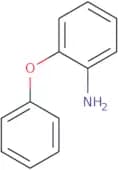
CAS:<p>Versatile small molecule scaffold</p>Fórmula:C13H17BrN2O2Pureza:Min. 95%Peso molecular:313.19 g/mol2-Phenoxyaniline
CAS:<p>2-Phenoxyaniline is a nitro compound that can be converted to the corresponding palladium complexes. It is an inhibitor of the acylation reaction, which is a type of chemical reaction in which an organic molecule reacts with an acid. The inhibition of this reaction has been shown to have an effect on heart disease, specifically by lowering cholesterol levels and reducing atherosclerosis. 2-Phenoxyaniline has also been shown to inhibit the activation energy for electron transfer reactions, making it useful as a catalyst in analytical methods. 2-Phenoxyaniline also undergoes vibrational spectroscopy when exposed to liquid chromatography and other analytical methods.</p>Fórmula:C12H11NOPureza:Min. 95%Cor e Forma:Brown PowderPeso molecular:185.22 g/mol2,2',4,4'-tetrahydroxybenzophenone
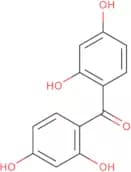
CAS:<p>2,2',4,4'-tetrahydroxybenzophenone is a hydroxylated benzophenone that has immunomodulatory effects. It binds to the receptor in the immune system and can cause an increase in cytokine production. 2,2',4,4'-tetrahydroxybenzophenone is cytotoxic and has significant toxicity in vitro. The molecule has been shown to disrupt mitochondrial membrane potential. This may be due to its ability to form hydrogen bonds with molecules on the mitochondrial membrane. 2,2',4,4'-tetrahydroxybenzophenone also modulates transcriptional regulation of genes involved in cell proliferation and apoptosis. The drug is detectable at low levels by mass spectrometry and is not known to have any toxicological effects.END>></p>Fórmula:C13H10O5Pureza:Min. 95%Cor e Forma:Green PowderPeso molecular:246.22 g/molRef: 3D-FT55663
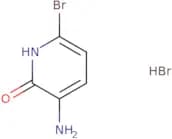
Produto descontinuado3-amino-6-bromopyridin-2-ol hydrobromide
CAS:<p>Versatile small molecule scaffold</p>Fórmula:C5H6Br2N2OPureza:Min. 95%Peso molecular:269.9 g/mol4-(Methylamino)benzene-1-sulfonamide
CAS:<p>Versatile small molecule scaffold</p>Fórmula:C7H10N2O2SPureza:Min. 95%Peso molecular:186.23 g/mol3-(Methoxycarbonyl)pyridine-4-carboxylic acid
CAS:<p>Versatile small molecule scaffold</p>Fórmula:C8H7NO4Pureza:Min. 95%Peso molecular:181.15 g/molH-Ser-Ala-Glu-Glu-Tyr-Glu-Tyr-Pro-Ser OH trifluoroacetate
CAS:<p>Please enquire for more information about H-Ser-Ala-Glu-Glu-Tyr-Glu-Tyr-Pro-Ser OH trifluoroacetate including the price, delivery time and more detailed product information at the technical inquiry form on this page</p>Fórmula:C47H63N9O20•(C2HF3O2)xPureza:Min. 95%Ref: 3D-FS183525
Produto descontinuadoGivinostat hydrochloride
CAS:<p>Givinostat hydrochloride is a research chemical that has shown potential in various fields. It is a molybdenum-based compound that has been studied for its effects on dopamine release and hydrogen evolution. Givinostat hydrochloride has also been investigated as an osteoclast inhibitor, which may be beneficial in the treatment of bone-related disorders such as osteoporosis. Additionally, it has shown promise as a retinoid and calpain inhibitor, suggesting its potential use in dermatological conditions and neurodegenerative diseases. The compound contains fluorine atoms, making it suitable for imaging studies using fluorine MRI techniques. Givinostat hydrochloride has been tested on MDA-MB-231 cells and has shown inhibitory effects on their growth, indicating its potential as an anticancer agent.</p>Fórmula:C24H27N3O4·HClPureza:Min. 95%Peso molecular:457.95 g/mol


![6-Chloro-1-methyl-1H-pyrazolo[3,4-d]pyrimidine](/_next/image/?url=https%3A%2Fstatic.cymitquimica.com%2Fproducts%2F3D%2Fthumb-webp%2FTHC29137.webp&w=3840&q=75)
![(1S)-2-Chloro-1-[4-(trifluoromethyl)phenyl]ethan-1-ol](/_next/image/?url=https%3A%2Fstatic.cymitquimica.com%2Fproducts%2F3D%2Fthumb-webp%2FTMC04440.webp&w=3840&q=75)
![Octahydropyrrolo[1,2-a]piperazin-6-one HCl](/_next/image/?url=https%3A%2Fstatic.cymitquimica.com%2Fproducts%2F3D%2Fthumb-webp%2FMXB38553.webp&w=3840&q=75)
![5-Amino-6,7,8,9-tetrahydro-5H-benzo[7]annulene-5-carboxylic acid hydrochloride](/_next/image/?url=https%3A%2Fstatic.cymitquimica.com%2Fproducts%2F3D%2Fthumb-webp%2FLCC31529.webp&w=3840&q=75)
![7-(Trifluoromethyl)-2-azabicyclo[4.1.0]heptane hydrochloride](/_next/image/?url=https%3A%2Fstatic.cymitquimica.com%2Fproducts%2F3D%2Fthumb-webp%2FLCC31527.webp&w=3840&q=75)
![2-[2-(3,3,3-Trifluoropropyl)-1,3-thiazol-4-yl]acetic acid hydrochloride](/_next/image/?url=https%3A%2Fstatic.cymitquimica.com%2Fproducts%2F3D%2Fthumb-webp%2FKHD06040.webp&w=3840&q=75)
![[4-(2,2-Difluoroethoxy)phenyl]methanol](/_next/image/?url=https%3A%2Fstatic.cymitquimica.com%2Fproducts%2F3D%2Fthumb-webp%2FJXB38953.webp&w=3840&q=75)
![2-[(2-Cyclohexylethyl)amino]acetamide](/_next/image/?url=https%3A%2Fstatic.cymitquimica.com%2Fproducts%2F3D%2Fthumb-webp%2FJXB07544.webp&w=3840&q=75)
![2-[(1S,2R)-2-Hydroxycyclohexyl]acetic acid](/_next/image/?url=https%3A%2Fstatic.cymitquimica.com%2Fproducts%2F3D%2Fthumb-webp%2FJKB04854.webp&w=3840&q=75)
![4-[4-(Propan-2-yl)piperazin-1-yl]butanoic acid dihydrochloride](/_next/image/?url=https%3A%2Fstatic.cymitquimica.com%2Fproducts%2F3D%2Fthumb-webp%2FJBD33718.webp&w=3840&q=75)
![2-Chloro-N-[2-(3-chlorophenyl)ethyl]acetamide](/_next/image/?url=https%3A%2Fstatic.cymitquimica.com%2Fproducts%2F3D%2Fthumb-webp%2FJBA16215.webp&w=3840&q=75)
![5,7-Dimethyl-[1,2,4]triazolo[1,5-a]pyrimidine-6-carboxylic acid](/_next/image/?url=https%3A%2Fstatic.cymitquimica.com%2Fproducts%2F3D%2Fthumb-webp%2FIMB70440.webp&w=3840&q=75)
![1-[2-(Dimethylamino)ethyl]piperazin-2-one](/_next/image/?url=https%3A%2Fstatic.cymitquimica.com%2Fproducts%2F3D%2Fthumb-webp%2FIMB69420.webp&w=3840&q=75)

![2-Azatricyclo[7.3.1.0,5,13]trideca-5,7,9(13)-triene](/_next/image/?url=https%3A%2Fstatic.cymitquimica.com%2Fproducts%2F3D%2Fthumb-webp%2FHTB56539.webp&w=3840&q=75)
![2-Cyano-N-[3-methyl-1-(4-methylphenyl)-1H-pyrazol-5-yl]acetamide](/_next/image/?url=https%3A%2Fstatic.cymitquimica.com%2Fproducts%2F3D%2Fthumb-webp%2FHKB22464.webp&w=3840&q=75)

![2-[2-Methyl-4-(trifluoromethyl)furan-3-yl]acetonitrile](/_next/image/?url=https%3A%2Fstatic.cymitquimica.com%2Fproducts%2F3D%2Fthumb-webp%2FHJD92128.webp&w=3840&q=75)

![tert-Butyl N-{[1-(bromomethyl)cyclopropyl]methyl}carbamate](/_next/image/?url=https%3A%2Fstatic.cymitquimica.com%2Fproducts%2F3D%2Fthumb-webp%2FVLC70629.webp&w=3840&q=75)
![2-Chloro-1-[3-(trifluoromethyl)cyclohexyl]ethan-1-one](/_next/image/?url=https%3A%2Fstatic.cymitquimica.com%2Fproducts%2F3D%2Fthumb-webp%2FVLC72752.webp&w=3840&q=75)
![3-[(3-Fluorophenyl)sulfanyl]-2-hydroxy-2-methylpropanoic acid](/_next/image/?url=https%3A%2Fstatic.cymitquimica.com%2Fproducts%2F3D%2Fthumb-webp%2FGKC04742.webp&w=3840&q=75)
![6-Methylpyrazolo[1,5-a]pyrimidin-3-amine](/_next/image/?url=https%3A%2Fstatic.cymitquimica.com%2Fproducts%2F3D%2Fthumb-webp%2FGBC98443.webp&w=3840&q=75)
![2-{Hydroxy[(1,3-thiazol-2-yl)amino]methylidene}-2,3-dihydropyridin-3-one](/_next/image/?url=https%3A%2Fstatic.cymitquimica.com%2Fproducts%2F3D%2Fthumb-webp%2FGBC69376.webp&w=3840&q=75)

![1-Bromospiro[2.3]hexane](/_next/image/?url=https%3A%2Fstatic.cymitquimica.com%2Fproducts%2F3D%2Fthumb-webp%2FWCA15328.webp&w=3840&q=75)
![rac-(4aR,7aS)-1H,2H,4aH,5H,7H,7aH-Furo[3,4-b]pyridine hydrochloride](/_next/image/?url=https%3A%2Fstatic.cymitquimica.com%2Fproducts%2F3D%2Fthumb-webp%2FYPD28574.webp&w=3840&q=75)
![7-Oxaspiro[3.5]nonan-1-amine hydrochloride](/_next/image/?url=https%3A%2Fstatic.cymitquimica.com%2Fproducts%2F3D%2Fthumb-webp%2FYXC37528.webp&w=3840&q=75)
![1-[5-(Trifluoromethyl)pyridin-2-yl]azetidin-3-ol](/_next/image/?url=https%3A%2Fstatic.cymitquimica.com%2Fproducts%2F3D%2Fthumb-webp%2FZJB83239.webp&w=3840&q=75)
![N-[4-(1-Aminoethyl)-1,3-thiazol-2-yl]-2,2-dimethylpropanamide](/_next/image/?url=https%3A%2Fstatic.cymitquimica.com%2Fproducts%2F3D%2Fthumb-webp%2FFJC98224.webp&w=3840&q=75)


![3-Methylbenzo[b]thiophene-2-carboxylic acid](/_next/image/?url=https%3A%2Fstatic.cymitquimica.com%2Fproducts%2F3D%2Fthumb-webp%2FDAA13378.webp&w=3840&q=75)
![1-[3-(Dimethylamino)propyl]-1-(4-fluorophenyl)-1,3-dihydro-3-oxo-5-isobenzofurancarbonitrile](/_next/image/?url=https%3A%2Fstatic.cymitquimica.com%2Fproducts%2F3D%2Fthumb-webp%2FFD184085.webp&w=3840&q=75)