Building Blocks
Subcategorias de "Building Blocks"
- Ácidos Borónicos e Derivados de Ácido Borónico(5.778 produtos)
- Building Blocks Quirais(1.243 produtos)
- Building Blocks Hidrocarbonetos(6.098 produtos)
- Building Blocks orgânicos(61.042 produtos)
Foram encontrados 204339 produtos de "Building Blocks"
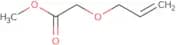
Methyl 2-(prop-2-en-1-yloxy)acetate
CAS:Methyl 2-(prop-2-en-1-yloxy)acetate is an ester that is soluble in organic solvents, such as acetone and ether. The compound has been shown to be a potent antifungal agent against dermatophytes and other fungi. It has been shown to exhibit the ability to cleave esters and amides with high enantiomeric excess (ee). This compound can also be used for the synthesis of chiral compounds, by using asymmetric synthesis methods, such as the Wittig reaction.Fórmula:C6H10O3Pureza:Min. 95%Peso molecular:130.14 g/mol2-[3-(Propan-2-yl)phenoxy]propanoic acid
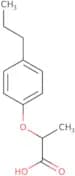
CAS:Versatile small molecule scaffoldFórmula:C12H16O3Pureza:Min. 95%Peso molecular:208.25 g/mol2-(4-Propylphenoxy)propanoic acid
CAS:Versatile small molecule scaffold
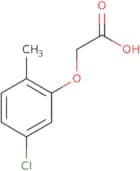
Fórmula:C12H16O3Pureza:Min. 95%Peso molecular:208.25 g/mol2-(5-Chloro-2-methylphenoxy)acetic acid
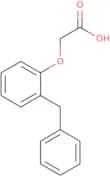
CAS:2-(5-Chloro-2-methylphenoxy)acetic acid is a chemical compound used in the synthesis of herbicides, such as glyphosate. It is an inhibitor of plant growth. 2-(5-Chloro-2-methylphenoxy)acetic acid has been shown to induce apoptosis and inhibit cell growth in breast cancer cells. The compound interacts with reactive oxygen species to form hydroxyl radicals that react with DNA and cause DNA damage. This genotoxic potential may be responsible for its anticancer activity. The compound has been shown to be mutagenic, although it can also act as a mutational blocker and suppress the production of mutations by other carcinogens.Fórmula:C9H9ClO3Pureza:Min. 95%Peso molecular:200.62 g/mol2-(2-Benzylphenoxy)acetic acid
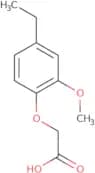
CAS:Versatile small molecule scaffoldFórmula:C15H14O3Pureza:Min. 95%Peso molecular:242.27 g/mol2-(4-Ethyl-2-methoxyphenoxy)acetic acid
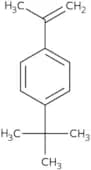
CAS:Versatile small molecule scaffoldFórmula:C11H14O4Pureza:Min. 95%Peso molecular:210.23 g/mol1-tert-Butyl-4-(prop-1-en-2-yl)benzene
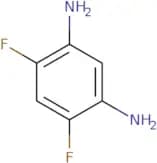
CAS:Versatile small molecule scaffoldFórmula:C13H18Pureza:Min. 95%Peso molecular:174.28 g/mol4,6-Difluorobenzene-1,3-diamine
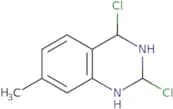
CAS:Versatile small molecule scaffoldFórmula:C6H6F2N2Pureza:Min. 95%Peso molecular:144.12 g/mol2,4-Dichloro-7-methylquinazoline
CAS:Versatile small molecule scaffold
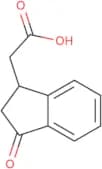
Fórmula:C9H6Cl2N2Pureza:Min. 95%Peso molecular:213.06 g/mol2-(3-Oxo-2,3-dihydro-1H-inden-1-yl)acetic acid
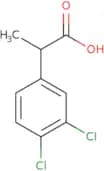
CAS:Versatile small molecule scaffoldFórmula:C11H10O3Pureza:Min. 95%Peso molecular:190.2 g/mol2-(3,4-Dichlorophenyl)propanoic acid
CAS:Versatile small molecule scaffold
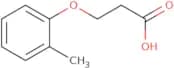
Fórmula:C9H8Cl2O2Pureza:Min. 95%Peso molecular:219.06 g/mol3-o-Tolyloxy-propionic acid
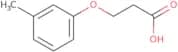
CAS:3-o-Tolyloxy-propionic acid (3TP) is a monomer that can be used in the production of polymers. 3TP has been shown to have high emission efficiency, which is attributed to its low density and inductive properties. It also has a low melting point, making it suitable for use in the production of polymers at low temperatures. 3TP is also known to have an acid group and vinyl group, making it useful in the production of polymers with a variety of functions. 3TP is soluble in water and other solvents, making it easy to handle during polymerization processes. It is non-toxic and environmentally friendly because it does not emit any harmful substances when heated or mixed with other materials.Fórmula:C10H12O3Pureza:Min. 95%Peso molecular:180.2 g/mol3-(3-Methylphenoxy)propanoic acid
CAS:3-(3-Methylphenoxy)propanoic acid (3MPPA) is a phenol with a 3-methyl group substituted for the hydroxyl group. It is a crystalline solid that melts at 96°C and decomposes when heated to 130°C. 3MPPA is a substrate for the enzyme catechol O-methyltransferase, which converts it to 3-O-methyldopa. This reaction occurs in both viable and nonviable cells. The kinetics of this reaction has been studied in detail and it has been shown that 3MPPA preferentially reacts with the active site of catechol O-methyltransferase.Fórmula:C10H12O3Pureza:Min. 95%Peso molecular:180.2 g/mol3-(4-Methylphenoxy)propionic acid
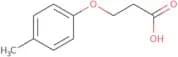
CAS:Versatile small molecule scaffoldFórmula:C10H12O3Pureza:Min. 95%Peso molecular:180.2 g/mol3-(2',3'-Dimethylphenyl)propionic acid
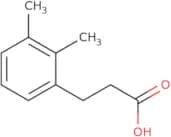
CAS:3-(2',3'-Dimethylphenyl)propionic acid is a prostaglandin compound that inhibits the production of vasoconstricting and vasodilating substances. It belongs to the class of amide, benzoic acid, and azacyclic compounds. The structural formula is CHCOOH. 3-(2',3'-Dimethylphenyl)propionic acid inhibits the response of cells to agonists such as histamine, serotonin, and bradykinin by binding to specific receptors on cell surfaces called integrins. This compound has been shown to have vasospastic effects in patients with Raynaud's phenomenon or other diseases involving vasospasm. 3-(2',3'-Dimethylphenyl)propionic acid also has thrombotic effects due to its inhibition of blood coagulation factors IIa and Xa.
Fórmula:C11H14O2Pureza:Min. 95%Peso molecular:178.23 g/mol3-(2,5-Dimethylphenyl)propionic acid
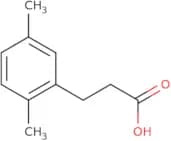
CAS:3-(2,5-Dimethylphenyl)propionic acid is a cytotoxic agent that belongs to the group of carboxamides. It is lipophilic and has been shown to be effective against colon tumor cells in vivo. 3-(2,5-Dimethylphenyl)propionic acid binds to DNA chains and inhibits cellular proliferation by inhibiting the synthesis of nucleic acids. This agent also inhibits the activity of topoisomerases I and II, which are enzymes that are necessary for DNA replication and transcription. 3-(2,5-Dimethylphenyl)propionic acid has been shown to have a high cytotoxic potency in vitro but low potency against cultured human cells.
Fórmula:C11H14O2Pureza:Min. 95%Peso molecular:178.23 g/mol6-(1H-Indol-3-yl)hexanoic acid
CAS:Versatile small molecule scaffoldFórmula:C14H17NO2Pureza:Min. 95%Peso molecular:231.29 g/mol2-[4-(3-Chlorophenyl)piperazin-1-yl]acetonitrile
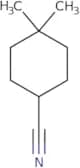
CAS:Versatile small molecule scaffoldFórmula:C12H14ClN3Pureza:Min. 95%Peso molecular:235.71 g/mol4,4-Dimethylcyclohexane-1-carbonitrile
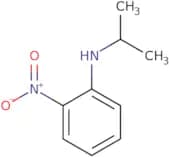
CAS:Versatile small molecule scaffoldFórmula:C9H15NPureza:Min. 95%Peso molecular:137.22 g/molIsopropyl-(2-nitro-phenyl)-amine
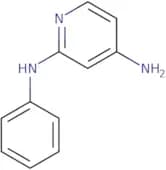
CAS:Versatile small molecule scaffoldFórmula:C9H12N2O2Pureza:Min. 95%Peso molecular:180.21 g/molN-2-Phenylpyridine-2,4-diamine
CAS:Versatile small molecule scaffold
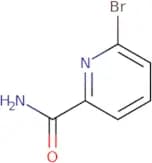
Fórmula:C11H11N3Pureza:Min. 95%Peso molecular:185.22 g/mol6-Bromopyridine-2-carboxamide
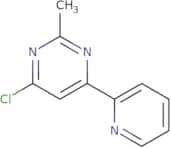
CAS:6-Bromopyridine-2-carboxamide is a dibenzazepine and an azacycle. It is used to study its affinity for the dopamine receptors, sodium channels, and histamine receptors. 6-Bromopyridine-2-carboxamide has been shown to block histamine receptors in the rat brain. This drug also has affinity for sodium channels and blocks them at lower concentrations than other drugs. Functional assays have demonstrated that 6-bromopyridine-2-carboxamide is a functional blocker of the ion channel receptor in human erythrocytes.Fórmula:C6H5BrN2OPureza:Min. 95%Peso molecular:201.02 g/mol4-Chloro-2-methyl-6-(pyridin-2-yl)pyrimidine
CAS:Versatile small molecule scaffold
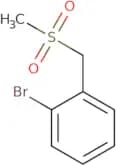
Fórmula:C10H8ClN3Pureza:Min. 95%Peso molecular:205.64 g/mol1-Bromo-2-((methylsulfonyl)methyl)benzene
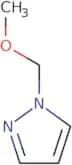
CAS:Versatile small molecule scaffoldFórmula:C8H9BrO2SPureza:Min. 95%Peso molecular:249.12 g/mol1-(Methoxymethyl)pyrazole
CAS:Versatile small molecule scaffold
Fórmula:C5H8N2OPureza:Min. 95%Peso molecular:112.13 g/mol4-Bromo-N-hexylaniline
CAS:Versatile small molecule scaffold
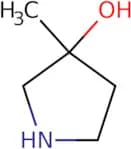
Fórmula:C12H18BrNPureza:Min. 95%Peso molecular:256.18 g/mol3-Methylpyrrolidin-3-ol
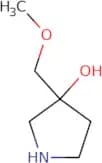
CAS:Versatile small molecule scaffoldFórmula:C5H11NO·HClPureza:Min. 95%Peso molecular:137.61 g/mol3-(Methoxymethyl)pyrrolidin-3-ol
CAS:Versatile small molecule scaffold
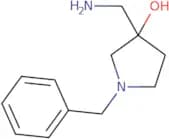
Fórmula:C6H13NO2Pureza:Min. 95%Peso molecular:131.17 g/mol3-(aminomethyl)-1-benzylpyrrolidin-3-ol
CAS:Versatile small molecule scaffoldFórmula:C12H18N2OPureza:Min. 95%Peso molecular:206.3 g/mol1-Benzyl-3-[(methylamino)methyl]pyrrolidin-3-ol dihydrochloride
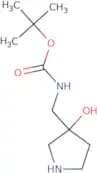
CAS:Versatile small molecule scaffoldFórmula:C13H22Cl2N2OPureza:Min. 95%Peso molecular:293.23 g/mol3-(boc-aminomethyl)-3-hydroxypyrrolidine
CAS:Versatile small molecule scaffold
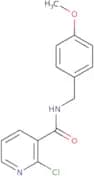
Fórmula:C10H20N2O3Pureza:Min. 95%Peso molecular:216.28 g/mol2-Chloro-N-(4-methoxybenzyl)nicotinamide
CAS:Versatile small molecule scaffold
Fórmula:C14H13ClN2O2Pureza:Min. 95%Peso molecular:276.72 g/mol2-(Bromomethyl)-5-methylimidazo[1,2-a]pyridine hydrobromide
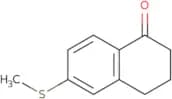
CAS:Versatile small molecule scaffoldFórmula:C9H10Br2N2Pureza:Min. 95%Peso molecular:306 g/mol6-(Methylsulfanyl)-1,2,3,4-tetrahydronaphthalen-1-one
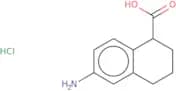
CAS:Versatile small molecule scaffoldFórmula:C11H12OSPureza:Min. 95%Peso molecular:192.28 g/mol6-Amino-1,2,3,4-tetrahydronaphthalene-1-carboxylic acid hydrochloride
CAS:Versatile small molecule scaffoldFórmula:C11H14ClNO2Pureza:Min. 95%Peso molecular:227.7 g/mol2-Chloro-6-[(4-chlorophenyl)sulfanyl]benzoic acid
CAS:Versatile small molecule scaffold
Fórmula:C13H8Cl2O2SPureza:Min. 95%Peso molecular:299.2 g/mol7-Oxobicyclo[2.2.1]hept-5-ene-2-carboxylic acid
CAS:Versatile small molecule scaffoldFórmula:C8H8O3Pureza:Min. 95%Peso molecular:152.15 g/molMethyl 2-(3-methylphenoxy)propanoate
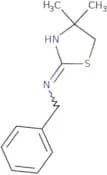
CAS:Versatile small molecule scaffoldFórmula:C11H14O3Pureza:Min. 95%Peso molecular:194.23 g/molN-Benzyl-4,4-dimethyl-4,5-dihydro-1,3-thiazol-2-amine
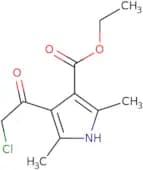
CAS:Versatile small molecule scaffoldFórmula:C12H16N2SPureza:Min. 95%Peso molecular:220.34 g/molEthyl 4-(2-chloroacetyl)-2,5-dimethyl-1H-pyrrole-3-carboxylate
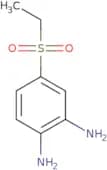
CAS:Versatile small molecule scaffoldFórmula:C11H14ClNO3Pureza:Min. 95%Peso molecular:243.68 g/mol4-(Ethanesulfonyl)benzene-1,2-diamine
CAS:Versatile small molecule scaffold
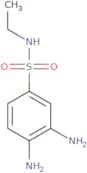
Fórmula:C8H12N2O2SPureza:Min. 95%Peso molecular:200.26 g/mol3,4-Diamino-N-ethylbenzene-1-sulfonamide
CAS:Versatile small molecule scaffoldFórmula:C8H13N3O2SPureza:Min. 95%Peso molecular:215.28 g/mol2-(2-Ethoxyethoxy)acetaldehyde
CAS:Versatile small molecule scaffold
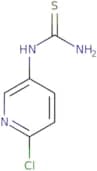
Fórmula:C6H12O3Pureza:Min. 95%Peso molecular:132.16 g/mol(6-Chloropyridin-3-yl)thiourea
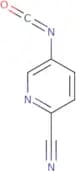
CAS:Versatile small molecule scaffoldFórmula:C6H6ClN3SPureza:Min. 95%Peso molecular:187.65 g/mol5-Isocyanatopyridine-2-carbonitrile
CAS:Versatile small molecule scaffoldFórmula:C7H3N3OPureza:Min. 95%Peso molecular:145.12 g/mol(1S,4S)-2-Thia-5-azabicyclo[2.2.1]heptane hydrochloride
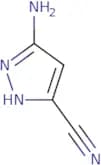
CAS:Versatile small molecule scaffoldFórmula:C5H10ClNSPureza:Min. 95%Peso molecular:151.66 g/mol5-Amino-1H-pyrazole-3-carbonitrile
CAS:5-Amino-1H-pyrazole-3-carbonitrile (APC) is a pyrazolopyrimidine compound. It is used as a starting material in organic synthesis, for example to prepare dithioesters and dithioacetals. The transformation of the APC molecule is accomplished by reacting it with either an alcohol or acid chloride.
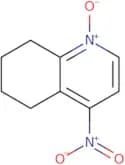
Fórmula:C4H4N4Pureza:Min. 95%Peso molecular:108.1 g/mol4-Nitro-5,6,7,8-tetrahydroquinolin-1-ium-1-olate
CAS:Versatile small molecule scaffold
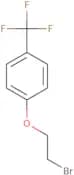
Fórmula:C9H10N2O3Pureza:Min. 95%Peso molecular:194.19 g/mol1-(2-Bromoethoxy)-4-(trifluoromethyl)benzene
CAS:Versatile small molecule scaffold
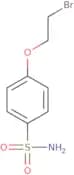
Fórmula:C9H8BrF3OPureza:Min. 95%Peso molecular:269.06 g/mol4-(2-Bromoethoxy)benzene-1-sulfonamide
CAS:Versatile small molecule scaffoldFórmula:C8H10BrNO3SPureza:Min. 95%Peso molecular:280.14 g/mol(2S)-2-Amino-N,N-dimethylpropanamide hydrochloride
CAS:Versatile small molecule scaffoldFórmula:C5H13ClN2OPureza:Min. 95%Peso molecular:152.62 g/mol(1S,4S)-2-Methyl-2,5-diazabicyclo[2.2.1]heptane dihydrobromide
CAS:Versatile small molecule scaffold
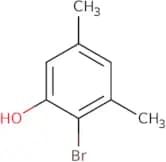
Fórmula:C6H12N2·2HBrPureza:Min. 95%Peso molecular:274 g/mol2-bromo-3,5-dimethylphenol
CAS:Versatile small molecule scaffoldFórmula:C8H9BrOPureza:Min. 95%Peso molecular:201.06 g/mol1-[(2,4-Dichlorophenyl)methyl]-1H-pyrazolo[3,4-d]pyrimidin-4-ol
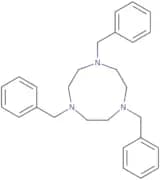
CAS:Versatile small molecule scaffoldFórmula:C12H8Cl2N4OPureza:Min. 95%Peso molecular:295.12 g/mol1,4,7-Tribenzyl-1,4,7-triazonane
CAS:1,4,7-Tribenzyl-1,4,7-triazonane is a crystalline compound that belongs to the group of ligands. This compound has a benzyl group in its structure and can be used as a transition metal complexing agent. The bond cleavage reaction of 1,4,7-tribenzyl-1,4,7-triazonane is catalyzed by a coordination chemical reaction with transition metals. It has been shown to form complexes with nickel and palladium. The kinetic isotope effect for this process has been reported to be large due to the presence of two hydrogen atoms in one molecule. This means that the molecule is more reactive at the site where it contains the hydrogen atom that is heavier isotopically.
Fórmula:C27H33N3Pureza:Min. 95%Peso molecular:399.6 g/moltert-butyl N-[(3-methylpyrrolidin-3-yl)methyl]carbamate
CAS:Versatile small molecule scaffoldFórmula:C11H22N2O2Pureza:Min. 95%Peso molecular:214.3 g/mol{[4-(Bromomethyl)phenyl]methoxy}(tert-butyl)dimethylsilane
CAS:Versatile small molecule scaffoldFórmula:C14H23BrOSiPureza:Min. 95%Peso molecular:315.32 g/mol2-{[(tert-Butoxy)carbonyl]amino}hexanoic acid
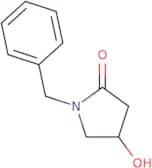
CAS:Versatile small molecule scaffoldFórmula:C11H21NO4Pureza:Min. 95%Peso molecular:231.29 g/mol1-Benzyl-4-hydroxypyrrolidin-2-one
CAS:Ethyl 1-benzyl-4-hydroxypyrrolidin-2-one can be synthesized in high yield by reacting benzyl amine with methanol and sodium carbonate in ethanol. This compound is a natural product found in marine organisms, such as sponges, sea cucumbers, and tunicates. It has been shown to have antibiotic properties against bacteria and fungi. The pharmaceutical industry has expressed interest in this compound because of its potential use as an anti-inflammatory agent.
Fórmula:C11H13NO2Pureza:Min. 95%Peso molecular:191.23 g/mol4-{[(Pyridin-3-yl)methyl]sulfanyl}aniline
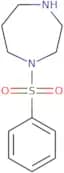
CAS:Versatile small molecule scaffoldFórmula:C12H12N2SPureza:Min. 95%Peso molecular:216.3 g/mol1-(Benzenesulfonyl)-1,4-diazepane
CAS:Versatile small molecule scaffold
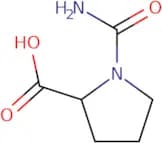
Fórmula:C11H16N2O2SPureza:Min. 95%Peso molecular:240.32 g/mol1-carbamoylpyrrolidine-2-carboxylic acid
CAS:1-Carbamoylpyrrolidine-2-carboxylic acid is an antimicrobial agent that belongs to the class of cyclic amino acid derivatives. It crystallizes well and has a high yield of approximately 91%. The antimicrobial activity of 1-carbamoylpyrrolidine-2-carboxylic acid is due to its ability to inhibit microbial cell parameters, such as axial rotation and hydrolysis. This compound also has the ability to bind to benzyl groups with a high affinity and inhibit microbial growth by interfering with protein synthesis. Furthermore, 1-carbamoylpyrrolidine-2-carboxylic acid is inexpensively synthesized from benzoic acid.
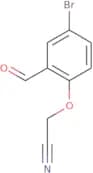
Fórmula:C6H10N2O3Pureza:Min. 95%Peso molecular:158.16 g/mol(4-Bromo-2-formylphenoxy)acetonitrile
CAS:Versatile small molecule scaffoldFórmula:C9H6BrNO2Pureza:Min. 95%Peso molecular:240.05 g/mol3-(Piperazin-1-yl)aniline
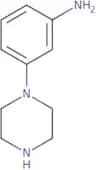
CAS:Versatile small molecule scaffold
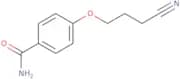
Fórmula:C10H15N3Pureza:Min. 95%Peso molecular:177.25 g/mol4-(3-Cyanopropoxy)-benzamide
CAS:Versatile small molecule scaffoldFórmula:C11H12N2O2Pureza:Min. 95%Peso molecular:204.22 g/mol4-[4-(Hydroxymethyl)phenoxy]butanenitrile
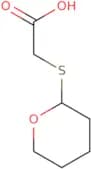
CAS:Versatile small molecule scaffoldFórmula:C11H13NO2Pureza:Min. 95%Peso molecular:191.23 g/mol2-(Oxan-2-ylsulfanyl)acetic acid
CAS:Versatile small molecule scaffoldFórmula:C7H12O3SPureza:Min. 95%Peso molecular:176.24 g/mol6-bromothieno[3,2-b]thiophene-2-carboxylic acid
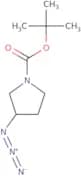
CAS:Versatile small molecule scaffoldFórmula:C7H3BrO2S2Pureza:Min. 95%Peso molecular:263.1 g/moltert-Butyl (3S)-3-azidopyrrolidine-1-carboxylate
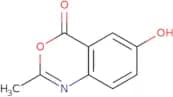
CAS:Versatile small molecule scaffoldFórmula:C9H16N4O2Pureza:Min. 95%Peso molecular:212.25 g/mol6-Hydroxy-2-methyl-4H-3,1-benzoxazin-4-one
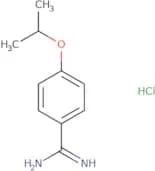
CAS:Versatile small molecule scaffoldFórmula:C9H7NO3Pureza:Min. 95%Peso molecular:177.16 g/mol4-(Propan-2-yloxy)benzene-1-carboximidamide hydrochloride
CAS:Versatile small molecule scaffoldFórmula:C10H15ClN2OPureza:Min. 95%Peso molecular:214.69 g/mol1-[3-(Hydroxymethyl)phenyl]ethan-1-one
CAS:Versatile small molecule scaffold
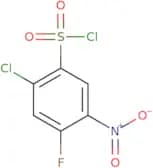
Fórmula:C9H10O2Pureza:Min. 95%Peso molecular:150.17 g/mol2-Chloro-4-fluoro-5-nitrobenzene-1-sulfonyl chloride
CAS:2-Chloro-4-fluoro-5-nitrobenzene-1-sulfonyl chloride is a synthetic, hydrolyzed nitroarene that is used as an intermediate for the synthesis of herbicides. It can be used to reduce carboxylic acids and carboxylic esters to produce alcohols and organic acids, respectively. 2C4FNS has been shown to react with iodides to form chloroiodide ions. Inorganic base reacts with 2C4FNS in the presence of water to form a redox cycle that produces chloride ions. Chloride ions can then react with carboxylic acids or carboxylic esters to form the corresponding acid chloride or ester chloride, respectively.Fórmula:C6H2Cl2FNO4SPureza:Min. 95%Peso molecular:274.05 g/moltert-Butyl[(4-fluorophenyl)methyl]amine
CAS:Versatile small molecule scaffoldFórmula:C11H16FNPureza:Min. 95%Peso molecular:181.25 g/mol4-chloro-2-methyl-6-phenylthieno[2,3-d]pyrimidine
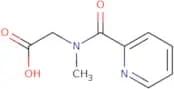
CAS:Versatile small molecule scaffoldFórmula:C13H9ClN2SPureza:Min. 95%Peso molecular:260.74 g/mol2-(N-Methyl-1-pyridin-2-ylformamido)acetic acid
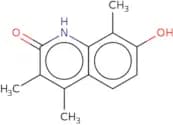
CAS:Versatile small molecule scaffoldFórmula:C9H10N2O3Pureza:Min. 95%Peso molecular:194.19 g/mol7-Hydroxy-3,4,8-trimethyl-1,2-dihydroquinolin-2-one
CAS:Versatile small molecule scaffoldFórmula:C12H13NO2Pureza:Min. 95%Peso molecular:203.2 g/mol2-{4-[(4-Chlorophenyl)methoxy]phenyl}acetic acid
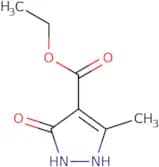
CAS:Versatile small molecule scaffoldFórmula:C15H13ClO3Pureza:Min. 95%Peso molecular:276.71 g/molEthyl 5-methyl-3-oxo-2,3-dihydro-1H-pyrazole-4-carboxylate
CAS:Versatile small molecule scaffold
Fórmula:C7H10N2O3Pureza:Min. 95%Peso molecular:170.17 g/mol[4-(Diethoxymethyl)phenyl]methanol
CAS:Versatile small molecule scaffold
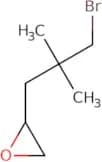
Fórmula:C12H18O3Pureza:Min. 95%Peso molecular:210.27 g/mol2-(3-Bromo-2,2-dimethylpropyl)oxirane
CAS:Versatile small molecule scaffold
Fórmula:C7H13BrOPureza:Min. 95%Peso molecular:193.08 g/mol2,4-Dibromo-3,5-dimethylaniline
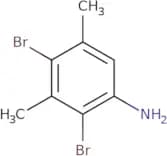
CAS:Versatile small molecule scaffoldFórmula:C8H9Br2NPureza:Min. 95%Peso molecular:278.97 g/mol3-(Pyridin-2-yloxy)propan-1-amine
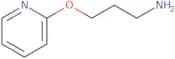
CAS:Versatile small molecule scaffoldFórmula:C8H12N2OPureza:Min. 95%Peso molecular:152.19 g/mol1-(2-Bromoethoxy)-3-ethylbenzene
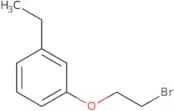
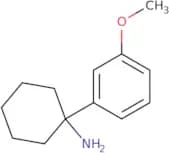
CAS:Versatile small molecule scaffoldFórmula:C10H13BrOPureza:Min. 95%Peso molecular:229.11 g/mol1-(3-Methoxyphenyl)cyclohexan-1-amine
CAS:Produto ControladoVersatile small molecule scaffold
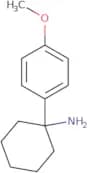
Fórmula:C13H19NOPureza:Min. 95%Peso molecular:205.3 g/mol1-(4-Methoxyphenyl)cyclohexan-1-amine
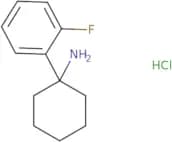
CAS:Produto ControladoVersatile small molecule scaffoldFórmula:C13H19NOPureza:Min. 95%Peso molecular:205.3 g/mol1-(2-Fluorophenyl)cyclohexan-1-amine hydrochloride
CAS:Produto ControladoVersatile small molecule scaffold
Fórmula:C12H17ClFNPureza:Min. 95%Peso molecular:229.7 g/mol1-[3-(Trifluoromethyl)phenyl]cyclohexan-1-amine hydrochloride
CAS:Versatile small molecule scaffoldFórmula:C13H17ClF3NPureza:Min. 95%Peso molecular:279.73 g/mol1-Bromo-4-{2-[2-(2-methoxyethoxy)ethoxy]ethoxy}benzene
CAS:Versatile small molecule scaffoldFórmula:C13H19BrO4Pureza:Min. 95%Peso molecular:319.19 g/mol5-[(1E)-3-Methoxy-3-oxoprop-1-en-1-yl]furan-2-carboxylic acid
CAS:Versatile small molecule scaffoldFórmula:C9H8O5Pureza:Min. 95%Peso molecular:196.16 g/mol3-[(3-Aminopropyl)disulfanyl]propan-1-amine dihydrochloride
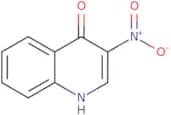
CAS:Versatile small molecule scaffoldFórmula:C6H17ClN2S2Pureza:Min. 95%Peso molecular:216.8 g/mol3-Nitroquinolin-4(1H)-one
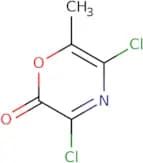
CAS:Versatile small molecule scaffoldFórmula:C9H6N2O3Pureza:Min. 95%Peso molecular:190.16 g/mol3,5-Dichloro-6-methyl-2H-1,4-oxazin-2-one
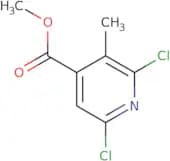
CAS:3,5-Dichloro-6-methyl-2H-1,4-oxazin-2-one is a hydrophobic compound that is used as a transistor and absorber. It can be used with nonionic surfactants for the treatment of textiles. The residue from this reaction is a disulfide bond that can be hydrolyzed with radiation or irradiation to give 3,5-dichlorohexanenitrile. This compound has been shown to be an effective modifier in the synthesis of polyurethane elastomers and has been shown to modulate the transfer rate in polymers. 3,5-Dichlorohexanenitrile also shows electrophilic catalysis when it is mixed with other compounds and then heated. This compound has also been found to be an efficient gel permeation chromatography stationary phase.Fórmula:C5H3Cl2NO2Pureza:Min. 95%Peso molecular:179.99 g/molMethyl 2,6-dichloro-3-methylisonicotinate
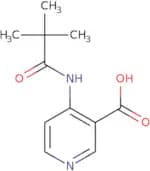
CAS:Versatile small molecule scaffoldFórmula:C8H7Cl2NO2Pureza:Min. 95%Peso molecular:220.05 g/mol4-(2,2,2-Trimethylacetamino)pyridine-3-carboxylic acid
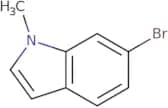
CAS:Versatile small molecule scaffoldFórmula:C11H14N2O3Pureza:Min. 95%Peso molecular:222.24 g/mol6-Bromo-1-methyl-1H-indole
CAS:6-Bromo-1-methyl-1H-indole is an antimicrobial agent that belongs to the class of bisindole alkaloids. It has been shown to inhibit the growth of Staphylococcus aureus, Escherichia coli, and other microorganisms. 6-Bromo-1-methyl-1H-indole is active against both planktonic cells and biofilm cells. In addition, it has been shown that this molecule inhibits microbial cell division by binding to DNA gyrase and topoisomerase IV. This drug can be used in combination with other antibiotics to treat infections caused by bacteria that are resistant to these drugs. 6-Bromo-1-methyl-1H-indole is not active against Gram positive bacteria such as Streptococcus pneumoniae or Lactobacillus acidophilus because it does not penetrate their cell walls easily.
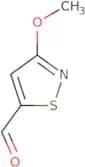
Fórmula:C9H8BrNPureza:Min. 95%Peso molecular:210.07 g/mol3-Methoxy-1,2-thiazole-5-carbaldehyde
CAS:Versatile small molecule scaffold
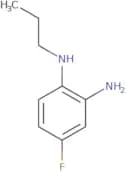
Fórmula:C5H5NO2SPureza:Min. 95%Peso molecular:143.17 g/mol4-Fluoro-1-N-propylbenzene-1,2-diamine
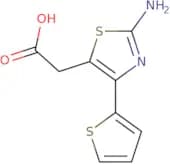
CAS:Versatile small molecule scaffoldFórmula:C9H13FN2Pureza:Min. 95%Peso molecular:168.21 g/mol(2-Amino-4-thiophen-2-yl-thiazol-5-yl)-acetic acid
CAS:Versatile small molecule scaffold
Fórmula:C9H8N2O2S2Pureza:Min. 95%Peso molecular:240.3 g/molApcin
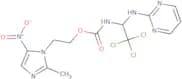
CAS:Apcin is a ubiquitin ligase that is activated by the binding of a reactive functional group. It has been shown to promote apoptosis in prostate cancer cells by regulating the cell cycle. Apcin binds to CDC20, halting the mitotic checkpoint and allowing cells to continue dividing. The binding of Apcin activates the Toll-like receptor pathway, which leads to an increased expression of molecules involved in apoptosis. This protein also increases protein synthesis and may be useful in treating HIV infection or cancer tissues.
Fórmula:C13H14Cl3N7O4Pureza:Min. 95%Peso molecular:438.65 g/mol

![2-[3-(Propan-2-yl)phenoxy]propanoic acid](/_next/image/?url=https%3A%2Fstatic.cymitquimica.com%2Fproducts%2F3D%2Fthumb-webp%2FABA14093.webp&w=3840&q=75)

![2-[4-(3-Chlorophenyl)piperazin-1-yl]acetonitrile](/_next/image/?url=https%3A%2Fstatic.cymitquimica.com%2Fproducts%2F3D%2Fthumb-webp%2FABA17891.webp&w=3840&q=75)

![1-Benzyl-3-[(methylamino)methyl]pyrrolidin-3-ol dihydrochloride](/_next/image/?url=https%3A%2Fstatic.cymitquimica.com%2Fproducts%2F3D%2Fthumb-webp%2FAFA03339.webp&w=3840&q=75)
![2-(Bromomethyl)-5-methylimidazo[1,2-a]pyridine hydrobromide](/_next/image/?url=https%3A%2Fstatic.cymitquimica.com%2Fproducts%2F3D%2Fthumb-webp%2FAFA04056.webp&w=3840&q=75)
![2-Chloro-6-[(4-chlorophenyl)sulfanyl]benzoic acid](/_next/image/?url=https%3A%2Fstatic.cymitquimica.com%2Fproducts%2F3D%2Fthumb-webp%2FAFA09145.webp&w=3840&q=75)
![7-Oxobicyclo[2.2.1]hept-5-ene-2-carboxylic acid](/_next/image/?url=https%3A%2Fstatic.cymitquimica.com%2Fproducts%2F3D%2Fthumb-webp%2FAFA09166.webp&w=3840&q=75)


![(1S,4S)-2-Thia-5-azabicyclo[2.2.1]heptane hydrochloride](/_next/image/?url=https%3A%2Fstatic.cymitquimica.com%2Fproducts%2F3D%2Fthumb-webp%2FAFA13643.webp&w=3840&q=75)

![(1S,4S)-2-Methyl-2,5-diazabicyclo[2.2.1]heptane dihydrobromide](/_next/image/?url=https%3A%2Fstatic.cymitquimica.com%2Fproducts%2F3D%2Fthumb-webp%2FAFA22462.webp&w=3840&q=75)
![1-[(2,4-Dichlorophenyl)methyl]-1H-pyrazolo[3,4-d]pyrimidin-4-ol](/_next/image/?url=https%3A%2Fstatic.cymitquimica.com%2Fproducts%2F3D%2Fthumb-webp%2FAFA24057.webp&w=3840&q=75)
![tert-butyl N-[(3-methylpyrrolidin-3-yl)methyl]carbamate](/_next/image/?url=https%3A%2Fstatic.cymitquimica.com%2Fproducts%2F3D%2Fthumb-webp%2FAFA29087.webp&w=3840&q=75)
![{[4-(Bromomethyl)phenyl]methoxy}(tert-butyl)dimethylsilane](/_next/image/?url=https%3A%2Fstatic.cymitquimica.com%2Fproducts%2F3D%2Fthumb-webp%2FAFA32020.webp&w=3840&q=75)
![2-{[(tert-Butoxy)carbonyl]amino}hexanoic acid](/_next/image/?url=https%3A%2Fstatic.cymitquimica.com%2Fproducts%2F3D%2Fthumb-webp%2FAFA34248.webp&w=3840&q=75)
![4-{[(Pyridin-3-yl)methyl]sulfanyl}aniline](/_next/image/?url=https%3A%2Fstatic.cymitquimica.com%2Fproducts%2F3D%2Fthumb-webp%2FAFA38242.webp&w=3840&q=75)
![4-[4-(Hydroxymethyl)phenoxy]butanenitrile](/_next/image/?url=https%3A%2Fstatic.cymitquimica.com%2Fproducts%2F3D%2Fthumb-webp%2FAFA43956.webp&w=3840&q=75)
![6-bromothieno[3,2-b]thiophene-2-carboxylic acid](/_next/image/?url=https%3A%2Fstatic.cymitquimica.com%2Fproducts%2F3D%2Fthumb-webp%2FAFA49306.webp&w=3840&q=75)
![1-[3-(Hydroxymethyl)phenyl]ethan-1-one](/_next/image/?url=https%3A%2Fstatic.cymitquimica.com%2Fproducts%2F3D%2Fthumb-webp%2FAFA60406.webp&w=3840&q=75)
![tert-Butyl[(4-fluorophenyl)methyl]amine](/_next/image/?url=https%3A%2Fstatic.cymitquimica.com%2Fproducts%2F3D%2Fthumb-webp%2FAFA64089.webp&w=3840&q=75)
![4-chloro-2-methyl-6-phenylthieno[2,3-d]pyrimidine](/_next/image/?url=https%3A%2Fstatic.cymitquimica.com%2Fproducts%2F3D%2Fthumb-webp%2FAFA66099.webp&w=3840&q=75)
![2-{4-[(4-Chlorophenyl)methoxy]phenyl}acetic acid](/_next/image/?url=https%3A%2Fstatic.cymitquimica.com%2Fproducts%2F3D%2Fthumb-webp%2FAFA72151.webp&w=3840&q=75)
![[4-(Diethoxymethyl)phenyl]methanol](/_next/image/?url=https%3A%2Fstatic.cymitquimica.com%2Fproducts%2F3D%2Fthumb-webp%2FAFA73444.webp&w=3840&q=75)
![1-[3-(Trifluoromethyl)phenyl]cyclohexan-1-amine hydrochloride](/_next/image/?url=https%3A%2Fstatic.cymitquimica.com%2Fproducts%2F3D%2Fthumb-webp%2FAFA80222.webp&w=3840&q=75)
![1-Bromo-4-{2-[2-(2-methoxyethoxy)ethoxy]ethoxy}benzene](/_next/image/?url=https%3A%2Fstatic.cymitquimica.com%2Fproducts%2F3D%2Fthumb-webp%2FAFA80805.webp&w=3840&q=75)
![5-[(1E)-3-Methoxy-3-oxoprop-1-en-1-yl]furan-2-carboxylic acid](/_next/image/?url=https%3A%2Fstatic.cymitquimica.com%2Fproducts%2F3D%2Fthumb-webp%2FAFA81200.webp&w=3840&q=75)
![3-[(3-Aminopropyl)disulfanyl]propan-1-amine dihydrochloride](/_next/image/?url=https%3A%2Fstatic.cymitquimica.com%2Fproducts%2F3D%2Fthumb-webp%2FAFA82910.webp&w=3840&q=75)