Building Blocks
Esta seção contém produtos fundamentais para a síntese de compostos orgânicos e biológicos. Building blocks são os materiais de partida essenciais usados para construir moléculas complexas através de várias reações químicas. Eles desempenham um papel crítico na descoberta de medicamentos, ciência dos materiais e pesquisa química. Na CymitQuimica, oferecemos uma ampla gama de building blocks de alta qualidade para apoiar suas pesquisas inovadoras e projetos industriais, garantindo que você tenha os componentes essenciais para uma síntese bem-sucedida.
Subcategorias de "Building Blocks"
- Ácidos Borónicos e Derivados de Ácido Borónico(5.756 produtos)
- Building Blocks Quirais(1.242 produtos)
- Building Blocks Hidrocarbonetos(6.095 produtos)
- Building Blocks orgânicos(60.526 produtos)
Foram encontrados 195848 produtos de "Building Blocks"
Ordenar por
Pureza (%)
0
100
|
0
|
50
|
90
|
95
|
100
1-(4-Methylbenzenesulfonyl)bicyclo[1.1.0]butane
CAS:<p>Versatile small molecule scaffold</p>Fórmula:C11H12O2SPureza:Min. 95%Peso molecular:208.28 g/mol3-(Pyridin-2-yloxy)aniline
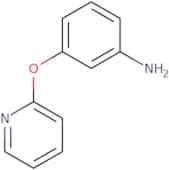
CAS:<p>3-(Pyridin-2-yloxy)aniline is a synthetic compound that is used as a potent inhibitor of the enzyme tyrosine hydroxylase. This enzyme catalyzes the conversion of tyrosine to L-3,4-dihydroxyphenylalanine and plays a key role in the synthesis of dopamine. 3-(Pyridin-2-yloxy)aniline has been shown to be effective in treating Parkinson's disease and other disorders that involve neuronal degeneration and cell death. This drug inhibits the production of dopamine by binding to tyrosine hydroxylase, thereby preventing it from converting tyrosine into L-3,4-dihydroxyphenylalanine. The compound also has significant inhibitory activity against cyclin dependent kinases (CDKs), which are enzymes that regulate the activity of protein kinases.</p>Fórmula:C11H10N2OPureza:Min. 95%Peso molecular:186.21 g/mol1-(3-Methylpiperidin-1-yl)propan-2-amine
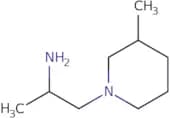
CAS:<p>Versatile small molecule scaffold</p>Fórmula:C9H20N2Pureza:Min. 95%Peso molecular:156.27 g/molMethyl 2,4,6-trichlorobenzoate
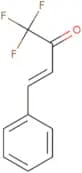
CAS:<p>Versatile small molecule scaffold</p>Fórmula:C8H5Cl3O2Pureza:Min. 95%Peso molecular:239.5 g/mol1,1,1-Trifluoro-4-phenylbut-3-en-2-one
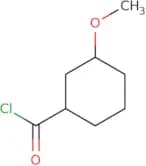
CAS:<p>Trifluoromethanesulfonic acid is a superacidic acid that has been used in organic synthesis. It has been shown to be reactive with electron-deficient molecules such as methyl cinnamate, which can lead to the formation of anions and carbanions. Trifluoromethanesulfonic acid is also able to protonate carbonyls, which makes it useful for the synthesis of functionalized carbonyls. Trifluoromethanesulfonic acid is hydrophobic and reacts with membranes, making it useful for protein extraction. It also reacts with s. typhimurium, a bacterium that causes food poisoning.</p>Fórmula:C10H7F3OPureza:Min. 95%Peso molecular:200.16 g/mol3-Methoxycyclohexane-1-carbonyl chloride
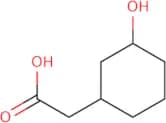
CAS:<p>Versatile small molecule scaffold</p>Fórmula:C8H13ClO2Pureza:Min. 95%Peso molecular:176.64 g/mol2-(3-Hydroxycyclohexyl)acetic acid
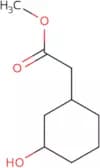
CAS:<p>Versatile small molecule scaffold</p>Fórmula:C8H14O3Pureza:Min. 95%Peso molecular:158.19 g/molMethyl 2-(3-hydroxycyclohexyl)acetate
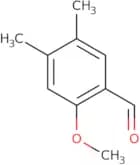
CAS:<p>Versatile small molecule scaffold</p>Fórmula:C9H16O3Pureza:Min. 95%Peso molecular:172.22 g/mol2-Methoxy-4,5-dimethylbenzaldehyde
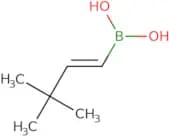
CAS:<p>Versatile small molecule scaffold</p>Fórmula:C10H12O2Pureza:Min. 95%Peso molecular:164.2 g/mol2-t-Butyl-E-vinylboronic acid
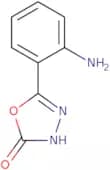
CAS:<p>Versatile small molecule scaffold</p>Fórmula:C6H13BO2Pureza:Min. 95%Peso molecular:127.98 g/mol5-(2-Aminophenyl)-2,3-dihydro-1,3,4-oxadiazol-2-one
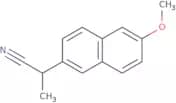
CAS:<p>5-(2-Aminophenyl)-2,3-dihydro-1,3,4-oxadiazol-2-one is an organic compound that belongs to the class of hydrazides. It has been used in the synthesis of other compounds and is used as a catalyst for peptide coupling reactions. The melting point of this compound is 139°C, and it decomposes at temperatures above 230°C. 5-(2-Aminophenyl)-2,3-dihydro-1,3,4-oxadiazol-2-one hydrolyzes to release ammonia and 2HCl. This reaction can be catalyzed by methylamine or hydrazine. 5-(2-Aminophenyl)-2,3-dihydro-1,3,4-oxadiazol-2-one can also undergo rearrangement reactions with methylamine or hydrazine to form anth</p>Fórmula:C8H7N3O2Pureza:Min. 95%Peso molecular:177.16 g/mol2-(6-Methoxynaphthalen-2-yl)propanenitrile
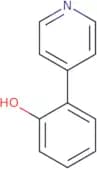
CAS:<p>2-(6-Methoxynaphthalen-2-yl)propanenitrile is a naturally occurring amino acid that can be synthesized in the laboratory. It has been found to inhibit enzyme activities such as ammonium sulfate, microbial metabolism and amide formation in bacteria. 2-(6-Methoxynaphthalen-2-yl)propanenitrile also inhibits the growth of bacteria by blocking the synthesis of proteins, DNA and RNA. The activity of this drug is specific for bacterial strains and does not affect higher organisms such as humans or mice. This compound is chiral, meaning that it can exist in two forms which are mirror images of each other. 2-(6-Methoxynaphthalen-2-yl)propanenitrile has been shown to be active against a number of bacterial strains including Pseudomonas aeruginosa, Streptococcus pyogenes and Staphylococcus aure</p>Fórmula:C14H13NOPureza:Min. 95%Peso molecular:211.26 g/mol2-(Pyridin-4-yl)phenol
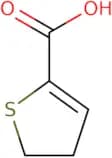
CAS:<p>Versatile small molecule scaffold</p>Fórmula:C11H9NOPureza:Min. 95%Peso molecular:171.19 g/mol4,5-Dihydrothiophene-2-carboxylic acid
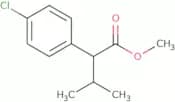
CAS:<p>4,5-Dihydrothiophene-2-carboxylic acid is a gamma-aminobutyric acid (GABA) inhibitor that belongs to the group of esters. It is used as an intermediate in the synthesis of GABA esters. 4,5-Dihydrothiophene-2-carboxylic acid has been shown to inhibit the activity of transaminase C1–6 alkyl and the metabolism of GABA to succinic semialdehyde. This compound also inhibits c1–6 alkyl transaminase, which converts GABA into succinic semialdehyde.</p>Fórmula:C5H6O2SPureza:Min. 95%Peso molecular:130.17 g/molMethyl 2-(4-chlorophenyl)-3-methylbutanoate
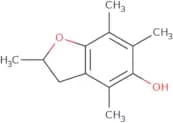
CAS:<p>Methyl 2-(4-chlorophenyl)-3-methylbutanoate (MEMB) is a sulfoxide that has been shown to stabilize the carbon nanotubes. MEMB is added to the carbon nanotube solution before it is heated to a temperature of 150°C. It was found that MEMB stabilizes the carbon nanotubes by forming a coordinated complex with the carbonyl group on the ends of the tubes. The MEMB molecule can then be removed from the tube by heating at higher temperatures, typically around 250°C. This process was also found to produce more long-term stability in the tubes, even after repeated heating cycles.</p>Fórmula:C12H15ClO2Pureza:Min. 95%Peso molecular:226.7 g/mol2,4,6,7-Tetramethyl-2,3-dihydro-1-benzofuran-5-ol
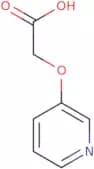
CAS:<p>2,4,6,7-Tetramethyl-2,3-dihydro-1-benzofuran-5-ol is a chlorinated benzenesulfonate. It is used in the treatment of hepatic diseases such as liver cirrhosis and chronic hepatitis. 2,4,6,7-Tetramethyl-2,3-dihydro-1-benzofuran-5-ol inhibits the synthesis of cholesterol and bile acids by competitive inhibition of 3β hydroxysteroid dehydrogenase. This compound also has a phenolic group that can be oxidized to form a phenoxy radical which may have antioxidant properties. The imidazole derivative has been shown to have antimicrobial activity against Gram positive bacteria such as Staphylococcus aureus and Streptococcus pneumoniae.</p>Fórmula:C12H16O2Pureza:Min. 95%Peso molecular:192.25 g/mol2-(Pyridine-3-yl)oxyacetic acid
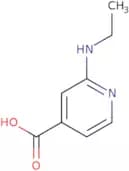
CAS:<p>Versatile small molecule scaffold</p>Fórmula:C7H7NO3Pureza:Min. 95%Peso molecular:153.14 g/mol2-(Ethylamino)isonicotinic acid
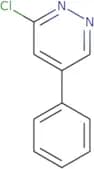
CAS:<p>Versatile small molecule scaffold</p>Fórmula:C8H10N2O2Pureza:Min. 95%Peso molecular:166.18 g/mol3-Chloro-5-phenylpyridazine
CAS:<p>Versatile small molecule scaffold</p>Fórmula:C10H7ClN2Pureza:Min. 95%Peso molecular:190.63 g/mol(2S)-2-[(tert-Butylcarbamoyl)amino]-3-methylbutanoic acid
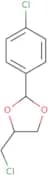
CAS:<p>Versatile small molecule scaffold</p>Fórmula:C10H20N2O3Pureza:Min. 95%Peso molecular:216.28 g/mol4-(Chloromethyl)-2-(4-chlorophenyl)-1,3-dioxolane
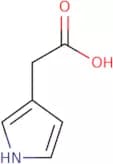
CAS:<p>Versatile small molecule scaffold</p>Fórmula:C10H10Cl2O2Pureza:Min. 95%Peso molecular:233.09 g/mol2-(1H-Pyrrol-3-yl)acetic acid
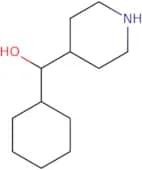
CAS:<p>2-(1H-Pyrrol-3-yl)acetic acid is a thioether monosubstituted orthopedic agent that has inhibitory activities against potent inhibitory functionalities. It is a fluorine containing compound that was synthesized through electropolymerization of 2-(1H-pyrrol-3-yl)acetic acid with acrylonitrile and tetrafluoroethylene. The bioactive molecules in this compound are carboxylates, pyrrole residues, and oxidants. This molecule also has the functionalities of being an orthopedic agent, an oxidant, and a polymer film.</p>Fórmula:C6H7NO2Pureza:Min. 95%Peso molecular:125.13 g/molCyclohexyl(piperidin-4-yl)methanol
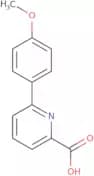
CAS:<p>Versatile small molecule scaffold</p>Fórmula:C12H23NOPureza:Min. 95%Peso molecular:197.32 g/mol6-(4-Methoxyphenyl)picolinic acid
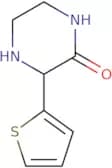
CAS:<p>Versatile small molecule scaffold</p>Fórmula:C13H11NO3Pureza:Min. 95%Peso molecular:229.23 g/mol3-(Thiophen-2-yl)piperazin-2-one
CAS:<p>3-(Thiophen-2-yl)piperazin-2-one (TPZ) is a chemical compound with a molecular weight of 248.37 g/mol. TPZ has been shown to inhibit the mitochondrial membrane potential, which leads to the release of cytochrome c and ATP production inhibition in microglia cells. TPZ is also an acetylcholine receptor agonist that binds to the α7 nicotinic acetylcholine receptor. TPZ has been shown to have dose-dependent effects on diabetic patients, suggesting its clinical relevance for metabolic disorders like diabetes mellitus type 2 and obesity. TPZ may be used as an inhibitor in fatty acid synthesis, although it is not a specific enzyme inhibitor for any particular enzyme.</p>Fórmula:C8H10N2OSPureza:Min. 95%Peso molecular:182.25 g/mol9-Thia-2-azaspiro[5.5]undecane
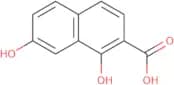
CAS:<p>Versatile small molecule scaffold</p>Fórmula:C9H17NSPureza:Min. 95%Peso molecular:171.31 g/mol1,7-Dihydroxynaphthalene-2-carboxylic acid
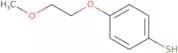
CAS:<p>Versatile small molecule scaffold</p>Fórmula:C11H8O4Pureza:Min. 95%Peso molecular:204.18 g/mol4-(2-Methoxyethoxy)benzene-1-thiol
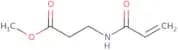
CAS:<p>Versatile small molecule scaffold</p>Fórmula:C9H12O2SPureza:Min. 95%Peso molecular:184.26 g/molMethyl 3-(prop-2-enamido)propanoate
CAS:<p>Methyl 3-(prop-2-enamido)propanoate is an acrylate that is used as a monomer in the production of polymers. It is an analog of methyl vinyl ketone and reacts with radical initiators to form copolymers, which can be modified by adding base catalysts. The polymerization process can be carried out in bulk or in solution. Methyl 3-(prop-2-enamido)propanoate has been shown to react with ethyl bromoacetate to produce acrylic acid esters.</p>Fórmula:C7H11NO3Pureza:Min. 95%Peso molecular:157.17 g/molMethyl imidazo[1,2-a]pyridine-7-carboxylate
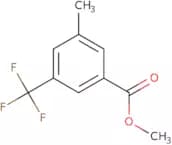
CAS:<p>Versatile small molecule scaffold</p>Fórmula:C9H8N2O2Pureza:Min. 95%Peso molecular:176.17 g/molMethyl 3-methyl-5-(trifluoromethyl)benzoate
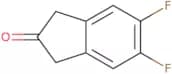
CAS:<p>Versatile small molecule scaffold</p>Fórmula:C10H9F3O2Pureza:Min. 95%Peso molecular:218.17 g/mol5,6-Difluoro-indan-2-one
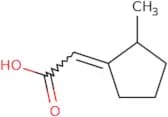
CAS:<p>Versatile small molecule scaffold</p>Fórmula:C9H6F2OPureza:Min. 95%Peso molecular:168.14 g/mol2-(2-Methylcyclopentylidene)acetic acid
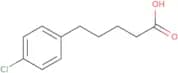
CAS:<p>Versatile small molecule scaffold</p>Fórmula:C8H12O2Pureza:Min. 95%Peso molecular:140.18 g/mol5-(4-Chlorophenyl)pentanoic acid
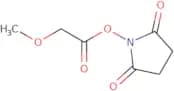
CAS:<p>Versatile small molecule scaffold</p>Fórmula:C11H13ClO2Pureza:Min. 95%Peso molecular:212.67 g/mol2,5-Dioxopyrrolidin-1-yl 2-methoxyacetate
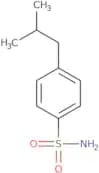
CAS:<p>Versatile small molecule scaffold</p>Fórmula:C7H9NO5Pureza:Min. 95%Peso molecular:187.15 g/mol4-(2-Methylpropyl)benzene-1-sulfonamide
CAS:<p>Versatile small molecule scaffold</p>Fórmula:C10H15NO2SPureza:Min. 95%Peso molecular:213.3 g/mol3-[(3-Methoxypropyl)carbamoyl]propanoic acid
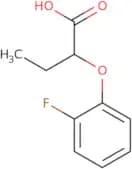
CAS:<p>Versatile small molecule scaffold</p>Fórmula:C8H15NO4Pureza:Min. 95%Peso molecular:189.21 g/mol2-(2-Fluorophenoxy)butanoic acid
CAS:<p>Versatile small molecule scaffold</p>Fórmula:C10H11FO3Pureza:Min. 95%Peso molecular:198.19 g/mol2-[2-(Propan-2-yl)phenoxy]butanoic acid
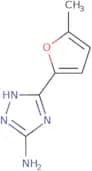
CAS:<p>Versatile small molecule scaffold</p>Fórmula:C13H18O3Pureza:Min. 95%Peso molecular:222.28 g/mol5-(5-Methylfuran-2-yl)-4H-1,2,4-triazol-3-amine
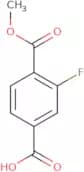
CAS:<p>Versatile small molecule scaffold</p>Fórmula:C7H8N4OPureza:Min. 95%Peso molecular:164.16 g/mol3-fluoro-4-(methoxycarbonyl)benzoic acid
CAS:<p>Versatile small molecule scaffold</p>Fórmula:C9H7FO4Pureza:Min. 95%Peso molecular:198.1 g/mol4-Bromothieno[3,2-c]pyridine
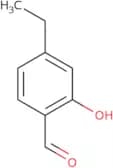
CAS:<p>Versatile small molecule scaffold</p>Fórmula:C7H4BrNSPureza:Min. 95%Peso molecular:214.08 g/mol4-Ethylsalicylaldehyde
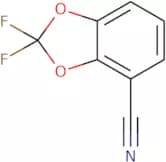
CAS:<p>Versatile small molecule scaffold</p>Fórmula:C9H10O2Pureza:Min. 95%Peso molecular:150.17 g/mol2,2-Difluoro-4-cyano-1,3-dioxaindane
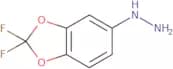
CAS:<p>Versatile small molecule scaffold</p>Fórmula:C8H3F2NO2Pureza:Min. 95%Peso molecular:183.11 g/mol(2,2-Difluoro-1,3-dioxaindan-5-yl)hydrazine
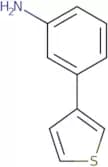
CAS:<p>Versatile small molecule scaffold</p>Fórmula:C7H6F2N2O2Pureza:Min. 95%Peso molecular:188.13 g/mol3-(Thiophen-3-yl)aniline
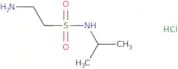
CAS:<p>Versatile small molecule scaffold</p>Fórmula:C10H9NSPureza:Min. 95%Peso molecular:175.25 g/mol2-Amino-N-(propan-2-yl)ethane-1-sulfonamide hydrochloride
CAS:<p>Versatile small molecule scaffold</p>Fórmula:C5H15ClN2O2SPureza:Min. 95%Peso molecular:202.7 g/molPerfluorophenyl methanesulfonate
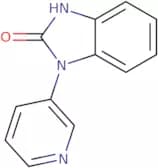
CAS:<p>Perfluorophenyl methanesulfonate is an organic solvent. It is a colorless liquid that is soluble in water and in most organic solvents. The chemical formula for perfluorophenyl methanesulfonate is C6F5OCH3SO3Cl. This compound has the structural formula of CH2=C(O)CH2-CF3SO3Cl. Perfluorophenyl methanesulfonate can be used as a formylating agent to convert alcohols, amines, or carboxylic acids into their corresponding formates, amides, or acid chlorides. It can also be used as an additive to petroleum products to increase the boiling point of hydrocarbons by adding a formyl group to the hydrocarbon chain. Other uses include as a divalent hydrocarbon in alkynyl groups and alkoxycarbonyl groups and as a skeleton for phosphoryl groups.</p>Fórmula:C7H3F5O3SPureza:Min. 95%Peso molecular:262.15 g/mol1-(Pyridin-3-yl)-2,3-dihydro-1H-1,3-benzodiazol-2-one
CAS:<p>Versatile small molecule scaffold</p>Fórmula:C12H9N3OPureza:Min. 95%Peso molecular:211.22 g/mol4-[2-(tert-Butoxy)-2-oxoethoxy]benzoic acid
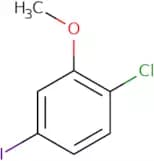
CAS:<p>Versatile small molecule scaffold</p>Fórmula:C13H16O5Pureza:Min. 95%Peso molecular:252.26 g/mol2-Chloro-5-iodoanisole
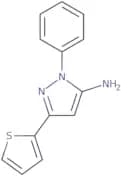
CAS:<p>Versatile small molecule scaffold</p>Fórmula:C7H6ClIOPureza:Min. 95%Peso molecular:268.48 g/mol1-Phenyl-3-(thiophen-2-yl)-1H-pyrazol-5-amine
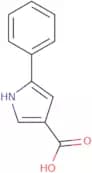
CAS:<p>Versatile small molecule scaffold</p>Fórmula:C13H11N3SPureza:Min. 95%Peso molecular:241.31 g/mol5-Phenyl-1H-pyrrole-3-carboxylic acid
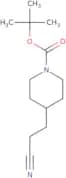
CAS:<p>Versatile small molecule scaffold</p>Fórmula:C11H9NO2Pureza:Min. 95%Peso molecular:187.19 g/molTert-Butyl 4-(2-Cyanoethyl)Piperidine-1-Carboxylate
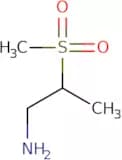
CAS:<p>Versatile small molecule scaffold</p>Fórmula:C13H22N2O2Pureza:Min. 95%Peso molecular:238.33 g/mol2-Methanesulfonylpropan-1-amine
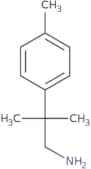
CAS:<p>Versatile small molecule scaffold</p>Fórmula:C4H11NO2SPureza:Min. 95%Peso molecular:137.2 g/mol2-Methyl-2-p-tolyl-propylamine
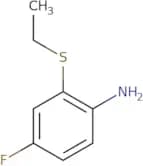
CAS:<p>2-Methyl-2-p-tolyl-propylamine (MPTP) is an aromatic compound that has been shown to have some biologic activity. MPTP was first synthesized in the lab of Dr. K.B. Sharpless and his team at Duke University in 1979, who were attempting to make an inhibitor for monoamine oxidase B (MAO-B). MAO-B is a type of enzyme that breaks down the neurotransmitter dopamine, which is involved in the regulation of movement and emotions. The synthesis of MPTP was abandoned when it was found that the compound was instead metabolized into a neurotoxin called 1-methyl-4-phenylpyridinium (MPP+), which caused Parkinson's disease in mice.<br>MPTP causes cell death by inhibiting mitochondrial complex I, which produces adenosine triphosphate (ATP) needed for cell function, leading to cell death through apoptosis or necrosis</p>Fórmula:C11H17NPureza:Min. 95%Peso molecular:163.26 g/mol2-(Ethylsulfanyl)-4-fluoroaniline
CAS:<p>Versatile small molecule scaffold</p>Fórmula:C8H10FNSPureza:Min. 95%Peso molecular:171.24 g/mol2-[(Tetrahydro-2H-pyran-4-yl)amino]ethanol
CAS:<p>Versatile small molecule scaffold</p>Fórmula:C7H15NO2Pureza:Min. 95%Peso molecular:145.2 g/moltert-Butyl 2-(4-amino-1H-pyrazol-1-yl)acetate
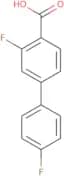
CAS:<p>Versatile small molecule scaffold</p>Fórmula:C9H15N3O2Pureza:Min. 95%Peso molecular:197.23 g/mol4-(4-Fluorophenyl)-2-fluorobenzoic acid
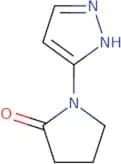
CAS:<p>Versatile small molecule scaffold</p>Fórmula:C13H8F2O2Pureza:Min. 95%Peso molecular:234.2 g/mol1-(1H-Pyrazol-3-yl)pyrrolidin-2-one
CAS:<p>Versatile small molecule scaffold</p>Fórmula:C7H9N3OPureza:Min. 95%Peso molecular:151.17 g/mol(2E)-3-[4-Methoxy-3-(methylsulfamoyl)phenyl]prop-2-enoic acid
CAS:<p>Versatile small molecule scaffold</p>Fórmula:C11H13NO5SPureza:Min. 95%Peso molecular:271.29 g/mol(2E)-3-{4-Methoxy-3-[(propan-2-yl)sulfamoyl]phenyl}prop-2-enoic acid
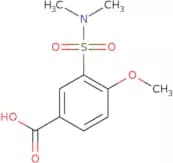
CAS:<p>Versatile small molecule scaffold</p>Fórmula:C13H17NO5SPureza:Min. 95%Peso molecular:299.34 g/mol3-(Dimethylsulfamoyl)-4-methoxybenzoic acid
CAS:<p>Versatile small molecule scaffold</p>Fórmula:C10H13NO5SPureza:Min. 95%Peso molecular:259.28 g/mol3-[({[4-(Ethoxycarbonyl)phenyl]carbamoyl}methyl)sulfanyl]propanoic acid
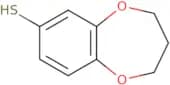
CAS:Produto Controlado<p>3-[({[4-(Ethoxycarbonyl)phenyl]carbamoyl}methyl)sulfanyl]propanoic acid is a research tool that is used as an activator of various receptors, ligands, and ion channels. This compound binds to the ligand binding site of the receptor and causes activation by increasing the rate of ligand-receptor interactions. 3-[({[4-(Ethoxycarbonyl)phenyl]carbamoyl}methyl)sulfanyl]propanoic acid has been shown to inhibit protein synthesis in cells by inhibiting peptide bond formation.</p>Fórmula:C14H17NO5SPureza:Min. 95%Peso molecular:311.36 g/mol3,4-Dihydro-2H-1,5-benzodioxepine-7-thiol
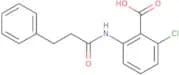
CAS:<p>Versatile small molecule scaffold</p>Fórmula:C9H10O2SPureza:Min. 95%Peso molecular:182.24 g/mol2-Chloro-6-(3-phenylpropanamido)benzoic acid
CAS:<p>Versatile small molecule scaffold</p>Fórmula:C16H14ClNO3Pureza:Min. 95%Peso molecular:303.74 g/mol7-Methyl-2-(2,4,6-trimethylphenyl)-3H-imidazo[4,5-b]pyridine
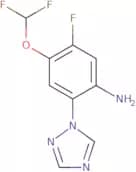
CAS:<p>Versatile small molecule scaffold</p>Fórmula:C16H17N3Pureza:Min. 95%Peso molecular:251.33 g/mol4-(Difluoromethoxy)-5-fluoro-2-(1H-1,2,4-triazol-1-yl)aniline
CAS:<p>Versatile small molecule scaffold</p>Fórmula:C9H7F3N4OPureza:Min. 95%Peso molecular:244.17 g/mol2-Amino-N-[2-chloro-5-(trifluoromethyl)phenyl]-4-methyl-1,3-thiazole-5-carboxamide
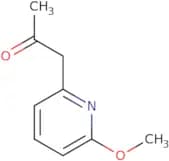
CAS:<p>Versatile small molecule scaffold</p>Fórmula:C12H9ClF3N3OSPureza:Min. 95%Peso molecular:335.73 g/mol1-(6-Methoxypyridin-2-yl)propan-2-one
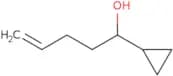
CAS:<p>Versatile small molecule scaffold</p>Fórmula:C9H11NO2Pureza:Min. 95%Peso molecular:165.19 g/mol1-Cyclopropylpent-4-en-1-ol
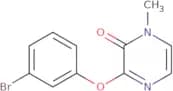
CAS:<p>Versatile small molecule scaffold</p>Fórmula:C8H14OPureza:Min. 95%Peso molecular:126.2 g/mol3-(3-Bromophenoxy)-1-methyl-1,2-dihydropyrazin-2-one
CAS:<p>Versatile small molecule scaffold</p>Fórmula:C11H9BrN2O2Pureza:Min. 95%Peso molecular:281.1 g/mol6-({[(4-Bromothiophen-2-yl)methyl](methyl)amino}methyl)-5-chloro-N-methylpyridin-2-amine
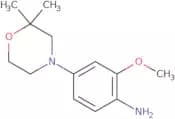
CAS:<p>Versatile small molecule scaffold</p>Fórmula:C13H15BrClN3SPureza:Min. 95%Peso molecular:360.7 g/mol4-(2,2-Dimethylmorpholin-4-yl)-2-methoxyaniline
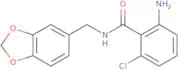
CAS:<p>Versatile small molecule scaffold</p>Fórmula:C13H20N2O2Pureza:Min. 95%Peso molecular:236.31 g/mol2-Amino-N-(1,3-dioxaindan-5-ylmethyl)-6-chlorobenzamide
CAS:<p>Versatile small molecule scaffold</p>Fórmula:C15H13ClN2O3Pureza:Min. 95%Peso molecular:304.73 g/mol2-[(2-Fluorophenyl)methoxy]pyridine-3-carboxylic acid
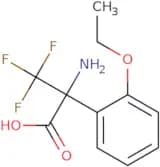
CAS:<p>Versatile small molecule scaffold</p>Fórmula:C13H10FNO3Pureza:Min. 95%Peso molecular:247.22 g/mol2-Amino-2-(2-ethoxyphenyl)-3,3,3-trifluoropropanoic acid
CAS:<p>Versatile small molecule scaffold</p>Fórmula:C11H12F3NO3Pureza:Min. 95%Peso molecular:263.21 g/mol2-{[(tert-Butoxy)carbonyl]amino}adamantane-2-carboxylic acid
CAS:<p>Versatile small molecule scaffold</p>Fórmula:C16H25NO4Pureza:Min. 95%Peso molecular:295.4 g/mol[2-(azetidin-1-yl)pyrimidin-5-yl]boronic Acid
CAS:<p>Versatile small molecule scaffold</p>Fórmula:C7H10BN3O2Pureza:Min. 95%Peso molecular:178.98 g/mol2-[3-(3-Chlorophenyl)-2,4-dioxoimidazolidin-1-yl]acetic acid
CAS:<p>Versatile small molecule scaffold</p>Fórmula:C11H9ClN2O4Pureza:Min. 95%Peso molecular:268.65 g/mol2-{[(tert-Butoxy)carbonyl]amino}-2-methyl-4-phenylbutanoic acid
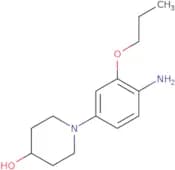
CAS:<p>Versatile small molecule scaffold</p>Fórmula:C16H23NO4Pureza:Min. 95%Peso molecular:293.4 g/mol1-(4-Amino-3-propoxyphenyl)piperidin-4-ol
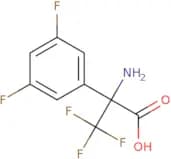
CAS:<p>Versatile small molecule scaffold</p>Fórmula:C14H22N2O2Pureza:Min. 95%Peso molecular:250.34 g/mol2-Amino-2-(3,5-difluorophenyl)-3,3,3-trifluoropropanoic acid
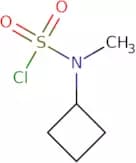
CAS:<p>Versatile small molecule scaffold</p>Fórmula:C9H6F5NO2Pureza:Min. 95%Peso molecular:255.14 g/molN-Cyclobutyl-N-methylsulfamoyl chloride
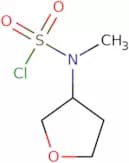
CAS:<p>Versatile small molecule scaffold</p>Fórmula:C5H10ClNO2SPureza:Min. 95%Peso molecular:183.66 g/molN-Methyl-N-(oxolan-3-yl)sulfamoyl chloride
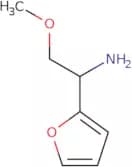
CAS:<p>Versatile small molecule scaffold</p>Fórmula:C5H10ClNO3SPureza:Min. 95%Peso molecular:199.66 g/mol1-(Furan-2-yl)-2-methoxyethan-1-amine
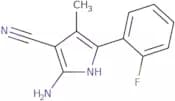
CAS:<p>Versatile small molecule scaffold</p>Fórmula:C7H11NO2Pureza:Min. 95%Peso molecular:141.17 g/mol2-Amino-5-(2-fluorophenyl)-4-methyl-1H-pyrrole-3-carbonitrile
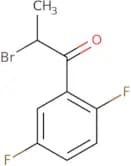
CAS:<p>2-Amino-5-(2-fluorophenyl)-4-methyl-1H-pyrrole-3-carbonitrile is a white crystalline powder that has a pyrrole ring structure. It has been found to be stable in air and light, but not soluble in water. The infrared absorption spectrum of this compound shows bands at 3140 cm−1, 1650 cm−1, 1560 cm−1, and 880 cm−1. 2-Amino-5-(2-fluorophenyl)-4-methyl-1H-pyrrole-3-carbonitrile is not soluble in water but can be dissolved in methanol or ethanol. It is an organic chemical with a molecular weight of 198.2 g/mol and a melting point of 184°C.</p>Fórmula:C12H10FN3Pureza:Min. 95%Peso molecular:215.23 g/mol2-Bromo-2',5'-difluoropropiophenone
CAS:<p>Versatile small molecule scaffold</p>Fórmula:C9H7BrF2OPureza:Min. 95%Peso molecular:249.05 g/molN-[1-(2-Fluorophenyl)-2-oxopropyl]acetamide
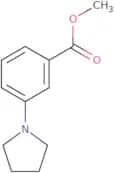
CAS:Produto Controlado<p>Versatile small molecule scaffold</p>Fórmula:C11H12FNO2Pureza:Min. 95%Peso molecular:209.22 g/molMethyl 3-(1-pyrrolidinyl)benzoate
CAS:<p>Versatile small molecule scaffold</p>Fórmula:C12H15NO2Pureza:Min. 95%Peso molecular:205.26 g/molrac-(2R,3S)-1-[(tert-Butoxy)carbonyl]-3-hydroxypyrrolidine-2-carboxylic acid
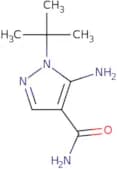
CAS:<p>Versatile small molecule scaffold</p>Fórmula:C10H17NO5Pureza:Min. 95%Peso molecular:231.25 g/mol5-Amino-1-tert-butyl-1H-pyrazole-4-carboxamide
CAS:<p>Versatile small molecule scaffold</p>Fórmula:C8H14N4OPureza:Min. 95%Peso molecular:182.22 g/mol2-Benzyl-octahydro-cyclopenta[c]pyrrol-4-ylamine
CAS:<p>Versatile small molecule scaffold</p>Fórmula:C14H20N2Pureza:Min. 95%Peso molecular:216.32 g/molMethyl 2-{[(2-methylphenyl)methyl]amino}acetate hydrochloride
CAS:<p>Versatile small molecule scaffold</p>Fórmula:C11H16ClNO2Pureza:Min. 95%Peso molecular:229.7 g/moltert-butyl N-{2-azaspiro[4.4]nonan-6-yl}carbamate
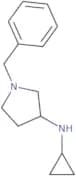
CAS:<p>Versatile small molecule scaffold</p>Fórmula:C13H24N2O2Pureza:Min. 95%Peso molecular:240.3 g/mol1-Benzyl-N-cyclopropylpyrrolidin-3-amine
CAS:<p>Versatile small molecule scaffold</p>Fórmula:C14H20N2Pureza:Min. 95%Peso molecular:216.32 g/moltert-butyl octahydropyrrolo[3,4-b]pyridine-6-carboxylate
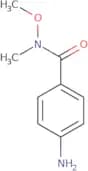
CAS:<p>Versatile small molecule scaffold</p>Fórmula:C12H22N2O2Pureza:Min. 95%Peso molecular:226.32 g/mol4-Amino-N-methoxy-N-methylbenzamide
CAS:<p>4-Amino-N-methoxy-N-methylbenzamide is a ligand that has been used to catalyze the aminocarbonylation of iodides with phosphine. It has been shown to be stable in air and water, and is active under heterogeneous conditions, such as in the presence of palladium on carbon. 4-Amino-N-methoxy-N-methylbenzamide is also a ligand for the palladium, which can be used to catalyze carbonylative coupling reactions. This ligand has shown high activity for aryl bromides.</p>Fórmula:C9H12N2O2Pureza:Min. 95%Peso molecular:180.21 g/mol3,4-Diethylbenzoic acid
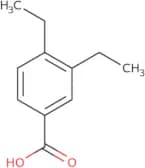
CAS:<p>Versatile small molecule scaffold</p>Fórmula:C11H14O2Pureza:Min. 95%Peso molecular:178.23 g/mol
![1-(4-Methylbenzenesulfonyl)bicyclo[1.1.0]butane](/_next/image/?url=https%3A%2Fstatic.cymitquimica.com%2Fproducts%2F3D%2Fthumb-webp%2FLDA53730.webp&w=3840&q=75)


![(2S)-2-[(tert-Butylcarbamoyl)amino]-3-methylbutanoic acid](/_next/image/?url=https%3A%2Fstatic.cymitquimica.com%2Fproducts%2F3D%2Fthumb-webp%2FLDA67478.webp&w=3840&q=75)
![9-Thia-2-azaspiro[5.5]undecane](/_next/image/?url=https%3A%2Fstatic.cymitquimica.com%2Fproducts%2F3D%2Fthumb-webp%2FLDA69702.webp&w=3840&q=75)
![Methyl imidazo[1,2-a]pyridine-7-carboxylate](/_next/image/?url=https%3A%2Fstatic.cymitquimica.com%2Fproducts%2F3D%2Fthumb-webp%2FLDA71801.webp&w=3840&q=75)
![3-[(3-Methoxypropyl)carbamoyl]propanoic acid](/_next/image/?url=https%3A%2Fstatic.cymitquimica.com%2Fproducts%2F3D%2Fthumb-webp%2FLGA78591.webp&w=3840&q=75)
![2-[2-(Propan-2-yl)phenoxy]butanoic acid](/_next/image/?url=https%3A%2Fstatic.cymitquimica.com%2Fproducts%2F3D%2Fthumb-webp%2FLGA79049.webp&w=3840&q=75)
![4-Bromothieno[3,2-c]pyridine](/_next/image/?url=https%3A%2Fstatic.cymitquimica.com%2Fproducts%2F3D%2Fthumb-webp%2FLGA82302.webp&w=3840&q=75)

![4-[2-(tert-Butoxy)-2-oxoethoxy]benzoic acid](/_next/image/?url=https%3A%2Fstatic.cymitquimica.com%2Fproducts%2F3D%2Fthumb-webp%2FLGA94880.webp&w=3840&q=75)
![2-[(Tetrahydro-2H-pyran-4-yl)amino]ethanol](/_next/image/?url=https%3A%2Fstatic.cymitquimica.com%2Fproducts%2F3D%2Fthumb-webp%2FLGB68400.webp&w=3840&q=75)

![(2E)-3-[4-Methoxy-3-(methylsulfamoyl)phenyl]prop-2-enoic acid](/_next/image/?url=https%3A%2Fstatic.cymitquimica.com%2Fproducts%2F3D%2Fthumb-webp%2FLGB72886.webp&w=3840&q=75)
![(2E)-3-{4-Methoxy-3-[(propan-2-yl)sulfamoyl]phenyl}prop-2-enoic acid](/_next/image/?url=https%3A%2Fstatic.cymitquimica.com%2Fproducts%2F3D%2Fthumb-webp%2FLGB72887.webp&w=3840&q=75)
![3-[({[4-(Ethoxycarbonyl)phenyl]carbamoyl}methyl)sulfanyl]propanoic acid](/_next/image/?url=https%3A%2Fstatic.cymitquimica.com%2Fproducts%2F3D%2Fthumb-webp%2FLGB72890.webp&w=3840&q=75)
![7-Methyl-2-(2,4,6-trimethylphenyl)-3H-imidazo[4,5-b]pyridine](/_next/image/?url=https%3A%2Fstatic.cymitquimica.com%2Fproducts%2F3D%2Fthumb-webp%2FLGC03738.webp&w=3840&q=75)
![2-Amino-N-[2-chloro-5-(trifluoromethyl)phenyl]-4-methyl-1,3-thiazole-5-carboxamide](/_next/image/?url=https%3A%2Fstatic.cymitquimica.com%2Fproducts%2F3D%2Fthumb-webp%2FLGC22749.webp&w=3840&q=75)
amino}methyl)-5-chloro-N-methylpyridin-2-amine](/_next/image/?url=https%3A%2Fstatic.cymitquimica.com%2Fproducts%2F3D%2Fthumb-webp%2FLGC37277.webp&w=3840&q=75)
![2-[(2-Fluorophenyl)methoxy]pyridine-3-carboxylic acid](/_next/image/?url=https%3A%2Fstatic.cymitquimica.com%2Fproducts%2F3D%2Fthumb-webp%2FLGC56429.webp&w=3840&q=75)
![2-{[(tert-Butoxy)carbonyl]amino}adamantane-2-carboxylic acid](/_next/image/?url=https%3A%2Fstatic.cymitquimica.com%2Fproducts%2F3D%2Fthumb-webp%2FLGC61411.webp&w=3840&q=75)
![[2-(azetidin-1-yl)pyrimidin-5-yl]boronic Acid](/_next/image/?url=https%3A%2Fstatic.cymitquimica.com%2Fproducts%2F3D%2Fthumb-webp%2FLGC64359.webp&w=3840&q=75)
![2-[3-(3-Chlorophenyl)-2,4-dioxoimidazolidin-1-yl]acetic acid](/_next/image/?url=https%3A%2Fstatic.cymitquimica.com%2Fproducts%2F3D%2Fthumb-webp%2FLGC65070.webp&w=3840&q=75)
![2-{[(tert-Butoxy)carbonyl]amino}-2-methyl-4-phenylbutanoic acid](/_next/image/?url=https%3A%2Fstatic.cymitquimica.com%2Fproducts%2F3D%2Fthumb-webp%2FLGC65563.webp&w=3840&q=75)
![N-[1-(2-Fluorophenyl)-2-oxopropyl]acetamide](/_next/image/?url=https%3A%2Fstatic.cymitquimica.com%2Fproducts%2F3D%2Fthumb-webp%2FLHA03607.webp&w=3840&q=75)
![rac-(2R,3S)-1-[(tert-Butoxy)carbonyl]-3-hydroxypyrrolidine-2-carboxylic acid](/_next/image/?url=https%3A%2Fstatic.cymitquimica.com%2Fproducts%2F3D%2Fthumb-webp%2FLHA13280.webp&w=3840&q=75)
![2-Benzyl-octahydro-cyclopenta[c]pyrrol-4-ylamine](/_next/image/?url=https%3A%2Fstatic.cymitquimica.com%2Fproducts%2F3D%2Fthumb-webp%2FLHA20160.webp&w=3840&q=75)
![Methyl 2-{[(2-methylphenyl)methyl]amino}acetate hydrochloride](/_next/image/?url=https%3A%2Fstatic.cymitquimica.com%2Fproducts%2F3D%2Fthumb-webp%2FLHA20299.webp&w=3840&q=75)
![tert-butyl N-{2-azaspiro[4.4]nonan-6-yl}carbamate](/_next/image/?url=https%3A%2Fstatic.cymitquimica.com%2Fproducts%2F3D%2Fthumb-webp%2FLHA20305.webp&w=3840&q=75)
![tert-butyl octahydropyrrolo[3,4-b]pyridine-6-carboxylate](/_next/image/?url=https%3A%2Fstatic.cymitquimica.com%2Fproducts%2F3D%2Fthumb-webp%2FLHA20381.webp&w=3840&q=75)