


Building Blocks
Esta seção contém produtos fundamentais para a síntese de compostos orgânicos e biológicos. Building blocks são os materiais de partida essenciais usados para construir moléculas complexas através de várias reações químicas. Eles desempenham um papel crítico na descoberta de medicamentos, ciência dos materiais e pesquisa química. Na CymitQuimica, oferecemos uma ampla gama de building blocks de alta qualidade para apoiar suas pesquisas inovadoras e projetos industriais, garantindo que você tenha os componentes essenciais para uma síntese bem-sucedida.
Subcategorias de "Building Blocks"
- Ácidos Borónicos e Derivados de Ácido Borónico(5.756 produtos)
- Building Blocks Quirais(1.242 produtos)
- Building Blocks Hidrocarbonetos(6.093 produtos)
- Building Blocks orgânicos(60.529 produtos)
Foram encontrados 195536 produtos de "Building Blocks"
Ordenar por
Pureza (%)
0
100
|
0
|
50
|
90
|
95
|
100
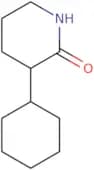
3-Cyclohexylpiperidin-2-one
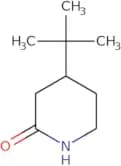
CAS:<p>Versatile small molecule scaffold</p>Fórmula:C11H19NOPureza:Min. 95%Peso molecular:181.27 g/mol4-tert-Butylpiperidin-2-one
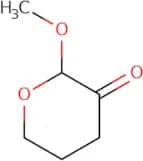
CAS:<p>Versatile small molecule scaffold</p>Fórmula:C9H17NOPureza:Min. 95%Peso molecular:155.24 g/mol2-Methoxyoxan-3-one
CAS:<p>Versatile small molecule scaffold</p>Fórmula:C6H10O3Pureza:Min. 95%Peso molecular:130.14 g/mol3-(6-Methylpyridin-3-yl)propan-1-ol
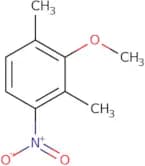
CAS:<p>Versatile small molecule scaffold</p>Fórmula:C9H13NOPureza:Min. 95%Peso molecular:151.21 g/mol2-Methoxy-1,3-dimethyl-4-nitrobenzene
CAS:<p>Versatile small molecule scaffold</p>Fórmula:C9H11NO3Pureza:Min. 95%Peso molecular:181.19 g/mol5-Chloro-4-methyl-1H-indole-2-carboxylic acid
CAS:<p>Versatile small molecule scaffold</p>Fórmula:C10H8ClNO2Pureza:Min. 95%Peso molecular:209.63 g/mol5-bromo-4-methyl-1H-indole-2-carboxylic acid
CAS:<p>Versatile small molecule scaffold</p>Fórmula:C10H8BrNO2Pureza:Min. 95%Peso molecular:254.1 g/mol4,5-Dimethyl-1H-indole-2-carboxylic acid
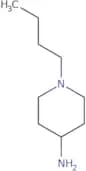
CAS:<p>Versatile small molecule scaffold</p>Fórmula:C11H11NO2Pureza:Min. 95%Peso molecular:189.21 g/mol1-Butylpiperidin-4-amine
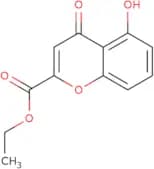
CAS:<p>Versatile small molecule scaffold</p>Fórmula:C9H20N2Pureza:Min. 95%Peso molecular:156.27 g/molEthyl 5-hydroxy-4-oxo-4H-chromene-2-carboxylate
CAS:<p>Ethyl 5-hydroxy-4-oxo-4H-chromene-2-carboxylate is a chromone that is used in the synthesis of other compounds.</p>Fórmula:C12H10O5Pureza:Min. 95%Peso molecular:234.2 g/mol2-{[(Benzyloxy)carbonyl]amino}-4-carbamoylbutanoic acid
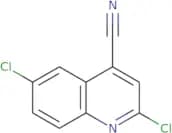
CAS:<p>2-{[(Benzyloxy)carbonyl]amino}-4-carbamoylbutanoic acid is a peptidomimetic that inhibits β-catenin signaling, leading to decreased cell proliferation. This compound has been shown to inhibit the growth of cancer cells and to be effective in preventing an outbreak of corynebacterium. 2-{[(Benzyloxy)carbonyl]amino}-4-carbamoylbutanoic acid was also shown to reduce the production of fatty acids and viral life. This compound is synthetic and can be made by microbial biotransformation or protein–protein interaction. It has been shown that this peptidomimetic binds with high affinity to coronaviruses, which may lead to new treatments for coronavirus infections.</p>Fórmula:C13H16N2O5Pureza:Min. 95%Peso molecular:280.28 g/mol2,6-Dichloroquinoline-4-carbonitrile
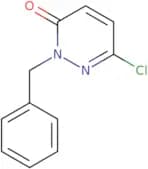
CAS:<p>Versatile small molecule scaffold</p>Fórmula:C10H4Cl2N2Pureza:Min. 95%Peso molecular:223.05 g/mol2-Benzyl-6-chloro-2,3-dihydropyridazin-3-one
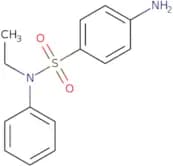
CAS:<p>2-Benzyl-6-chloro-2,3-dihydropyridazin-3-one is a Grignard reagent that reacts with electrophiles to form organometallic compounds. It is used in organic chemistry as a nucleophilic agent in the formation of carbon–carbon bonds and other types of reactions. 2-Benzyl-6-chloro-2,3-dihydropyridazin-3-one can also be used to produce alkyl magnesium bromides from alcohols and chlorides. The transformation of 2,2'-bipyridine into 2,2'-bipyrimidine is one example of this reaction.</p>Fórmula:C11H9ClN2OPureza:Min. 95%Peso molecular:220.65 g/mol4-Amino-N-ethyl-N-phenylbenzenesulfonamide
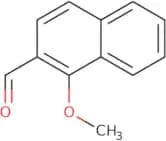
CAS:<p>Versatile small molecule scaffold</p>Fórmula:C14H16N2O2SPureza:Min. 95%Peso molecular:276.36 g/mol1-Methoxynaphthalene-2-carboxaldehyde
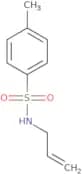
CAS:<p>1-Methoxynaphthalene-2-carboxaldehyde is an organic compound with the formula C11H14O. It is the simplest member of a family of compounds called naphthalenesulfonates, which consists of two fused benzene rings with a sulfonic acid group at each end. 1-Methoxynaphthalene-2-carboxaldehyde has been synthesised by reacting aluminium chloride with zinc chloride in anhydrous conditions. The product can be purified by distillation or recrystallisation from water and ethanol.</p>Fórmula:C12H10O2Pureza:Min. 95%Peso molecular:186.21 g/molN-Allyl-p-toluenesulfonamide
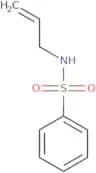
CAS:<p>N-Allyl-p-toluenesulfonamide is a nucleophilic, centrosymmetric molecule that is used as an intermediate in organic synthesis. It can be prepared by refluxing allylstannane with azide and triflic acid. N-Allyl-p-toluenesulfonamide is useful for the preparation of azides and azidoformates because it reacts with alkyl halides to form cyclic products. The chloride group on this molecule makes it a good nucleophile for reactions with other nucleophiles, such as chloride ion or azide ion.</p>Fórmula:C10H13NO2SPureza:Min. 95%Peso molecular:211.28 g/molN-(Prop-2-en-1-yl)benzenesulfonamide
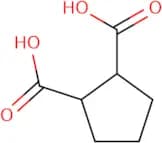
CAS:<p>Versatile small molecule scaffold</p>Fórmula:C9H11NO2SPureza:Min. 95%Peso molecular:197.26 g/molCyclopentane-1,2-dicarboxylic acid
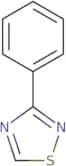
CAS:<p>Cyclopentane-1,2-dicarboxylic acid is a bioactive chemical that contains nitrogen atoms. It has a structural formula of C5H8O4 and an x-ray structure with antibacterial properties. Cyclopentane-1,2-dicarboxylic acid can be found in cocatalyst preparations for organic solvents such as benzene, toluene, and xylene. This compound has been shown to inhibit the growth of bacteria by binding to amines and forming coordination complexes with carboxylate groups on the surface of bacterial cells. The crystal structures of cyclopentane-1,2-dicarboxylic acid have not yet been determined due to its alicyclic nature.</p>Fórmula:C7H10O4Pureza:Min. 95%Peso molecular:158.15 g/mol3-Phenyl-1,2,4-thiadiazole
CAS:<p>3-Phenyl-1,2,4-thiadiazole is a tricyclic compound that has been synthesized in equimolar amounts by reactions of benzene with sulfur and nitric acid. This substance has also been shown to react with a number of other compounds and produce adducts. The reaction of 3-phenyl-1,2,4-thiadiazole with potassium bromide produces an adduct that contains the reactive benzylic bromide ion (3’). 3-Phenyl-1,2,4-thiadiazole is used in organic chemistry as a reagent for the synthesis of dithioesters. It can also be used to study the photochemistry of benzonitrile derivatives.</p>Fórmula:C8H6N2SPureza:Min. 95%Peso molecular:162.21 g/molEthyl 3-phenyl-1,2,4-thiadiazole-5-carboxylate
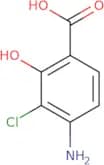
CAS:<p>Versatile small molecule scaffold</p>Fórmula:C11H10N2O2SPureza:Min. 95%Peso molecular:234.28 g/mol4-Amino-3-chloro-2-hydroxybenzoic acid
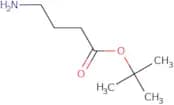
CAS:<p>Versatile small molecule scaffold</p>Fórmula:C7H6ClNO3Pureza:Min. 95%Peso molecular:187.58 g/moltert-Butyl 4-aminobutanoate
CAS:<p>tert-Butyl 4-aminobutanoate is an amine that has been shown to stabilize the natural formyl group of the molecule. It is a nucleophilic reactant, which means it will react with electrophiles. The nucleophilic attack occurs when a nucleophile reacts with an electrophile, leading to the formation of a new bond between the two molecules. Tert-butyl 4-aminobutanoate also has a hydroxymethyl group on its side chain. This hydroxymethyl group can be reduced by pyridoxal phosphate in order to form gamma-aminobutyric acid.</p>Fórmula:C8H17NO2Pureza:Min. 95%Peso molecular:159.23 g/mol5-chlorothiophene-2-carbonitrile
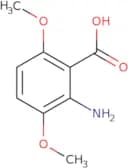
CAS:<p>5-Chlorothiophene-2-carbonitrile is a reactive heterocyclic compound that can be made by the chlorination of thiophene. It can be used as a precursor to other compounds, such as 1,3-dipolar cycloaddition products and 1,3-dioxolanes. 5-Chlorothiophene-2-carbonitrile has been shown to react with isoxazoles in a 1,3-dipolar cycloaddition reaction. This reaction produces dimers that are useful intermediates for the synthesis of pharmaceuticals. 5-Chlorothiophene-2-carbonitrile can also be used in an enantiospecific synthesis of 2,4,5,6 tetrahydropyrimidines. Irradiation of 5 chlorothiophene 2 carbonitrile leads to the formation of the corresponding n oxide or chloride and aldehyde.</p>Fórmula:C5H2ClNSPureza:Min. 95%Peso molecular:143.6 g/mol2-Amino-3,6-dimethoxybenzoic acid
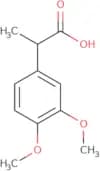
CAS:<p>Versatile small molecule scaffold</p>Fórmula:C9H11NO4Pureza:Min. 95%Peso molecular:197.19 g/mol2-(3,4-Dimethoxyphenyl)propanoic acid
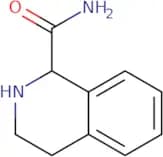
CAS:<p>Versatile small molecule scaffold</p>Fórmula:C11H14O4Pureza:Min. 95%Peso molecular:210.23 g/mol1,2,3,4-Tetrahydroisoquinoline-1-carboxamide
CAS:<p>1,2,3,4-Tetrahydroisoquinoline-1-carboxamide is a solvate that is used in the pharmaceutical industry. It has been shown to be an inhibitor of thromboembolic disorders and is used as a crystalline solid. 1,2,3,4-Tetrahydroisoquinoline-1-carboxamide is a white crystalline solid that can be dissolved in water or methanol. The compound has been shown to inhibit thromboembolic disorders by preventing the oxidation of low density lipoprotein cholesterol and its subsequent aggregation with other molecules.</p>Fórmula:C10H12N2OPureza:Min. 95%Peso molecular:176.21 g/mol2-[(2-Methoxyphenoxy)methyl]benzoic acid
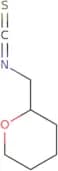
CAS:<p>Versatile small molecule scaffold</p>Fórmula:C15H14O4Pureza:Min. 95%Peso molecular:258.27 g/mol2-(Isothiocyanatomethyl)oxane
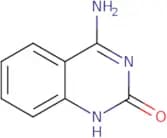
CAS:<p>Versatile small molecule scaffold</p>Fórmula:C7H11NOSPureza:Min. 95%Peso molecular:157.2 g/mol4-Aminoquinazolin-2-ol
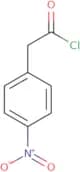
CAS:<p>4-Aminoquinazolin-2-ol is a regiospecific nitrogen nucleophile that can be used to synthesize heterocyclic compounds. It has been shown to have anticancer activity, and can be used as a control agent for cancer. 4-Aminoquinazolin-2-ol is also used in animals to study cell growth and the effects of drugs on cells. It binds to the alkyl group of a cell membrane and reacts with a hydroxyl group on the other side of the membrane, causing it to become more permeable so that sodium ions are allowed into the cell, which leads to an increase in intracellular calcium levels. 4-Aminoquinazolin-2-ol is also able to bind with potassium ion (K+) as a result of its nitrogen nucleophilic character.</p>Fórmula:C8H7N3OPureza:Min. 95%Peso molecular:161.16 g/mol4-Nitro-benzeneacetyl chloride
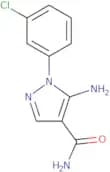
CAS:<p>4-Nitrobenzeneacetyl chloride is an amide with a heterocyclic amine group. It has been shown to have inhibitory activities against the growth of bacteria in acidic conditions, such as ph 3.5, and also inhibits the growth of bacteria in neutral conditions, such as ph 7.4. The functional groups on this compound are chlorides and phenyl groups. This compound does not have any halides or hydrochloric acid present in its structure. Nitrobenzeneacetyl chloride is unsymmetrical and has a benzene ring that is attached to an acetyl group.</p>Fórmula:C8H6ClNO3Pureza:Min. 95%Cor e Forma:SolidPeso molecular:199.59 g/mol5-Amino-1-(3-chlorophenyl)-1H-pyrazole-4-carboxamide
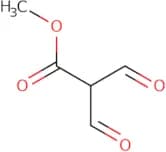
CAS:<p>Versatile small molecule scaffold</p>Fórmula:C10H9ClN4OPureza:Min. 95%Peso molecular:236.66 g/molMethyl 2-formyl-3-oxo-propionate
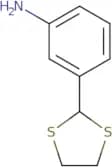
CAS:<p>Methyl 2-formyl-3-oxo-propionate is a reactive chemical that is used to prepare quinolizidines, which are biologically active compounds. It is synthesized from 3-acetylpyridine and formaldehyde in the presence of diborane. The reaction with trifluoroacetic acid leads to the formation of an acid chloride, which can be further reacted with amines to give quinolizidines. This compound has been shown to inhibit adenosine receptor a2a, which may lead to increased blood flow and improved cardiac function.</p>Fórmula:C5H6O4Pureza:Min. 95%Peso molecular:130.1 g/mol3-(1,3-Dithiolan-2-yl)aniline
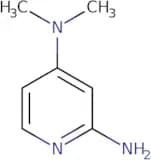
CAS:<p>Versatile small molecule scaffold</p>Fórmula:C9H11NS2Pureza:Min. 95%Peso molecular:197.33 g/mol4-N,4-N-Dimethylpyridine-2,4-diamine
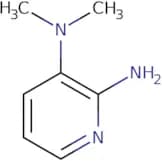
CAS:<p>Versatile small molecule scaffold</p>Fórmula:C7H11N3Pureza:Min. 95%Peso molecular:137.18 g/mol3-N,3-N-Dimethylpyridine-2,3-diamine
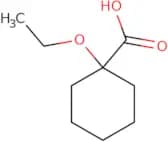
CAS:<p>3-N,3-N-Dimethylpyridine-2,3-diamine (DMPYD) is a pyrrole compound that has been used for the synthesis of aminopyridines. It can be synthesized by reacting 2-aminopyridine with dimethylamine in the presence of an acid catalyst and a base. The resulting molecule contains a pyrrole ring and an amino group. DMPYD binds to DNA through its amino group and is able to inhibit bacterial growth by inhibiting RNA synthesis in the ribosomes of bacteria. This inhibition prevents protein synthesis and leads to cell death.</p>Fórmula:C7H11N3Pureza:Min. 95%Peso molecular:137.18 g/mol1-Ethoxycyclohexane-1-carboxylic acid
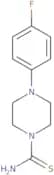
CAS:<p>Versatile small molecule scaffold</p>Fórmula:C9H16O3Pureza:Min. 95%Peso molecular:172.22 g/mol4-(4-Chlorophenyl)piperazine-1-carbothioamide
CAS:<p>Versatile small molecule scaffold</p>Fórmula:C11H14ClN3SPureza:Min. 95%Peso molecular:255.77 g/mol4-(4-Fluorophenyl)piperazine-1-carbothioamide
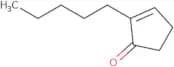
CAS:<p>Versatile small molecule scaffold</p>Fórmula:C11H14FN3SPureza:Min. 95%Peso molecular:239.31 g/mol2-Pentyl-2-cyclopenten-1-one
CAS:<p>2-Pentyl-2-cyclopenten-1-one is a stereoselective reaction product. It is synthesized by reacting cyclopentyl amines with sodium carbonate in acidic solution. The reaction is carried out at room temperature and the optimal reaction time appears to be 18 hours. This compound reacts with chloride to form an acid chloride, which undergoes dehydration to form the desired product. The resulting chemical structures are shown below.</p>Fórmula:C10H16OPureza:Min. 95%Peso molecular:152.24 g/mol2-[2-(4-Methylphenoxy)phenyl]acetic acid
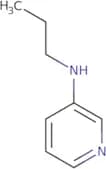
CAS:<p>Versatile small molecule scaffold</p>Fórmula:C15H14O3Pureza:Min. 95%Peso molecular:242.27 g/molN-Propylpyridin-3-amine
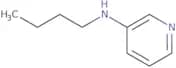
CAS:<p>Versatile small molecule scaffold</p>Fórmula:C8H12N2Pureza:Min. 95%Peso molecular:136.19 g/molN-Butylpyridin-3-amine
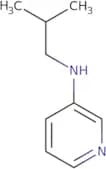
CAS:<p>Versatile small molecule scaffold</p>Fórmula:C9H14N2Pureza:Min. 95%Peso molecular:150.22 g/molN-(2-Methylpropyl)pyridin-3-amine
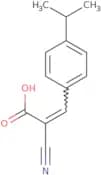
CAS:<p>Versatile small molecule scaffold</p>Fórmula:C9H14N2Pureza:Min. 95%Peso molecular:150.22 g/mol(2Z)-2-Cyano-3-(4-isopropylphenyl)acrylic acid
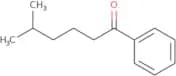
CAS:<p>Versatile small molecule scaffold</p>Fórmula:C13H13NO2Pureza:Min. 95%Peso molecular:215.25 g/mol5-Methyl-1-phenylhexan-1-one
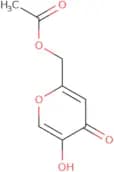
CAS:<p>5-Methyl-1-phenylhexan-1-one is an antiviral agent that inhibits the infectivity of human immunodeficiency virus (HIV). It has been shown to be potent against HIV. The antiviral effect of 5-Methyl-1-phenylhexan-1-one is due to its ability to inhibit the action of HIV reverse transcriptase, which is an enzyme that catalyzes the synthesis of viral DNA from viral RNA. It is a 6 membered heterocycle with aspartyl and cyclopentyl rings. 5-Methyl-1 phenylhexan-1 one has not been tested for mutagenicity or carcinogenicity.</p>Fórmula:C13H18OPureza:Min. 95%Peso molecular:190.28 g/mol(5-Hydroxy-4-oxo-4H-pyran-2-yl)methyl acetate
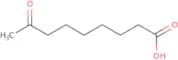
CAS:<p>Versatile small molecule scaffold</p>Fórmula:C8H8O5Pureza:Min. 95%Peso molecular:184.15 g/mol8-Oxononanoic acid
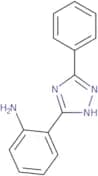
CAS:<p>8-Oxononanoic acid is a fatty acid that is found in the human body. It has been shown to have health effects such as decreasing the risk of cancer and lowering the rate of cardiovascular disease. 8-Oxononanoic acid is a coeluting compound, which means that it shares properties with other molecules. It has been shown to inhibit the growth of cancer cells by inhibiting tyrosinase, β-glucosidase, and lipid biosynthesis. 8-Oxononanoic acid also inhibits the production of lipids by blocking the enzyme acetyl-CoA carboxylase (ACCase). This enzyme catalyzes the conversion of acetyl-CoA into malonyl-CoA, which is then used in fatty acid synthesis.</p>Fórmula:C9H16O3Pureza:Min. 95%Peso molecular:172.22 g/mol2-(5-Phenyl-1H-1,2,4-triazol-3-yl)aniline
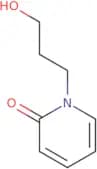
CAS:<p>Versatile small molecule scaffold</p>Fórmula:C14H12N4Pureza:Min. 95%Peso molecular:236.27 g/mol1-(3-Hydroxypropyl)-1,2-dihydropyridin-2-one
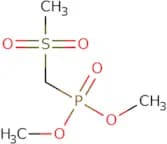
CAS:<p>Versatile small molecule scaffold</p>Fórmula:C8H11NO2Pureza:Min. 95%Peso molecular:153.18 g/molDimethyl (methanesulfonylmethyl)phosphonate
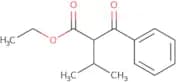
CAS:<p>Versatile small molecule scaffold</p>Fórmula:C4H11O5PSPureza:Min. 95%Peso molecular:202.17 g/molethyl 2-benzoyl-3-methylbutanoate
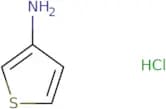
CAS:<p>Versatile small molecule scaffold</p>Fórmula:C14H18O3Pureza:Min. 95%Peso molecular:234.29 g/molThiophen-3-amine hydrochloride
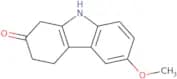
CAS:<p>Thiophen-3-amine hydrochloride is a heterocyclic amine that is structurally related to quinaldine. It has shown nitro transfer and nitroso transfer, which are mechanisms for the formation of nitro and nitrosamines. Thiophen-3-amine hydrochloride has low energy, which makes it an excellent candidate for rechargeable batteries. The amines in this compound have affinity for functional groups on the backbones of polymers and monomers, making them useful in research and optimization.</p>Fórmula:C4H6ClNSPureza:Min. 95%Peso molecular:135.62 g/mol6-Methoxy-1,3,4,9-tetrahydro-carbazol-2-one
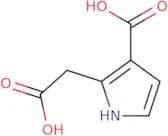
CAS:<p>Versatile small molecule scaffold</p>Fórmula:C13H13NO2Pureza:Min. 95%Peso molecular:215.25 g/mol2-(Carboxymethyl)-1H-pyrrole-3-carboxylic acid
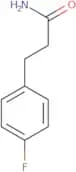
CAS:<p>2-(Carboxymethyl)-1H-pyrrole-3-carboxylic acid (CMPC) is an acid ethyl ester of 2-(carboxymethyl)-1H-pyrrole-3-carboxylic acid. CMPC is a reactive chemical that can be used as a raw material in the preparation of pharmaceuticals. It has anti-inflammatory properties and can be used in the treatment of inflammation, pain, and fever. Hydrolysis of CMPC with triethylamine and chloride yields the corresponding diester, which has anti-inflammatory properties. The hydrated form of CMPC reacts with ethylene to produce antiphlogistic effects, which may be due to its ability to inhibit prostaglandin synthesis.</p>Fórmula:C7H7NO4Pureza:Min. 95%Peso molecular:169.13 g/mol3-(4-Fluorophenyl)propanamide
CAS:<p>Versatile small molecule scaffold</p>Fórmula:C9H10FNOPureza:Min. 95%Peso molecular:167.18 g/mol2-Methylpyrazolo[1,5-a]quinazolin-5(4H)-one
CAS:<p>Versatile small molecule scaffold</p>Fórmula:C11H9N3OPureza:Min. 95%Peso molecular:199.21 g/mol5-(Pyridin-2-yl)-1,3,4-thiadiazol-2-amine
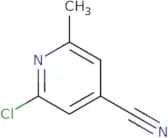
CAS:<p>Versatile small molecule scaffold</p>Fórmula:C7H6N4SPureza:Min. 95%Peso molecular:178.22 g/mol2-Chloro-6-methylpyridine-4-carbonitrile
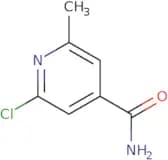
CAS:<p>Versatile small molecule scaffold</p>Fórmula:C7H5ClN2Pureza:Min. 95%Peso molecular:152.58 g/mol2-Chloro-6-methylpyridine-4-carboxamide
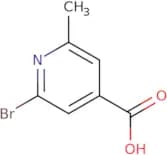
CAS:<p>Versatile small molecule scaffold</p>Fórmula:C7H7ClN2OPureza:Min. 95%Peso molecular:170.59 g/mol2-Bromo-6-methylisonicotinic acid
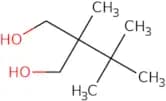
CAS:<p>Versatile small molecule scaffold</p>Fórmula:C7H6BrNO2Pureza:Min. 95%Peso molecular:216.03 g/mol2-tert-Butyl-2-methyl-propane-1,3-diol
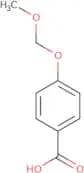
CAS:<p>Versatile small molecule scaffold</p>Fórmula:C8H18O2Pureza:Min. 95%Peso molecular:146.23 g/mol4-(Methoxymethoxy)benzoic acid
CAS:<p>4-(Methoxymethoxy)benzoic acid (MMBA) is a synthetic compound that is used in the synthesis of allyl compounds. MMBA is not chemically reactive and does not undergo any reactions at room temperature. This substance can be activated by adding a nucleophile, such as an alcohol or water molecule, which will then react with the electrophilic carbon atom. This reaction produces epoxide and an alkene product. The most common reaction occurs with methanol, producing methoxypropane, which can then be converted to other organic compounds. Research has shown that MMBA has anticancer properties due to its ability to inhibit cell growth and induce apoptosis in humans.</p>Fórmula:C9H10O4Pureza:Min. 95%Peso molecular:182.17 g/molEthyl N-(2-hydroxyethyl)-N-methylcarbamate
CAS:<p>Versatile small molecule scaffold</p>Fórmula:C6H13NO3Pureza:Min. 95%Peso molecular:147.17 g/mol4,5-Dimethyl-2,3-dihydro-1,3-thiazol-2-one
CAS:<p>Versatile small molecule scaffold</p>Fórmula:C5H7NOSPureza:Min. 95%Peso molecular:129.18 g/mol1-[(Trimethylsilyl)oxy]cyclopentane-1-carbonitrile
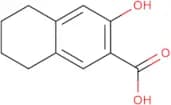
CAS:<p>Versatile small molecule scaffold</p>Fórmula:C9H17NOSiPureza:Min. 95%Peso molecular:183.32 g/mol3-Hydroxy-5,6,7,8-tetrahydronaphthalene-2-carboxylic acid
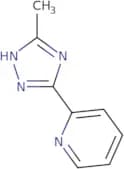
CAS:<p>Versatile small molecule scaffold</p>Fórmula:C11H12O3Pureza:Min. 95%Peso molecular:192.21 g/mol2-(3-Methyl-1H-1,2,4-triazol-5-yl)pyridine
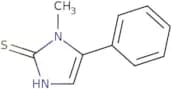
CAS:<p>2-(3-Methyl-1H-1,2,4-triazol-5-yl)pyridine is a cytotoxic compound that can be used to induce cell death. It binds to cisplatin, forming a covalent bond with the sulfur atom of the ligand. This process results in DNA crosslinking and inhibition of RNA synthesis. The compound can also be used as a radioprotective agent. 2-(3-Methyl-1H-1,2,4-triazol-5-yl)pyridine has been shown to have antihemolytic properties and is not toxic to human cells at low concentrations.</p>Fórmula:C8H8N4Pureza:Min. 95%Peso molecular:160.18 g/mol1-Methyl-5-phenyl-1h-imidazole-2-thiol
CAS:<p>1-Methyl-5-phenyl-1H-imidazole-2-thiol (1MPHT) is an experimental drug that has been shown to be an active inhibitor of the enzyme protein kinase C delta (PKCδ). PKCδ is a serine/threonine kinase that is involved in inflammatory bowel disease and hepatic steatosis. 1MPHT has also been shown to inhibit dextran sulfate, a molecule that activates Toll-like receptor 4 (TLR4), which plays a role in the pathogenesis of inflammatory bowel disease. More research needs to be done to determine the effects of 1MPHT on cancer cell viability.</p>Fórmula:C10H10N2SPureza:Min. 95%Peso molecular:190.27 g/mol2-(Methylsulfanyl)-4-phenyl-1H-imidazole
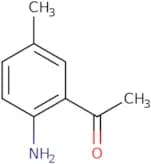
CAS:<p>Versatile small molecule scaffold</p>Fórmula:C10H10N2SPureza:Min. 95%Peso molecular:190.27 g/mol1-(2-Amino-5-methylphenyl)ethan-1-one
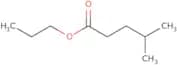
CAS:<p>Versatile small molecule scaffold</p>Fórmula:C9H11NOPureza:Min. 95%Peso molecular:149.19 g/molPropyl 4-methylpentanoate
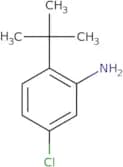
CAS:<p>Propyl 4-methylpentanoate is a carboxylic acid that has been shown to have antibacterial activity. It is used in the production of perfumes and flavors, as well as in the manufacture of polymers. The compound has a taste that is described as slightly acidic with a phenolic odor. It was also found to be effective at inhibiting the growth of bacteria such as Staphylococcus aureus and Streptococcus pyogenes.</p>Fórmula:C9H18O2Pureza:Min. 95%Peso molecular:158.24 g/mol2-tert-Butyl-5-chloroaniline
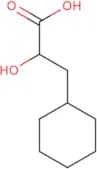
CAS:<p>Versatile small molecule scaffold</p>Fórmula:C10H14ClNPureza:Min. 95%Peso molecular:183.68 g/mol3-Cyclohexyl-2-hydroxypropanoic acid
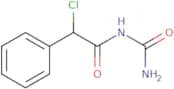
CAS:<p>Versatile small molecule scaffold</p>Fórmula:C9H16O3Pureza:Min. 95%Peso molecular:172.22 g/mol(2-Chloro-2-phenylacetyl)urea
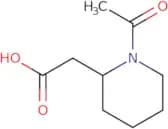
CAS:<p>Clorpheniramine is a drug that blocks the action of acetylcholine in the central and peripheral nervous system. It is used to relieve the symptoms of allergies, such as runny nose and watery eyes, and also to control coughing. Clorpheniramine has been found to be safe for use in children. The drug acts by blocking the receptors for acetylcholine on neuronal cells, which prevents stimulation of these cells by acetylcholine. Clorpheniramine also affects ion channels and prevents normal nerve transmission. Clorpheniramine has a wide spectrum of activity, which includes disorders of the nervous system and ectopic expression in normal tissues. This drug may be prescribed for subtypes of nervous system disorders such as neurodevelopmental disorders, where it has been shown to normalize sodium channel function.</p>Fórmula:C9H9ClN2O2Pureza:Min. 95%Peso molecular:212.63 g/mol2-(1-Acetylpiperidin-2-yl)acetic acid
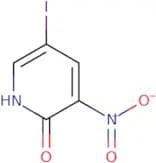
CAS:<p>Versatile small molecule scaffold</p>Fórmula:C9H15NO3Pureza:Min. 95%Peso molecular:185.22 g/mol2-Hydroxy-5-iodo-3-nitropyridine
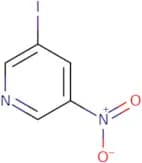
CAS:<p>Versatile small molecule scaffold</p>Fórmula:C5H3IN2O3Pureza:Min. 95%Peso molecular:265.99 g/mol3-Iodo-5-nitropyridine
CAS:<p>Versatile small molecule scaffold</p>Fórmula:C5H3IN2O2Pureza:Min. 95%Peso molecular:249.99 g/mol1-Chloro-5-methylhexan-2-one
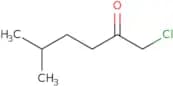
CAS:<p>Versatile small molecule scaffold</p>Fórmula:C7H13ClOPureza:Min. 95%Peso molecular:148.63 g/mol4-(3-Methoxyphenyl)-3,3-dimethylbutanoic acid
CAS:<p>Versatile small molecule scaffold</p>Fórmula:C13H18O3Pureza:Min. 95%Peso molecular:222.28 g/mol2-Phenylindolizine
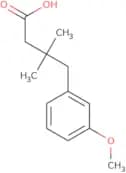
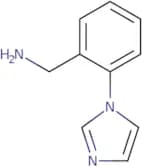
CAS:<p>2-Phenylindolizine is a chemical compound that can be used in the synthesis of other compounds. It has been shown to react with acrylonitrile to form a nitrile, which is an important intermediate in organic chemistry. 2-Phenylindolizine has also been shown to react with benzaldehyde, creating an acetal and a diazo compound. The reaction of 2-phenylindolizine with a chiral electrophile yields two different products. This reaction is highly efficient and can be screened for desirable products using fluorescence and yield measurements.</p>Fórmula:C14H11NPureza:Min. 95%Peso molecular:193.24 g/mol2-Imidazol-1-yl-benzylamine
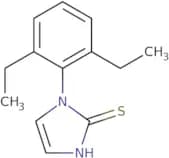
CAS:<p>Versatile small molecule scaffold</p>Fórmula:C10H11N3Pureza:Min. 95%Peso molecular:173.22 g/mol1-(2,6-Diethylphenyl)-1H-imidazole-2-thiol
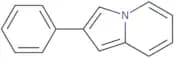
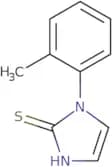
CAS:<p>Versatile small molecule scaffold</p>Fórmula:C13H16N2SPureza:Min. 95%Peso molecular:232.35 g/mol1-(2-methylphenyl)-1H-imidazole-2-thiol
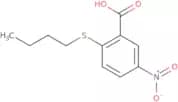
CAS:<p>Versatile small molecule scaffold</p>Fórmula:C10H10N2SPureza:Min. 95%Peso molecular:190.26 g/mol2-(Butylsulfanyl)-5-nitrobenzoic acid
CAS:<p>Versatile small molecule scaffold</p>Fórmula:C11H13NO4SPureza:Min. 95%Peso molecular:255.29 g/mol4,4,5,5-Tetramethyl-2-[2-(thiophen-3-yl)ethenyl]-1,3,2-dioxaborolane
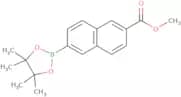
CAS:<p>Versatile small molecule scaffold</p>Fórmula:C12H17BO2SPureza:Min. 95%Peso molecular:236.14 g/molMethyl 6-(tetramethyl-1,3,2-dioxaborolan-2-yl)naphthalene-2-carboxylate
CAS:<p>Versatile small molecule scaffold</p>Fórmula:C18H21BO4Pureza:Min. 95%Peso molecular:312.17 g/mol2H,4H,5H,6H,7H-Pyrrolo[3,4-c]pyridin-4-one
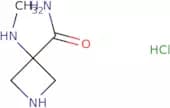
CAS:<p>Versatile small molecule scaffold</p>Fórmula:C7H8N2OPureza:Min. 95%Peso molecular:136.15 g/mol3-(Methylamino)azetidine-3-carboxamide hydrochloride
CAS:<p>Versatile small molecule scaffold</p>Fórmula:C5H12ClN3OPureza:Min. 95%Peso molecular:165.62 g/mol3-(Dimethylamino)azetidine-3-carboxamide hydrochloride
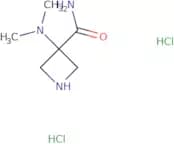
CAS:<p>Versatile small molecule scaffold</p>Fórmula:C6H15Cl2N3OPureza:Min. 95%Peso molecular:216.11 g/mol3-Aminoazetidine-3-carboxamide hydrochloride
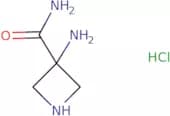
CAS:<p>Versatile small molecule scaffold</p>Fórmula:C4H10ClN3OPureza:Min. 95%Peso molecular:151.59 g/mol2-[1-Methyl-3-(trifluoromethyl)-1H-pyrazol-5-yl]ethan-1-amine
CAS:<p>Versatile small molecule scaffold</p>Fórmula:C7H10F3N3Pureza:Min. 95%Peso molecular:193.17 g/mol3-[(1H-1,2,3-Triazol-1-yl)methyl]benzoic acid
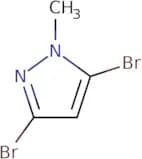
CAS:<p>Versatile small molecule scaffold</p>Fórmula:C10H9N3O2Pureza:Min. 95%Peso molecular:203.2 g/mol3,5-dibromo-1-methyl-1H-pyrazole
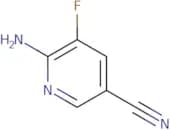
CAS:<p>Versatile small molecule scaffold</p>Fórmula:C4H4Br2N2Pureza:Min. 95%Peso molecular:239.9 g/mol6-Amino-5-fluoronicotinonitrile
CAS:<p>Versatile small molecule scaffold</p>Fórmula:C6H4FN3Pureza:Min. 95%Peso molecular:137.11 g/mol3,4-Dihydro-2H-benzo[b][1,4]oxazine-7-boronic acid pinacol ester
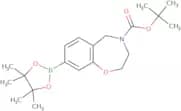
CAS:<p>Versatile small molecule scaffold</p>Fórmula:C14H20BNO3Pureza:Min. 95%Peso molecular:261.12 g/moltert-Butyl 8-(tetramethyl-1,3,2-dioxaborolan-2-yl)-2,3,4,5-tetrahydro-1,4-benzoxazepine-4-carboxylate
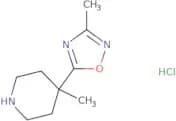
CAS:<p>Versatile small molecule scaffold</p>Fórmula:C20H30BNO5Pureza:Min. 95%Peso molecular:375.3 g/mol4-Methyl-4-(3-methyl-1,2,4-oxadiazol-5-yl)piperidine hydrochloride
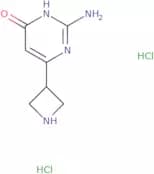
CAS:<p>Versatile small molecule scaffold</p>Fórmula:C9H16ClN3OPureza:Min. 95%Peso molecular:217.69 g/mol2-Amino-6-(azetidin-3-yl)pyrimidin-4-ol dihydrochloride
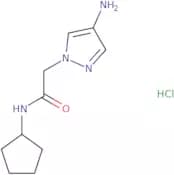
CAS:<p>Versatile small molecule scaffold</p>Fórmula:C7H12Cl2N4OPureza:Min. 95%Peso molecular:239.1 g/mol2-(4-Aminopyrazol-1-yl)-N-cyclopentylacetamide hydrochloride
CAS:<p>Versatile small molecule scaffold</p>Fórmula:C10H17ClN4OPureza:Min. 95%Peso molecular:244.72 g/mol4-{4-[(tert-Butoxy)carbonyl]piperazin-2-yl}benzoic acid
CAS:<p>Versatile small molecule scaffold</p>Fórmula:C16H22N2O4Pureza:Min. 95%Peso molecular:306.36 g/mol




![2-{[(Benzyloxy)carbonyl]amino}-4-carbamoylbutanoic acid](/_next/image/?url=https%3A%2Fstatic.cymitquimica.com%2Fproducts%2F3D%2Fthumb-webp%2FACA51614.webp&w=3840&q=75)


![2-[(2-Methoxyphenoxy)methyl]benzoic acid](/_next/image/?url=https%3A%2Fstatic.cymitquimica.com%2Fproducts%2F3D%2Fthumb-webp%2FACA45688.webp&w=3840&q=75)

![2-[2-(4-Methylphenoxy)phenyl]acetic acid](/_next/image/?url=https%3A%2Fstatic.cymitquimica.com%2Fproducts%2F3D%2Fthumb-webp%2FABA56303.webp&w=3840&q=75)
![2-Methylpyrazolo[1,5-a]quinazolin-5(4H)-one](/_next/image/?url=https%3A%2Fstatic.cymitquimica.com%2Fproducts%2F3D%2Fthumb-webp%2FABA46850.webp&w=3840&q=75)



![1-[(Trimethylsilyl)oxy]cyclopentane-1-carbonitrile](/_next/image/?url=https%3A%2Fstatic.cymitquimica.com%2Fproducts%2F3D%2Fthumb-webp%2FABA43835.webp&w=3840&q=75)

![4,4,5,5-Tetramethyl-2-[2-(thiophen-3-yl)ethenyl]-1,3,2-dioxaborolane](/_next/image/?url=https%3A%2Fstatic.cymitquimica.com%2Fproducts%2F3D%2Fthumb-webp%2FLEB98775.webp&w=3840&q=75)
![2H,4H,5H,6H,7H-Pyrrolo[3,4-c]pyridin-4-one](/_next/image/?url=https%3A%2Fstatic.cymitquimica.com%2Fproducts%2F3D%2Fthumb-webp%2FLEB99047.webp&w=3840&q=75)
![2-[1-Methyl-3-(trifluoromethyl)-1H-pyrazol-5-yl]ethan-1-amine](/_next/image/?url=https%3A%2Fstatic.cymitquimica.com%2Fproducts%2F3D%2Fthumb-webp%2FLEC00361.webp&w=3840&q=75)
![3-[(1H-1,2,3-Triazol-1-yl)methyl]benzoic acid](/_next/image/?url=https%3A%2Fstatic.cymitquimica.com%2Fproducts%2F3D%2Fthumb-webp%2FLEC00421.webp&w=3840&q=75)
![3,4-Dihydro-2H-benzo[b][1,4]oxazine-7-boronic acid pinacol ester](/_next/image/?url=https%3A%2Fstatic.cymitquimica.com%2Fproducts%2F3D%2Fthumb-webp%2FLEC11064.webp&w=3840&q=75)
![4-{4-[(tert-Butoxy)carbonyl]piperazin-2-yl}benzoic acid](/_next/image/?url=https%3A%2Fstatic.cymitquimica.com%2Fproducts%2F3D%2Fthumb-webp%2FLEC11226.webp&w=3840&q=75)