Building Blocks
Subcategorias de "Building Blocks"
- Ácidos Borónicos e Derivados de Ácido Borónico(5.778 produtos)
- Building Blocks Quirais(1.243 produtos)
- Building Blocks Hidrocarbonetos(6.098 produtos)
- Building Blocks orgânicos(61.042 produtos)
Foram encontrados 204339 produtos de "Building Blocks"
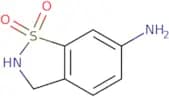
1,1-Dioxo-2,3-dihydro-1,2-benzothiazol-6-amine
CAS:Versatile small molecule scaffold
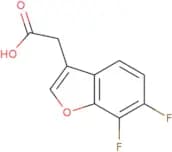
Fórmula:C7H8N2O2SPureza:Min. 95%Peso molecular:184.22 g/mol2-(6,7-Difluoro-1-benzofuran-3-yl)acetic acid
CAS:Versatile small molecule scaffold
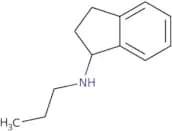
Fórmula:C10H6F2O3Pureza:Min. 95%Peso molecular:212.15 g/molN-Propyl-2,3-dihydro-1H-inden-1-amine
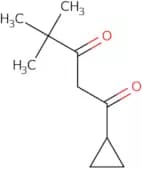
CAS:Produto ControladoVersatile small molecule scaffoldFórmula:C12H17NPureza:Min. 95%Peso molecular:175.27 g/mol1-Cyclopropyl-4,4-dimethylpentane-1,3-dione
CAS:Versatile small molecule scaffold
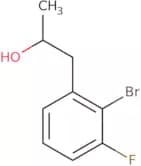
Fórmula:C10H16O2Pureza:Min. 95%Peso molecular:168.23 g/mol1-(2-Bromo-3-fluorophenyl)propan-2-ol
CAS:Versatile small molecule scaffoldFórmula:C9H10BrFOPureza:Min. 95%Peso molecular:233.08 g/molRef: 3D-UFC04202
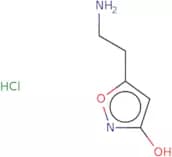
Produto descontinuado5-(2-Aminoethyl)-1,2-oxazol-3-ol hydrochloride
CAS:Versatile small molecule scaffold
Fórmula:C5H9ClN2O2Pureza:Min. 95%Peso molecular:164.6 g/mol1-[2-(4-Methoxyphenyl)ethyl]imidazolidine-2,4,5-trione
CAS:Versatile small molecule scaffold
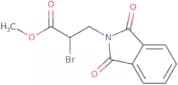
Fórmula:C12H12N2O4Pureza:Min. 95%Peso molecular:248.23 g/molMethyl 2-bromo-3-(1,3-dioxo-2,3-dihydro-1H-isoindol-2-yl)propanoate
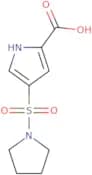
CAS:Versatile small molecule scaffoldFórmula:C12H10BrNO4Pureza:Min. 95%Peso molecular:312.12 g/mol4-(Pyrrolidine-1-sulfonyl)-1H-pyrrole-2-carboxylic acid
CAS:Versatile small molecule scaffoldFórmula:C9H12N2O4SPureza:Min. 95%Peso molecular:244.27 g/mol2-[(4-Aminophenyl)sulfanyl]-5-chlorobenzonitrile
CAS:Versatile small molecule scaffold
Fórmula:C13H9ClN2SPureza:Min. 95%Peso molecular:260.74 g/mol[2-(3-Methoxyphenyl)ethyl][(trimethyl-1H-pyrazol-4-yl)methyl]amine
CAS:Versatile small molecule scaffold
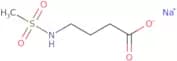
Fórmula:C16H23N3OPureza:Min. 95%Peso molecular:273.37 g/molSodium 4-methanesulfonamidobutanoate
CAS:Versatile small molecule scaffold
Fórmula:C5H10NNaO4SPureza:Min. 95%Peso molecular:203.19 g/moltert-Butyl 4-[(aminocarbamothioyl)amino]piperidine-1-carboxylate
CAS:Versatile small molecule scaffold
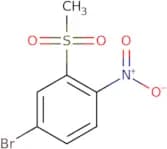
Fórmula:C11H22N4O2SPureza:Min. 95%Peso molecular:274.4 g/mol4-Bromo-2-methanesulfonyl-1-nitrobenzene
CAS:Versatile small molecule scaffold
Fórmula:C7H6BrNO4SPureza:Min. 95%Peso molecular:280.1 g/mol3-[(Pyridin-4-yl)methyl]-1,2,4-oxadiazol-5-amine
CAS:Versatile small molecule scaffold
Fórmula:C8H8N4OPureza:Min. 95%Peso molecular:176.18 g/mol2-[Ethyl(propan-2-yl)amino]ethan-1-ol
CAS:Produto ControladoVersatile small molecule scaffold
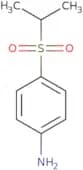
Fórmula:C7H17NOPureza:Min. 95%Peso molecular:131.22 g/mol4-(Propane-2-sulfonyl)aniline
CAS:Versatile small molecule scaffold
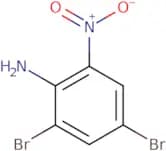
Fórmula:C9H13NO2SPureza:Min. 95%Peso molecular:199.27 g/mol2,4-Dibromo-6-nitroaniline
CAS:2,4-Dibromo-6-nitroaniline is a nitro compound that has been used in the production of dyes. It is also used as a component in the synthesis of other organic compounds. 2,4-Dibromo-6-nitroaniline can be produced by electrolysis of an acid solution containing radical cations and benzene. The radical cations are formed by proton transfer from the acid to the benzene, followed by electron transfer from benzene to the electrode. This process results in the formation of nitro groups on the benzene ring, which undergoes oxidation to form 2,4-dibromo-6-nitroaniline. The cyclic voltammetry shows that this process occurs via two pathways: one with a fast rate and one with a slow rate. The mechanism for this reaction is not yet known.
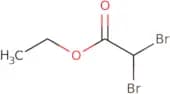
Fórmula:C6H4Br2N2O2Pureza:Min. 95%Peso molecular:295.92 g/molAcetic acid, dibromo-, ethyl ester
CAS:Acetic acid, dibromo-, ethyl ester is a reactive molecule that can be used as a nucleophilic substituent. It has hydroxyl group and ruthenium complex. It is a particle that can be used in the production of monoclonal antibodies. Acetic acid, dibromo-, ethyl ester also has viscosity and polycarboxylic acid. This chemical reacts with β-unsaturated ketones to form polymerization initiator. Acetic acid, dibromo-, ethyl ester also has carbonyl group and monoclonal antibodies. Acetic acid, dibromo-, ethyl ester can be conjugated with ethyl bromoacetate to produce conjugates.
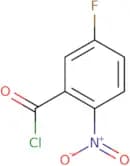
Fórmula:C4H6Br2O2Pureza:Min. 95%Peso molecular:245.9 g/mol5-Fluoro-2-nitrobenzoyl chloride
CAS:5-Fluoro-2-nitrobenzoyl chloride is a conformationally locked macrocyclic compound that has been synthesized by solid phase synthesis. It is found in two conformational states and can be made to switch between these two states by applying a force to the molecule. This conformation can be controlled by changing the side chain of 5-fluoro-2-nitrobenzoyl chloride, which can be done experimentally. The conformational behavior of this macrocycle was studied using molecular dynamics simulations and it was found that there are four possible conformations for the molecule. The conformations with different side chains were found to have different energies, which could be used as a measure of their relative stability.
Fórmula:C7H3ClFNO3Pureza:Min. 95%Peso molecular:203.55 g/mol2-{5-Methylimidazo[1,2-a]pyridin-2-yl}morpholine
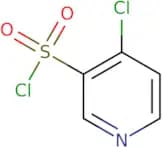
CAS:Versatile small molecule scaffoldFórmula:C12H15N3OPureza:Min. 95%Peso molecular:217.27 g/mol4-chloropyridine-3-sulfonyl chloride
CAS:4-Chloropyridine-3-sulfonyl chloride is a thrombin inhibitor that has been discovered through the use of in vitro screening methods. It is a small molecule with lipophilic properties and oral bioavailability. This compound inhibits thrombin by binding to the active site of the enzyme, which prevents the formation of an enzyme-thrombin complex. The discovery was made using a pharmacophore-based approach and further modifications were made to improve its potency and increase its lipophilicity. This compound also exhibits an acceptable level of bioavailability in vivo, which may be due to its high solubility in water.Fórmula:C5H3Cl2NO2SPureza:Min. 95%Peso molecular:212.1 g/mol1-Bromo-4-cyclopentylbenzene
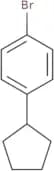
CAS:1-Bromo-4-cyclopentylbenzene (1-BCPB) is a chlorinated aromatic compound that can be synthesized by reacting 1-bromo-4-chlorobenzene and cyclopentylmagnesium bromide. The reaction sequence begins with the addition of hydrochloric acid to the first reactant, followed by magnesium chloride and ether. The mixture is heated to produce a liquid solution of ethylhexyloxy pyridine, which reacts with the second reactant in a sequence that leads to the desired product. 1-BCPB is used as an intermediate in organic synthesis. It has been shown to have moderate interaction with paraldehyde and pyridinium salts at room temperature, but it does not react with cycloalkyls or pyridinium salts at elevated temperatures.
Fórmula:C11H13BrPureza:Min. 95%Peso molecular:225.13 g/mol1-(Propan-2-yl)-N-[1-(propan-2-yl)-4,5,6,7-tetrahydro-1H-indazol-5-yl]-4,5,6,7-tetrahydro-1H-indazol-5-amine
CAS:Versatile small molecule scaffold
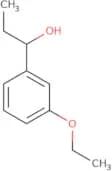
Fórmula:C20H31N5Pureza:Min. 95%Peso molecular:341.5 g/mol1-(3-Ethoxyphenyl)propan-1-ol
CAS:Versatile small molecule scaffold
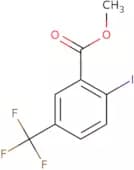
Fórmula:C11H16O2Pureza:Min. 95%Peso molecular:180.24 g/molMethyl 2-iodo-5-(trifluoromethyl)benzoate
CAS:Versatile small molecule scaffold
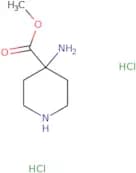
Fórmula:C9H6F3IO2Pureza:Min. 95%Peso molecular:330.04 g/molMethyl 4-aminopiperidine-4-carboxylate dihydrochloride
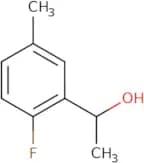
CAS:Versatile small molecule scaffoldFórmula:C7H16Cl2N2O2Pureza:Min. 95%Peso molecular:231.12 g/mol1-(2-Fluoro-5-methylphenyl)ethan-1-ol
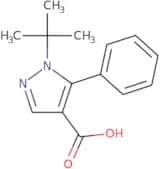
CAS:Versatile small molecule scaffoldFórmula:C9H11FOPureza:Min. 95%Peso molecular:154.18 g/mol1-tert-Butyl-5-phenyl-1H-pyrazole-4-carboxylic acid
CAS:Versatile small molecule scaffold
Fórmula:C14H16N2O2Pureza:Min. 95%Peso molecular:244.29 g/mol3-(Aminomethyl)-2,2-difluoropentane hydrochloride
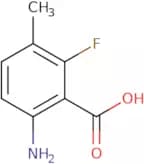
CAS:Versatile small molecule scaffoldFórmula:C6H14ClF2NPureza:Min. 95%Peso molecular:173.6 g/mol6-Amino-2-fluoro-3-methylbenzoic acid
CAS:Versatile small molecule scaffold
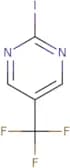
Fórmula:C8H8FNO2Pureza:Min. 95%Peso molecular:169.15 g/mol2-Iodo-5-(trifluoromethyl)pyrimidine
CAS:Versatile small molecule scaffold
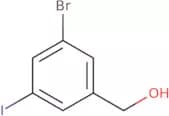
Fórmula:C5H2F3IN2Pureza:Min. 95%Peso molecular:273.98 g/mol(3-bromo-5-iodophenyl)methanol
CAS:Versatile small molecule scaffold
Fórmula:C7H6BrIOPureza:Min. 95%Peso molecular:312.9 g/molPyrrolo[1,2-b]pyridazin-4(1H)-one
CAS:Versatile small molecule scaffold
Fórmula:C7H6N2OPureza:Min. 95%Peso molecular:134.14 g/mol3-(3-Amino-1H-pyrazol-1-yl)pyrrolidin-2-one
CAS:Versatile small molecule scaffold
Fórmula:C7H10N4OPureza:Min. 95%Peso molecular:166.18 g/molRef: 3D-NKD27328
Produto descontinuado4,5,6,7-Tetrahydropyrazolo[1,5-a]pyrazine dihydrochloride
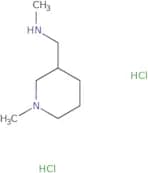
CAS:Versatile small molecule scaffoldFórmula:C6H11Cl2N3Pureza:Min. 95%Peso molecular:196.08 g/molN-Methyl-1-(1-methylpiperidin-3-yl)methanamine
CAS:Versatile small molecule scaffoldFórmula:C8H18N2Pureza:Min. 95%Peso molecular:142.25 g/mol2-Bromo-3,3,3-trifluoro-1-propene
CAS:Produto Controlado2-Bromo-3,3,3-trifluoro-1-propene is a chemical compound that has been synthesized in an asymmetric reaction. The reactant is bromopropane and the product is 2,2,2-trifluoropropene. The methylene group on the propene molecule is activated by the nucleophilic attack of a fluoride ion from hydrogen fluoride to form a cavity with a highly strained bond. The kinetic study of this reaction revealed that the activation energy for the reaction is 42 kJ/mol. Palladium-catalyzed coupling reactions are catalyzed by palladium and require nonpolar solvents such as toluene or dichloromethane. This type of reaction has been shown to be exothermic with an isolated yield of 1%.
Fórmula:C3H2BrF3Pureza:Min. 95%Cor e Forma:Colorless PowderPeso molecular:174.95 g/molPiperyline
CAS:Piperyline is an alkanoic acid that has shown to be effective against skin cancer. It also has antimicrobial properties, which may be due to its ability to bind metal ions and form polymeric compounds. Piperyline inhibits microbial growth by inhibiting the synthesis of proteins and nucleic acids. The antimicrobial activity is related to its cationic polymerization with hydroxyl groups, which forms a structure that can inhibit microbial enzymes and disrupt microbial cell membranes. This compound also interacts with the skin's natural lipids, making it difficult for microorganisms to attach and grow on the skin. Piperyline is synthesized in organic chemistry laboratories as an amide precursor of other pharmaceuticals such as penicillin.
Fórmula:C16H17NO3Pureza:Min. 95%Peso molecular:271.31 g/mol

![1-[2-(4-Methoxyphenyl)ethyl]imidazolidine-2,4,5-trione](/_next/image/?url=https%3A%2Fstatic.cymitquimica.com%2Fproducts%2F3D%2Fthumb-webp%2FUTB40814.webp&w=3840&q=75)
![2-[(4-Aminophenyl)sulfanyl]-5-chlorobenzonitrile](/_next/image/?url=https%3A%2Fstatic.cymitquimica.com%2Fproducts%2F3D%2Fthumb-webp%2FVJC36571.webp&w=3840&q=75)
![[2-(3-Methoxyphenyl)ethyl][(trimethyl-1H-pyrazol-4-yl)methyl]amine](/_next/image/?url=https%3A%2Fstatic.cymitquimica.com%2Fproducts%2F3D%2Fthumb-webp%2FVWB92946.webp&w=3840&q=75)
![tert-Butyl 4-[(aminocarbamothioyl)amino]piperidine-1-carboxylate](/_next/image/?url=https%3A%2Fstatic.cymitquimica.com%2Fproducts%2F3D%2Fthumb-webp%2FXAD88015.webp&w=3840&q=75)
![3-[(Pyridin-4-yl)methyl]-1,2,4-oxadiazol-5-amine](/_next/image/?url=https%3A%2Fstatic.cymitquimica.com%2Fproducts%2F3D%2Fthumb-webp%2FYZB21426.webp&w=3840&q=75)
![2-[Ethyl(propan-2-yl)amino]ethan-1-ol](/_next/image/?url=https%3A%2Fstatic.cymitquimica.com%2Fproducts%2F3D%2Fthumb-webp%2FCAA89361.webp&w=3840&q=75)
![2-{5-Methylimidazo[1,2-a]pyridin-2-yl}morpholine](/_next/image/?url=https%3A%2Fstatic.cymitquimica.com%2Fproducts%2F3D%2Fthumb-webp%2FHKC66896.webp&w=3840&q=75)
![1-(Propan-2-yl)-N-[1-(propan-2-yl)-4,5,6,7-tetrahydro-1H-indazol-5-yl]-4,5,6,7-tetrahydro-1H-indaz…](/_next/image/?url=https%3A%2Fstatic.cymitquimica.com%2Fproducts%2F3D%2Fthumb-webp%2FJDC14931.webp&w=3840&q=75)

![Pyrrolo[1,2-b]pyridazin-4(1H)-one](/_next/image/?url=https%3A%2Fstatic.cymitquimica.com%2Fproducts%2F3D%2Fthumb-webp%2FNKB72026.webp&w=3840&q=75)

![4,5,6,7-Tetrahydropyrazolo[1,5-a]pyrazine dihydrochloride](/_next/image/?url=https%3A%2Fstatic.cymitquimica.com%2Fproducts%2F3D%2Fthumb-webp%2FQGA89407.webp&w=3840&q=75)