Building Blocks
Subcategorias de "Building Blocks"
- Ácidos Borónicos e Derivados de Ácido Borónico(5.784 produtos)
- Building Blocks Quirais(1.244 produtos)
- Building Blocks Hidrocarbonetos(6.105 produtos)
- Building Blocks orgânicos(61.076 produtos)
Foram encontrados 205454 produtos de "Building Blocks"
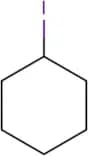
Iodocyclohexane
CAS:Iodocyclohexane is an antimicrobial agent that has the chemical formula CHClI. It is a colorless, volatile liquid which has been shown to have some antibacterial properties. Iodocyclohexane is not toxic when applied externally to the skin and has been used in medical devices such as eye drops, ointments, and ear drops. Iodocyclohexane is also used in agriculture as a fungicide. The chemical structure of iodocyclohexane includes a hydroxyl group (-OH) and a nitrogen atom (N). These two groups make it more resistant to degradation by bacteria or fungi. The presence of these two groups also provides iodocyclohexane with biological properties such as the ability to inhibit bacterial growth and prevent the formation of resistant mutant strains.
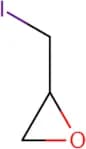
Fórmula:C6H11IPureza:Min. 95%Peso molecular:210.06 g/mol2-(Iodomethyl)oxirane
CAS:2-(Iodomethyl)oxirane is a chemical compound that contains a hydroxyl group, two nitrogen atoms, and a single hydrochloric acid molecule. It is not soluble in water and is only slightly soluble in organic solvents. 2-(Iodomethyl)oxirane can be used to remove pollutants from wastewater. This chemical reacts with the carboxylic acid groups on the pollutant molecules to form an ester. The ester can then be broken down by enzymes or by heating it to produce the original hydroxy group and carboxylic acid. 2-(Iodomethyl)oxirane has been shown to react with aliphatic hydrocarbons, naphthalene, fatty acids, alkynyl groups, alkanoic acids, and carbonyl groups.
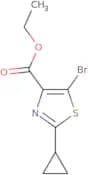
Fórmula:C3H5IOPureza:Min. 95%Peso molecular:183.98 g/molEthyl 5-bromo-2-cyclopropyl-1,3-thiazole-4-carboxylate
CAS:Versatile small molecule scaffold
Fórmula:C9H10BrNO2SPureza:Min. 95%Peso molecular:276.15 g/mol(Dimethyl-1,2-thiazol-4-yl)methanol
CAS:Versatile small molecule scaffold
Fórmula:C6H9NOSPureza:Min. 95%Peso molecular:143.21 g/molMethyl 5-methyl-2-oxo-2,3-dihydro-1H-imidazole-4-carboxylate
CAS:Versatile small molecule scaffoldFórmula:C6H8N2O3Pureza:Min. 95%Peso molecular:156.14 g/mol3-(2-Chloroethyl)-5,5-dimethylimidazolidine-2,4-dione
CAS:Versatile small molecule scaffold
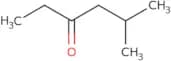
Fórmula:C7H11ClN2O2Pureza:Min. 95%Peso molecular:190.63 g/molEthyl isobutyl ketone
CAS:Ethyl isobutyl ketone, also known as acetone, belongs to the group of aliphatic ketones. It is a colorless and volatile liquid that has a sweet odor. Ethyl isobutyl ketone can be used in the synthesis of pharmaceuticals, dyes, and perfumes. In addition to this, it has shown to have properties of a solvent in organic chemistry and as an active oxygen source in electrochemical impedance spectroscopy. This product also has functional groups such as hydroxy and carbonyl groups that are responsible for its solvency in water and its viscosity. Nitro and hydroxyl groups on the other hand are responsible for its solvency in water vapor.
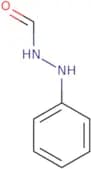
Fórmula:C7H14OPureza:Min. 95%Peso molecular:114.19 g/molN'-Phenylcarbohydrazide
CAS:N'-Phenylcarbohydrazide is an anion that binds to the nitrogen atom in the ammonium ion. It can be hydrolysed by a feedback inhibition mechanism. This compound has been used as a precursor for various analogues, often those of carbonyl compounds. N'-Phenylcarbohydrazide is also used as a reagent in organic synthesis and has been shown to inhibit bacterial growth when used at high concentrations.
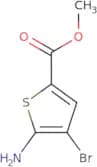
Fórmula:C7H8N2OPureza:Min. 95%Peso molecular:136.15 g/molMethyl 5-amino-4-bromothiophene-2-carboxylate
CAS:Versatile small molecule scaffold
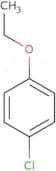
Fórmula:C6H6BrNO2SPureza:Min. 95%Peso molecular:236.09 g/mol4-Chlorophenetole
CAS:4-Chlorophenetole is a colorless gas with a pungent odor that is soluble in water. It is used as an intermediate for organic synthesis, being converted to piperidine in the presence of sodium formate and hydrogen chloride. 4-Chlorophenetole can be prepared by reduction of naphthalene with sodium and ethylene or by treatment with sodium metal. 4-Chlorophenetole has been used as an insecticide but its toxicity to mammals has made it less desirable than other compounds. Its use as a fumigant has decreased due to its continued production of chlorides, which are toxic to humans.
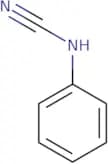
4-Chlorophenetole also reacts with dipolar molecules such as chlorides and gaseous chlorine to produce a constant emission of light at visible wavelengths (λ=548 nm).Fórmula:C8H9ClOPureza:Min. 95%Peso molecular:156.61 g/molN-Phenylcyanamide
CAS:N-Phenylcyanamide is a nitrogen-containing compound that has been shown to have biological properties. It binds to the mitochondria and inhibits the mitochondrial membrane potential, which is required for cell division, leading to the death of cancer cells in cervical cancer. N-Phenylcyanamide also reacts with human serum and forms a crystalline product, which has been shown to be reactive in solution. The structure of this product is determined by crystallography.
Fórmula:C7H6N2Pureza:Min. 95%Peso molecular:118.14 g/mol3-(4-Ethylphenyl)butanoic acid
CAS:Versatile small molecule scaffold
Fórmula:C12H16O2Pureza:Min. 95%Peso molecular:192.25 g/mol(3-Chlorophenyl)(2-methoxyphenyl)methanamine
CAS:Versatile small molecule scaffold
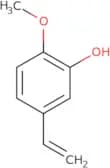
Fórmula:C14H14ClNOPureza:Min. 95%Peso molecular:247.72 g/mol5-Ethenyl-2-methoxyphenol
CAS:5-Ethenyl-2-methoxyphenol is a volatile compound that has been isolated from the bark of the cinnamon tree. It has shown anticancer activities "in vitro" and "in vivo". 5-Ethenyl-2-methoxyphenol has been shown to be demethylated by cytochrome P450 enzymes, which may result in its antitumor activity. This active compound can also be detected in postharvested fruit and vegetables as well as processed foods such as apple juice, tomato sauce, and dried fruits. 5-Ethenyl-2-methoxyphenol is responsible for the characteristic flavor of cinnamon, so it is often used as a flavoring agent in food processing.
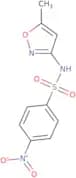
Fórmula:C9H10O2Pureza:Min. 95%Cor e Forma:PowderPeso molecular:150.17 g/mol4-Nitro-sulfamethoxazole
CAS:Please enquire for more information about 4-Nitro-sulfamethoxazole including the price, delivery time and more detailed product information at the technical inquiry form on this page
Fórmula:C10H9N3O5SPureza:Min. 95%Cor e Forma:PowderPeso molecular:283.26 g/molRef: 3D-FN182590
Produto descontinuado6-Bromoimidazo[1,2-a]pyridin-8-ol dihydrochloride
CAS:Versatile small molecule scaffold
Fórmula:C7H7BrCl2N2OPureza:Min. 95%Peso molecular:285.95 g/mol2-Methyl-2-[(trimethylsilyl)oxy]propanamide
CAS:Versatile small molecule scaffold
Fórmula:C7H17NO2SiPureza:Min. 95%Peso molecular:175.3 g/mol(5-Amino-2,2-dimethyl-1,3-dioxan-5-yl)methanol
CAS:Versatile small molecule scaffold
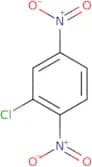
Fórmula:C7H15NO3Pureza:Min. 95%Peso molecular:161.2 g/mol2-Chloro-1,4-dinitrobenzene
CAS:Versatile small molecule scaffold
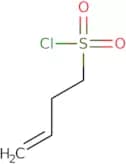
Fórmula:C6H3ClN2O4Pureza:Min. 95%Peso molecular:202.55 g/mol3-Butene-1-sulfonyl Chloride
CAS:3-Butene-1-sulfonyl chloride is a reagent that is used in the synthesis of organic compounds. It is a functional group that yields metathesis reactions, which are used in chemistry and biology. 3-Butene-1-sulfonyl chloride can be used as an inhibitor to stop the activity of thrombin, which plays an important role in blood coagulation. This compound has also been shown to have potential against cancer cells and other diseases because it has been synthesized with a spacer and linker to create a cyclic biomolecular that inhibits protein synthesis by binding to ribosomes. The metathesis reaction occurs when two different molecules are mixed together and react with each other through the formation of new bonds. The spacer is a synthetic molecule that separates the linker from the functional group on one side of the molecule, while the linker connects to another functional group on the other side of the molecule. Cyclisation refers to
Fórmula:C4H7ClO2SPureza:Min. 95%Peso molecular:154.62 g/mol





![6-Bromoimidazo[1,2-a]pyridin-8-ol dihydrochloride](/_next/image/?url=https%3A%2Fstatic.cymitquimica.com%2Fproducts%2F3D%2Fthumb-webp%2FEFC35848.webp&w=3840&q=75)
![2-Methyl-2-[(trimethylsilyl)oxy]propanamide](/_next/image/?url=https%3A%2Fstatic.cymitquimica.com%2Fproducts%2F3D%2Fthumb-webp%2FEFC36009.webp&w=3840&q=75)