Building Blocks
Subcategorias de "Building Blocks"
- Ácidos Borónicos e Derivados de Ácido Borónico(5.778 produtos)
- Building Blocks Quirais(1.243 produtos)
- Building Blocks Hidrocarbonetos(6.098 produtos)
- Building Blocks orgânicos(61.038 produtos)
Foram encontrados 205191 produtos de "Building Blocks"
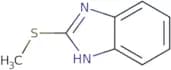
2-(Methylthio)benzimidazole
CAS:2-(Methylthio)benzimidazole (MTBZ) is a diazonium salt that is used as a reagent for the introduction of the methylthio group into organic compounds. This reagent can be prepared by reacting sodium carbonate with trifluoroacetic acid in the presence of metal carbonyls to yield a reactive intermediate, which then reacts with diazonium salts. MTBZ is also known to inhibit cytochrome P450 enzymes and to inhibit bacterial growth in vitro. One application for MTBZ is in the synthesis of sulfoxides, benzimidazole compounds, and other heterocyclic compounds.Fórmula:C8H8N2SPureza:Min. 95%Peso molecular:164.23 g/mol{[4-(Dimethylamino)phenyl]sulfanyl}formonitrile
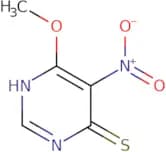
CAS:Versatile small molecule scaffoldFórmula:C9H10N2SPureza:Min. 95%Peso molecular:178.26 g/mol6-Methoxy-5-nitropyrimidine-4-thiol
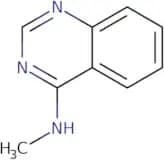
CAS:Versatile small molecule scaffoldFórmula:C5H5N3O3SPureza:Min. 95%Peso molecular:187.18 g/molN-Methylquinazolin-4-amine
CAS:Versatile small molecule scaffold
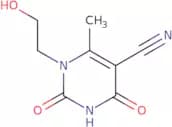
Fórmula:C9H9N3Pureza:Min. 95%Peso molecular:159.19 g/mol1-(2-Hydroxyethyl)-6-methyl-2,4-dioxo-1,2,3,4-tetrahydropyrimidine-5-carbonitrile
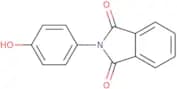
CAS:Versatile small molecule scaffoldFórmula:C8H9N3O3Pureza:Min. 95%Peso molecular:195.2 g/molN-(4-Hydroxyphenyl)phthalimide
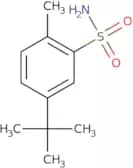
CAS:N-(4-Hydroxyphenyl)phthalimide is a white powder that has a melting point of 140.5°C, and is soluble in chloroform, acetone, and ethanol. It has the chemical formula C6H4N(OH)C6H3(OCH2CH2)2 and is used as a reagent for the synthesis of phthalic anhydride. It reacts with ammonia to form phthalamide. This compound belongs to the family of compounds called phthalimides. The molecule consists of two benzene rings connected by a single bond, which contains two hydroxyl groups on opposite sides of the ring system. Hydrogen bonds are formed between these hydroxyl groups and other atoms in the molecule. These hydrogen bonds contribute to the dihedral angle of this molecule (104°).Fórmula:C14H9NO3Pureza:Min. 95%Peso molecular:239.23 g/mol5-tert-Butyl-2-methylbenzene-1-sulfonamide
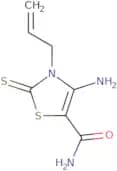
CAS:Versatile small molecule scaffoldFórmula:C11H17NO2SPureza:Min. 95%Peso molecular:227.33 g/mol3-Allyl-4-amino-2-thioxo-2,3-dihydro-thiazole-5-carboxylic acid amide
CAS:Versatile small molecule scaffold
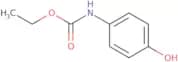
Fórmula:C7H9N3OS2Pureza:Min. 95%Peso molecular:215.3 g/molEthyl N-(4-hydroxyphenyl)carbamate
CAS:Ethyl N-(4-hydroxyphenyl)carbamate is a synthetic compound that is used as an antioxidant to treat erythema, skin redness and inflammation. It also has the ability to decolorize hair. This product is a precursor for the synthesis of aminophenols, which are biologically active compounds that have been found in plants, animals and humans. Ethyl N-(4-hydroxyphenyl)carbamate is metabolized by human enzymes into arbutin, ellagic acid and 4-hydroxyphenylacetic acid. The human body converts ellagic acid into ellagic acid glucuronide, which may be excreted in urine or bile.
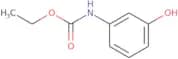
Fórmula:C9H11NO3Pureza:Min. 95%Peso molecular:181.19 g/molEthyl (3-Hydroxyphenyl)carbamate
CAS:Ethyl (3-Hydroxyphenyl)carbamate is a carbonyl group that is produced by the hydrolysis of triticum aestivum. This product has been shown to have a synergistic interaction with retroflexus and bioassay, an imaging technique used to measure the photosynthetic activity of plants. Ethyl (3-Hydroxyphenyl)carbamate has low light fluorescence properties, which are useful for the detection of sugarbeet in low light conditions. The symptoms of ethyl (3-hydroxyphenyl)carbamate exposure include a constant and acceptor, which is a molecule or atom that accepts electrons from an electron donor in chemical reactions. Ethyl (3-hydroxyphenyl)carbamate can react with proton to form arvensis, a sugar found in sugarbeets.
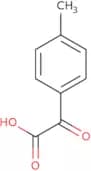
Fórmula:C9H11NO3Pureza:Min. 95%Peso molecular:181.19 g/mol(4-Methylphenyl)(oxo)acetic acid
CAS:(4-Methylphenyl)(oxo)acetic acid is a chlorinated compound that has a reactive functional group. This chemical is used as a reagent in organic synthesis and has been shown to be a useful additive in organic reactions involving chloride compounds. The reaction mechanism of this compound is that it reacts with the oxidant, dehydrogenative or surrogates such as acetonitrile and hydrogen peroxide, to produce the desired product. In addition, (4-methylphenyl)(oxo)acetic acid can also be used as an acylation agent in the synthesis of disulfides.
Fórmula:C9H8O3Pureza:Min. 95%Peso molecular:164.16 g/mol2-{[(2-Chlorophenyl)amino]methyl}phenol
CAS:Versatile small molecule scaffold
Fórmula:C13H12ClNOPureza:Min. 95%Peso molecular:233.69 g/mol(3-Methoxyphenyl)methanethiol
CAS:Versatile small molecule scaffoldFórmula:C8H10OSPureza:Min. 95%Peso molecular:154.23 g/molBicyclo[2.2.1]hept-5-ene-2-sulfonamide
CAS:Versatile small molecule scaffoldFórmula:C7H11NO2SPureza:Min. 95%Peso molecular:173.24 g/molBicyclo[2.2.2]octane-2-sulfonamide
CAS:Versatile small molecule scaffoldFórmula:C8H15NO2SPureza:Min. 95%Peso molecular:189.28 g/mol6-Methoxy-1,3-dioxaindane-5-carboxylic acid
CAS:Versatile small molecule scaffoldFórmula:C9H8O5Pureza:Min. 95%Peso molecular:196.16 g/mol6,7-Dimethoxy-2,3-dihydro-1-benzofuran-3-one
CAS:Versatile small molecule scaffoldFórmula:C10H10O4Pureza:Min. 95%Peso molecular:194.18 g/mol2-Methyl-[1,2,4]triazolo[1,5-a]pyridin-6-amine
CAS:Versatile small molecule scaffold
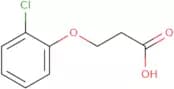
Fórmula:C7H8N4Pureza:Min. 95%Peso molecular:148.17 g/mol3-(2-Chlorophenoxy)propionic acid
CAS:Versatile small molecule scaffold
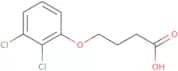
Fórmula:C9H9ClO3Pureza:Min. 95%Peso molecular:200.62 g/mol4-(2,3-Dichlorophenoxy)butanoic acid
CAS:Produto ControladoVersatile small molecule scaffoldFórmula:C10H10Cl2O3Pureza:Min. 95%Peso molecular:249.09 g/mol

![{[4-(Dimethylamino)phenyl]sulfanyl}formonitrile](/_next/image/?url=https%3A%2Fstatic.cymitquimica.com%2Fproducts%2F3D%2Fthumb-webp%2FHAA15280.webp&w=3840&q=75)
![2-{[(2-Chlorophenyl)amino]methyl}phenol](/_next/image/?url=https%3A%2Fstatic.cymitquimica.com%2Fproducts%2F3D%2Fthumb-webp%2FHAA16637.webp&w=3840&q=75)

![Bicyclo[2.2.1]hept-5-ene-2-sulfonamide](/_next/image/?url=https%3A%2Fstatic.cymitquimica.com%2Fproducts%2F3D%2Fthumb-webp%2FHAA16708.webp&w=3840&q=75)
![Bicyclo[2.2.2]octane-2-sulfonamide](/_next/image/?url=https%3A%2Fstatic.cymitquimica.com%2Fproducts%2F3D%2Fthumb-webp%2FHAA16714.webp&w=3840&q=75)


![2-Methyl-[1,2,4]triazolo[1,5-a]pyridin-6-amine](/_next/image/?url=https%3A%2Fstatic.cymitquimica.com%2Fproducts%2F3D%2Fthumb-webp%2FHAA16994.webp&w=3840&q=75)