Building Blocks
Esta seção contém produtos fundamentais para a síntese de compostos orgânicos e biológicos. Building blocks são os materiais de partida essenciais usados para construir moléculas complexas através de várias reações químicas. Eles desempenham um papel crítico na descoberta de medicamentos, ciência dos materiais e pesquisa química. Na CymitQuimica, oferecemos uma ampla gama de building blocks de alta qualidade para apoiar suas pesquisas inovadoras e projetos industriais, garantindo que você tenha os componentes essenciais para uma síntese bem-sucedida.
Subcategorias de "Building Blocks"
- Ácidos Borónicos e Derivados de Ácido Borónico(5.778 produtos)
- Building Blocks Quirais(1.243 produtos)
- Building Blocks Hidrocarbonetos(6.099 produtos)
- Building Blocks orgânicos(61.038 produtos)
Foram encontrados 205376 produtos de "Building Blocks"
Ordenar por
Pureza (%)
0
100
|
0
|
50
|
90
|
95
|
100
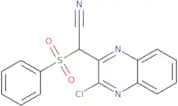
2-(Benzenesulfonyl)-2-(3-chloroquinoxalin-2-yl)acetonitrile
CAS:Versatile small molecule scaffoldFórmula:C16H10ClN3O2SPureza:Min. 95%Peso molecular:343.8 g/mol2-(3-Chloroquinoxalin-2-yl)-2-(4-methylbenzenesulfonyl)acetonitrile
CAS:Versatile small molecule scaffoldFórmula:C17H12ClN3O2SPureza:Min. 95%Peso molecular:357.8 g/mol3-[(2-Aminoethyl)sulfanyl]propan-1-ol
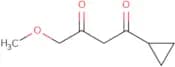
CAS:Versatile small molecule scaffoldFórmula:C5H13NOSPureza:Min. 95%Peso molecular:135.23 g/mol1-Cyclopropyl-4-methoxybutane-1,3-dione
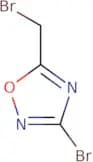
CAS:Versatile small molecule scaffoldFórmula:C8H12O3Pureza:Min. 95%Peso molecular:156.18 g/mol3-Bromo-5-(bromomethyl)-1,2,4-oxadiazole
CAS:Versatile small molecule scaffoldFórmula:C3H2Br2N2OPureza:Min. 95%Peso molecular:241.87 g/mol[3-(Methylamino)phenyl]methanol
CAS:Versatile small molecule scaffoldFórmula:C8H11NOPureza:Min. 95%Peso molecular:137.17 g/mol6-Bromo-8-chloro-2H-benzo[b][1,4]oxazin-3(4H)-one
CAS:Versatile small molecule scaffoldFórmula:C8H5BrClNO2Pureza:Min. 95%Peso molecular:262.49 g/mol6-Bromo-8-methyl-2H-benzo[b][1,4]oxazin-3(4H)-one
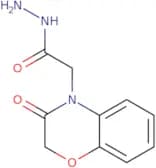
CAS:Versatile small molecule scaffoldFórmula:C9H8BrNO2Pureza:Min. 95%Peso molecular:242.07 g/mol2-(3-Oxo-3,4-dihydro-2H-1,4-benzoxazin-4-yl)acetohydrazide
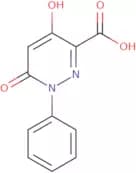
CAS:Versatile small molecule scaffoldFórmula:C10H11N3O3Pureza:Min. 95%Peso molecular:221.21 g/mol4-Hydroxy-6-oxo-1-phenyl-1,6-dihydropyridazine-3-carboxylic acid
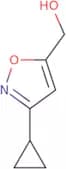
CAS:Versatile small molecule scaffoldFórmula:C11H8N2O4Pureza:Min. 95%Peso molecular:232.19 g/mol(3-Cyclopropyl-5-isoxazolyl)methanol
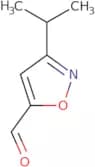
CAS:Versatile small molecule scaffoldFórmula:C7H9NO2Pureza:Min. 95%Peso molecular:139.15 g/mol3-Isopropylisoxazole-5-carboxaldehyde
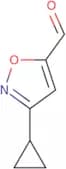
CAS:Versatile small molecule scaffoldFórmula:C7H9NO2Pureza:Min. 95%Peso molecular:139.15 g/mol3-Cyclopropyl-1,2-oxazole-5-carbaldehyde
CAS:Versatile small molecule scaffold
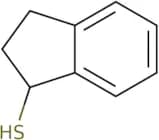
Fórmula:C7H7NO2Pureza:Min. 95%Peso molecular:137.14 g/mol2,3-Dihydro-1H-indene-1-thiol
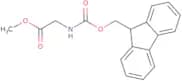
CAS:Versatile small molecule scaffoldFórmula:C9H10SPureza:Min. 95%Peso molecular:150.24 g/molMethyl 2-((((9H-fluoren-9-yl)methoxy)carbonyl)amino)acetate
CAS:Methyl 2-((((9H-fluoren-9-yl)methoxy)carbonyl)amino)acetate is a benzyl ester that was synthesized by the reaction of chloroformate and methyl ester. Methyl 2-((((9H-fluoren-9-yl)methoxy)carbonyl)amino)acetate is a functional group that can be used as a linker in solid phase synthesis. It has been shown to undergo alkaline hydrolysis to produce dicarbonate, yielding high yields. This compound also reacts with benzyl alcohols to form methyl esters, which are important organic compounds.
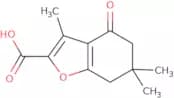
Fórmula:C18H17NO4Pureza:Min. 95%Peso molecular:311.3 g/mol3,6,6-Trimethyl-4-oxo-4,5,6,7-tetrahydro-benzofuran-2-carboxylic acid
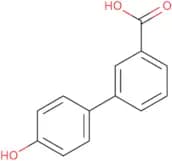
CAS:Versatile small molecule scaffoldFórmula:C12H14O4Pureza:Min. 95%Peso molecular:222.24 g/mol4'-Hydroxy-biphenyl-3-carboxylic acid
CAS:4'-Hydroxy-biphenyl-3-carboxylic acid (4HBCA) is a chiral molecule with an acidic character. 4HBCA has been shown to be a potent regulator of the mesomorphic properties of 3-hydroxybenzoic acid. It has been shown that the compound destabilizes the mesomorphic state, which may be due to the presence of hydroxyl groups in both the phenyl and carboxylic acid moieties. The addition of 4HBCA to biphenyl at room temperature results in lamellar crystals. These crystals are birefringent and have a negative optical rotation. 4HBCA also induces dehydrogenation reactions with polyfluoroalkyl compounds.Fórmula:C13H10O3Pureza:Min. 95%Peso molecular:214.22 g/mol2-(Quinolin-8-ylsulfanyl)acetohydrazide
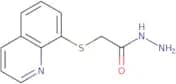
CAS:Versatile small molecule scaffold
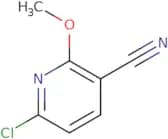
Fórmula:C11H11N3OSPureza:Min. 95%Peso molecular:233.29 g/mol6-Chloro-2-methoxynicotinonitrile
CAS:Versatile small molecule scaffoldFórmula:C7H5N2OClPureza:Min. 95%Peso molecular:168.58 g/mol5-(3-Methoxyphenyl)hexanoic acid
CAS:Versatile small molecule scaffoldFórmula:C13H18O3Pureza:Min. 95%Peso molecular:222.28 g/mol


![3-[(2-Aminoethyl)sulfanyl]propan-1-ol](/_next/image/?url=https%3A%2Fstatic.cymitquimica.com%2Fproducts%2F3D%2Fthumb-webp%2FWEA51997.webp&w=3840&q=75)
![[3-(Methylamino)phenyl]methanol](/_next/image/?url=https%3A%2Fstatic.cymitquimica.com%2Fproducts%2F3D%2Fthumb-webp%2FWEA56278.webp&w=3840&q=75)
![6-Bromo-8-chloro-2H-benzo[b][1,4]oxazin-3(4H)-one](/_next/image/?url=https%3A%2Fstatic.cymitquimica.com%2Fproducts%2F3D%2Fthumb-webp%2FWEA56496.webp&w=3840&q=75)
![6-Bromo-8-methyl-2H-benzo[b][1,4]oxazin-3(4H)-one](/_next/image/?url=https%3A%2Fstatic.cymitquimica.com%2Fproducts%2F3D%2Fthumb-webp%2FWEA56497.webp&w=3840&q=75)