Building Blocks
Subcategorias de "Building Blocks"
- Ácidos Borónicos e Derivados de Ácido Borónico(5.778 produtos)
- Building Blocks Quirais(1.243 produtos)
- Building Blocks Hidrocarbonetos(6.099 produtos)
- Building Blocks orgânicos(61.038 produtos)
Foram encontrados 205376 produtos de "Building Blocks"
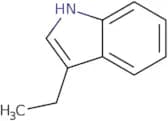
3-Ethyl-1H-indole
CAS:3-Ethyl-1H-indole is a chiral compound with a high degree of stereoselectivity. It is synthesized by the reaction of ethyl formate and diethyl malonate in the presence of sulfuric acid, magnesium and liquid chromatography. The product can be purified by vacuum distillation or recrystallization. 3-Ethyl-1H-indole is used as a starting material for the synthesis of other aromatic compounds. 3-Ethyl-1H-indole has been shown to be useful in the production of pharmaceuticals and agrochemicals.
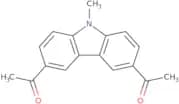
Fórmula:C10H11NPureza:Min. 95%Peso molecular:145.2 g/mol1-(6-Acetyl-9-methyl-9H-carbazol-3-yl)ethan-1-one
CAS:Versatile small molecule scaffoldFórmula:C17H15NO2Pureza:Min. 95%Peso molecular:265.31 g/mol1-(6-Acetyl-9-ethyl-9H-carbazol-3-yl)ethan-1-one
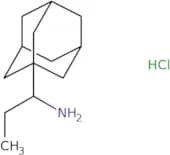
CAS:Versatile small molecule scaffoldFórmula:C18H17NO2Pureza:Min. 95%Peso molecular:279.3 g/mol1-(Adamantan-1-yl)propan-1-amine hydrochloride
CAS:Versatile small molecule scaffoldFórmula:C13H24ClNPureza:Min. 95%Peso molecular:229.79 g/molSpiro[5.5]undecane-2,4-dione
CAS:Spiro[5.5]undecane-2,4-dione is an analgesic drug that belongs to the class of carboxylic acid derivatives. It has been shown to be effective in treating chronic pain and neuropathic pain. Spiro[5.5]undecane-2,4-dione binds to a pharmacophore site on voltage gated sodium channels, preventing the influx of sodium ions into the cell, which blocks the conduction of nerve impulses and relieves pain. The chemical structure of Spiro[5.5]undecane-2,4-dione is similar to that of morphine but it does not have morphine's addictive properties or potential for abuse.
Fórmula:C11H16O2Pureza:Min. 95%Peso molecular:180.25 g/mol4-Chromanol
CAS:4-Chromanol is a trifluoroacetic acid amide. It contains a hydroxyl group, which is important for its neuroprotective properties. 4-Chromanol's mechanism of action is not yet fully understood, but it has been shown to inhibit the growth of human serum and oral pathogens in vitro. The compound also has an anti-inflammatory effect by inhibiting the production of pro-inflammatory cytokines from human monocytes. 4-Chromanol's chemical structure consists of a hydroxy group, fatty acids, and benzyl groups on both sides of the carbonyl group at position 4.
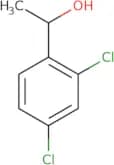
Fórmula:C9H10O2Pureza:Min. 95%Peso molecular:150.18 g/mol2,4-Dichloro-±-methylbenzyl Alcohol
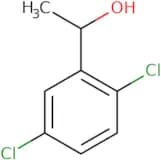
CAS:2,4-Dichloro-±-methylbenzyl Alcohol is a metabolite of 2,4-dichlorobenzyl alcohol (2,4-DCBA) and is used as an antifungal drug. It has been shown to inhibit the growth of fungi by blocking octanoyl and pentyl groups in the synthesis of fatty acids. The metabolites are formed from 2,4-DCBA when it is activated by cytochrome P450 enzymes or monooxygenase. This compound also has a B1 chiral center that can exist in two forms: erythro and threo. The enantiomers have different effects on certain organisms. 2,4-Dichloro-±-methylbenzyl Alcohol is one of the metabolites formed from 2,4-dichlorobenzyl alcohol (2,4-DCBA). It has been shown to inhibit the growth of fungi by blocking octanoyFórmula:C8H8Cl2OPureza:Min. 95%Peso molecular:191.05 g/mol1-(2,5-Dichlorophenyl)ethanol
CAS:Versatile small molecule scaffold
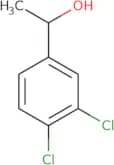
Fórmula:C8H8Cl2OPureza:Min. 95%Peso molecular:191.06 g/mol1-(3,4-Dichlorophenyl)ethanol
CAS:1-(3,4-Dichlorophenyl)ethanol is a metabotropic glutamate receptor antagonist that has been shown to have strong affinity for the mGlu2 receptor. It is a potent antagonist of the mGlu2 receptor and displays high affinity for this receptor. The discovery of 1-(3,4-Dichlorophenyl)ethanol led to the discovery of other compounds with similar pharmacological profiles. This drug has been shown to be an agonist of the metabotropic glutamate receptors. 1-(3,4-Dichlorophenyl)ethanol has been used in studies investigating its use as a treatment for schizophrenia, obsessive compulsive disorder and depression.
Fórmula:C8H8Cl2OPureza:Min. 95%Peso molecular:191.05 g/molBicyclo[4.2.0]octa-1(6),2,4-triene-7-carbonyl chloride
CAS:Versatile small molecule scaffold
Fórmula:C9H7ClOPureza:Min. 95%Peso molecular:166.6 g/mol6-Chloro-2-thiatricyclo[9.4.0.0,3,8]pentadeca-1(15),3,5,7,11,13-hexaen-9-one
CAS:Versatile small molecule scaffold
Fórmula:C14H9ClOSPureza:Min. 95%Peso molecular:260.7 g/mol5,6-Dihydrobenzo[b]thiophen-7(4H)-one
CAS:5,6-Dihydrobenzo[b]thiophen-7(4H)-one is a sulfur-containing heterocycle that has been shown in studies to have cytotoxic activity. This compound has been found to induce apoptosis (programmed cell death) in cancer cells by binding to the protein kinase B (PKB/Akt), which is involved in the regulation of cell proliferation and survival. 5,6-Dihydrobenzo[b]thiophen-7(4H)-one also binds to DNA, preventing transcription and translation of proteins. The cytotoxic effects of this compound make it useful for treatment of ophthalmic conditions such as cataracts and glaucoma. This compound is being studied for use in the treatment of ovarian cancer and other types of cancer. It was recently shown that 5,6-dihydrobenzo[b]thiophen-7(4H)-one
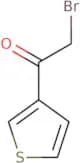
Fórmula:C8H8OSPureza:Min. 95%Peso molecular:152.21 g/mol3-(Bromoacetyl)thiophene
CAS:3-(Bromoacetyl)thiophene is a chromophore that can be used as an antibacterial agent. It has potent inhibitory effects on bacteria, which are caused by the ring-opening of the thiophene ring in the presence of irradiation. 3-(Bromoacetyl)thiophene can also be used in electrochemical polymerization and cyclic voltammetry. In addition, it has been shown to have an inhibitory effect on dehydrogenase enzymes, which are important for energy production in cells. This compound is fluorescent and can be detected using electrochemical impedance spectroscopy (EIS).
Fórmula:C6H5BrOSPureza:Min. 95%Peso molecular:205.07 g/mol6-(Carbamoylamino)hexanoic acid
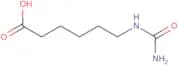
CAS:6-(Carbamoylamino)hexanoic acid (6ACA) is a synlett that has been shown to be a potent and selective inhibitor of Hsp70. It is functional as a modulator through the interaction with the zinc-binding site, which inhibits ATPase activity. This molecule also acts as a lead molecule for the development of therapeutic agents against various diseases such as cancer, diabetes, and neurodegenerative disorders. The compound has been shown to have catalytic activity in acidic conditions and shows high stereoselectivity in multicomponent reactions.
Fórmula:C7H14N2O3Pureza:Min. 95%Peso molecular:174.2 g/mol6-Methylbenzo[b]thiophene-2-carboxylic acid
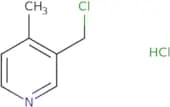
CAS:Mebendazole is a benzimidazole anthelmintic drug that inhibits the growth of worms by binding to the benzimidazole-sensitive sites on the worm's nervous system. Mebendazole has been shown to be a potent and selective antagonist at the benzimidazole-sensitive site of the GABA receptor. This activity has been confirmed in vitro and in animal models, where it blocked convulsions induced by pentylenetetrazol. Mebendazole is also orally active, but modifications are needed to optimize its oral bioavailability and dosing. Mebendazole has been shown to have significant activity against some human parasites, including Entamoeba histolytica, Trichuris trichiura, and Giardia lamblia. In vivo studies have shown that mebendazole is well tolerated in humans when taken orally.Fórmula:C10H8O2SPureza:Min. 95%Peso molecular:192.24 g/mol3-(Chloromethyl)-4-methylpyridine hydrochloride
CAS:Versatile small molecule scaffoldFórmula:C7H9Cl2NPureza:Min. 95%Peso molecular:178.06 g/molN-(Prop-2-yn-1-yl)benzamide
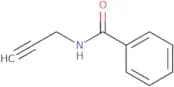
CAS:N-(Prop-2-yn-1-yl)benzamide is a potential drug for the treatment of Parkinson's disease. It has been shown to be an effective inhibitor of the enzyme tyrosine hydroxylase and is able to reduce dopamine levels in animals. N-(Prop-2-yn-1-yl)benzamide has also been shown to have antiinflammatory properties, which may be due to its ability to inhibit cyclooxygenase activity. This drug can be synthesized by a stepwise process starting with propargylamine and benzoyl chloride. The x-ray crystallography studies conducted on this compound show that it is a mononuclear arene with a crystallographic symmetry of C2v. The oxidized form of this molecule shows high reactivity towards electron rich aromatic compounds, such as ferrocene, which may explain its ability to catalyze the oxidation reactions of electron poor arenes such as isoindolines.
Fórmula:C10H9NOPureza:Min. 95%Peso molecular:159.18 g/mol2-[4-(Benzyloxy)-1H-indol-3-yl]acetic acid
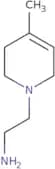
CAS:Versatile small molecule scaffoldFórmula:C17H15NO3Pureza:Min. 95%Peso molecular:281.3 g/mol2-(4-Methyl-1,2,3,6-tetrahydropyridin-1-yl)ethan-1-amine
CAS:Versatile small molecule scaffold
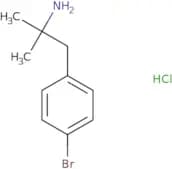
Fórmula:C8H16N2Pureza:Min. 95%Peso molecular:140.23 g/mol1-(4-Bromophenyl)-2-methylpropan-2-amine hydrochloride
CAS:Produto ControladoVersatile small molecule scaffold
Fórmula:C10H15BrClNPureza:Min. 95%Peso molecular:264.59 g/mol


![Spiro[5.5]undecane-2,4-dione](/_next/image/?url=https%3A%2Fstatic.cymitquimica.com%2Fproducts%2F3D%2Fthumb-webp%2FBAA48199.webp&w=3840&q=75)

![Bicyclo[4.2.0]octa-1(6),2,4-triene-7-carbonyl chloride](/_next/image/?url=https%3A%2Fstatic.cymitquimica.com%2Fproducts%2F3D%2Fthumb-webp%2FBAA47347.webp&w=3840&q=75)
![6-Chloro-2-thiatricyclo[9.4.0.0,3,8]pentadeca-1(15),3,5,7,11,13-hexaen-9-one](/_next/image/?url=https%3A%2Fstatic.cymitquimica.com%2Fproducts%2F3D%2Fthumb-webp%2FBAA46928.webp&w=3840&q=75)
![5,6-Dihydrobenzo[b]thiophen-7(4H)-one](/_next/image/?url=https%3A%2Fstatic.cymitquimica.com%2Fproducts%2F3D%2Fthumb-webp%2FBAA46884.webp&w=3840&q=75)
![6-Methylbenzo[b]thiophene-2-carboxylic acid](/_next/image/?url=https%3A%2Fstatic.cymitquimica.com%2Fproducts%2F3D%2Fthumb-webp%2FBAA46786.webp&w=3840&q=75)
![2-[4-(Benzyloxy)-1H-indol-3-yl]acetic acid](/_next/image/?url=https%3A%2Fstatic.cymitquimica.com%2Fproducts%2F3D%2Fthumb-webp%2FBAA46412.webp&w=3840&q=75)