Building Blocks
Esta seção contém produtos fundamentais para a síntese de compostos orgânicos e biológicos. Building blocks são os materiais de partida essenciais usados para construir moléculas complexas através de várias reações químicas. Eles desempenham um papel crítico na descoberta de medicamentos, ciência dos materiais e pesquisa química. Na CymitQuimica, oferecemos uma ampla gama de building blocks de alta qualidade para apoiar suas pesquisas inovadoras e projetos industriais, garantindo que você tenha os componentes essenciais para uma síntese bem-sucedida.
Subcategorias de "Building Blocks"
- Ácidos Borónicos e Derivados de Ácido Borónico(5.774 produtos)
- Building Blocks Quirais(1.237 produtos)
- Building Blocks Hidrocarbonetos(6.098 produtos)
- Building Blocks orgânicos(60.970 produtos)
Foram encontrados 205134 produtos de "Building Blocks"
Ordenar por
Pureza (%)
0
100
|
0
|
50
|
90
|
95
|
100
(S)-2-(N-Boc-aminomethyl)morpholine
CAS:Versatile small molecule scaffold
Fórmula:C10H20N2O3Pureza:Min. 95%Peso molecular:216.27 g/mol1-tert-butyl 2-methyl (2R,4S)-4-aminopyrrolidine-1,2-dicarboxylate hydrochloride
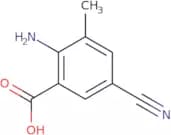
CAS:Versatile small molecule scaffoldFórmula:C11H21ClN2O4Pureza:Min. 95%Peso molecular:280.7 g/mol2-amino-5-cyano-3-methylbenzoic acid
CAS:2-Amino-5-cyano-3-methylbenzoic acid is a diester of methylamine. It is an acid ester that has been used in the synthesis of other compounds. 2-Amino-5-cyano-3-methylbenzoic acid is an intermediate in the synthesis of some pharmaceuticals, such as carbamazepine and methylphenidate. This compound has not been shown to have any biological activity.Fórmula:C9H8N2O2Pureza:Min. 95%Peso molecular:176.18 g/mol2,4,6-Trichloronicotinic acid
CAS:Versatile small molecule scaffoldFórmula:C6H2Cl3NO2Pureza:Min. 95%Peso molecular:226.44 g/moltert-Butyl 4-amino-4-(aminomethyl)piperidine-1-carboxylate
CAS:Versatile small molecule scaffoldFórmula:C11H23N3O2Pureza:Min. 95%Peso molecular:229.32 g/molSpiro[3.3]heptane-2,6-dicarboxylic acid, 2,6-dimethyl ester
CAS:Versatile small molecule scaffoldFórmula:C11H16O4Pureza:Min. 95%Peso molecular:212.25 g/molN-(4-Bromophenyl)-N-phenylacrylamide
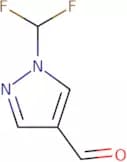
CAS:Versatile small molecule scaffoldFórmula:C15H12BrNOPureza:Min. 95%Cor e Forma:PowderPeso molecular:302.16 g/mol1-(Difluoromethyl)-1H-pyrazole-4-carbaldehyde
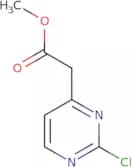
CAS:Versatile small molecule scaffoldFórmula:C5H4F2N2OPureza:Min. 95%Peso molecular:146.09 g/molMethyl 2-(2-chloropyrimidin-4-yl)acetate
CAS:Versatile small molecule scaffold
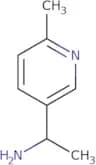
Fórmula:C7H7ClN2O2Pureza:Min. 95%Peso molecular:186.59 g/mol1-(6-Methylpyridin-3-yl)ethanamine
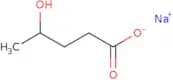
CAS:Versatile small molecule scaffoldFórmula:C8H12N2Pureza:Min. 95%Peso molecular:136.19 g/mol4-Hydroxyvaleric Acid Sodium Salt
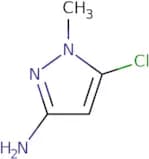
CAS:Produto Controlado4-Hydroxyvaleric acid sodium salt is a hydrophilic, thermally sensitive substance that is used as an analytical reagent in toxicology. It is typically used as a screening agent for the detection of acetaldehyde and other aldehydes. 4-Hydoxyvaleric acid sodium salt reacts with acetone to form a clear solution and can be injected into a gas chromatograph using an injection method. The reaction between 4-hydroxyvaleric acid sodium salt and acetone produces an efficient method for the analysis of acetaldehyde. This chemical is often used by toxicologists and chemists to screen for the presence of acetaldehyde in blood or urine samples.Fórmula:C5H9NaO3Pureza:Min. 95%Peso molecular:140.11 g/mol5-Chloro-1-methyl-1H-pyrazol-3-amine
CAS:Versatile small molecule scaffold
Fórmula:C4H6N3ClPureza:Min. 95%Peso molecular:131.56 g/molMethyl 3-bromo-1-methyl-1H-pyrazole-5-carboxylate
CAS:Versatile small molecule scaffold
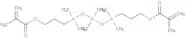
Fórmula:C6H7BrN2O2Pureza:Min. 95%Peso molecular:219.04 g/molMethacryloxypropyl terminated polydimethylsiloxanes
CAS:MW 20,000 - 30,000
Fórmula:C20H40O6Si3Pureza:Min. 95%Peso molecular:460.8 g/molbenzyl 5-(tetramethyl-1,3,2-dioxaborolan-2-yl)-1,2,3,6-tetrahydropyridine-1-carboxylate
CAS:Versatile small molecule scaffoldFórmula:C19H26BNO4Pureza:Min. 95%Peso molecular:343.2 g/molOctacalcium phosphate
CAS:Octacalcium phosphate is a calcium salt with a molecular formula of Ca8(PO4)6. It is used as a supplement in animal feed, as an emulsifier, and as an ingredient in the production of toothpaste and other dental hygiene products. Octacalcium phosphate has been shown to have biological properties that are due to its carotenoid content. This compound has been shown to be stable in vitro and in vivo, even after exposure to plasma mass spectrometry or tissue culture. Octacalcium phosphate also has strong chemical stability under acidic conditions, which makes it suitable for use as a reaction solution for polymerase chain reactions (PCRs). The crystal structure of octacalcium phosphate was determined by X-ray crystallography and the structural analysis revealed that octacalcium phosphate has an orthorhombic unit cell with a lattice spacing of 12.7 Å. The crystal structure consists of two different types of calcium ions: Ca2Fórmula:Ca4•(H3PO4)3Pureza:Min. 95%Cor e Forma:PowderPeso molecular:454.3 g/mol2-(Bromomethyl)-6-nitro-benzoic acid methyl ester
CAS:Versatile small molecule scaffoldFórmula:C9H8BrNO4Pureza:Min. 95%Peso molecular:274.07 g/molPiperidine-3-sulfonamide hydrochloride
CAS:Versatile small molecule scaffoldFórmula:C5H13ClN2O2SPureza:Min. 95%Peso molecular:200.69 g/moltert-Butyl (2S)-2-formylmorpholine-4-carboxylate
CAS:Versatile small molecule scaffoldFórmula:C10H17NO4Pureza:Min. 95%Peso molecular:215.25 g/molSodium 4-hydroxybenzenesulfonate dihydrate
CAS:Sodium 4-hydroxybenzenesulfonate dihydrate is a hydrogenated compound with reactive properties. It is used in the production of optical materials and is used to produce hydrogen peroxide, which is a strong oxidizing agent. Sodium 4-hydroxybenzenesulfonate dihydrate has been shown to react with calcium ions to form calcium sulfinates. The luminescence property of this compound can be enhanced by mixing it with other compounds such as x-ray diffraction study, functional groups, or hydrogen peroxide. The reaction time for the formation of sodium 4-hydroxybenzenesulfonate dihydrate can be shortened by adding anions such as sulfamic acid.Fórmula:C6H5NaO4S·2H2OPureza:Min. 95%Cor e Forma:White To Off-White SolidPeso molecular:232.19 g/mol




![Spiro[3.3]heptane-2,6-dicarboxylic acid, 2,6-dimethyl ester](/_next/image/?url=https%3A%2Fstatic.cymitquimica.com%2Fproducts%2F3D%2Fthumb-webp%2FMBA94279.webp&w=3840&q=75)